Functional biology: Animal biology.
 Call Kai
 Learn
Learn Practice Test
 Spaced Repetition
 Match
Match Flashcards
 Knowt Play
1/284

There's no tags or description
Looks like no tags are added yet.
Name | Mastery | Learn | Test | Matching | Spaced | Call with Kai | Chat |
|---|
No analytics yet
Send a link to your students to track their progress
285 Terms
How do animals regulate their internal state even in changing or harsh environments?
Name 3
Example of penguins
Form (anatomy)
Biological Function (physiology)
Behavior
Think penguin:
Form = fat reduces hear loss
Function = Shivering mainteans heat production
Behavior = grouping of penguins
Anatomy vs physiology
Anatomy = biological structure.
Physiology = biological function.
What do all animals need.
How to make sure all cells get these.
Oxygen
Energy that can be converted into ATP
Obtain nutrients
Preduce offspring
Fight of infection
Water
Through intestitail fluids like blood,
What is meant with the Hierarchical Organization of Body Plans?
Name the levels?
It is the different levels of structural and functional organization that the has:
Cells
Tissues
Organs
Organs system.
Name the 4 tissue types:
Epithelial tissue.
Connective tissue
Muscle tissue
Nervous tissue
These are the 4 tissues that make up all the different parts of the body
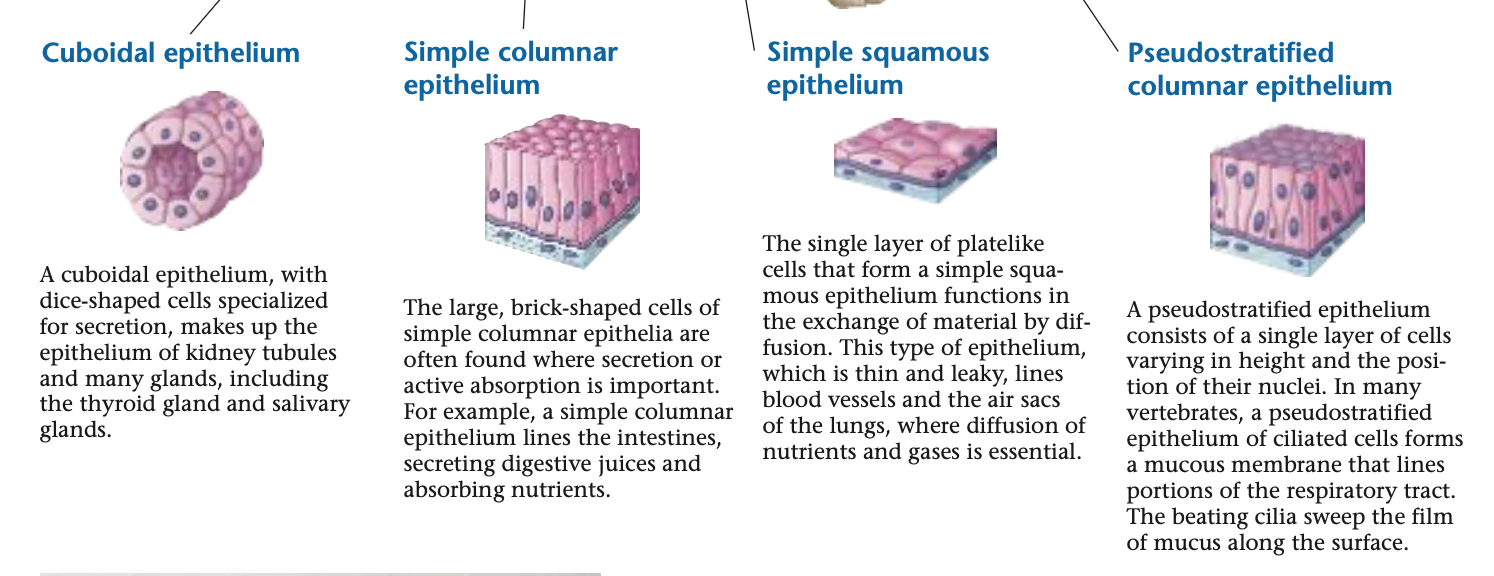
Types of epithelial tissue
Cuboidal epithelium.
Simple columnar epithelium.
Simple squamous epithelium
Pseudostratidied columnar epithelium.
Tissue that covers oudisde of body and line organs,
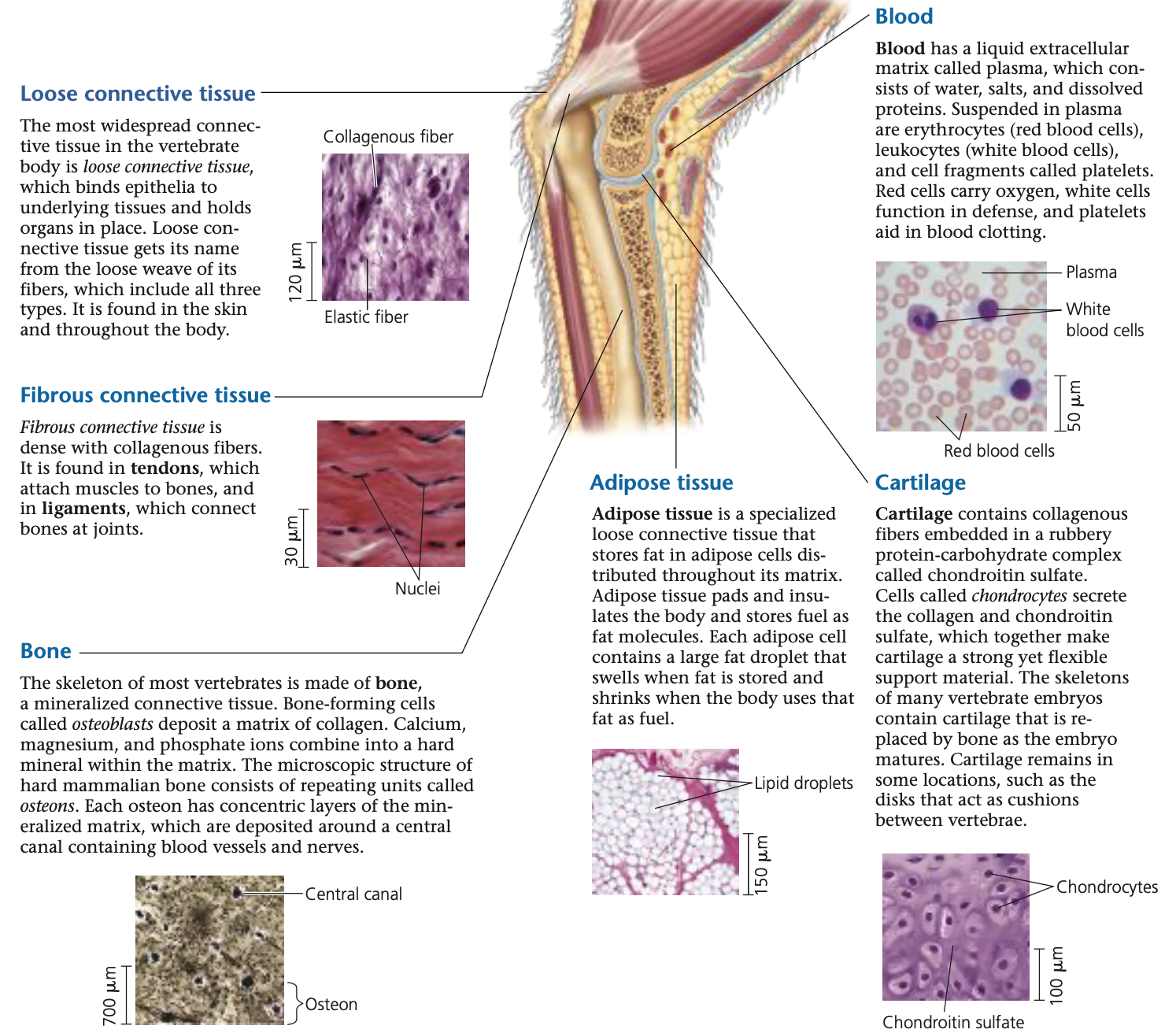
Types of Conncective tissue:
Loose connective tissue
Fibrous connective tissue
Bone
Blood
Adipose tissue (fat)
Cartilage (fibers tissue that secretes collagen)
Types of muscle Tissue:
Skeletal muscle:
Attached to bones by tendons, skeletal muscle, or striated muscle, is responsible for voluntary movements
Smooth muscle:
is found in the walls of the digestivetract, urinary bladder, arteries, and other
internal organs. The cells are spindle-
shaped. Smooth muscles are responsible
for involuntary body activities, such as
churning of the stomach and constric-
tion of arteries.
Cardiac muscle:
Cardiac muscle forms the contractilewall of the heart. It is striated like skeletal
muscle and has similar contractile proper-
ties. Unlike skeletal muscle, however, car-
diac muscle has branched fibers that inter-
connect via intercalated disks, which relay
signals from cell to cell and help synchronize
heart contraction

Types of nervous tissue:
Neurons
Gilia:
The various types of glia help nourish, insulate, and replenish neurons, and in some cases, modulate neuron function.
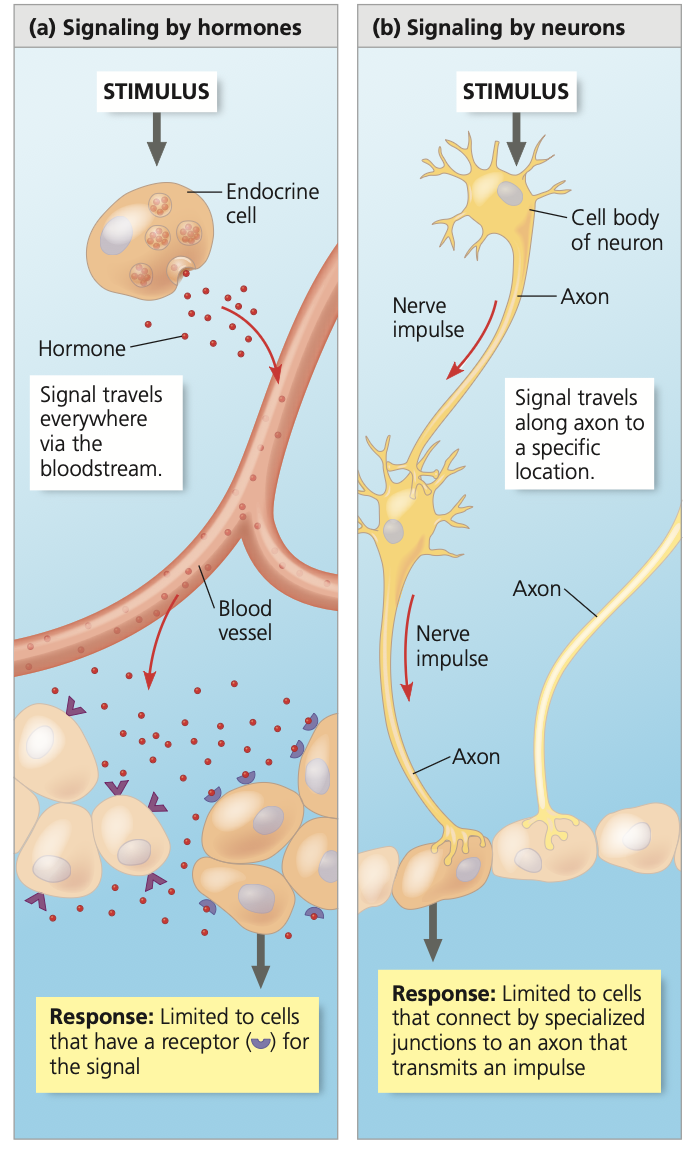
The 2 major systems for coordinating and controlling responses to stimuli.
When is wich one used.
Endocrine system (hormones).
Nervous system.
The endocrine system is especially well adapted for coordinating gradual changes that affect the entire body, such as growth, development, reproduction, metabolic processes, and digestion.
The nervous system is well-suited for directing immediate and rapid responses to the environment, such as reflexes and other rapid movements.
Homeostasis
What is it
Give examples
Maintenance of internal balance.
Think of: Body temp, pH, blood ,and glucose concentrations.
How is Homeostasis achhieved, basic principle?
Use set point, sensor, stimulus and response in answer
What type of feedback?
Set point: target state, which homeostasis is trying to maintain.
Senser: detects when the value moves away from the set point.
Stimulus: is induced by the sensor when it moves away from the set point.
Response: Action to get back to the set point. Through a NEGATIVE FEEDBACK.
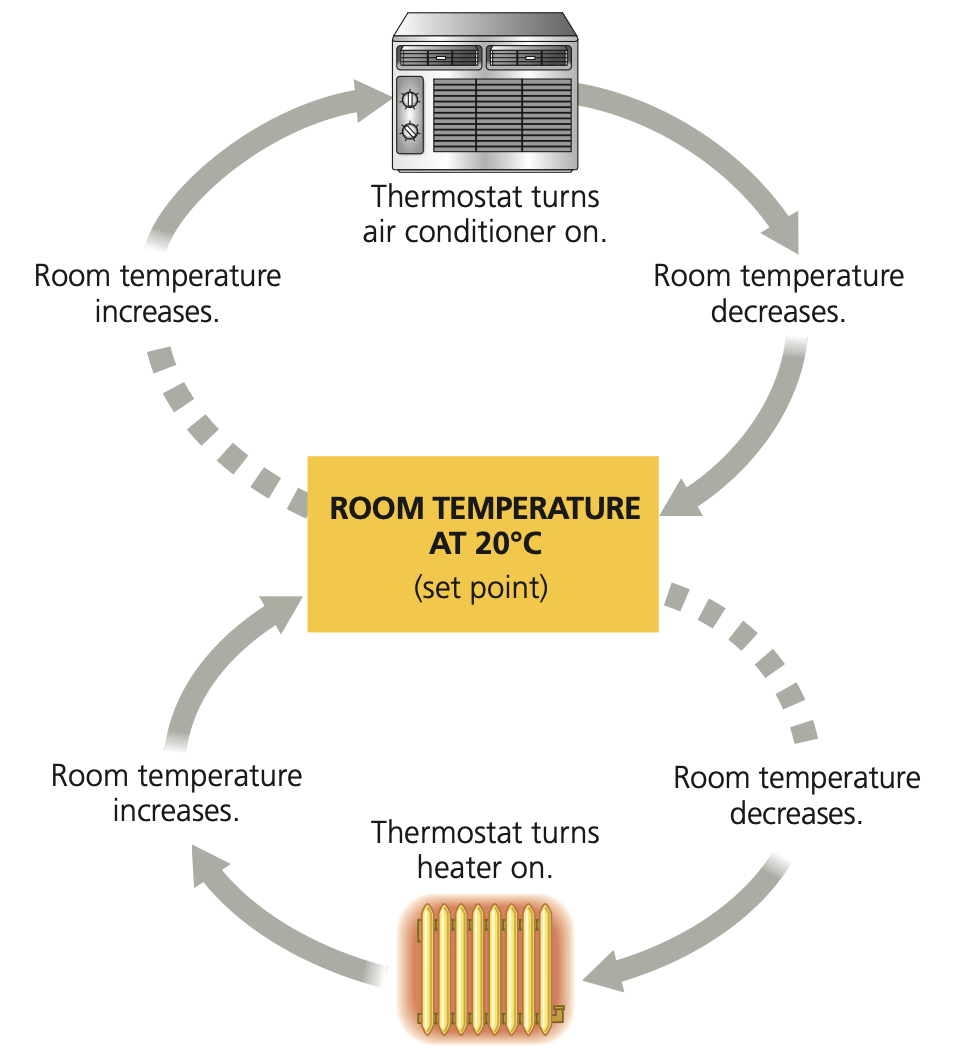
How can Homeostasis change to fit envoirment or rhythm?
Acclimatization: an animal’s physiological adjustment to changes in its external environment. Think of when you clime big mountan, body needs to change.
Circadian rhythm: Hormones or body responses that are regulated by a 24h cycle.
Regulated changes, like puberty (of de overgang), so changes that follow things like development.
Also think of the mantrocycle for example.
Thermoregulation?
Thermoregulation is the process by which animals maintain their body temperature within a normal range.
Endothermy vs Ectothermy
what
Why
Mutaly exclusive?
Endothermic: warmed mostly by heat generated by metabolism. More stable.
Ectothermic: gain most of their heat from external sources. Cost Less Energy
Most organism do both, like humans are endothermic, but we still stand in the sun.
Ecto cause eco
Endo cause internail
poikilotherm VS homeotherm
Poikilotherm: Body temp can varie a lot,
Homeotherm: Constant body temp.
Homo so stays
How can a animal lose heat?
Name 4.
Basic principle
Radiation.
Evaporation
Convection.
Conduction (Conduction is the transfer of heat between molecules of objects in contact with each other)
In each, heat is transferred from an object of higher temperature to one of lower temperature.
Entropy
Name one of the ways mammals reduce heat exchange?
Integumentary system. (isolation),
The outer covering of the body, consisting of the skin, hair, and nails (claws or hooves in some species).
Integumentary system. (isolation),
Is dynamic. Can secret oils to isolate better. Or raise fur (thereby creating a thicker layer, why we get goosebumps its a remnant from when we had fur).
See mammals use blubber, very good at insulating.
Circulatory Adaptations
Using of blood flow to regulate body temperature.
So allows the widdening of blood vessels near the skin for more release of heat,
How to Coole a body: countercurrent exchange (type of Circulatory Adaptations)
When heat is maintained in the body by putting hot blood next to cold blood. So most heat transfer is from inside the body to inside the body, and thus not to oudside the body.
Because blood flows through the arteries and veins in opposite directions, this arrangement allows heat exchange to be remarkably efficient. As warm blood in the arteries moves outward from the body core, it transfers heat to the colder blood in the veins returning from the extremities
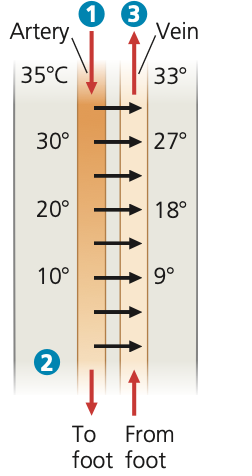
How to Coole a body: Evaporative
Main concept
Name 3 examples
Cooling by Evaporative Heat Loss
Think of:
Sweating for humans and horses.
Panting for more furry animals
Pouch some birds use it. Fluttering the pouch increases evaporation
Can Behavioral Responses be a part of Thermoregulation?
Yes…
Can sit in sun or shade.
Can Adjusting Metabolic be a part of Thermoregulation?
Why and example?
Yes.
Think of shivering. What activates muscle and leads to the burning of glucose what results in heat release.
Acclimatization in Thermoregulation
Growing fur in winter and shedding it in summer.
But also think of antifreeze proteins.
Hypothalamus
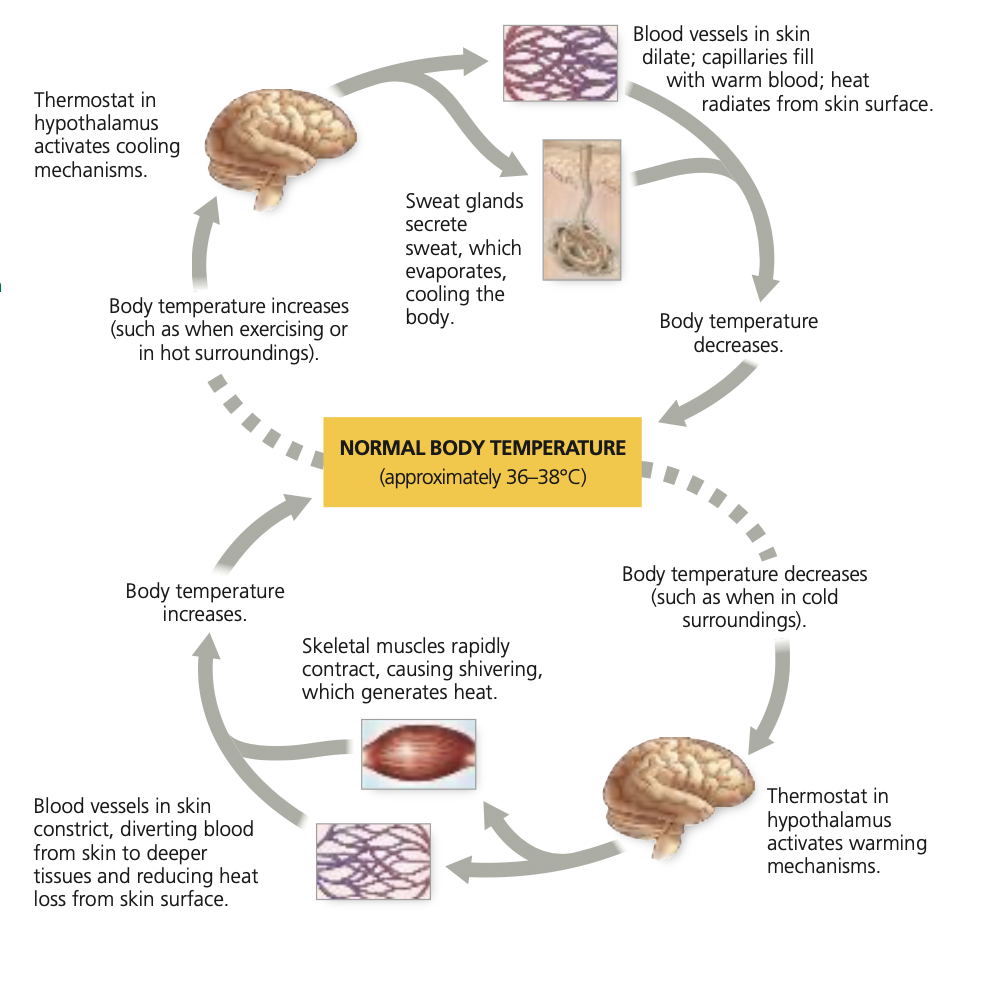
Brain region that acts as the thermostat of the body. SO also regualtes fever
Also controlles things like circadian clock
Thermoregulation, summery
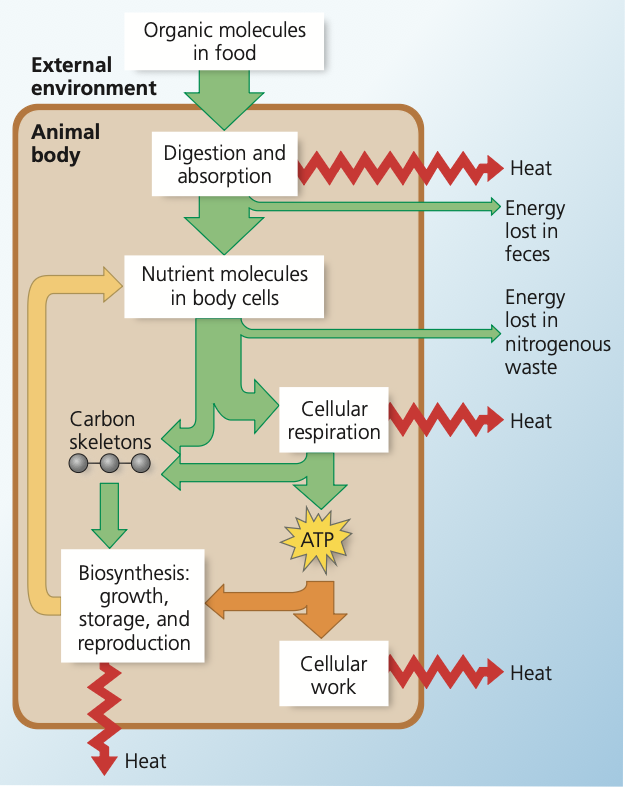
bioenergetics
The overall flow and transformation of energy in an animal.
Animals are hetrotrophes. PHOTO summery of animal body.
Metabolic rate.
What is it?
Unit?
The sum of all the energy an animal uses in a given time interval.
Measured in Joules or in calories.
1000 calories =4,184 kilojoules
standard metabolic rate (SMR).
For male vs female vs alligator
During normal acitvity how much are we over SMR
The metabolic rate of a fasting, nonstressed ectotherm at rest at a particular temperature is called SMR…
The BMR for a male human averages 1,600–1,800 kcal per day.
The BMR for a FEmale humans averages 1,300–1,500 kcal per day for adult females.
For alligators its about 60 kcal per day at 20°C (68°F).
It is clear that ectothermy has a markedly lower energetic requirement than endotherm
Size effect on Metabolic Rate
Explain size relation to Metabolic Rate with needed energy per gram of tissue?
Explain size relation to Metabolic Rate with needed energy for whole body?X
As body size decreases, each gram of tissue increases in energy cost.
As body size increases, energy costs per gram of tissue decrease, but an ever-larger fraction of body tissue is required for exchange, support, and locomotion.
LOOK GRAPHS WHERE IT SHOWS RELATION
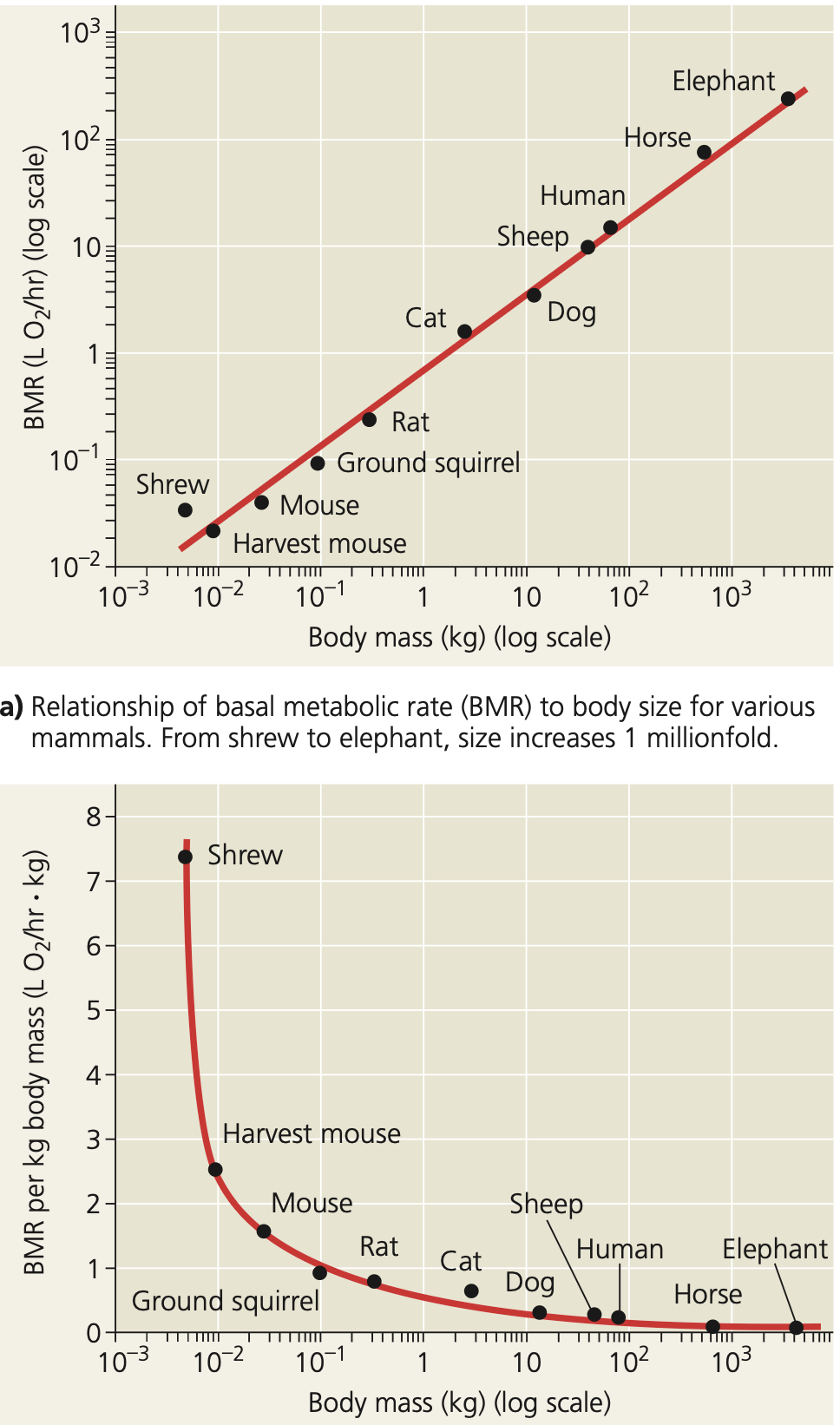
Basal metabolic rate (BMR).
During normal acitvity how much are we over SMR
BMR is measured under a “comfortable” temperature range—a range that requires only the minimum generation or shedding of heat.
The minimum metabolic rate of ectotherms is determined at a specific temperature because changes in the environmental temperature alter body temperature and, therefore, metabolic rate.
About 2 to 4 times over SMR
Torpor
What?
Why?
Examples
a physiological state of decreased activity and metabolism.
In torpor, it decreases body temp and Basal metabolic rate (BMR).
When there is no food.
What bats do in the day. Like sleeping/resting. Saving energy. This is a daily torpor.
Hybernation is also a type of torpor. Where cercadian rythem turns off, BUT every two weeks or so, body temp goes up for a brief while.
This is a technique that rewuies less use of energy so can go through the food scarce times without starving.
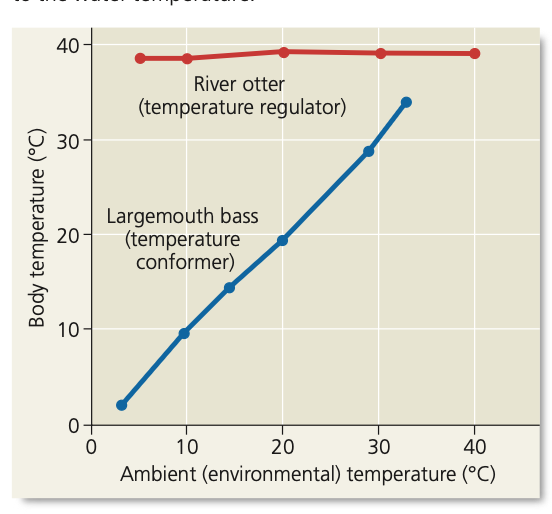
Regulator vs conformer
An animal is a regulator if it controls an internal variable and a conformer if it allows an internal variable to vary with external changes. Homeostasis is the maintenance of a steady state despite internal and external changes.
Endocrine signals is an other name for ….
Hormones
What secretes hormones?
Name 2
Where do they secrete the hormones to.
How do hormones reach target cells
Endocrine cells.
Ductless glands.
Secretes hormones to the extracellular fluid.
Reach all cells through the circulatory fluids. (type of extracellular fluid).
Then only cells with the right receptores will be triggert.
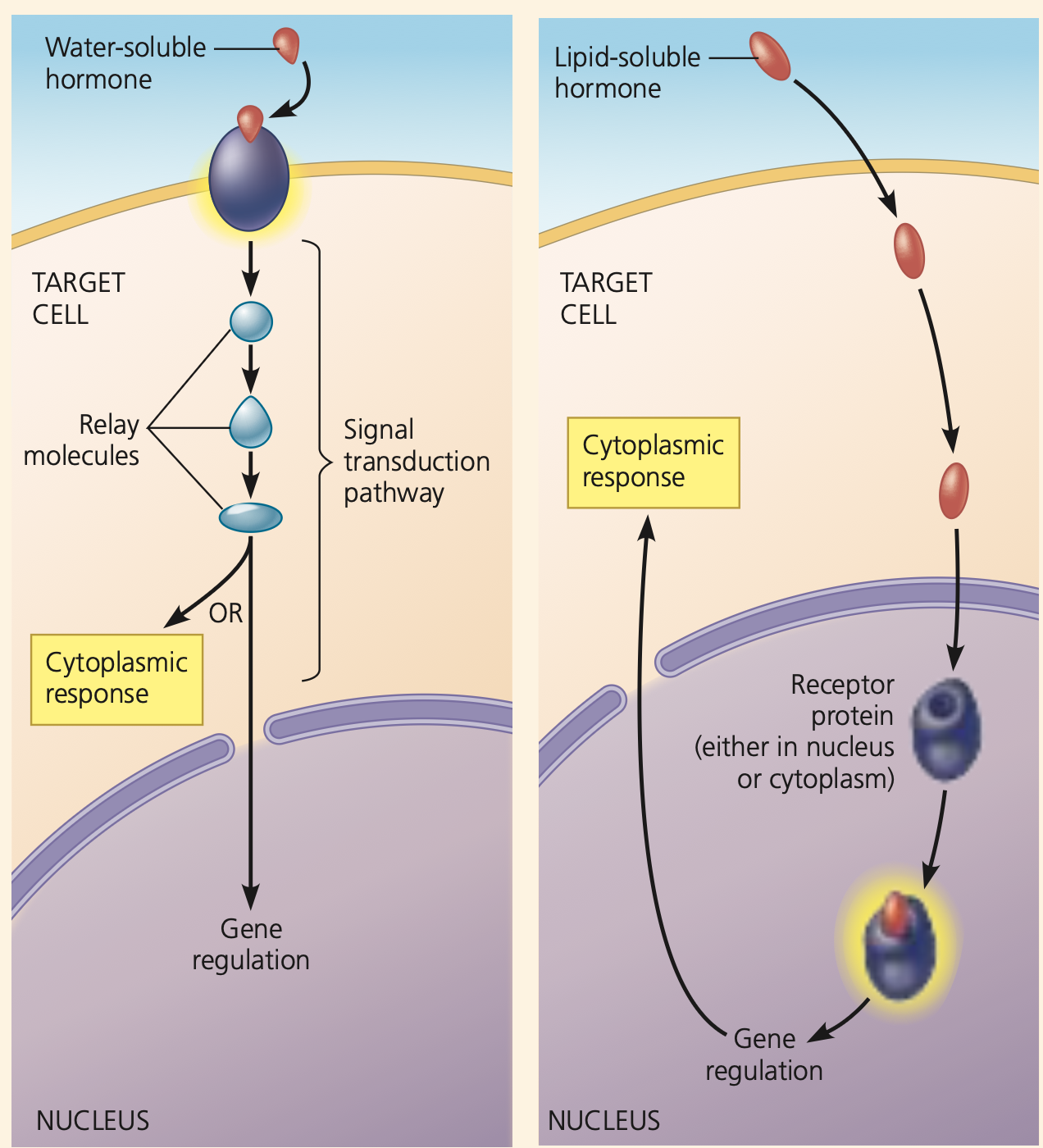
Name the two types of animal hormones
Water soluble (need to bind to receptor)
Lipid-soluble (can go through membrane to trigger response when bound to a receptor in the cell)
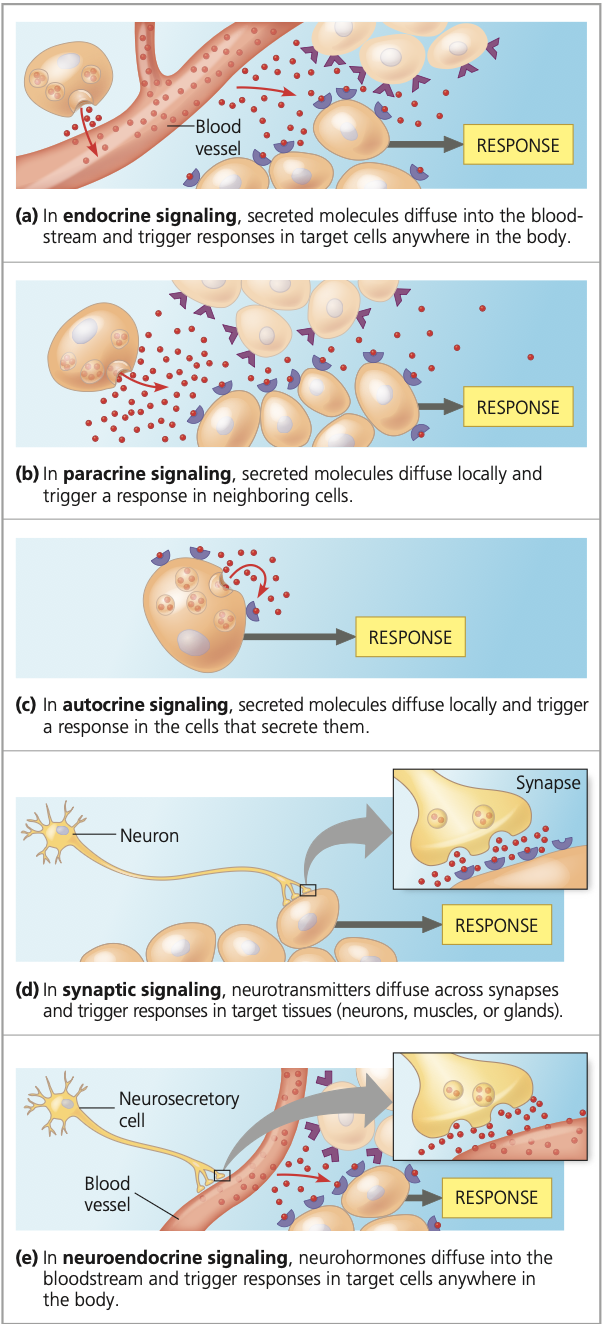
Type of signals:
Paracrine?
Autocrine?
Endocrine?
Neurotransmitters?
Neurohormones?
Pheromones?
Paracrine = Signals that act on neighboring cells.
Autocrine = signaling that acts on signaling cells (can trigger him self or trigger the same type of cels)
Endocrine = Signaling to cells for away, by using circulatory fluids.
Neurotransmitters = Type of local signaling = SYNAPTIC SIGNALING.
Neurohormones = Type of endocrine signaling where neurons produce hormones which they deliver to the blood stream (can act on whole body). When baby sucks on niple siganil gows to brain, than neurons release milk preducing hormone and release into the blood so niple preduces milk ofr baby.
Pheromones = Released by animals to the environment for communication between animals, think ants.
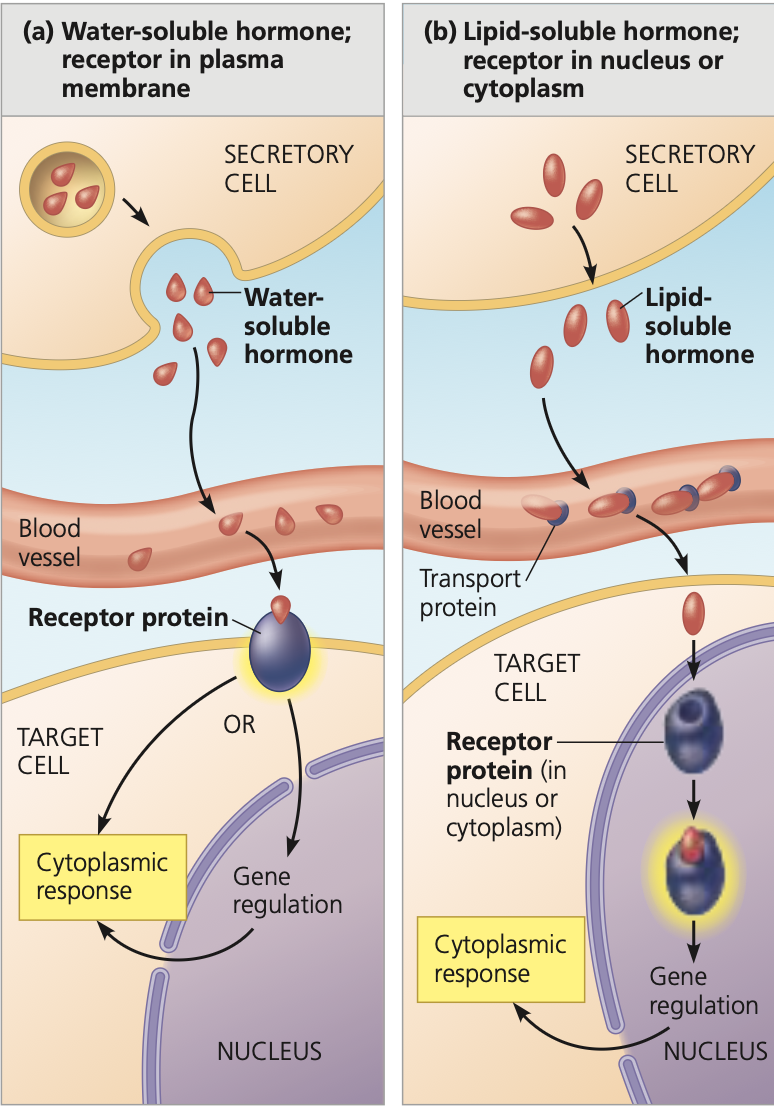
Name the 3 classes of hormones:
Which are lipid-soluble and which are water-soluble.
Polypeptides = water-soluble (bind to receptors on the membrane)
Steroids = lipid-soluble (bind to receptors in the cytoplasm)
Amines = BOTH lipid-soluble and water-soluble.
LIPID-SOLUBLE PROTEINS USE TRANSPORT PROTEINS
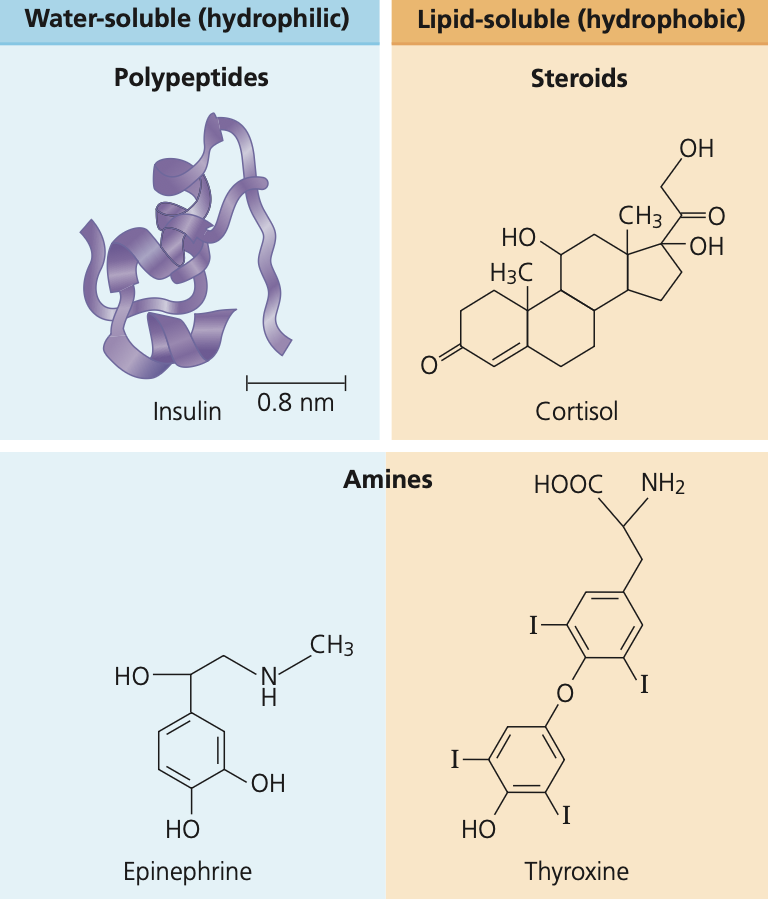
Local regulators:
What type of signaling do they induce?
What type of signaling molecules do they use?
What type of signaling.
Paracrine and autocrine.
What molecules.
Cytokines
Growth factors (polypeptides)
Prostaglandins (modified fatty acids)
Nitric oxide (a gas).
Endocrine pathway vs neuroendocrine pathway.
Endocrine cells respond directly to a stimulus.
Neuroendocrine pathway, a sensory neuron receives the stimulus.
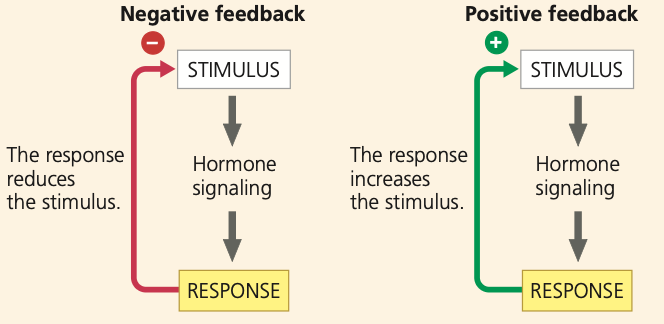
Hormone pathway can induce
A positive feedback or a negative feedback.
In insects what are the 3 hormones that control development?
How regulated
The 3 hormones
PTTH
Ecdysteroid (Is triggered by PTTH)
juvenile hormone
Coordination of signals from the nervous and endocrine systems and modulation of one hormone activity by another bring about the sequence of developmental stages that lead to an adult form.
Neurosecretory cells in the hypothalamus produce two hormones that are secreted by the ……
Posterior pituitary
On what do the two hormones made in the posterior pituitary act?
Nonendocrine tissues
How are the the two hormones made in the posterior pituitary called?
Oxytocin
Antidiuretic hormone (ADH)
They are released at the same time.
Oxytocin effect?
Uterine contraction
Release of milk from mammary glands (breast)
Released with ADH.
Antidiuretic hormone (ADH) effect?
Enhances water reabsorption in the kidneys
Released with Oxytocin.
Hypothalamic cells
Hypothalamic cells are specialized neurons and glial cells in the brain's hypothalamus that regulate homeostasis, hormone secretion, and the autonomic nervous system
What happens to hormones that are produced by hypothalamic cells that are transported to the anterior pituitary?
They stimulate or inhibit the release of particular hormones.
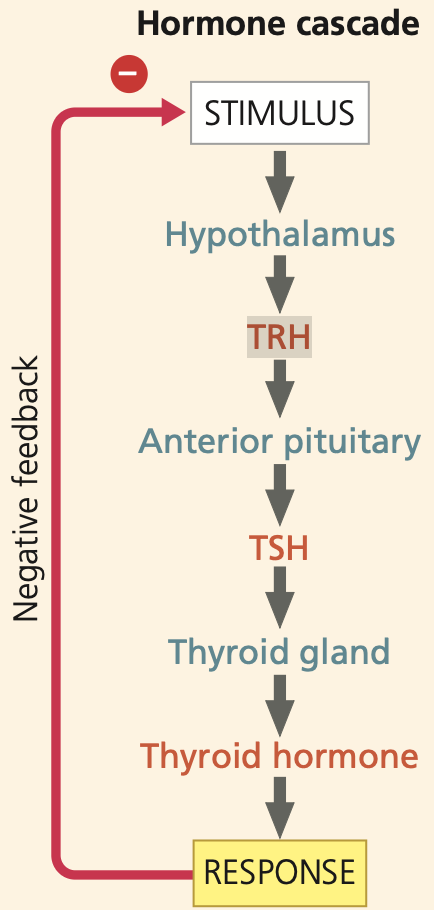
Hormone cascade?
Most hormones act in a cascade of different hormones (Red in picture) and different hormone-producing glands (blue in picture).
In the picture example of a hormone cascade.
Most anterior pituitary hormones are?
Tropic hormones.
Tropic hormones?
Hormones that stimulate or inhibit the release of other particular hormones.
By acting on endocrine tissues or glands to regulate hormone secretion.
Does groth hormone (GH) have tropic or nontropic effects?
Both.
It promotes growth directly affects metabolism, AND stimulates the production of growth factors by other tissues.
Parathyroid hormone (PTH) is secreted by the ….
Parathyroid
Parathyroid hormone (PTH) effects
Causes bone to release Ca2+ into the blood and stimulates reabsorption of Ca2+ in the kidneys.
Stimulates the kidneys to activate vitamin D, which promotes intestinal uptake of Ca2+ from food.
Calcitonin?
effects?
Is the opposite of?
Is secreted by?
Effects: Has the opposite effects in bones and kidneys than PTH. SO:
Bones take up more Ca2+ from blood.
Kidneys release more Ca2+.
Its the opposite effects of Parathyroid hormone (PTH).
Secreted by thyroidthe
In response to stress, neurosecretory cells in the adrenal medulla release which 2 hormones?
Epinephrine and norepinephrine.
What do Epinephrine and norepinephrine trigger?
various fight-or-flight responses.
The adrenal cortex releases?
What effect does this have?
Glucocorticoids (such as cortisol).
Effects:
Influences glucose metabolism
Influences immune system.
It also releases mineralocorticoids, (primarily aldosterone),
Which help regulate salt and water balance.
What do sex hormones regulate?
Regulate:
Growth
Development
Reproduction
Sexual behavior
Where are sex hormones produced?
Adrenal cortex produces small amounts.
The gonads (testes and ovaries) serve as the major source.
What are the three types of sex hormones?
Are all 3 produced in both males and females?
Androgens.
Estrogens.
Progesterone.
Are all produced in both males and females, just in different ratios.
Pineal gland:
Where located?
Secretes what?
Located in the brain.
Secretes melatonin.
Melatonin?
Function?
How regulated?
Functions in biological rhythms related to reproduction and sleep.
Release of melatonin is controlled by the SCN, the region of the brain that functions as a biological clock.
Hormones through out evolution.
Hormones have acquired distinct roles in different species over the course of evolution.
So can hormone X have Y effect in species A
But have Z effect in species B.
Example:
Melanocyte-stimulating hormone (MSH) influences fat metabolism in mammals and skin pigmentation in other vertebrates.
Vertebrates have what circulatory system?
Vertebrates have a closed circulatory system, in which blood circulates in a closed network of pumps and vessels.
What does food need to provide?
Energy for ATP production.
Carbon skeletons for biosynthesis.
Essential nutrients.
Essential nutrients?
Example of essential nutrient and of key functions?
Essential nutrients are substances that an animal requires but cannot assemble from simple organic molecules.
Examples
Amino acids
Fatty acids
Vitamins
Minerals.
The key functions of essential:
Serving as sub-strates of enzymes.
Coenzymes,
Cofactors in biosynthetic
reactions
Vitamin?
What
How many
How much do you need
A vitamin is a substance that makes you ill if you don’t eat it.” Vitamins are organic molecules that are required in the diet in very small amounts (0.01-100 mg per day, depending on the vitamin).
Humans require 13 vitamins
What includes Essential nutrients:
Amino acids that animals cannot synthesize.
Fatty acids that animals cannot synthesize.
Vitamins, which are organic molecules.
Minerals, which are inorganic substances.
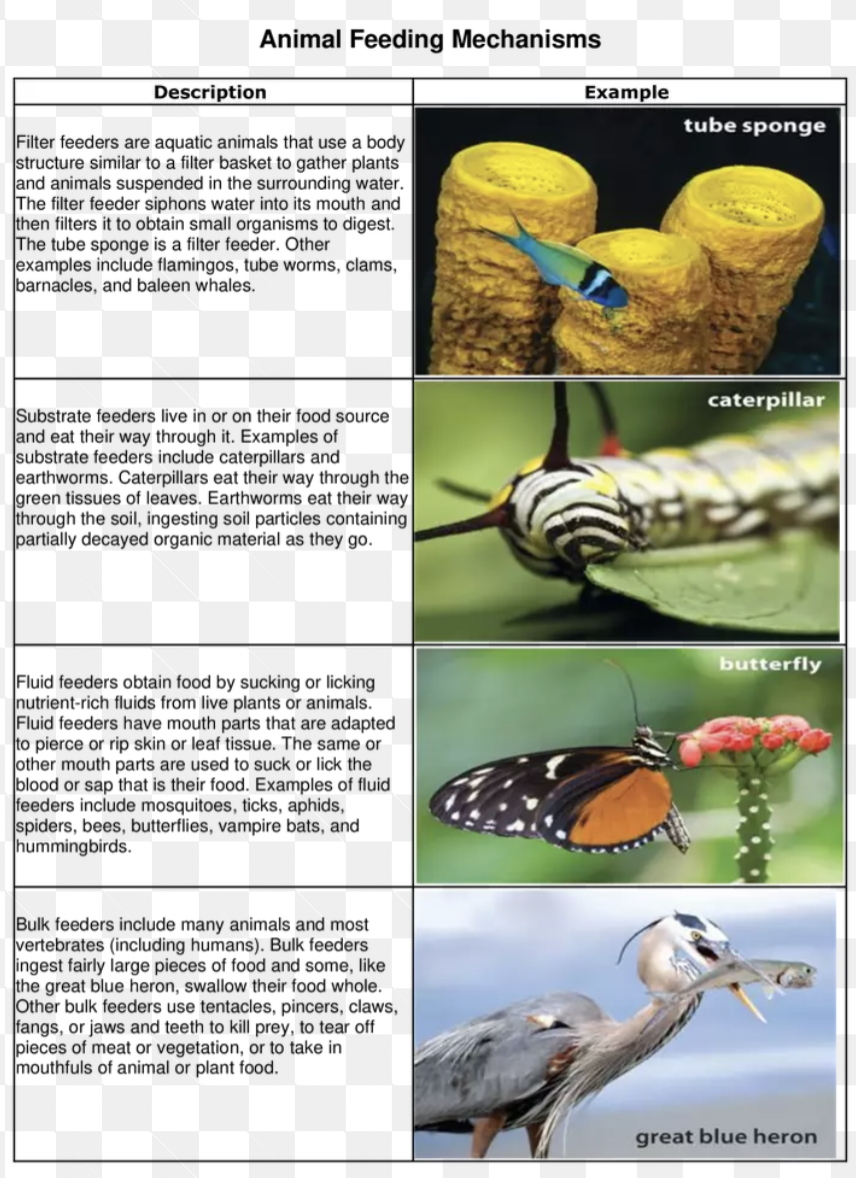
Name 4 types of feeders:
Give example for each
Bulk feeders. (humans)
Filter feeders.
Substrate feeders.
Fluid feeders.
LOOK PICTURE FOR EXAMPLES
Name the 4 steps of food processing?
Ingestion — is the act of eating or feeding.
Digestion — is the second stage of food processing, food is broken down into molecules small enough for the body to absorb
Absorption — is the animal’s cells take up (absorb) small molecules such as amino acids and simple sugars.
Elimination — is when undigested material passes out of the digestive system, completes the process.
Why is Compartmentalization of digestion necessary?
To avoid self-digestion
Compartmentalization in intracellular digestion and in extracellular digestion.
intracellular digestion, food particles are engulfed by phagocytosis and digested within food vacuoles that have fused with lysosomes.
Extracellular digestion, which is used by most animals, enzymatic hydrolysis occurs outside cells in a gastrovascular cavity or alimentary canal.
Food tip to tip, what does in pass?
Enters in oral cavity (mouth)
Stomach
Small intestine
Big intestine
Oral cavity = …
Mouth
How many salivary glands are there?
Where are they?
How many individual glands are there?
Name them?
There are three pairs of salivary glands.
All three in the mouth.
There are three pairs of individual glands.
The pancreas, the liver, and the gallbladder.
What happens in the mouth, and why?
Teeth chew food. Cause:
Increases surface area for chemical breakdown.
Facilitates swallowing.
Salivary glands produce saliva. Cause:
Saliva contains mucus. Mucus lubricates food for easier swallowing, protects the gums against abrasion, and facilitates taste and smell.
Saliva also contains buffers, which help prevent tooth decay by neutralizing acid, and antimicrobial agents, which protect against bacteria that enter the mouth with food.
Saliva also contains the enzyme amylase, which breaks down starch But most chemical digestion occurs not in the mouth, SO WHY THERE?
A current hypothesis is that amylase in saliva releases food particles that are stuck to the teeth, thereby reducing the nutrients available to microorganisms living in the mouth.
Tong
Helps with taste
Helps with swallowing
The two mayor roles of the stomach in food digestion:
Function 1:
Storage, can hold about 2L of food and fluid.
Function 2:
Procces food in a liquid suspension.
The stomach secretes a digestive fluid called gastric juice and mixes it with the food through a churning action. This mixture of ingested food and gastric juice is called chyme.
Gastric juice?
How is the action of mixing called?
Resulting mixture?
The stomach secretes a digestive fluid called gastric juice and mixes it with the food through a churning action. This mixture of ingested food and gastric juice is called chyme.
How does gastric juice help liquefy food in the stomach?
Name the steps
And the 2 major players
Hydrochloric acid (HCl) disrupts the extracellular matrix that binds cells of food together.
The HCl also lowers the PH to 2, which denatures proteins in food, increasing exposure of their peptide bonds.
The exposed bonds are then attacked by the second component of gastric juice a protease, or protein-digesting enzyme, called pepsin. Pepsin is adapted to work best in a very acidic environment.
By breaking peptide bonds, pepsin cleaves proteins into smaller polypeptides and further exposes the contents of ingested tissues.
PH of 2 is enough to dissolve iron nails and to kill most bacteria.
How to make sure components of gastric juice only become active in the extraceluir.
Name steps
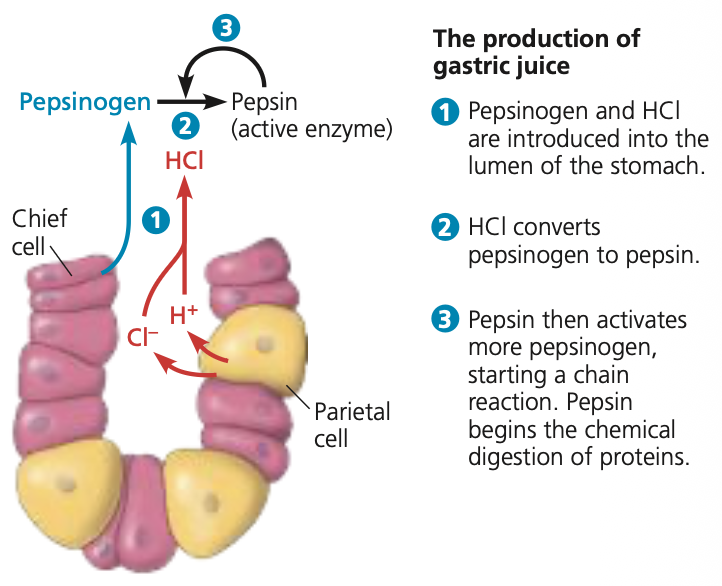
H+ pumped out of partietal cells.
Induces the chloride (Cl-) ions to diffuse into the lumen.
In the lumen they bind to form HCl.
Chief cells secrete Pepsinogen.
Pepsinogen is cleaved by HCl to form pepsin.
Pepsin cleaves more in Pepsinogen in a positive feedback.
Sooo only components or inactive versions of the gastric juice are secreted by cells and only in the lumen do they form the gastric juice.
This all hapens in deep pores of the stomach
Why dont gastric juice eat through the lining of the stomach?
Name 2 reasons
Mucus secreted by cells in gastric glands protects against self-digestion.
Also, cell division adds a new epithelial layer every three days on average, replacing cells before the lining is fully eroded by digestive juices.
How often does churning occur?
he coordinated series of muscle contractions and relaxations that we call “churning” mixes the stomach contents about every 20 seconds.
How long does food stay in the stomach?
2-6 hours
Where does most chemical digestion take place?
In the small intestine…
Although there is some chemical digestion in the oral cavity and stomach, most enzymatic hydrolysis of macromolecules from food occurs in the small intestine.
Digestion in the small intestine steps:
Secretin triggers what?
Bicarbinate function?
Trypsin and chymotrypsin function?
From where is it secreted?
The first 25 cm of the small intestine forms the duodenum.
Here, chyme from the stomach mixes with digestive juices from the pancreas, liver, and gallbladder, as well as from gland cells of the intestinal wall itself.
The arrival of chyme in the duodenum triggers the release of the hormone secretin
Secretin stimulates the pancreas to secrete bicarbonate.
Bicarbonate neutralizes the acidity of chyme and acts as a buffer for chemical digestion in the small intestine.
Also, the pancreas secretes numerous digestive enzymes into the small intestine. Like Trypsin and chymotrypsin Which just like the enzymes in the stomach, only activate when in the lumen of the duodenum.
With what does the small intestine digest fat?
What is it?
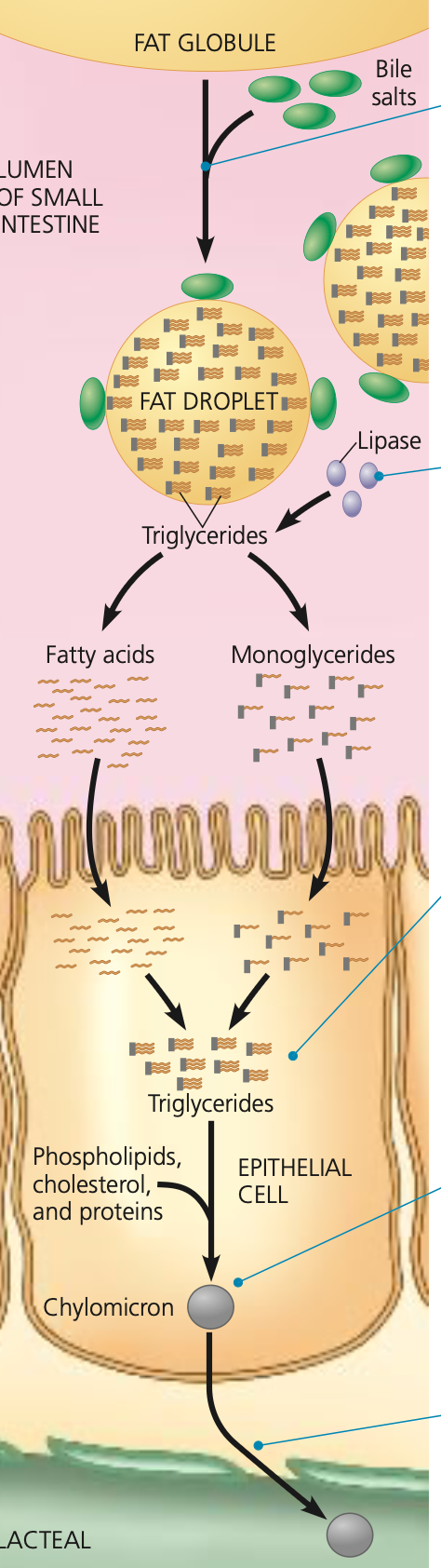
With bile salts.
Bile salts are a major component of bile, a secretion of the liver that is stored and concentrated in the gallbladder.
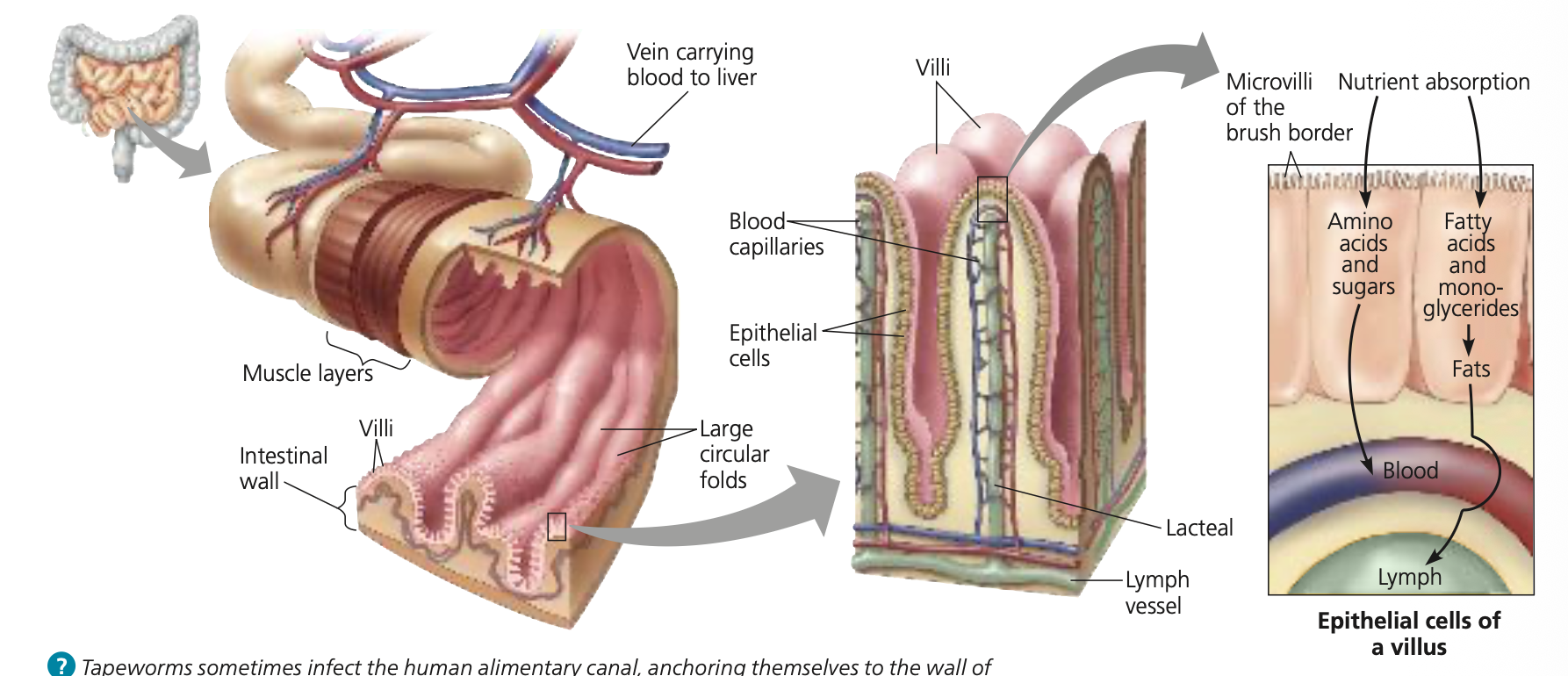
How is absorption in the small intestine maximized?
Name the terms?
Through surface area.
Folds
vili
Micro vili
Transport can be active or passive
Hepatic portal vein.
What step in absorption?
What?
Why/where?
Name 2 reasons
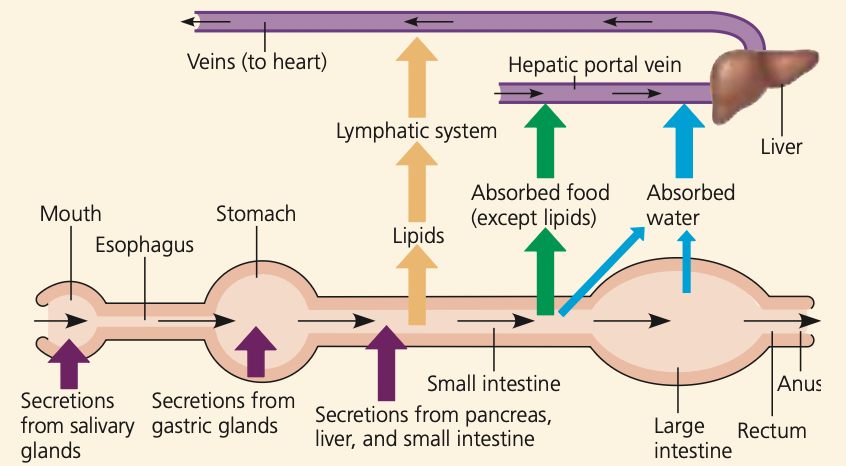
When nutrients are absorbed by cells, they are dumbed to capillaries and veins who carrie them to the Hepatic portal vein.]
The Hepatic portal vein carries the. nutrients to the liver where?
It allows the liver to regulate the distribution of nutrients to the rest of the body.
Second, the arrangement allows the liver to remove toxic substances before they can circulate broadly.
chylomicrons
What
What happens to them
All the fat that is not absorbed by the small intestine forms are absorbed later by epithelial cells and recombined into triglycerides. They are then coated with phospholipids, cholesterol, and proteins, forming globules into something called chylomicrons.
Chylomicronsare are then transported to the lymph to form part of the lymphatic system where they eventually are transported into veins which bring them to the heart to be pumped around.
The large intestine, includes what?
The large intestine includes:
The colon
The cecum,
The rectum
What are the two sides of the T side junction that connects the small intestines with the big one
One side goes to the rectum and anus
The other side goes to the appendix, the Appendix a finger-shaped extension Cecum that acts as a reservoir for symbiotic microorganisms
Name the in-goings and out-goings along the mammalian digestive system. The alimentary canal.
All the arrows and labels
Example of symbolic relations of bacteria and gut
For example, some intestinal bacteria produce vitamins, such as vitamin K, biotin, and folic acid, which are absorbed into the blood, supplementing our dietary intake. Intestinal bacteria also regulate the development of the intestinal epithelium and the function of the innate immune system. The bacteria in turn receive a steady supply of nutrients and a stable host environment.
Herbivores evolutionary adaptation with diet
Teeth for plants
Many herbivores have fermentation chambers where mutualistic microorganisms digest cellulose.
Herbivores usually have longer alimentary canals than carnivores, reflecting the longer time needed to digest vegetation.
Name the levels at which nutrition is regulated:
Of food movement through the channel
Food intake triggers what?
What does this cause?
Of Glucose availability.
What needs to be broken down
How is this regulateded name 2.
Movement through the canal.
Food intake triggers nervous and hormonal responses.
This cause secretion of digestive juices and promote movement of ingested material through the canal.
Glucose availability.
Glucose availability is regulated by the breakdown of glycogen.
The breakdown and synthesis of glycogen is controlled by the hormones insulin and glucagon.
Vertebrates store excess calories in?
Tissue and cell name?
Glycogen (in liver and muscle cells)
Fat (in adipose cells).
Which hormones and organs regulate blood glucose level?
In which organ
BETA vs APLHA cells.
Insulin effects
Glycogen effects
When glucose levels are high
BETA cells in Pancreas secretes insulin so that tissues absorb glucose.
When glucose levels are low
APLHA cells in Pancreas secretes glucagon, which promotes the breakdown of glycogen in the liver and releases the resulting glucose into the blood