Unit Two Psychology
 Call Kai
 Learn
Learn Practice Test
 Spaced Repetition
 Match
Match Flashcards
 Knowt Play
1/99

There's no tags or description
Looks like no tags are added yet.
Name | Mastery | Learn | Test | Matching | Spaced | Call with Kai | Chat |
|---|
No analytics yet
Send a link to your students to track their progress
100 Terms
Intelligence
Hypothetical construct defined as the application of cogntive skills and knowledge to learn and problem solve
Psychometric Testing
Methods testing the abilities and skills associated with intelligence, such as reasoning, memory, and problem-solving, in order to provide an IQ score.
IQ
Standard score of an indivdual’s intelligence as measured by a test. Scores are based on the deviation from the average.
Standford-Binet Intelligence Scale
Scale assessing intelligence according to age, providing scores for fludi reasoning, knoweledge, qualative processing, visual processing and working memory.
Wechsler’s Intelligence Scale
IQ score provided for 4 seperate ares:
Verbal comprehension index → ability to process verbal information
Perceptural reasoning index → ability to use visual images for reasoning
Working memory index → short-term memory and attention
Processing speed index → mental efficency
Advantages to psychometric testing
Provides standardised scores
Quick and easy application of results
Compares scores against same age group
Make predicitions about academic performance
Limitations to Psychometric Testing
Rarely perfect and may disadvantage some
Should only be used if results have strong reliability and validity
Des not consider the individual differences of a person
Results may label people unfairly
Information Processing Theory
Framework explaing how a person processes information using PAUSe
P - processes information
A - aquires the information
U - uses the information
S - stores the information
Information Processing Theory Advantages
can be tested under controlled experimental conditions
Information Processing Theory Disadvantages
less focused on understanding influences of culture on intelligence
Sternburg’s Triarchic Theory of Intelligence
Theory propsing that practical and creative intelligences are just as important as academic
Practical - one’s ability to interact with the everyday world
Creative - one’s ability to use exsisting knowledge to create new ways to solve a problem
Analytical - academic intelligence
Gardners Theory of Multiple Intelligence
Combines psychometric, biological and contextual approaches to intelligence to suggest 8 types of intelligence including, naturalist, interpersonal, logical, visual, intrapersonal, bodily-kinesthetic, musical and lingusitc
Intelligence and Inheritence - Nature
Genes based
can limit some syndromes
may be linked to specific intelligence genes
applies neuroanatomy for brain functions
Intelligence and Inheritence - Nurture
Environmental Influences
Suggests enriched and deprived environments influence how intelligent a person is
Typical Behaviour
behaviour that is accepted by a society and is typical in it’s contect
Abnormal behaviour
Behaviour out of the ordinary which is difficult to define but is highly contextualised
Normality
State of being normal defined by typical and atypical behaviours
Mental Health
State of emotional and social wellbeing where someone can realise their own abilites and cope with life
Mental Health Problems
Difficulties that arise as a result of extra periods of stress
Mental Disorder
Affects on the mind, thoughts, feelings and behaviours, that present as clinically recognisable symptoms that require treatment
Psychological disorder
Dysfunction involving disordered mood, behaviour and cognition, typically associated with ongoing periods of stress
Situational Approach to Normality
Behaviour that suits the context of the situation and is determined by social cues
Sociocultral Approach to Normality
Norms and rules within a society, suggesting what is normal based on cultural and social cues
Historical Approach to Normality
Suggests what is considered normal based on cues in different time periods
Statistical Approach to Normality
Identifies behaviours by looking at how often a behaviour occurs in a population
Functional Approach to Normality
Behaviour that is considered normal if the individual is able to lead a functional life
Psychological Dysfunction → A breakdown in the way a person thinks, feels and behaves (abnormal behaviour)
Mental Approach to Normality
Views abnormaility as a diagnosable mental disorder trying to instead provide a biological explanation
Adaptive Behaviour
Age-appropriate ‘everyday living skills’ that develop through experiences that has positive effects on a personMediation
Running
To-Do lists
Cleaning
Maladaptive Behaviours
Means of reducing anxiety, orginiating from childhood experiences. Often relates to coping mechanisms
Tantrums
Aggression
Self-harm
Cleaning
Psychosis
Mental illness where there is some loss of contact with relaity
Can be thoughts, voices and hallucinations
E.g. Schizophrenia
Neurosis
Illness presenting with difficulty in thoughts, feelings and behaviours leading to dysfunctional behaviours
E.g. Depression, OCD, NPD
DMS-5 = Diagnostic and statistical manual of mental disorders (version 5)
Manual where diagnosis is based on a number of factors; medical condition, psychosocial state and everyday functioning. However, cause and treatment are not considered.
ICD=II = International statistical classification of disease (and related health problems)
Classification system based on reported symptoms, considering physical and psychological health problems. However, cause and treatment are not considered.
Limitations of Diagnosis (based on DSM-5)
Does not identify or allude to a cause
Considered subjective → looks at symptoms of self-reports
Does not suggest treatment
Stigmas surround diagnosis
Based on medical model → mental disorders are not medical disorders
Does not recogise cultural context
Diagnosis of Disorder - Negative
Social stigmatisation of mental disorders stops an individual from seeking treatment
Diagnosis may not always to inform a clear treatment pathway
Not many people fit one category of a disorder (e.g. depression), instead a person has a combination of disorders (e.g. elements of depression, anxiety and PTSD)
Symptoms aren’t always clear in the pt
Diagnosis of Disorder - Postive
Provides health clicinicans with a way of communication about individuals behaviours and needs
Allows for treatment plans to be decided
Helps communication between health clinicans
Diagnosis helps for insurance purposes
Allows the pt to understand themselvels better and the help available to them
Mood Disorder
General emotional state or mood are distored or inconsistent with your circumstances and interferes with your ability to function
Psychotic Disorders
Loss of contact with reality, maing a person experience a range of extreme symptoms that usually include hallucinations or delusions
Anxiety Disorders
Intense, excessive and persistent worry and dread about everyday situations which is very difficult to control
Personality Disorders
Mental disorder in which you have a ridgid and unhealthy pattern of thinking, functioning and behaving
Biopsychosocial Apprach
Holistic approach to disorders considering a persons biology, psychology and sociology
Postive Factors
Factors preventing the development of a disorder
Negative Factors
Factors contributing to the development of a disorder
Four P’s of Disorders
Predisposing risk factor → what a person is born with and at risk for
Precipitating risk factor → current symptoms exhibited
Perpetuating risk factor → factors inhibiting recovery
Protective risk factor → factors preventing disorders
Biological Risk Factors
Genes (inherted genes or structure and neurology of brain)
Medication (how someone responds to a prescribed medication)
Sleep (whether a person gets enough sleep or has a sleep disorder)
Substance abuse (affect of drug use on neural pathways)
Psychological Risk Factors
Rumination (excessive worry about past negative events)
Impaired reasoning and memory (ability to draw on a persons memory to problem solve)
Stress (the safe or excessive release of coritsol and adrenaline as part of the FFF response)
Social Risk Factors
Disorganised attachment (individuals who struggle to express their emotions or empathise)
Loss of signficant relationship (loss of a high importance relationship including death of a loved one)
Generalised Anxiety Disorder
Medical condition characterised by persistent, excessive worry
Symptoms
persistent, excessive or unrealistc worry (GAD)
uncontrollable compulsions (OCD → Behavioural anxiety)
intence worry in social situations (social anxiety)
panic attacks (panic disorders)
GAD
excessive worry
focused (stems from a main trigger like family, friends, work)
difficult to control
worry needs to be present for 6 months before a diagnosis
Social Phobias
afraid of being judged or evaluated by society
most suffer one type of situations, some fear many
Specific Phobia
persistent irrational fear of an object or situation (clowns or flying)
person may experience physical symptoms or panic attacks
Panic Disorders
not related to a situation; occur spontaneously
individual needs to have 4 attacks in one month to get diagnosed
Stigmas of Help-seeking Behaviours
The labels, names and thoughts a society associates with a specific group
Example: being gay is an illness
Self-Stigma
When a person internalises negative stereotypes and has negative subsequent emotions
Social Stigma
Prejudice and discrimination directed at individuals with psychological disorders by the general public
Institutional Stigma
Government organisations and policies that restrict opportunites for those with a mental disorder
Placebo Effect
Effect occurs when an indivudal is told something and they believe it
Example: Taking this pill will make you run faster. An individual takes a sugar pill believing they will run faster, so in turn they run faster
Psychotherapy
A psychological apprach to treating disorders
Pharmacotherapies
Use of medication to treat disorders
Electroconvulsive Therapy
Passing of an eletrical current through the brain affecting the brain activity
Emotion
Response of an organsim involving physiological arousal, expressive behaviours and conscious experience
Components of Emotions
Involves a physiological change (e.g. increased HR from the sympathetic nervous system being activated)
Subjective feelings (feelings associated with an emotion that cannot be objectively measured, like happiness or sadness)
A behavioural response (e.g. tapping fingers on a desk because you are annoyed)
Two Factor Theory of Emotion
Theory says that when an emotion is felt, a physical arousal will occur
An individual will label the emotion from their ‘cogntivie explanations’ or current situation
Physical arousal occurs before an emotion is felt
Proposes stimulus → physiological change and label of feeling → emotion
Cogntivie Apprasial Model
Suggets that cognitive apprasial is a personal interpretation of the situation
Primary apprasial → situation being perceived as irrelevant, benefical or stressful
Secondary apprasial → assessment of resources to cope or improve the situation
Happiness
A subjective experience that brings positive physiological responses to a person, often reffering to a person’s enjoyment and satisfaction.
Positive Effect in Happiness
High emotional state with generally positive thoughts and feelings
Negative Effect in Happiness
Pessimistic view on line where a person has negative thoughts and feelings
Flow
The holistic senstation that people feel whe the act with total involvement
Characteristics of Flow
Complete Concentration
Clear Goals
Transformation of Time (Speed up or Slow down)
Experience is Rewarding
Effortlessness and Ease
Balance between Challenge and Skill
Loss of Self-Conscious Rumination
Feeling of Control on Taste
Limitations of Flow
Becomes addictive and at times unstable
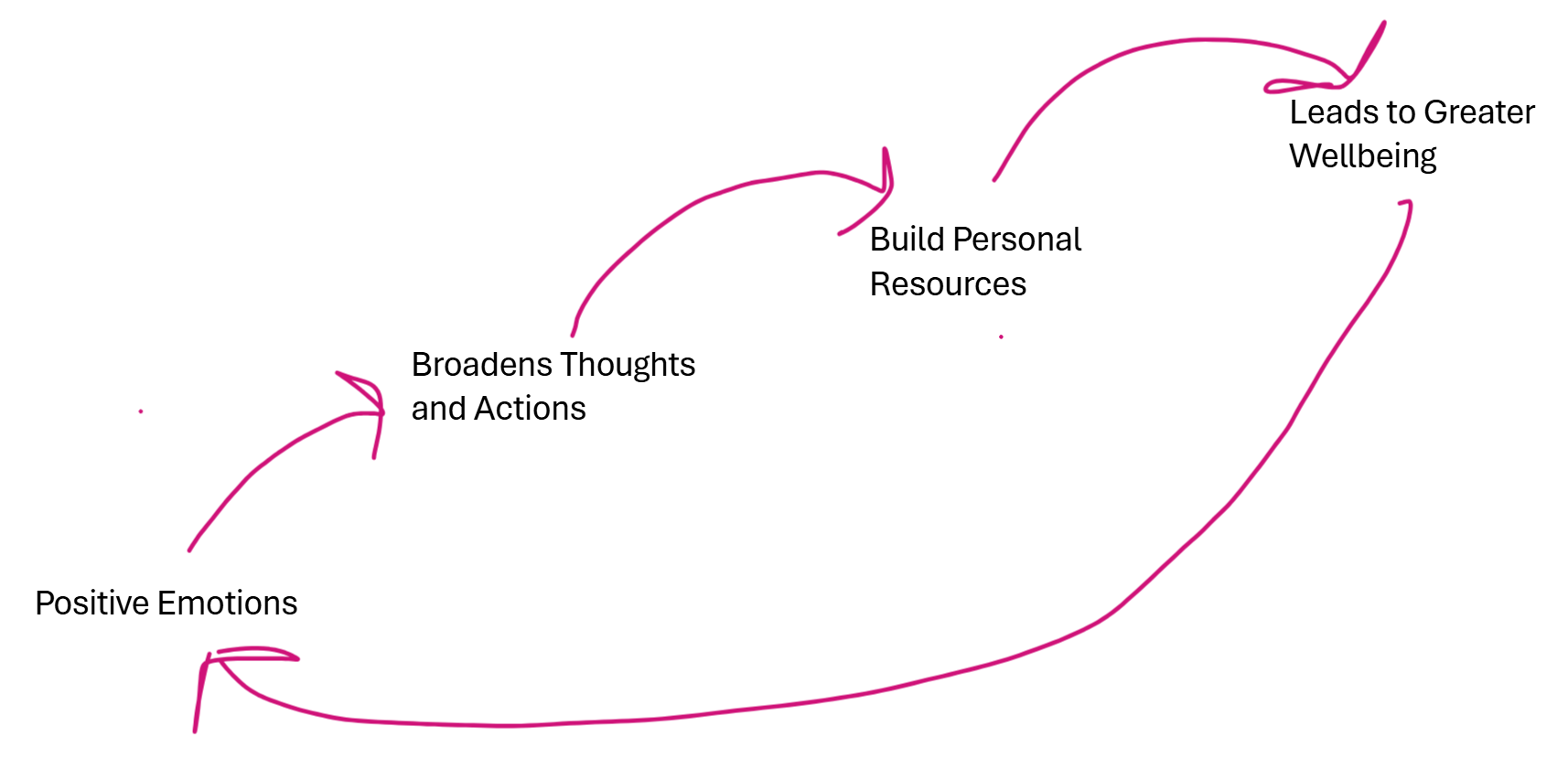
Broaden and Build Theory
The form and function of a subject of positive emotions, including joy, interest, contentment and love.
Broaden & Build Theory Diagram
Subjective Wellbeing Theory
Aspects of happiness that can be measured:
Positive Effects
Negative Effects
Life Satisfaction
Wellbeing Categories
Autonomy (picking your own R.Q for your FIA3)
Environmental Mastery (blanacing work, school, social life)
Personal Growth (Leadning the piano in later life)
Positive Relationships with Others (showing empathy to friends)
Purpose in Life (volunteeriing at a hospital)
Self-acceptance (embracing all aspects of themselves)
Motivation
The willingness of a person to expend a certain amount of effort to achieve a particular goal under a particular circumstance
Achievement Goal Theory
Achievement Goals = competence-based goals aims that individuals target in evaluative settings (e.g. sport)
Ego Goals = Reflect competence in terms of absolute evaluative standards or tasks (e.g. running 5km in under 30min)
Limitation to Achievement Goal Theory
Individuals are going to be somewhere inbetween task goals and ego goals C
Cognitive Evaluation Theory
Suggests that there are two motivation systems; intrinsic and extrinsic
Intrinsic motivation - internal motivation like achievement, responsibility etc. This links to ego goals
Extrinsic motivation - external motivation like pay or feedback. This links to task goals
Self-Efficacy
Assess one’s belief to achieve their own goals by their own actions
Goal
What an individual strives to acomplish
Why Goal Setting Improves Performance
Directs attention to task and away from distractions
Energise Effort
Increase Persistence
Promote the development of new knowledge and strategies
Principles of Goal Setting
Clarity → Goal is easy to measure
Challenging → Needs to have someone work hard for an achievement
Commitment → Prepared to put in the effort
Feedback → self-reflection on limits/strengths
Task Complexity → Needs to be realistic based on current achievement
Mindfulness
Practice of attending to one’s environment without judgement
Attention
How we pay attention to stimuli, including time and preferance
Acceptance
Practice of embracing all thoughts, feelings and experiences without judgement, resistence or attempts to change them.
Mindfulness Based Therapies
Therapies encourgae participants to change the way they pay attnetion, and reach a non-judgemental accepatance of their experiences. This allows better mindfulness for a person.
Limbic System
Connection of interconnected brain areas including:
Thalamus
Hypothalamus
Amygdala
Hippocampus
Cingulate Gyrus
Basal Ganglia → Important in emotion but not apart of system
Thalamus
Recieves all sensory information (excluding smell)
Role in emotion is to direct information into appropriate areas
Located in the forebrain
Hypothalamus
Controls atuomatic functions
Role in emotion is the create the physiological response (FFF)
Links nervous system and endocrine system together
Located below the thalamus
Amygdala
Assess emotional relevance of stimuli
Triggers the hypothalamus to create a physiological response
Conditioning and recognising of emotions for social processing
Critical for fear
Hippocampus
Forms emotional memories (e.g. don’t go near the bully)
Intergrates emotional intesity with contexual details
Important for memory recall of emotional events (i.e. remembers how you felt in the past about something)
Cingulate Gyrus
Involved in attention of emotional and cognitive processing
Combines body state and attention to create conscious emotional experiences
Involved in emotional memory and physiological pain (e.g. rejection)
Located above corpus collosum
Basal Ganglia
Group of subcortical structures involves in movement and cognition
Linked to emotional recognition (facial expressions), social interaction and decision making
Plays a role in the brains reward system (dopamine and habit)
Pathway of Emotion: Short Route
Fast, unconscious reactions key for survival situations
Emotional Stimulus → thalamus → amygdala → emotional response
Example: Jumping Away from a snake-like stick
Pathway for Emotion: Long Route
Slower, conscious, thoughtful reactions for a more accurate apprasial response
Emotional Stimulus → thalamus → sensory cortex → amygdala/hippocampus → emotional response
Example: Reading an angry message from a friend