Bone Tissue
 Call Kai
 Learn
Learn Practice Test
 Spaced Repetition
 Match
Match Flashcards
 Knowt Play
1/31

Earn XP
Description and Tags
Lecture 5
Name | Mastery | Learn | Test | Matching | Spaced | Call with Kai | Chat |
|---|
No analytics yet
Send a link to your students to track their progress
32 Terms
Bone (osseous tissue)
hard, rigid material made of mineralized collagen and is hardened by calcium phosphate
Cartilages
tough, flexible connective tissue
Ligaments
fibrous band of tissue that holds bones together
Features of Bone
Outer shell is:
compact
dense
cortical bone the encloses marrow
Spongy / Cancellous bone
Loosely organized bone tissue with ends of the bone (epiphyses)
Diaphysis
the middle of the bone

Epiphysis
the ends of the bone

Epiphyseal plate
a line of cartilage that separates the marrow of the epiphysis and diaphysis
is only present in kids and adolescents

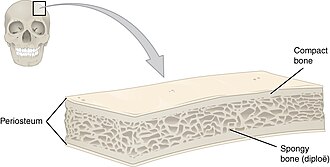
Diploe
the spongy bone in the skull
Osteogenic cells
stem cells that give rise to osteoblasts
Osteocytes
former osteoblasts that get trapped in the matrix
they stay in the lacunae
they help detect stress in the bone
Osteoblasts
bone building cells, promotes mineralization
Osteogenesis: the action of osteoblasts building the bones
Osteclasts
Bone crushing/dissolving macrophages in the endosteum and osteogenic layer of periosteum
They secrete HCl onto bone to dissolve the minerals
Osteolysis: the bone breaking action that osteoclasts do
Matrix of bone
made of 1/3 organic stuff and 2/3 inorganic stuff
organic stuff: collagen, glycoproteins, anything with -glycan
inorganic stuff: hydroxyapatite (calcium phosphate salt)
Compact bone features
concentric lamellae
osteon
circumferential lamellae
interstitial lamellae
Spongy bone features
spicules
trabeculae
Bone marrow
soft material inside the marrow of a long bone, spaces within spongy bone, and largest of central canals
Red bone marrow
Myeloid or hematopoietic tissue that makes blood
Yellow bone marrow
adipose tissue that eventually replaces red bone marrow
in kids and babies, every bone has red bone marrow, but in adults, red bone marrow is only in the skull, spine, sternum, ribs, pelvis, and humerus and femur
Intramembranous Ossification
makes flat bones of the skull, part of the mandible, and clavicle
Endochondral ossification
makes other bones such as vertebrae, ribs, scapulae, pelvic girdle, limb bones. has 2 step process
Chondrification: mesenchyme becomes hyaline cartilage model of a future bone
Ossification: when cartilage is broken down and replaced by bone

Structure of Metaphysis
Zone of reserve cartilage: resting hyaline cartilage
Zone of cell proliferation: chondrocytes multiply
Zone of cell hypertrophy: chondrocytes enlarge, lacunae walls thin
Zone of calcification: minerals go into matrix walls
Zone of bone deposition: chondrocytes die and osteocytes dissolve cartilage
Wolff’s law of bone
structure of a bone depends on the mechanical stress put on it
Ex. pro tennis players get thick arm bones
Calcium and phosphate
materials for mineralization
Vitamin A
promotes glycosaminoglycan synthesis
Vitamin C
promotes collagen cross-linking
Vitamin D
helps calcium absorption from food/diet
Calcitonin
helps osteoblast activity
Growth hormone
promotes cartilage growth at epiphyseal plates
Bone resorption stimulated by 1 hormone
Parathyroid hormone (PTH): helps osteoblasts make osteoclasts resorb bone
maintain good level of blood calcium
Osteoporosis
when you lose so much bone that your physical activity gets impacted (like when you age)
Osteopenia
Net loss of bone