Neuroscience Key Terms: Brain Structures and Functions
 Call Kai
 Learn
Learn Practice Test
 Spaced Repetition
 Match
Match Flashcards
 Knowt Play
1/34

There's no tags or description
Looks like no tags are added yet.
Name | Mastery | Learn | Test | Matching | Spaced | Call with Kai | Chat |
|---|
No analytics yet
Send a link to your students to track their progress
35 Terms
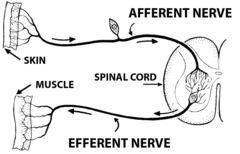
affernt
info traveling towards the brain

amygdala
A limbic system structure involved in memory and emotion, particularly fear and aggression.

arachnoid membrane
middle layer of the three membranes (meninges) that surround the brain and spinal cord

brainstem
the oldest part and central core of the brain, beginning where the spinal cord swells as it enters the skull; the brainstem is responsible for automatic survival functions

broca's area
Controls language expression - an area of the frontal lobe, usually in the left hemisphere, that directs the muscle movements involved in speech.

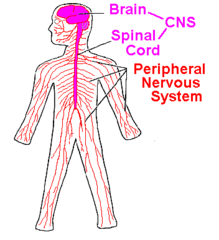
central nervous system
consists of the brain and spinal cord

cerebellum
A large structure of the hindbrain that controls fine motor skills.

cerebral cortex
outer region of the cerebrum, containing sheets of nerve cells; gray matter of the brain

cerebrospinal fluid
Fluid in the space between the meninges that acts as a shock absorber that protects the central nervous system.

cerebrum
Area of the brain responsible for all voluntary activities of the body

choroid plexus
A highly vascular portion of the lining of the ventricles that secretes cerebrospinal fluid.

corpus callosum
the large band of neural fibers connecting the two brain hemispheres and carrying messages between them

crainal nerves
12 pairs of nerves that emerge from the brain- most of these connecting with areas in your head, such as eyes, ears, nose and face

dura mater
Outermost layer of the meninges

efferent
conveying away from the center
fusiform gyrus
brain area of the inferior temporal cortex that recognizes faces

gray matter
Brain and spinal cord tissue that appears gray with the naked eye; consists mainly of neuronal cell bodies (nuclei) and lacks myelinated axons.
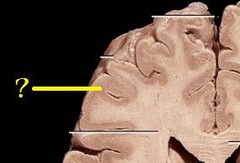
gyrus
A ridged or raised portion of a convoluted brain surface.
hippocampus
A neural center located in the limbic system that helps process explicit memories for storage.

hypothalamus
A neural structure lying below the thalamus; it directs several maintenance activities (eating, drinking, body temperature), helps govern the endocrine system via the pituitary gland, and is linked to emotion and reward.

motor cortex
an area at the rear of the frontal lobes that controls voluntary movements

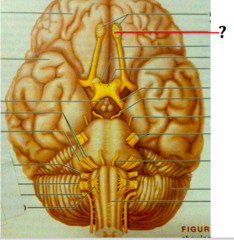
olfactory bulb
a brain structure located above the nasal cavity beneath the frontal lobes
peripheral nervous system
the sensory and motor neurons that connect the central nervous system to the rest of the body
pia mater
thin, delicate inner membrane of the meninges

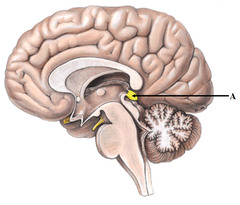
pineal gland
secretes melatonin
prefrontal cortex
the frontmost portion of the frontal lobes, especially prominent in humans; important for attention, working memory, decision making, appropriate social behavior, and personality

visual cortex
The visual processing areas of cortex in the occipital and temporal lobes.

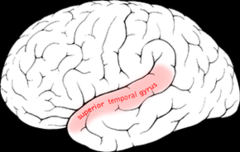
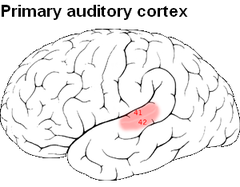
auditory cortex
the area of the temporal lobe responsible for processing sound information
spinal cord
Nerves that run up and down the length of the back and transmit most messages between the body and brain

somatosensory cortex
area at the front of the parietal lobes that registers and processes body touch and movement sensations

spinal nerves
31 pairs of nerves arising from the spinal cord

sulcus
groove

thalamus
the brain's sensory control center, located on top of the brainstem; it directs messages to the sensory receiving areas in the cortex and transmits replies to the cerebellum and medulla

ventricles
channel through which CSF fills

wenikes area
language comprehension (temporal lobe)