IB Biology B1.1 Carbohydrates and Lipids PART 1 (carbs)
 Call Kai
 Learn
Learn Practice Test
 Spaced Repetition
 Match
Match Flashcards
 Knowt Play
1/33

There's no tags or description
Looks like no tags are added yet.
Name | Mastery | Learn | Test | Matching | Spaced | Call with Kai |
|---|
No analytics yet
Send a link to your students to track their progress
34 Terms
_____ is the backbone of ___ ______ ________
Carbon, all organic molecules
How many protons, neutrons, and electrons does carbon have?
6 protons, 6/7/8 neutrons, and 6 electrons
How many electrons make the inner shell stable? Second?
2 electrons first, 8 electrons second
What do the electron shells of carbon look like?
6 electrons total, 2 inner shell, 4 outer shell.
What unique characteristic does the formation of electrons in carbon create?
Carbon wants to form 4 bonds with other molecules to have a stable shell or the most bonds of ALL atoms making it the backbone. All living organisms are carbon based.
What type of bond do carbon atoms form with other atoms?
COVALENT when sharing electrons
What type of bonds can carbon have?
Either 4 single covalent bonds, or 2 single and 1 double covalent bond.
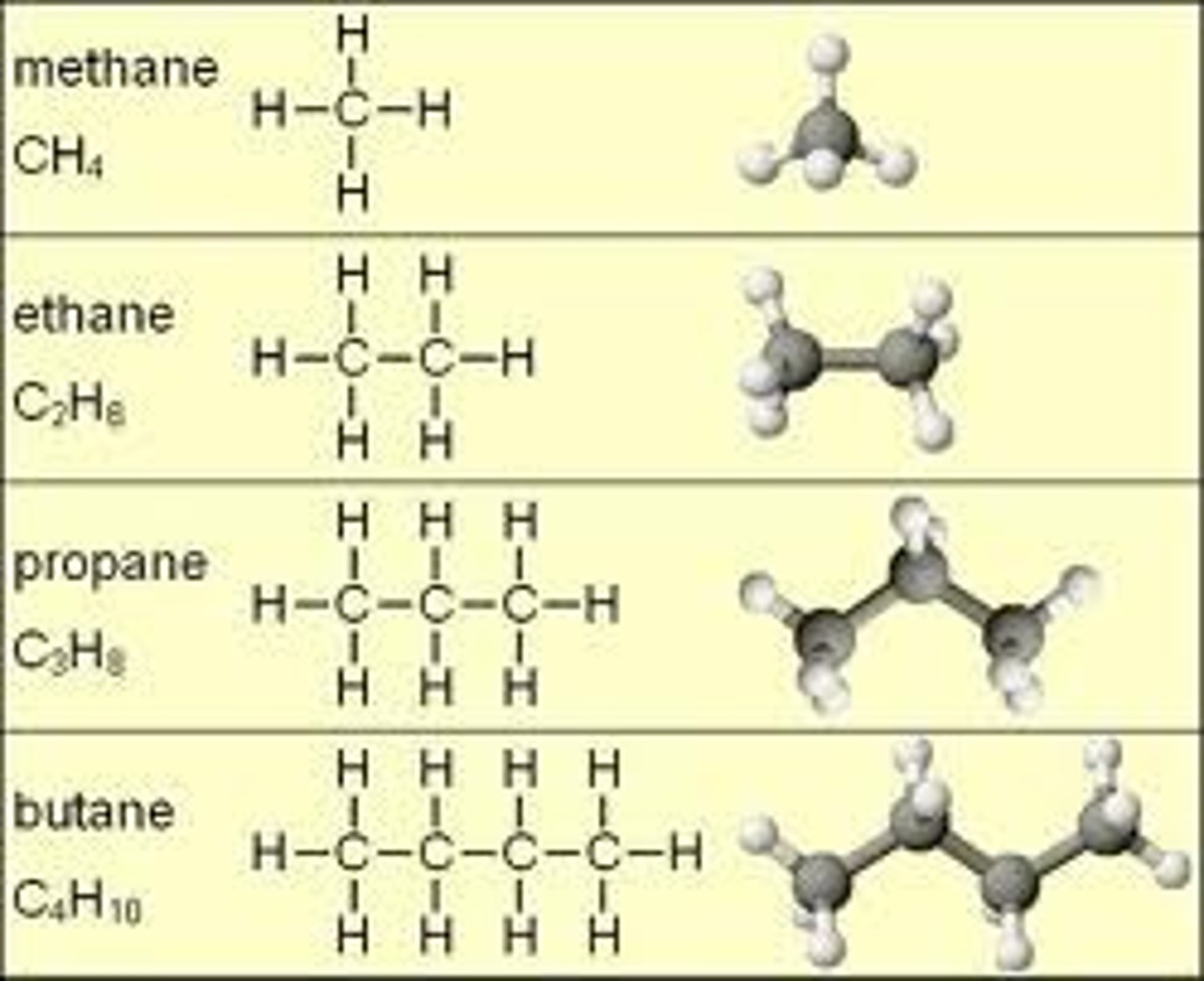
What is the molecular shape of the carbon atom bonds? Chains too.
TETRAHEDRAL, spread apart bonds. Chains of carbon are in a zigzag. Chains can also be branched with a branch made with an oxygen atom. Chains can form single or multiple rings
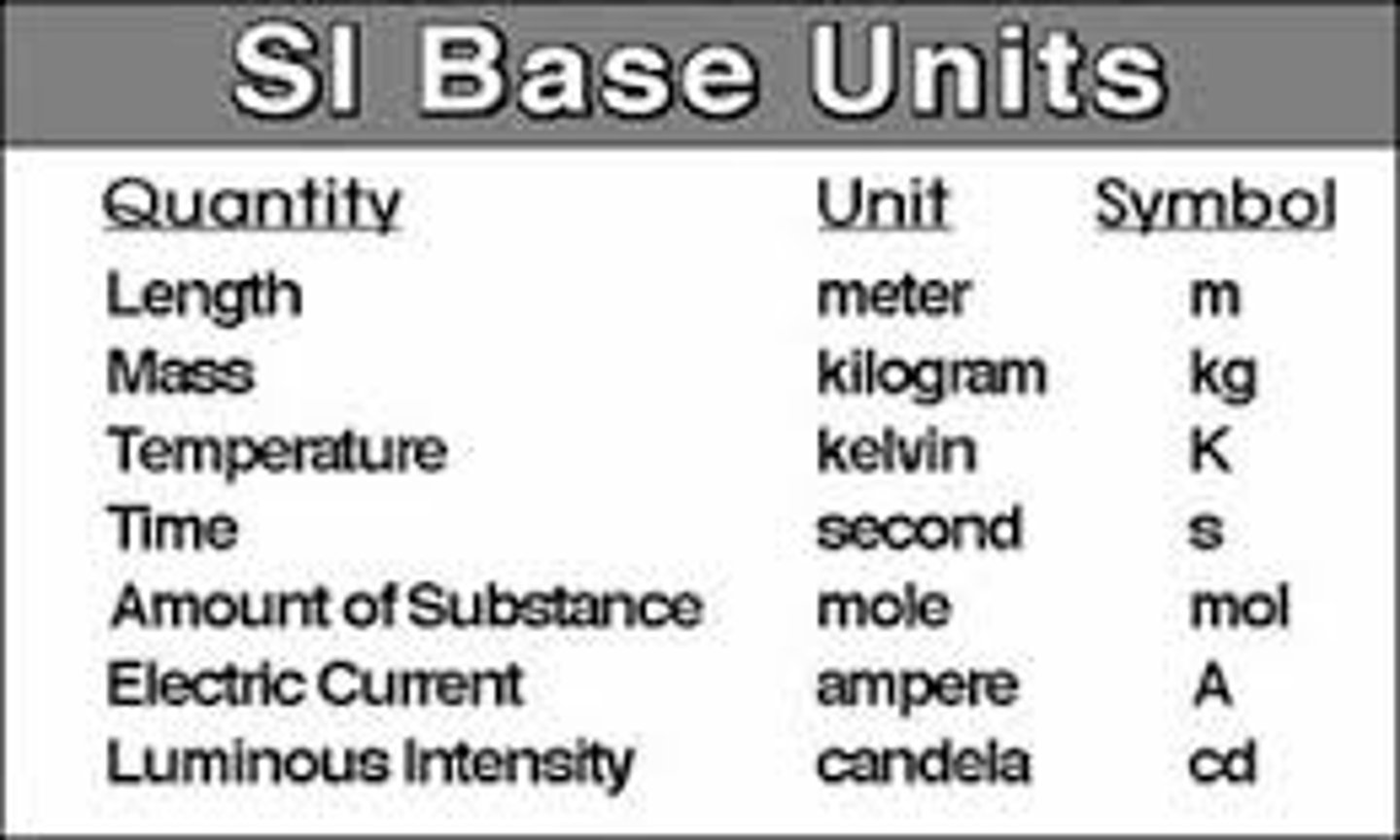
What is the International System of Units?
Rules for the metric units of measurement
What is a monomer? polymer?
Monomer: Individual molecule or subunit.
Polymer: Multiple monomers linked together
How are subunits linked?
CONDENSATION reactions form a larger molecule and water
A ____ group (-OH) is _____ from one of the molecules and a ___ is ____ from the other. This allows what to happen?
hydroxyl removed, hydrogen removed
A bond is formed between the moelcules and the OH and H bond to form a water molecule called a GLYSOSIDIC bond
What is a glysodic bond?
A bond formed by condensation reaction, and is an oxygen bonding two molecules together producing excess water.
What do condensation reactions require?
Energy in the form of ATP (Adenosine triphosphate)
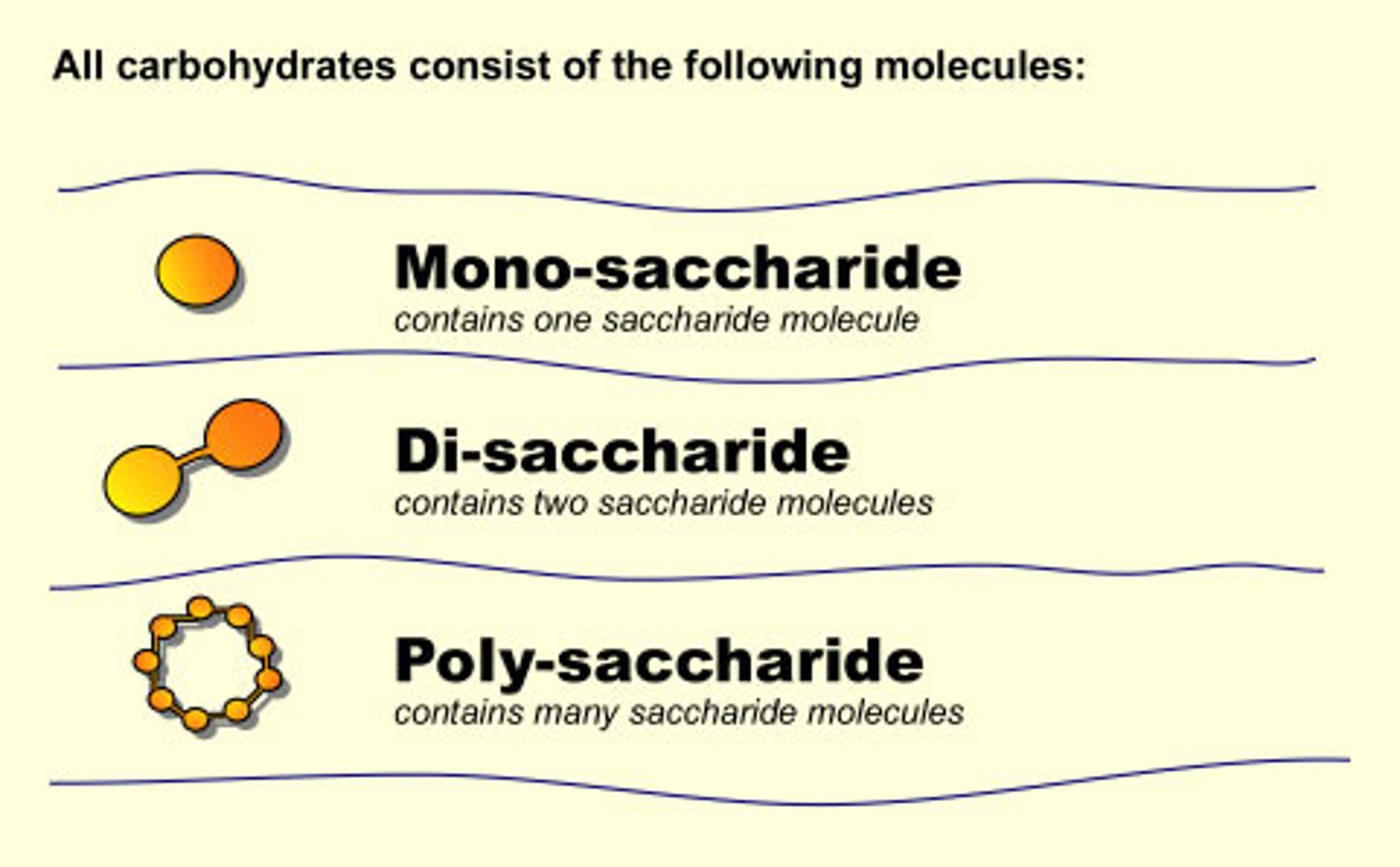
What are carbohydrates? What are the 3 forms of carbohydrates
A type of biomolecule made of carbon, hydrogen, oxygen
1. MONOMER - monosaccharide, glucose, fructose
2. DIMER - disaccharide, maltose, sucrose
3. POLYMER - polysaccharide, glycogen, starch, cellulose
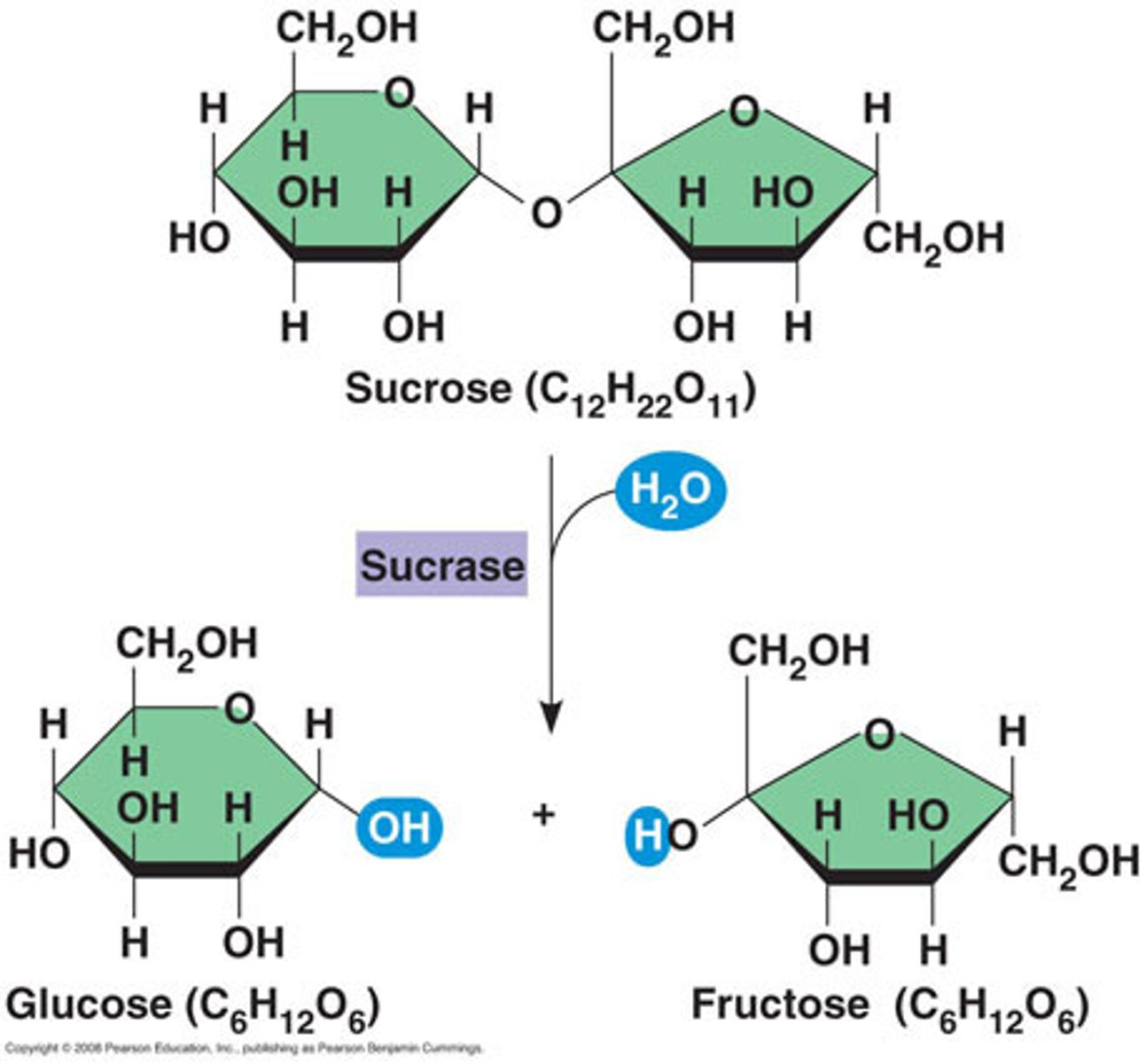
What is a hydrolysis reaction? What are they used to deconstruct?
The opposite reaction of condensation, or splitting a molecule by adding water.
Polysaccharides into monosaccharides
Polypeptides into amino acids
nucleic acids into nucleotides
What are the characteristics of monosaccharides?
Also called simple sugars, which have between 3-7 carbon atoms. The carbons, hydrogens, oxygens, are in a 1:2:1 ratio.
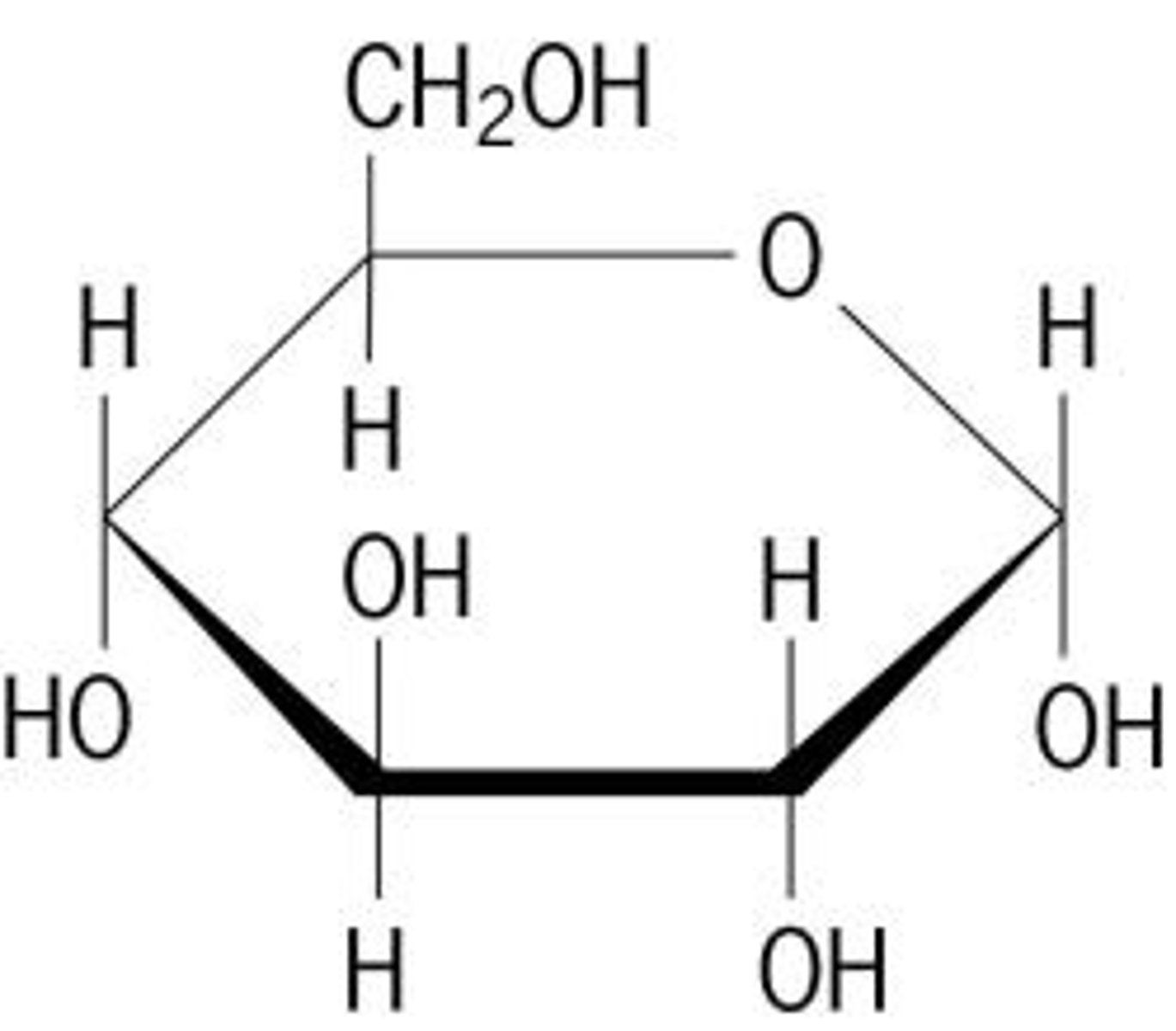
How many carbon atoms do ___sugars and ___sugars have?
Pentose have 5, Hexose have 6
Chains what can be formed but must be in what form to make which forms of carbohydrates?
Pentose and hexose sugars can exist in a straight chain or ring form but they must be in the ring form in order to make disaccharides and polysaccharides.
What are the 4 properties of glucose (most abundant type of monosaccharide)?
Solubility: very soluble and small so can be dissolved in blood plasma easily
Transportability: easily transported in blood
Chemical Stability: very stable, useful for food storage and is usually stored as glycogen or starch
Yield of energy from oxidization: glucose yields energy from oxidation and can be used as a substrate for respiration
What are the two types of glucose?
alpha glucose and beta glucose, alpha glucose hydroxyl group on carbon 1 goes down and on beta glucose it goes up
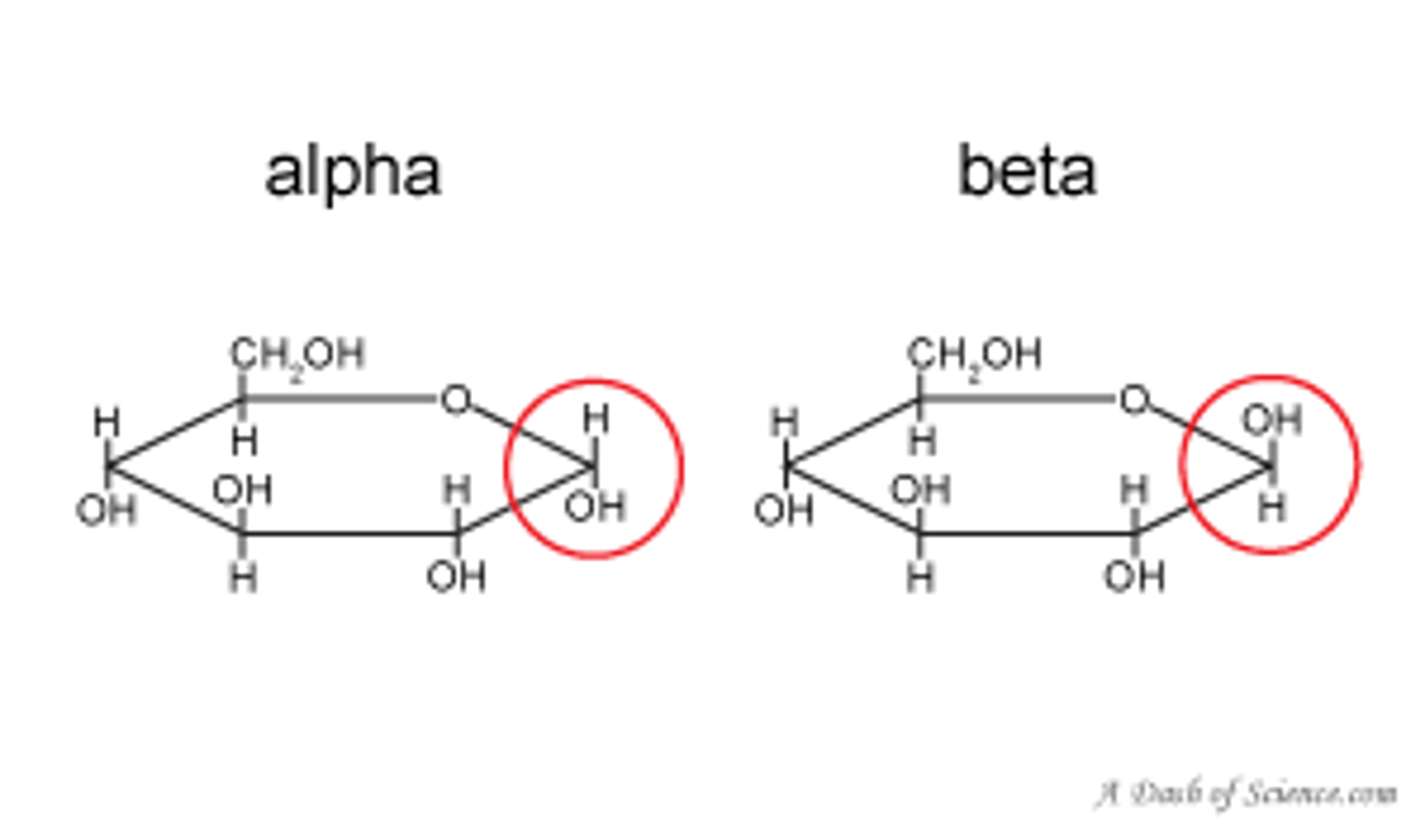
How is what sugar stored in plants and animals?
Glucose is stored as a starch in plants and as glycogen in animals.
What are the two types of plant starch?
amylose: unbranched helical chain of A-GLUCOSE linked by 1-4 glysosidic bonds
amylopectin: BRANCHED same strucutre with 1-6 glysosidic bonds
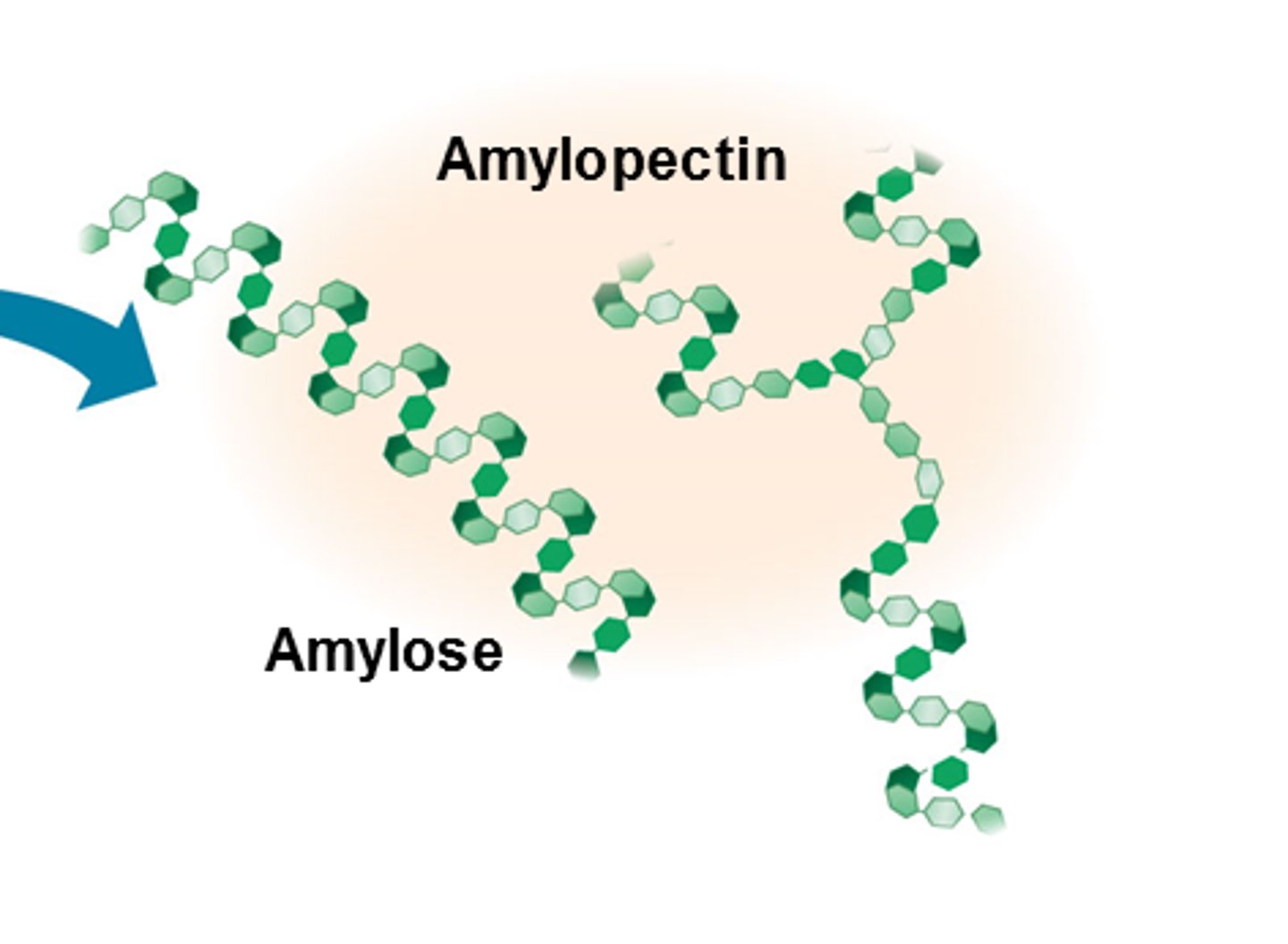
What is the one type of sugar storage for humans?
GLYCOGEN: which is structured like amylopectin with even more 1-6 bonds making it even more branched
How can you remove glucose from starch and glycogen?
Hydrolysis reaction to break 1-4 glysosidic bond
Pros of glucose storage:
Starch or glycogen storing is compact because of coiling and branching during polymerization (polymer chains)
What are some of the properties of glucose storage?
INSOLUBLE: large molecular size, 10,000 of molecules
Mobility: It's easy to remove or add alpha glucose (monomers) (condensation and hydrolysis) to build or mobilize energy stores
What is cellulose?
Polymer chain of glucose (type of polysaccharide). COmposed of B GLUCOSE (up). But because of the hydroxl group oreinted upwards, the chains must be INVERTED.
What does the special chains of cellulose cause?
Straight chains instead of a helix, which are bonded by hydrogen bonds between the spaces of hydroxyl groups. CROSS LINKED
What is cellulose microfibrilis? characteristics too
Hydrogen bonds of cellulose straight chains cause bundles or cellulose microfibrils. They have HIGH TENSILE STRENGTH because of the strong covalent bonds in the molecules and CROSS-LINKED hydrogen bonds.
What are glycoproteins? What are some functions?
Proteins with carbohydrate chains attached. They are embedded in cell membranes for CELL RECOGNITION. Glycoprotein on one cell is recognized by receptors on the other cell
Usually glycoproteins are made of....
OLIGOSACCHARIDES: Short chain of monosaccharides linked by glycosidic bonds.
What is another example of glycoprotein usage?
Red blood cells have glycoproteins in their membrane that affect blood transfusion. There are 3 types of oligosaccharides, A, B, and O
What do oligosaccharides/glycoproteins do in blood?
If the wrong glycoprotein (A, B, O) is transfused into a person who does not produce the glycoprotein themself it will be rejected. However, glycoprotein O does not cause rejection problems because it has the same structure as A and B with one less monosaccharide