industrialization
 Studied by 1 person
 Call Kai
 Learn
Learn Practice Test
 Spaced Repetition
 Match
Match Flashcards
 Knowt Play
1/33

There's no tags or description
Looks like no tags are added yet.
Name | Mastery | Learn | Test | Matching | Spaced |
|---|
No study sessions yet.
34 Terms
industrialization
industry/factory/machines
labor
workers
push factors
factors for leaving a place that are negative
-famine
-instability
-rise of capitalism
-political persecution
-religious persecution
pull factors
factors for leaving a place that are positive
-land
-job opportunities
-new lifestyle
-relatives
-freedom of speech
what happened when there were dips in the immigrant levels
-war(civil war)
-economic crises(panic of 1873)
2nd wave of immigration
1820-1870
800,000
mostly northern and western Europeans; some from Asia
“old immigrants”
3rd wave of immigrants
1880-1920
23,00,000 (largest wave)
mostly Southern & Eastern Europe; growing number from Asia
“new immigrants”
Immigrants in this wave were more likely to come from northern and western Europe
2nd wave of people because they came from UK and other areas surrounding
Immigrants in this wave came in record numbers
3rd wave had the biggest spike in levels
Immigrants in this wave were more likely to speak English
2nd wave came from areas where ing was more common like UK and Ireland
Immigrants in this wave were more likely to look like Native-born American (Whites)
2nd wave people in northern and western Europe were most likely to look native
Immigrants in this wave were more likely to be Protestant than Catholic, Jewish, or Eastern Orthodox
2nd wave people in UK Ireland and northern Ireland were more common to practice Catholicism
The larger percentage of women arrived during this wave of immigration.
3rd wave mostly in garment industries and mostly Irish women
Dream of immigration
-thought america/New York was unbelievable
-hoped to find a new beginning
-immigration made an industrial city
-98% made it through(Ellis Island)
why were people through for the checkpoints
made sure they were suitable for work
what was the reality of people were not able to make it past the checkpoints
-they had to leave everything behind
-were told to go back home, many did not have one to go back to
-criminals, people w/ disease or sick had to turn back
conditions of journey across Atlantic
in a steamship that holds 1,200-2000 for 8-14 days. It was very crammed and many were starved and there were many contagious conditions aboard.
What was the arrival process when getting in at Ellis island
75% of all Americans entered through Ellis Island in New York
Many immigrants spent several hours, sometimes days processing at Ellis Island
Thousands of immigrants were processed everyday through Ellis Island
Every passenger was given a number that corresponded to their name and pinned to their clothes
location and basics on Angel Island
Located on the West Coast
mostly immigrants from Asia
Opened in 1910*
Goal was to send back
2 – 3 week detention
175,000 immigrants passed through
location and basics on Ellis Island
Located on the East Coast
mostly immigrants from Europe
Opened in 1892*
Goal was to admit
3 – 5 hour detention
12 million immigrants passed through
opinion for many immigrating to the US
even though the journey was hard, ultimately what lied on the other side was worth it
what did the legal inspections consist of?
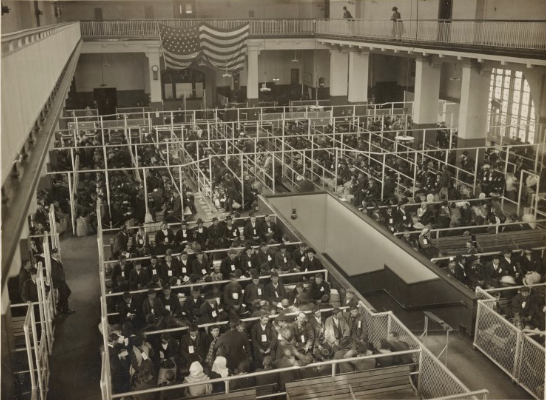
Hall held as many as 5,000 people at a time.
Waited 45 min-hour to be questioned by immigration agents
Confirm answers given on boat
32 questions to determine reason coming to America(do you have money with you? Are you joining a relative?)
Names were often recorded incorrectly due to language barriers
some immigrants that came into Ellis island said what about the process
Many immigrants remembered their experiences at Ellis Island as one of the worst times of their lives. It was very stressful. US officials, detained 20% but only 2% were sent back.
melting pot
when peoples from various cultures come to America and contribute aspects of their culture to create a new, unique American culture. The contributions from many cultures are indistinguishable from one another… they “melt” together.
salad bowl
when newly arrived immigrants do not lose the unique aspects of their cultures like in the melting pot model
second wave of people
farmers because machines took the farmers job
rich conditions
nice houses, good quality food, and sanitary and clean
poor conditions
crowded, many disease spread, poor ventilation, and unsanitary pollution (government was laissez faire)
who was Jacob Riis and what did he do
he was an immigrant from Denmark. he became a police reporter and saw the streets that were filled with crime and it was very unsanitary. Because of this his he chose, over the next year to take pictures of the poorest neighborhoods to emphasis what life was like on the other side of things.
Andrew carnagie
became a industrialist and was in the steel business. he made a mass of fortune and then became a major philanthropists and write the gospel of wealth, saying that the rich have a moral obligation to distribute their money to promote the welfare and happiness of the common man.he donated to churches and many libraries and promoted the growth in research in science and education. considered more of a captain of industry
Cornelius Vanderbilt
became an industrialist in the industry of steamships and railroads. he did not become a major philanthropist and his only major donation was when he gave 1 million to build a university. he is seen as more of a robber baron
John D. Rockefeller
became an industrialist in the industry of oil. he became the worlds wealthiest men and a major philanthropists. he followed in Carnegie’’s footsteps in believing to distribute each others wealth. but he is definitely seen as a robber baron because of the monopoly he created.the government was lazizess faire.
JP morgan
john became a industrialist in the industry of banking. he helped finance everything and was seen as a robber baron because of how he was very aggressive and he consolidated monopolies. he aided the US in avoiding many economic crisises and loaned the US money to help the government becuase they did not have a central bank. people said that he had too much power and and could manipulate the system for his own gain.
quota
a fixed limit on the quantity of something (goods, people, tasks) allowed or required