cob 300 b exam 1
 Call Kai
 Learn
Learn Practice Test
 Spaced Repetition
 Match
Match Flashcards
 Knowt Play
1/170

There's no tags or description
Looks like no tags are added yet.
Name | Mastery | Learn | Test | Matching | Spaced | Call with Kai | Chat |
|---|
No analytics yet
Send a link to your students to track their progress
171 Terms
finance
management, creation, and study of money and investments involving use of credit and debt, securities and investments
3 important quesitons for finance
how much do we need
where do we get it and what form
what do we do once we get it
3 areas of finance
business finance, investments, and financial institutions
investments
trading and portfolio of management of securities ( looks at stocks, bonds, portfolios, and risk)
business finance ( corporate finance)
financial management of a business enterprise
financial institutions
management of banks, credit unions, and other financial service enterprises
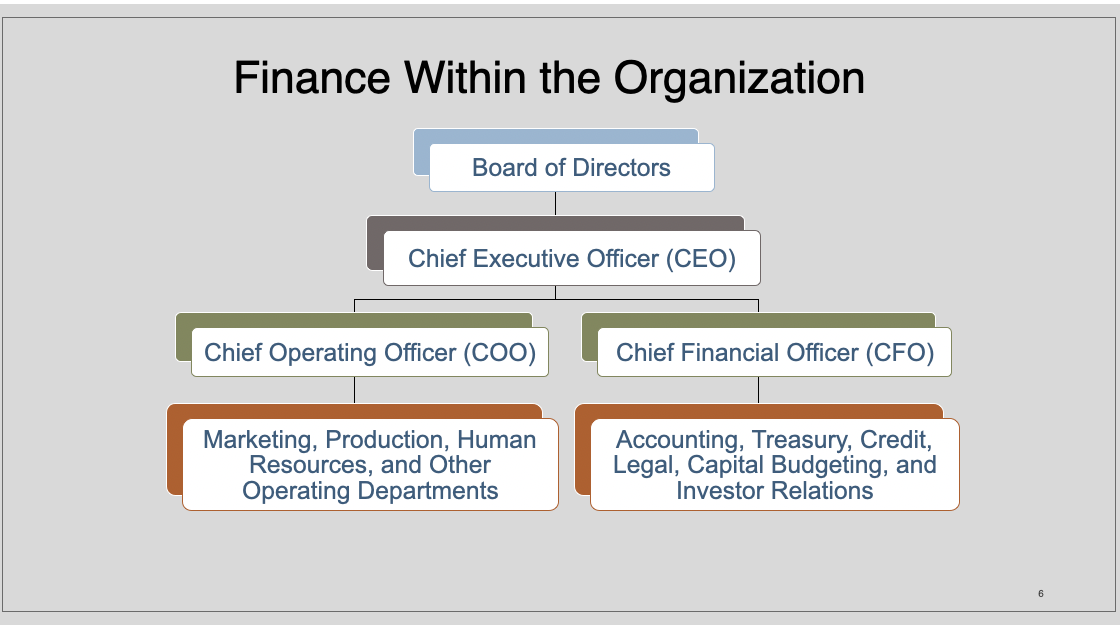
fiance within org
board of directors —> ceo —> coo and cfo
who reports to coo
marketing, production, hr, and other operating
who reports to cfo
accounting, treasury, credit, legal, capital budgeting, and investor relations
sarbanes oxley act
law passed by congress in 2002 that requires ceo and cfo to certify that their firms financial statement are accurate
forms of business organization
proprietorship, partnership, and corporation
sole proprietorship
business owned and run by one person
partnership
business arrangement where two or more people own and operate a company, either general partnership or limited liability partnership
distinction between general partnership and llc
A general partnership gives all partners equal management control but unlimited personal liability for business debts, whereas a limited liability partnership (LLP) protects partners from the personal negligence or debts of other partners
sole proprietorship pros
easiest to start
least regulated
single owner keeps all profit
taxed once as personal income
sole proprietorship cons
limited to life of owner
equity capital limited to owners personal wealth
unlimited personal liability
difficult to sell ownership interest
partnership pros
two or more partner
more capital available
relatively easy to start
income taxed once as personal income
partnership cons
unlimited liability
partnership dissolves when one partner dies or wishes to sell
difficult to transfer ownership
corporation
business organized as a separate legal entity under corporate law, with ownership divided into transferable shares
corporation characteristics
owners= shareholders
shareholders elect members of board
separation of management and ownership
governance structure of large companies
3 main types of corps
c corp
s corp
limited liability corp
c corp
legal structure for corporation in which owners, or shareholders, are taxed separate from entity
s corp
special designation that allows small businesses that meet qualifications to be taxed as if they were a proprietorship or partnership
limited liability corp
popular type of organization that is hybrid between partnership and corp
b corp
businesses that meet the highest standards of verified social and environmental performance, public transparency, and legal accountability to balance profit and purpose ( Patagonia)
corp pros
limited liability
unlimited life
separation of ownership and management
transfer of ownership is easy
easier to raise capital
corp disadvatanges
double taxation ( income taxed at corporate rate and then dividends taxed at personal rate)
separation of ownership and management
s corp pros
do not pay federal income taxes
income passed through to shareholders
limited liability
perpetual life
s corp cons
limited shareholders no more than 100
ability to raise capital is limited
llc pros
do not pay federal income taxes
income passed through to shareholders
limited liability
no limit to shareholders
perpetual life
llc cons
separation of owners and management
ability to raise capital is limited
goals of business enterprise
increase the value of the firm , measured by maximizing companys stock price over time
stakeholders examples
shareholders
creditors ( bondholders, loan holders)
employees
vendors
customer s
a stocks price should be equal to
instrinsic or true value
agency relationship ( role of management )
principal ( stockholders) hire agent ( managers) to represent interests
problems with agency
conflict of interest between the principal and the agent ( companys management and companys stockholders conflict of interest)
ways to manage managers
managerial compensation
corporate control
other stakeholders ( bond holders, preferred stock holders, vendors, etc)
managerial compensation
incentives to align management and stockholder interests (salary, bonus, stock options)
corporate control
threat of takeover may result in better management
stockholders vs bondholders
those who own stock in compay vs those who own bonds issued by company
both offer opportunity to make money but different risks
stockholder debtholder conflicts
stockholders prefer riskier projects because of potential pros of project ( if it succeeds) while bondholders receive fixed payments ( so prefer limited risk)
bondholders are concerned with use of additional debt
bondholders attempt to protect themselves by including convenants in bond agreements that limit use of additional debt and constrains managers action
market cap
total value of publicly traded companys shares
link between stock value and instrinsic value
intrinsic value is measure of what a stock is worth
major financial decisions
capital budgeting
capital structure
working capital management
capital budgeting
deciding which long project to invest in
capital structure
deciding how to finace the firm ( debt vs equity)
working capital management
day to day operations like managing cash and inventory
financial markets plays
crucial role in
allocating capital efficently
allows firm to raise money
investors to buy and sell securities
primary market vs secondary market
where new securities are issued vs where existing securities are traded ( nyse )
corporate governance
includes systems, rules, and processes that guide how companies are directed and controlled, including the board and transparency practices
capital allocation process
capital flows from those who supply capital to those who demand it
suppliers of capital
individuals and institutions with excess funds ( saving money and looking for a rate of return on investment)
demanders of capital
individuls who need to raise funds to finance their investment opportunities, willing to pay rate of return on what they borrow
how is capital transferred between savers and borrowers
direct transfers, investment banks, and financial intermediaries
market
venue where goods and services are exchanged
financial market
where individuals and orgs wanting to borrow funds are brought together with those who have surplus of funds
importance of financial markets
provide savers with returns on money saved
provide users of capital with necessary funds to finance their projects
promotes economic growth
well developed markets perform better
increase liqudity
reduce transaction costs
physical asset markets
physical products such as wheat, cars
financial asset markets
stocks, bonds, notes, and mortgages
spot markets
assets are bought on the spot ( purchasing foreign currency at exhcange booth)
futures markets
people agree to buy and sell asset at some future data ( farmer locking in price for corn to be delivered in a month)
money markets
funds are borrowed or loaned for one year or less
primary markets
corporations raise capital by issuing new securities
secondary markets
securities and other financial assets are traded among investors after they have been issued by corporations
private markets
transactions are worked out direclty between two or more parties
public markets
standardized contracts are traded on organized exchanges
ipo ( initial public offering)
company issues stock in public market for first time ( going public allows owners to raise capital from investors but are subject to regulations)
security
negotiable financial instrument that is evidence of indebtedness or ownership ( stocks, bonds, mutual funds, exchange traded funds you can buy or sell)
money market examples
us treasury bills
commerical paper
certificate of deposits
money market mutual funds
consumer credit
think short term
capital market examples
us treasury notes and bonds
mortgages
state and local govt bonds
corporate bonds
leases
preferred and common stocks
types of financial institutions
investment and commerical banks
financial services corps
credit unions
life insurance companies
private equity
hedge, mutual, exchange-traded, and pension funds
derivative security value
derived from price of another security that is used to reduce risk ( purchasing currency futures that do well when dollar weakens)
approximatley what % of us stocks are owned by long term investors vs owned by short term investors
75, 25
physical location stock exchanges
tangible entities, brokerage departments ( purchase seats on exchange and designate one or more members)
Security exchanges facilitate communication between buyers and sellers
how do stock exchanges work
auction markets, dealer markets, electronic exchanges, and otc exchange
auction markets
buyers and sellers of single security are matched before trade is facilitated
dealer markets
dealers facilitate transactions using their own money ( increase liquidity of market)
electronic exchanges
automate electronic communication network enables buy and sell orders for stock to be made without dealers
otc exchanges
securities that arent listed on major exchanges
bid ask spread
amount by whihc ask price exceeds bid price for asset in market ( difference between highest price buyer is willing to pay for and lowest price seller is willing to accept)
bid represents demand and ask represents supply
market for common stock
closely held corporations ( smaller) and publicly owned corporations ( large number of individual owners)
type of stock market transactions
outstnading shares traded on secondary market
additional shares sold by companies in private market
iPO MADE BY privately held firms
equity securities
small cap < 2 bill
mid cap > 2 bill < 10 bil
large cap >10 bill
regulations
federal reserve system establishes margin requirements, requires disclosures regarding consumer lending , and assesses reserve requirements of member banks and non depository institutions
sec protects investors , maintains fair, ordelry, and efficient markets , and facilitates capital formation
market efficiency
securities are in equilibrium and fairly priced
investors cannot beat market unless lucky or expert
highly efficient vs highly inefficient
large companies with lots of analysts and good communciation with investors vs small companies with not any analysts and not much contact with investors
weak form efficiency
prices reflect past information
semi strong form efficiency
prices reflect public info ( news )
strong form efficieny
prices reflect all info ( public and private )
commercial banks
accept deposits and make loans
credit unions
nonprofit financial institutions owned by members and have lower fees and intetest rates
savings institutions
focuses on consumer savings and mortgage lending
investment banks
help companies raise capital and probide advisory services
insurance companes
pool risk and invest collected premiums
pension funds
manage retirment savigns for employees
financial instruments
legal contracts that represent a claim to future cahs flows ( stocks, bonds and derivaties )
financial statements
accounting reports issued periodically that present past performance information and snapshot of firms assets and the financing of them
which parties are interested in financial statements
investors, financial analysts, managers, creditors
disclosure of financial info
file results with the sec on quarterly basis (10-q) or annual basis (10k)
annual report sent to shareholders yearly
why are financial statements important
window to company
lets us know what company is doing, how they have performed, what we can expect for future