Quiz 2 Art History
 Call Kai
 Learn
Learn Practice Test
 Spaced Repetition
 Match
Match Flashcards
 Knowt Play
1/14

There's no tags or description
Looks like no tags are added yet.
Name | Mastery | Learn | Test | Matching | Spaced | Call with Kai | Chat |
|---|
No analytics yet
Send a link to your students to track their progress
15 Terms
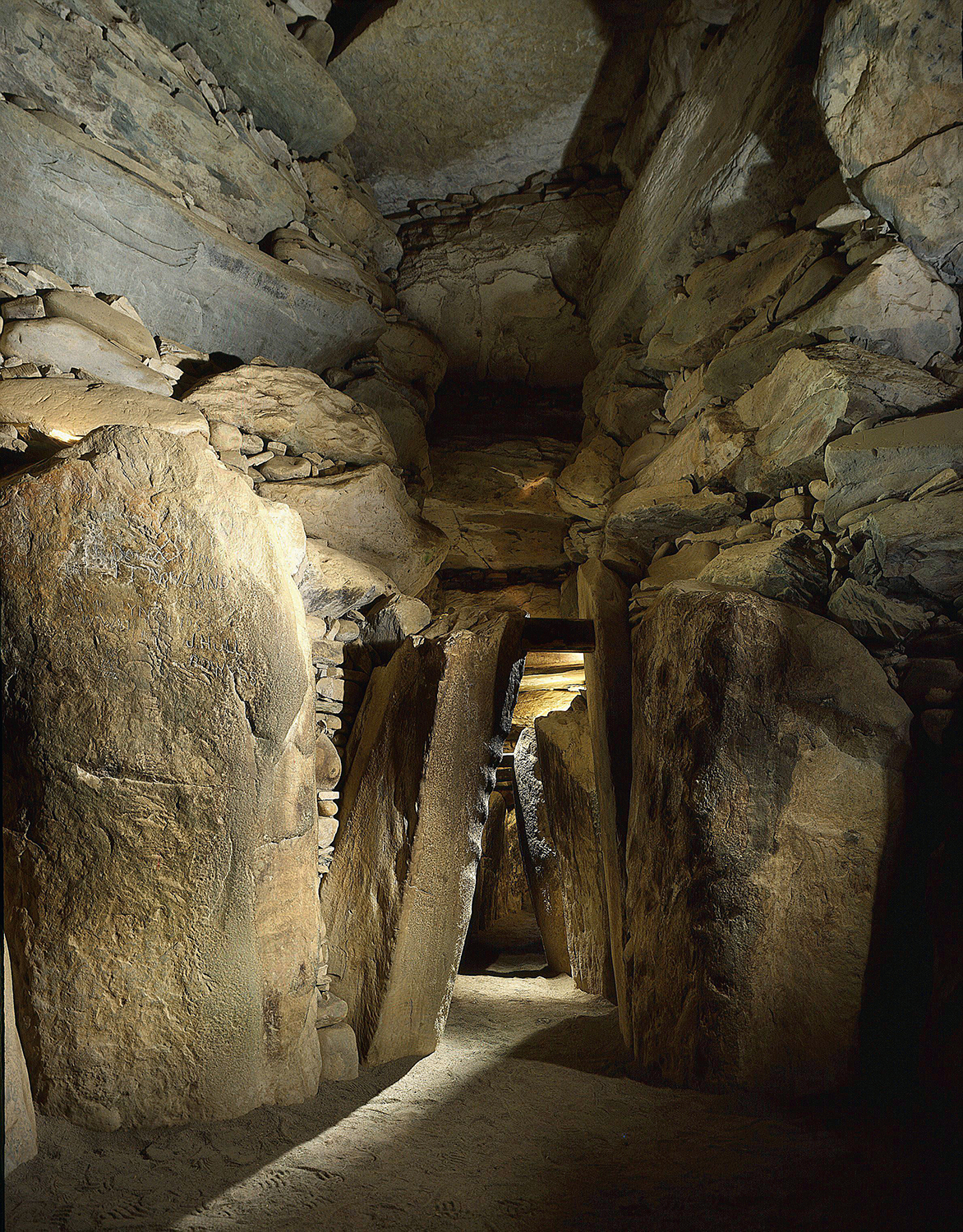
“Newgrange” approx. date
ca. 3200–2500 bce.
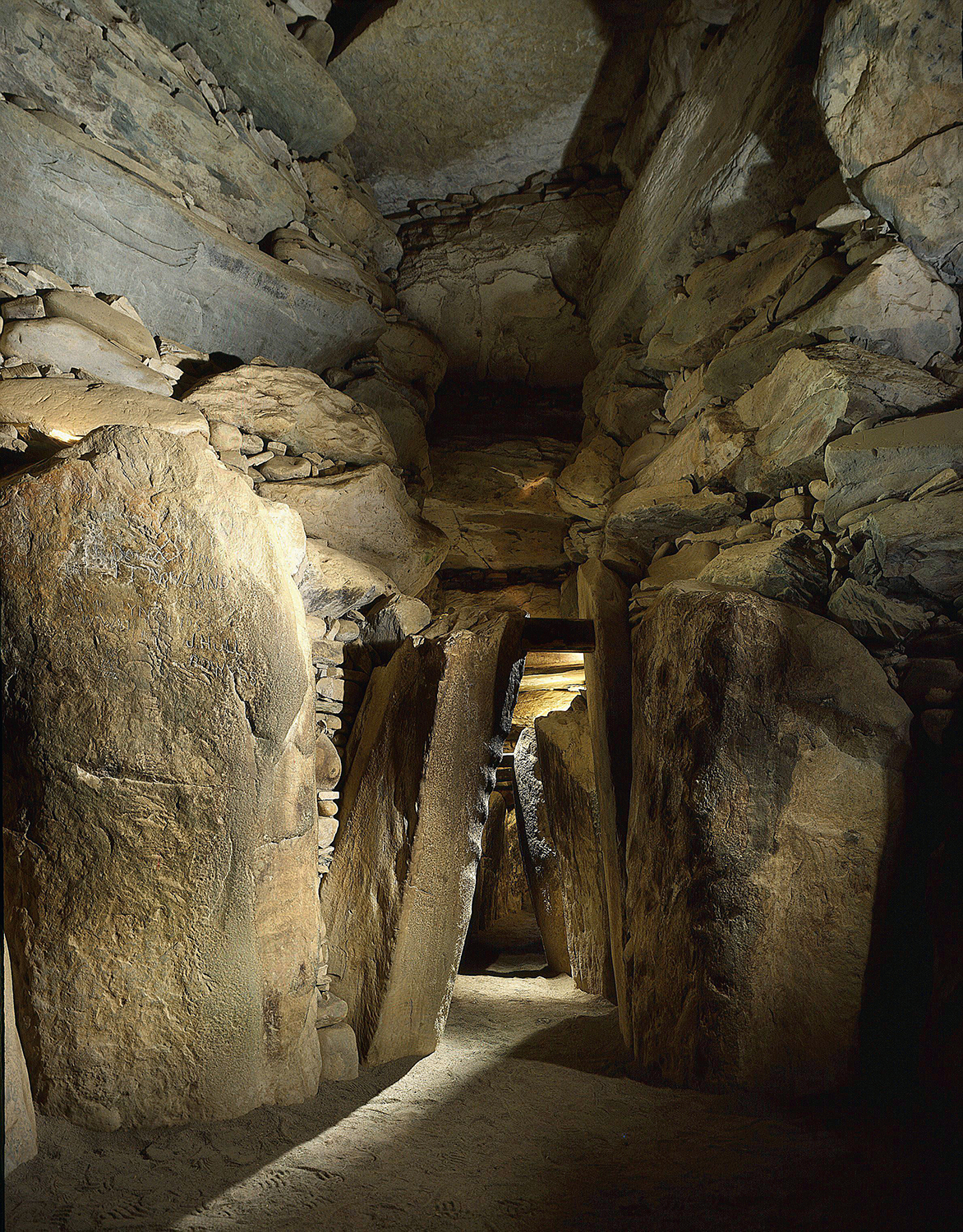
What are we looking at?
Main chamber of the grave passage, Newgrange, Ireland
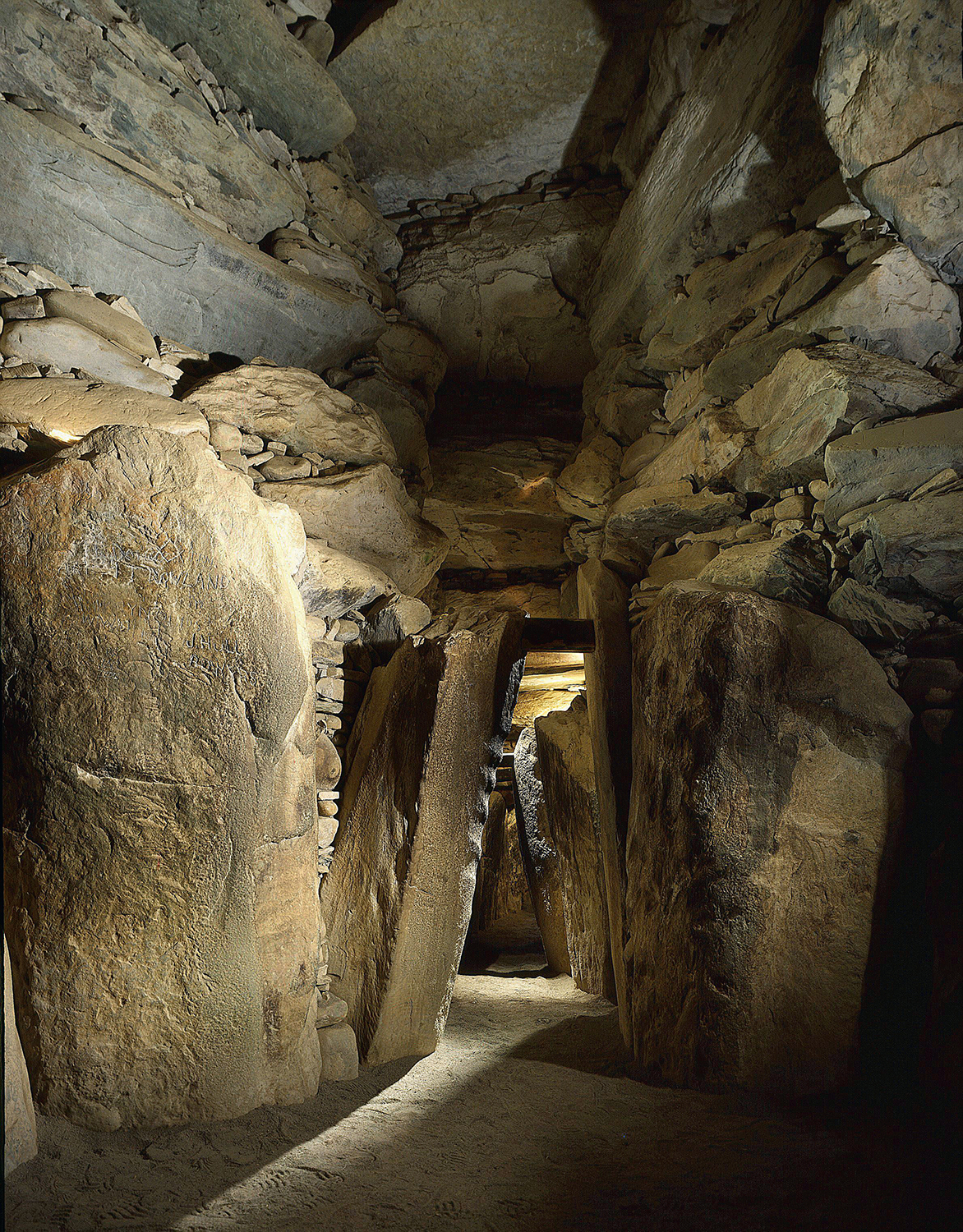
Identify and describe one specific detail and how does it help us understand the meaning, purpose, or significance of this object?
At the winter solstice, the sun illuminates the passageway and the burial chamber. This suggests an interest in the sky and astronomical events. Also, a possible connection between funerary ritual and astronomy.
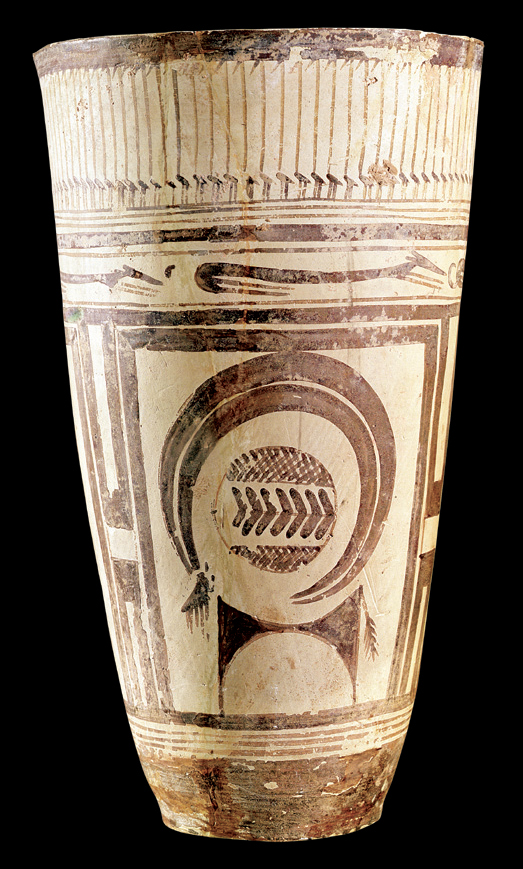
Beaker with animal decoration, Susa approx. date
ca. 4000 BCE

What are we looking at?
Beaker with animal decoration, from Susa, Iran

Identify and describe one specific detail and how does it help us understand the meaning, purpose, or significance of this object?
There are animals such as an ibex, a hound, and a bird. They could be symbols for things like fertility, the hunt, the cycle of the seasons for a vessel for the dead (these were found in graves).

Warka Vase approx. age
c. 3300 BCE

What are we looking at?
Vase with scene of offerings procession, from the Inanna temple complex, Uruk (modern Warka), Iraq

Identify and describe one specific detail and how does it help us understand the meaning, purpose, or significance of this object?
We can see the pots themselves represented as offerings on the top register. This can indicate what these pot(s) used are for, as we see them in a scene of an offering procession. It shows that the pieces were being used, not just made to sit in a museum and be looked at.

Statuettes of two worshippers, Tell Asmar approx. date
c. 2900-2750 BCE
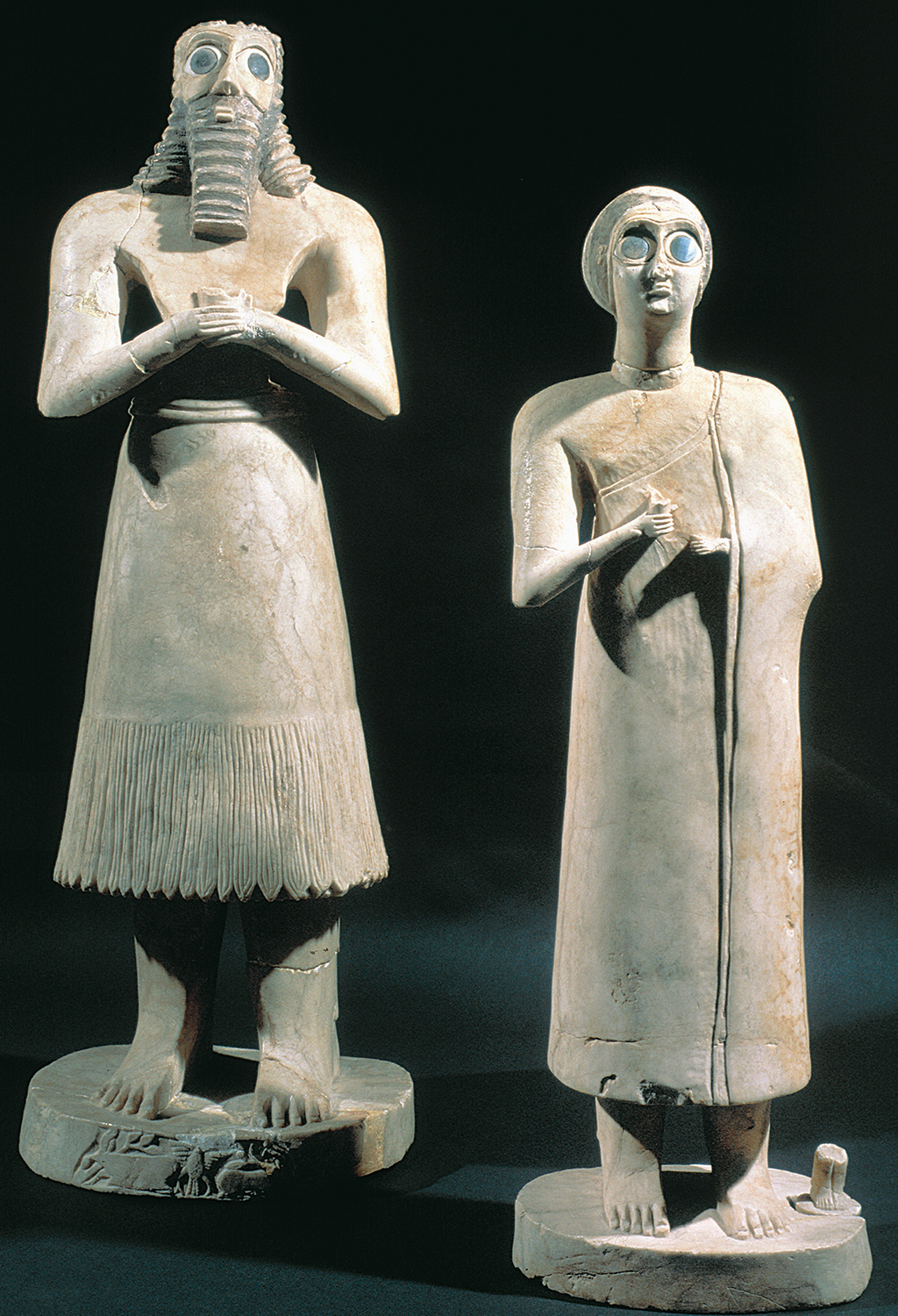
What are we looking at?
Statuettes of two worshipers, from the Square Temple in (modern Tell Asmar), Iraq

Identify and describe one specific detail and how does it help us understand the meaning, purpose, or significance of this object?
The statuette have large, oversized eyes. This could symbolize the perpetual awakeness of these substitute worshipers offering prayers to the deity in temple.
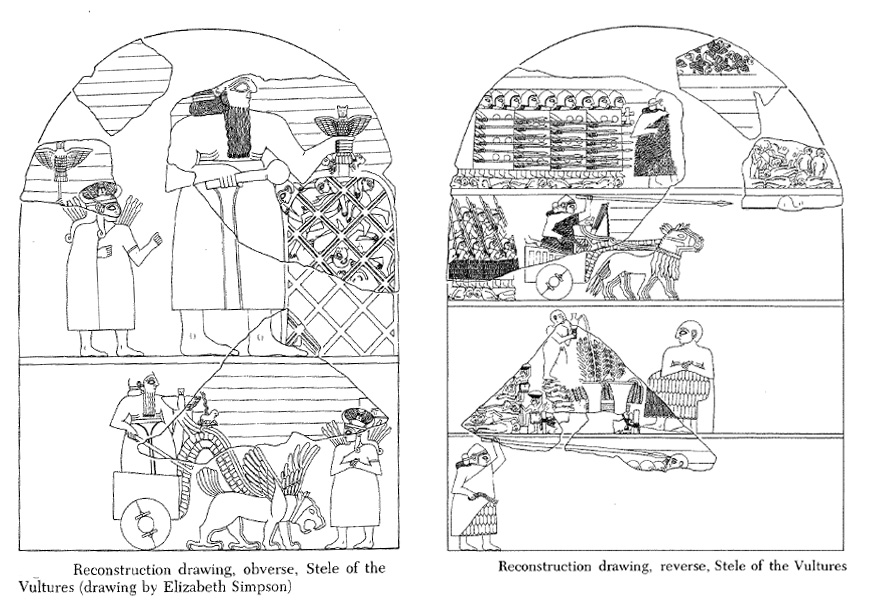
Stele of the Vultures approx. date
c. 2550-2500 BCE

What are we looking at?
Fragments of the Stele of the Vultures, from Girsu (modern Telloh), Iraq

Identify and describe one specific detail and how does it help us understand the meaning, purpose, or significance of this object?
On the back, there is a large god depicted with the defeated in a net. This could suggest the king leading this battle has legitimacy, because he has the divine backing from the god.