Introduction to Parasitology: Parasites, Hosts, and Disease Transmission
 Call Kai
 Learn
Learn Practice Test
 Spaced Repetition
 Match
Match Flashcards
 Knowt Play
1/22

There's no tags or description
Looks like no tags are added yet.
Name | Mastery | Learn | Test | Matching | Spaced | Call with Kai | Chat |
|---|
No analytics yet
Send a link to your students to track their progress
23 Terms
What is Parasitology?
The study of parasites and their relationships to their hosts.
What are parasites?
Organisms that use other species of plants and animals as hosts.
What are the three main classes of parasites that can cause disease in humans?
Protozoa, Helminths, and Ectoparasites.
What is a definitive host?
The host in which the parasite reaches sexual maturity and harbors the adult parasite.
What is an intermediate host?
The host that harbors the developmental (immature) stages of the parasite.
What is a paratenic host?
An intermediate host where the parasite resides but does not develop.
What is a reservoir host?
An animal infected by a parasite that serves as a source of infection for humans or other species.
What are protozoa?
Microscopic, one-celled organisms that can be free-living or parasitic.
How are protozoa transmitted from one human to another?
Typically through a fecal-oral route or by an arthropod vector.

What are helminths?
Large, multicellular organisms that are generally visible to the naked eye in their adult stages.

What are the three main groups of helminths that are human parasites?
Flatworms (platyhelminths), thorny-headed worms (acanthocephalins), and roundworms (nematodes).

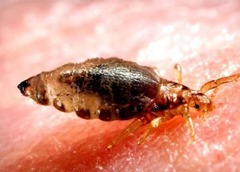
What are ectoparasites?
Parasites that live on the outside of their host.
What is symbiosis?
Any organism that spends a portion or all of its life intimately associated with another organism of a different species.
What is commensalism?
A type of symbiosis where one participant benefits and the other is neutrally affected.
What is mutualism?
An association in which both the mutualist and the host depend on each other physiologically.
What is parasitism?
A symbiosis where one organism benefits at the expense of the other.
What is an obligate parasite?
A parasite that cannot complete its life cycle without being in a parasitic relationship.
What is a facultative parasite?
A parasite that can complete its life cycle without a host but may exploit hosts under certain conditions.
What is a hyperparasite?
A parasite that is itself infected with another parasite.
What is a vector?
A living organism that carries and transmits an infectious agent from one host to another.

What is zoonosis?
A disease in humans caused by a parasite that normally infects non-human animals.
What are common ways people can get infected with zoonotic diseases?
Direct contact, indirect contact, vector-borne, food-borne, and water-borne.
Why study parasitology?
For historical significance, medical and veterinary relevance, evolutionary and ecological insight, and interdisciplinary applications.