Music Theory Unit 1: Fundamentals 1
 Studied by 1 person
 Call with Kai
 Learn
Learn Practice Test
 Spaced Repetition
 Match
Match Flashcards
 Knowt Play
1/43

There's no tags or description
Looks like no tags are added yet.
Name | Mastery | Learn | Test | Matching | Spaced | Call with Kai |
|---|
No study sessions yet.
44 Terms
Pitch
The frequency/height of a sound, measured in hertz or Hz.
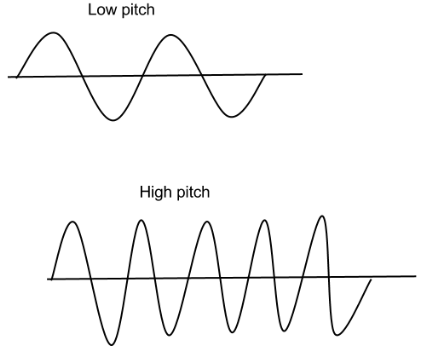
Musical pitches
Named after letters A-G.
Orchestras tune using A4
Which is at 440 Hz.
Melody
A deliberate sequencing of pitches through time.
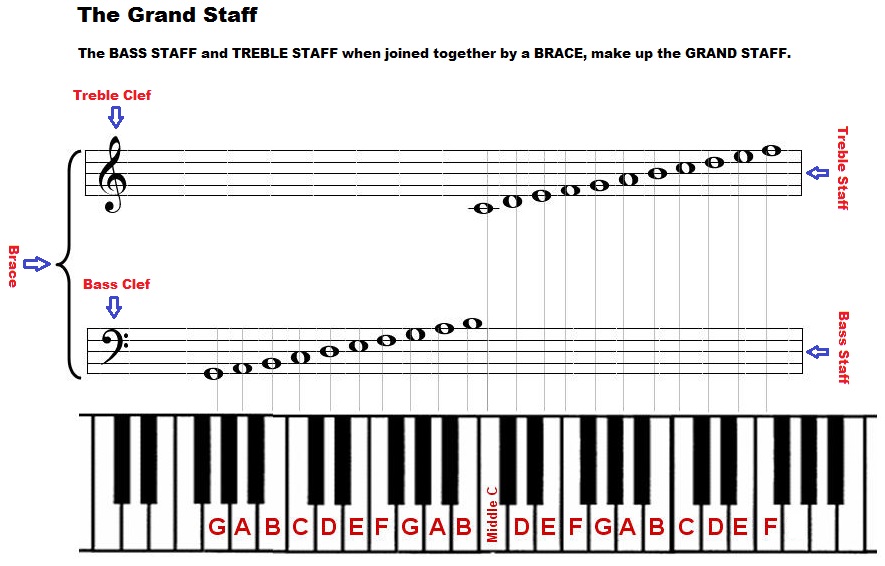
the grand staff
A notation system that combines the treble and bass clefs, used for piano music and other instruments.
Intensity
The amplitude of a sound(wave); how loud or soft a sound is), measured in decibels or dB.
Pianissimo
Very soft (pp).
Piano
Soft (p).
Mezzo Piano
Moderately soft (mp).
Mezzo Forte
Moderately loud (mf).
Forte
Loud.
Fortissimo
Very loud.
Rhythmic Values
The duration of a note is dependent on the rhythmic value, meter, and tempo.
Dot (augmented dot)
Increases the duration of the note by half the note value.
Dotted quarter note
Equals 3 eighth notes.
Dotted half note
Equals 3 quarter notes.
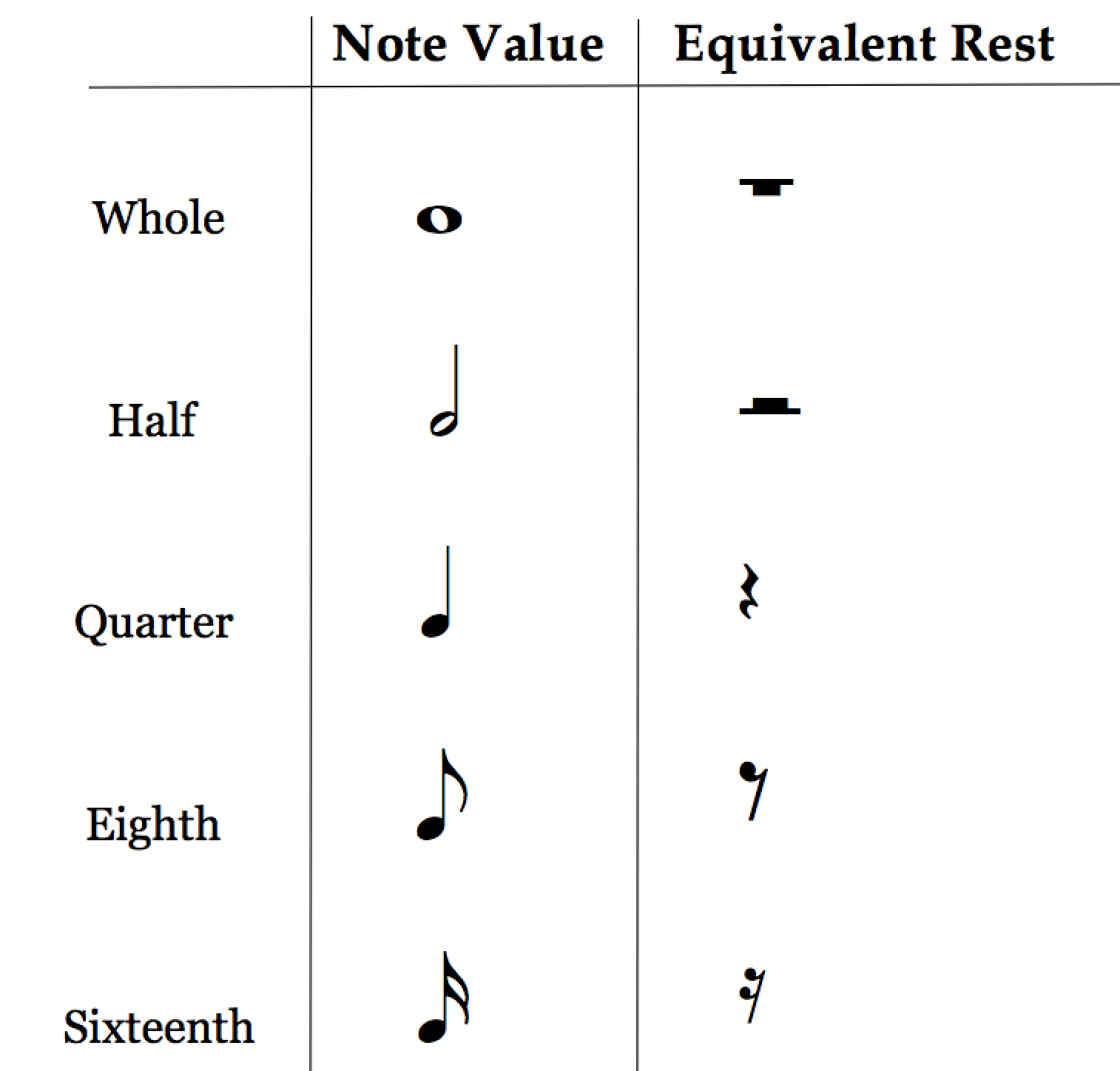
Note values
Whole, half, quarter, eighth, sixteenth.
note values and equivalent rests
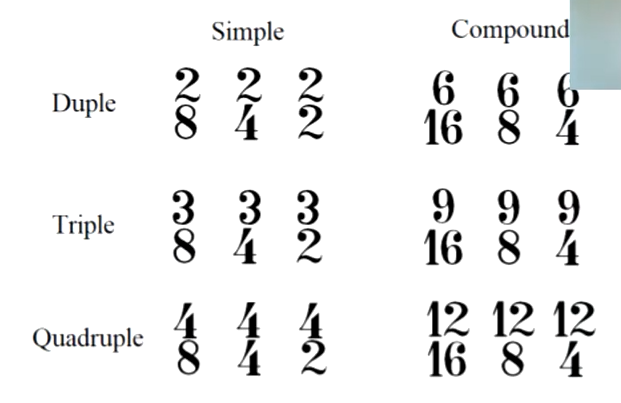
Meter
The grouping of strong and weak beats.
Simple meter
Beats are divisible by 2.
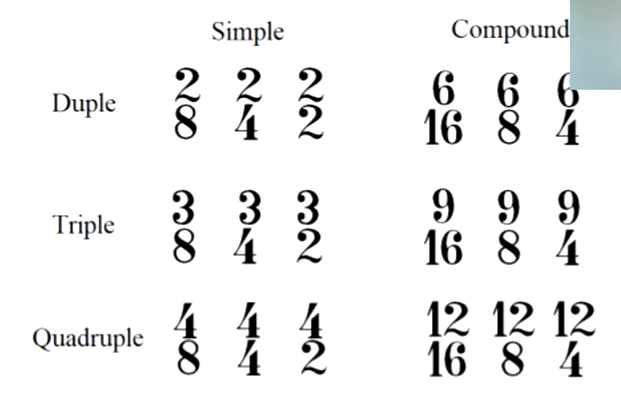
Compound meter
Beats are divisible by 3.
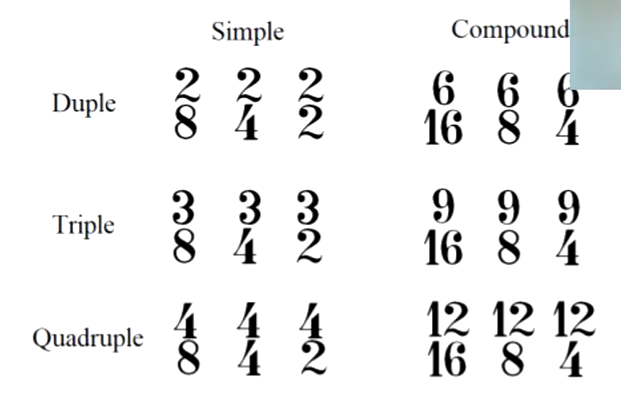
Duple meter
2 beats per measure.
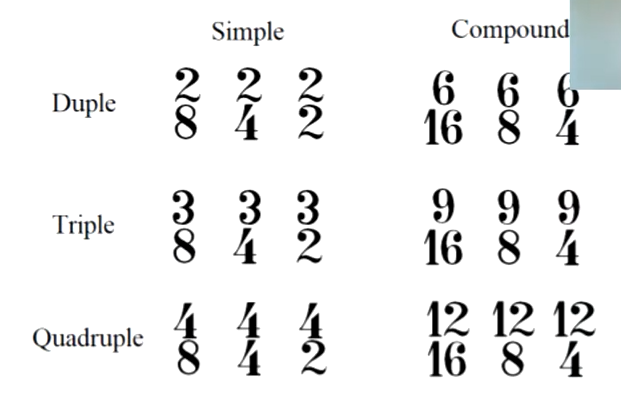
Triple meter
3 beats per measure.
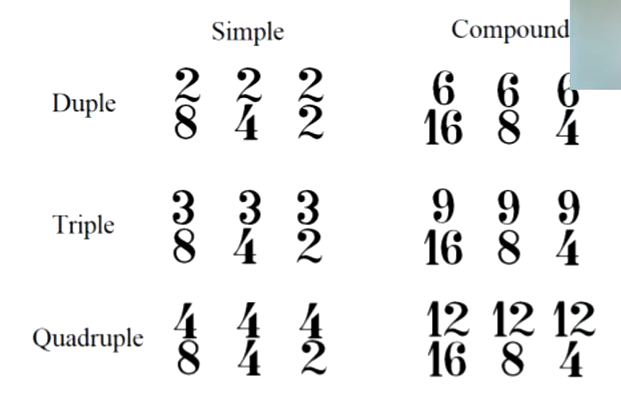
Quadruple meter
4 beats per measure.
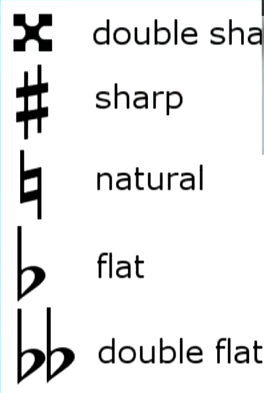
Sharp (#)
Raises the note by a semitone.
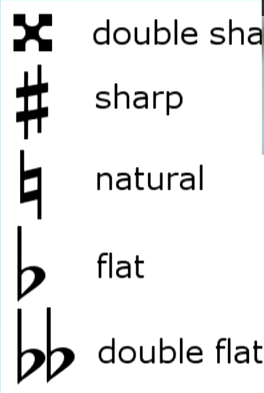
Flat (b)
Lowers the note by a semitone.
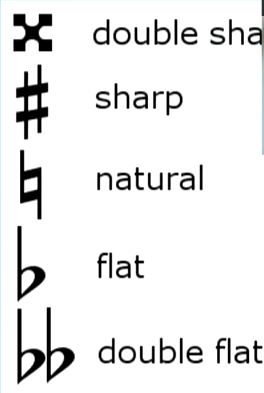
Natural (♮)
Cancels a sharp flat; applies for one whole measure.
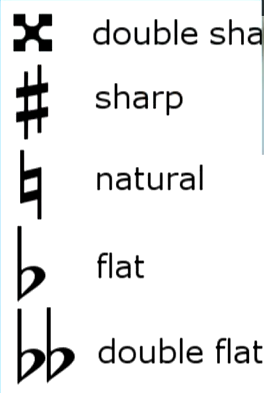
Double sharps
Raise note twice or by a whole step.
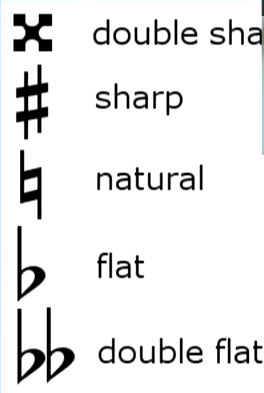
Double flats
Lower by a whole step.
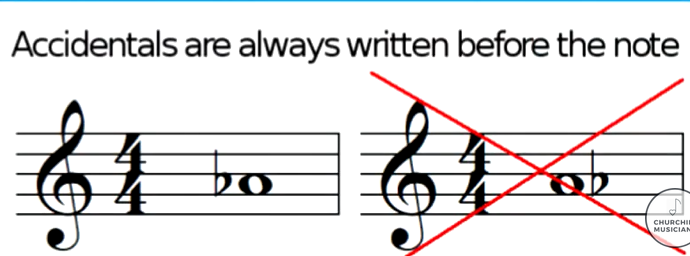
Writing accidentals
Always written before the note in music; after the note in writing.
Tempo
The speed of a piece of music, measured in bpm.
Grave
Tempo <40 bpm.
Adagio
Tempo 40-60 bpm.
Andante
Tempo 60-76 bpm.
Moderato
Tempo 76-108 bpm.
Allegretto
Tempo 108-120 bpm.
Allegro
Tempo 120-160 bpm.
Presto
Tempo >160 bpm.
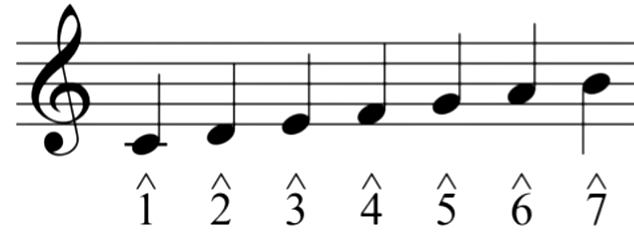
Functional names for scale degrees
1 (do) - tonic, 2 (re) - supertonic, 3 (mi) - mediant, 4 (fa) - subdominant, 5 (sol) - dominant, 6 (la) - submediant, 7 (ti) - leading tone/subtonic.
Subtonic
Lower form of scale degree 7 in minor; a whole step between the tonic.
Leading tone
Scale degree 7 in major; raised form of degree 7 in the harmonic; half step below the tonic.
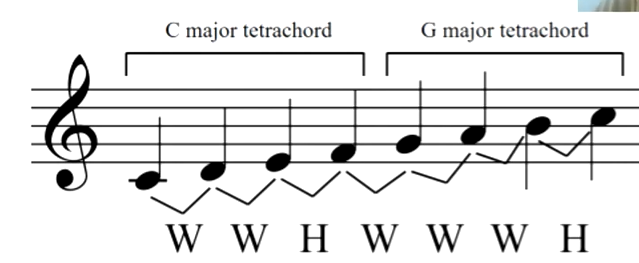
Tetrachord
A series of 4 notes.
Major tetrachord
Whole, whole, half, whole.
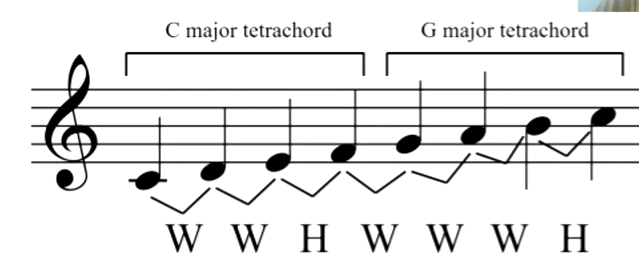
Major scale
Consists of 2 major tetrachords: tonic and dominant.