Patient Clip & Prep
 Call Kai
 Learn
Learn Practice Test
 Spaced Repetition
 Match
Match Flashcards
 Knowt Play
1/68

There's no tags or description
Looks like no tags are added yet.
Name | Mastery | Learn | Test | Matching | Spaced | Call with Kai | Chat |
|---|
No analytics yet
Send a link to your students to track their progress
69 Terms
What is a vet techs role in preparation of the patient prior to surgery?
Clipping
Prepping
Positioning
What is the primary goal of prep before surgery?
to minimize patient exposure to bacteria
better surgical outcomes
fewer complications
Techs enhance ____,___ and ____ of the practice
efficiency, productivity, proficiency
complete elimination of microbial viability (bacteria, viruses, spores)
sterilization
destruction of MOST pathogenic organisms on inanimate objects
disinfection
prevent growth or action of microorganisms on living tissue by inhibiting activity or killing them (not sterilized)
antisepsis
living organism too small to be seen with the unaided eye.
microbe and microorganism
microbe capable of causing disease.
pathogen
the detrimental result of invasion by pathogens.
infection
infection acquired during hospitalization or during attendance at any veterinary medical facility
nosocomial
What should happen with extremely dirty dogs before surgery?
bathe the day before surgery, ensure the hair is dry prior to anesthesia (hypothermia), ensure animal is free of external parasites (fleas, capstar)
Solid food should be withheld from the patient at least ____ hours prior to procedure
6
why withhold food prior to surgery?
decreased risk of regurgitation and aspiration
withholding food may differ in what animals
young puppies and kittens, 6-12 weeks old, they are prone to hypoglycemia
NPO
nothing per os (by mouth)
Always walk outside just prior to procedure
urinate, defecate, prevent contamination in OR
you should perform ___ ____ expression as long as no contraindications (abdominal trauma, bladder surgery)
Urinary bladder
always double and triple check that the appropriate procedure is being prepped for ESPECIALLY the __ ___ if the surgery involves an extremity
correct limb
Key points for clipper use
pencil grip
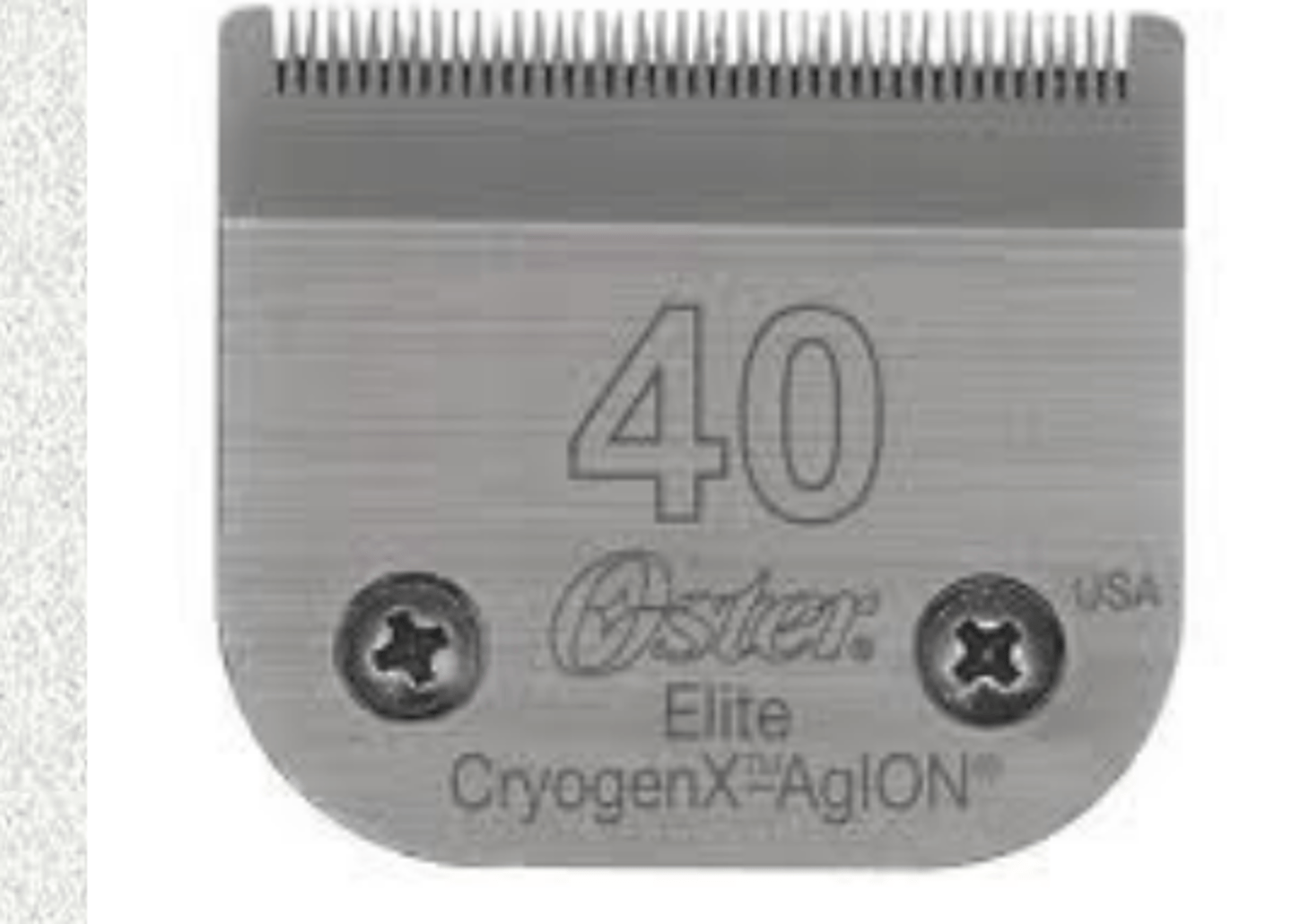
#40 clipping blade (closer cut)
hair should be removed _____ ___ __ or direction of hair growth
AGAINST the grain (closer cut)
what is the goal when removing hair
goal is to allow for skin preparation and minimize intraoperative contamination
At LEAST ____ clipper blade widths from the area of the proposed incision, preferably more
2
2 clipper blade width hair removals allows for
ancillary procedures or change in plan
chest tube, drain placement
Hair removal in orthopedic procedures
hanging leg technique
hair removed circumferentially
vacuuming of hair
most effective way to remove clippings
coarse cut
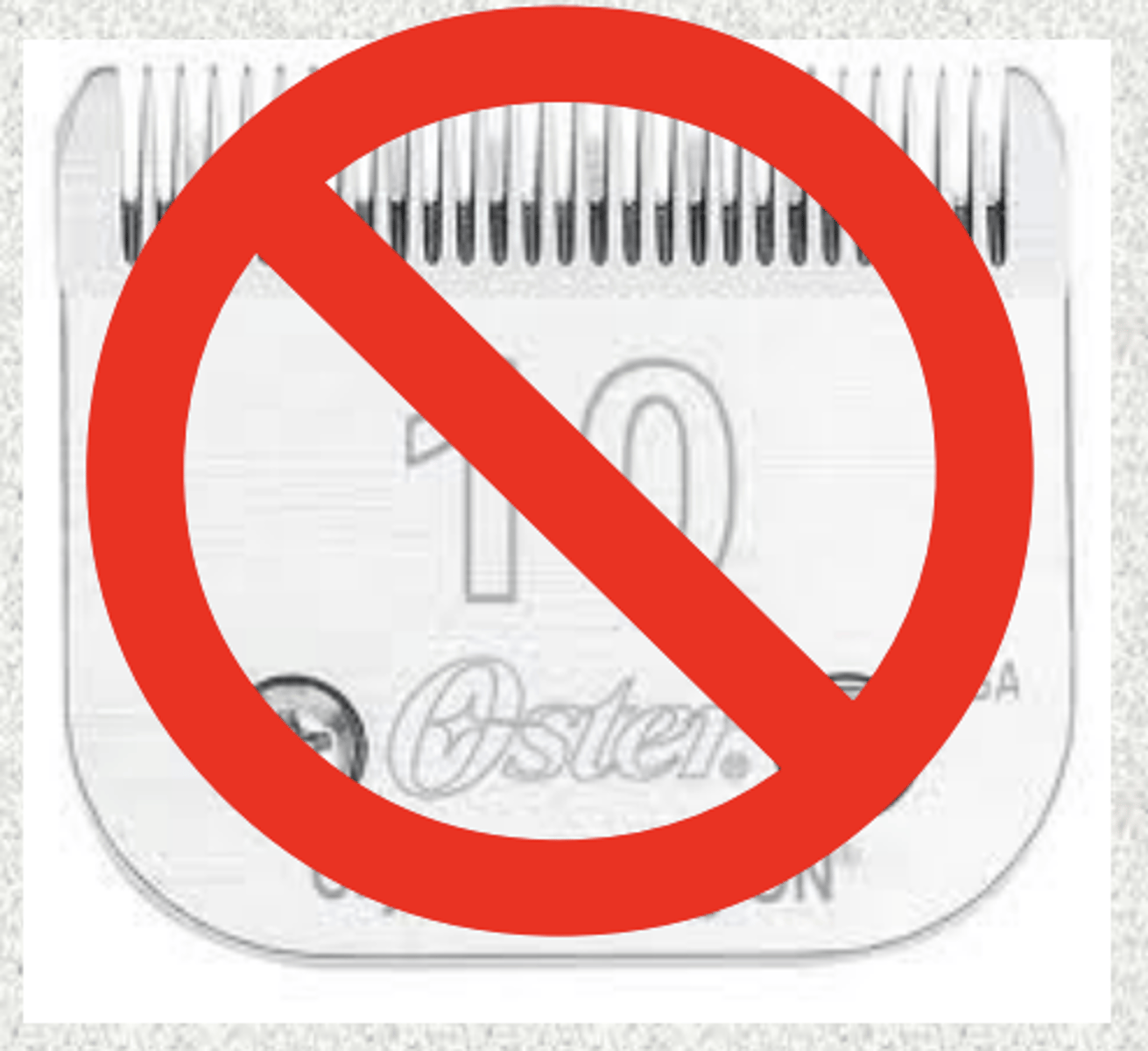
Fine cut
for hair removal cut along the edge of clipped area at ____ degrees to hair growth for a crisp even edge
90
for hair removal use ___ ___ on skin to facilitate a close clip on loose or wrinkly skin
counter tension
what is a purse string suture used for?
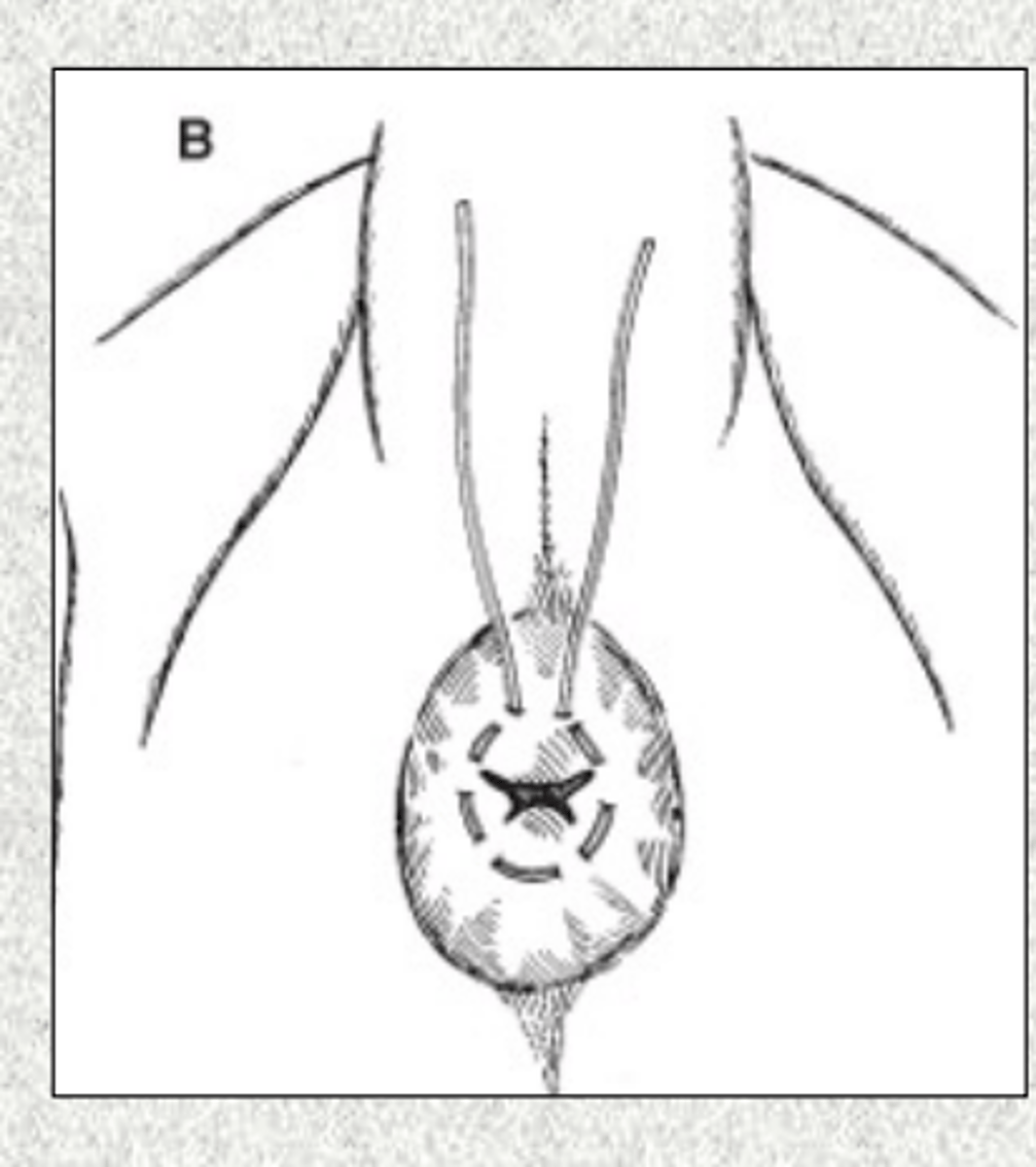
applied around anal opening to prevent leakage of fecal material during surgery, perineal surgery, hind limb orthopedic procedures, DO NOT forget to remove
Purse string suture
new blades should be cleansed in ____ ___ to remove protective film
blade wash
blades should be what after each use
brushed to remove hair, disinfected, lubricated
skin CANNOT be _____ but is made _____ with the use of antiseptics
sterilized, antiseptic
most commonly used antiseptics
chlorhexidine
povidone-iodine
the skin is made 'antiseptic' in two stages
initial 'rough' prep in surgical prep area and final 'sterile' prep: once positioned for surgery in surgical suite
what are 5 desirable properties of surgical site prep
- Wide spectrum of antimicrobial activity - Low tissue toxicity - Inexpensive/readily available - Residual activity - Works well in presence of organic activity
Characteristics of povidone iodine
Cheap - Broad spectrum - "Okay" residual activity - Low tissue toxicity - Will stain clothing/fur - Inactivated by inorganic debris - Generally diluted 50:50 with water when used as a scrub.
characteristics of chlorhexidine gluconate
Good activity in organic debris - Very good residual activity - Broad spectrum - Low tissue toxicity... except mucous membranes: Keep away from eyes and mouth! - Does not stain clothing - Generally diluted 60:40 with water for scrubbing
Commonly used to "rinse" the surgical site and remove the detergent. - Not completely necessary
rinsing agents
2 types of rinsing agents
70% isopropyl alcohol and sterile saline
70% isopropyl alcohol
Antibacterial - Dries quickly.... But may cool patient. - CAUTION when using cautery.... Flammable.
sterile saline
no antimicrobial activity
non flammable
For abdominal procedures where the prepuce will be "draped in," the prepuce should be flushed with
dilute betadine
Initial scrub performed with exam gloves while in
prep area
Final scrub performed once in surgical suite and after patient is
positioned for surgery
Sterile gloves - Sterile gauze, prep basin - "New" scrub solution - "Clean" hand, "dirty" hand
What is the starting point for scrubbing patterns?
Start over the area of the proposed incision and work towards the periphery.
What motion should be used when scrubbing?
Use a circular motion.
What should you do if the sponge or gauze touches hair or a contaminated site?
Do NOT go back over the incision area, discard the sponge/gauze.
how much to scrub
Most important consideration: Contact time of scrub with skin (see manufacturer recommendations). - Usually ~ 5 minutes - Sponge/Gauze comes away "clean" with no residue or dirt
What is a rinsing agent for sterile prep?
Alcohol or saline
What is used to remove scrub detergent if a rinsing agent is not used?
Dry gauze or a sterile huck towel
Circular motion from center out, clean hand/dirty hand
dry gauze
Unfolded and sterilely placed over entire surgical site and "patted" à Do not slide!
huck towel
What is a common solution used by some surgeons after a sterile scrub?
Povidone iodine
What is a characteristic of the povidone iodine solution used by surgeons?
It is usually without detergent and at a slightly higher concentration.
How is the povidone iodine solution typically applied?
Usually applied with a spray bottle.
What is the recommended method for applying povidone iodine solution on the skin?
Allowed to dry on the skin.
In general, don't mix ______ products with ______ products
chlorhexidine, iodine
reaction to scrub?
More common with iodine Usually presents as patchy to diffuse urticaria Benadryl?
Razor burn?
From dull or dirty blades Pressing too hard or bad angle Blades too warm
What is the hanging leg technique used for?
Most extremity orthopedic or soft tissue procedures.
What advantage does the hanging leg technique provide during surgery?
Allows the entire extremity to be draped in and manipulated.
What is a benefit of the hanging leg technique related to muscle fatigue?
It helps with fatigue of muscles for fracture reduction.
What is another name for the hanging leg technique?
Traction.
goals of patient positioning
Patient is secure Surgeon can access surgical site(s) in a adequate manner Anesthesia team can access patient, fluid lines, monitoring equipment, etc
maintaining a sterile field
After the sterile prep is performed Draping Controlled traffic in OR
quarter drape
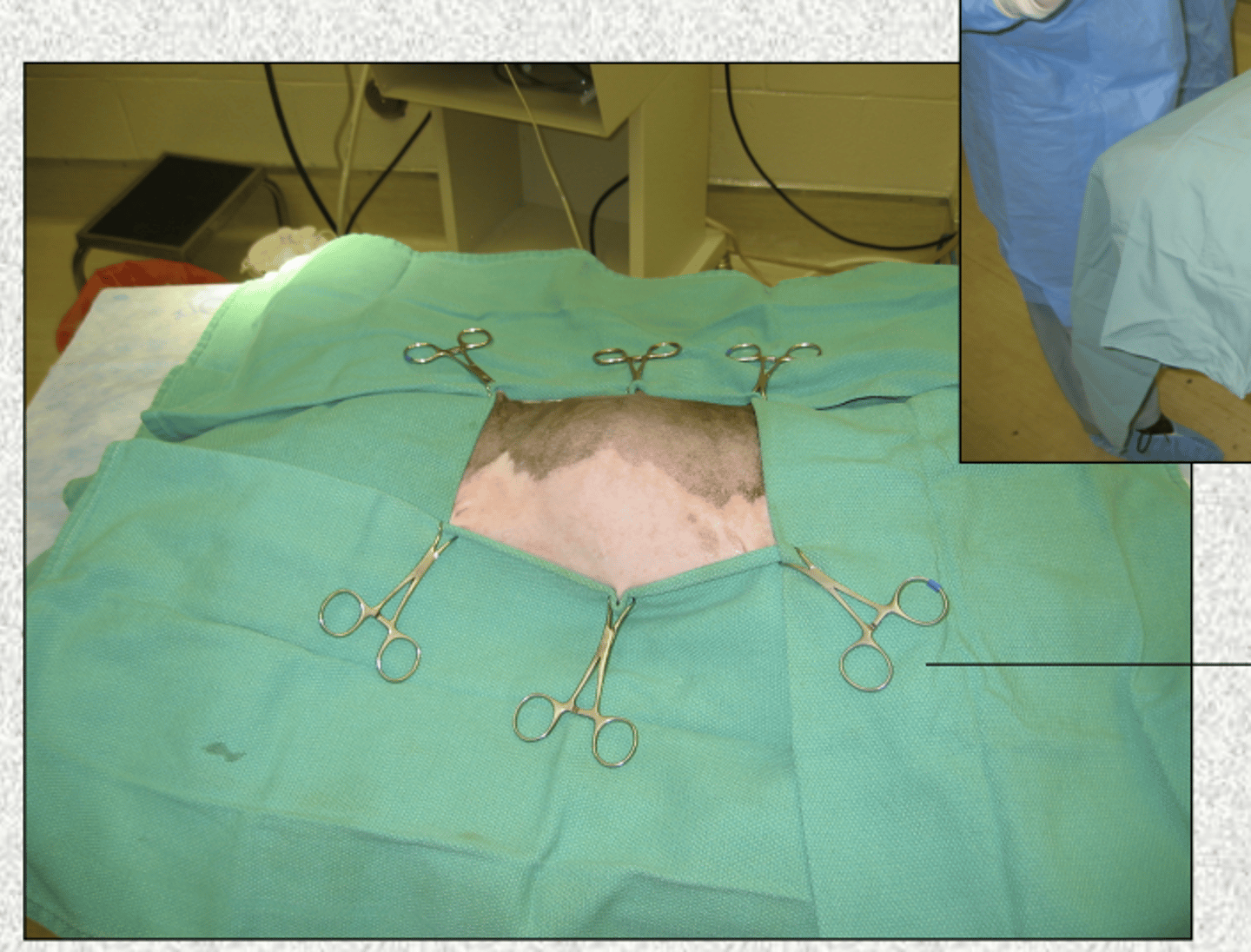
final result of draping in surgery
Minimal skin exposure - Multiple layers - Waterproof barrier to prevent strike through