Orthodontics- Cephalometric Anatomy, Tracing, and Analysis
 Call Kai
 Learn
Learn Practice Test
 Spaced Repetition
 Match
Match Flashcards
 Knowt Play
1/61

There's no tags or description
Looks like no tags are added yet.
Name | Mastery | Learn | Test | Matching | Spaced | Call with Kai | Chat |
|---|
No analytics yet
Send a link to your students to track their progress
62 Terms
cephalometric tracing
The process of identifying landmarks and creating a line drawing of the radiograph is called ......
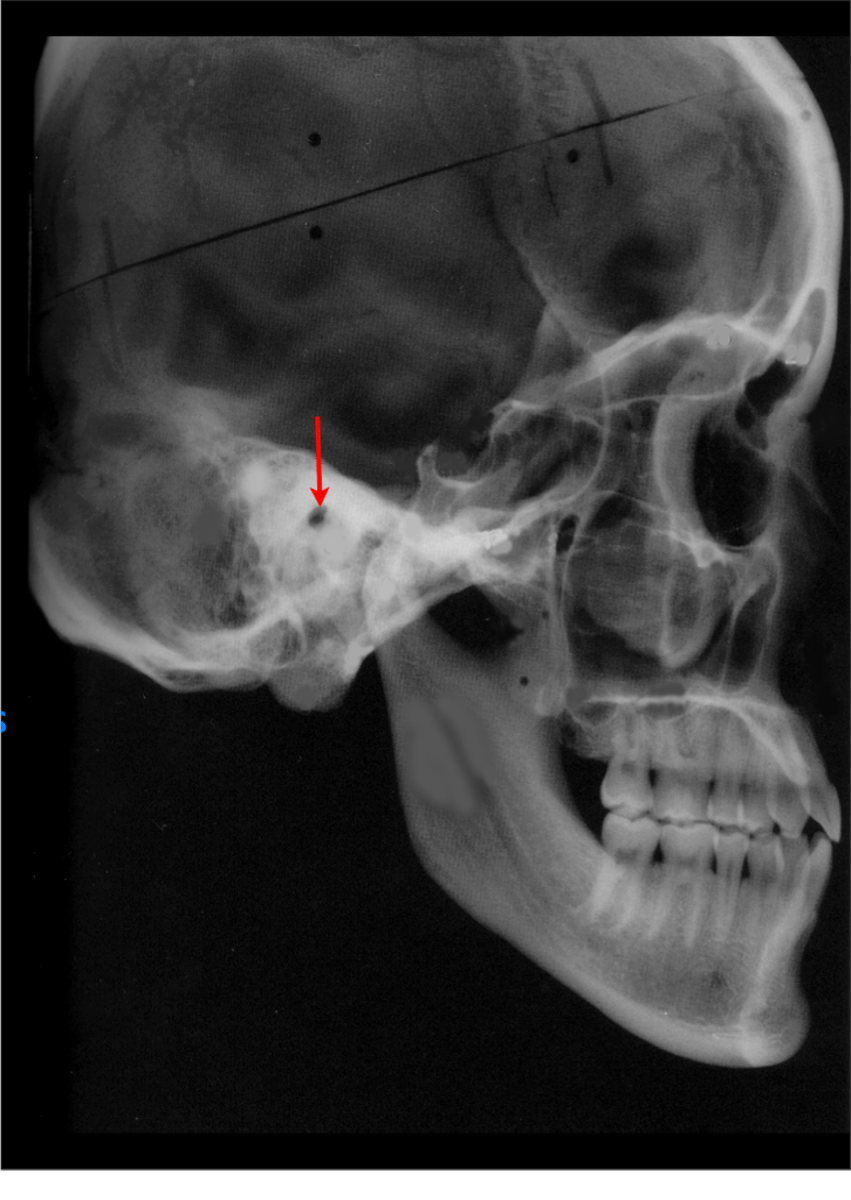
porion
which anatomical landmark:
- Highest point of the ear canal
- Most superior point of the external auditory meatus
- Immediately distal to the condyle
orbitale
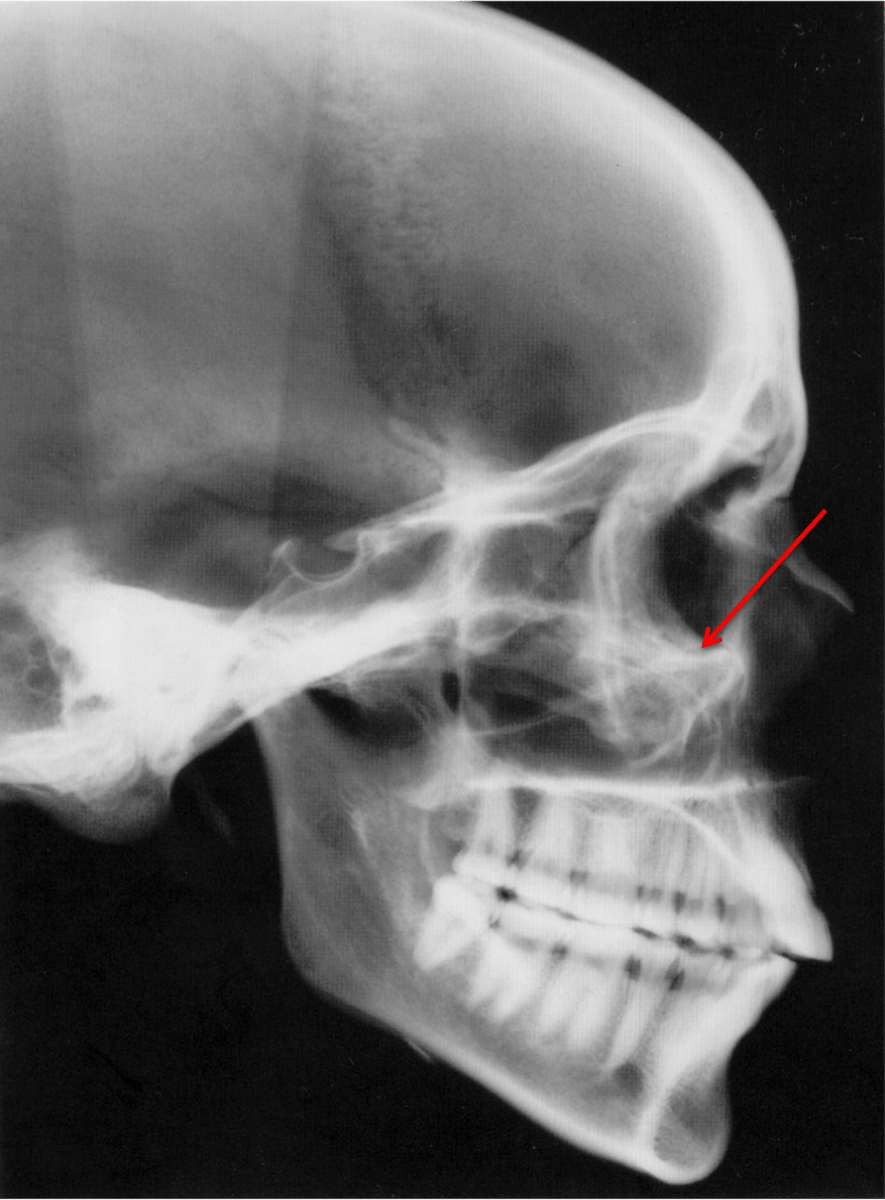
which anatomical landmark:
- Lowest point of the floor of the orbit
- Most inferior point of the external border of the orbital cavity
sella
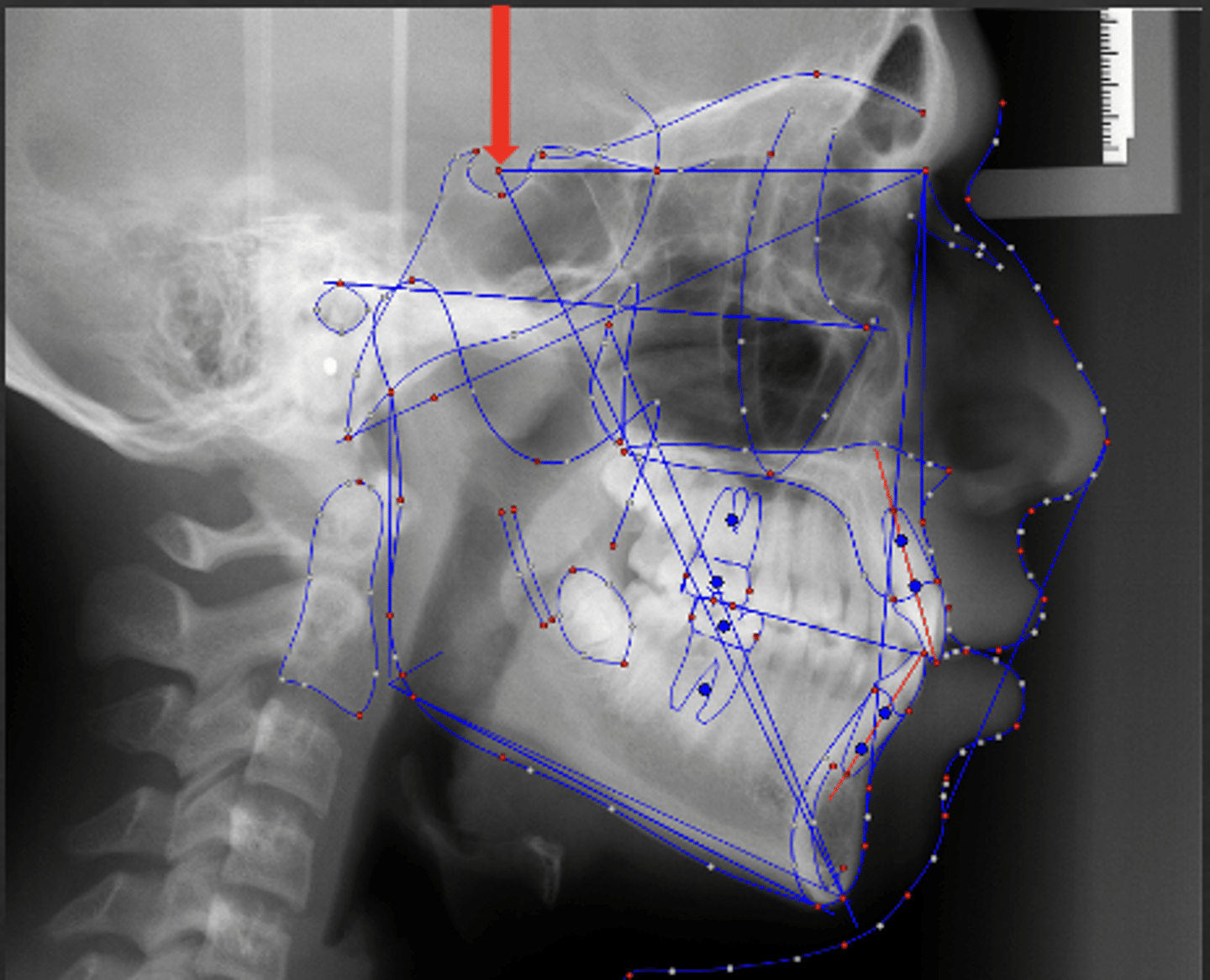
which anatomical landmark:
- Center of the pituitary fossa (sella turcica) of the sphenoid bone
nasion
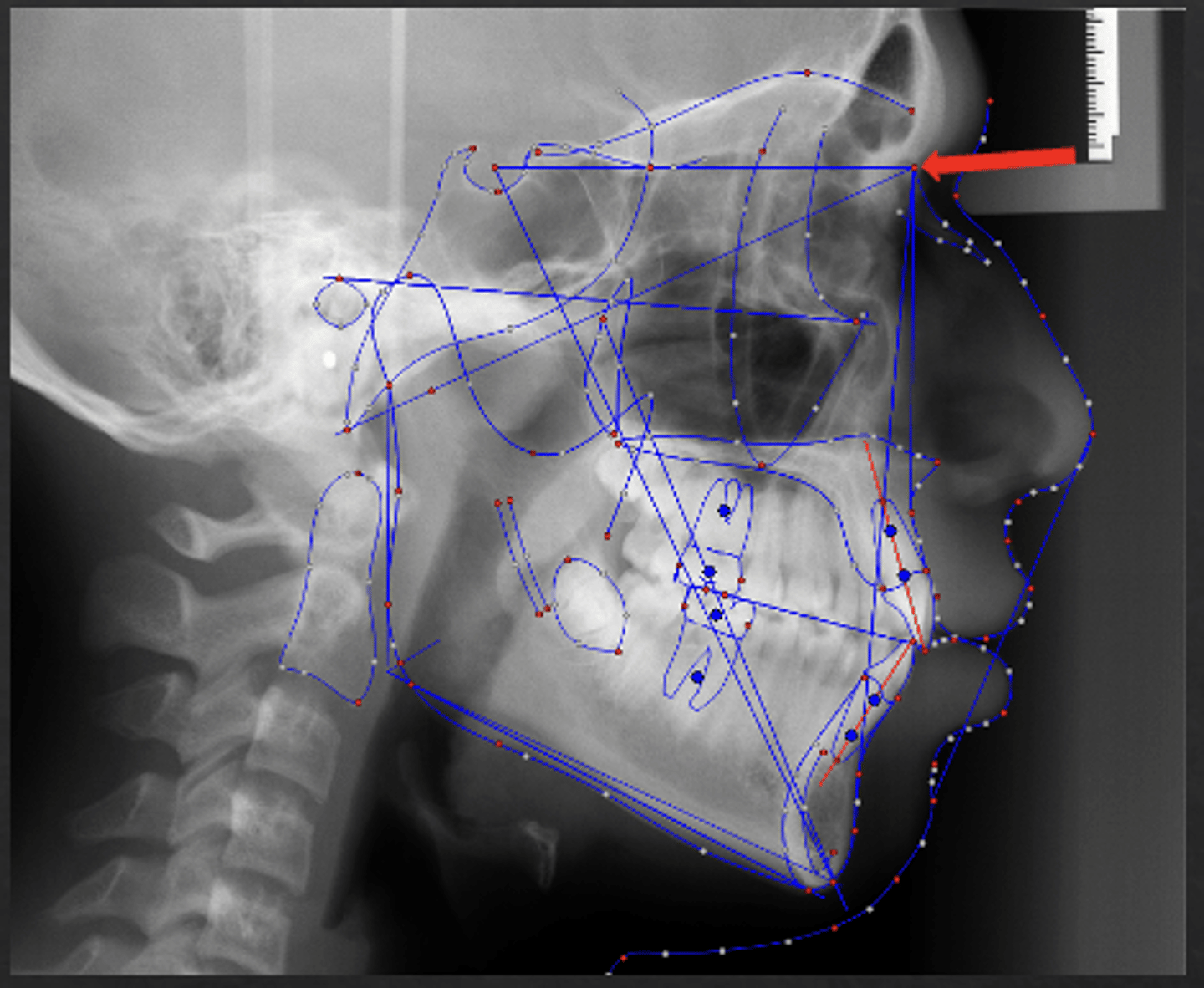
which anatomical landmark:
- The most anterior point of the intersection between the nasal bone and the frontal bone
basion
which anatomical landmark:
- Most inferior posterior point of the occipital bone
- Also the anterior margin of the foramen magnum
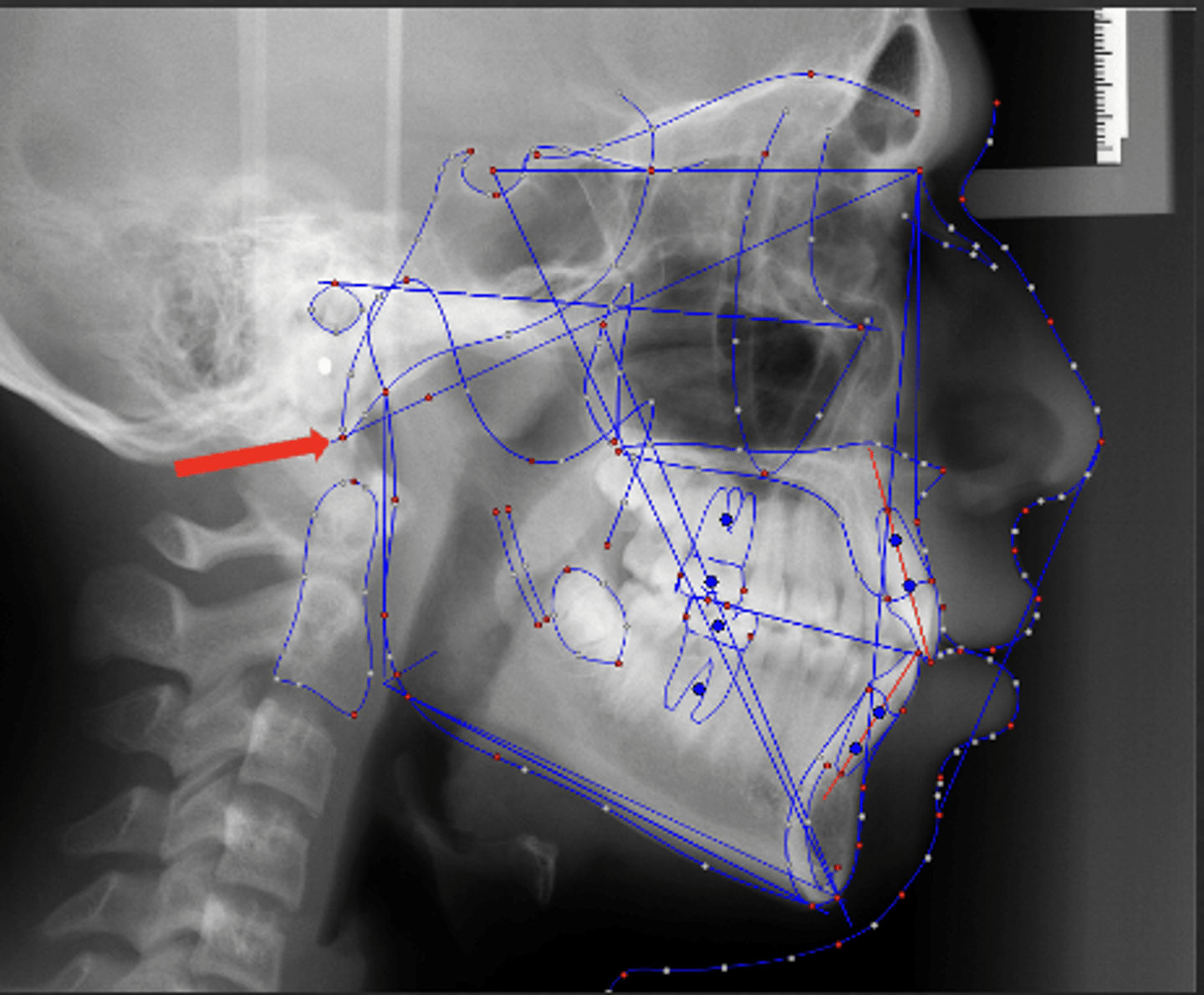
anterior nasal spine
which anatomical landmark:
- The tip of the anterior nasal spine
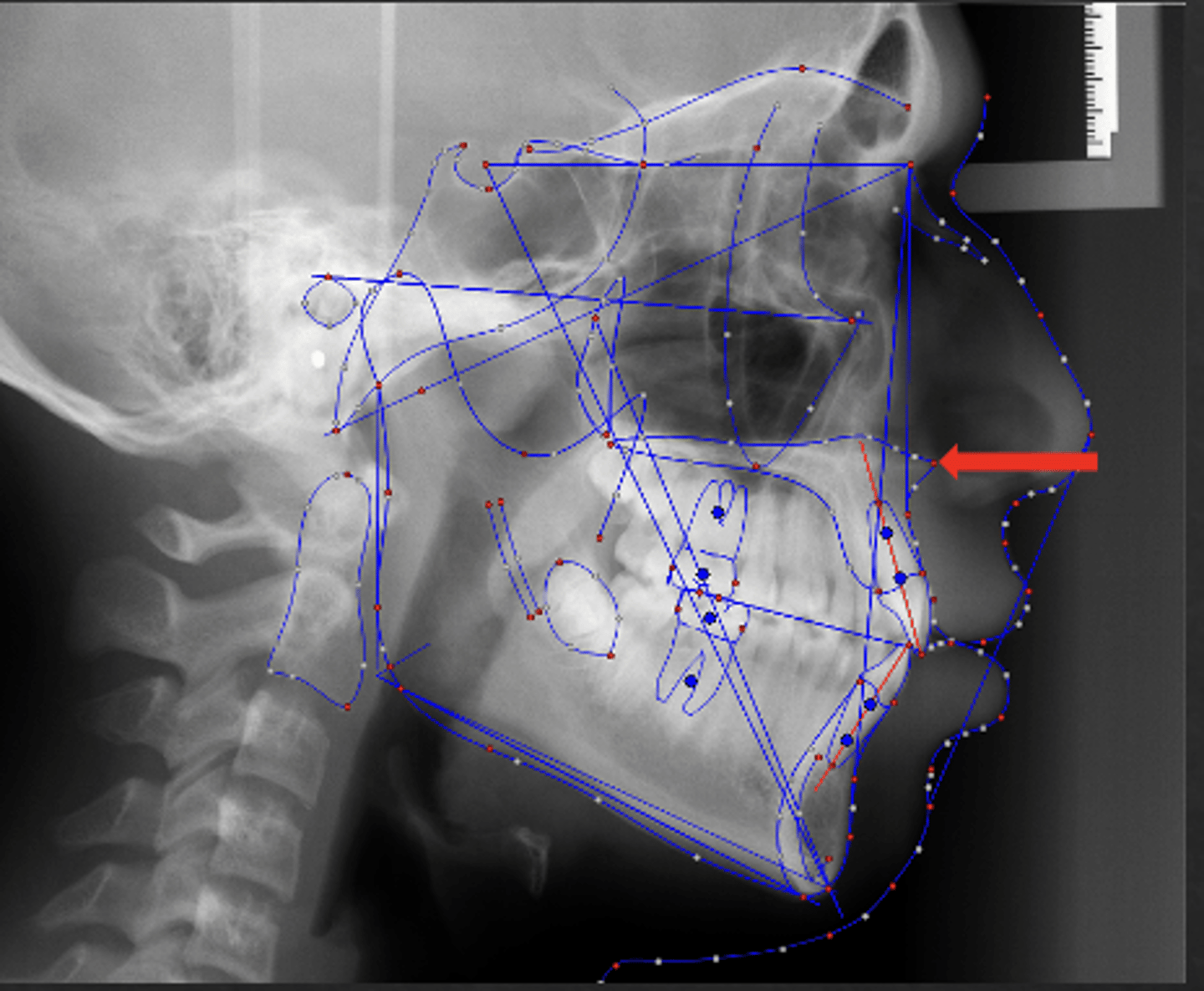
posterior nasal spine
which anatomical landmark:
- The tip of the posterior nasal spine
- The most posterior point on the hard palate
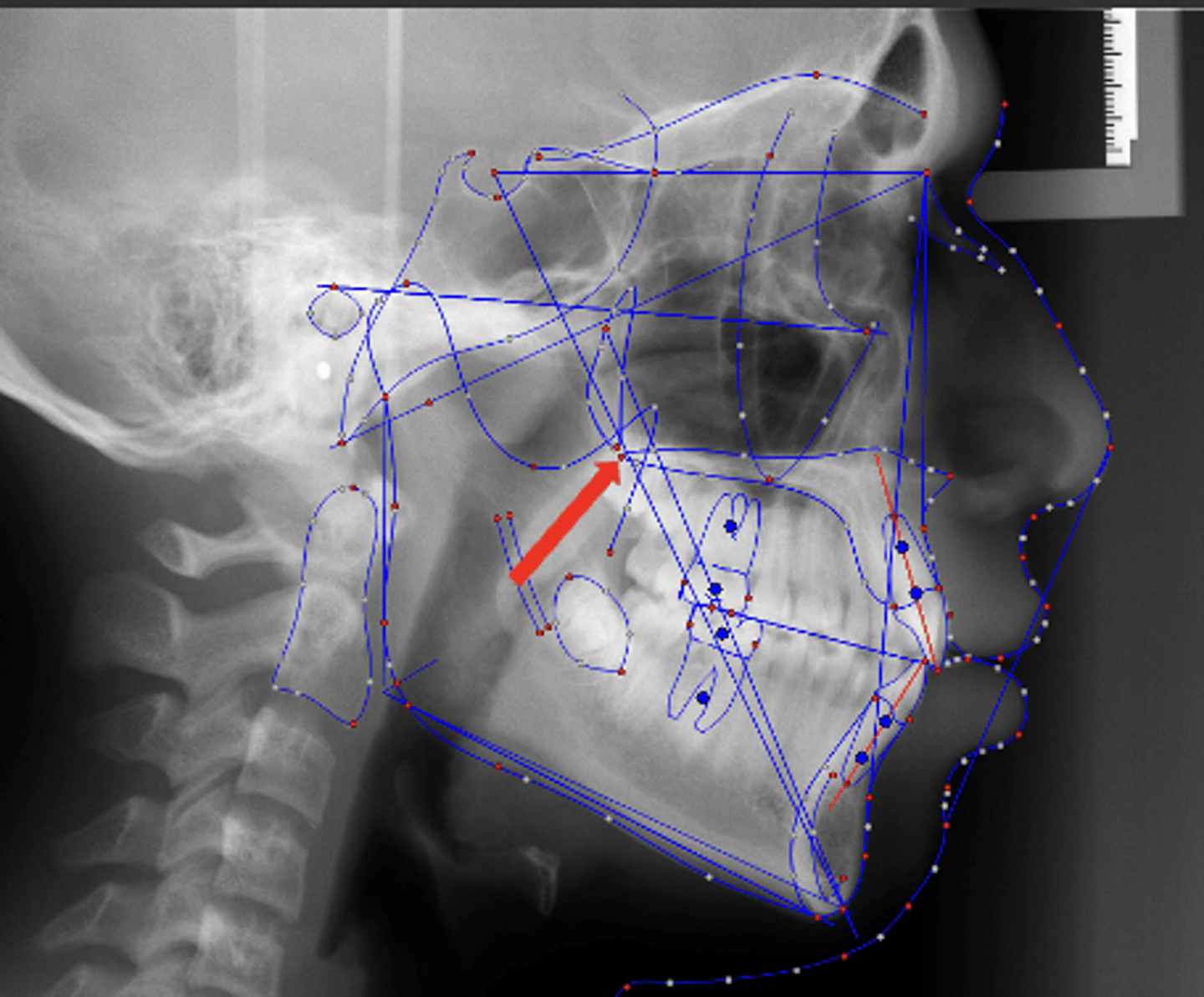
A point
which anatomical landmark:
- Deepest point of the curve of the maxilla, between anterior nasal spine (ANS) and the dental alveolus
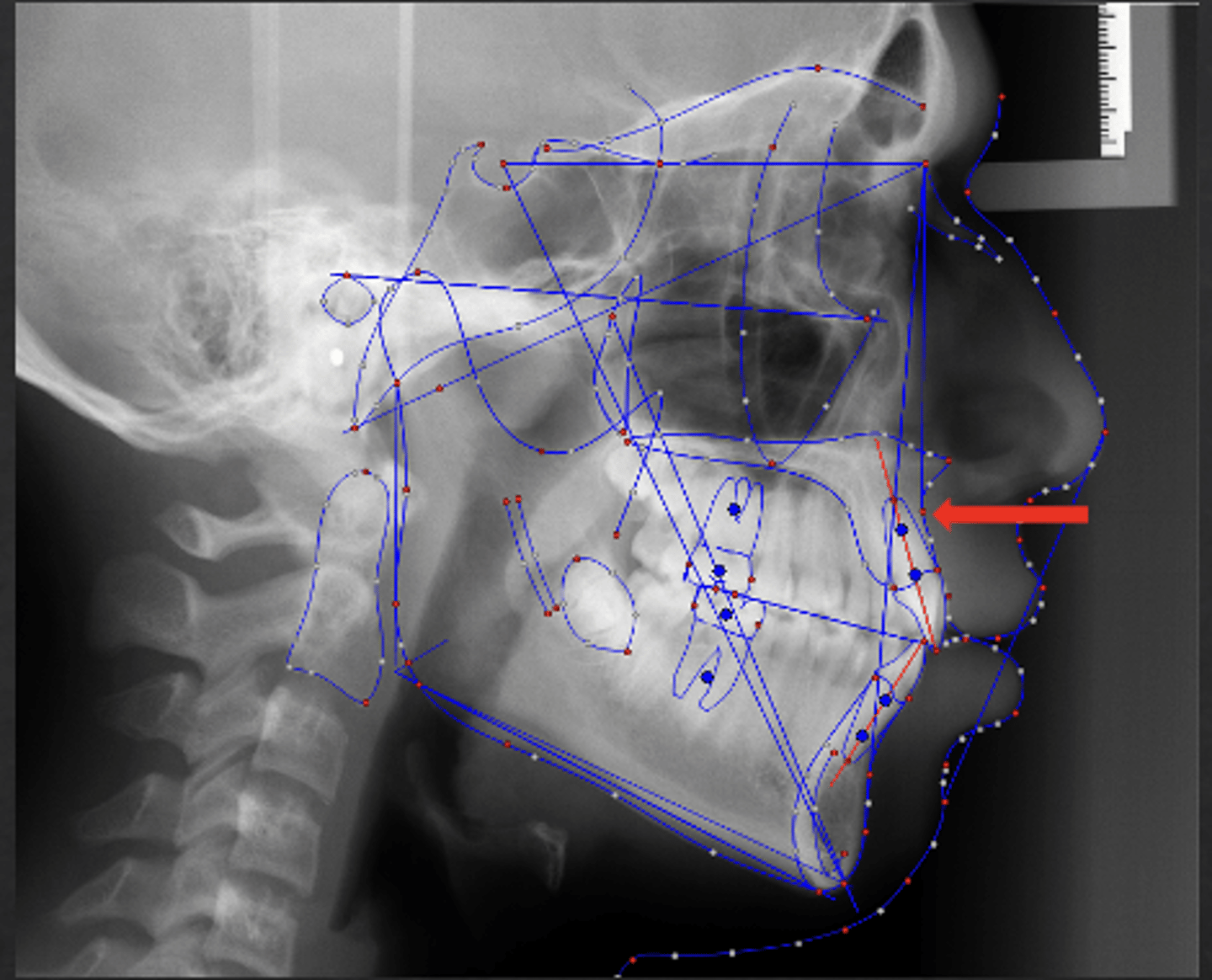
B point
which anatomical landmark:
- Most posterior point in the concavity along the anterior border of the symphysis
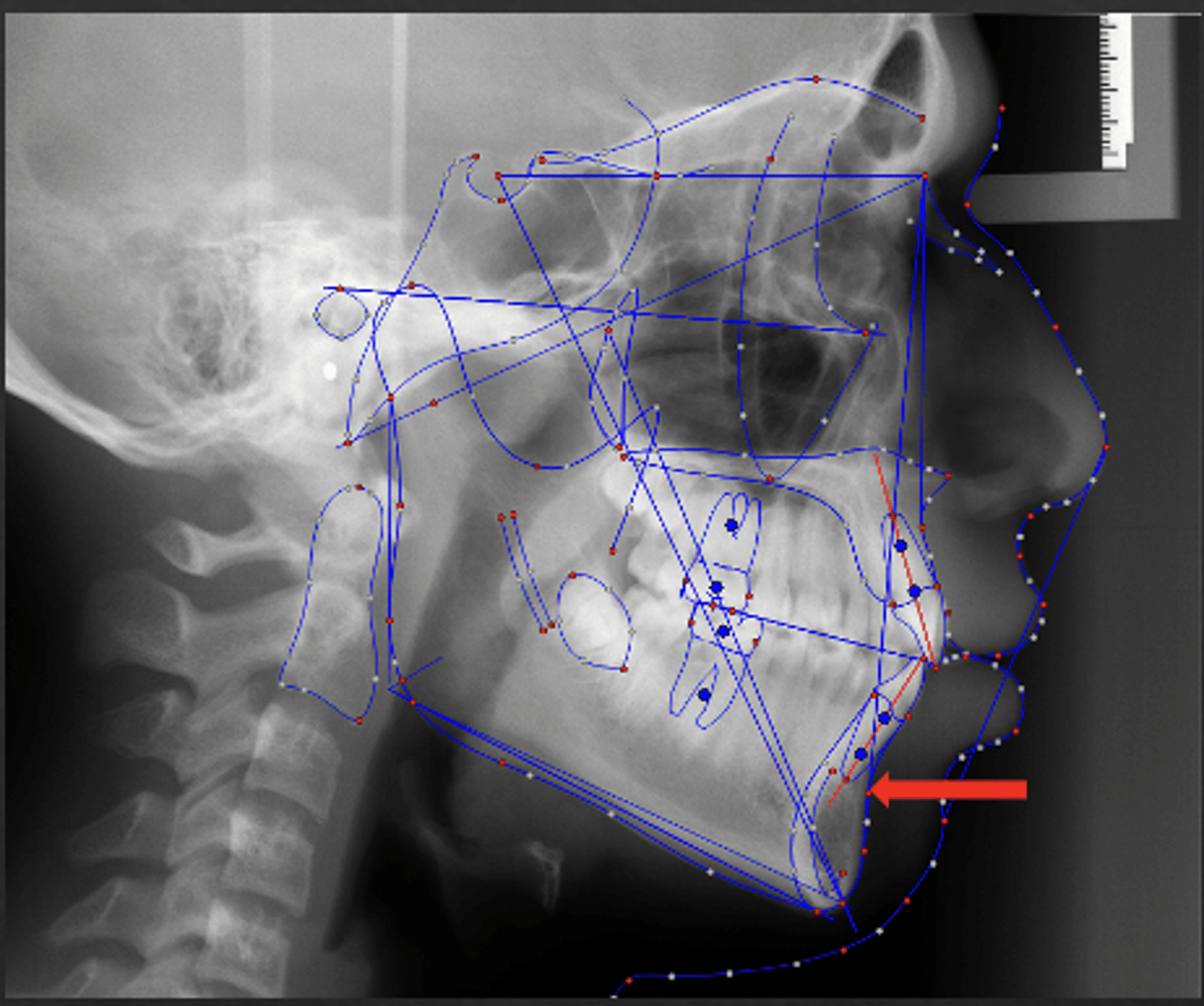
pogonion
which anatomical landmark:
- Most anterior point on the mid-sagittal symphysis
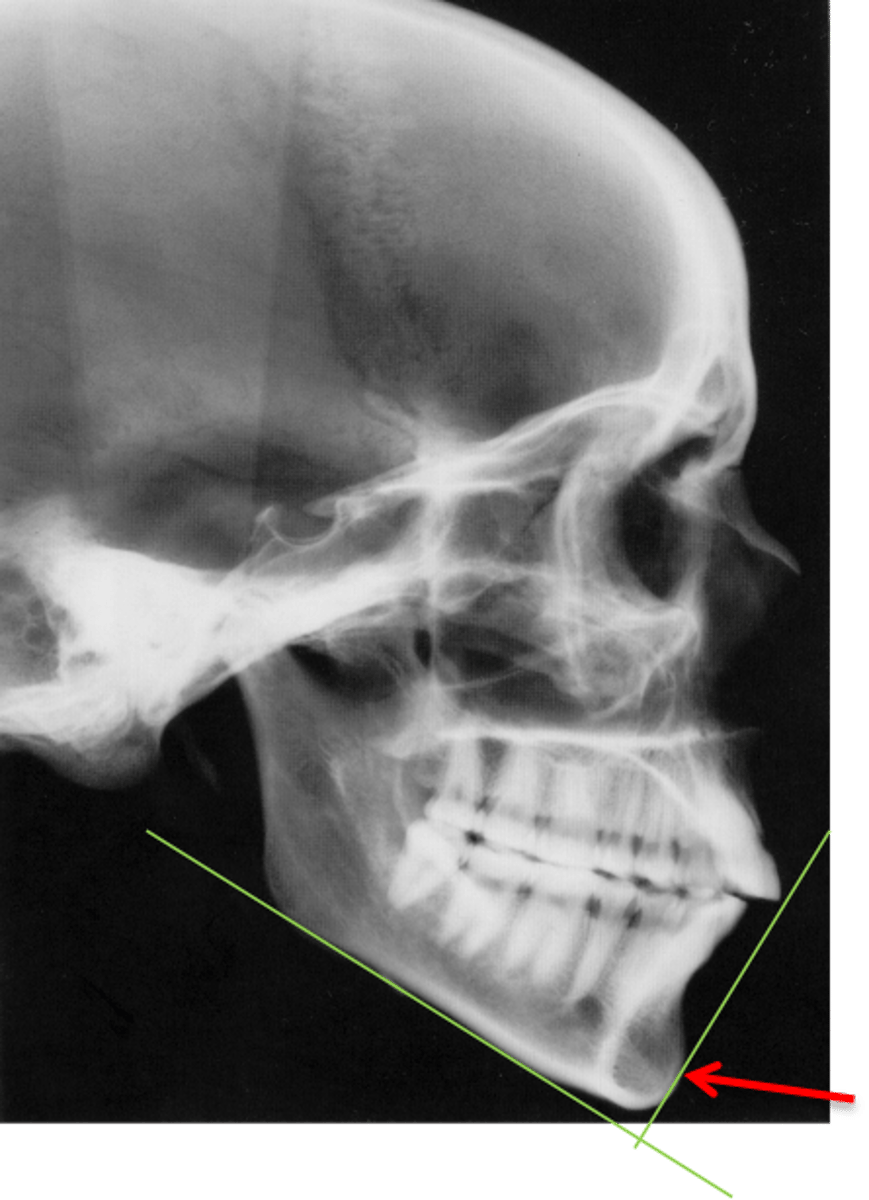
gnathion
which anatomical landmark:
- Midpoint between the most anterior and inferior point on the boney chin
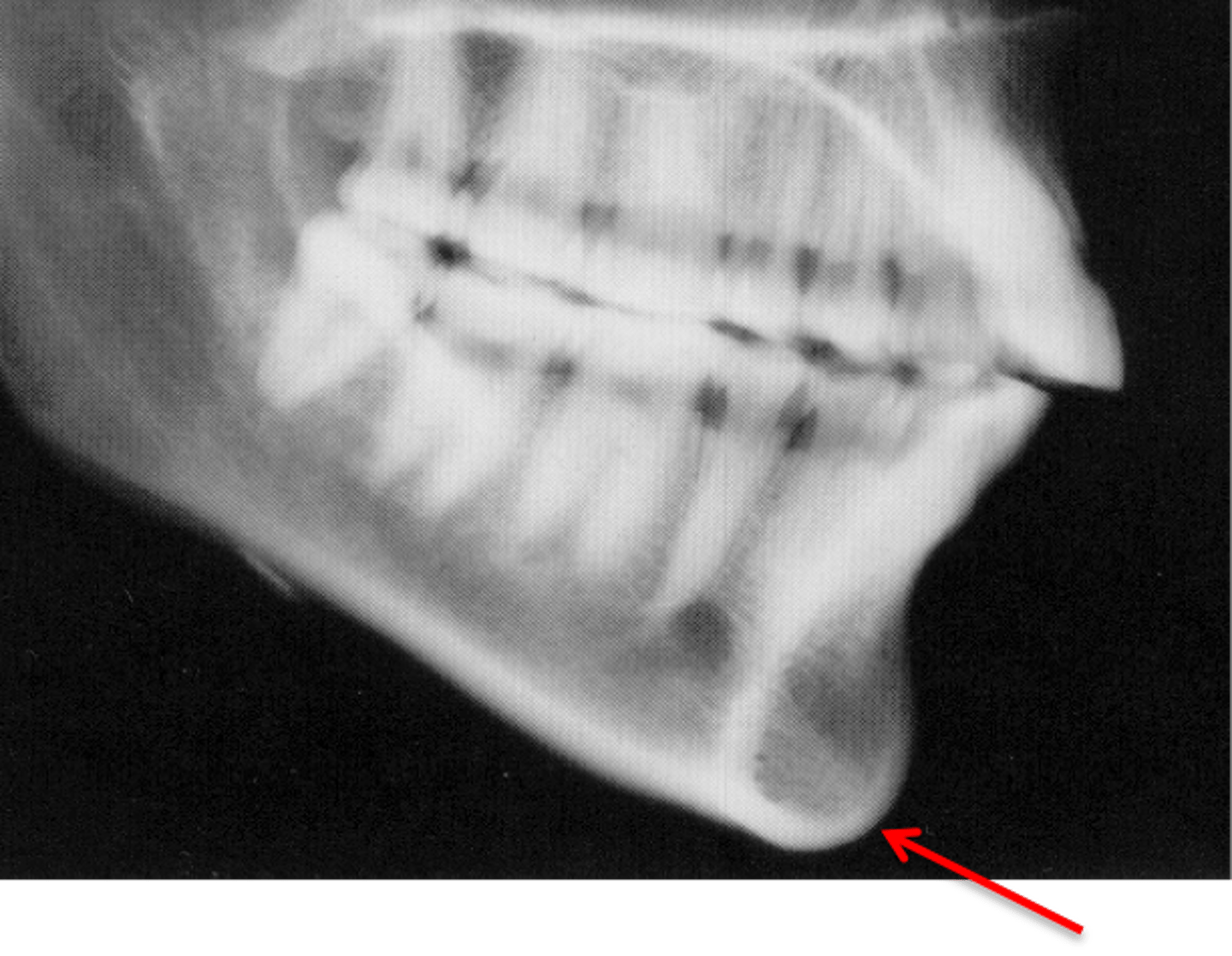
menton
which anatomical landmark:
- Most inferior point of the symphysis
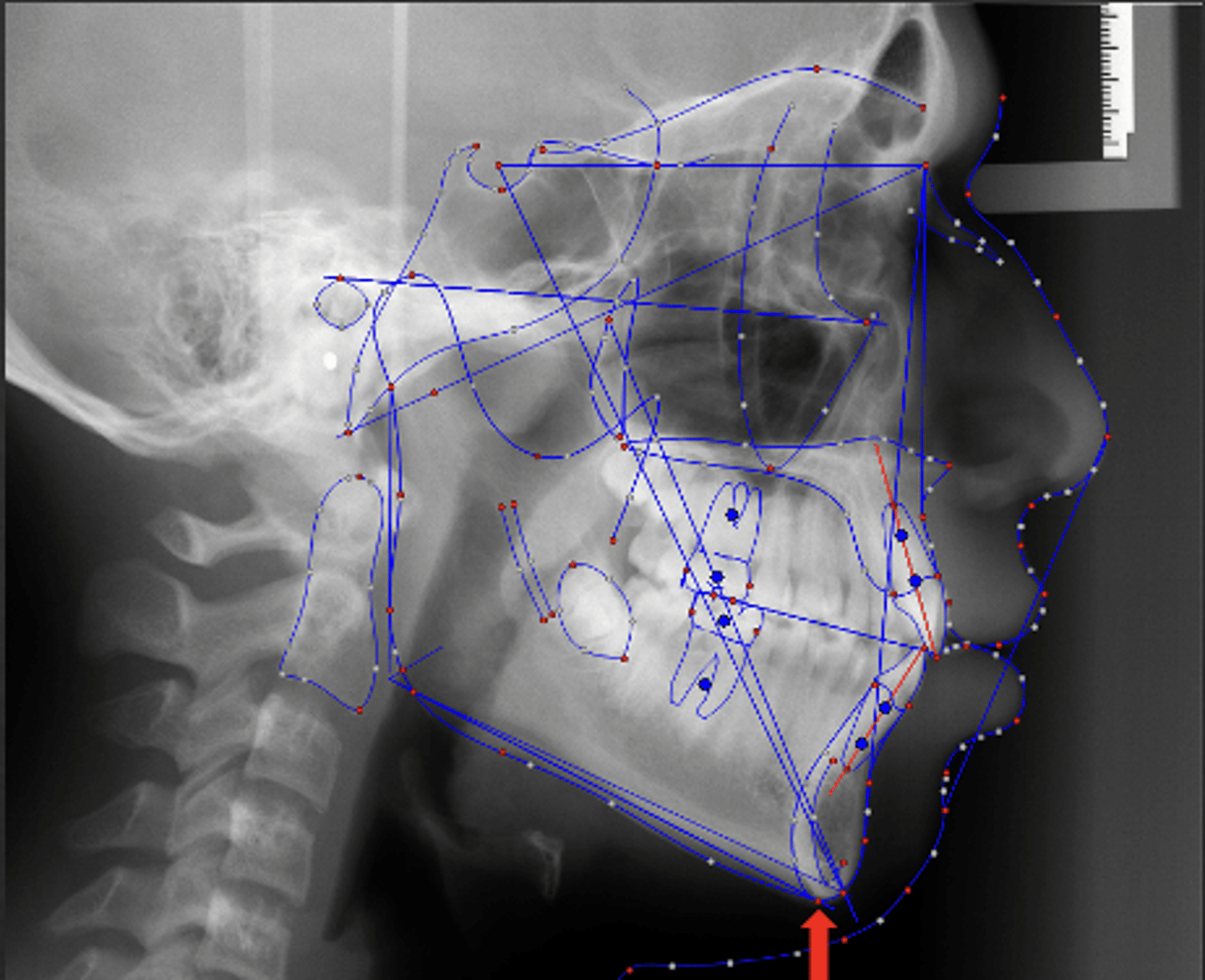
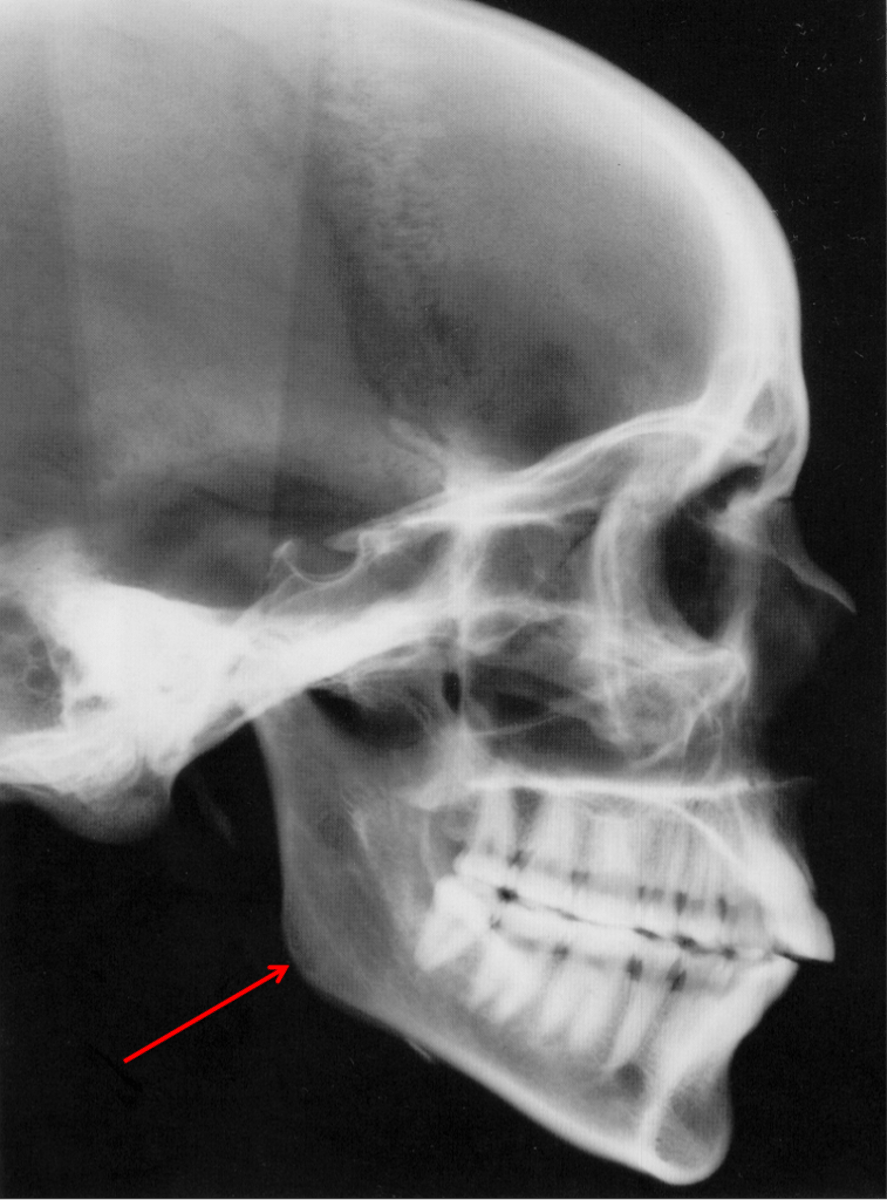
gonion
which anatomical landmark:
- Most convex point along the inferior border of the body of the mandible
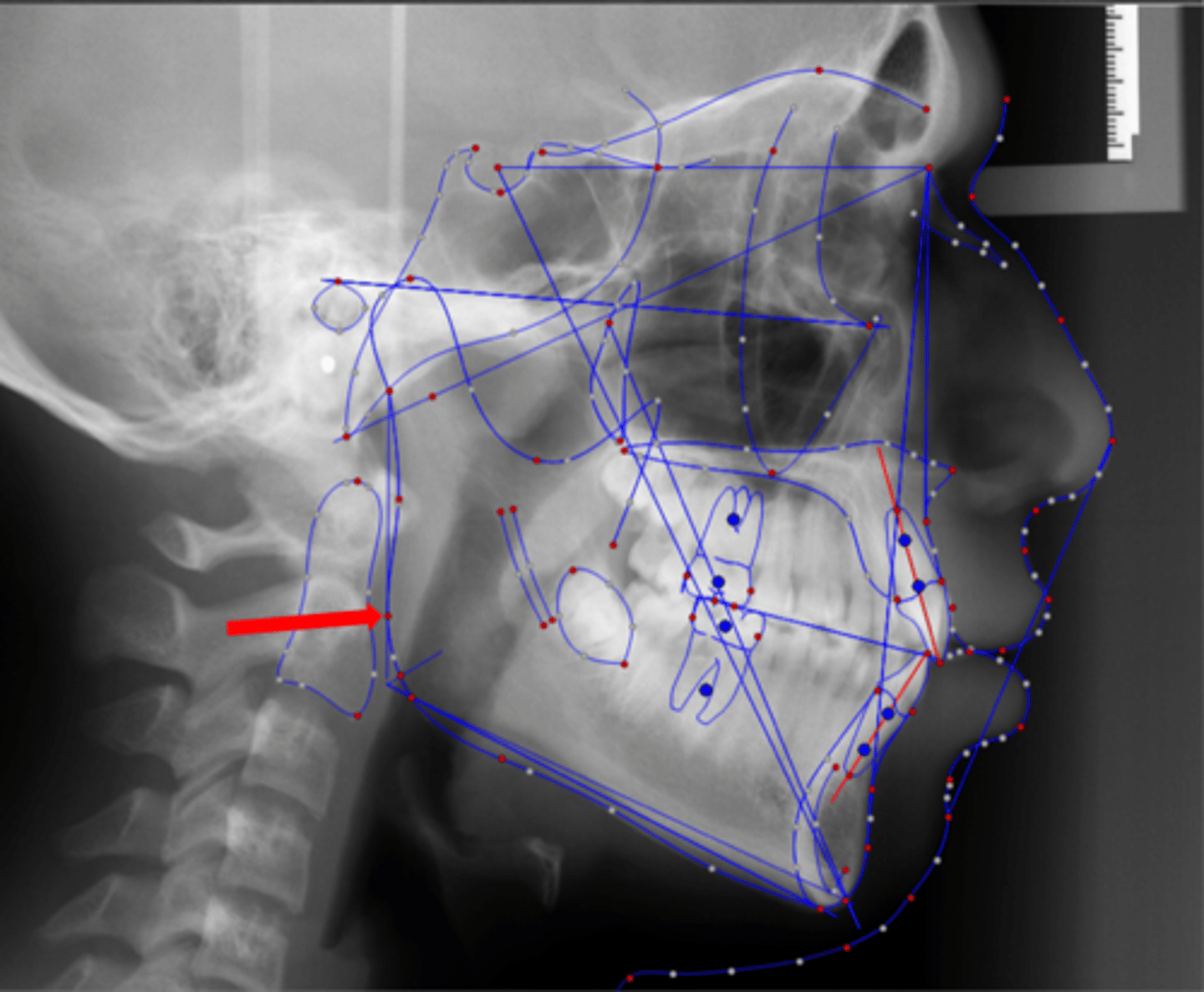
ramus point
which anatomical landmark:
- Most posterior point on the border of the inferior ramus
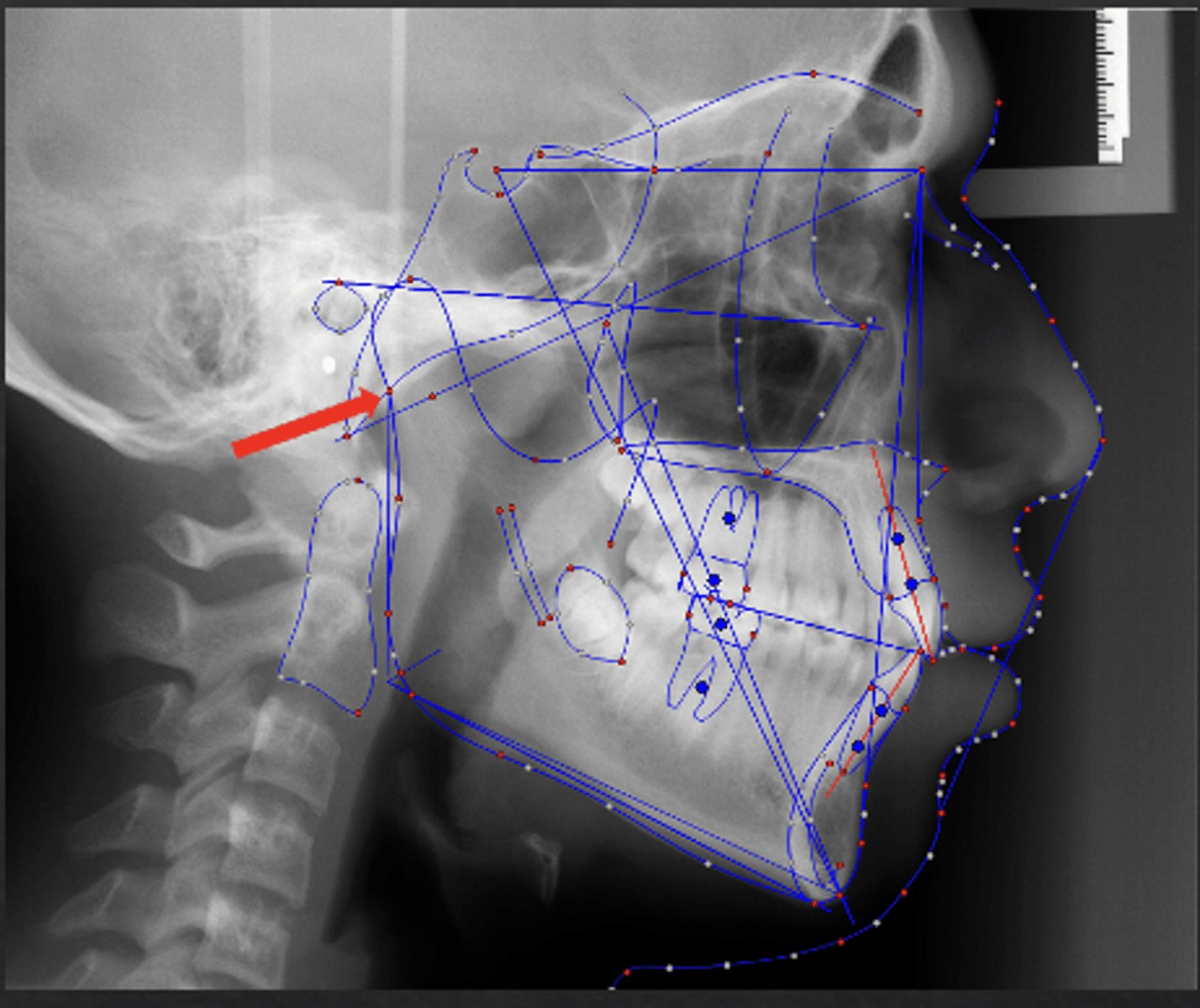
articulare
which anatomical landmark:
- Intersection of the mandible with the temporal bone
- Not an anatomic structure
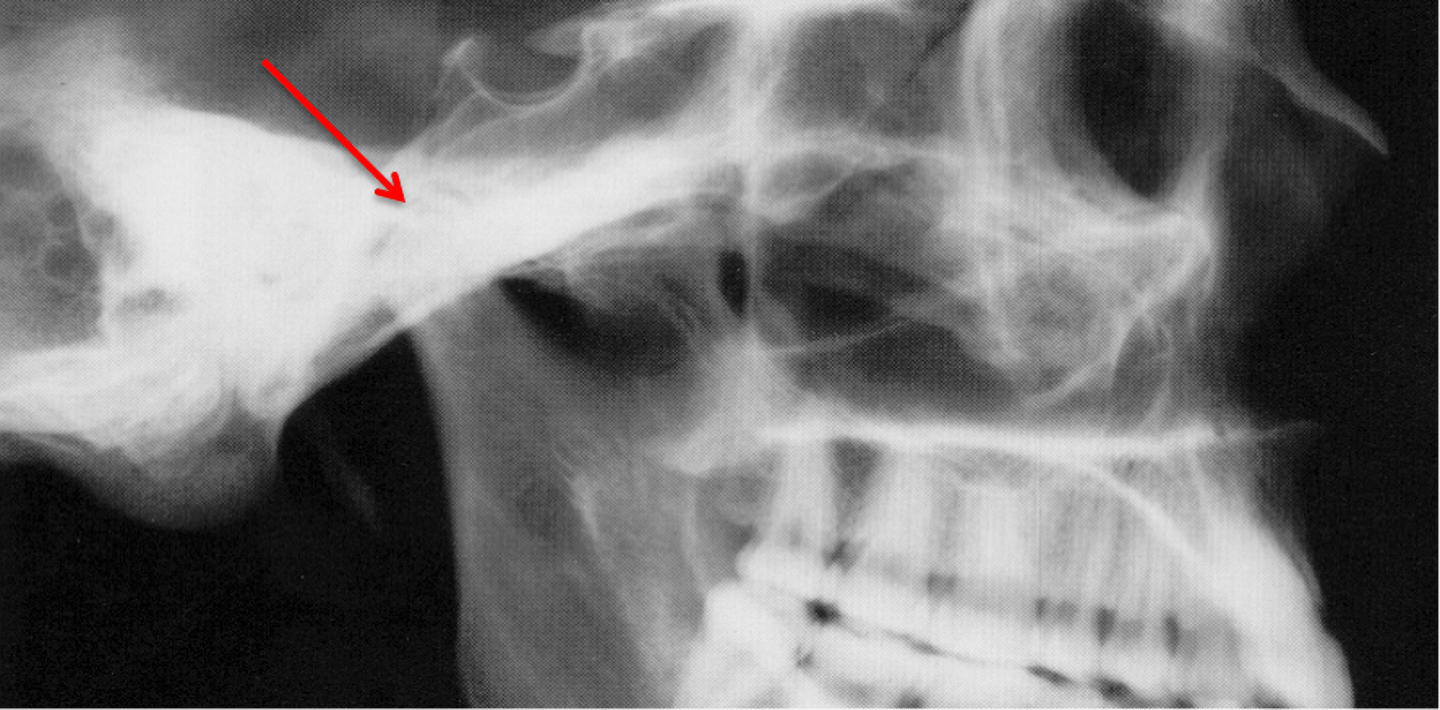
condylion
which anatomical landmark:
- Most superior point of the condyle
- Should be immediately anterior to Porion
constructed gonion
which anatomical landmark:
- The intersection of the mandible and the line that bisects the angle formed by Menton-Gonion and Articulare-Ramus Point
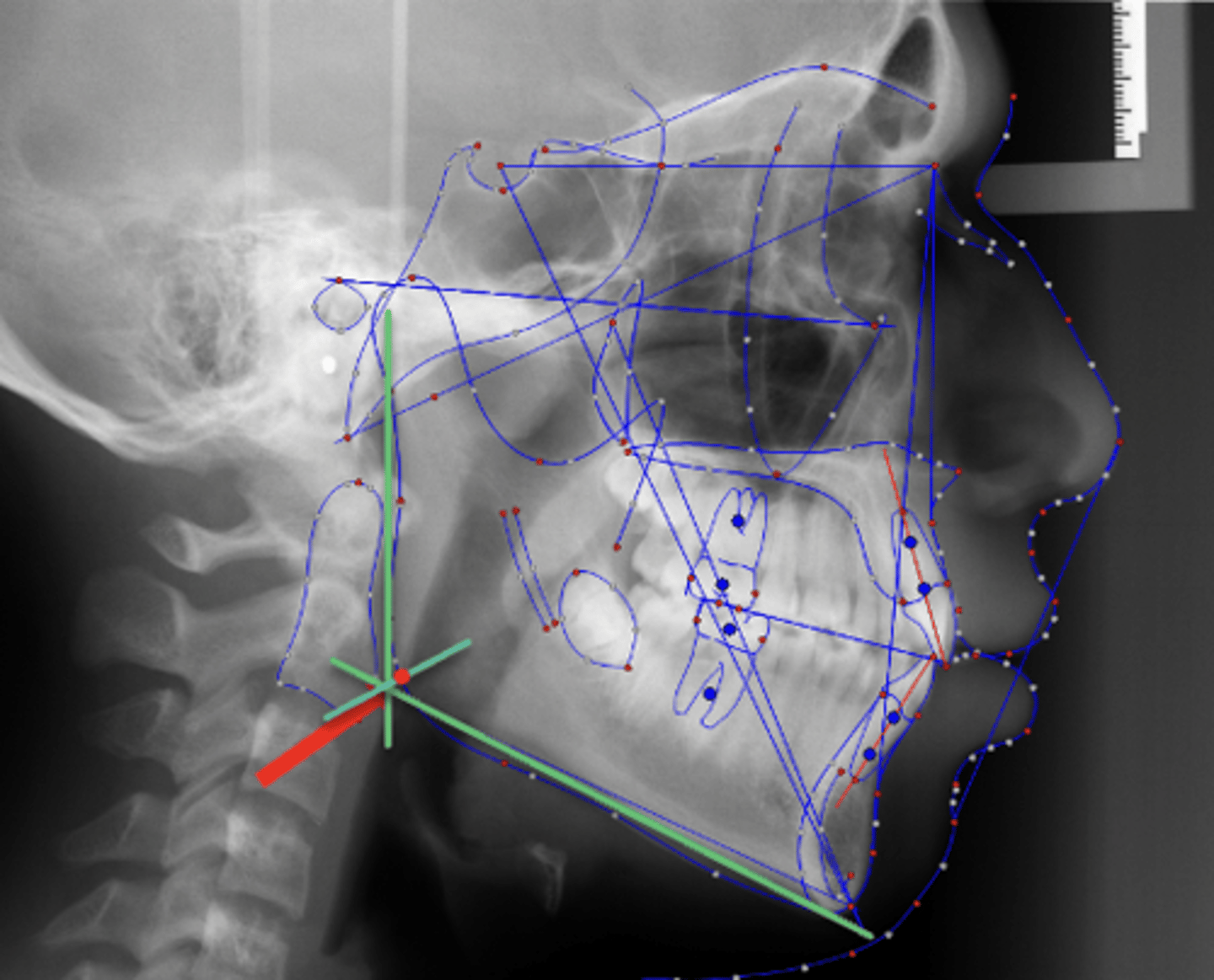
tip of nose
which anatomical landmark:
- Most anterior point of the curve of the nose
- Pronasale
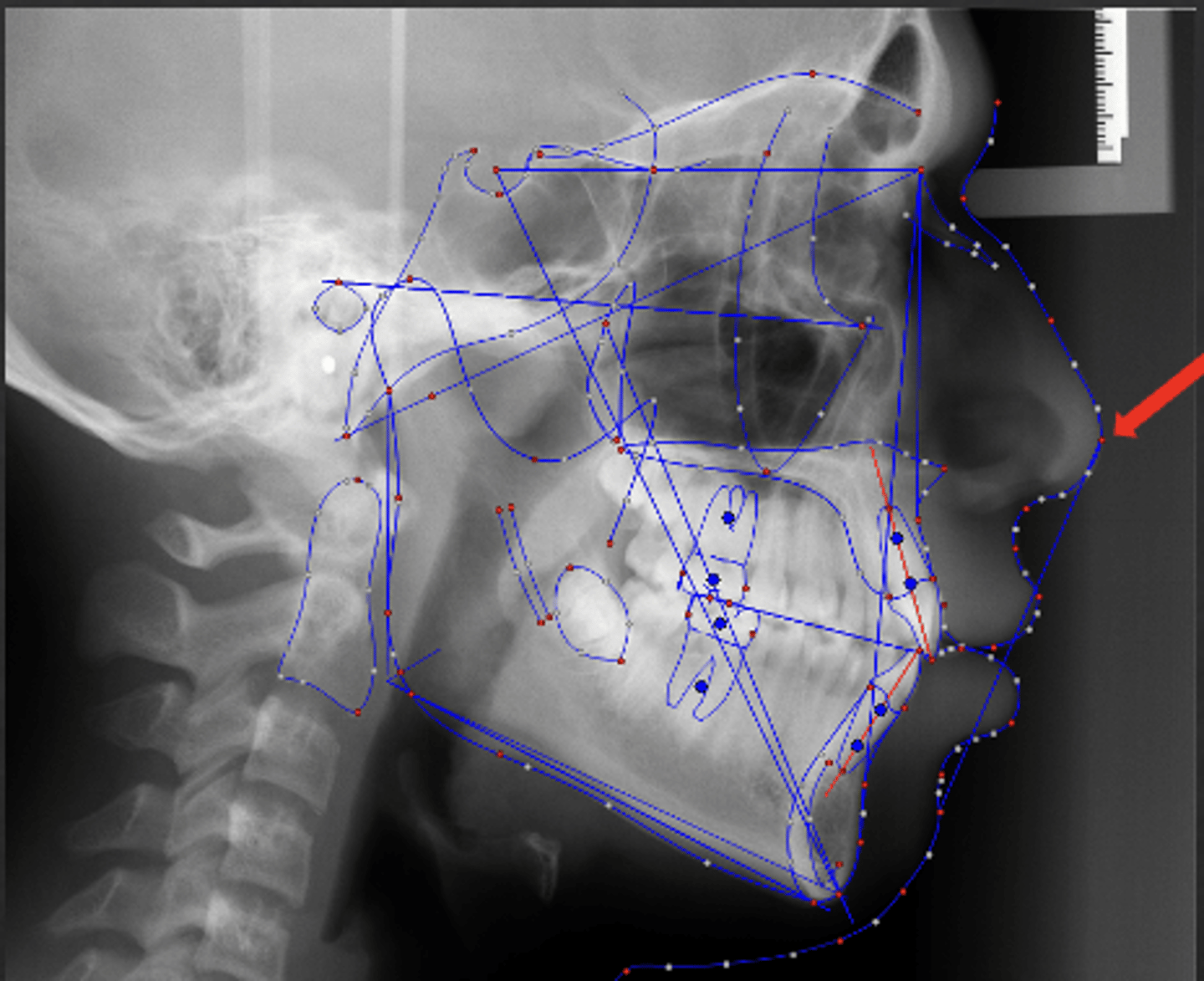
upper lip
which anatomical landmark:
- Most anterior point on the curve of the upper lip
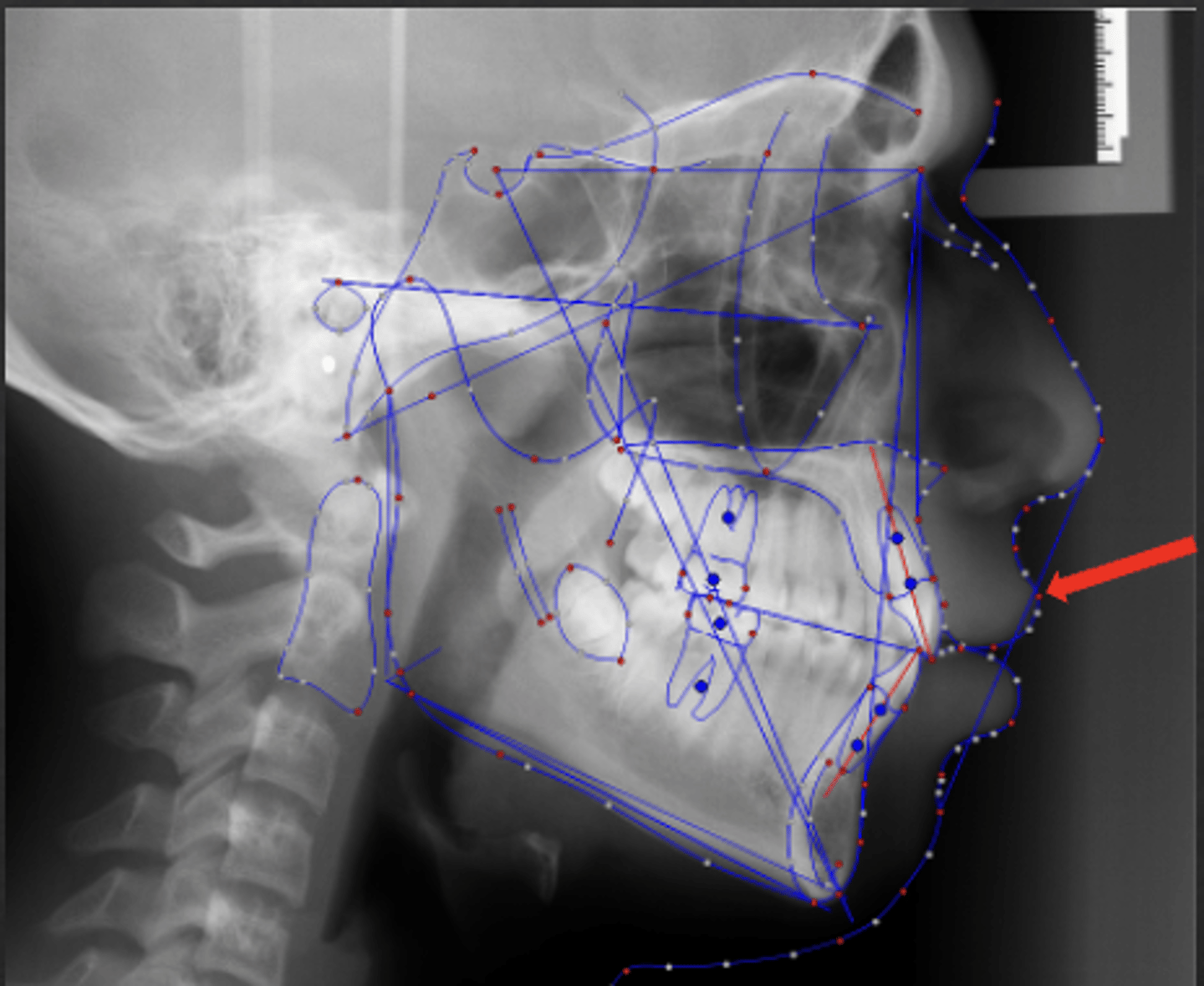
lower lip
which anatomical landmark:
- Most anterior point on the curve of the lower lip
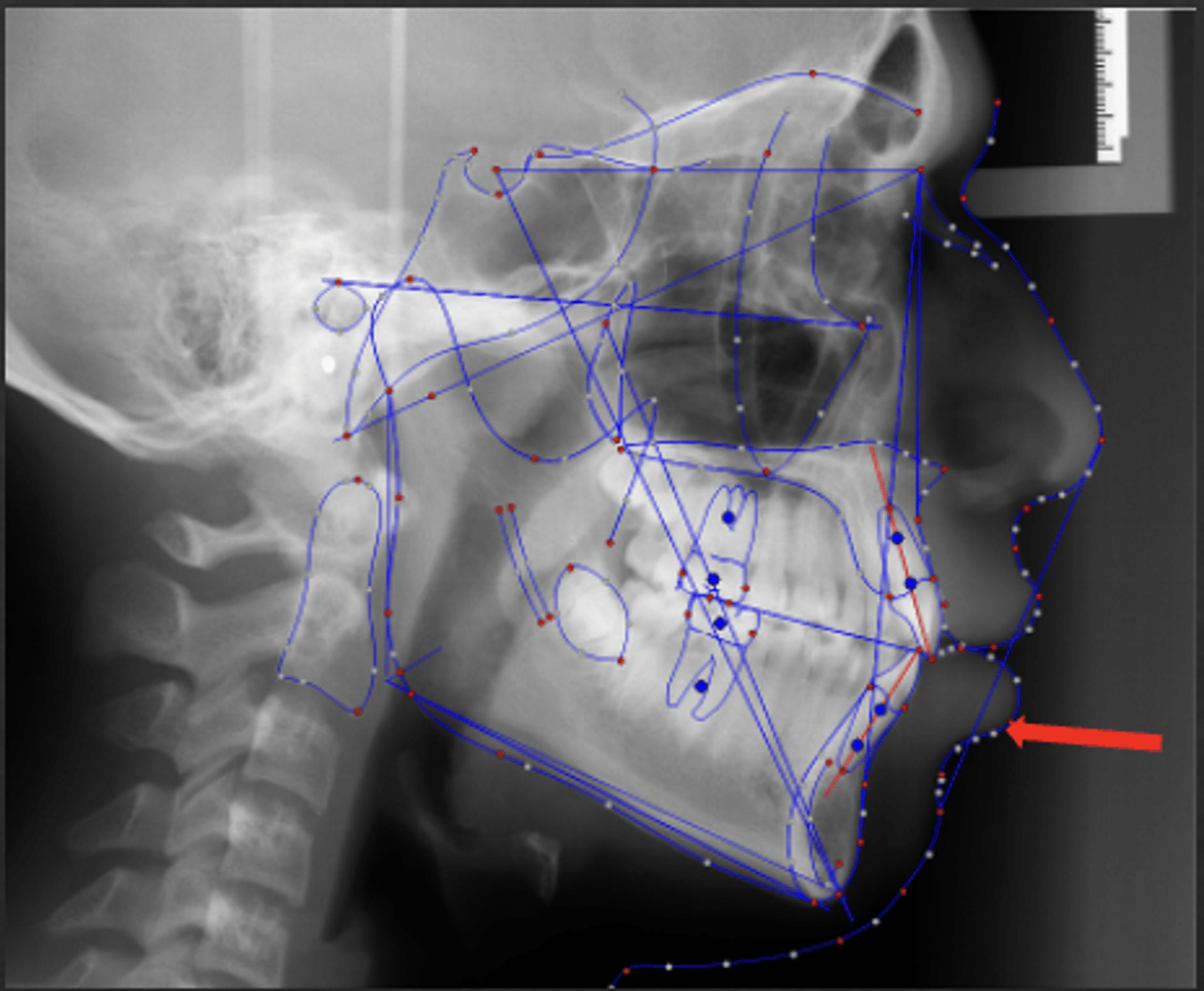
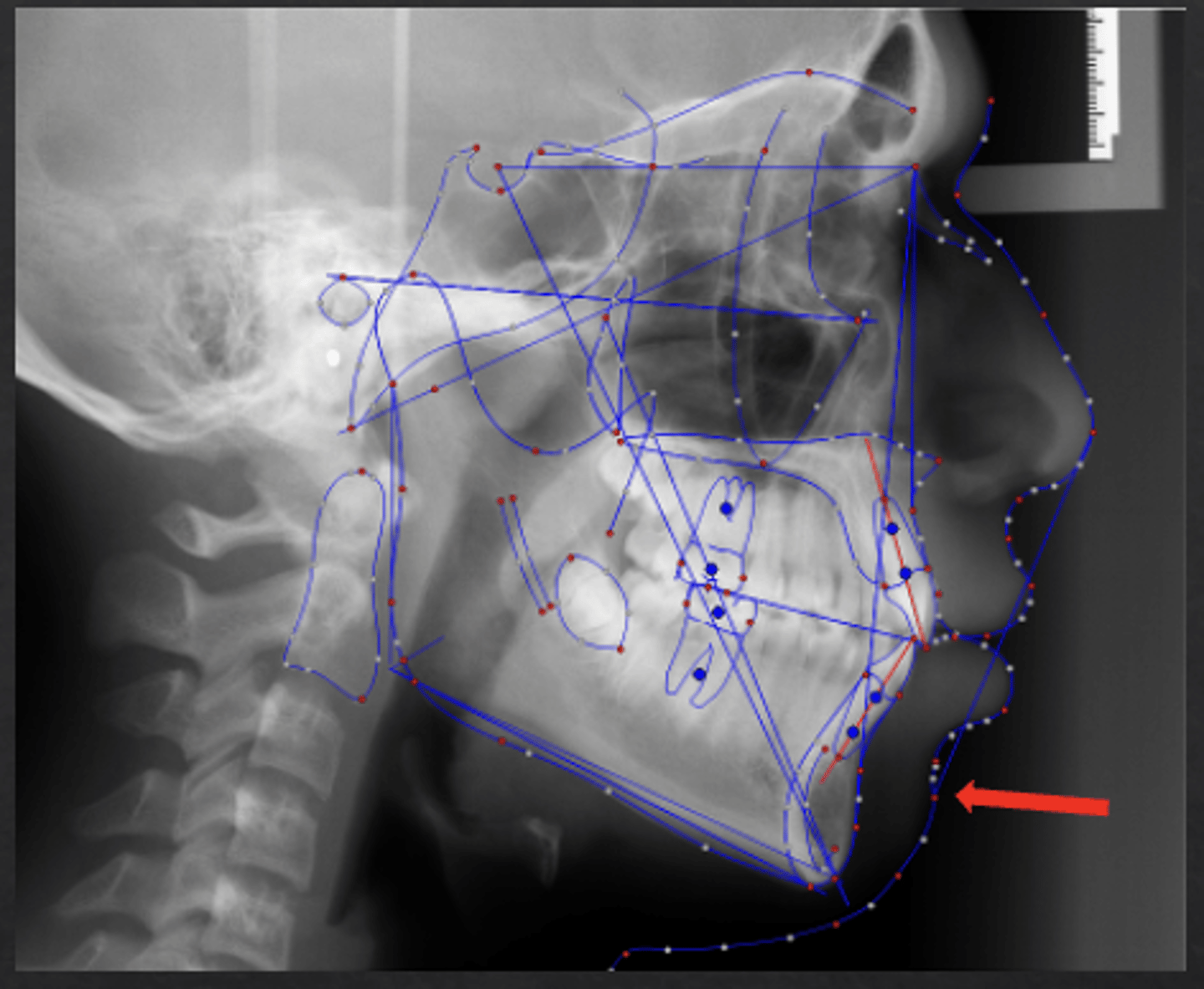
soft tissue pogonion
which anatomical landmark:
- Most anterior point on the curve of the soft tissue chin
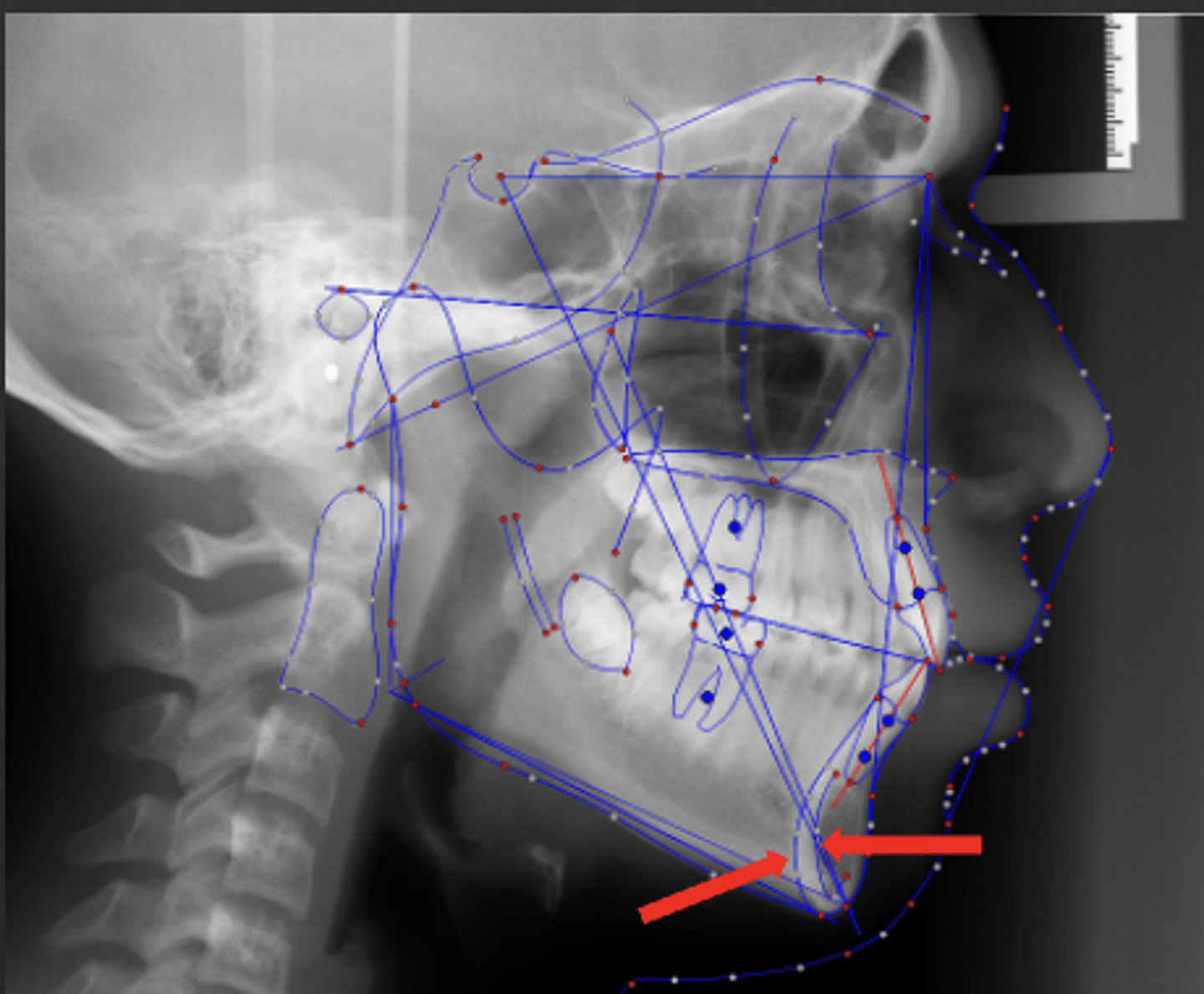
symphysis
which anatomical landmark:
- The internal and external aspects of the symphysial border
- Used to superimpose the mandible
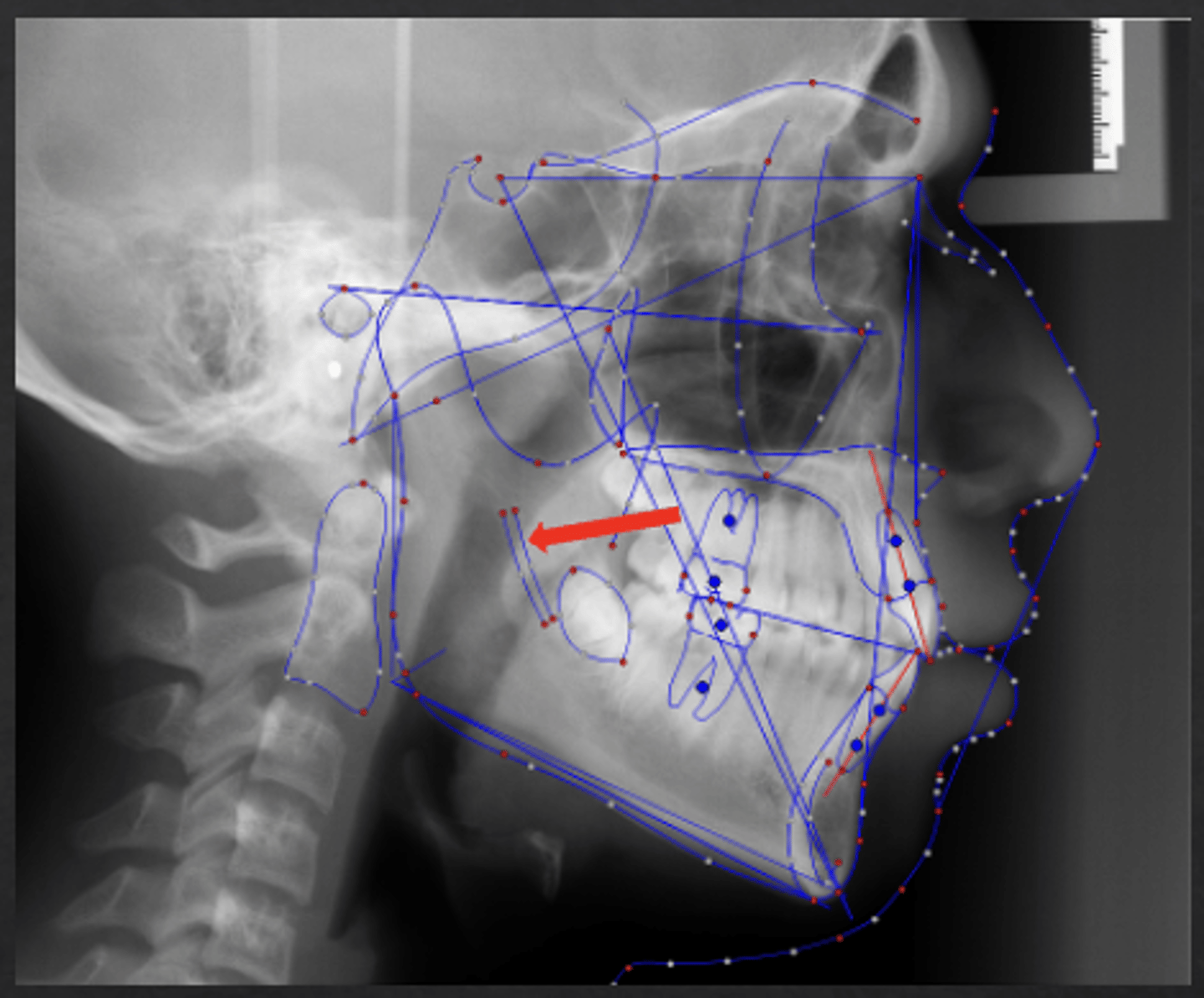
IAN
which anatomical landmark:
- The inferior alveolar nerve canal
- Used to superimpose the mandible
quantitative
the cephalometric analysis measurements provide a .... guide for understanding the patient's malocclusion
skeletal; dental; soft tissue
cephalometric analysis Measurements can be taken in three categories:
1. ....
2. ....
3. ....
AP; Vertical
cephalometric analysis ±Measurements can be taken in two dimensions:
1. ....
2. ....
ceph ruler
- To calculate a distance measurement, you must use a ratio to account for magnification
- We do this using the .....
actual measurement
..... = (actual ruler/ceph ruler) x ceph measurement
Cranial base to mandible
Skeletal cephalometric analysis often compares three relationships:
- Cranial base to maxilla
- ......
- Maxilla to mandible
frankfort horizontal
which reference plane:
- Porion to Orbitale
- Cranial base reference line
- "Natural head position"
- Should be parallel to the floor when the patient "looks off into the horizon"
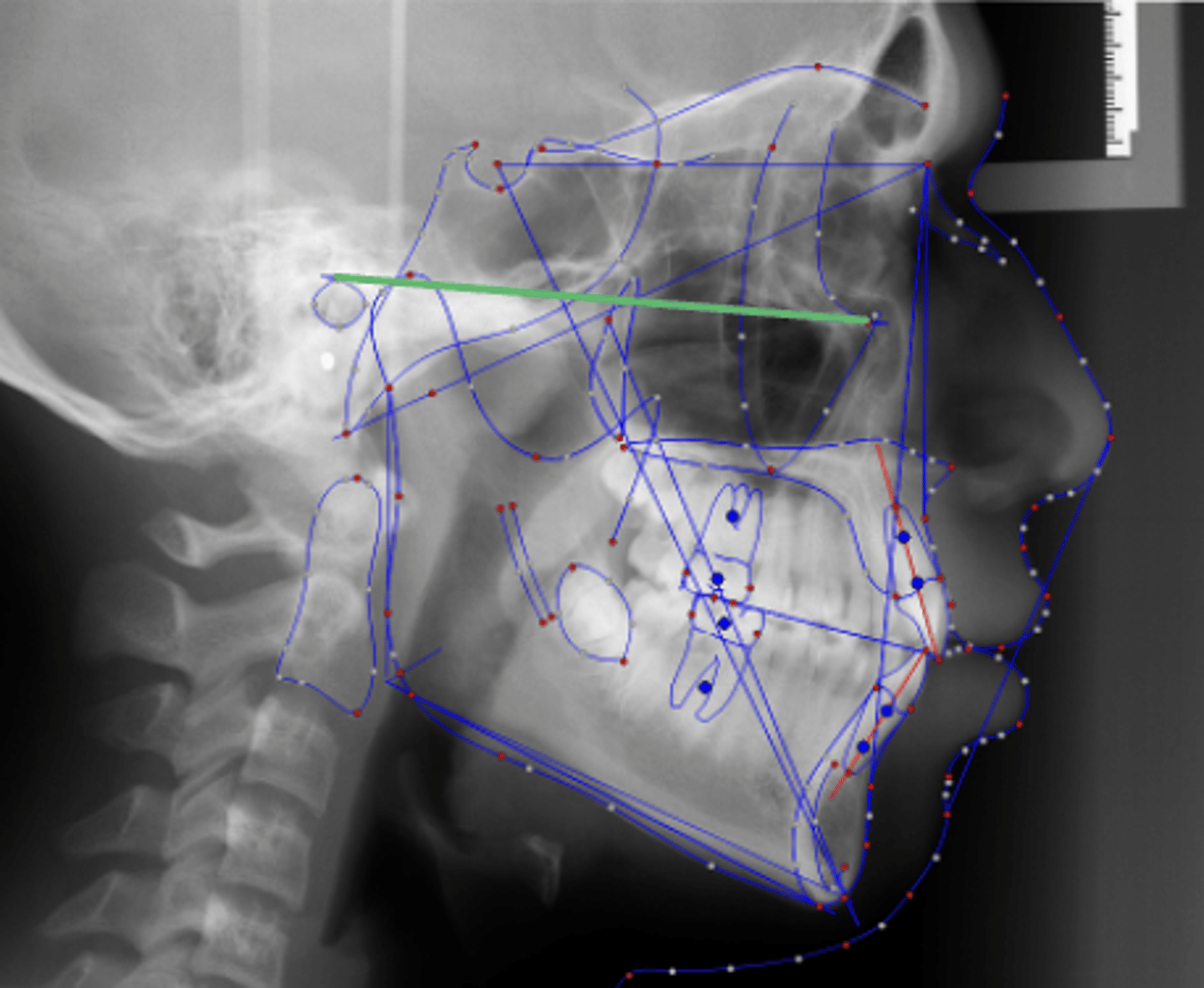
sella nasion
which reference plane:
- Sella to Nasion
- Cranial base reference line
- According to Bjork, the cranial base grows along the Sella Nasion line
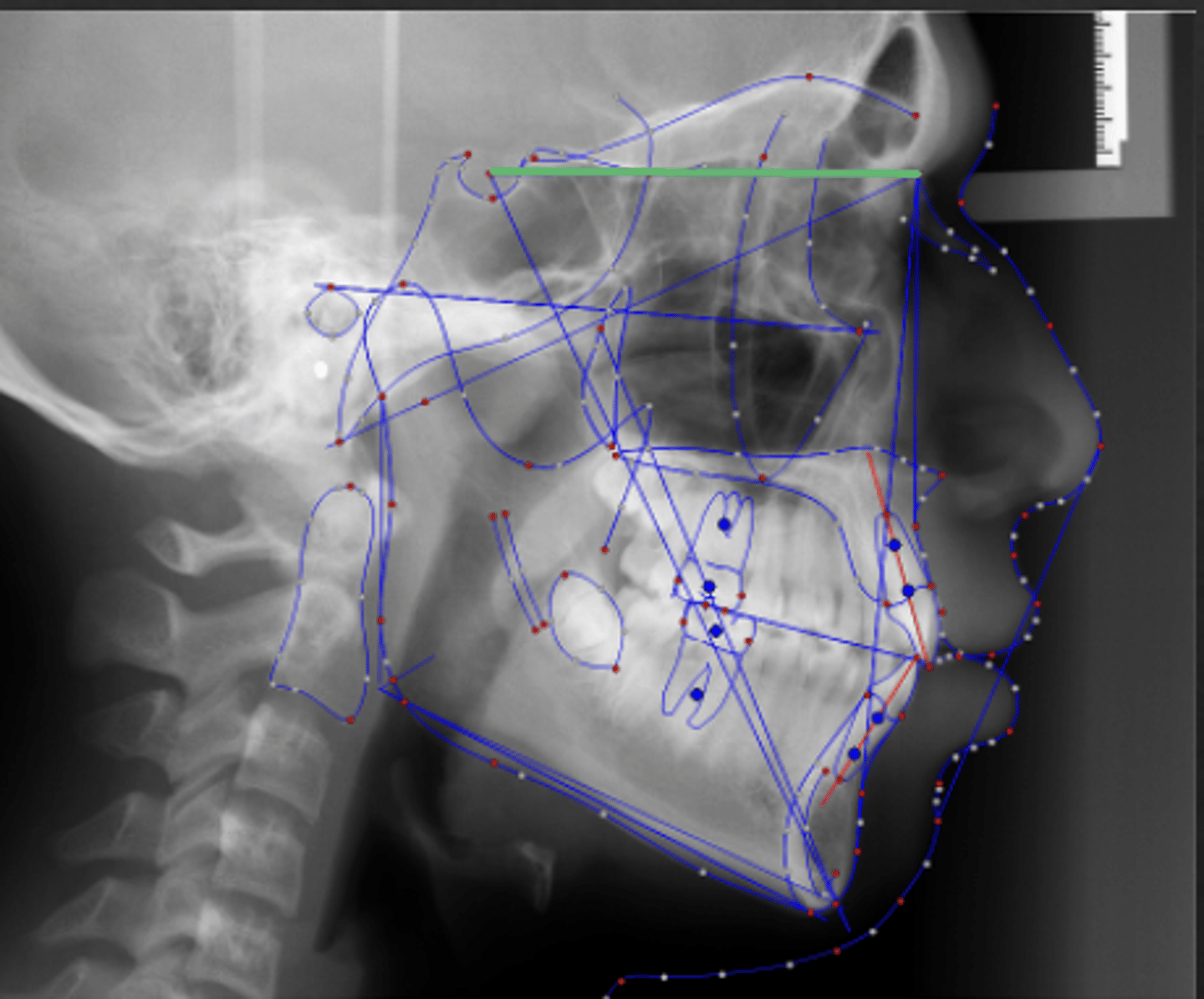
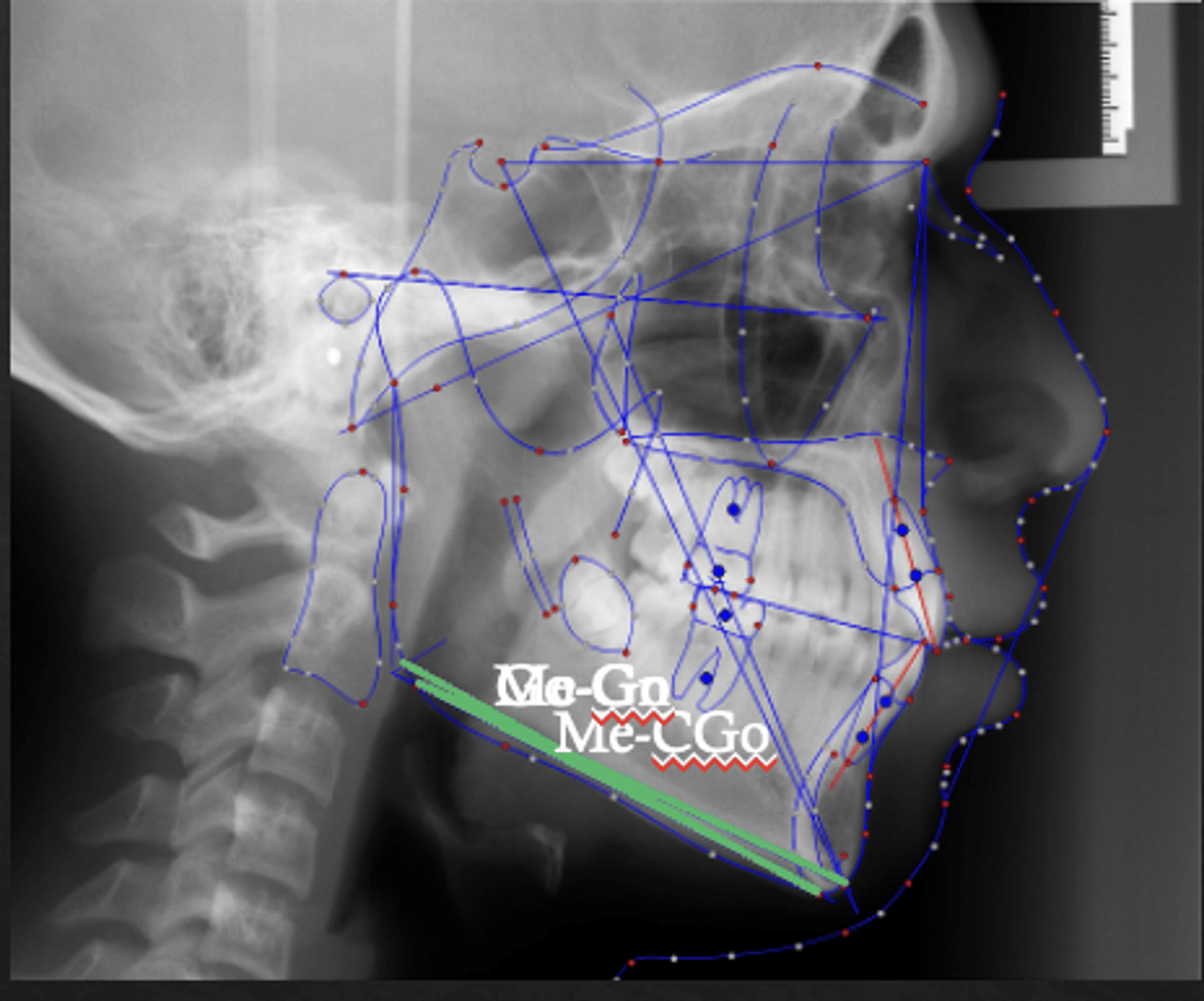
mandibular plane
which reference plane:
- Tangent line to lower border of the mandible
Three definitions:
- Me-Go
- Me-Constructed Go (This is what the American Board of Orthodontics uses)
- Go-Gn
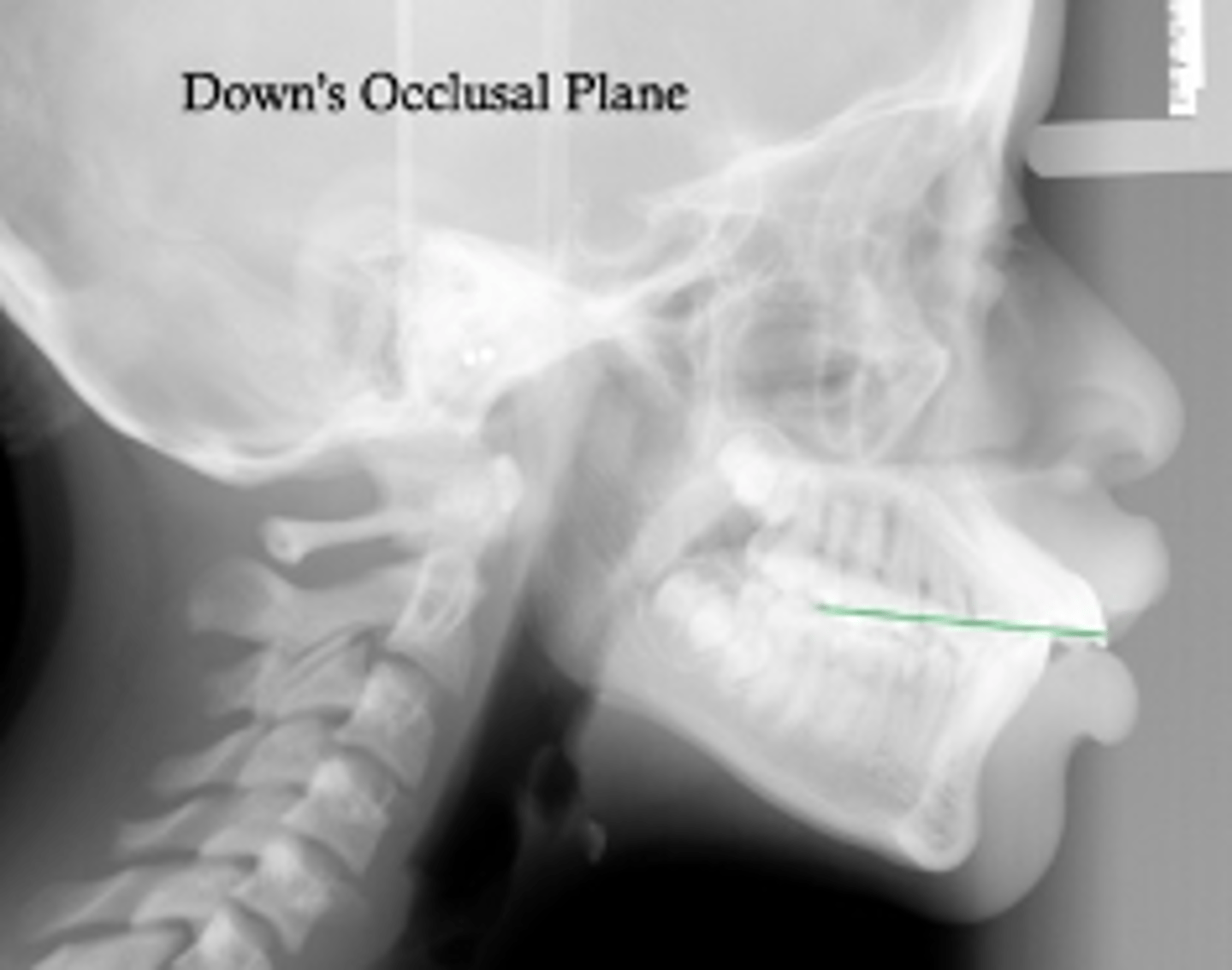
Downs occlusal plane
which reference plane:
- Point 1: Molar occlusal contact
- Point 2: Bisection of the overbite
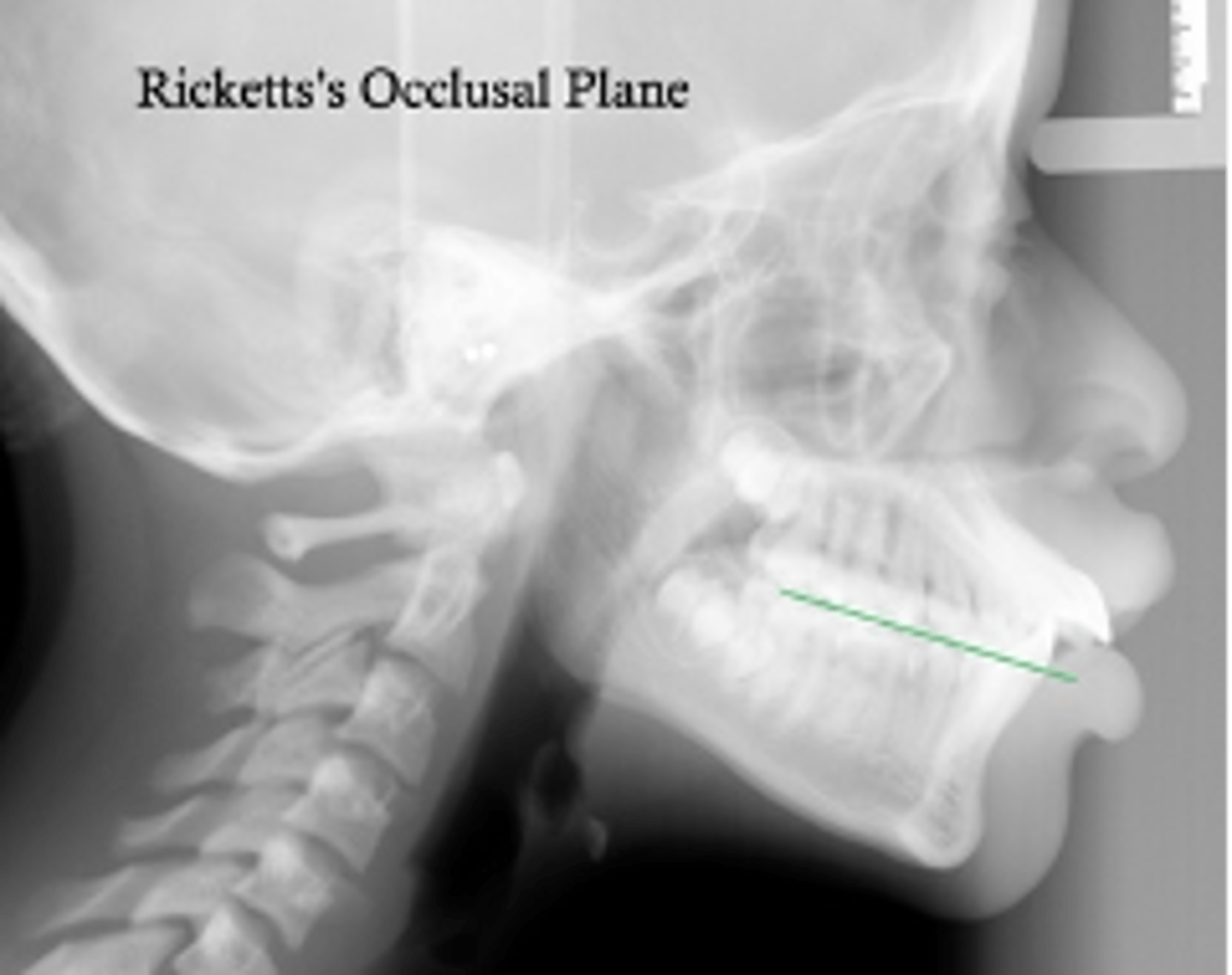
ricketts occlusal plane
which reference plane:
- Point 1: Molar occlusal contact
- Point 2: 1st premolar occlusal contact
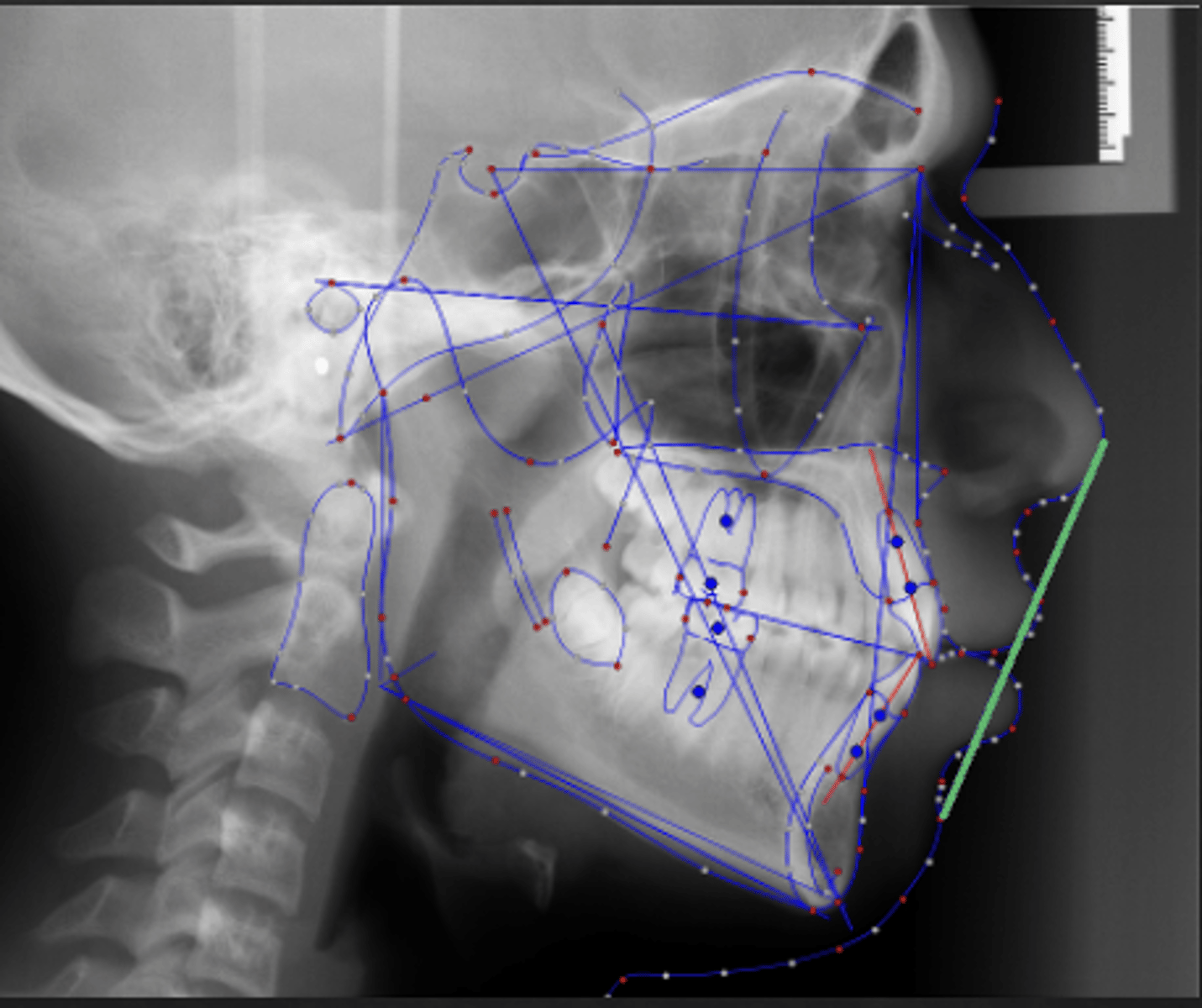
E plane
which reference plane:
- Tip of Nose to Soft Tissue Pogonion
- Lip protrusion reference plane
- Heavily affected by nose and chin size
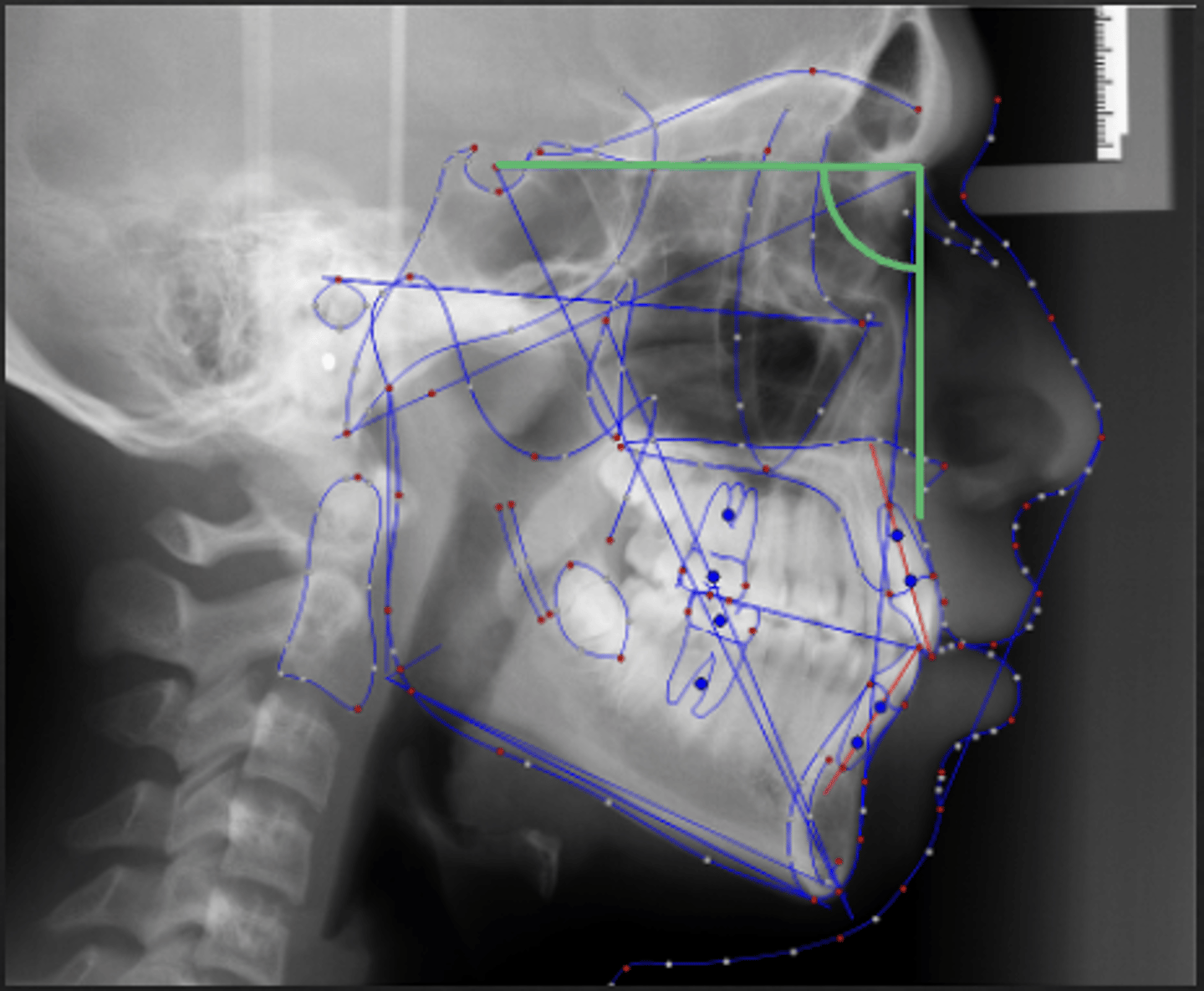
SNA
What skeletal measurement:
- Sella-Nasion vs Nasion-A Point
- AP relationship between the cranial base and the maxilla
- Tells you about the AP position of the maxilla
protrusive maxilla
an SNA greater than to norm indicates a ....
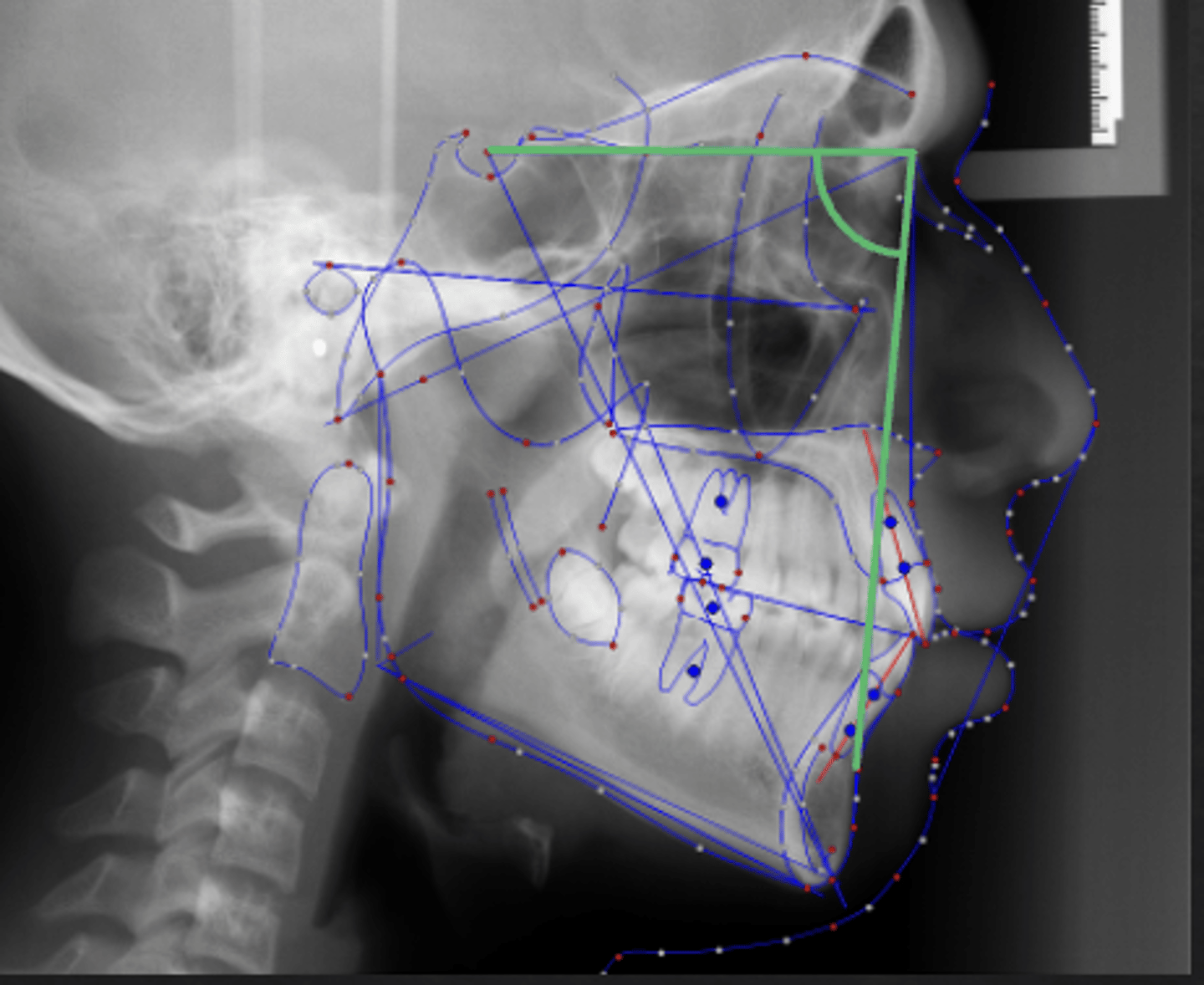
SNB
What skeletal measurement:
- Sella-Nasion vs Nasion-B Point
- AP relationship between the cranial base and the mandible
- Tells you about the AP position of the mandible
Protrusive mandible
an SNB greater than to norm indicates a ....
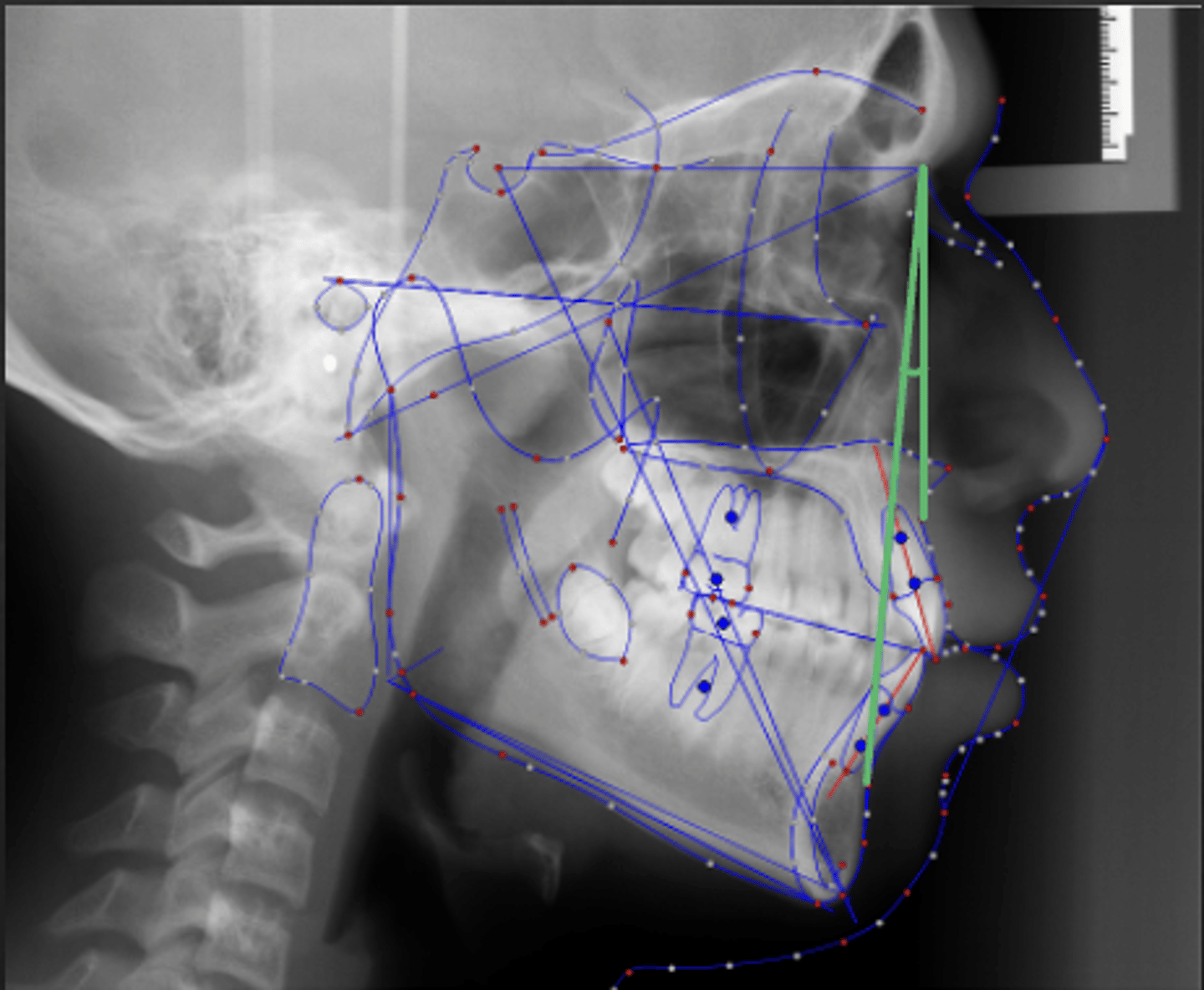
ANB
What skeletal measurement:
- Nasion-A Point vs Nasion-B Point
- ANB=SNA-SNB
- This means ANB can be negative!!!!!
- AP relationship between the maxilla and the mandible
- Tells you about the AP skeletal classification
class 2
an SNB greater than to norm indicates ....
Wits
What skeletal measurement:
- Distance between A point and B point measured along the occlusal plane
- AP relationship between the maxilla and the mandible
- Tells you about the AP skeletal classification
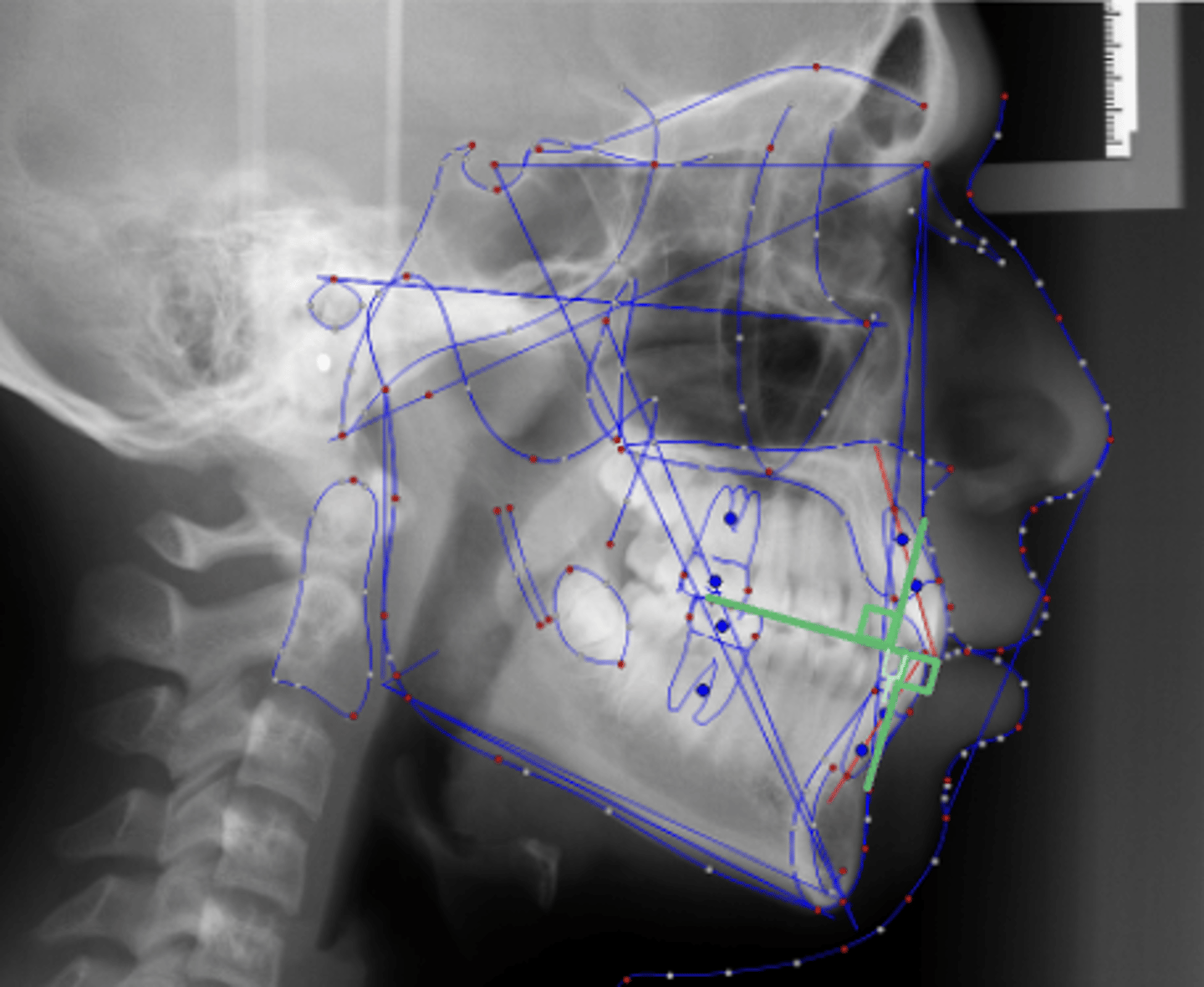
class 2
an Wits greater than to norm indicates ....
FMA
What skeletal measurement:
- Frankfort Horizontal vs. Mandibular Plane
- Vertical relationship between the cranial base and the mandible
- Tells you about the vertical angulation of the mandible
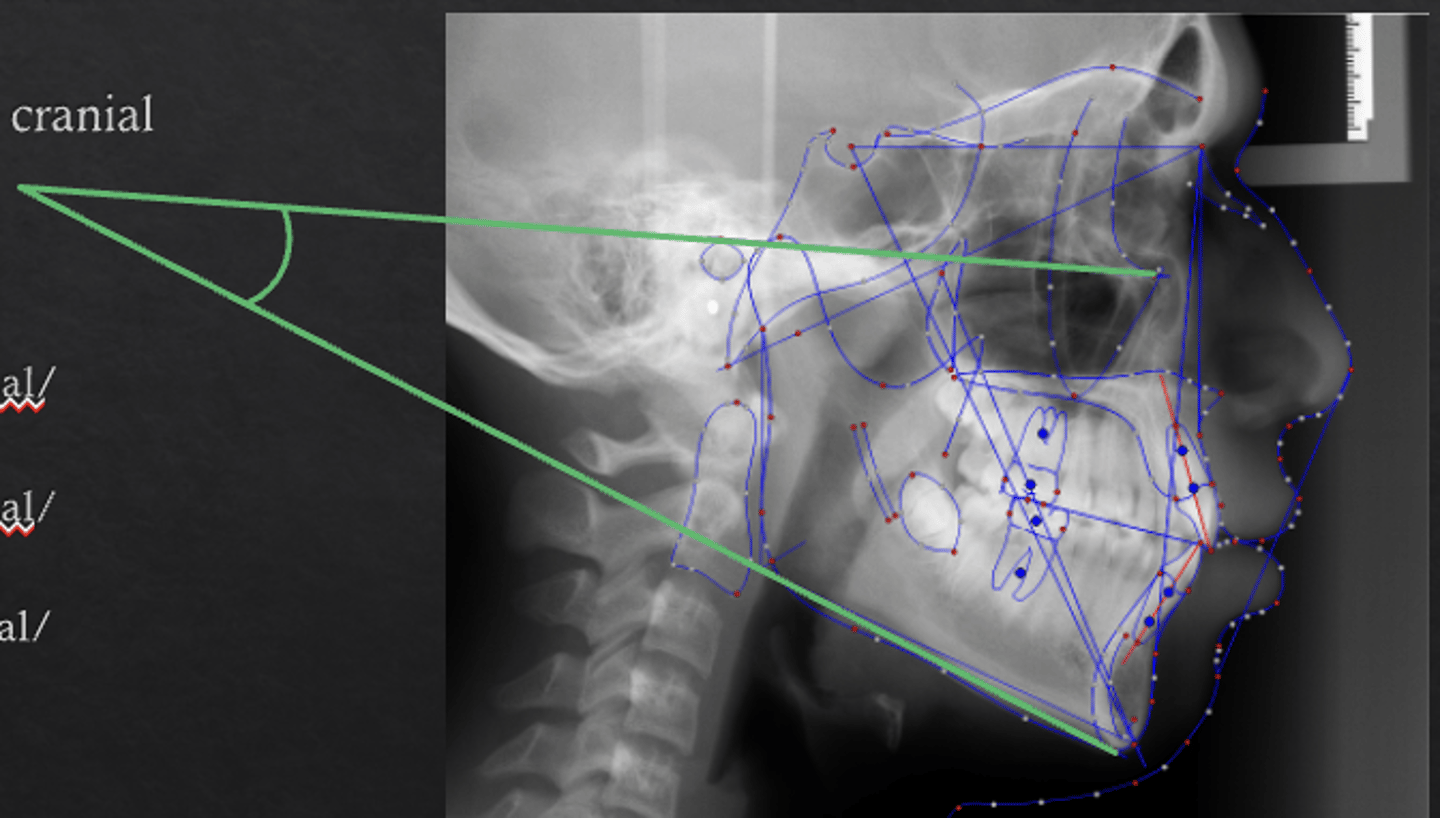
dolicofacial
an FMA greater than to norm indicates ....
SN-MP
What skeletal measurement:
- Sella-Nasion vs. Mandibular Plane
- Vertical relationship between the cranial base and the mandible
- Tells you about the vertical angulation of the mandible
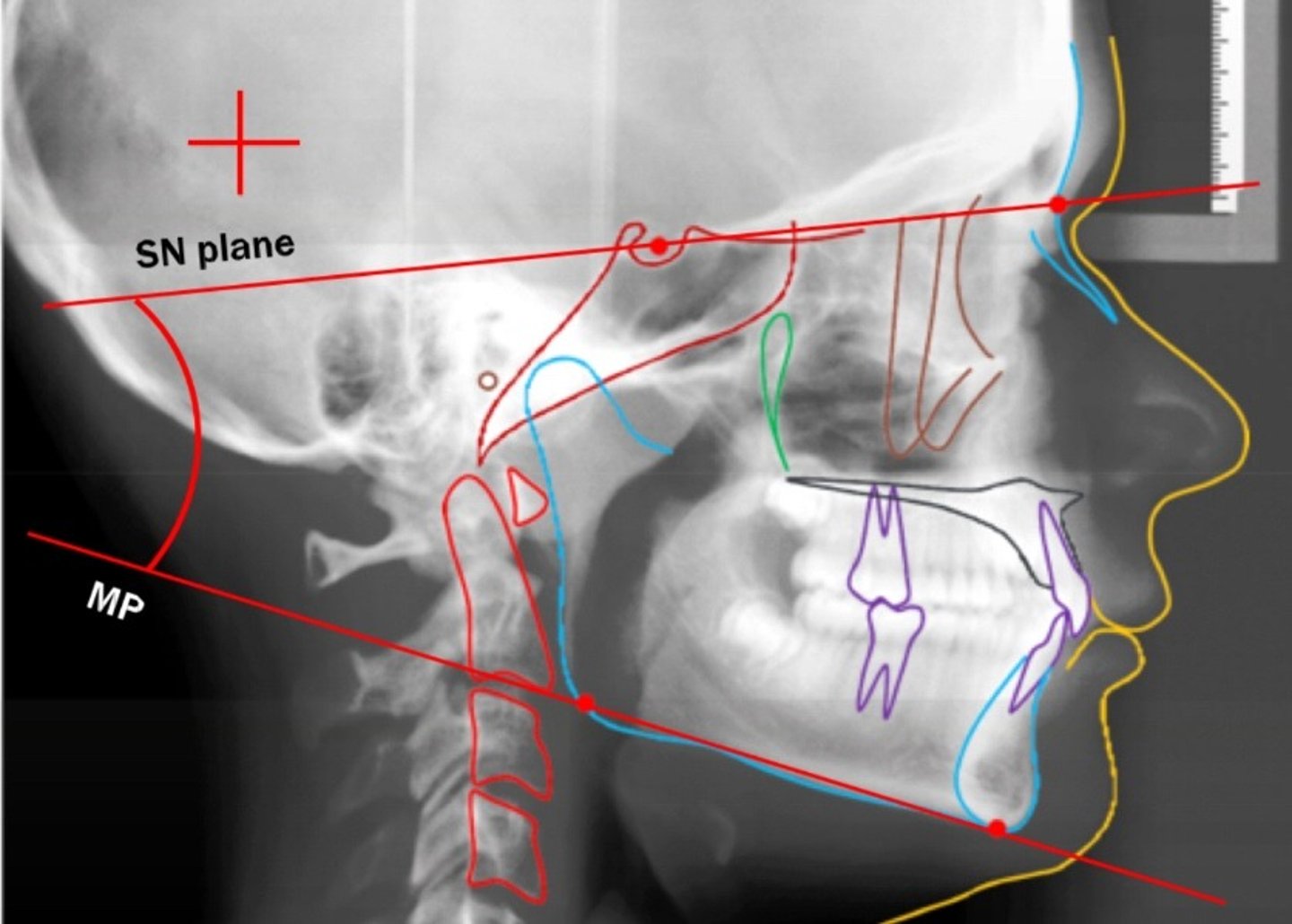
dolicofacial
an SN-MP greater than to norm indicates ....
Y-axis
What skeletal measurement:
- Frankfort Horizontal vs. Sella-Gnathion
- Vertical relationship between the cranial base and the mandible
- Tells you about the vertical angulation of the mandible
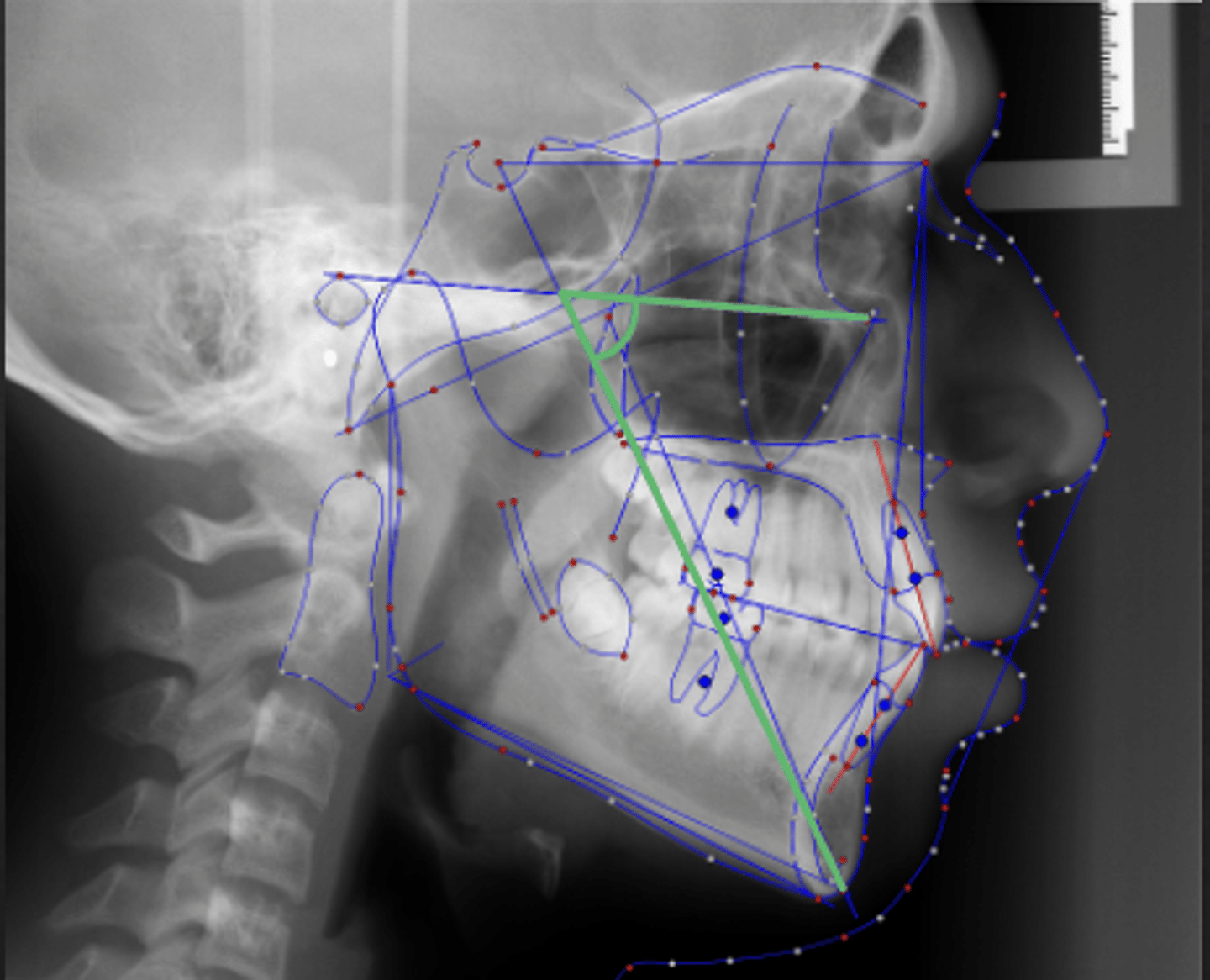
dolicofacial
an y-axis greater than to norm indicates ....
U1-SN
What dental measurement:
- Sella-Nasion vs Long Axis of U1
- AP relationship between the cranial base and the upper incisors
- Tells you about the angulation of the upper incisors
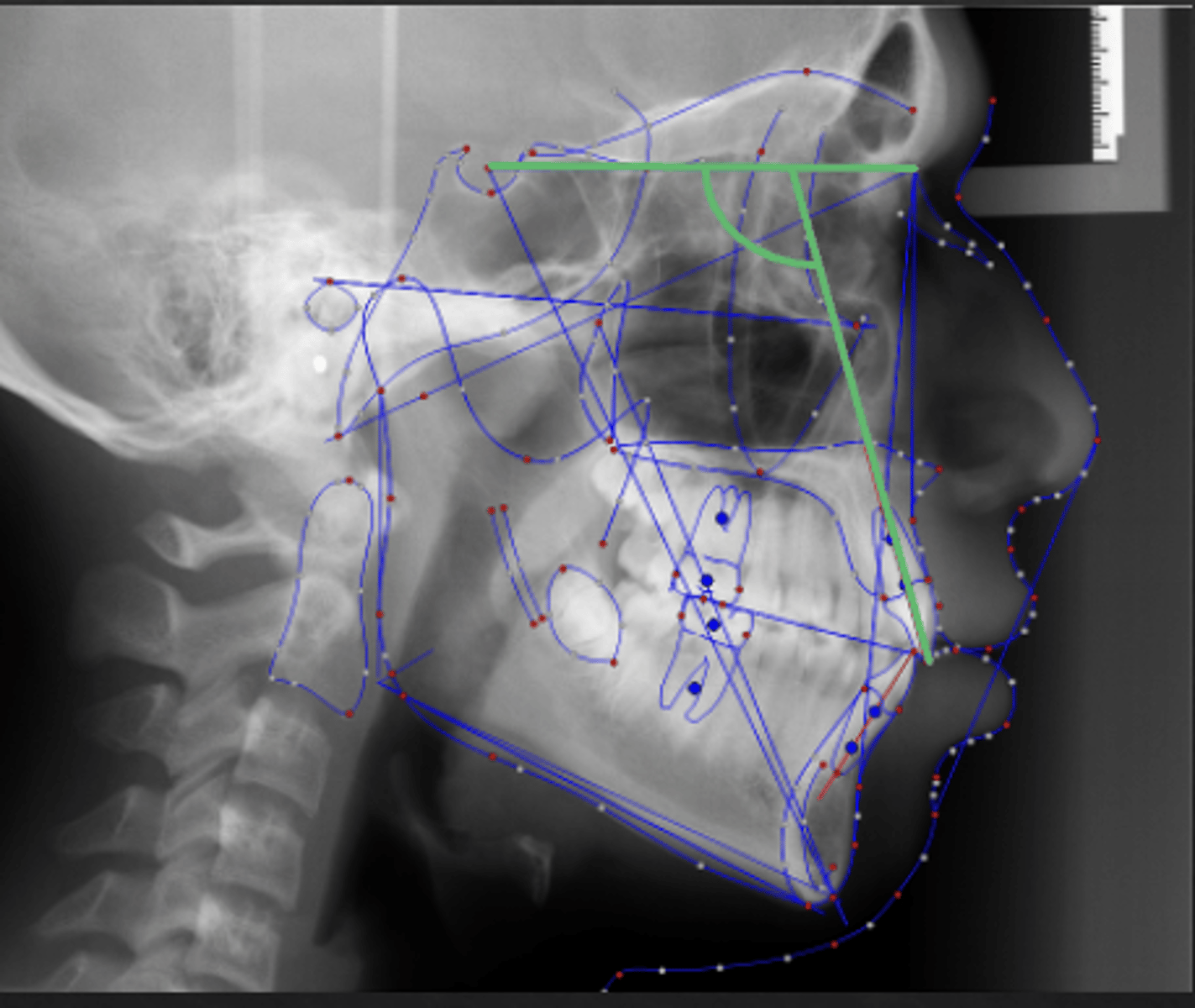
proclined upper incisors
an U1-SN greater than to norm indicates ....
L1-MP
What dental measurement:
- Mandibular Plane vs Long Axis of L1
- AP relationship between the body of the mandible and the lower incisors
- Tells you about the angulation of the lower incisors
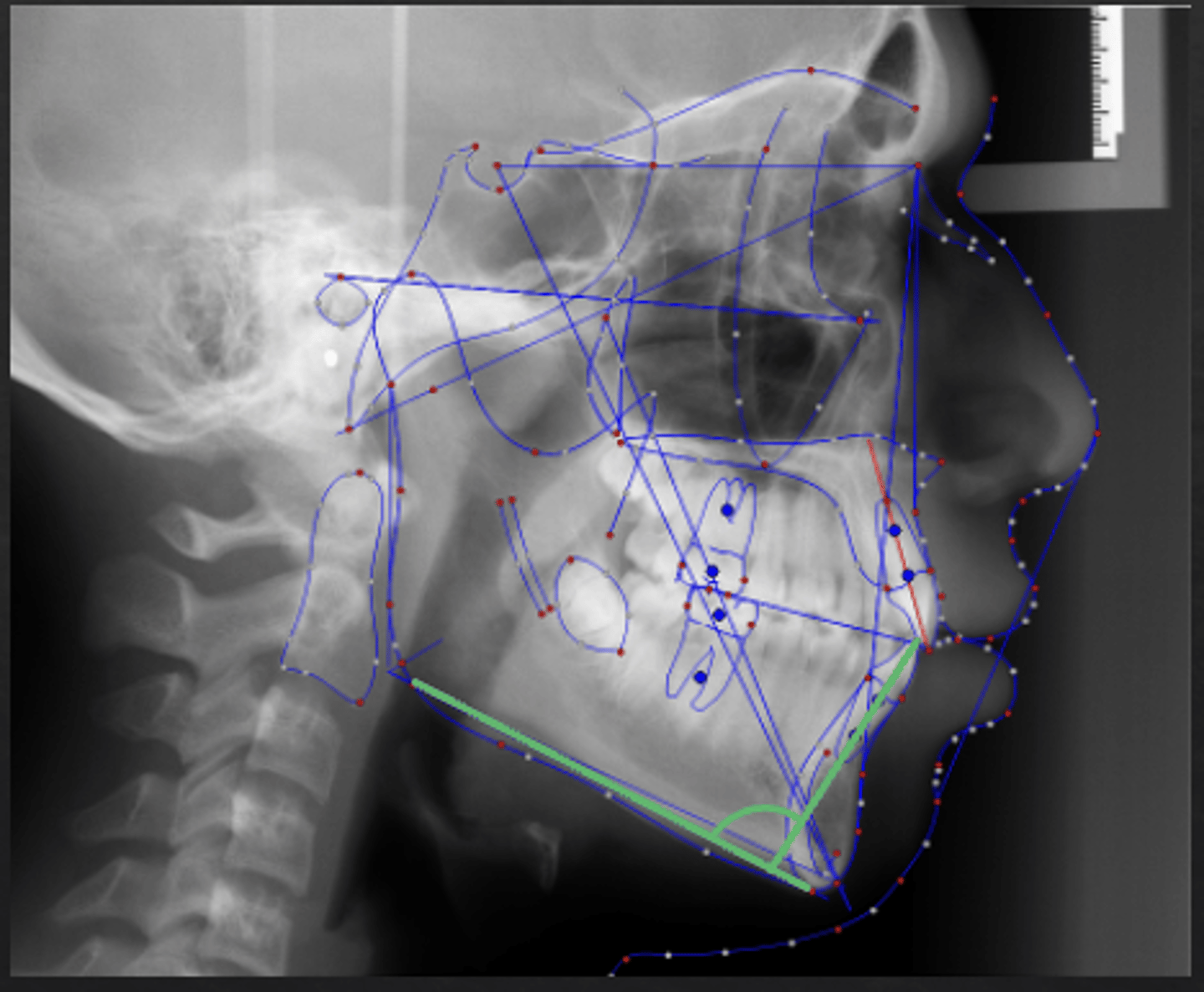
proclined lower incisors
an L1-MP greater than to norm indicates ....
U1-NA
what distance measurement:
- Nasion-A Point to the upper incisors
- AP relationship between the cranial base, maxilla, and the upper incisors
- Measured from the incisal edge of the upper incisor to Nasion-A Point along a perpendicular line
- If U1 is anterior to NA, the measurement is positive
- If U1 is posterior to NA, the measurement is negative
- Tells you about the horizontal position of the upper incisors
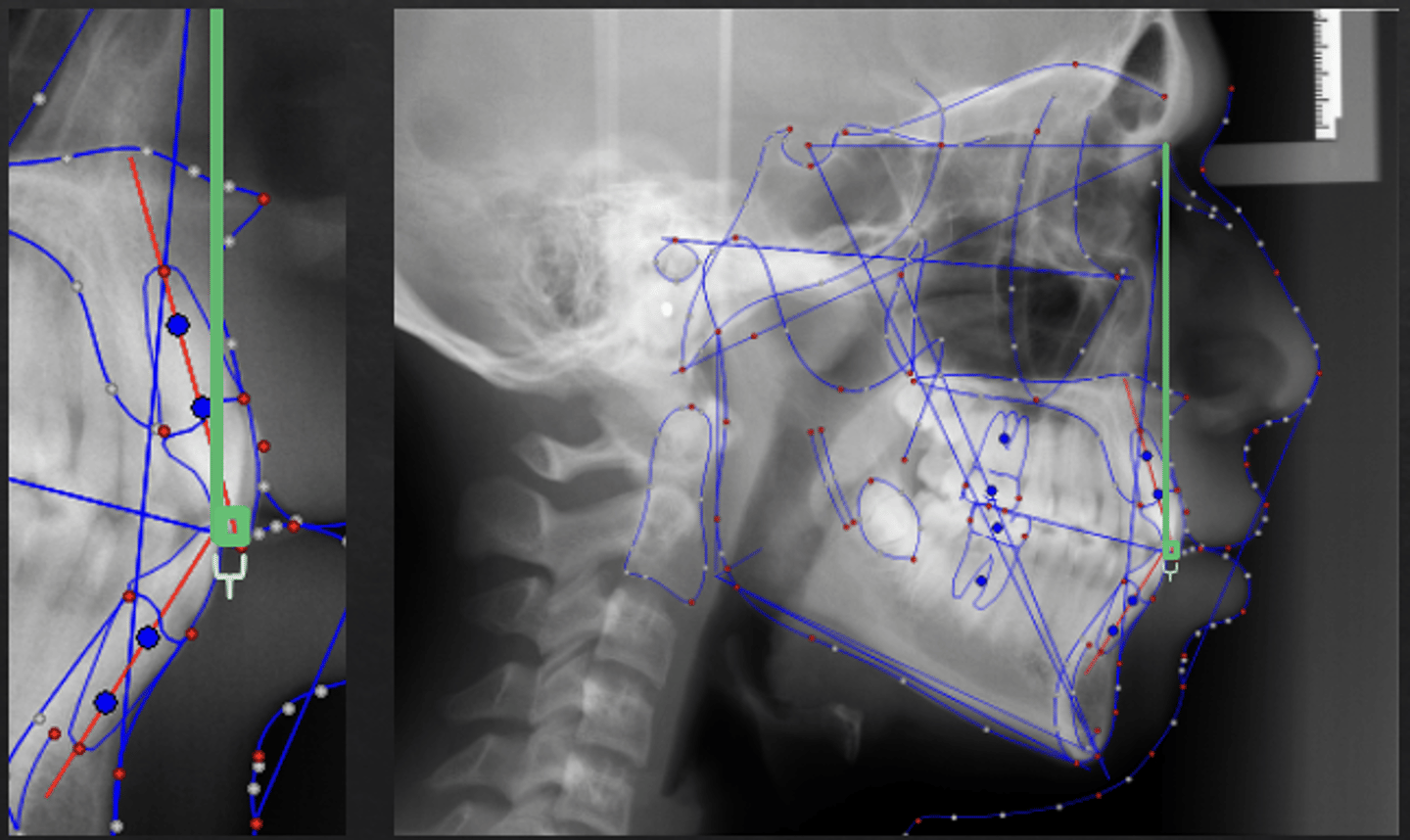
protruded upper incisors
an U1-NA greater than to norm indicates ....
L1-NB
what distance measurement:
- Nasion-B Point to the lower incisors
- AP relationship between the cranial base, mandible, and the lower incisors
- Measured from the incisal edge of the lower incisor to Nasion-B Point along a perpendicular line
- If L1 is anterior to NB, the measurement is positive
- If L1 is posterior to NB, the measurement is negative
- Tells you about the horizontal position of the lower incisors
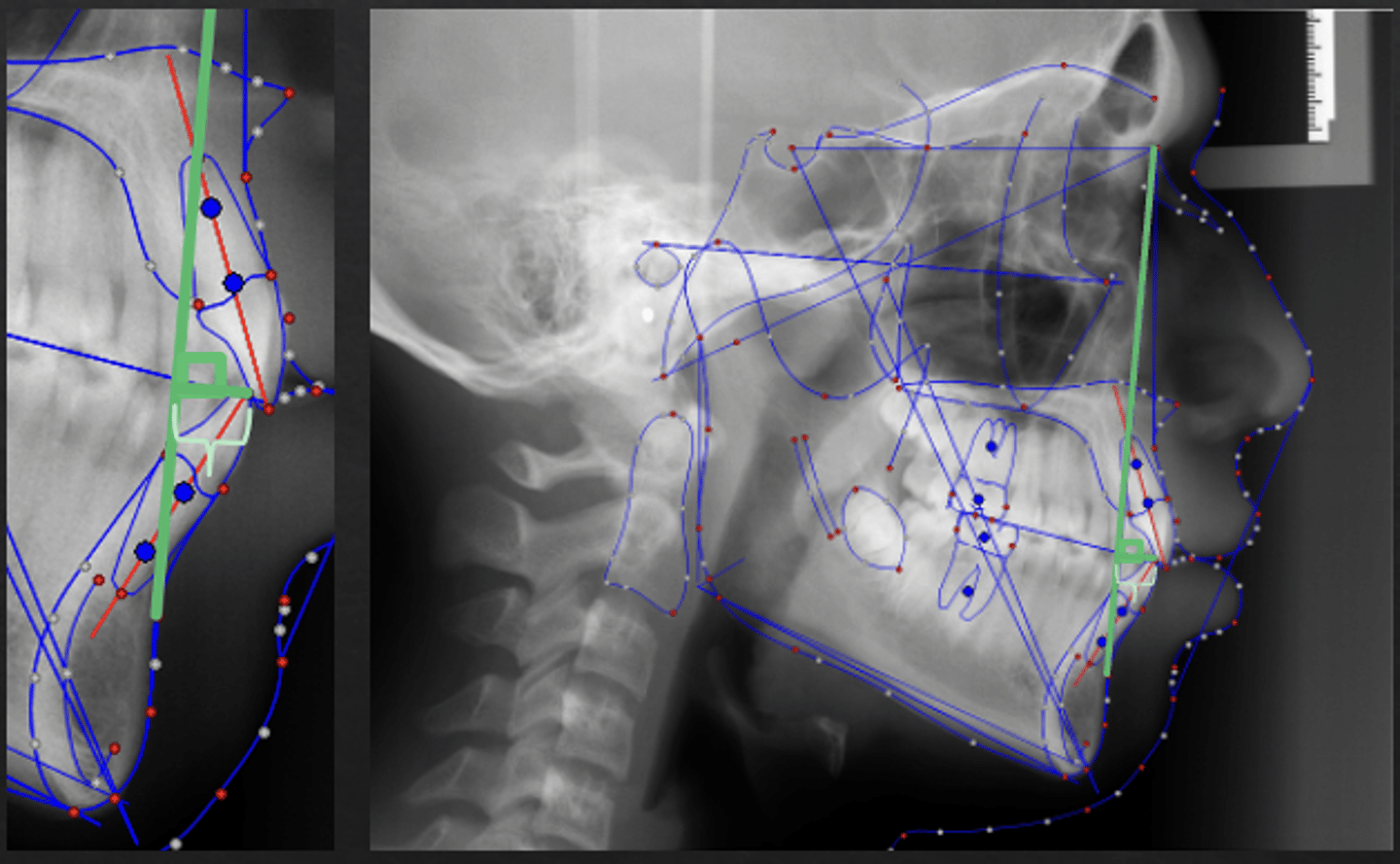
protruded lower incisors
an L1-NB greater than to norm indicates ....
U lip to E-plane
what soft tissue measurement:
- Upper lip to E-Plane
- Distance from the most protrusive point on the upper lip to E-Plane along a perpendicular line
- If U Lip is anterior to E-Plane, the measurement is positive
- If U Lip is posterior to E-Plane, the measurement is negative
- Tells you about upper lip protrusion
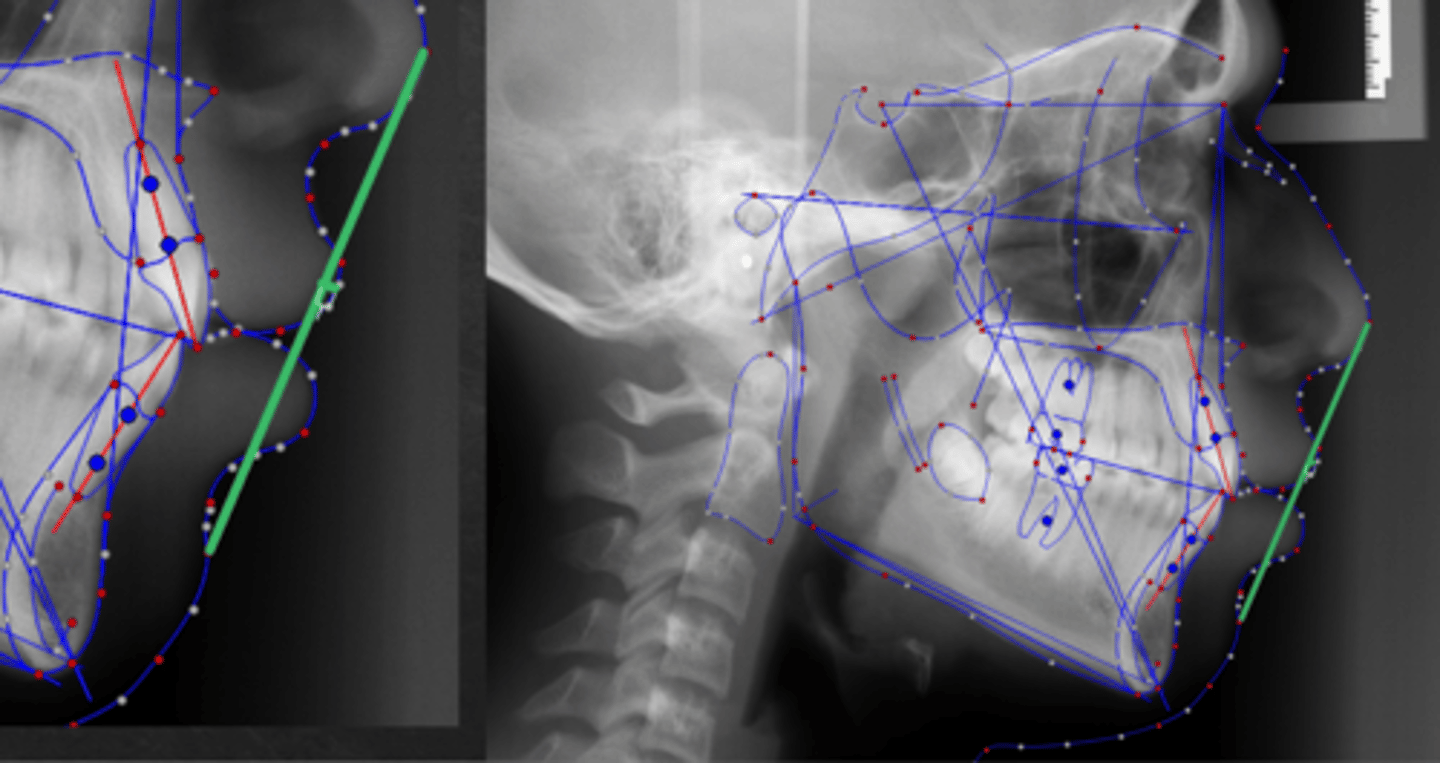
protrusive upper lip
an U lip to E-plane greater than to norm indicates ....
L lip to E-plane
what soft tissue measurement:
- Lower lip to E-Plane
- Distance from the most protrusive point on the lower lip to E-Plane along a perpendicular line
- If L Lip is anterior to E-Plane, the measurement is positive
- If L Lip is posterior to E-Plane, the measurement is negative
- Tells you about lower lip protrusion
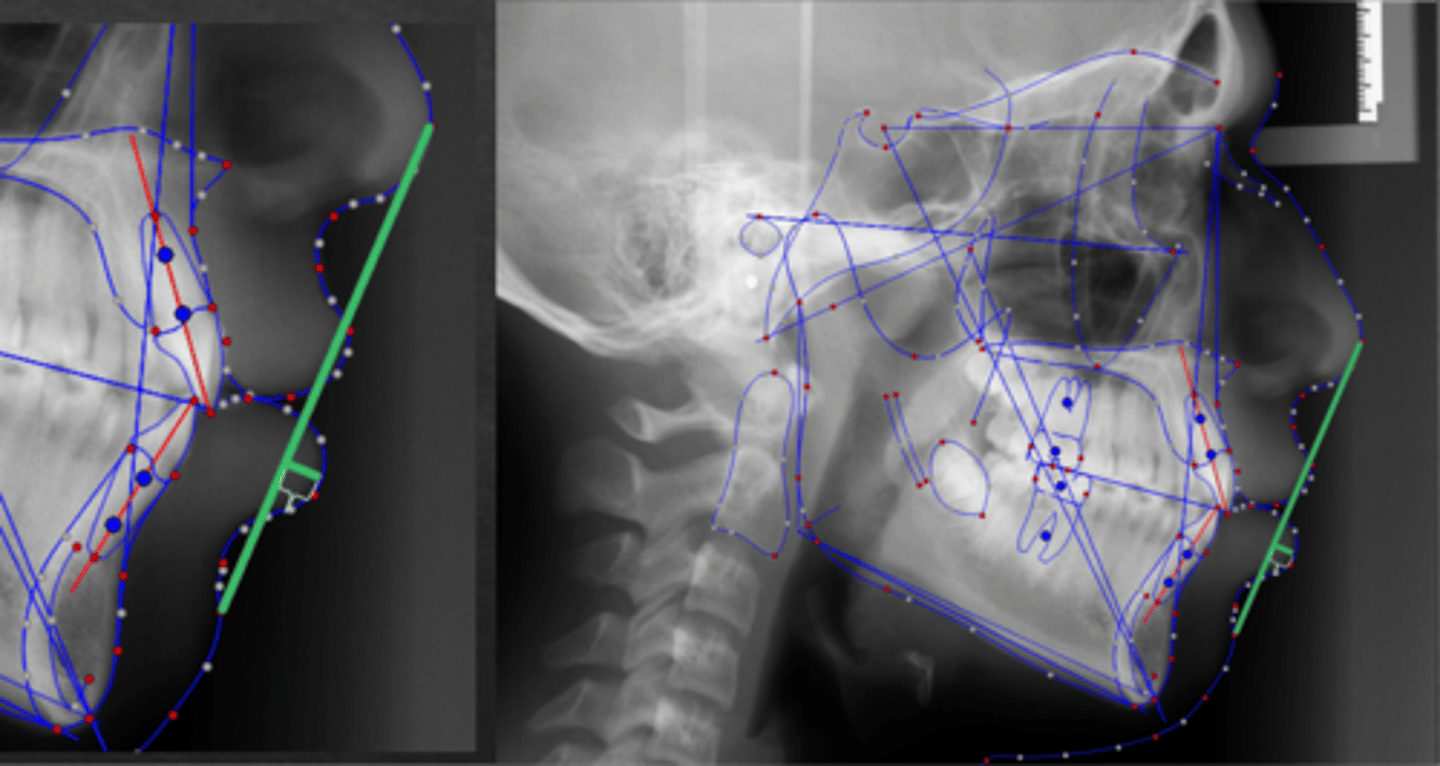
protrusive lower lip
an L lip to E-plane greater than to norm indicates ....