Unit 1: The Renaissance and The Reformation
 Call Kai
 Learn
Learn Practice Test
 Spaced Repetition
 Match
Match Flashcards
 Knowt Play
1/20

Earn XP
Description and Tags
A review flashcard deck covering key terms, historical figures, and events from the Middle Ages through the Renaissance and Protestant Reformation.
Name | Mastery | Learn | Test | Matching | Spaced | Call with Kai | Chat |
|---|
No analytics yet
Send a link to your students to track their progress
21 Terms
Historical Empathy
The practice of understanding the different social, cultural, intellectual, and emotional settings that formed people's lives throughout history by taking in multiple perspectives.
Black Death (The Plague)
A devastating disease originating in Asia that reached the Sicilian port of Messina, Italy, in October 1347 via Mongol trade routes and killed one in three people in Europe within three years.
The Mongols
A group that supported Silk Road trade, religious tolerance, and diversity, but was also likely responsible for the spread of the bubonic plague.
The Hundred Years' War
A series of conflicts fought off and on between England and France from 1337 to 1453 over land and the English Channel.
Joan of Arc
A historical figure who emerged during the Hundred Years' War and helped France achieve victory over England.
Fall of Constantinople (1453)
The event in 1453 when Ottoman Turks invaded and conquered the Byzantine Empire's capital city of Constantinople, renaming it Istanbul.
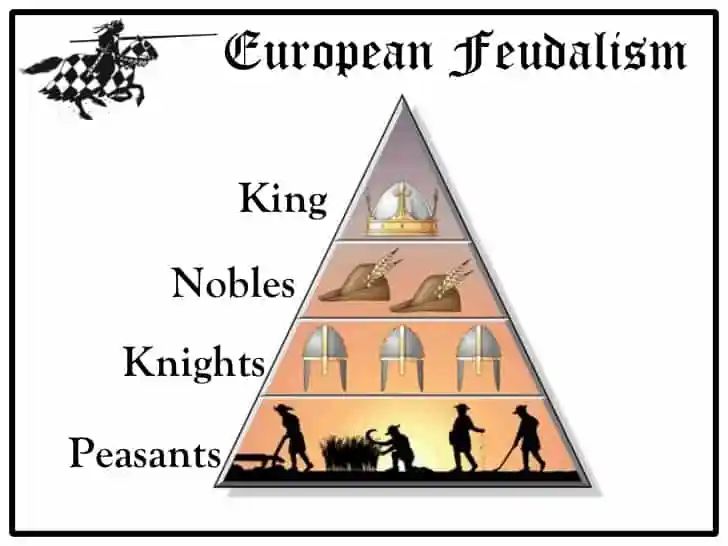
European Feudalism
The social and political system practiced in Europe during the Middle Ages, structured in a pyramid consisting of the King, Nobles, Knights, and Peasants.
The Renaissance
A period beginning in the 1300s and peaking around 1500 characterized by a rebirth of classical learnings from Greece and Rome, technological advancements, and art that glorified the individual.
Humanism
A Renaissance movement focused on studying ancient Greek and Roman culture to increase understanding, emphasizing the humanities such as language, poetry, and history.
Humanist
A person during the Renaissance who studied Greek and Roman culture to increase their understanding and believed in education centered on the humanities.
Medici Family
A wealthy family of Florence in the late 1400s who served as generous patrons of Renaissance arts.

Printing Press
A machine created by Johann Gutenberg in 1455 that made books and knowledge widely accessible, increased literacy, and spread new ideas across Europe.
Indulgences
Certificates sold by popes in the Roman Catholic Church in exchange for money, claimed to reduce or eliminate punishment in purgatory for buyers or their deceased loved ones.
Martin Luther
A German monk who spoke out against Catholic Church corruption and authored the 95 Theses in 1517, initiating the Protestant Reformation.
95 Theses
A document written by Martin Luther in 1517 detailing arguments against the Catholic Church and asserting that the Bible, rather than the pope, was the sole source of religious truth.
Protestants
The followers of Martin Luther's ideas who, by 1530, adopted this name because they protested against Catholic Church authority.
John Calvin
A Swiss religious reformer whose followers were known as Calvinists and who shared beliefs similar to Luther while teaching the concept of predestination.
Predestination
A core Calvinist doctrine stating that God has already determined prior to birth who will gain salvation.
Church of England
The national church established by King Henry VIII in 1534 after Parliament completed the official separation of England from the Roman Catholic Church.
Queen Elizabeth I
The daughter of King Henry VIII and Anne Boleyn who became Queen of England at age 25, restored religious peace through compromise, and was the last Tudor monarch.
Ghetto
A separate section of a city to which Jewish populations were forcibly restricted during the 1500s amid widespread religious intolerance.