Week 1 Material
 Call Kai
 Learn
Learn Practice Test
 Spaced Repetition
 Match
Match Flashcards
 Knowt Play
1/13

There's no tags or description
Looks like no tags are added yet.
Name | Mastery | Learn | Test | Matching | Spaced | Call with Kai | Chat |
|---|
No analytics yet
Send a link to your students to track their progress
14 Terms
What is economics?
consists of :
-making choices
-study how companies, societies, and individuals make decisions to maximize their well-being given limitation
-limitation can be: money, resources, time, and information. Economics analyzes trade-offs and opportunity costs involved in these decisions.
What is scarcity?
-clash between our unlimited wants with limited resources
-focus on the allocation of scarce resources to satisfy unlimtied wants as fully possible
-scarcity exists because humans want consistently to outpace the resources available to satisfy them *due to humane perception/interpretation
-scarce: not abundant
*scarcity is not the same thing as scarce
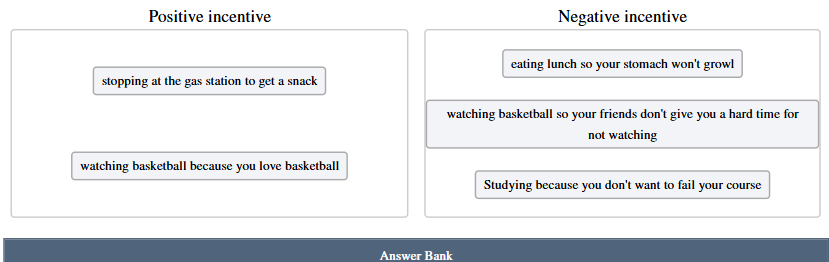
What is an incentive?
An incentive is a factor or motivation that influences individuals' or organizations' decisions and actions, typically designed to encourage a specific behavior or response.
positive
negative
What is the difference between macro and micro econ?
micro econ: focuses on deals with decision-making of individuales, businesses, and industries
micro: individual
ex: if someone will buy nike’s
Macro econ: focuses on deals with nation based problems. Such as inflations of overall goods and services.
macro: cities/nations
What are definitions of:
Efficiency:
Equity:
Efficiency: how well resources are used and allocated
Equity: evaluation of how resources are used and allocated
What is opportunity of cost?
-the value of the next best alternative use of resources. Opportunity cost refers to the potential benefits that an individual, investor, or business misses out on when choosing one alternative over another.
Production Possibilities Frontier:
*draw a graph and label
-efficiency
-attainable
-unattainable
-efficiency: the curve that represent properly/max utilization of resources
-attainable: the area inside of the curve
-unattainable: the area outside of the curve

How do you calculate opportunity f cost on PPC
You calculate opportunity cost on the Production Possibilities Curve (PPC) by determining the slope of the curve, which reflects the trade-off between two goods. It represents the amount of one good that must be sacrificed to produce more of another good.
*comparing the 2 variables, the relationship between decreasing one or increasing another

What is the difference between positive vs normative economies?
positive economics deals with objective analysis and fact-based statements, while normative economics involves subjective judgments and opinions on what ought to be.
-Positive: what is ( data analysis/facts)
-Normative: what should be (involves ethical judgements/ opinions)
What is the definition of ceteris paribus?
-Why is this concept important?
Ceteris paribus is a Latin phrase meaning "all other things being equal." It is used in economics to isolate the effect of one variable while assuming that other relevant factors remain constant, allowing for clearer analysis of cause and effect.
it is important for analysis, it would be impossible to isolate the impact of 1 variable on another

Separate these into Normative/ Positive:
look at answers
*look for words such as: should

Definition of a market?
a setting that brings together potential buyers and sellers of goods or services
Provide definitions for these terms:
Market failure:
A command economy:
the invisible hand:
a recession:
Market failure: occurs when the free market, on its own, does not allocate resources efficiently, leading to outcomes that are socially undesirable
A command economy: the government owns resources and makes all major economic decisions
the invisible hand: idea by adam smith that an individual pursing their own self- interest unintentionally promotes the overall good of society
a recession: period of significant economic decline due to unemployment, falling GDP, reduced consumer spending
Distinguish between these different economies
Market:
Command:
Traditional:
Market: based on private ownership. Prices and consumption is made by indivduals and businesses
Command: government owns and controls all resources (decide who, what, and how something is produced)
Traditional: relies on customs, tranditionsm and beliefs