Cranial Nerves and Olfaction A+P 2
 Call Kai
 Learn
Learn Practice Test
 Spaced Repetition
 Match
Match Flashcards
 Knowt Play
1/38

There's no tags or description
Looks like no tags are added yet.
Name | Mastery | Learn | Test | Matching | Spaced | Call with Kai | Chat |
|---|
No analytics yet
Send a link to your students to track their progress
39 Terms
How many cranial nerves are there?
12 peripheral nerves
What is the primary function of cranial nerves?
They have sensory, motor, and parasympathetic functions.
What is the function of CN I Olfactory Nerve?
SENSORY
responsible for the sense of smell (olfaction)
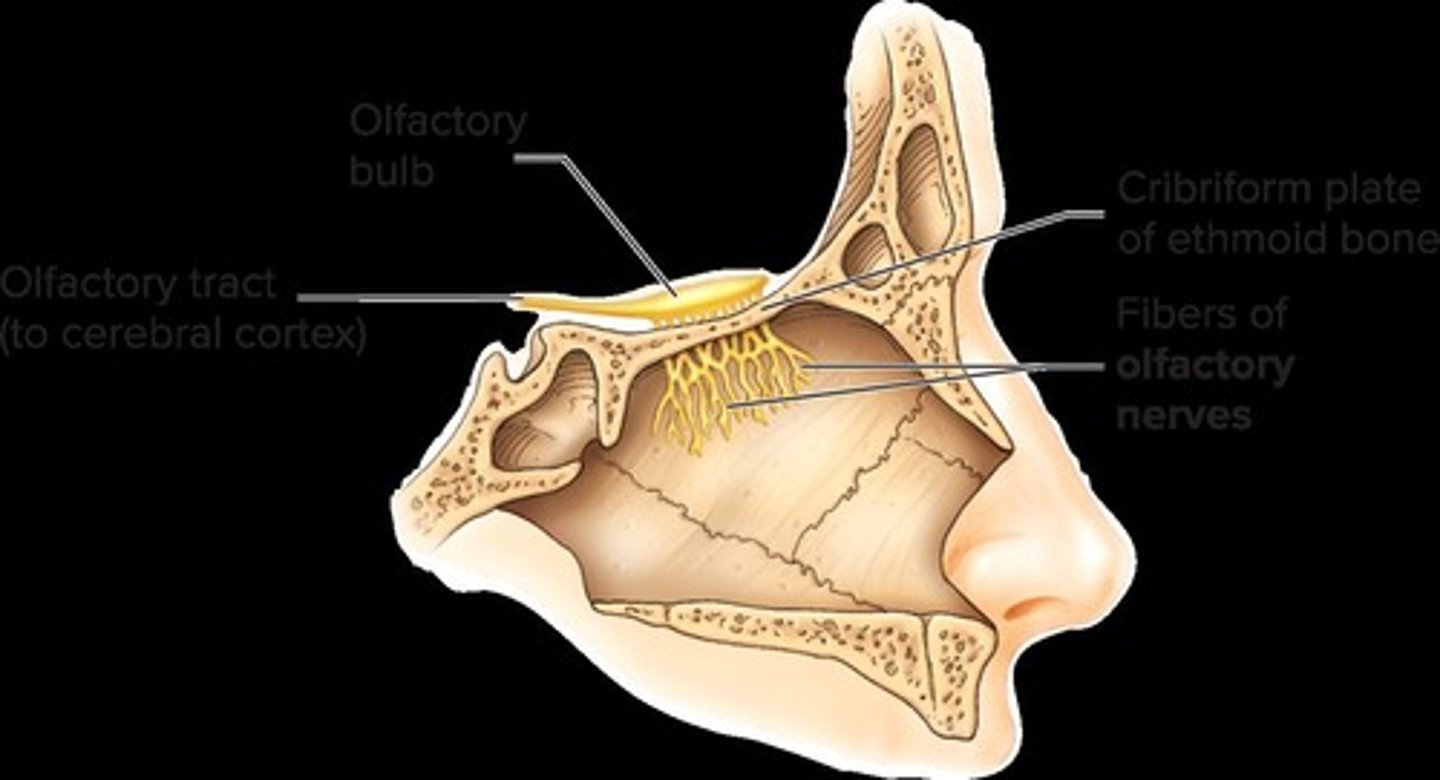
Where is CN I located?
On anterior floor of cranium
Where does CN I Olfactory Nerve connect?
Directly to the cerebrum.
What is the significance of the olfactory epithelium?
It contains olfactory receptors and is located in the superior region of the nasal cavity.
What type of receptors are involved in olfaction?
G protein coupled receptors (GPCRs).
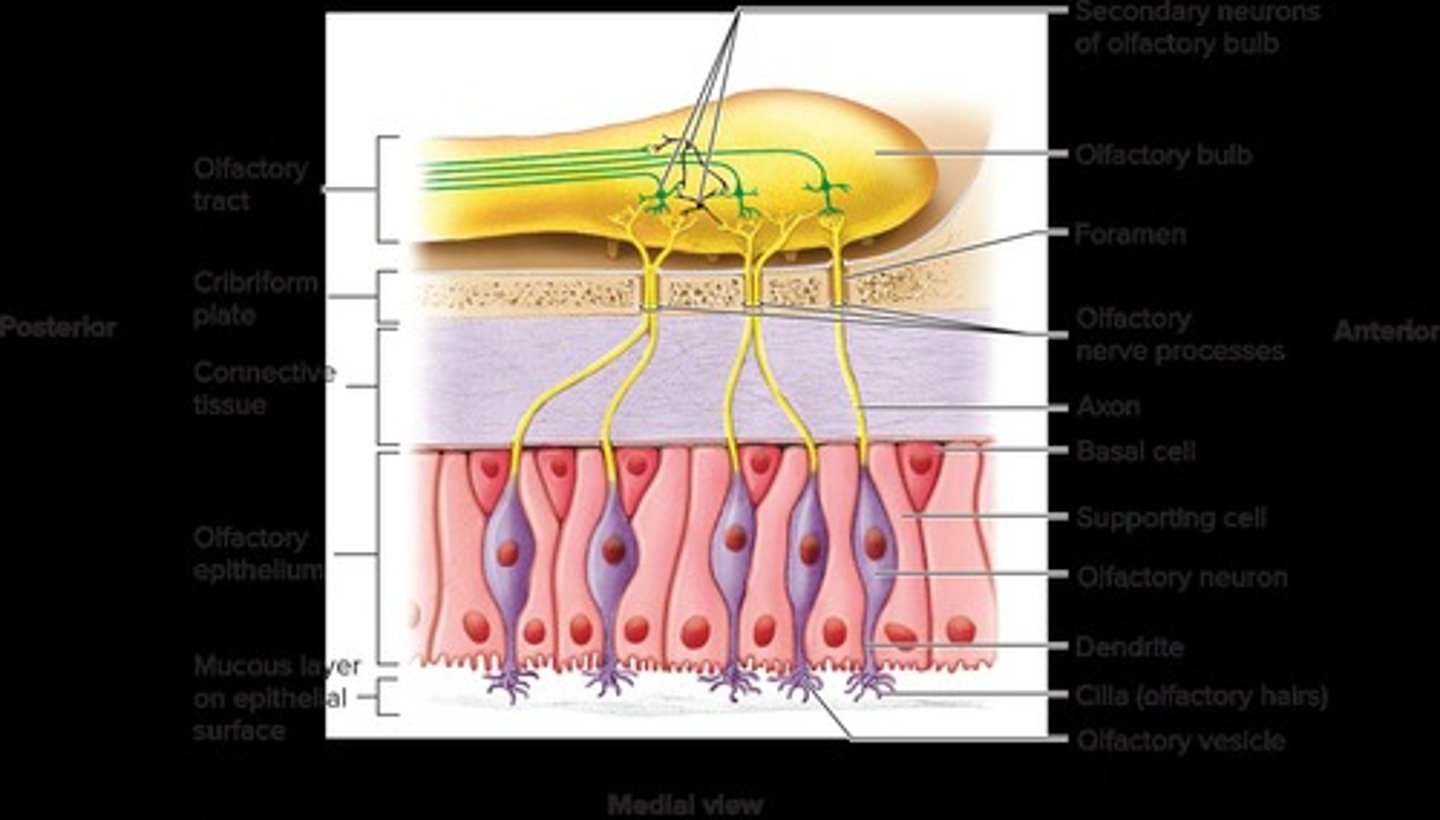
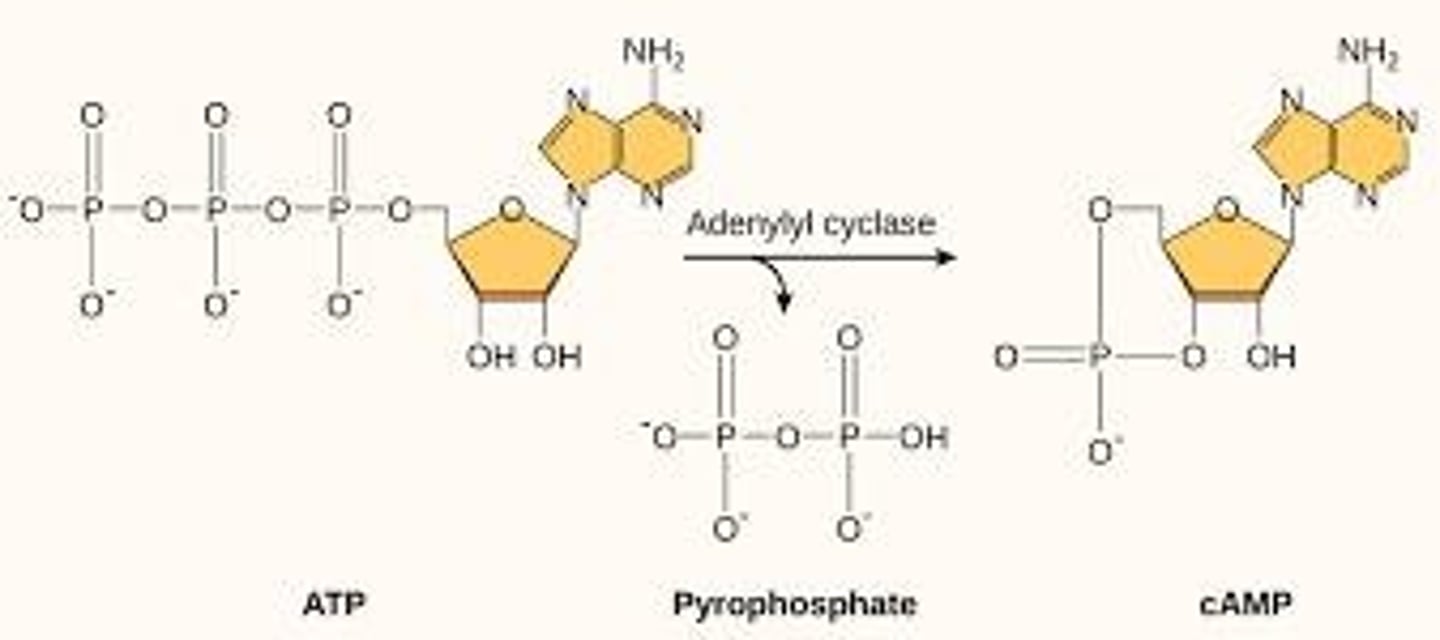
What is the role of cAMP in olfactory signaling?
cAMP activates ion channels that lead to depolarization of olfactory neurons.
What happens when an odorant binds to a GPCR?
It causes a conformational change that activates the G protein complex.
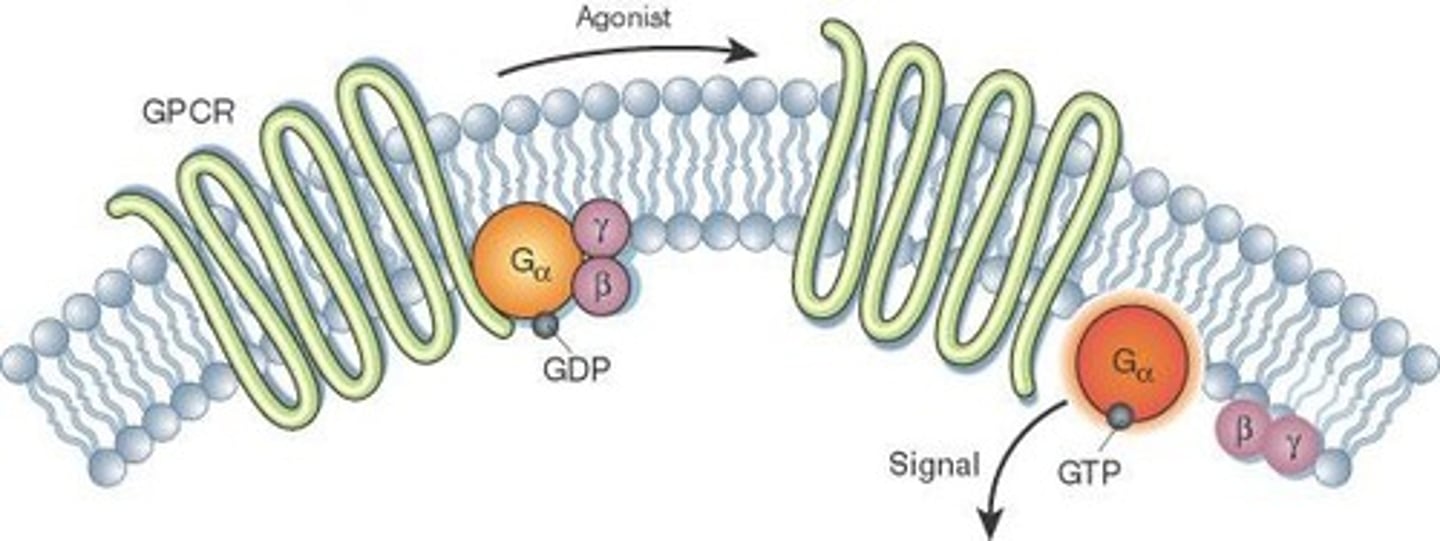
What is the resting state of GPCR signaling?
GDP is bound to the Gα subunit, and adenylate cyclase is inactive.
What is the role of adenylate cyclase in olfactory signaling?
It converts ATP to cAMP, increasing cAMP levels.
What happens to the Gα subunit after GTP hydrolysis?
It reassociates with the β and γ subunits and becomes inactive.
What is the function of CN II Optic Nerve?
SENSORY
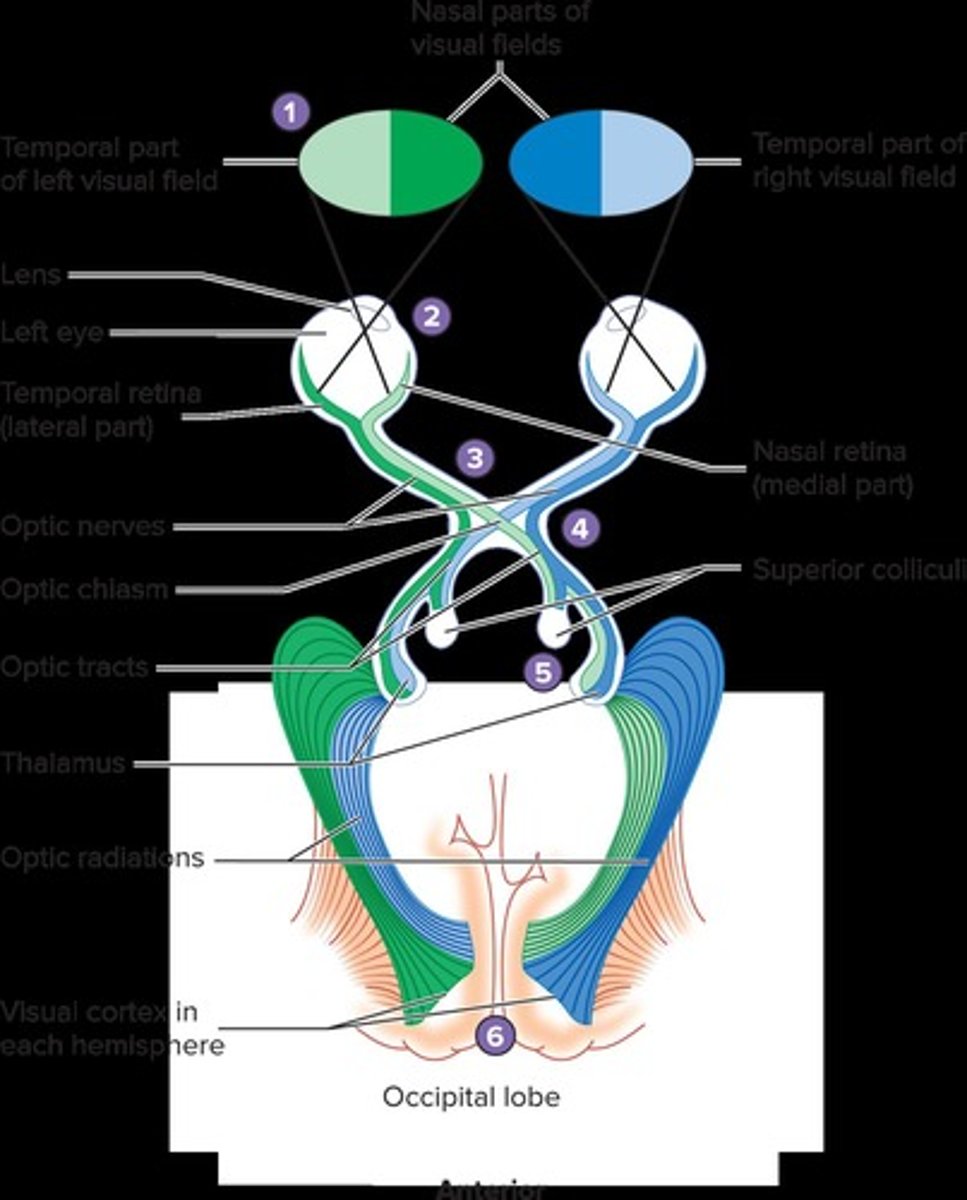
transmits action potentials from retina to the visual processing regions in occipital nerve. Contains optic chiasm.
What is the optic chiasm responsible for?
It processes visual information from the left and right visual fields.
What is the function of CN III Oculomotor Nerve?
MOTOR
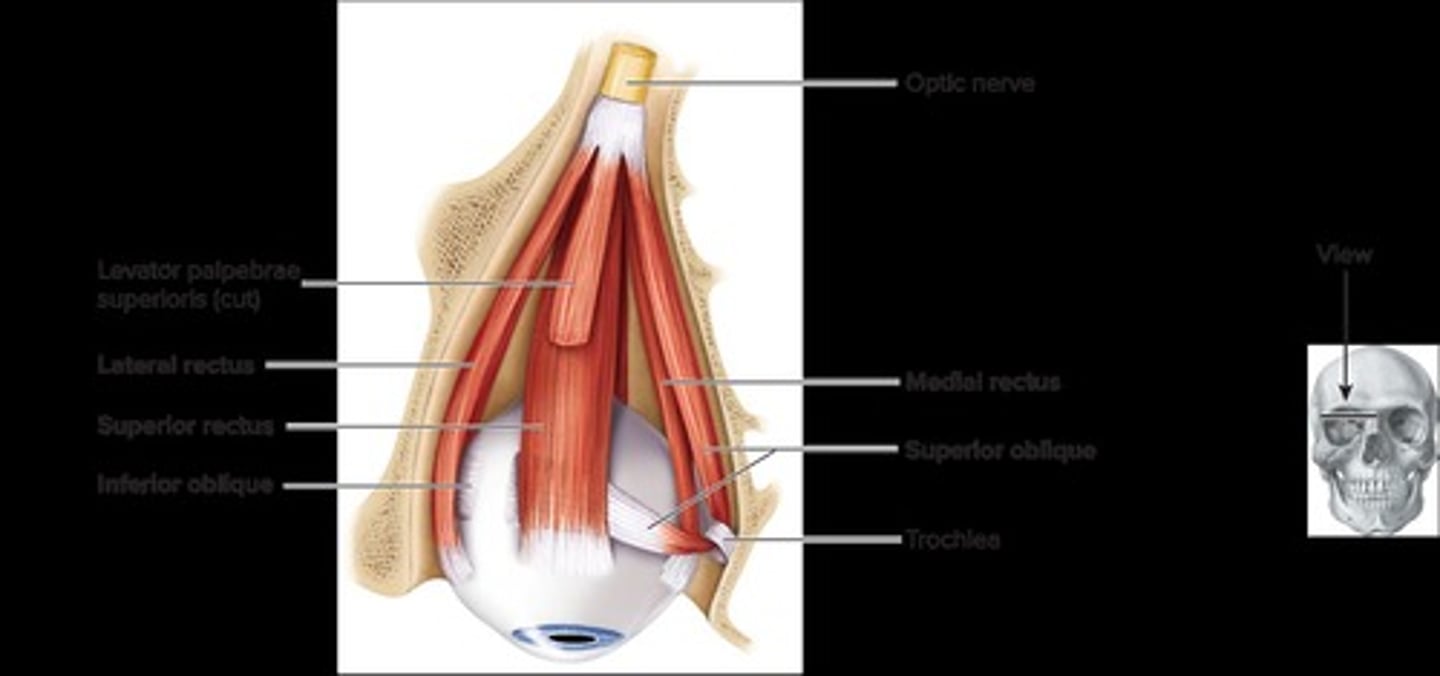
extrinsic eye muscles
PARASYMPATHETIC
Constricts pupils for close-up vision
What muscles does CN III Oculomotor Nerve innervate?
Extrinsic eye muscles
Superior rectus
Inferior rectus
Medial rectus
Inferior oblique
Eyelid muscles
Levitator palpebrae (elevates eyelid)
What is the function of CN IV Trochlear Nerve?
MOTOR
superior oblique muscle
What is the function of CN V Trigeminal Nerve?
SENSORY
General sensation of entire face and part of scalp
Has a ganglion just external to the pons
MOTOR
face muscles of mastication
What are the three branches of CN V?
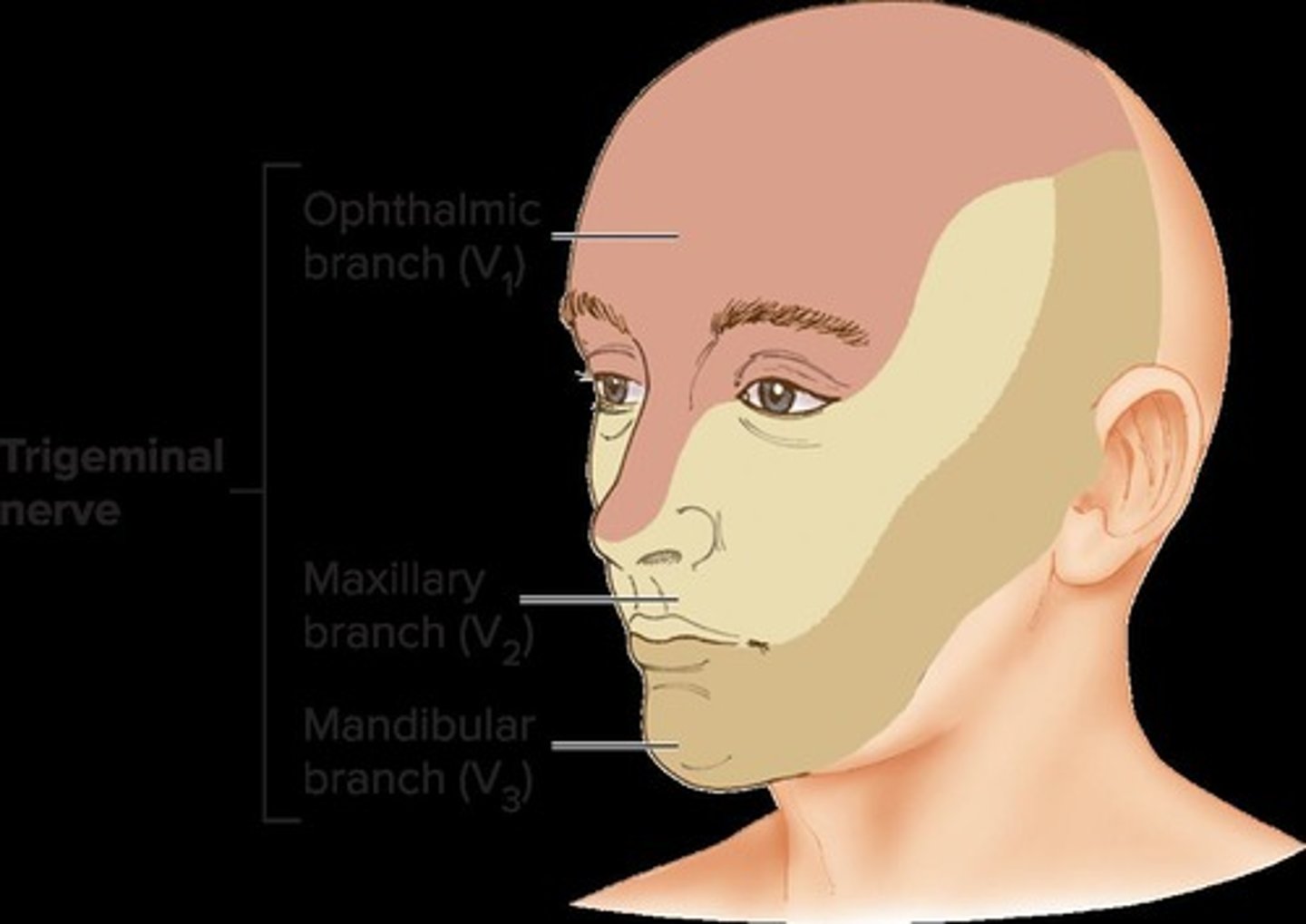
Ophthalmic, maxillary, and mandibular branches.
Function of Ophthalmic branch (V1)
SENSORY
1.anterior and lateral scalp, upper eyelid, to tip of nose
Function of Maxillary branch (V2)
SENSORY
upper teeth, gums, and lip; lower eye lid; nasal cavity; skin and mucous membrane of cheek
Function of Mandibular branch (V3)
SENSORY
lower teeth, gums, and lip; skin of cheek and chin, anterior 2/3 of tongue, external ear, skin of temples
MOTOR
mastication muscles (masseter, temporalis, medal/lateral pterygoid, one palatine and neck muscle, tensor tympani in middle ear)
What is the function of CN VI Abducens Nerve?
MOTOR
innervates lateral rectus muscle; allows eye abduction
What is the function of CN VII Facial Nerve?
SENSORY
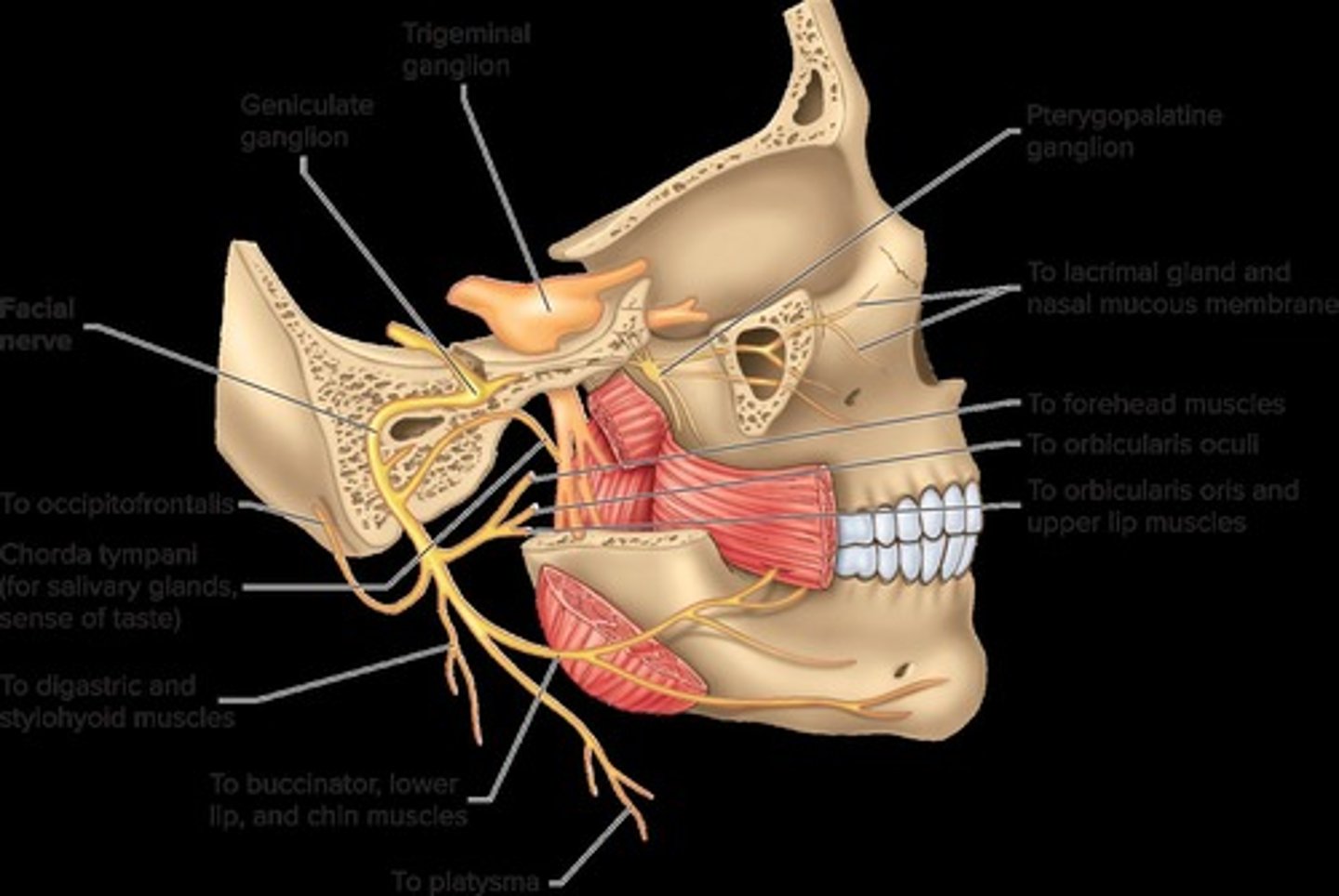
taste on anterior 2/3 of tongue. Part of external ear and palate. chorda tympani
MOTOR
facial expressions. Some throat muscles. Strapedius muscle in middle ear (dampens sound)
PARASYMPATHETIC
Submandibular and sublingual salivary glands. Lacrimal glands. Glands of nasal cavity and palate
What is Bell's Palsy?
A condition linked to inflammation of the facial nerve causing unilateral muscle weakness.
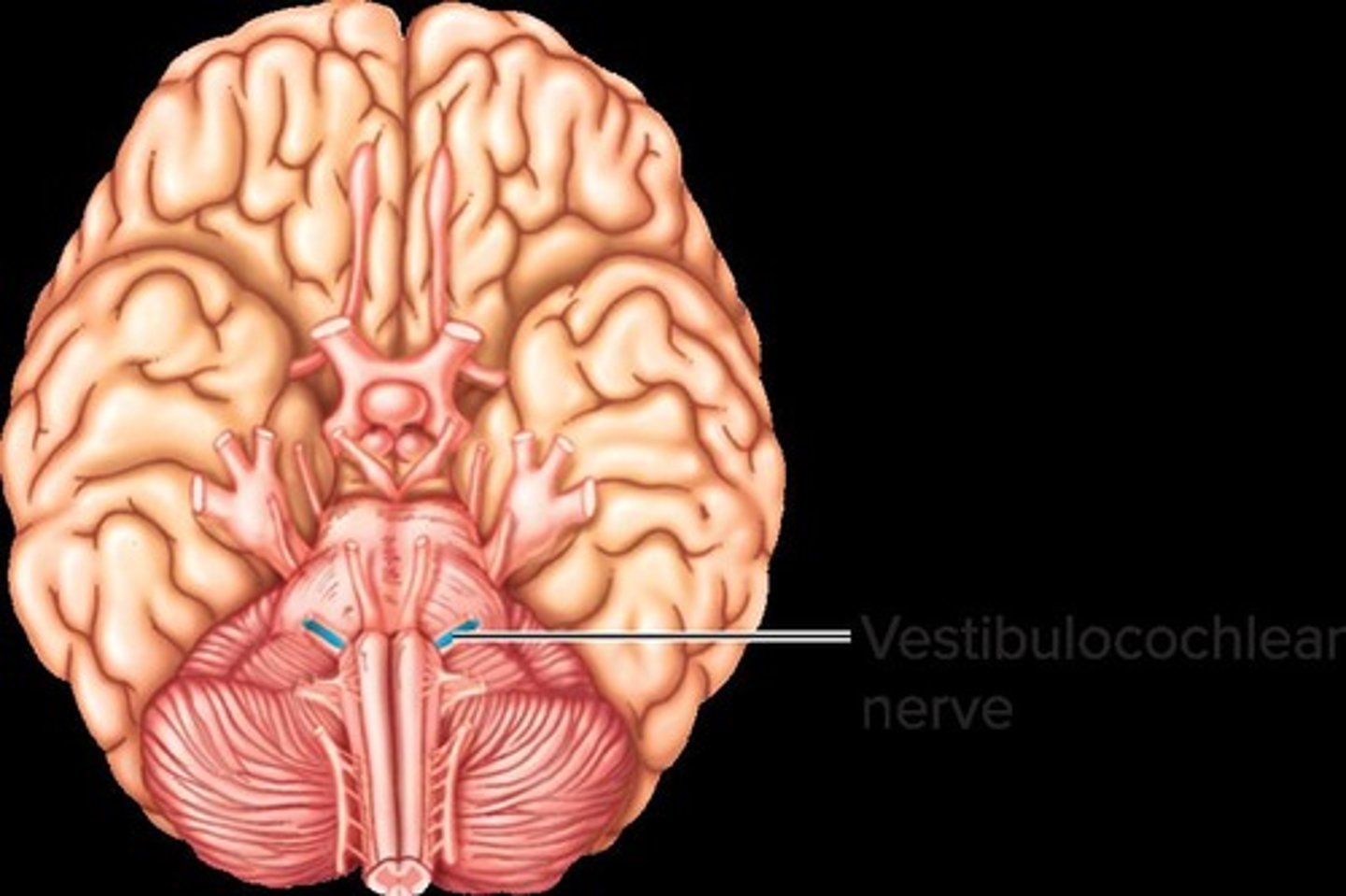
What is the function of CN VIII Vestibulocochlear Nerve?
SENSORY
responsible for hearing (cochlear nerve) and balance (vestibular nerve).
What is the function of CN IX Glossopharyngeal Nerve?
SENSORY
taste and tactile sensation of posterior 1/3 tongue. Sensation of pharynx and middle ear (gag reflex). Visceral sensory involving carotid artery that use baro and chemorecptors
MOTOR
Stylopharyngeus involved w elevating larynx and swallowing
PARASYMPATHETIC
Parotid salivary gland and glands of posterior tongue
What is the function of the CN X Vagus Nerve?
SENSORY
taste at root of tongue, ear canal and mucosa of inferior pharynx etc (general), baro and chemoreceptors in aortic arch as well as thoracic and abdominal organs (visceral)
MOTOR
larynx muscles, muscle in soft pallet and pharynx. “gag reflex”
PARASYMPATHETIC
all abdominal, thoracic, and visceral organs down to left colic flexure. rest and digest (parasympathetic functions: (-) HR, (-) BP, stimulate peristalsis and gastric secretions, regulates airway diameter and RR, gagging/sneezing/vomiting
What does CN X Vagus Nerve innervate?
Muscles of the larynx, soft palate, and provides parasympathetic functions to thoracic and abdominal organs.
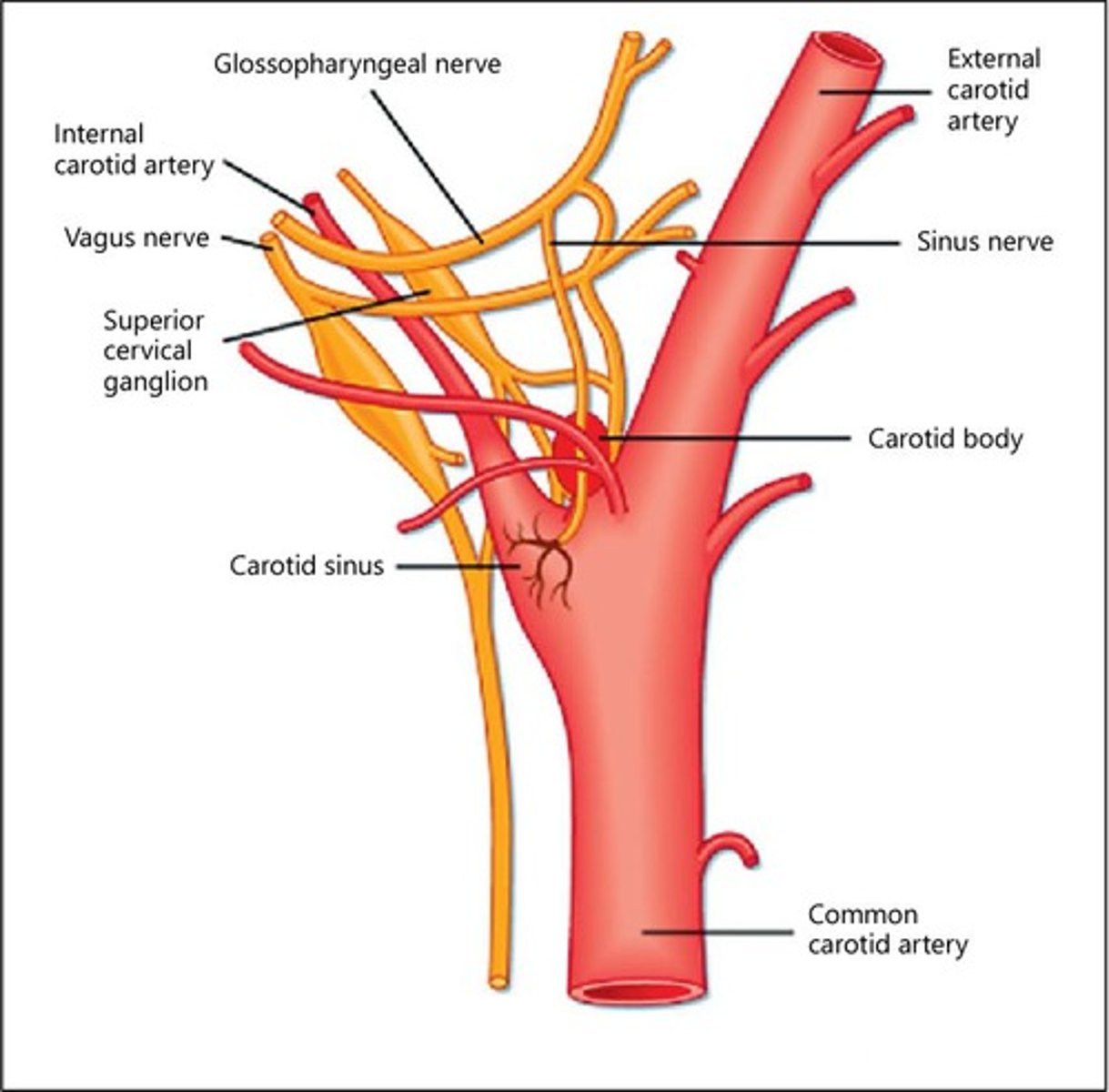
What are the parasympathetic functions of the vagus nerve?
Decreases heart rate, stimulates peristalsis, and regulates respiratory rate.
What is the function of CN XI Accessory Nerve?
MOTOR
sternocleidomastoid and trapezius muscles.
(originates from spinal cord. this nerve travels up through the foramen magnum into the skull and exits the skull at the jugular foramen)
What is the role of CN XII Hypoglossal?
MOTOR
innervates intrinsic and extrinsic tongue muscles.
(2 throat muscles and 3 out of 4 extrinsic muscles. Vagus has the 4th)
Which cranial nerves are involved in tongue sensation?
CN V (anterior 2/3 tongue. gen sensory at mandibular branch)
CN VII (taste at chorda tympani. intrinsic and extrinsic muscles) (but CN X has one extrinsic)
CN IX (taste and gen sensory at posterior 1/3 tongue)
CN X (taste and gen sensory at root of tongue)
Which cranial nerves are involved in eye movement?
CN II (vision)
CN III (up, down, medial)
CN IV (down and lateral)
CN VI (lateral)
Parasympathetic CN
CN III (pupil constriction)
CN VII (salivary and lacrimal glands)
CN IX (salivary glands)
CN X (thoracic and abdominal organs)
Which is the only cranial nerve that connects directly to the cerebrum?
CN I
Which is the only cranial nerve that connects directly to the diencephalon?
CN II
What mnemonic helps remember the order of cranial nerves?
Oh Oh Oh, to touch and feel very good velvet, AH.
What does the mnemonic 'Some Say Money Matters, But My Brother Says Big Brains Matter Most' represent?
The functions of the cranial nerves excluding parasympathetic functions.