APUSH Unit 1 Colonization Review (1491-1754)
 Studied by 9 people
 Call Kai
 Learn
Learn Practice Test
 Spaced Repetition
 Match
Match Flashcards
 Knowt Play
1/39

There's no tags or description
Looks like no tags are added yet.
Name | Mastery | Learn | Test | Matching | Spaced |
|---|
No study sessions yet.
40 Terms
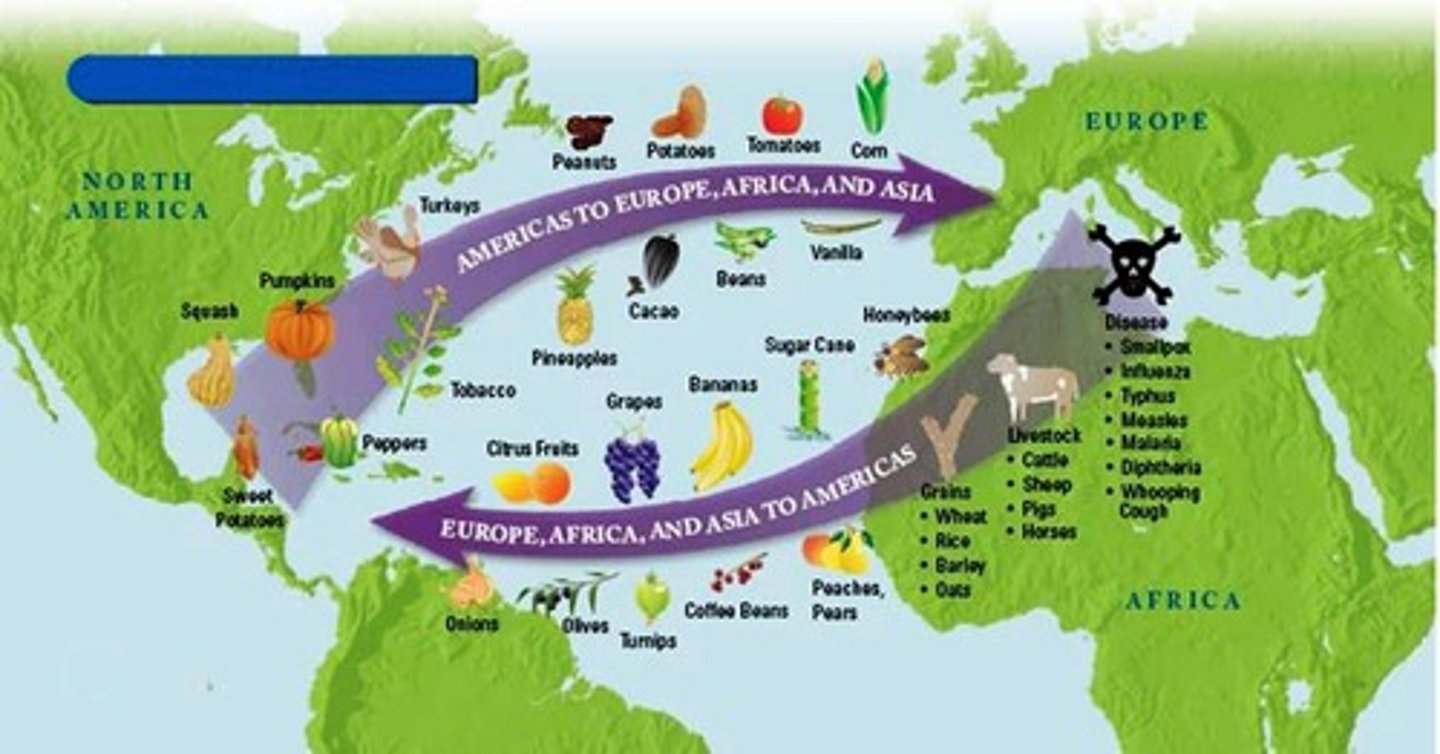
Columbian Exchange
The exchange of plants, animals, diseases, and technologies between the Americas and the rest of the world following Columbus's voyages.
Encomienda System
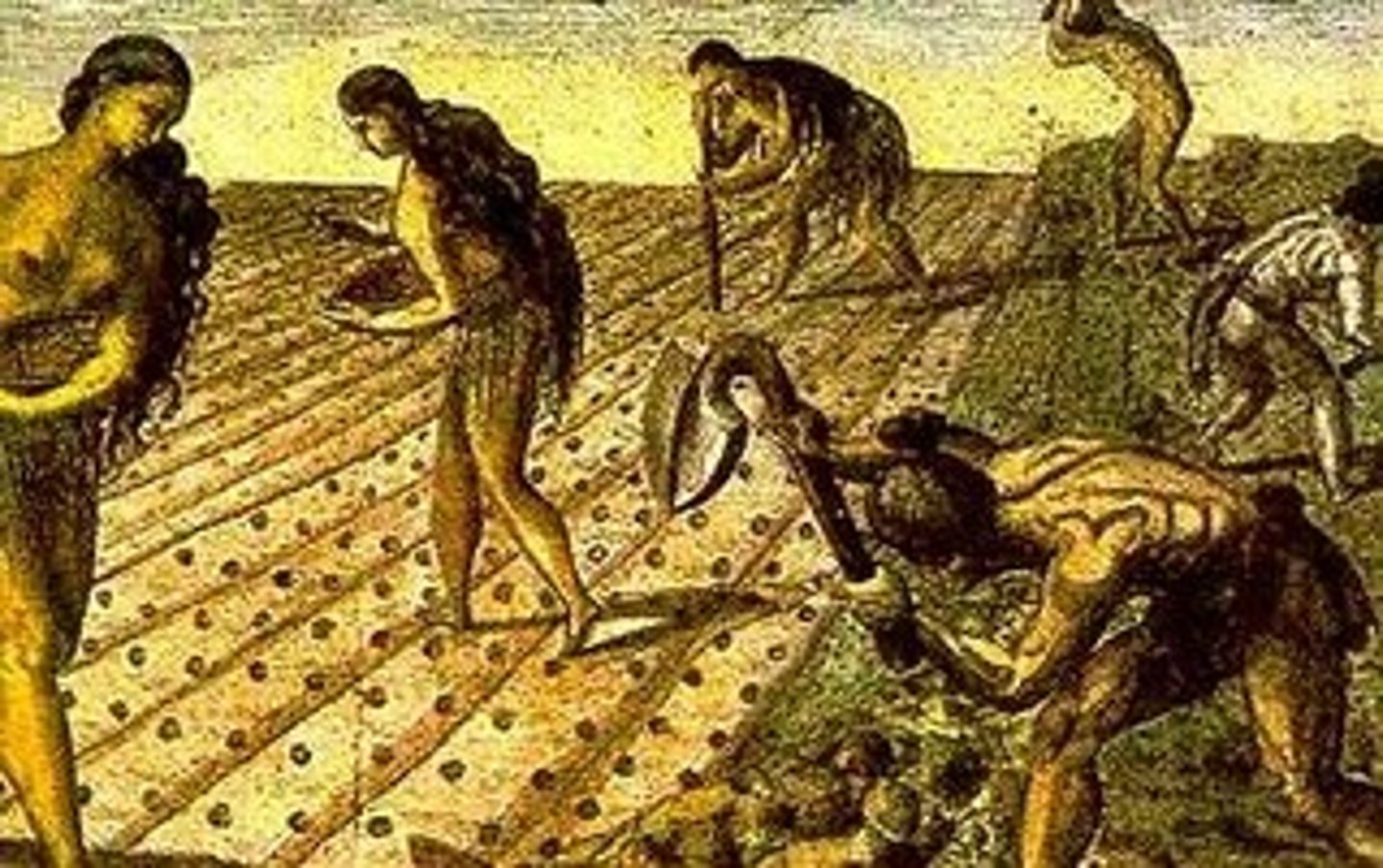
A system whereby the Spanish crown granted the conquerors the right to forcibly employ groups of Indians; it was a disguised form of slavery.
3 G's of European Exploration
God, Gold, Glory- These were the primary motivations for countries like Spain, France and England to explore and and settle the New World
Conquistadors
Early-sixteenth-century Spanish adventurers who conquered Mexico, Central America, and Peru. (Examples Cortez, Pizarro, Francisco.)
Cahokia
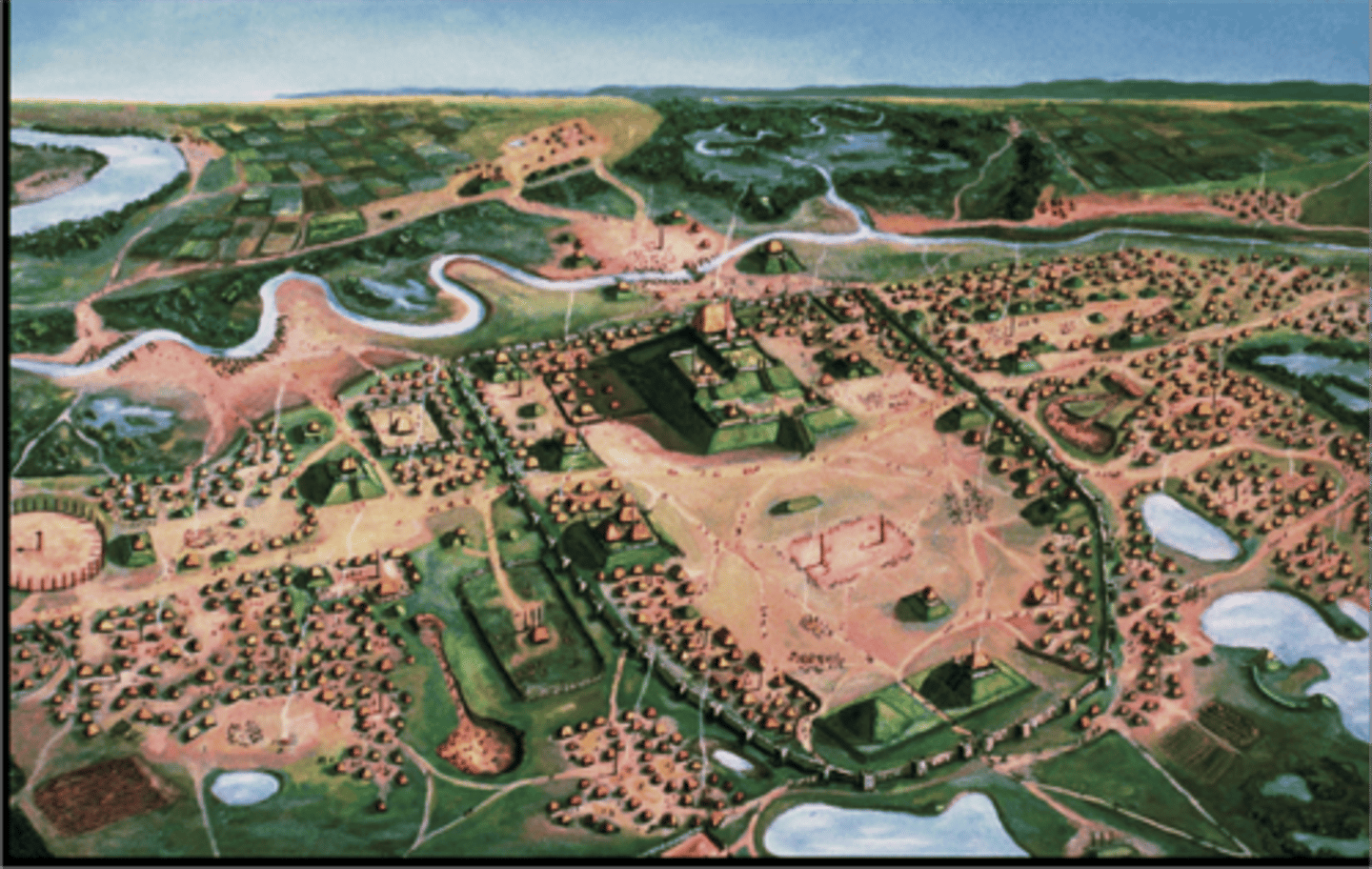
an ancient settlement of southern Indians, located near present day St. Louis, it served as a trading center for 40,000 at its peak in A.D. 1200.
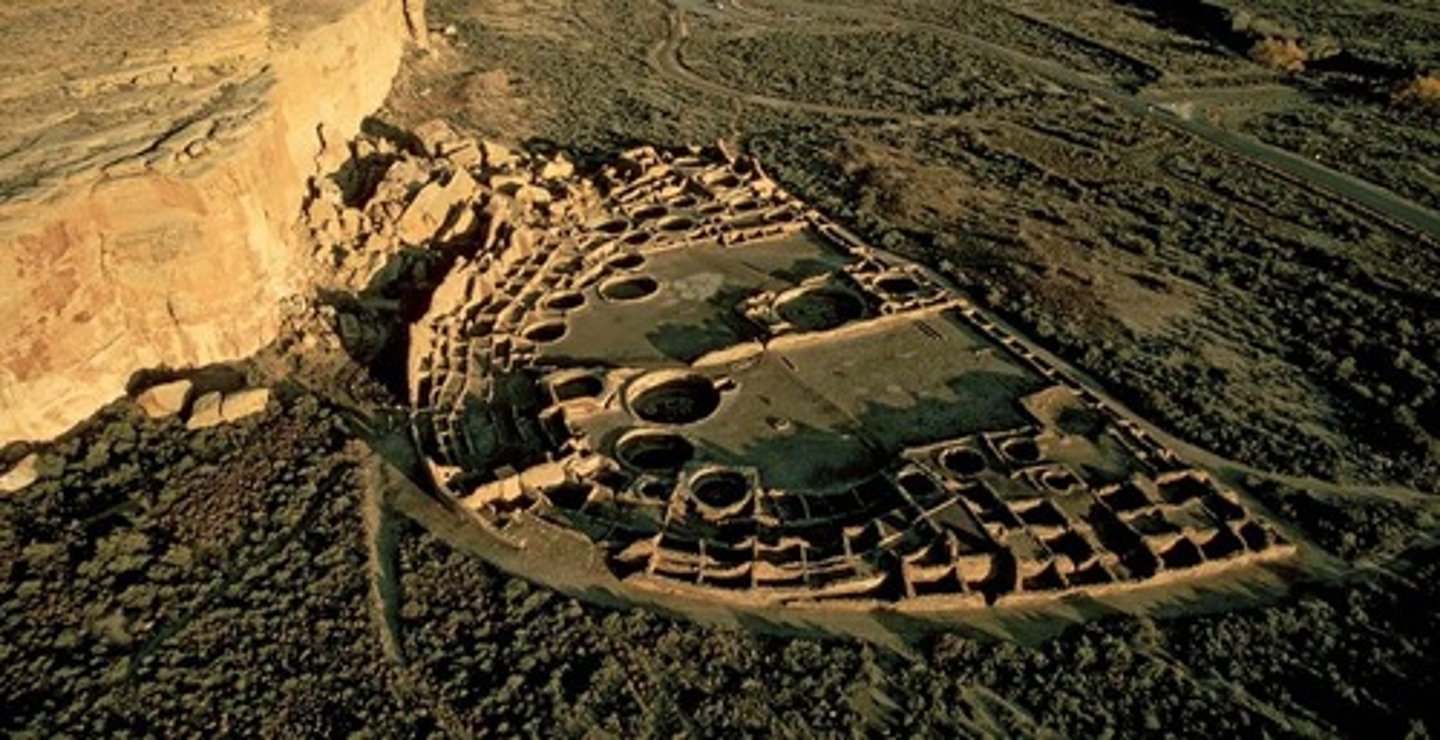
Chaco Canyon
Important ancient Anasazi Indian center in New Mexico that included a pueblo of six hundred interconnected rooms
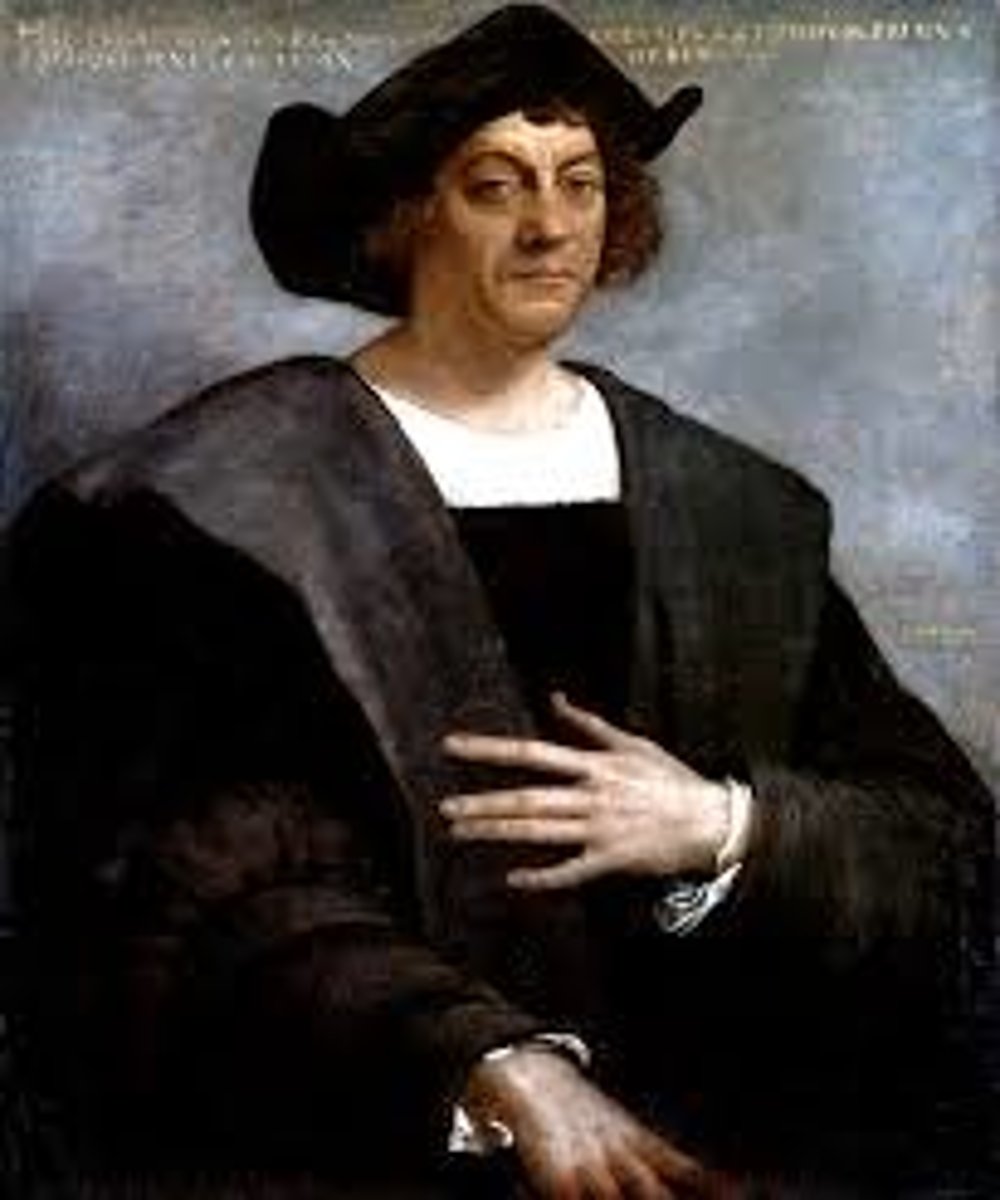
Christopher Columbus
An Italian navigator who was funded by the Spanish Government to find a passage to the Far East. He is given credit for discovering the "New World," even though at his death he believed he had made it to India. He made four voyages to the "New World." The first sighting of land was on October 12, 1492, and three other journies until the time of his death in 1503.
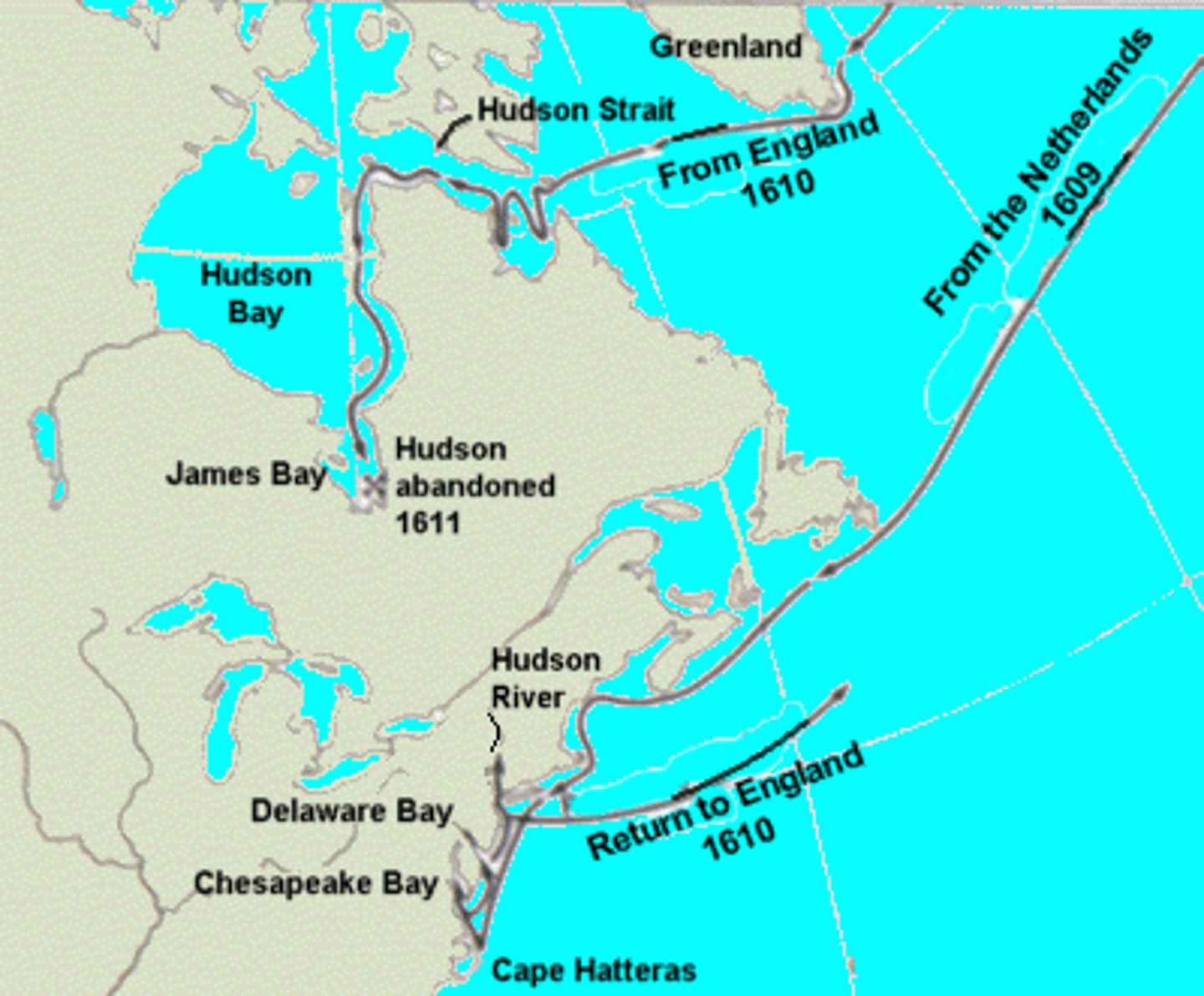
Henry Hudson
An English explorer who explored for the Dutch. He claimed the Hudson River around present day New York and called it New Netherland. He also had the Hudson Bay named for him
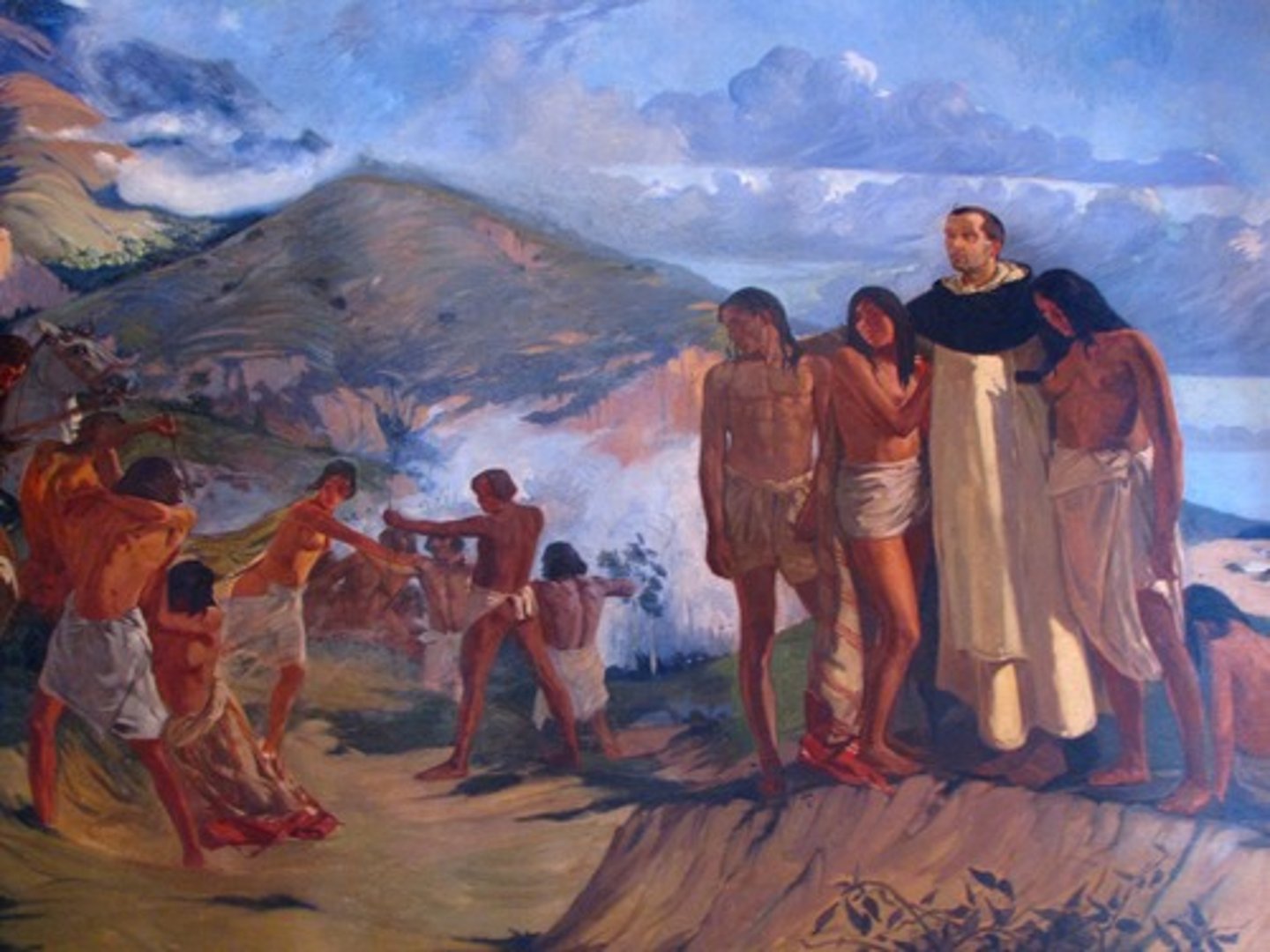
Bartolome de Las Casas
Spanish bishop living in the Americas. He devoted most of his life to protecting Amerindian peoples from exploitation and spoke out against mistreatment of Native Americans at the hands of the Spanish.
Spanish Colonization of New World
-Stretched from the Caribbean to California and down through Central and South America
-Characterized by lots of interaction with the natives, both through the Encomienda System and racial mixing (Mestizo population)
-Mostly males who immigrated from Spain, many of which were seeking personal wealth or glory (ex. Conquistadors)
French Colonization in the New World
-French colonies stretched from Quebec to New Orleans and included the Great Lakes, the Great Plains and the Ohio River Valley.
-Was more of a system of trading posts and trade routes than a series of developments
-The French employed diplomacy with the natives and adapted to the Natives more than the Spanish or the British (to promote the fur trade)
British Colonization in the New World
-Mainly focused on the eastern seaboard of the current US and Canada
-Lived separately from the natives (moved natives off the land to settle) and had less daily interaction with the natives than the Spanish or French did
-Motivated primarily by economic (Joint Stock Companies) or religious (Puritans, Pilgrims) interests
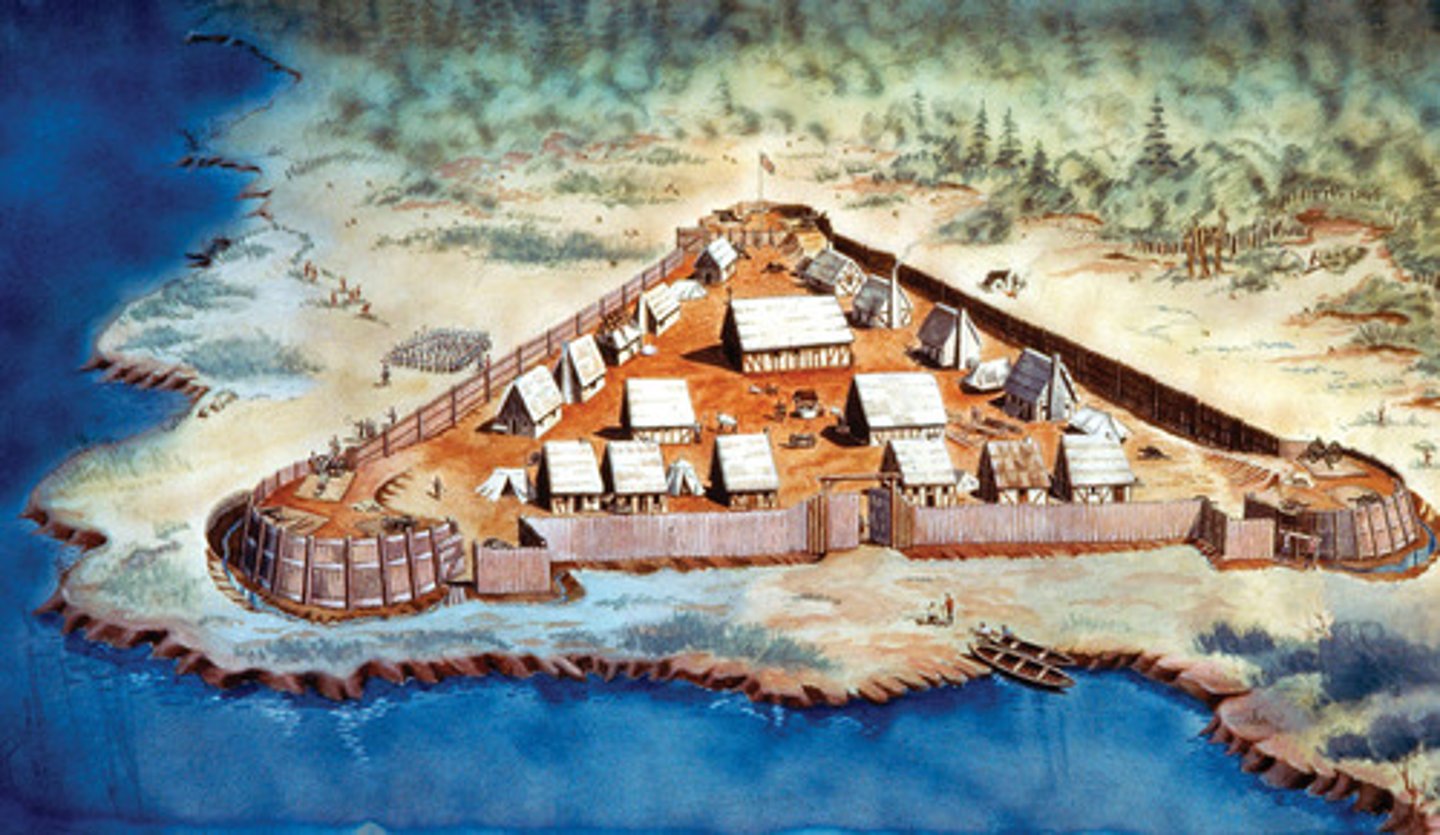
Jamestown
1st permanent English settlement in North America in 1607.
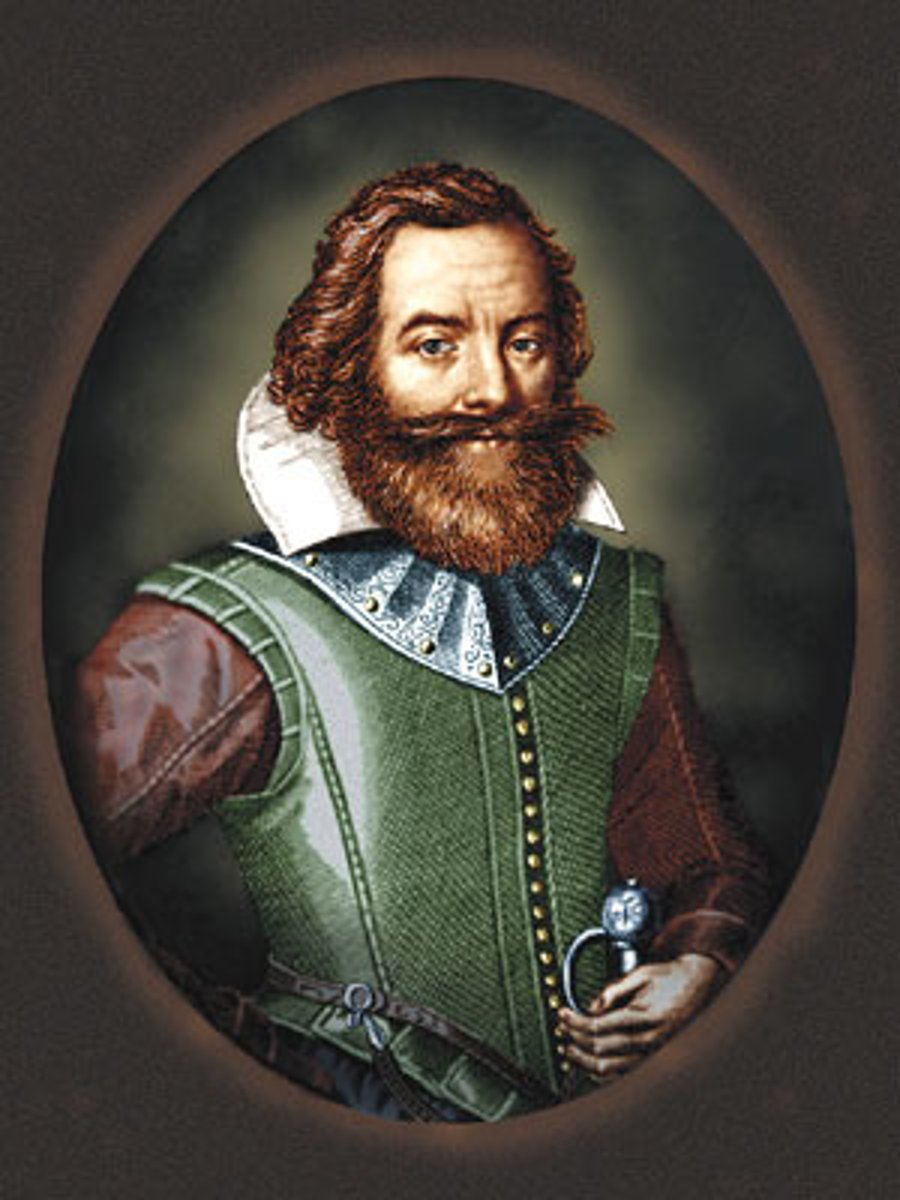
John Smith
A captain famous for world travel. As a young man, he took control in Jamestown. He organized the colony and saved many people from death the next winter and coined the phrase "he who shall not work, shall not eat". He also initiated attacks on Natives.
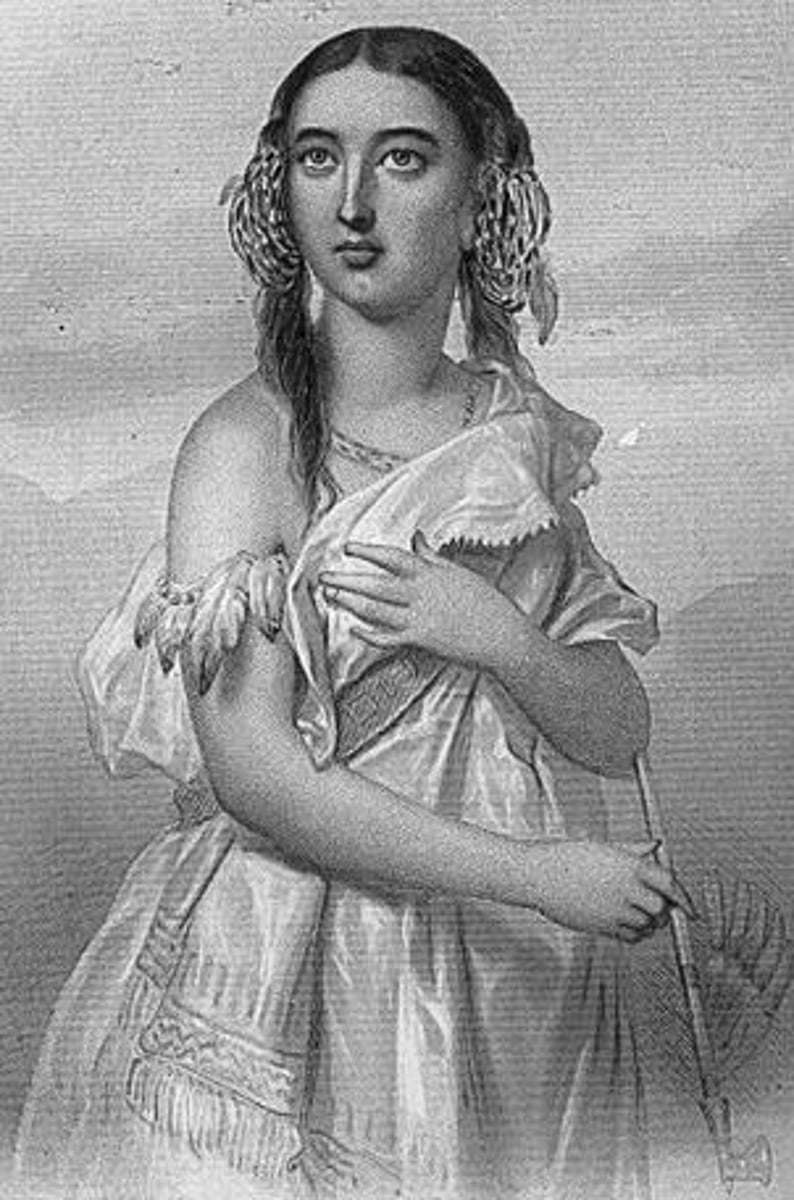
Pocohontas
An American Indian princess who saved the life of John Smith and helped form more peaceful relations with the Powhatan when she married John Rolfe but died of smallpox in England on a visit to Rolfe's family. Her remains are still there as the English government refuses to send her remains back to North America.
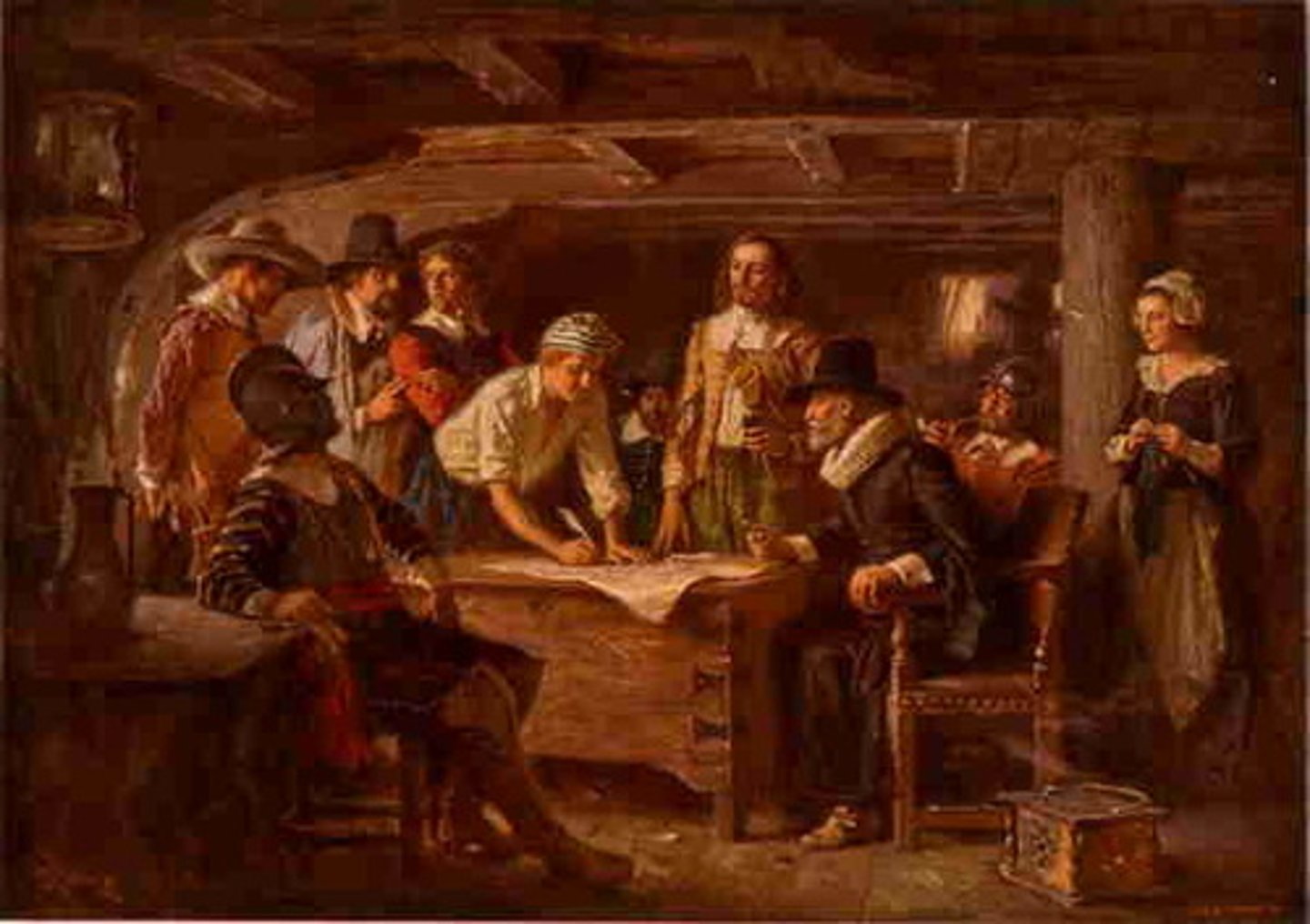
Mayflower Compact
1620 - The first agreement for self-government in America. It was signed by the 41 men on the Mayflower and set up a government for the Plymouth colony
John Winthrop
As governor of Massachusetts Bay Colony, Winthrop (1588-1649) was instrumental in forming the colony's government and shaping its legislative policy. He envisioned the colony, centered in present-day Boston, as a "city upon a hill" from which Puritans would spread religious righteousness throughout the world.
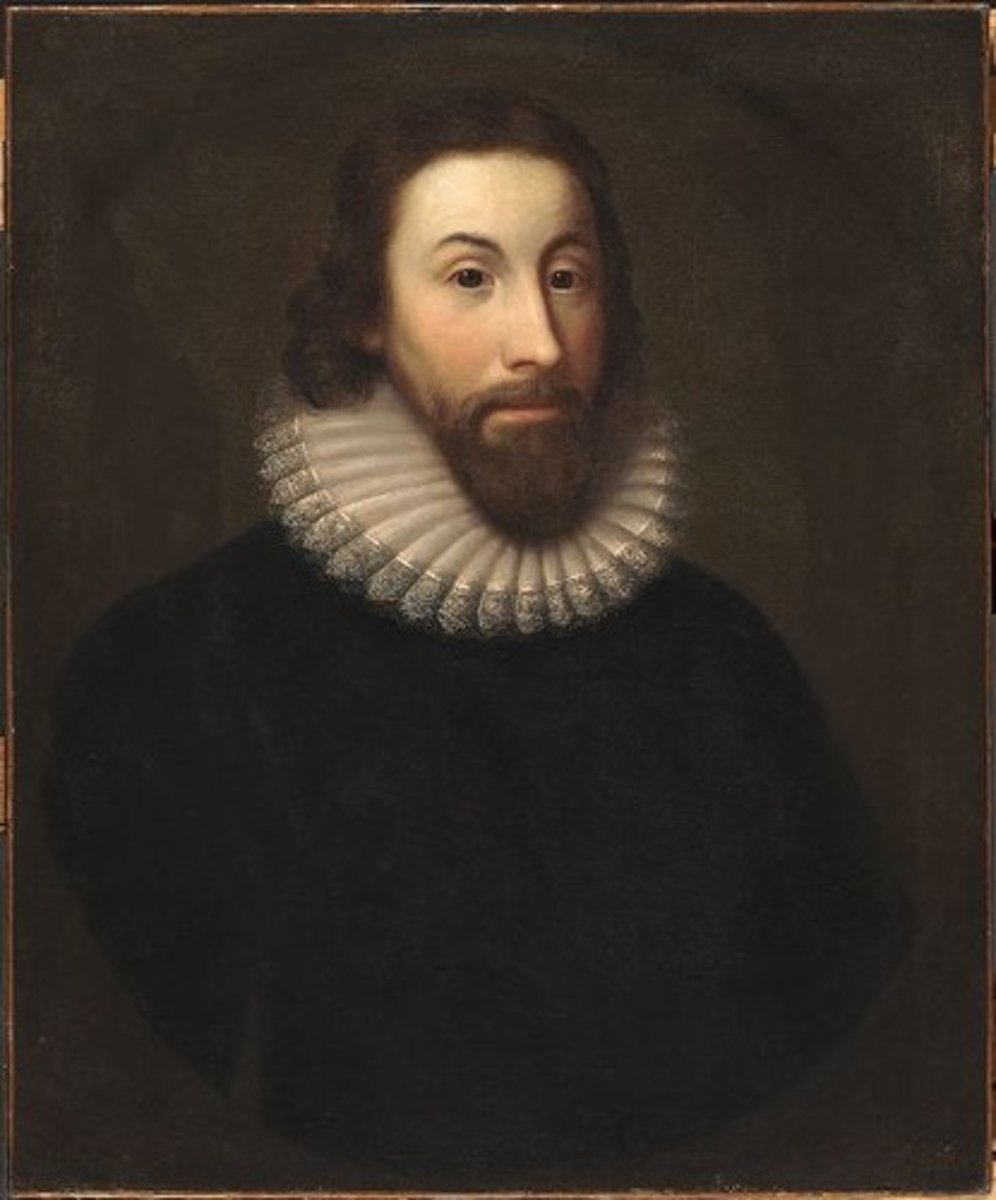
Puritans
A religious group who wanted to purify the Church of England. They came to America for religious freedom and settled Massachusetts Bay.
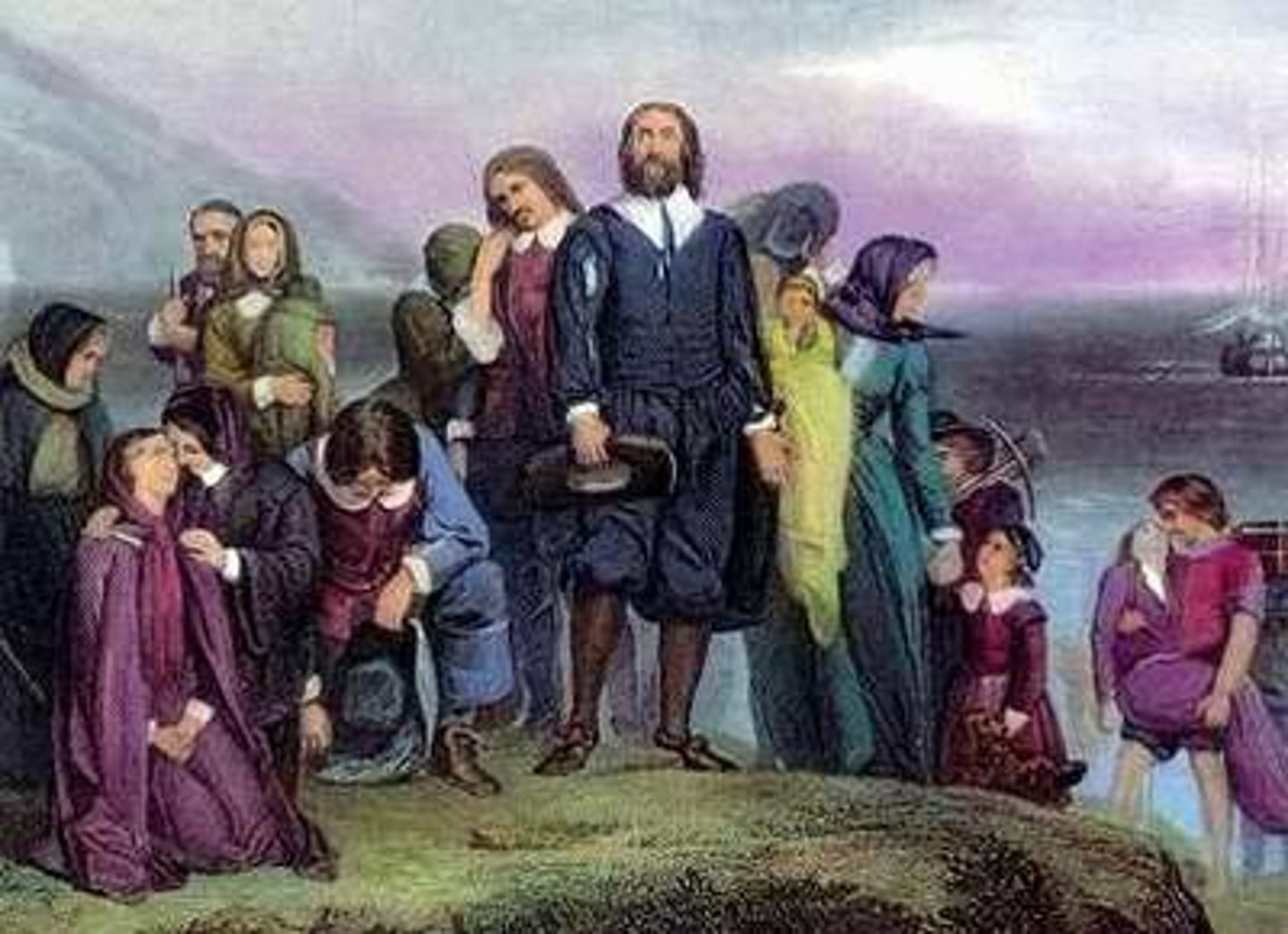
New Amsterdam
A settlement established by the Dutch near the mouth of Hudson River and the southern end of Manhattan Island as a trade port for the Dutch trade empire.
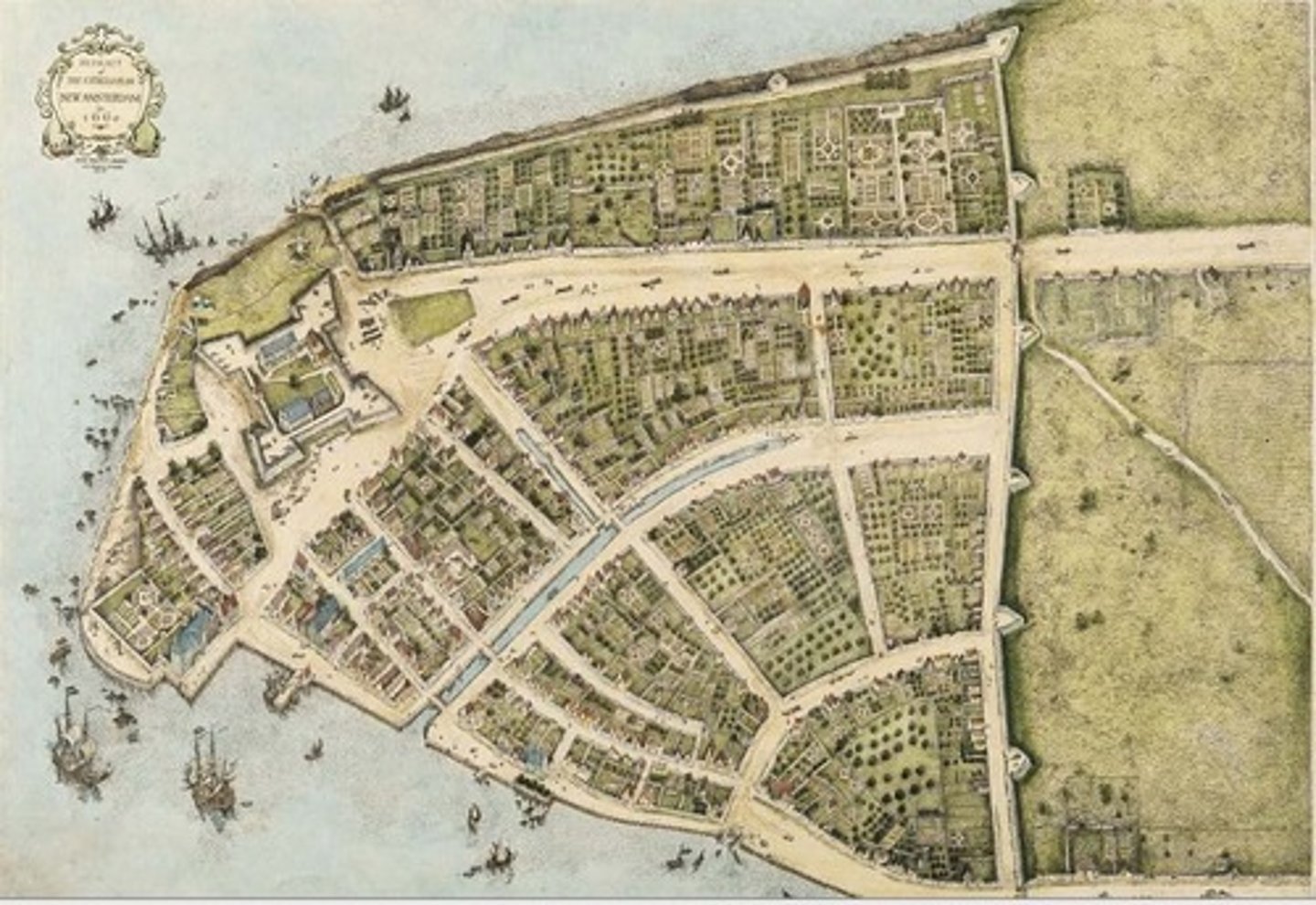
House of Burgesses
1619 - The Virginia House of Burgesses formed, the first legislative body in colonial America. It was made up of two representatives from teach town voted on by men who owned property. Later other colonies would adopt the Houses of Burgesses concept creating self-governing bodies in the colonies.
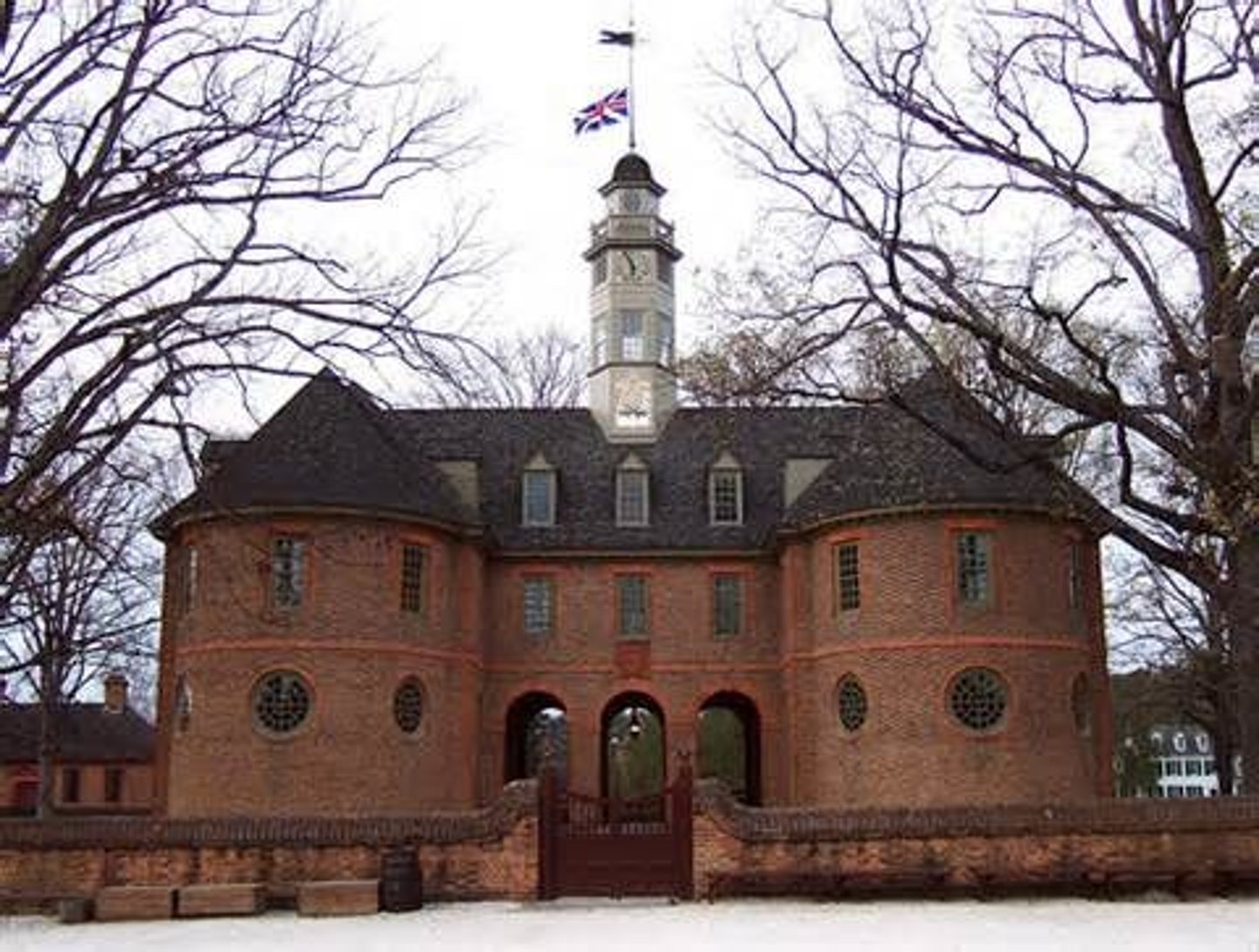
Headright system
Headrights were parcels of land consisting of about 50 acres which were given to colonists who brought indentured servants into America. They were used by the Virginia Company to attract more colonists.
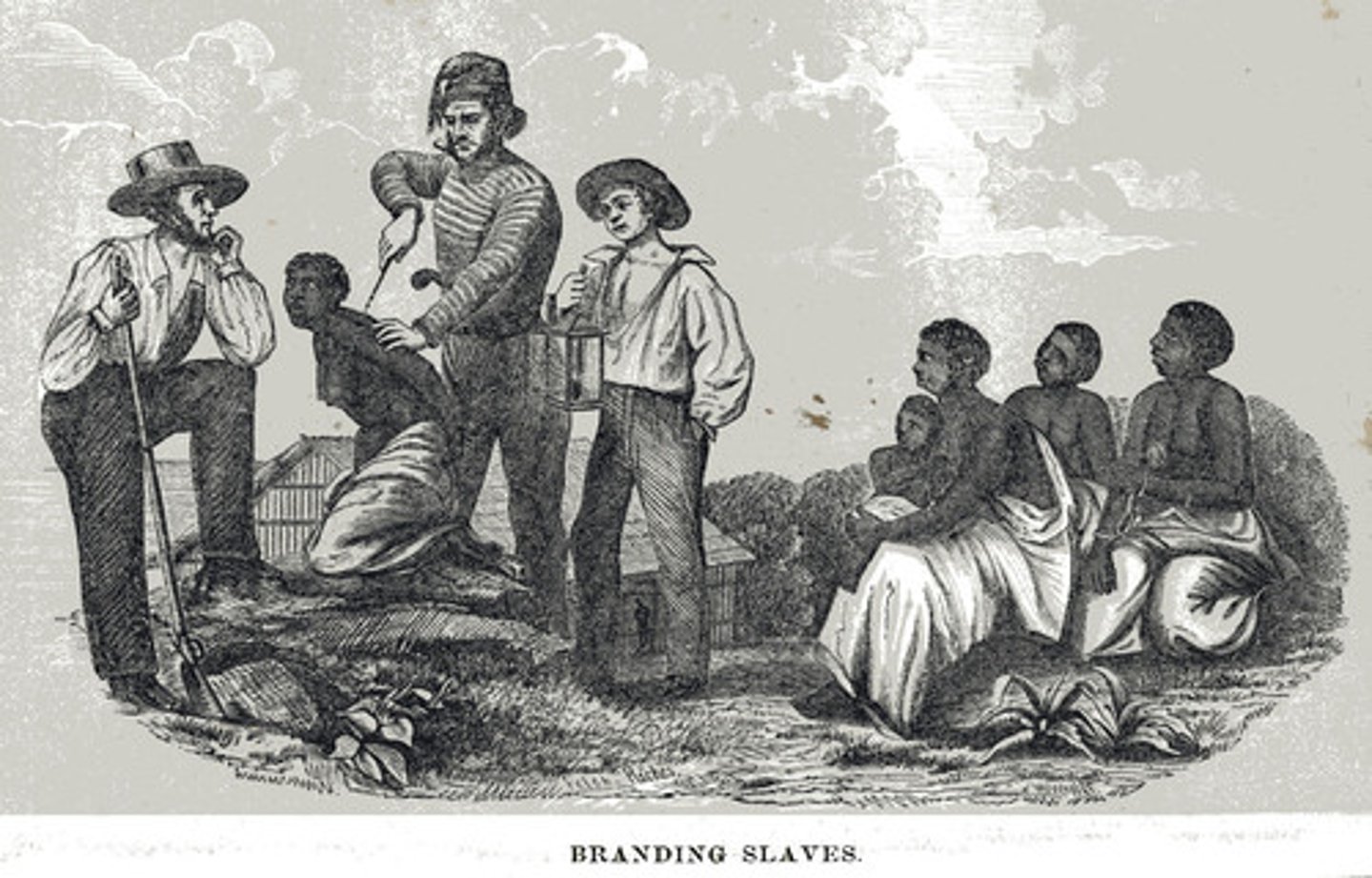
Indentured servants
Colonists who received free passage to North America in exchange for working without pay for a certain number of years
Bacon's Rebellion
1676 - Nathaniel Bacon and other western Virginia settlers were angry at Virginia Governor Berkley for trying to appease the Doeg Indians after the Doegs attacked the western settlements. The frontiersmen formed an army, with Bacon as its leader, which defeated the Indians and then marched on Jamestown and burned the city. The rebellion ended suddenly when Bacon died of an illness.
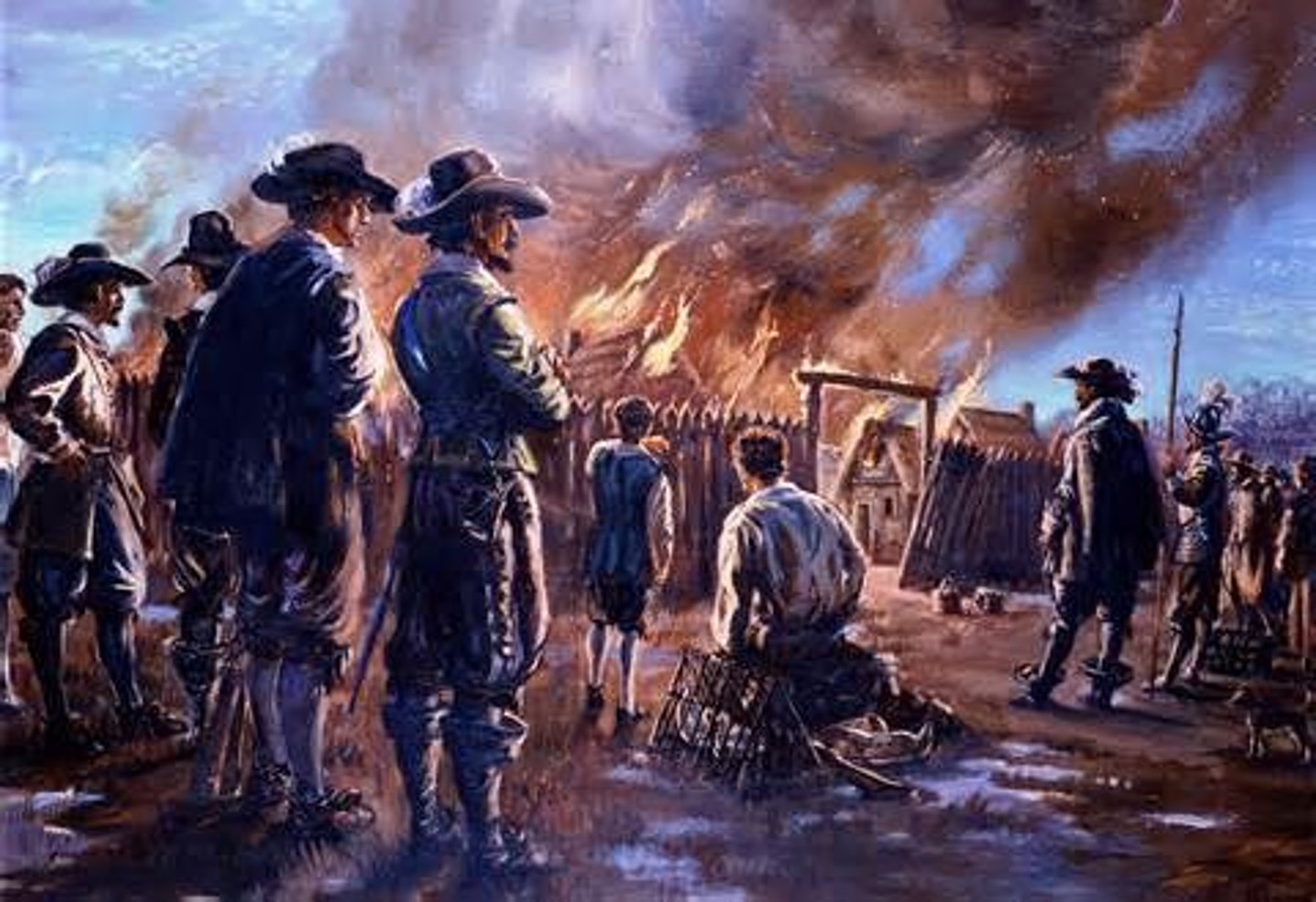
King Phillip's War
Under the leadership of Metacom, or King Phillip, the Wampanoag destroyed colonial towns, the colonists destroyed native farms, leading to the most deadly of Indian Wars. The war was disastrous for the natives leading to few surviving the war, and those that did left New England.
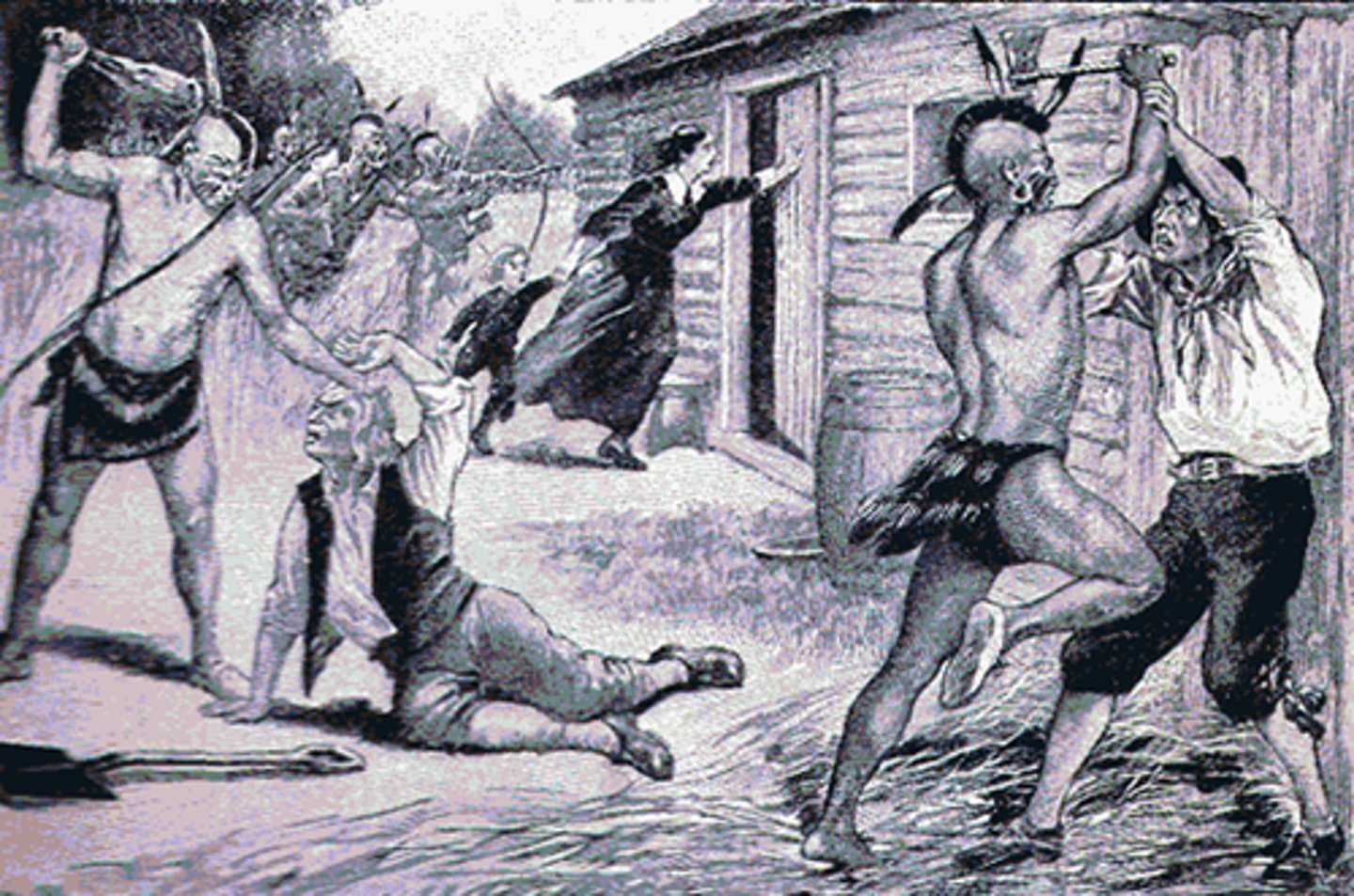
royal colony
A colony ruled by governors appointed by a king
proprietary colony
English colony in which the king gave land to proprietors in exchange for a yearly payment
town meetings
A purely democratic form of government common in the colonies, and the most prevalent form of local government in New England. In general, the town's voting population would meet once a year to elect officers, levy taxes, and pass laws.
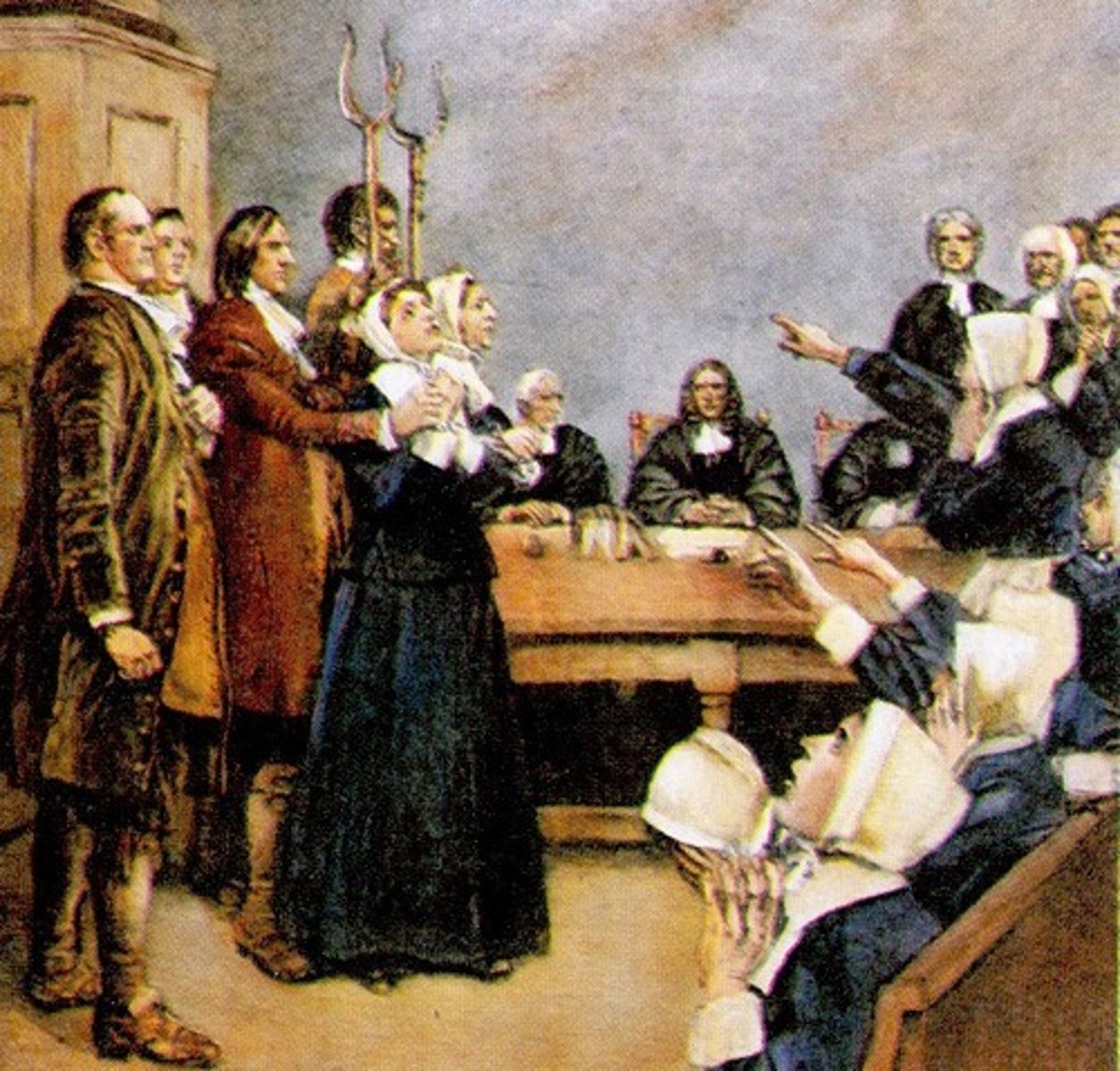
Salem Witch Trials
1629 outbreak of witchcraft accusations in a Puritan village marked by an atmosphere of fear, hysteria, and unfounded accusations in courts with Puritan ministers who served as judges. 19 women were executed.
Roger Williams
A dissenter who clashed with the Massachusetts Puritans over separation of church and state and was banished in 1636, after which he founded the colony of Rhode Island to the south.
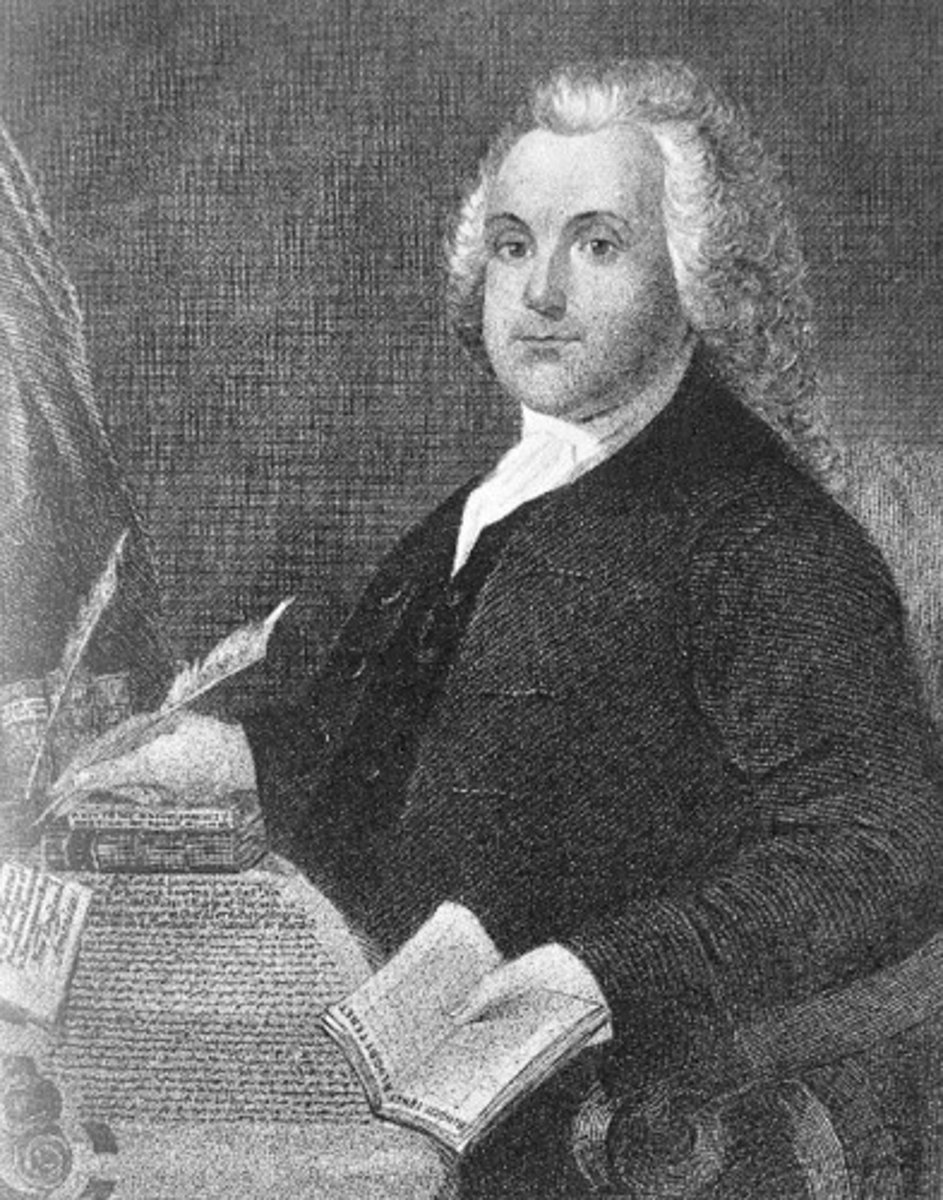
Anne Hutcheson
One of the dissenters in Puritan Massachusetts held bible studies at her house and believed in a personal relationship with god. She moved to New Hampshire where she died along with her children from an Indian attack.
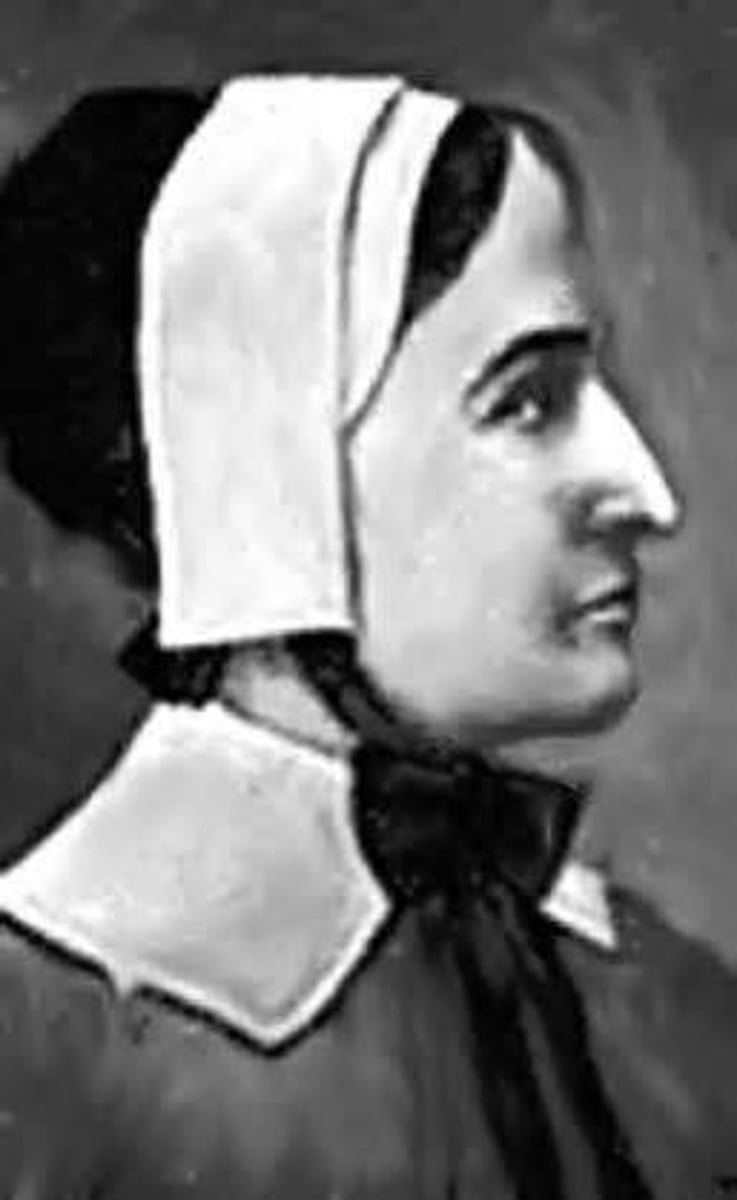
William Penn
Established the colony of Pennsylvania as a "holy experiment". Freemen had the right to vote, provided leadership for self- government based on personal virtues and Quaker religious beliefs. His colony was religiously tolerant leading to diversity in the region.
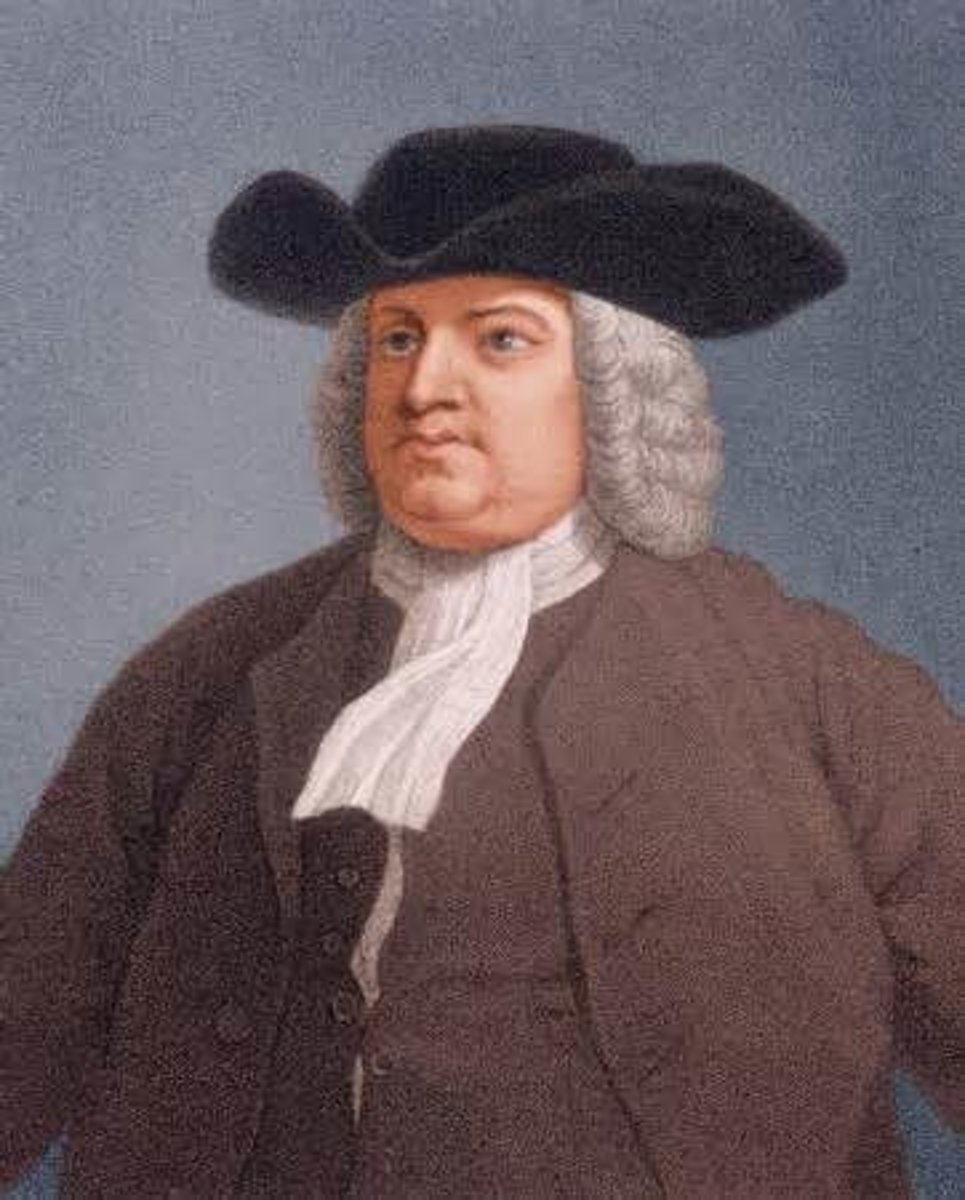
James Oglethorpe
Founded colony of Georgia as a chance for poor immigrants who were in debt to have a second chance at a comfortable life
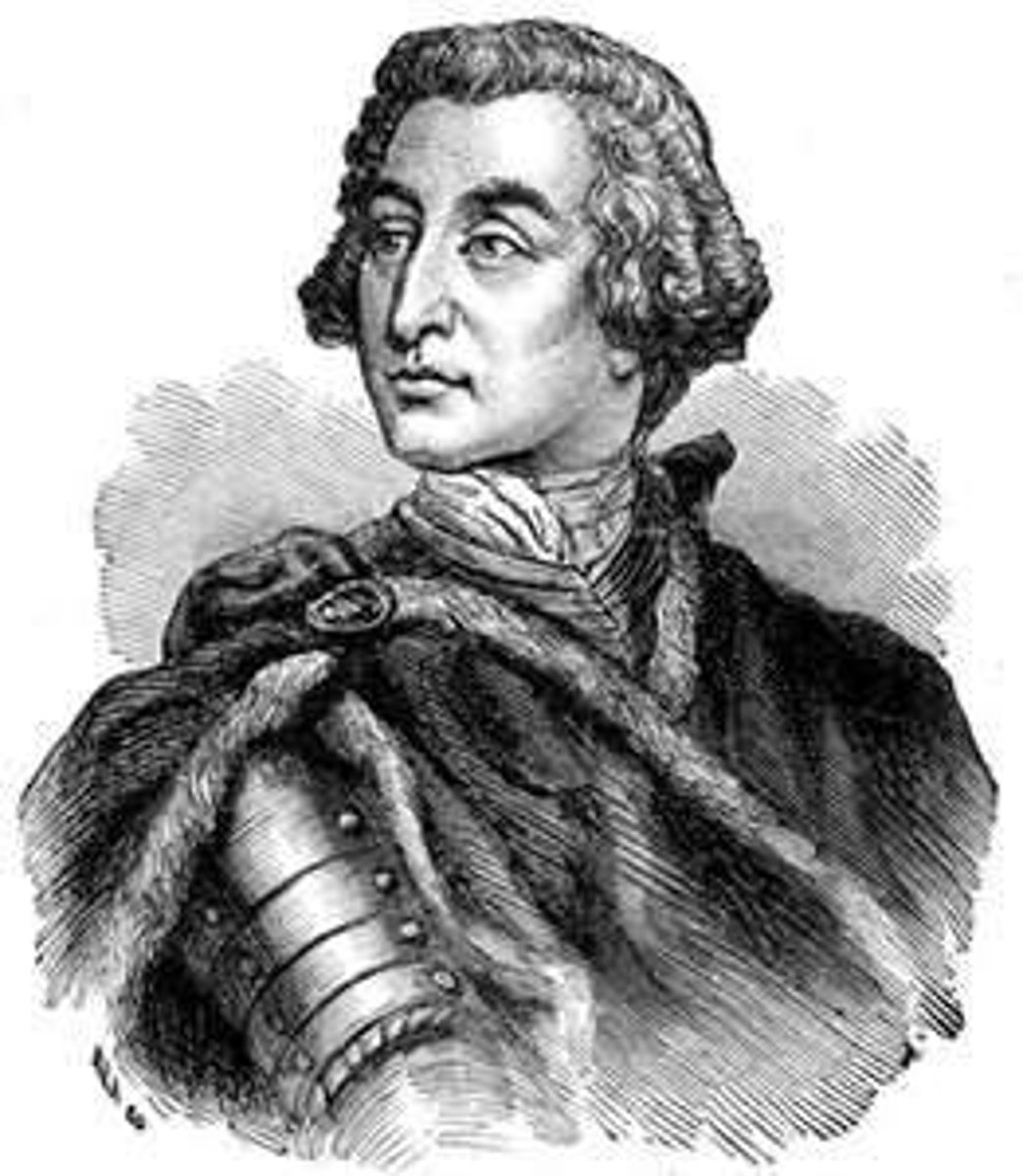
Lord Baltimore
1694- He was the founder of Maryland, a colony which offered religious freedom, and a refuge for the persecuted Roman Catholics.
Navigation Acts
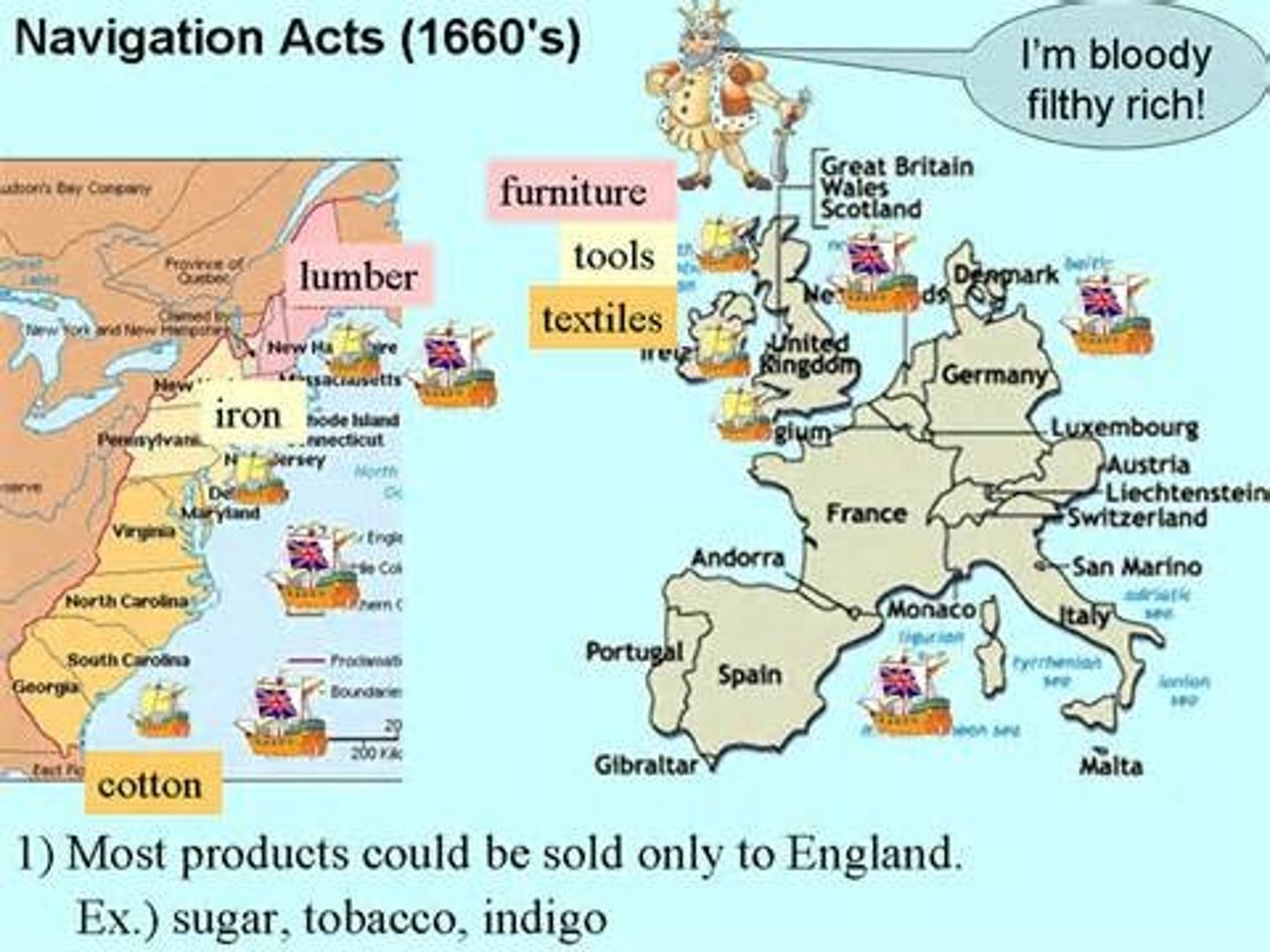
Three acts that regulated colonial trade: 1st act: closed the colonies to all trade except that from English ships, and required the colonists to export certain goods, such as tobacco, to only English territories, 2nd act: (1663) demanded that everything being shipped from Europe to the colonies had to pass through England so they could tax the goods. 3rd act: 1673, was a reaction to the general disregard of the first two laws; it forced duties on the coastal trade among the colonies and supplied customs officials to enforce the Navigation Acts.
Mercantilism
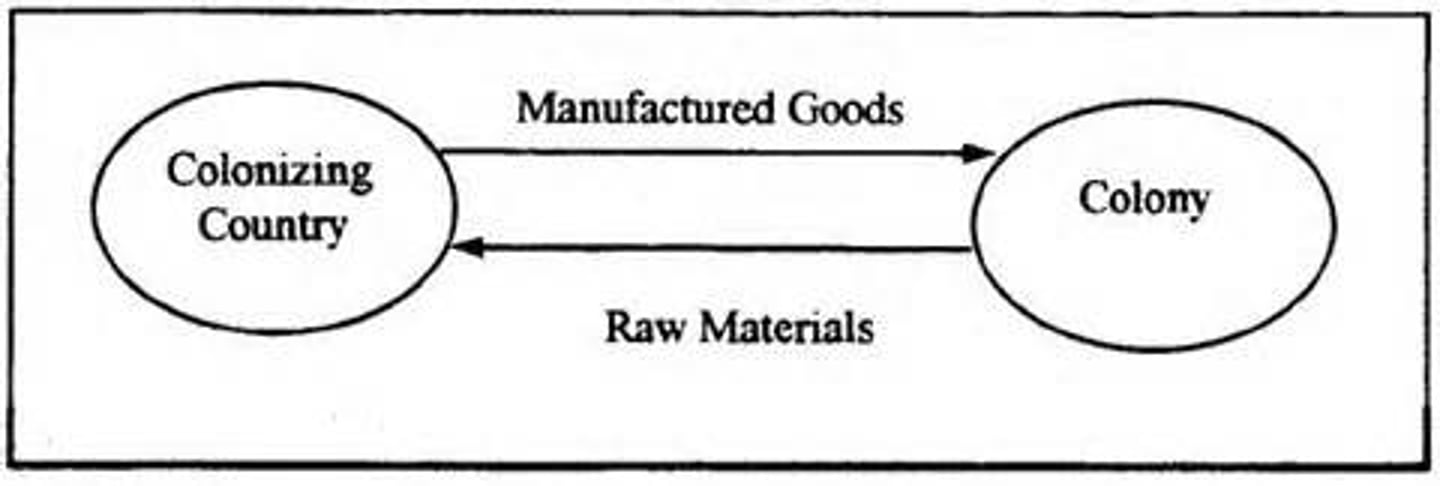
An economic policy under which nations sought to increase their wealth and power by obtaining large amounts of gold and silver and by selling more goods than they bought.
Triangular Slave Trade
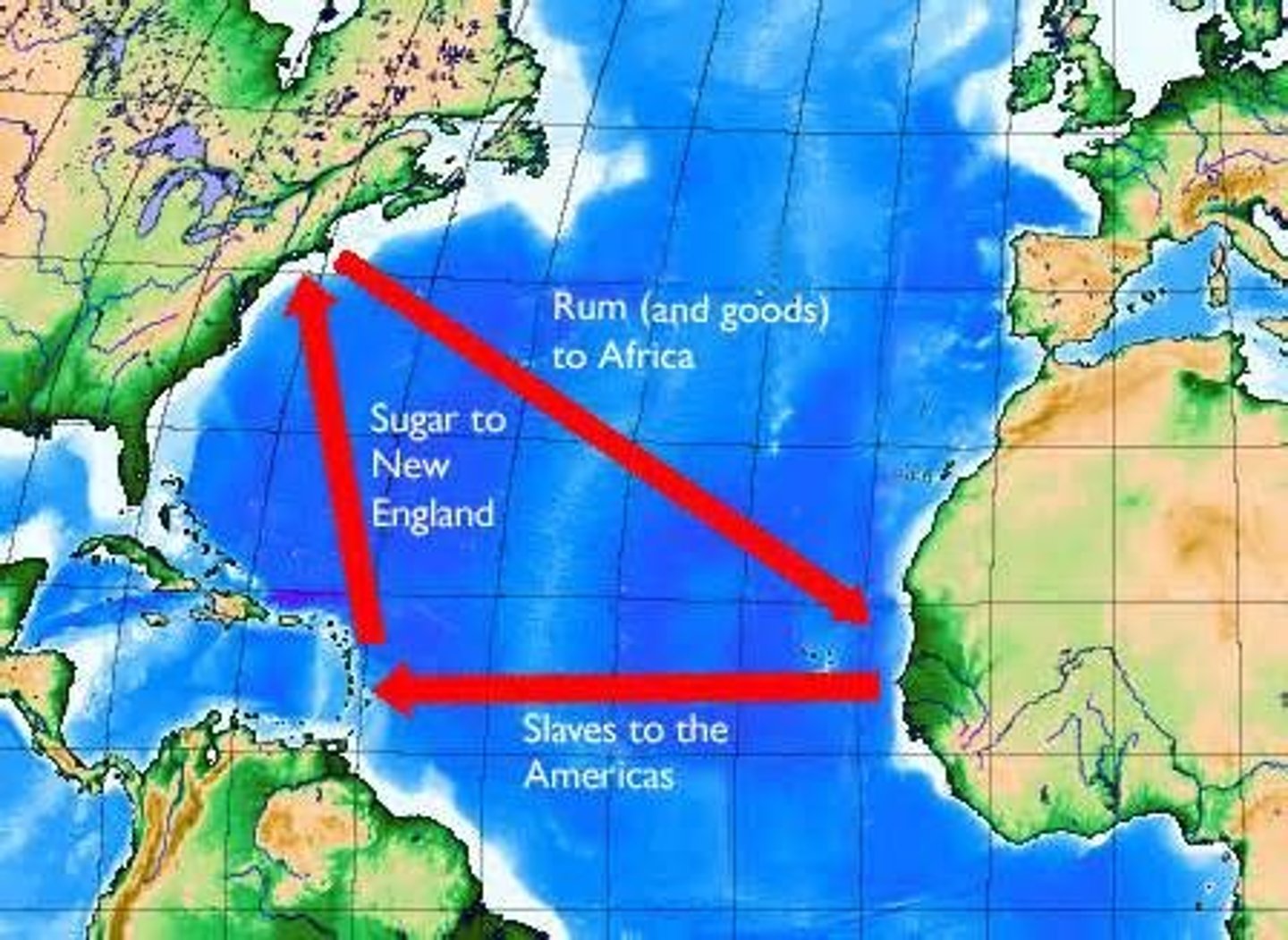
A practice, primarily during the eighteenth century, in which European ships transported slaves from Africa to Caribbean islands, molasses from the Caribbean to Europe, and trade goods from Europe to Africa.
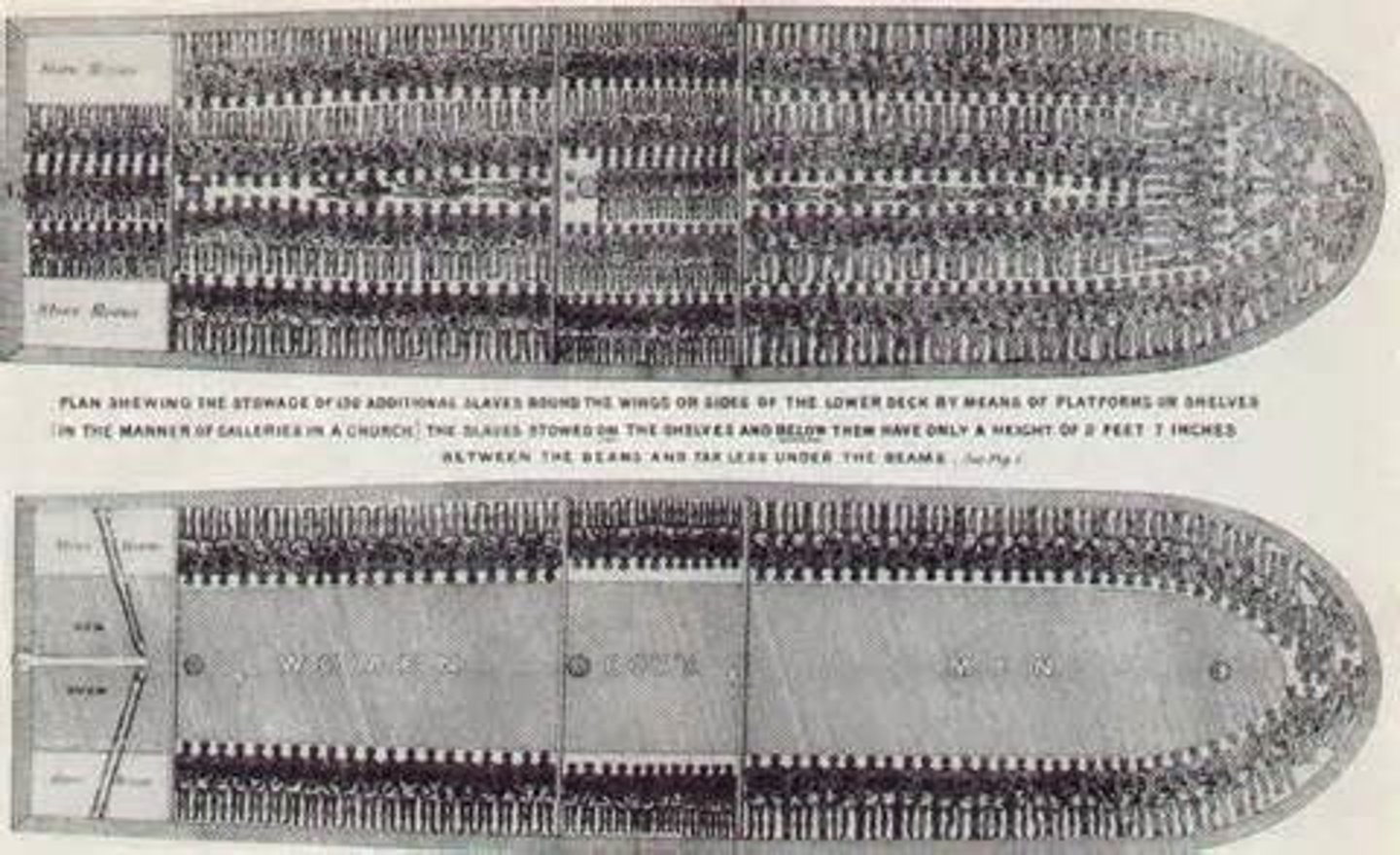
Middle Passage
A voyage that brought enslaved Africans across the Atlantic Ocean to North America and the West Indies. The conditions on the ships from Africa to the west led to the loss of hundreds of thousands of lives.
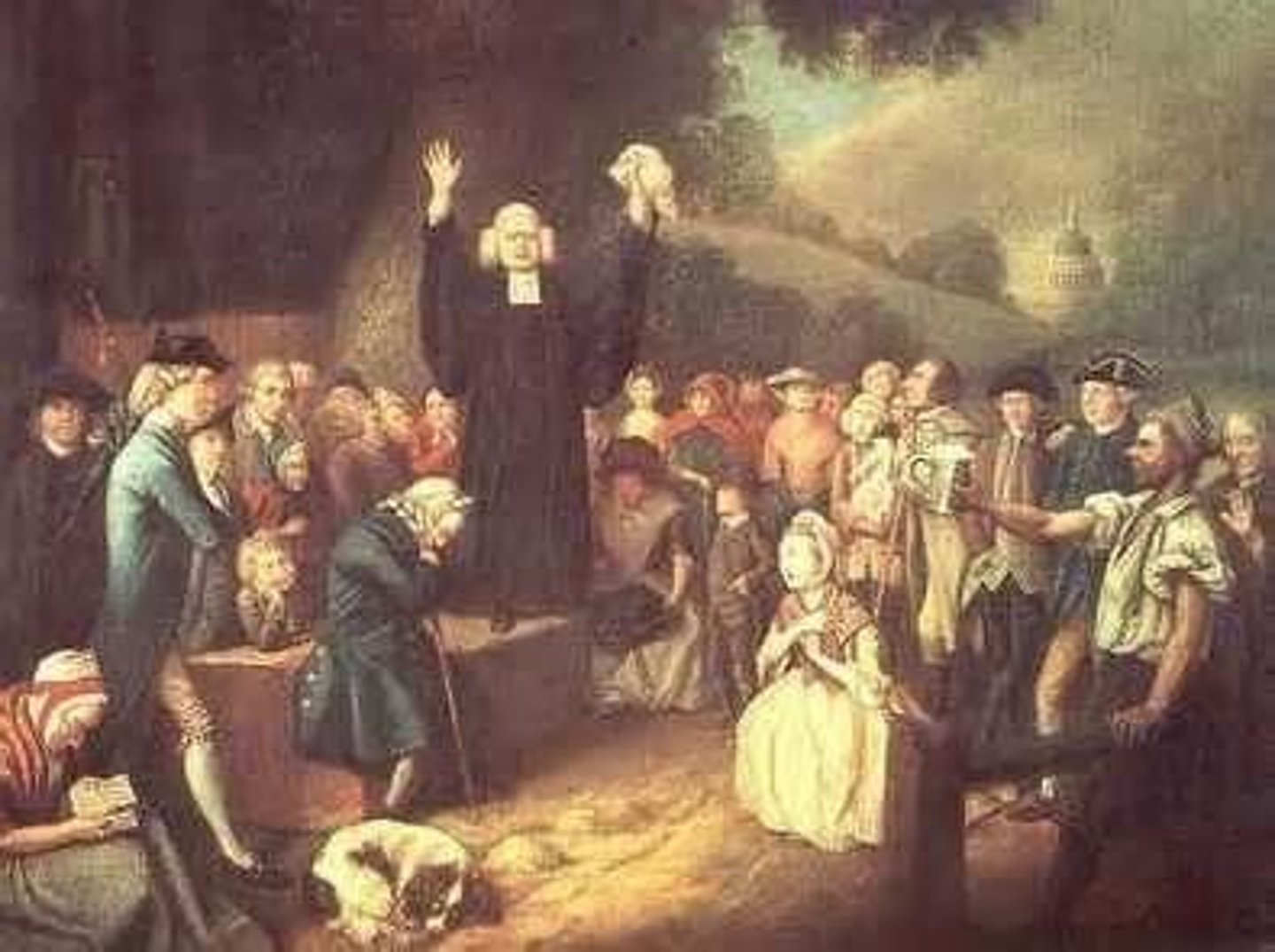
Great Awakening
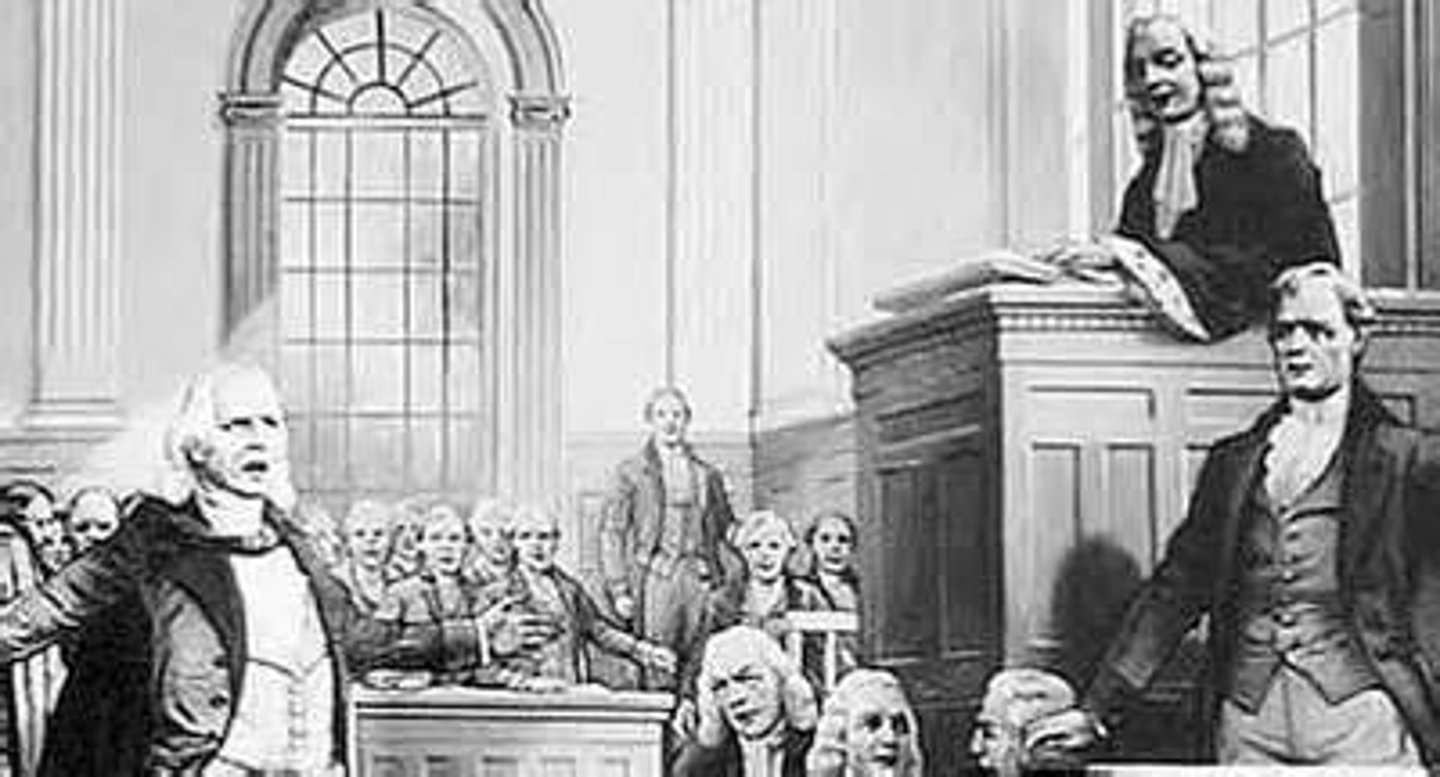
(1730s and 1740s) Religious movement characterized by emotional preaching (Jonathan Edwards & George Whitefield). It established American religious precedents such as camp meetings, revivals, and a "born again" philosophy. The first cultural movement to unite the thirteen colonies. It was associated with the democratization of religion, and a challenge to existing authorities and was an influence leading to the American Revolution.
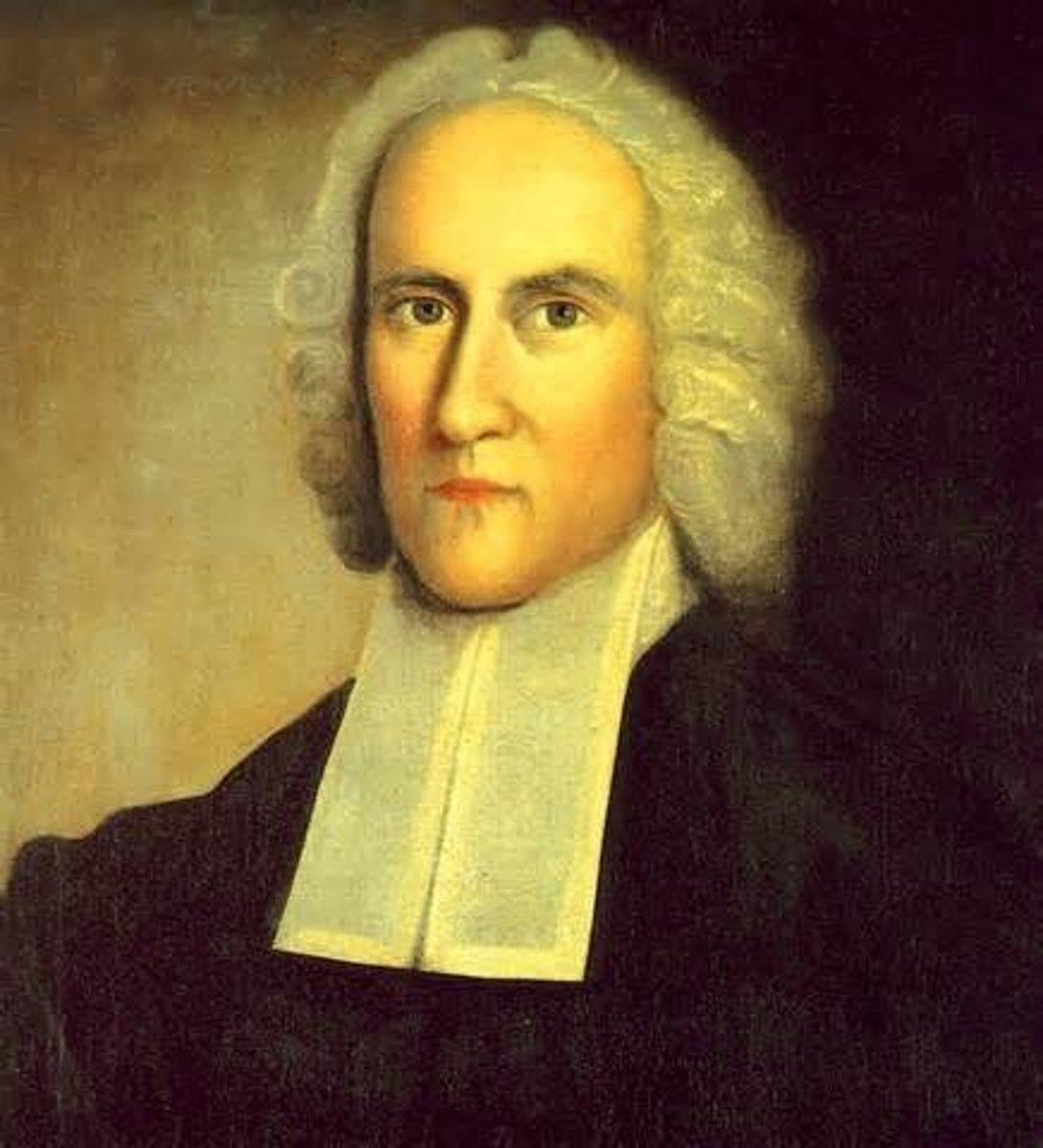
Jonathan Edwards
A leading minister during the Great Awakening, he delivered the famous sermon "Sinners in the Hands of an Angry God" promising that evildoers would pay a price on judgement day.
Zenger Trial
(1734-1735) New York libel case against John Peter Zenger. Established the principle that truthful statements about public officials could not be prosecuted as libel.