Concept 23.1: Genetic variation makes evolution possible
 Call Kai
 Learn
Learn Practice Test
 Spaced Repetition
 Match
Match Flashcards
 Knowt Play
1/13

Name | Mastery | Learn | Test | Matching | Spaced | Call with Kai | Chat |
|---|
No analytics yet
Send a link to your students to track their progress
14 Terms
Natural selection
Force in nature that allows populations of animals to adapt to their environment through genetic components
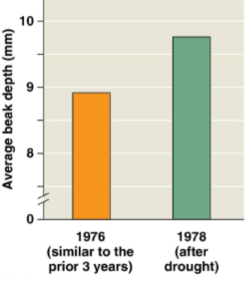
Seen with ground finches in the Galapagos Islands evolving to have larger beaks in response to a small seed shortage
This led to an increase in average beak depth
Microevolution
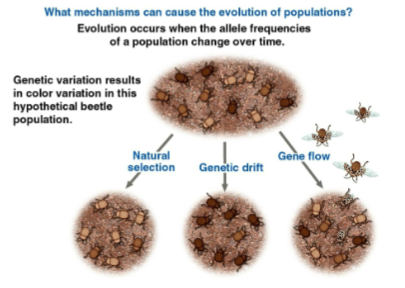
The change in allele frequencies in a population over generations, caused by:
Natural selection (environmental adaptations)
Genetic drift (chance events)
Gene flow (population allele transfers)
Genetic variation
The differences in genes or DNA sequences among individuals; this is a prerequisite for evolution by natural selection
The discovery of this was aided by Gregor Mendel's work on pea plant heritability
It can be quantified by the percentage of heterozygous loci in a population or the nucleotide sequences of individuals
Gregor Mendel
Scientist that discovered evidence of discrete heritable units (genes) in pea plants
Phenotype
How the trait is expressed in the real world, affected by the inherited genotype and environmental influences
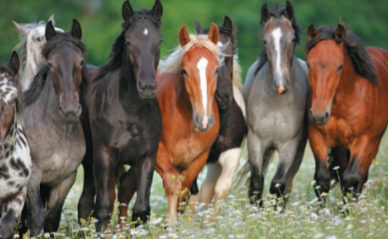
Though most of these are expressed as two traits, a gradient of traits may appear when determined by two or more genes
Seen in horse coat colors or height in humans
Introns
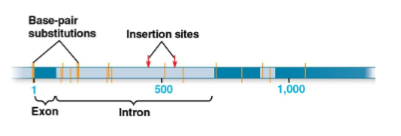
Noncoding DNA segments where most nucleotide differences occur, resulting in no change
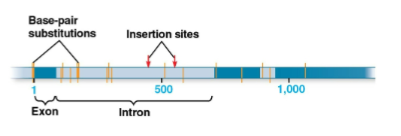
Exons
Coding DNA segments where fewer nucleotide differences occur
Even if DNA is changed here, it rarely results in a change to the amino acid sequence of an encoded protein
Genetic variation sources
Includes:
Mutation
Gene duplication
Other processes
These are accelerated through organisms with short generation times or reproduction through the combination of existing alleles
Mutation
A change in the nucleotide sequence of DNA as a source of genetic variation
Replication errors, radiation, or chemicals are common sources of this — overall, though, these are rare
Even a single change can result in a significant phenotypical impact, often becoming at least slightly harmful if not hidden as a recessive trait
If an organism can produce gametes, these can be passed to offspring
Heterozygote protection
The maintenance of a pool of alleles that could be beneficial with environmental changes through heterozygous individuals
Point mutation
A mutation of a single nucleotide
Neutral variation
A variation with no selective advantage or disadvantage as a result of a point mutation
Occurs due to genetic redundancy
Gene duplication
The duplication of small segments of DNA, is a key source of genetic variation
This can result in the accumulation of mutations and new functions, such as mammals' heightened sense of smell
Virus
An infectious agent with rapid mutation rates and short generation times, increasing drug resistance and survival rates