Normal Human Flora and Human Microbiome
 Call Kai
 Learn
Learn Practice Test
 Spaced Repetition
 Match
Match Flashcards
 Knowt Play
1/63

There's no tags or description
Looks like no tags are added yet.
Name | Mastery | Learn | Test | Matching | Spaced | Call with Kai | Chat |
|---|
No analytics yet
Send a link to your students to track their progress
64 Terms
The skin is dominated primarily by (?) organisms
Salt-tolerant organisms
Staphylococcus epidermidis
Corynebacterium species
Propionibacterium
S. aureus
Candida
The GI tract is predominantly dominated by (?)
anaerobes
Enterobacteriaceae
Enterococci
The Nasopharynx is predominantly dominated by (?)
Diphtheroids
non-pathogenic Neisseria
alpha-hemolytic streptococci
anaerobic species
The Genitalia is predominantly dominated by (?)
Lactobacillus species (maintains acidic environment
Corynebacterium
non-pathogenic Neisseria
Why is Lactobacillus so crucial in the female genital tract, and how does its presence protect against overgrowth by opportunistic pathogens like Candida albicans?
Due to Lactic Acid Production, ferments glycogen into lactic acid = Maintain acidic environment
Production of Hydrogen Peroxide & Bacteriocins = antimicrobial
T or F? E. coli is a normal resident of the Colon & GI Tracts.
True.
T or F? E. coli is a normal resident of the urinary tract?
False. It is pathogenic = cause UTIs
T or F? Prevotella / Peptostreptococcus is a normal minority in Mucosal Sites.
True
Prevotella / Peptostretococcus is pathogenic if present in predominant numbers in the Genital Tract.
True or False? Salmonella, Shigella, Yersinia, and Vibrio are never considered normal flora in the gastrointestinal tract.
Major Bacterial Residents of the Skin
S. Epidermis
Corynebacterium species
Propionibacterium species
Primary GI tract PATHOGENS
Salmonella
Shigella
Yersinia
Vibrio
Campylobacter
Predominant microbial group in the GI tract
Anaerobes
Anaerobes significant if found in pure growth in genitalia
Prevotella
Clostridium
Peptostreptococcus species
Common residents of the Nasopharynx
Non-pathogenic Neisseria species
alpha-hemolytic streptococci
Diptheroids
Presence of S. aureus as normal flora?
occurs in small numbers on the skin, nasopharynx and GI tract
Normal Gram Negative inhabitants of the GI tract
Enterobacteriaceae
Glucose non-fermenting rods
Yeast found in small numbers in the GI tract and skin
Candida species
Status of Neisseria meningitidis in the nasopharynx
Can be present in small amounts as part of normal microbiota in healthy carriers.
factors that help eliminate non-resident microorganisms from the skin
Low pH
Fatty acids in sebaceous secretions
Lysozymes
Sebaceous areas like the forehead and glabella have high conc. of lipid loving microboes like?
Propionibacterium acnes
Malassezia (fungus)
Moist areas like the armpits, groin favor ?
Corynebacterium
Staphylococcus species
Overgrowth of Propionibacterium acnes in the blocked, sebum-rich hair follicles can lead to?
Acne Vulgaris
Loss of protective Staphylococcus epidermidis lead to?
Atopic dermatitis
Immune system hyper-reactivity triggered by altered microbial profiles in genetically susceptible individuals can lead to?
Psoriasis
How does the secretion of lipase enzymes by resident skin bacteria directly contribute to stopping non-resident pathogenic bacteria from invading the skin?
Lipase acts on sebum → generate free fatty acids → inc. skin pH = pathogens are inhibited or destroyed
Based on what we know about how normal skin bacteria protect us (making biofilms, producing antimicrobial peptides, maintaining low pH, what happens to the skin barrier when Staphylococcus epidermidis disappears?
S. aureus predominates = Atopic dermatitis (eczma)
S. epidermis produces antimicrobial peptides and maintain healthy competition
According to modern sequence-based guidelines, what should happen to the copy number of a pathogen's nucleic acid as a patient recovers?
A. It should decrease
The oral microbiome exists as a ?
Biofilm
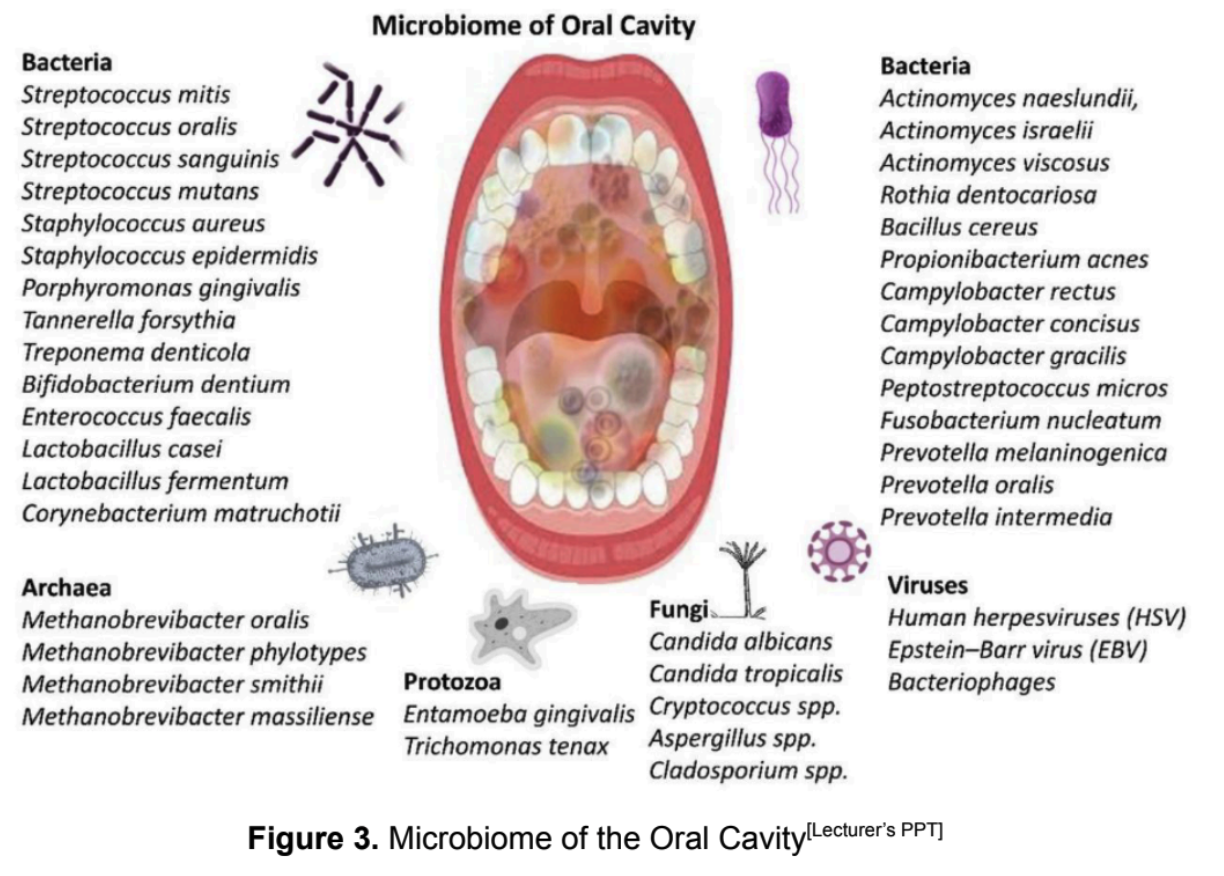
4 phases of Plaque build up
Acquired Enamel Pellicle
Thin film of salivary proteins and glycoproteins form over mineralized enamel
Early colonizing
Gram + species (e.g. Streptococcus sanguis and Streptococcus mutans adhere to the pellicle
Cememting
Streptococcus mutans synthesize high-molecular weight extracellular glucan polymers to create a sticky matrix that glues the community together
Late colonizing
Within 2-4 days, Gram (-) anaerobes (e.g. Fusobacterium nucleatum and Porphyromonas gingivalis) join the mature biofilm
Why must early colonizers like Streptococcus sanguis bind to the pellicle before aggressive late colonizers like Porphyromonas gingivalis can establish themselves in the oral biofilm?
Late colonizers like Porphyromonas gingivalis do not have the right surface molecules to stick directly to the salivary pellicle on teeth. Instead, they use early colonizers as a physical "bridge" or anchor to latch onto.
Late colonizers are strict anaerobes (oxygen is toxic to them). Early colonizers are facultative species—they use up the oxygen on the surface, creating a low-oxygen environment that allows the late colonizers to survive and thrive.
Saliva contains protective enzymes, antibodies, and buffering agents. What do you think happens to the microbial balance in the mouth if a person develops severe dry mouth (low salivary flow rate)?
When salivary flow decreases, we lose critical antimicrobial components like lysozyme, immunoglobulins (IgA), and bicarbonate buffers. Without saliva to flush out debris and neutralize acids, pathogenic species overrun the commensal bacteria, shifting the oral environment from homeostasis into dysbiosis.
f a patient with severe periodontitis has high levels of circulating bacterial toxins like LPS (lipopolysaccharide) in their bloodstream, how might that systemic inflammation lead to bone loss in distant joints?
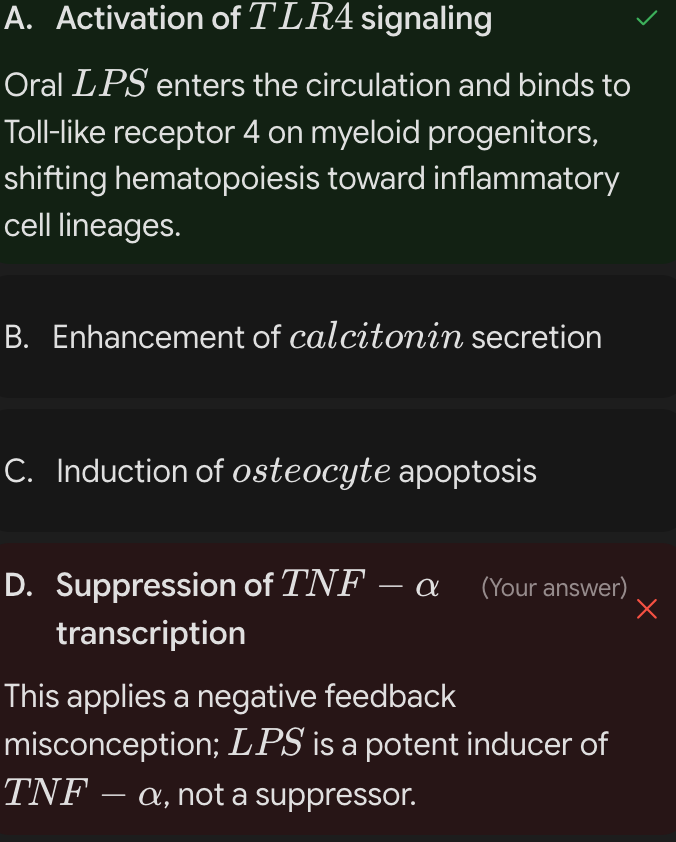
LPS (lipopolysaccharide) from oral bacteria acts as an endotoxin. Immune cells like macrophages recognize it via special receptors TLR4 and release high levels of pro-inflammatory signals like TNF- alpha and IL-6 into the blood.
These inflammatory signals travel through the circulatory system to distant bone tissue and joint spaces.
High levels of TNF-alpha and IL-6 stimulate the formation and activity of osteoclasts—the specialized cells responsible for breaking down and resorbing bone matrix.
Which specific mechanism allows Porphyromonas ggingivalis to exacerbate bone resorption in systemic conditions like osteoporosis?
What unique enzymatic activity of Aggregatibacter $actinomycetemcomitans links periodontal dysbiosis to the pathogenesis of Rheumatoid Arthritis?
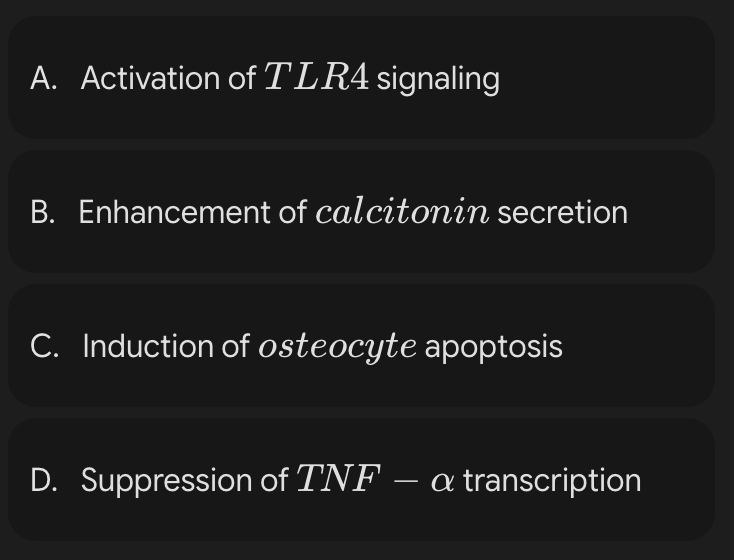
In the context of the 'oral-bone axis,' how does systemic dissemination of oral Lipopolysaccharide LPS) typically affect bone marrow homeostasis?
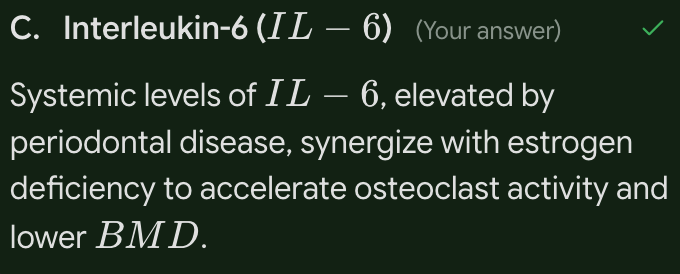
Which cytokine is considered the primary systemic mediator connecting oral inflammation to the reduction of Bone Mineral Density in postmenopausal women?

Which observation would best support a causal link between oral dysbiosis and Osteoarthritis using sequence-based guidelines?
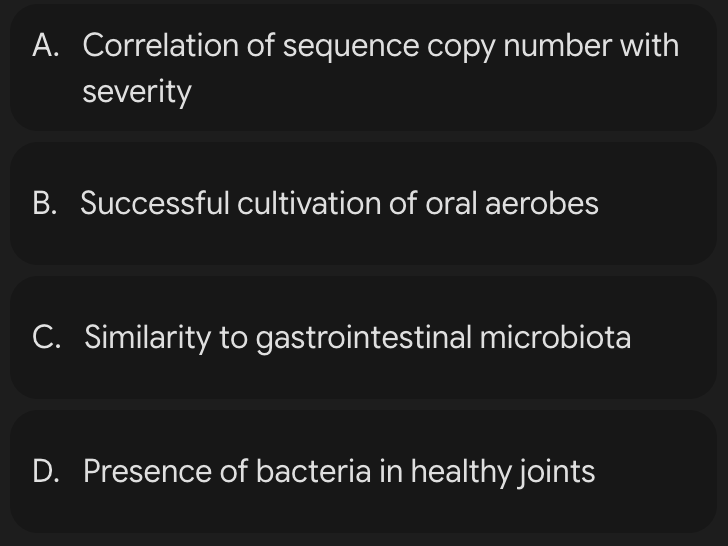
A. high conc. of oral bacteria DNA sequences in synovial fluid correlating w/ synovial fluid correlating w. joint disregulation satisfies modern causal guidelines
How does Oral dysbiosis affect the heart ((Infective Endocarditis)?
Dental trauma opens blood vessels
Transient bacteremia
Viridans streptococci travel through blood and settle on damaged/deformed heart valves.
How does Oral dysbiosis affect the Lungs (Pneumonia / Cystic Fibrosis)?
Normal oral streptococci naturally produce H2O2 (hydrogen peroxide) to block Pseudomonas aeruginosa.
If oral flora shifts, this defense drops, allowing respiratory colonization.
How does Oral dysbiosis affect the Pancreas (Diabetes Mellitus)?
Periodontitis increases AGEs (Advanced Glycation End-products)
activates RAGE receptors = releases pro-inflammatory cytokines that disrupt glucose control.
How does Oral dysbiosis affect the Bones (Osteoporosis)?
Circulating inflammatory signals turn on osteoclasts (bone breakdown cells) causing alveolar bone resorption.
Pathway | High-Yield Mechanism | Key Linked Conditions |
1. Metabolic | Imbalance causes metabolic disturbances that disrupt neurotransmitter or brain functions. | Anxiety, Depression, Schizophrenia, ASD, Epilepsy, PD, Dementia |
2. Oral-Gut-Brain Axis | Swallowed oral microbes alter the gut microbiome, which then signals the brain. | Dementia |
3. Immune Response | Oral pathogens activate immune cells (APCs, T cells, B cells) → triggers neuroinflammation. | ASD, Dementia |
4. Microbial Translocation | Live bacteria or their fragments physically travel to the brain via blood vessels or nerve pathways (e.g., vagus/trigeminal). | Anxiety, Depression, Schizophrenia, Epilepsy, PD |
5. Inflammation | Inflammatory mediators weaken and break the Blood-Brain Barrier (BBB). | Anxiety, Depression, ASD, Dementia |
If a patient gets a tooth extraction and Viridans streptococci enter their blood, which organ and specific disease are they most at risk for?
Heart and Infective Endocarditis! 🫀
The transient bacteremia allows Viridans streptococci to travel through the bloodstream and colonize damaged or deformed heart valves.
What is the only species in the esophagus and stomach that can persist long term in the extreme acidic environment?
H. Pylori
T or F? Taking antacids or Proton Pump Inhibitors (PPIs) lowers stomach acidity, allowing fecal/intestinal flora to overgrow in the stomach.
True
How does the pH and Microbial density in the small intestine (Duodenum → Jejunum → ileum) change?
pH increases (pH 5 → 7)
Microbial density increases
Where in the GIT houses the highest density of bacteria in any known habitat?
Large intestine (cecum & colon)
Microbes make up 60% of total fecal mass in the sigmoid colon and rectum
What are the 3 Bacteriocin Action Types?
Colonizing peptide: Helps beneficial probiotics establish themselves on mucosal surfaces.
Killing peptide: Directly destroys membrane walls of incoming pathogens.
Signaling peptide: Communicates with underlying host immune cells.
The Gut microbiota produces metabolites like ? and ? that regulate Enteroendocrine cells along the GI tract.
SCFAs and Bile acids
Which specific cell type is stimulated by microbial-derived Short-Chain Fatty Acids (SCFAs) to release GLP-1 and PYY?
G cells
L cells
D cells
S cells
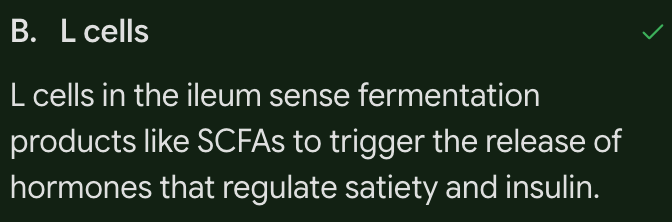
What is the primary role of 'physiologic hypoxia' in the healthy intestinal lumen?
Maintain anaerobic flora
Which hormone acts as the 'universal off-switch' by
inhibiting the secretion of gastrin, secretin, and CCK?
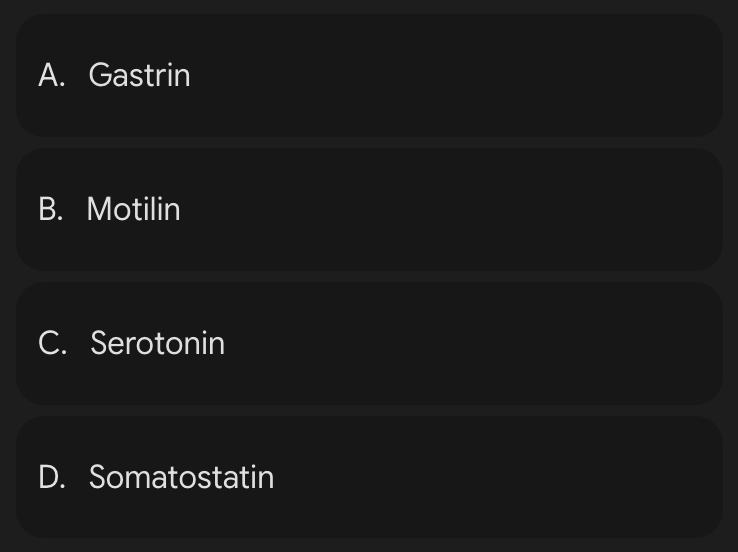
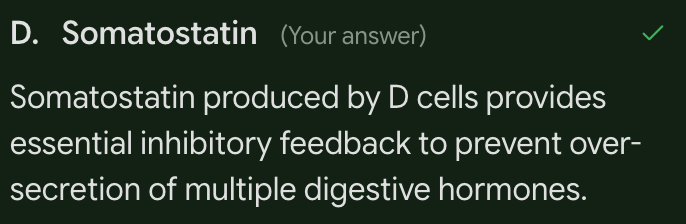
How do microbial metabolites like SCFAs influence the production of Serotonin in the colon?
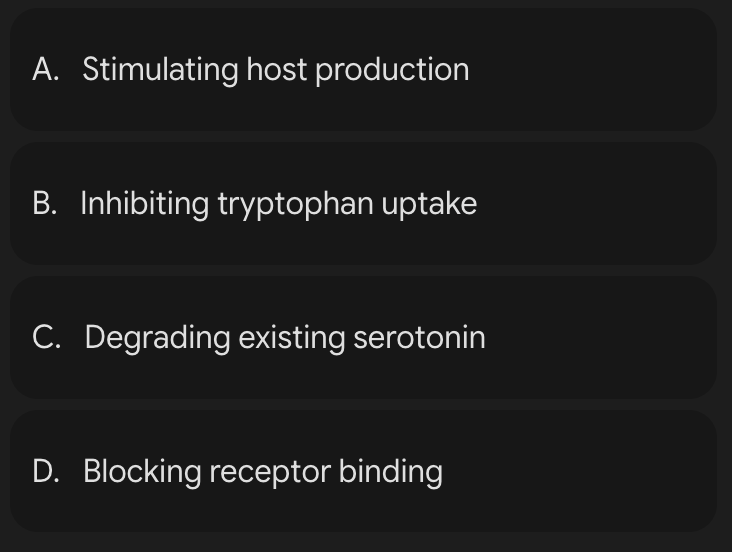
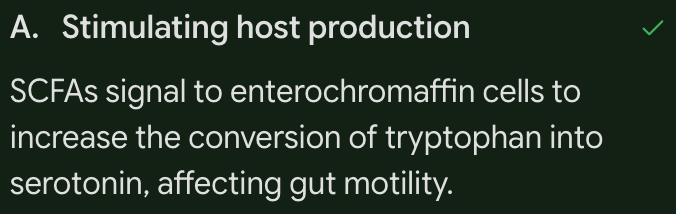
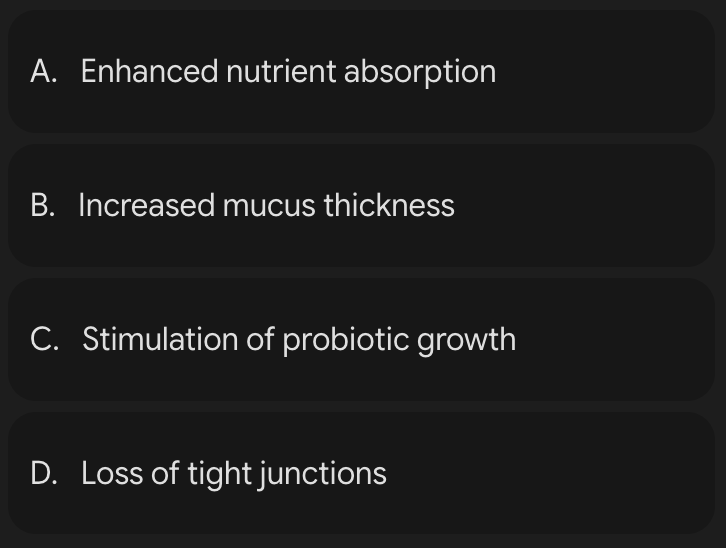
The stabilization of Hypoxia-Inducible Factors (HIFs) in gut tissue primarily leads to which outcome?
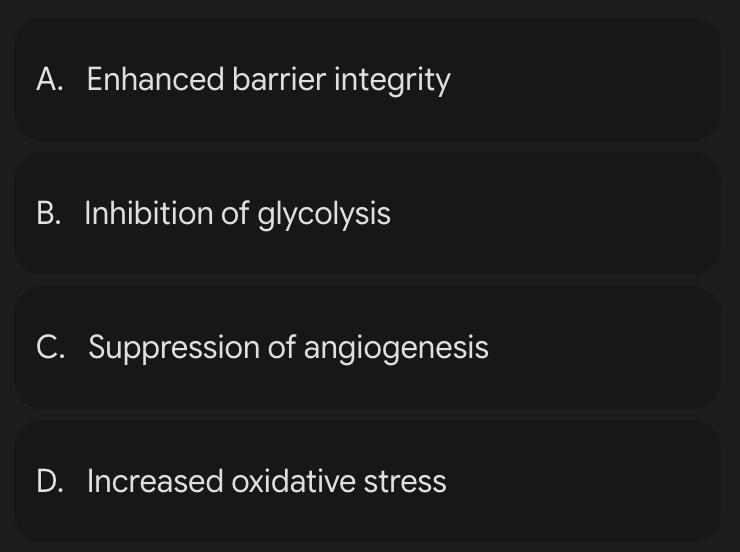

What effect does a decrease in lumenal oxygen tension have on the metabolic environment of the gut?
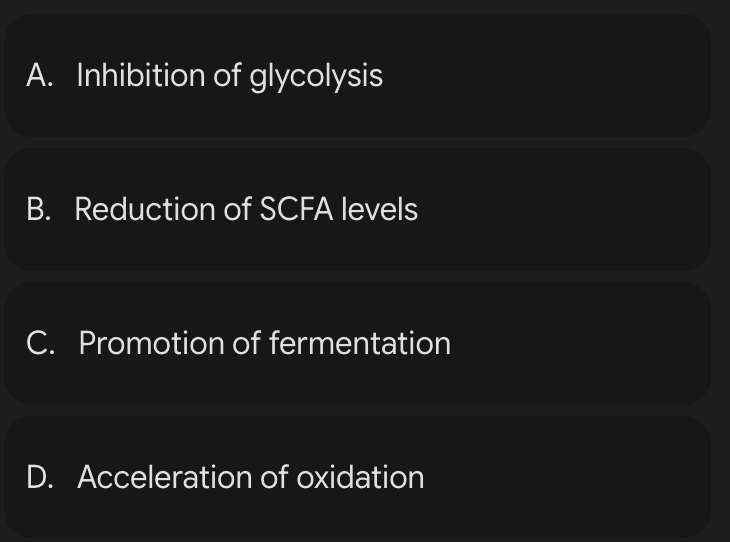
Which hormone's secretion is directly modulated by the duodenum sensing HCO3- needs to neutralize stomach acid?


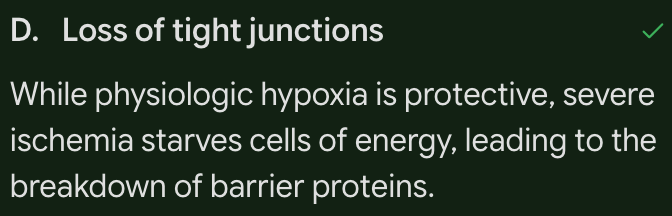
What is a likely consequence of severe pathological hypoxia (ischemia) on the intestinal barrier?
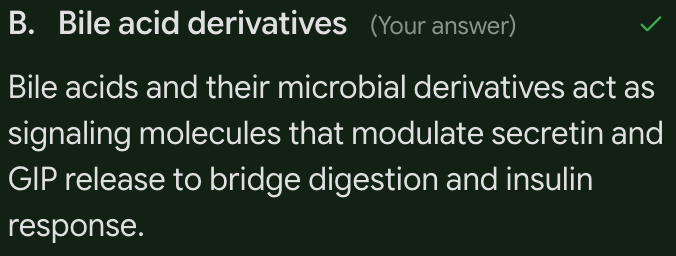
Which metabolite links the sensing of nutrients in the gut to the 'Incretin effect' via Secretin/GIP modulation?
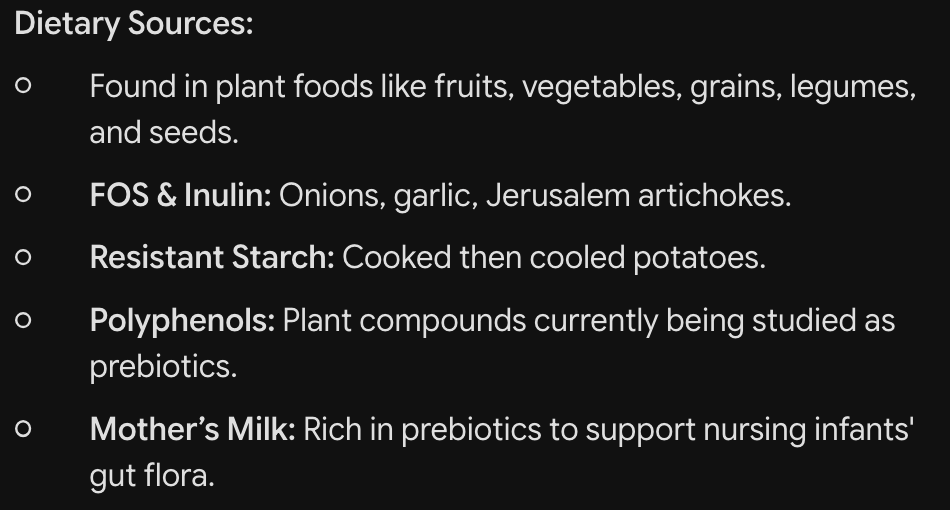
T or F? Most prebiotics are dietary fibers, but not all dietary fibers are prebiotics.
T
Non-digestible substrates (food) selectively utilized by host microorganisms to confer health benefits by altering the composition and/or function of the gut microbiota.
Pre-biotics
Live microorganisms that
confer a health benefit when administered in adequate amounts.
Supports beneficial host bacteria during disruptions like antibiotic use, poor diet, or traveling.
Probiotics
Certain microorganisms are never considered to be members of the normal flora. They are always considered to be pathogens. Which one of the following organisms fits into that category?
a. Streptococcus pneumoniae
b. Escherichia coli
c. Mycobacterium tuberculosis
d. Staphylococcus aureus
e. Neisseria meningitidis
c. Mycobacterium tuberculosis
A 26-year old woman visits her physician because of an unusual vaginal discharge. On examination, the physician observes a thin, homogenous, white-gray discharge that adheres to the vaginal wall. The pH of the discharge is 5.5 (normal, <4.3). On Gram-stain, many epithelial cells covered with Gram-variable rods are seen. Bacterial vaginosis is
diagnosed. Which one of the following normal genital flora
microorganisms is greatly decreased in bacterial vaginosis?
a. Corynebacterium species
b. Staphylococcus epidermidis
c. Prevotella species
d. Candida albicans
e. Lactobacillus species
e. Lactobacillus species