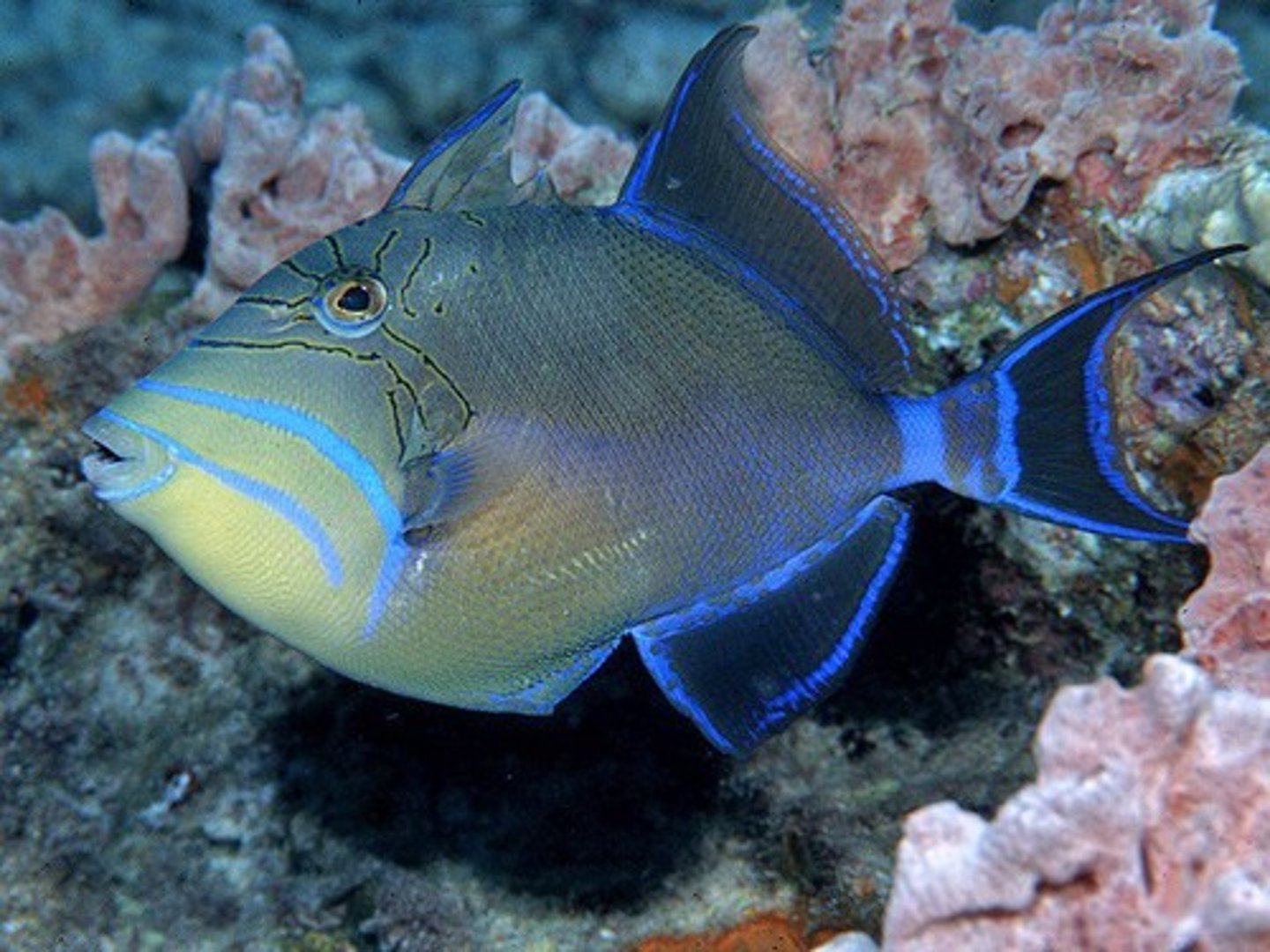
Subdivision Teleostei
 Call Kai
 Learn
Learn Practice Test
 Spaced Repetition
 Match
Match Flashcards
 Knowt Play
1/47

There's no tags or description
Looks like no tags are added yet.
Name | Mastery | Learn | Test | Matching | Spaced | Call with Kai |
|---|
No analytics yet
Send a link to your students to track their progress
48 Terms
Subdivision Teleostei
largest group of ray-finned fishes, comprising about 96% of all living fish species
-Branchiostegal rays
-Homocercal caudal fin
-Pectorals high on sides of body
-Pelvic fins lower and below pectorals
-Mobile premaxilla
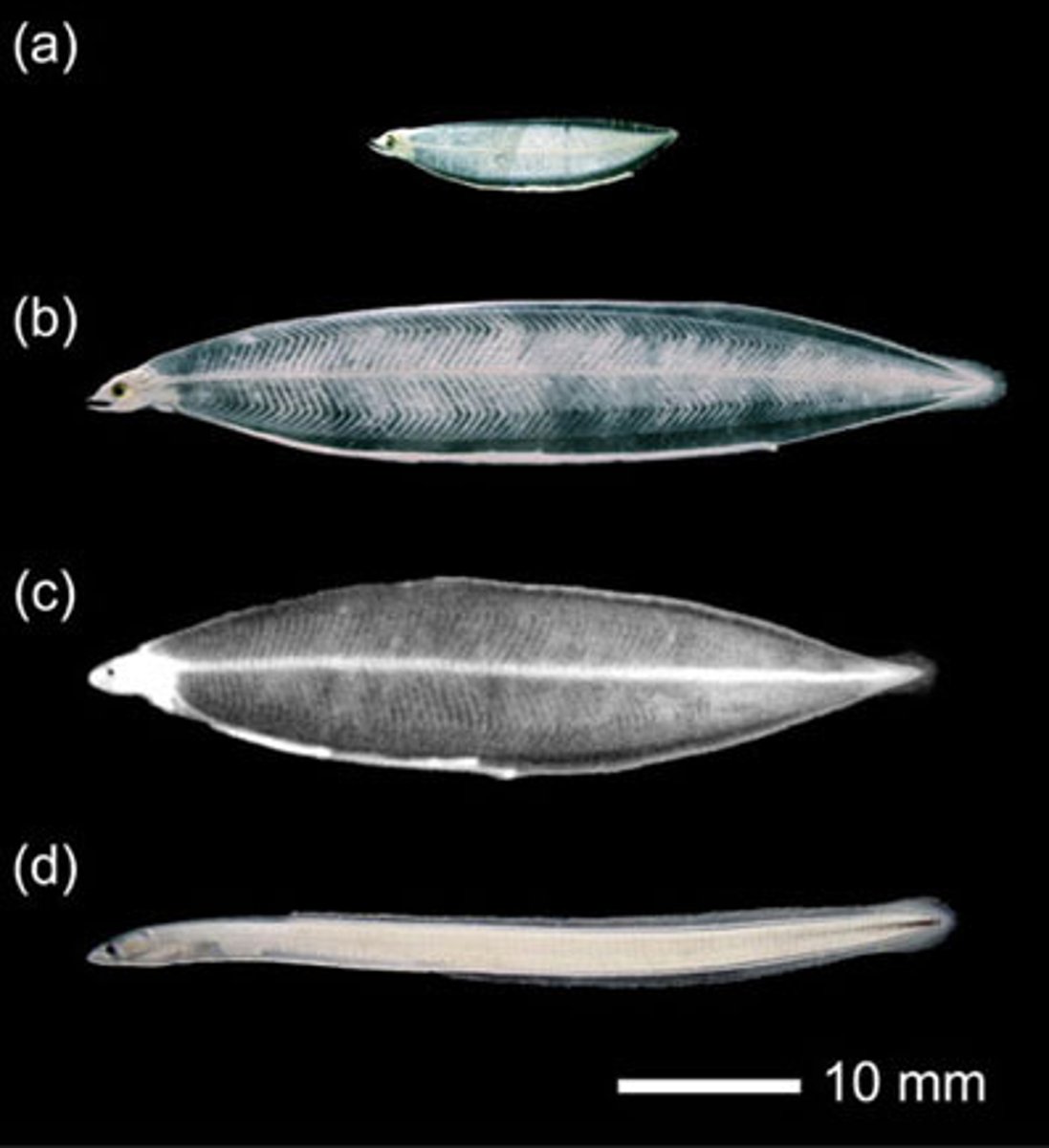
Leptocephalus Larvae
Cohort Elopomorpha
Long, filamentous, translucent larvae of eels and other species in Elopomorpha
-Can coil up to look like jellyfish to deter predators
-teeth on parasphenoid
Order Elopiformes
Subdivision Elopomorpha
Tarpons and Ladyfishes
-Highly fecund: 12 million eggs
-Retain primitive gular plate
-Many branchiostegal rays (gill membrane support)
-Well developed forked caudal fin
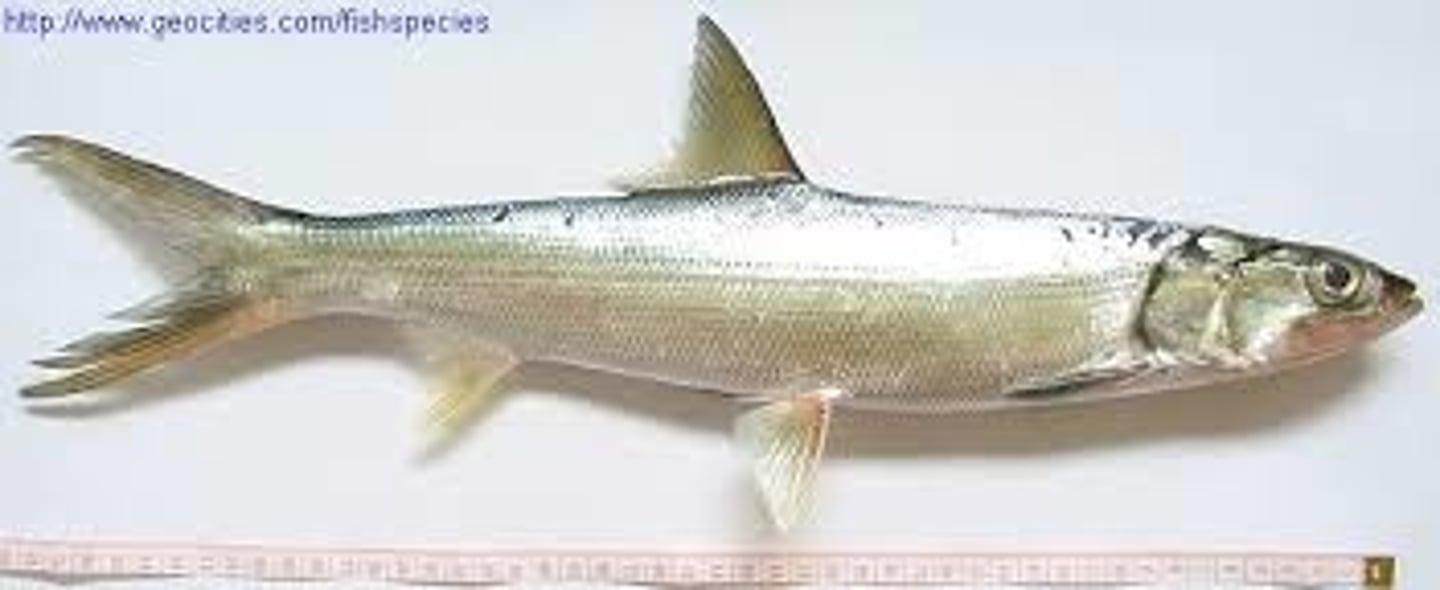
Order Albuliformes
Subdivision Elopomorpha
Bonefishes
-Inferior mouth, small
-Gular plate
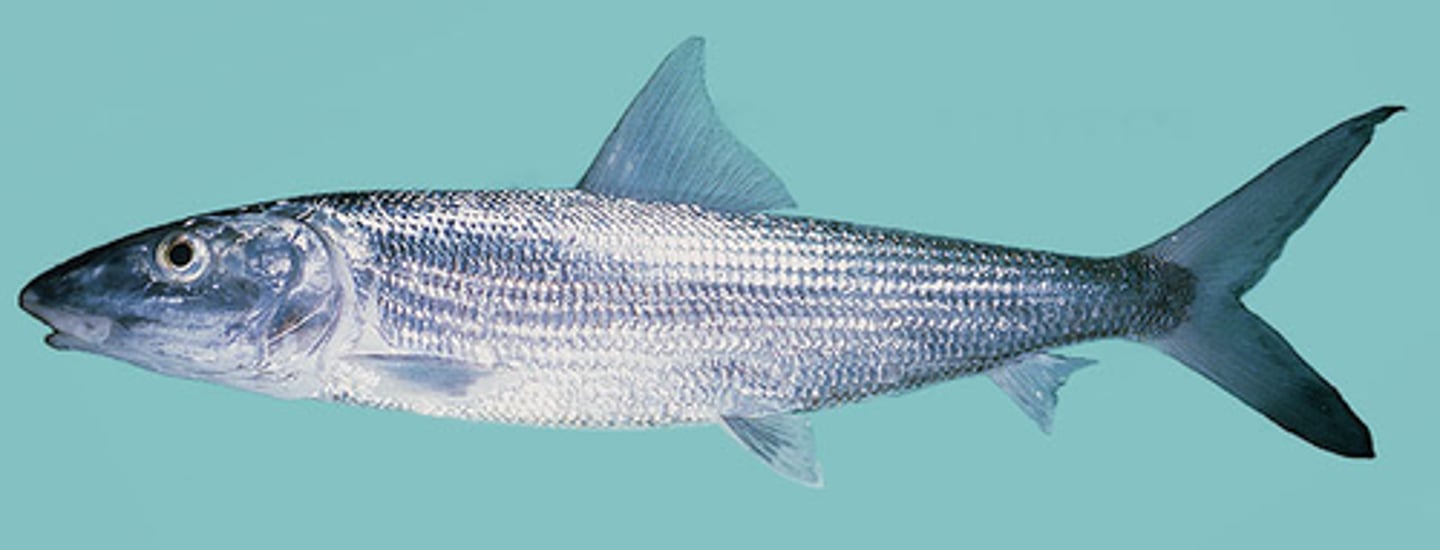
Order Notacanthiformes
Subdivision Elopomorpha
spiny eels
-Long anal fin w/ many spines
-Some w/ large leptocephalus larvae (larger than adults)
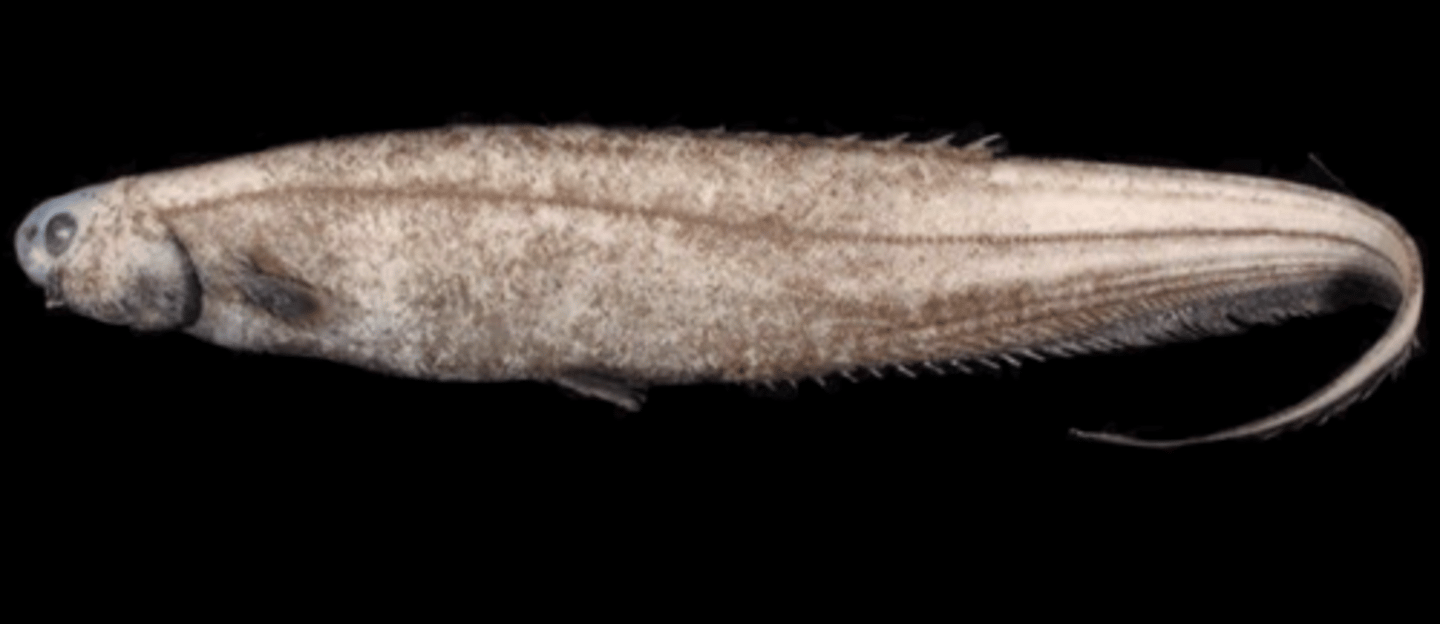
Order Anguilliformes
Subdivision Elopomorpha
true eels
-Pelvic fins and girdle absent
-Anguilliform body shape
-Narrow gill openings
-No gill rakers
-caudal fin small and round

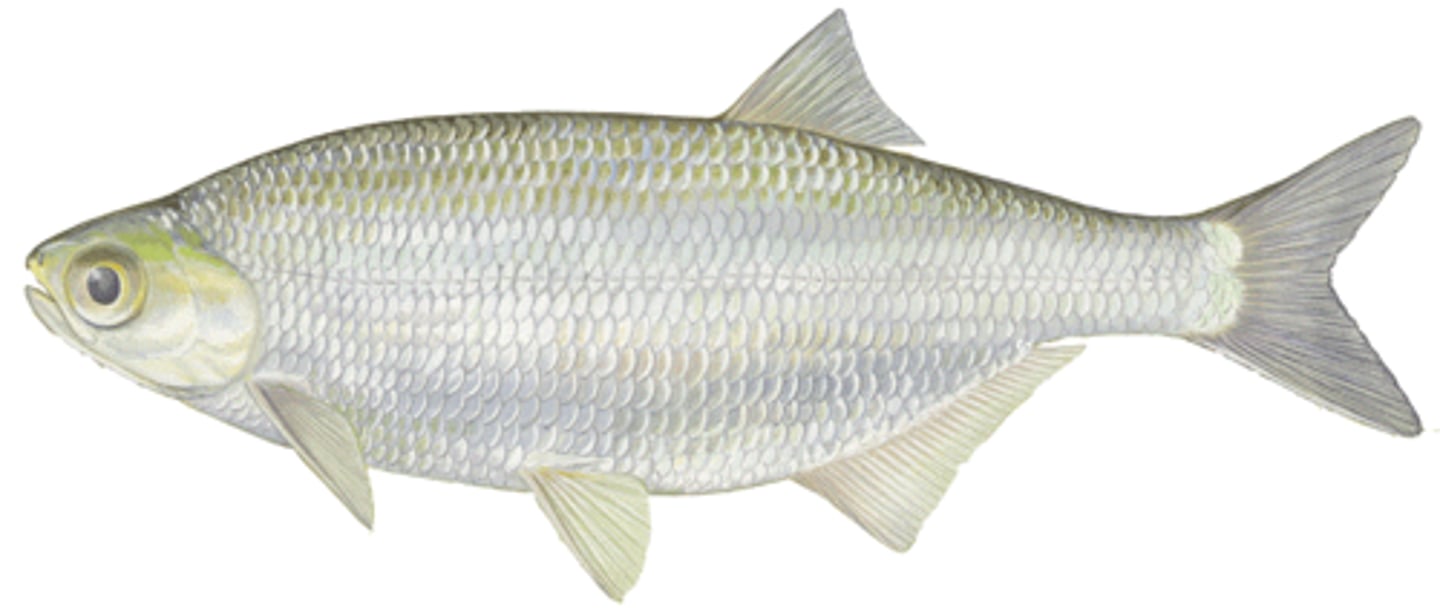
Order Hiodontiformes
Cohort Osteoglossomorpha
Mooneyes
-Tubular nasals, strongly curved
-Opercle w/ recurved process
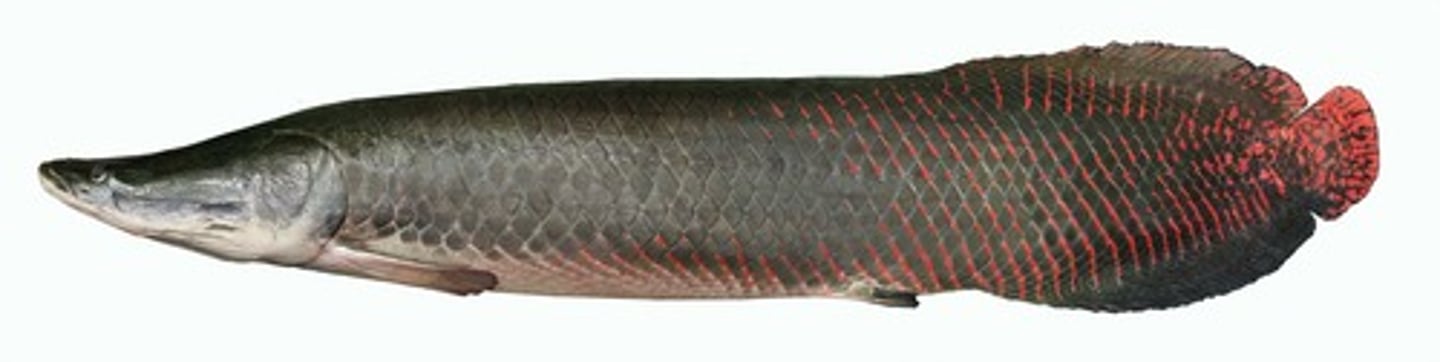
Order Osteoglossiformes
Cohort Osteoglossomorpha
bonytongues
-Tooth plate on tongue
-premaxilla fixed to skull
-intestine lies left to stomach
Cohort Otocephala
Many Otophysic (hearing) connection between gas bladder and inner ear in most members
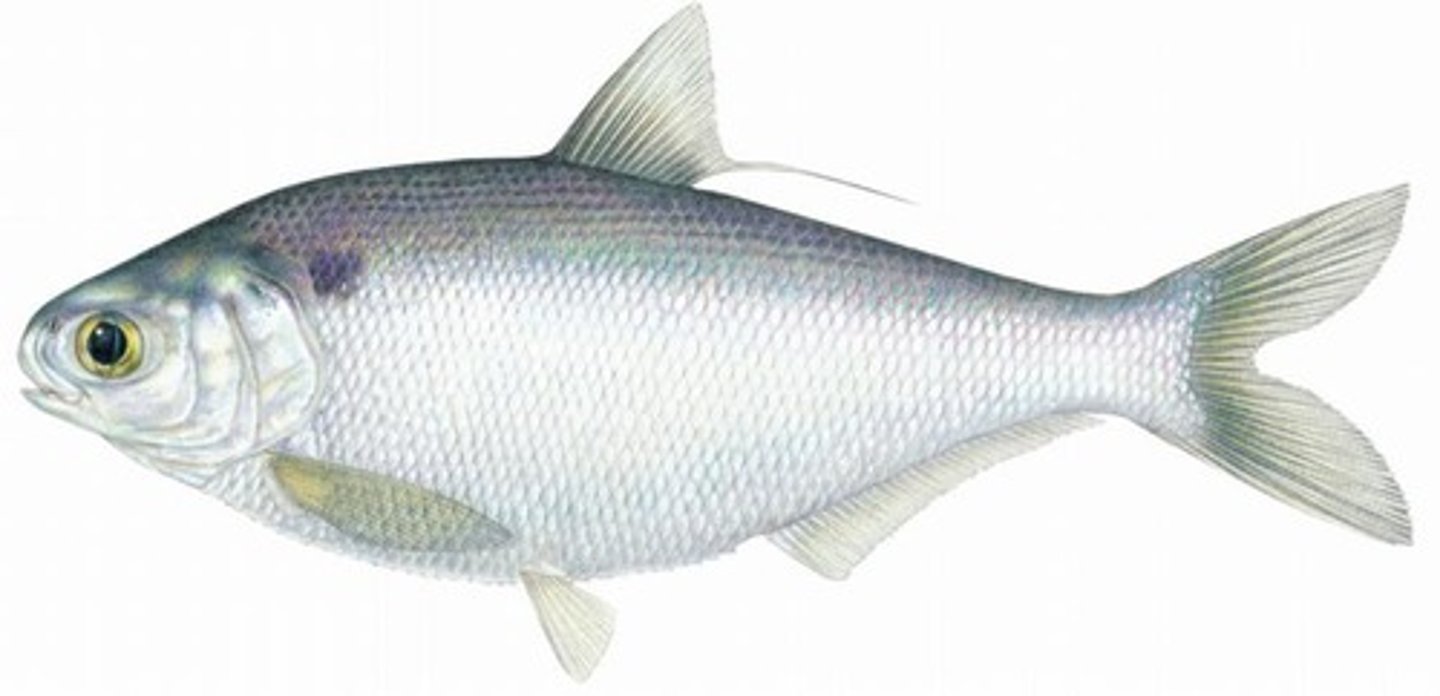
Order Clupeiformes
Superorder Clupeomorpha
Cohort otocephala
Herrings, herring like fishes, shads, sardines, menhadens, anchovies
-Otophysic gas bladder
-Most abundant fishes in world
-keel like bellies w/ scutes
Order Alepocephaliformes
Superorder Alepocephali
Cohort Otocephala
Slickhead and tubeshoulders
-Dorsal fin way back
-no gas bladder
-large mouth

Superorder ostariophysi
Series Otophysi
Cohort Otocephala
Fish of this superorder have....
-Weberian apparatus
-Schreckstoff (alarm scent)
-Otophysic gas bladder
-Physostomous gas bladder
-Unculi/ keratinous nuptial tubercles in breeding males
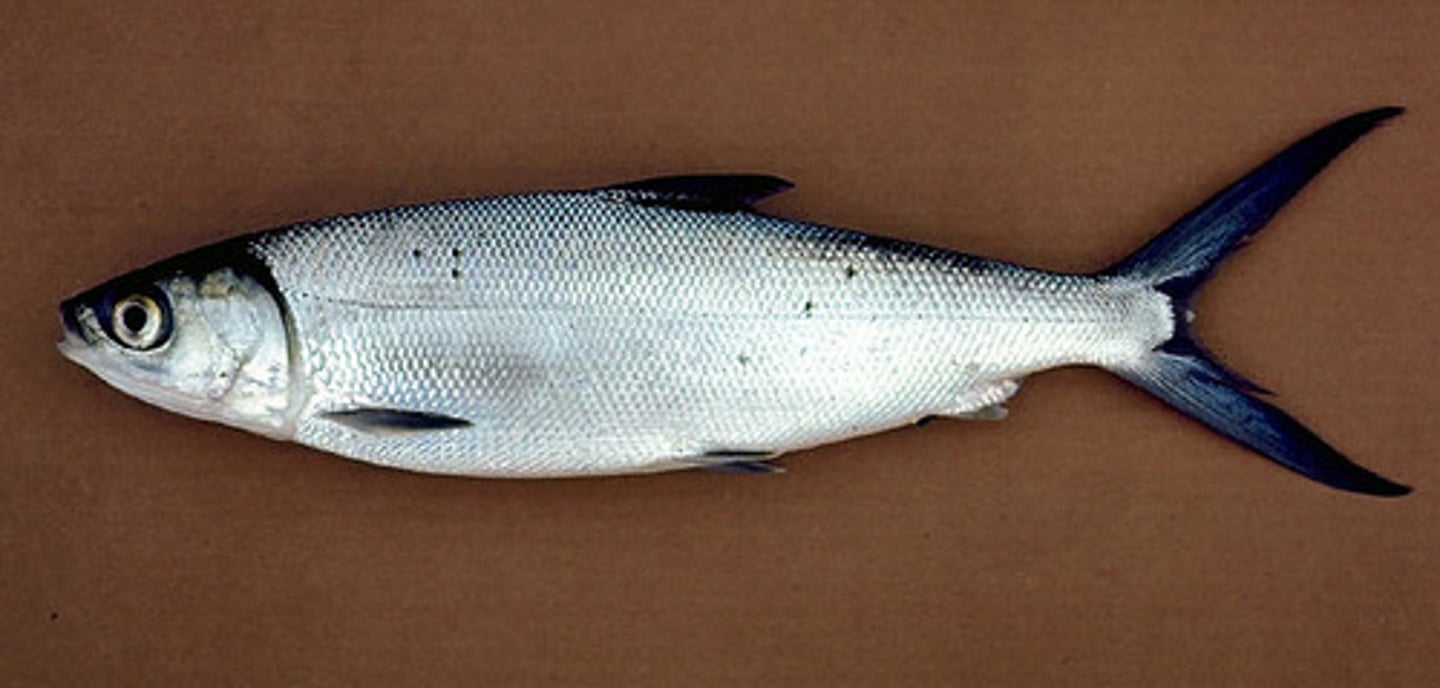
Order Gonorynchiformes
Series Anotophysi
Superorder Ostariophysi
Milkfish
-first 3 vertebrae modified and represents weberian apparatus (primitive weberian apparatus)
-Suprabranchial organ
Series Otophysi
Fish of this series have.....
-weberian apparatus
-tubercles in breeding males
-pharyngeal teeth
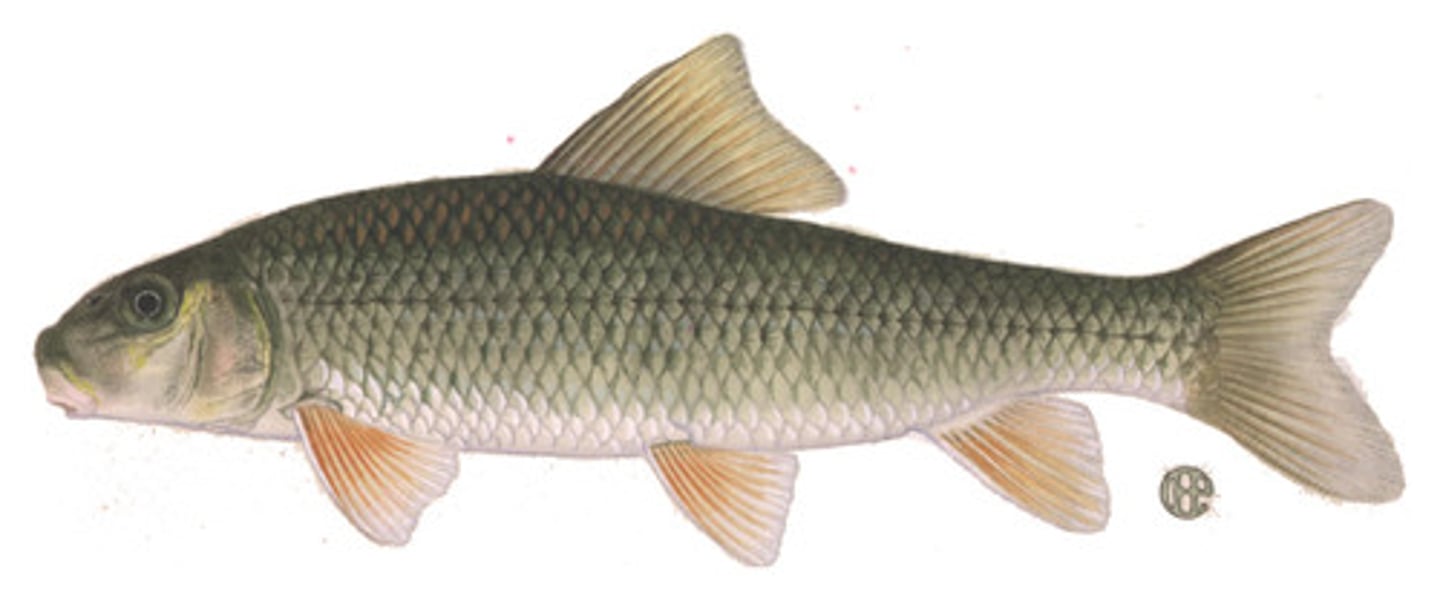
Order Cypriniformes
Series Otophysi
Superorder Ostariophysi
Minnows, Carp, Suckers
-Kinethmoid mediated premaxilla protrusion
-Protrusible upper jaw
-No teeth on oral jaw
Order Characiformes
Series Otophysi
Superorder Ostariophysi
characins, tetras, piranhas, pacus, silver dollars
-Upper jaw non protrusible
-jaw teeth
-body scaled

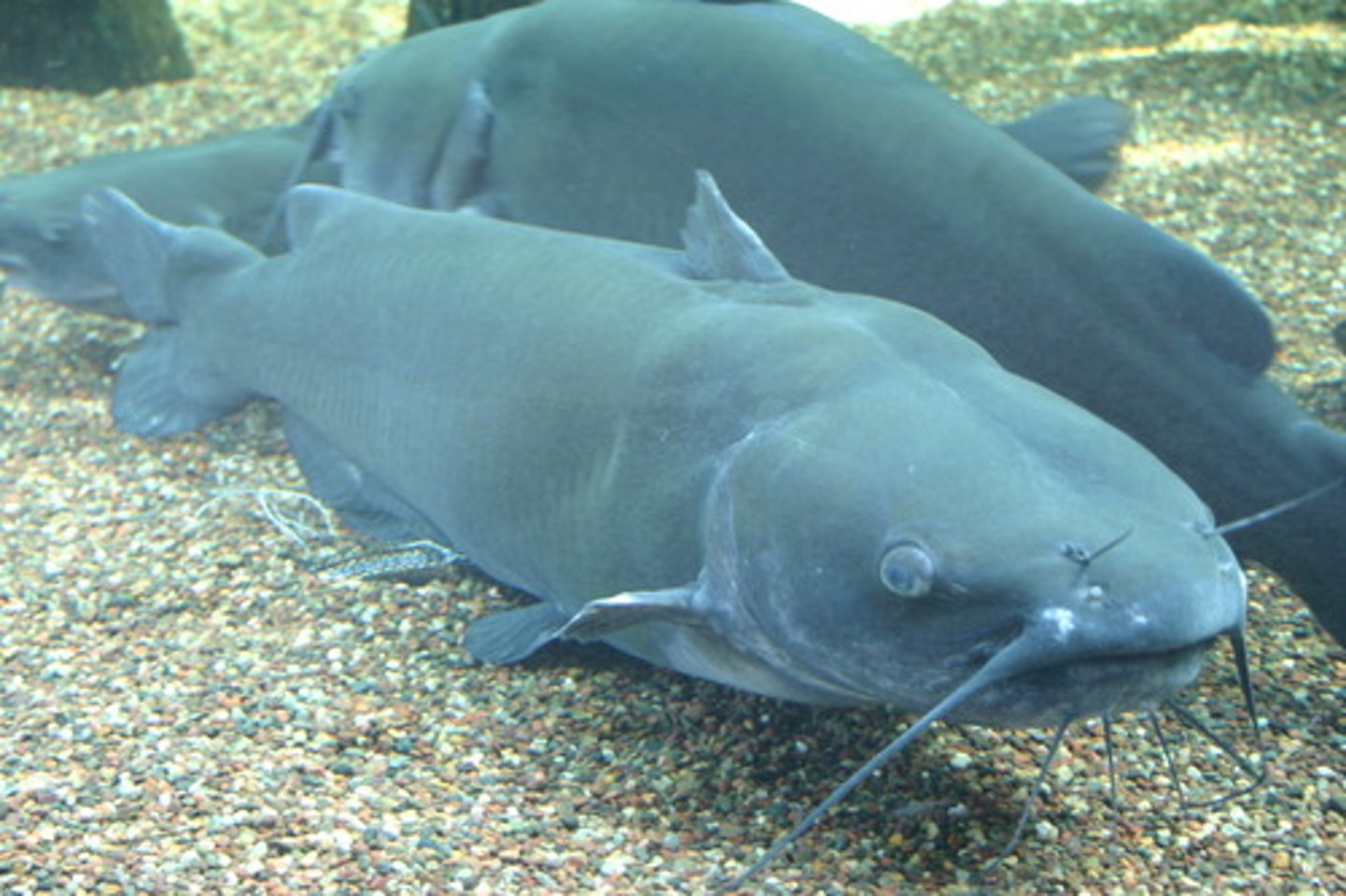
Order Siluriformes
Series Otophysi
Superorder Ostariophysi
catfish
-Barbels 1 to 4 pairs
-spine like rays
-no scales
-External, internal, buccal fertilization
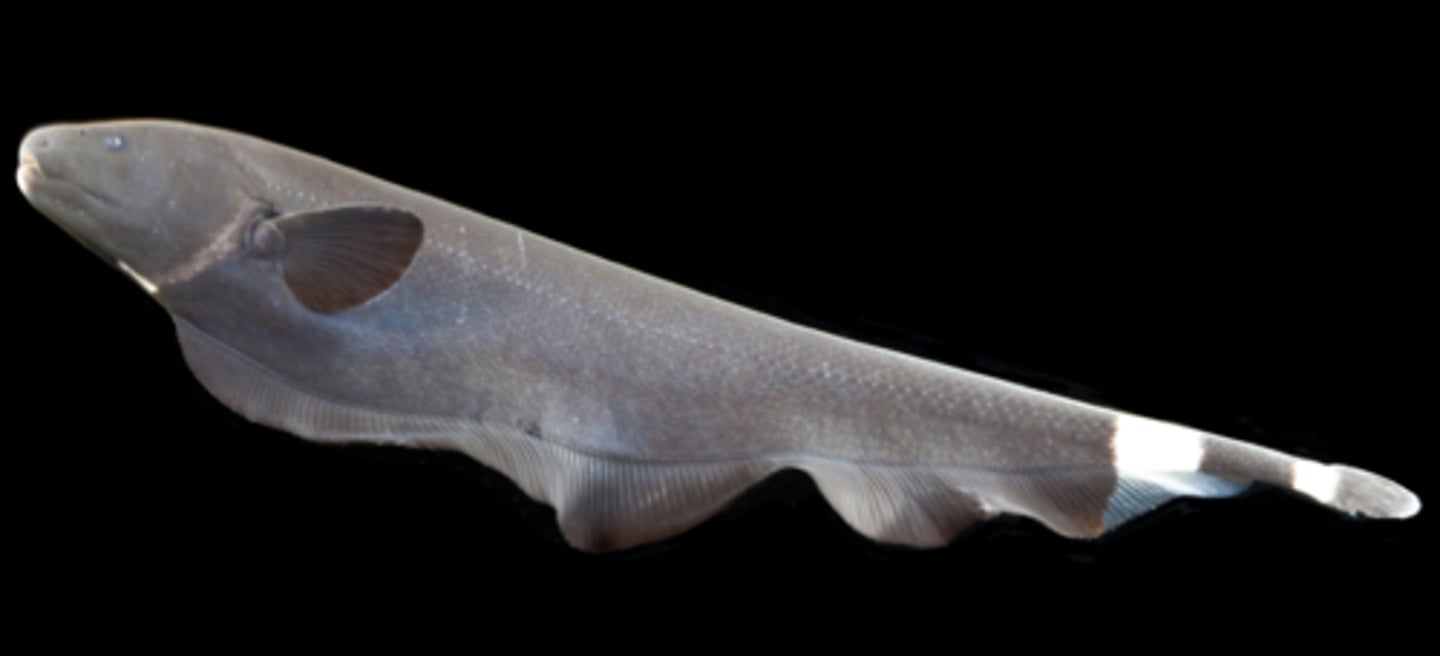
Order Gymnotiformes
Series Otophysi
Superorder Ostariophysi
American knifefishes and electric eels
-All electric producing
-no dorsal or pelvic fins
-long anal fin, undulatory
Cohort Euteleostei
Subdivision Teleostei
This cohort consists of
-2/3 of teleosts
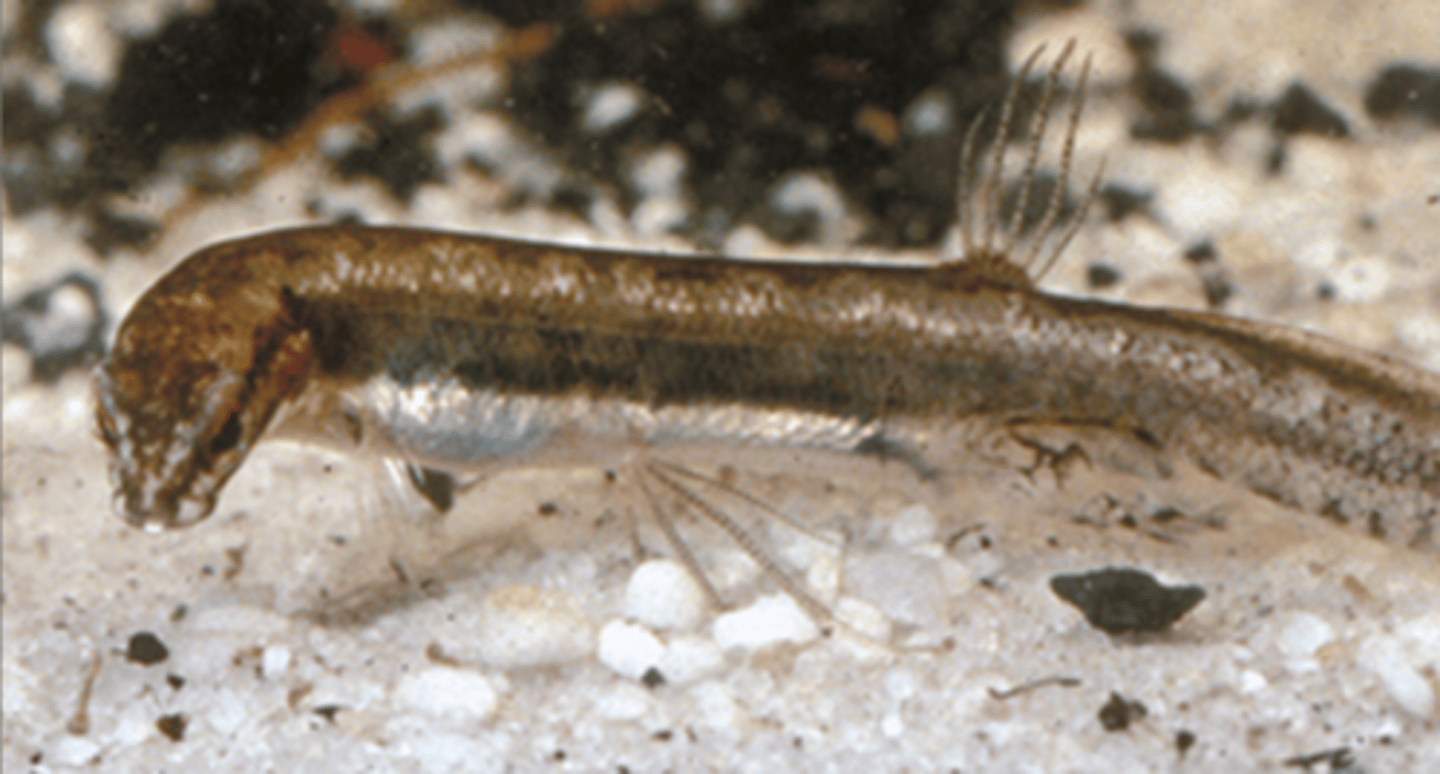
Order Lepidogalaxiiformes
Cohort Euteleostei
Salamanderfish
-bend its neck
-no eye muscles
-internal fertilization
Superorder Protacanthopterygii
Cohort Euteleostei
Subdivision Teleostei
-Fins in primitive state (dorsal and anal fins short, inserted far back. low pectorals. abdominal pelvics)
-No spines
-Cycloid scales
-Physostomous gas bladder
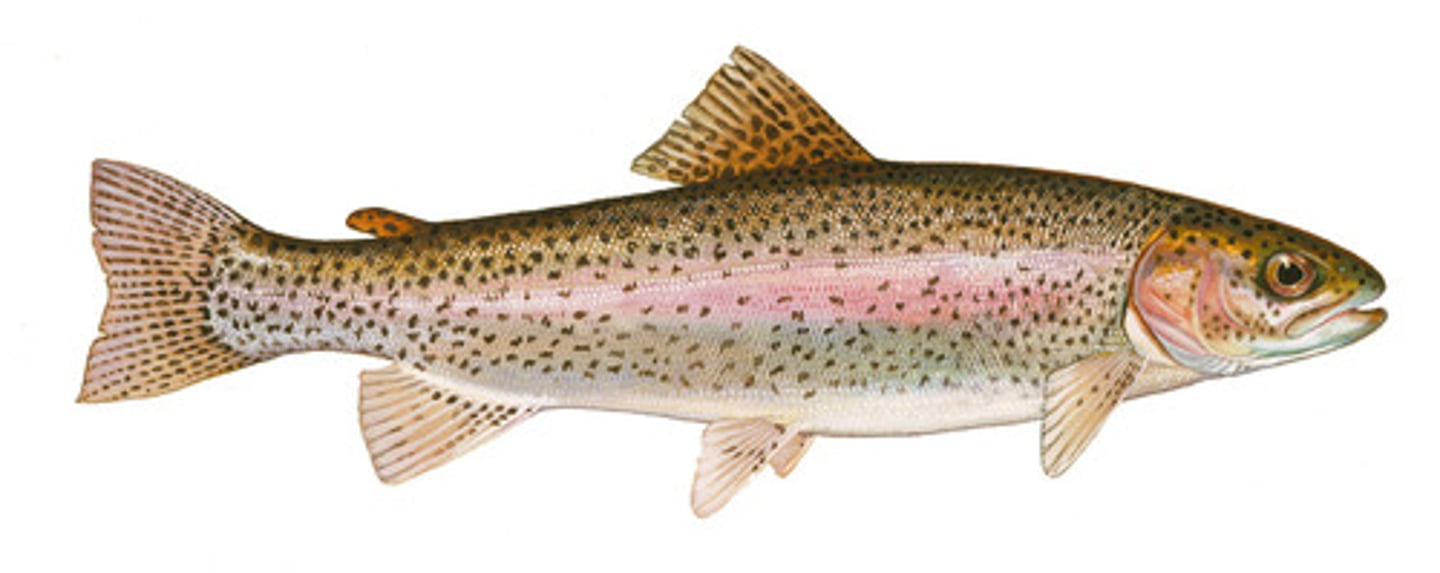
Order Salmoniformes
Superorder Protacanthopterygii
Cohort Euteleostei
Salmon and trouts
-Pelvic axillary process (fill the angle between fin and body to ain in streamlining)
-last 3 vertebrae turned upward
-Freshwater and anadromous
Order Esociformes
Superorder Protacanthopterygii
Cohort Euteleostei
Pike, pickerel, mudminnows
-Toothless maxilla
-Sagittiform
-Confined to Northern Hemisphere
-Lie and wait predators

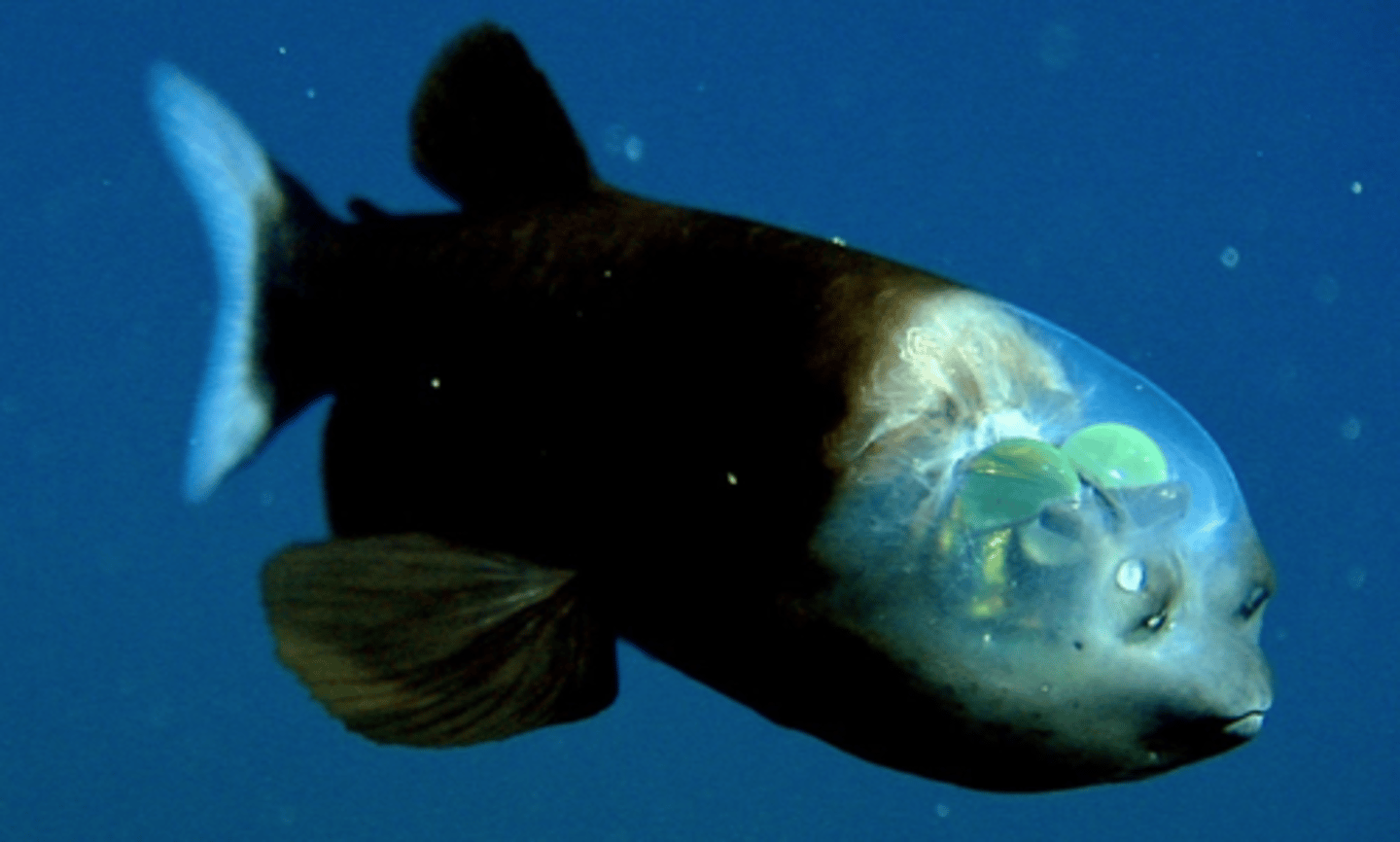
Order Argentiniformes
Superorder Osmeromorpha
Cohort Euteleostei
Argentines and marine smelts
-Crumenal organ
-Bathypelagic
-Marine
-Argentines barreleye
Order Galaxiiformes
Superorder Osmeromorpha
Cohort Euteleostei
River Galaxias, mountain galaxias
-no scales, have lateral line
-No keel or cucumber odor

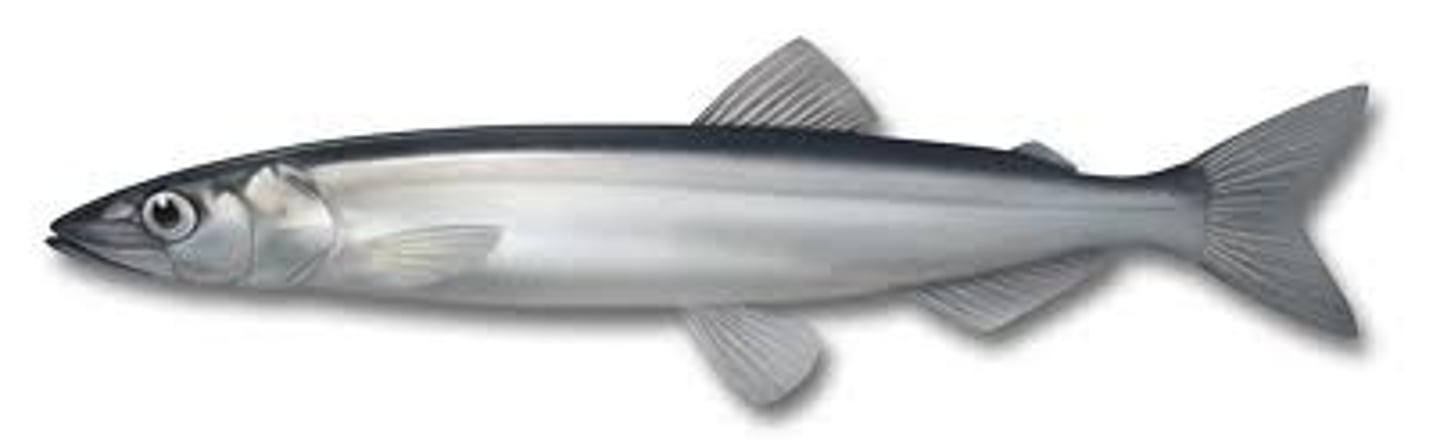
Order Osmeriformes
Superorder Osmeropmorpha
Cohort Euteleostei
Freshwater smelts and noodlefishes
-Angular process absent or reduced
-Cucumber like odor
-Hypomesus transpacificus (delta smelt)
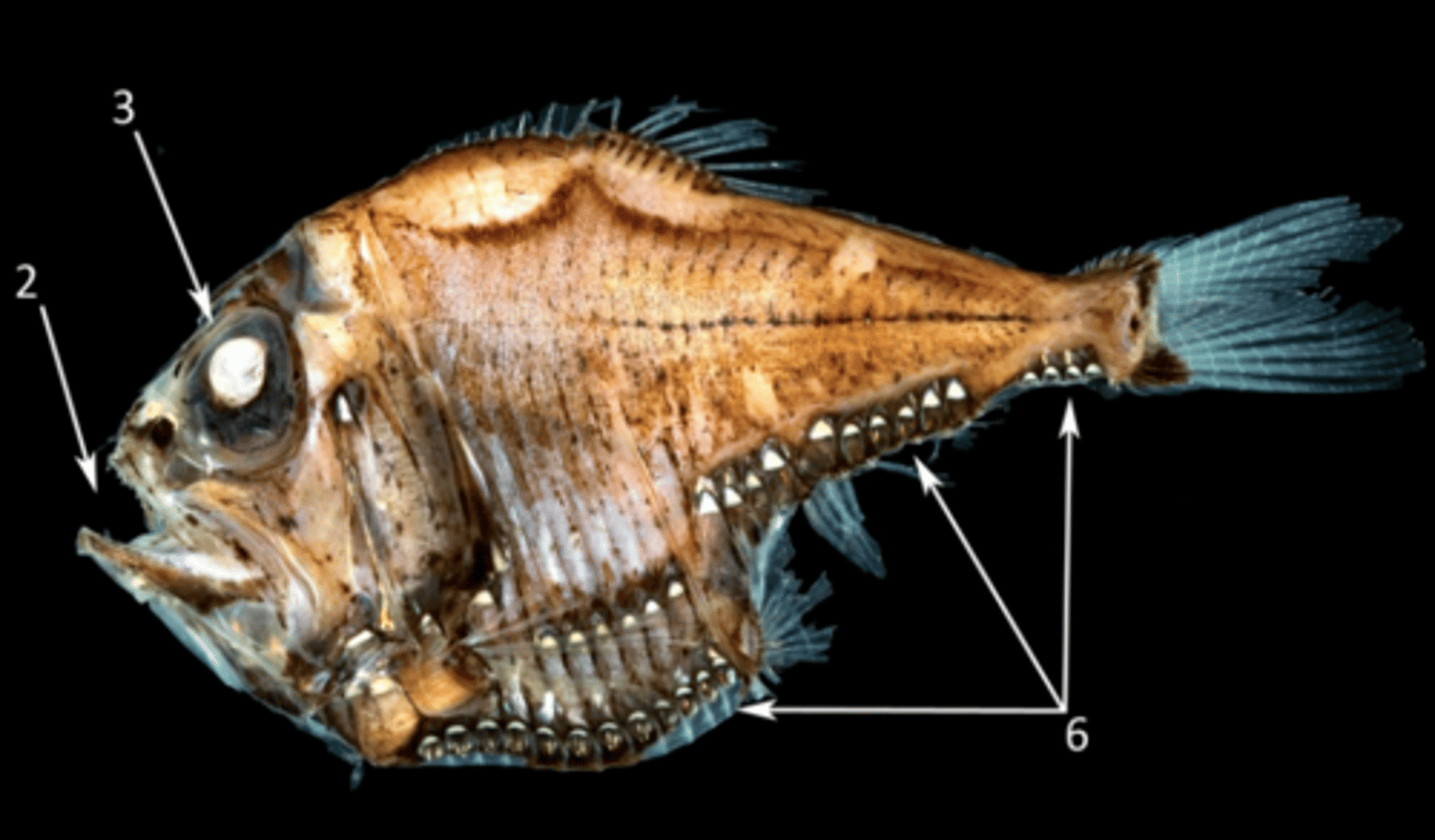
Order Stomiiformes
Superorder Osmeromorpha
Cohort Euteleostei
dragonfishes, lightfishes, loosejaws
-Photophores
-Large mouth extending past eye
-Genus Cyclothone (bristlemouths) most abundant and widely distributed vertebrates on Earth
-deep sea fishes
Neoteleostei
this is called "New teleost" is it is/has....
-monophyletic group
-retractor dorsalis muscle: retract or pull back on upper pharyngeal teeth
-tripartite occipital condyle: 1st vertebra articulates w/ 3 bones of the skull
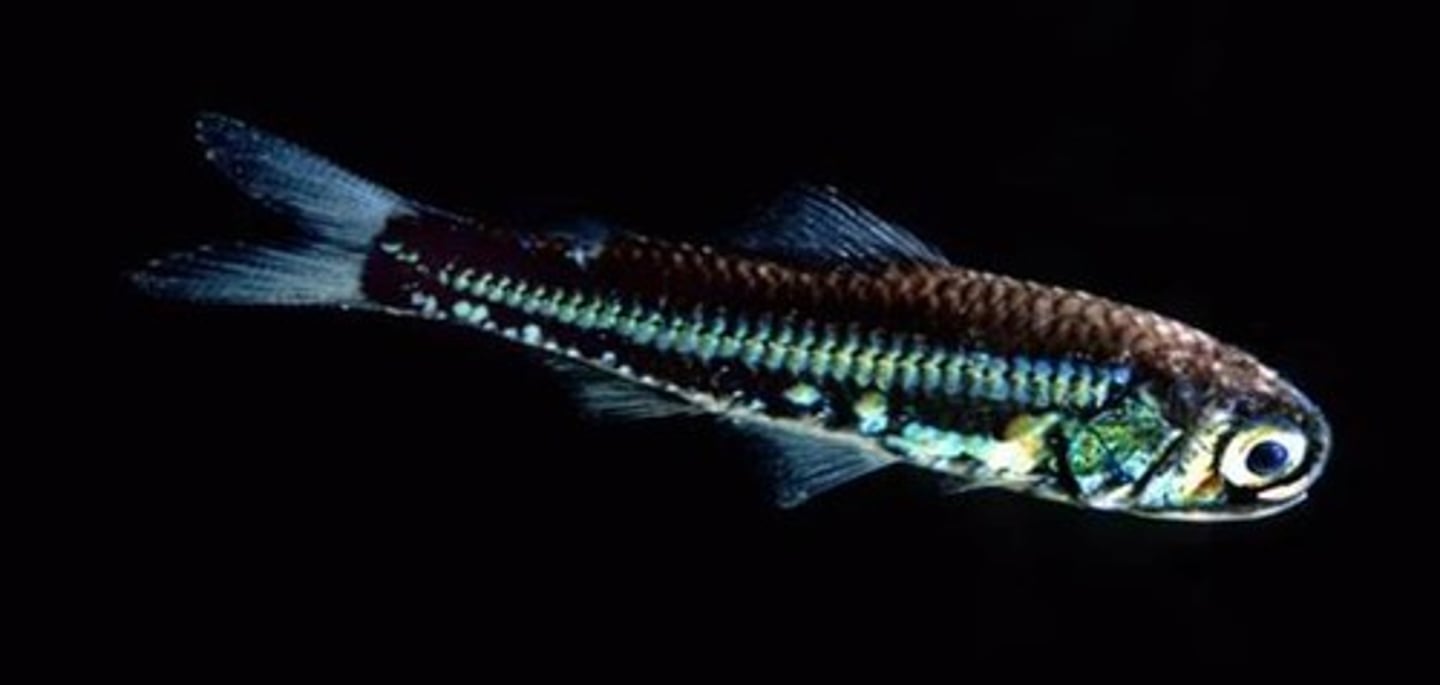
Order Myctophiformes
Superorder Scopelomorpha
Neoteleostei
lantern fishes and blackchins
-upper pharyngeal jaw dominated by 3rd pharyngobranchial
-adipose fin supported by cartilaginous plate
-diel vertical migrations
Acanthomorpha
This consists of spiny rayed fishes
-most have true spines
-60% of known teleostean species and 1/3 of verts
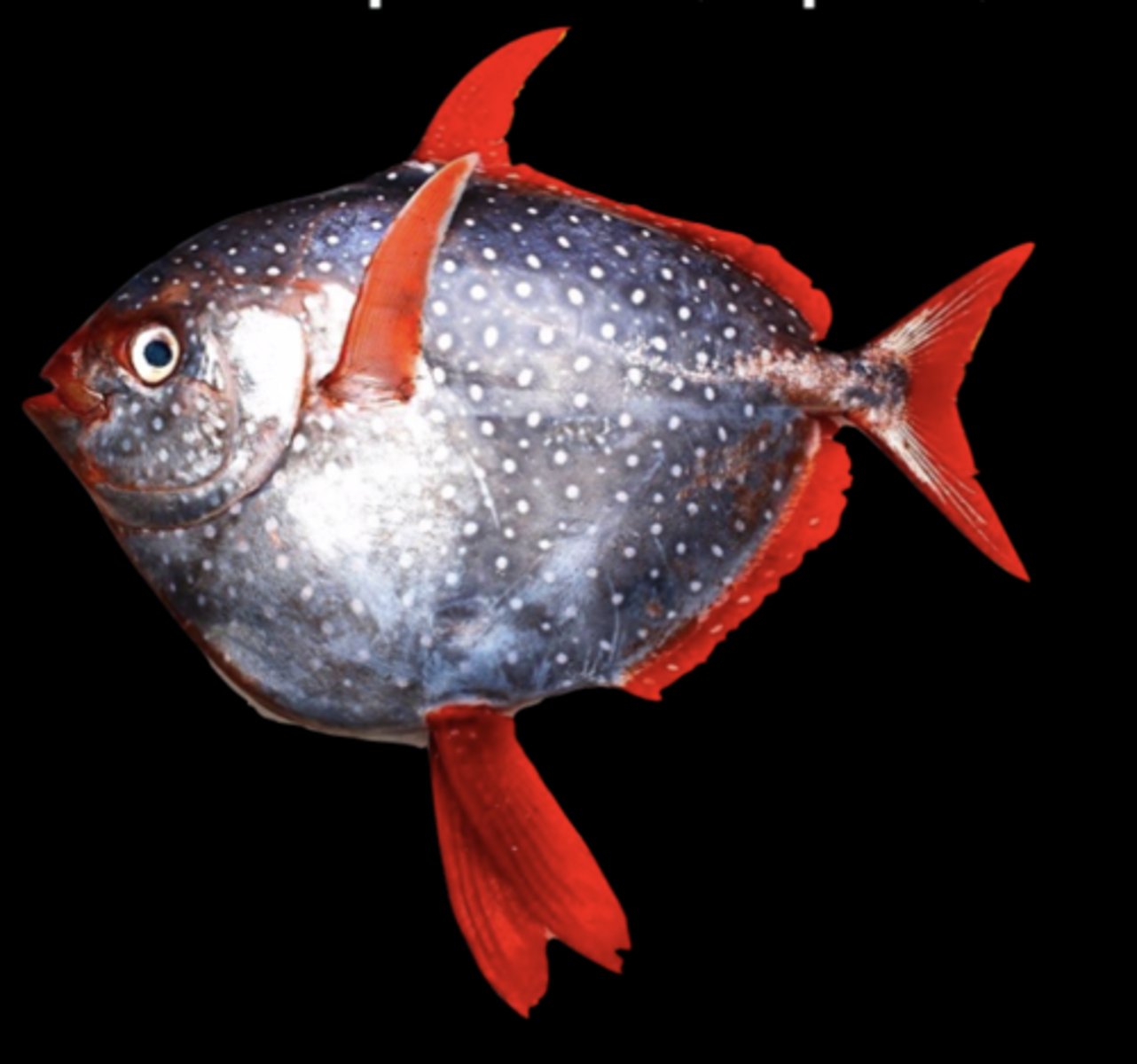
Order Lampriformes
Superorder Lamprimorpha
Lamprimorpha
opahs, oarfishes
-Protrusible upper jaw
-marine
-lack true spines
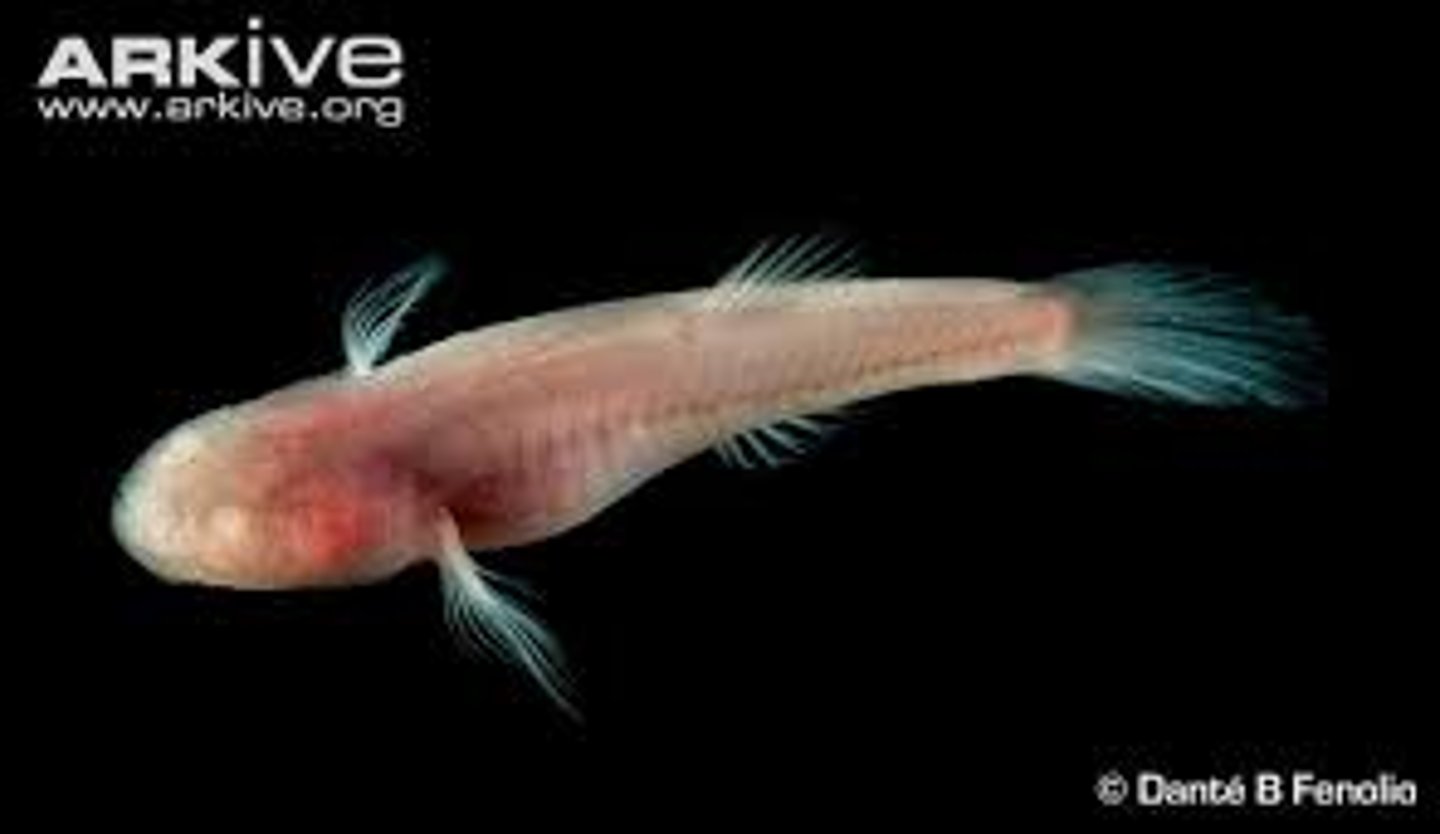
Order Percopsiformes
Superorder Paracanthopterygii
Acanthomorpha
Cavefishes, pirate perch, troutperches
-Anus located in throat
-Abdominal pelvic fin position
freshwater - Eastern North America
-Premaxilla non protrusible
-Scales ctenoids
Order Stylephoriformes
Superorder Paracanthopterygii
Acanthomorpha
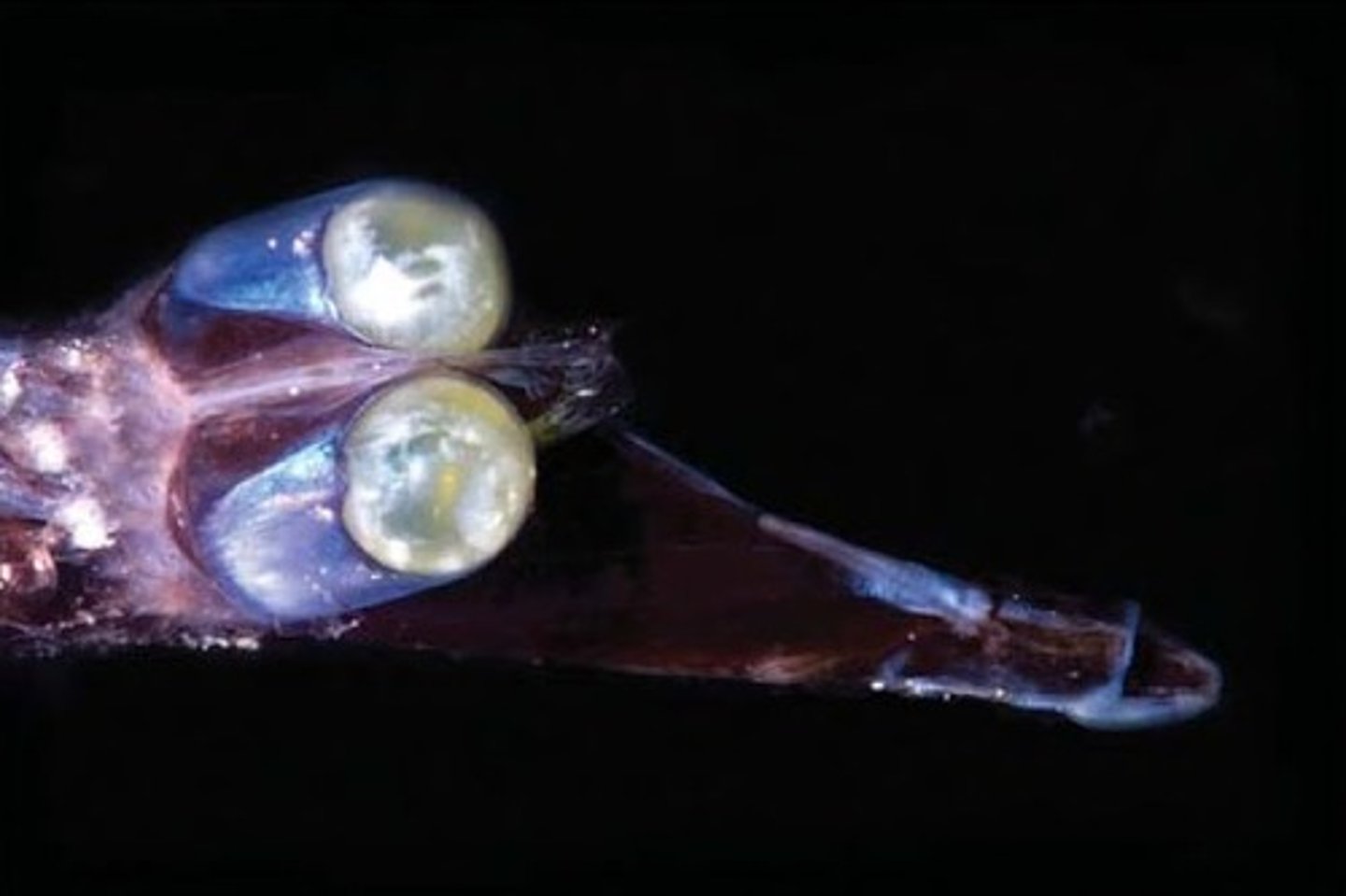
Tube eyes or thread tails
-Marine abyssal
-Body ribbon like
-40 fold enlargement of mouth
Order Gadiformes
Superorder Paracanthopterygii
Acanthomorpha
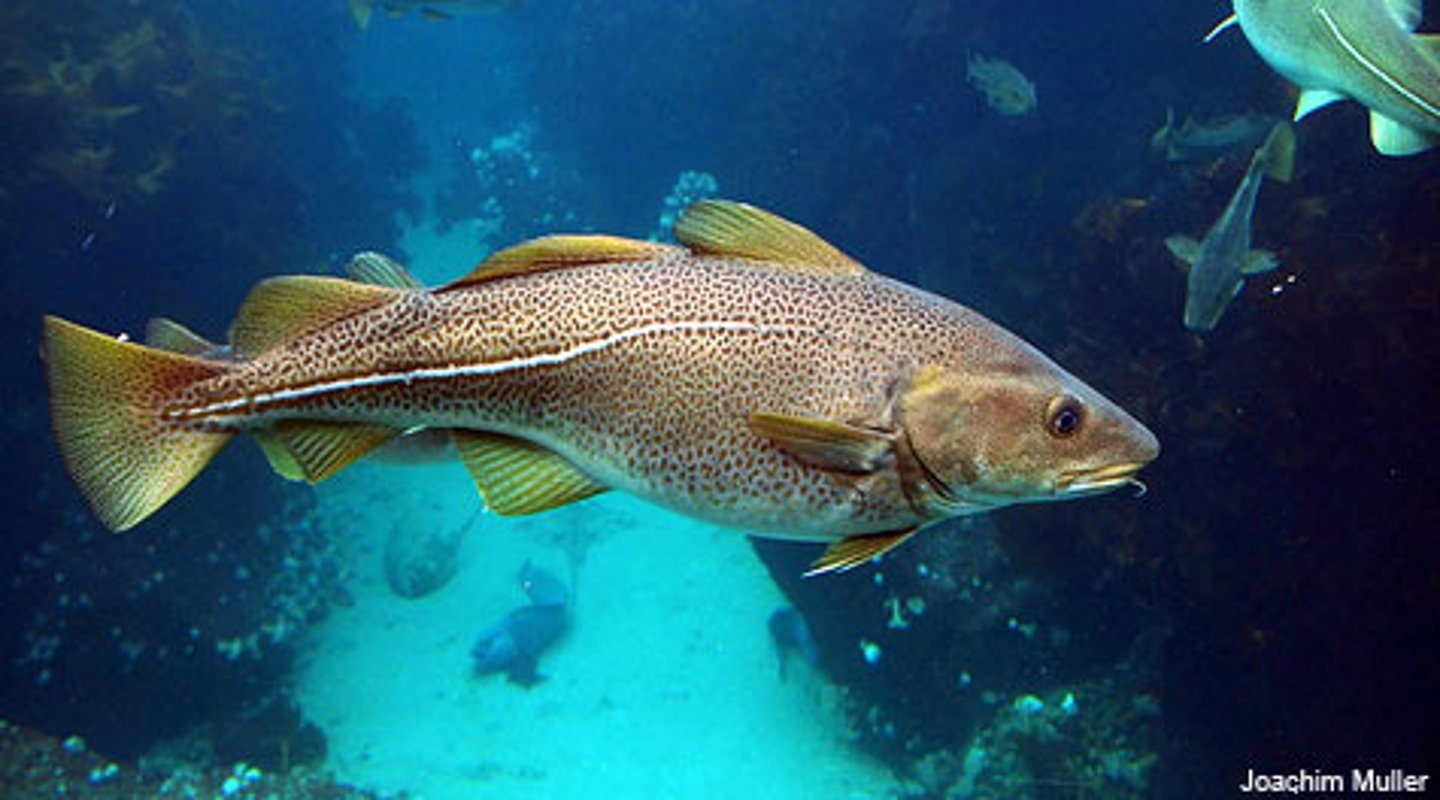
Cods, hakes, pollocks, haddocks
-isocercal caudal fin
-2 or 3 dorsals
-pelvic fins thoracic or jugular
-lack spines
Superorder Acanthopterygii
This superorder is/has
-Baudelot's ligament originates on basioccipital of skull rather than on first vert
-"Higher spiny rayed fishes"
-long ascending premaxillary process
Order Ophidiiformes
Series percomorpha
Superorder Acanthopterygii
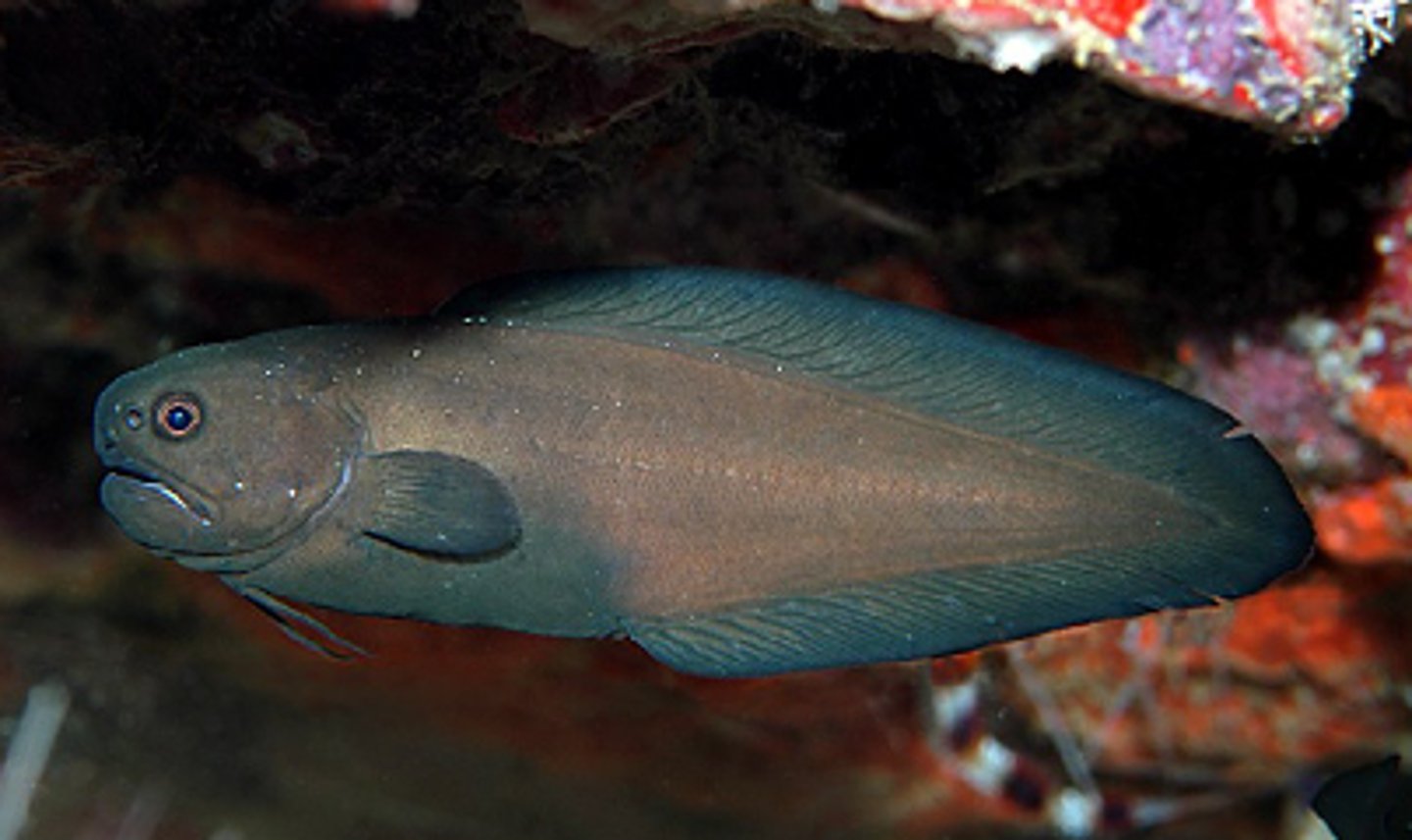
Pearlfishes, cusk eels, viviparous brotulas
-Eel like w/ tapering tail
-parasitic or commensal
-deep sea
-jugular pelvic fin if present
Order Batrachoidiformes
Series percomorpha
Superorder Acanthopterygii
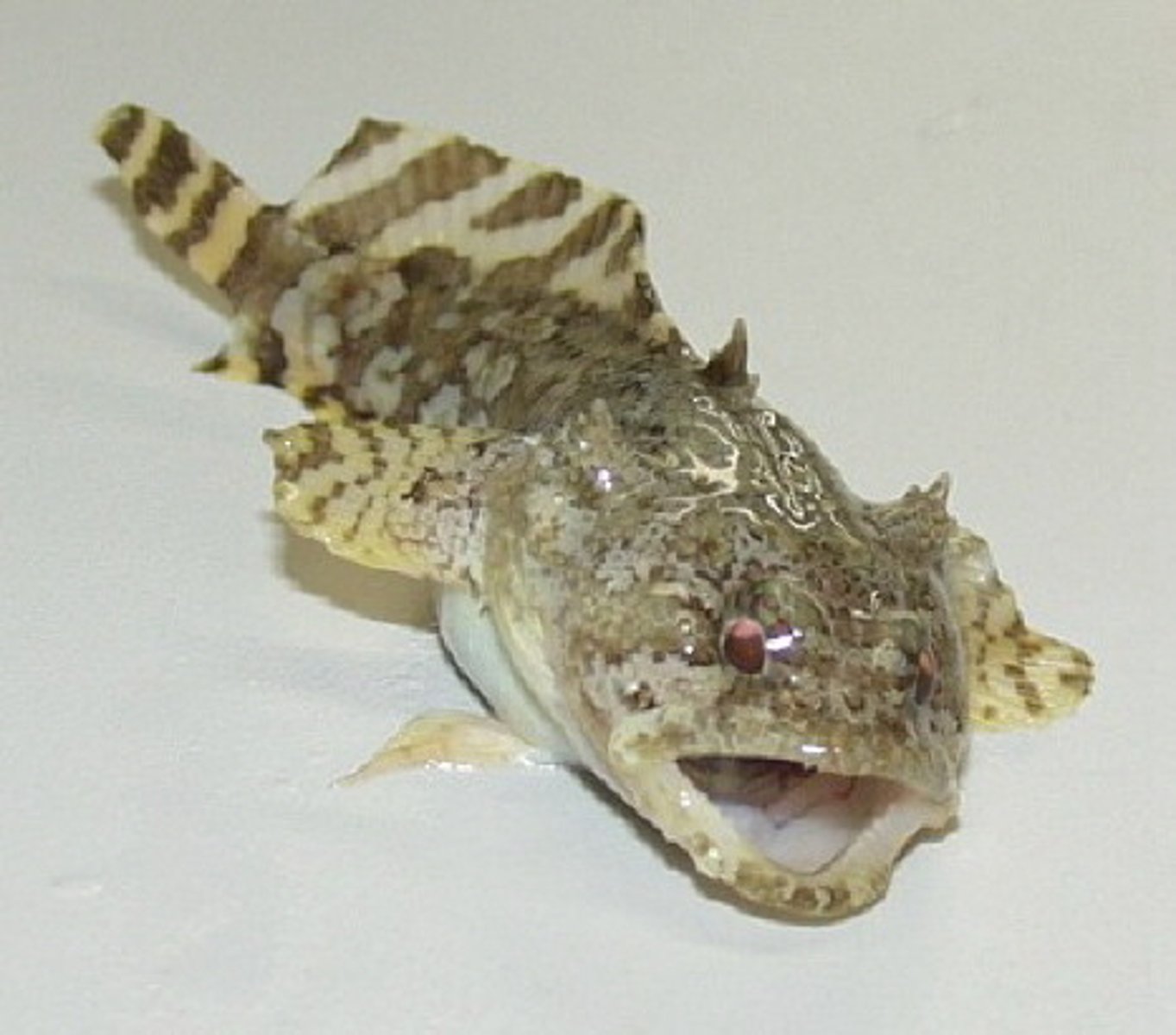
Toadfishes and midshipmen
-3 pairs of gills
-many lateral lines
-fastest contracting muscles
-larvae w/ big yolk sac
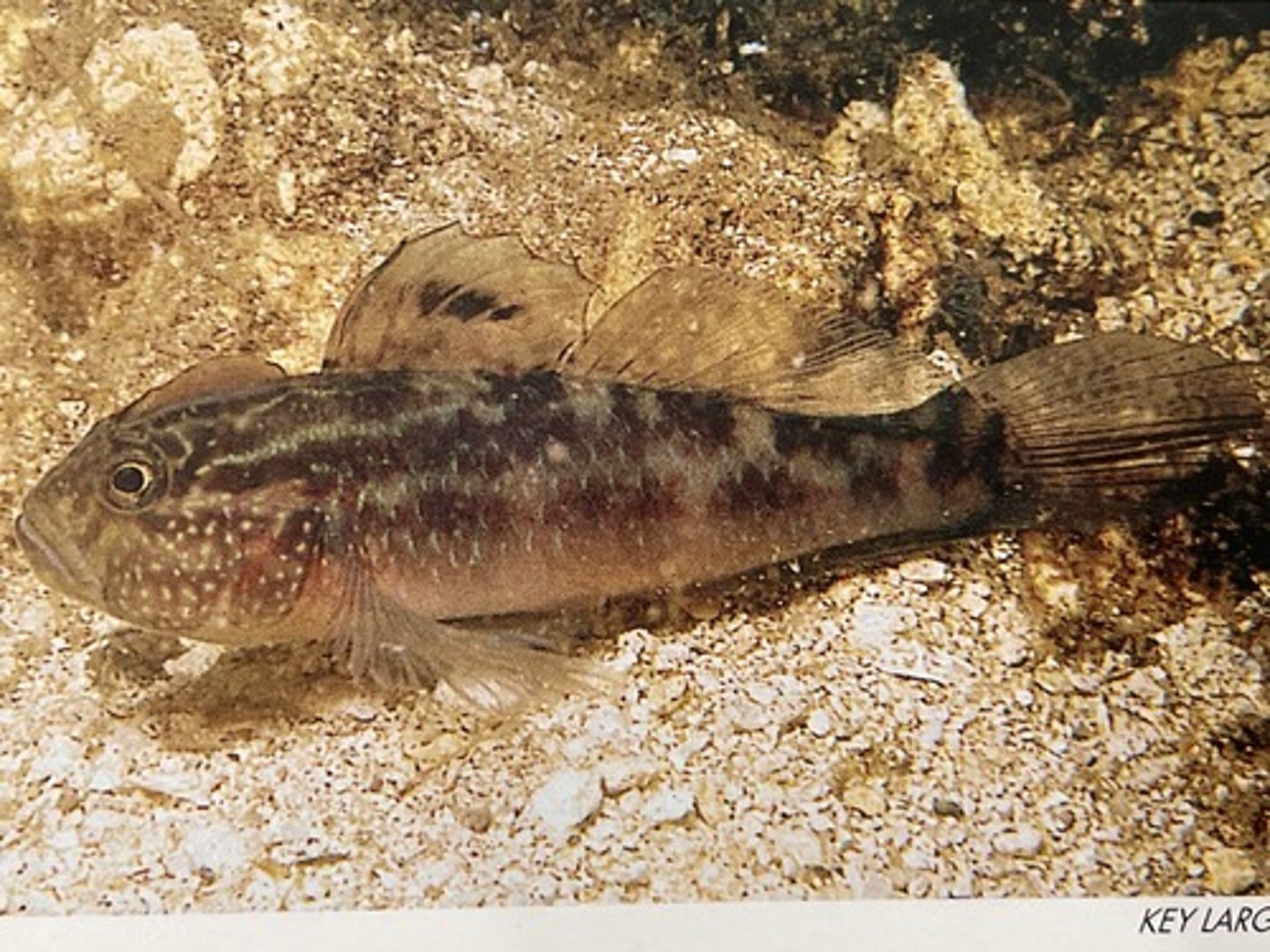
Order Gobiiformes
Series percomorpha
Superorder Acanthopterygii
sleepers and gobies
-Pelvic fins formed into suction cup
-no gas bladder
-no parietals
-many w/ adaptations to terrestrial
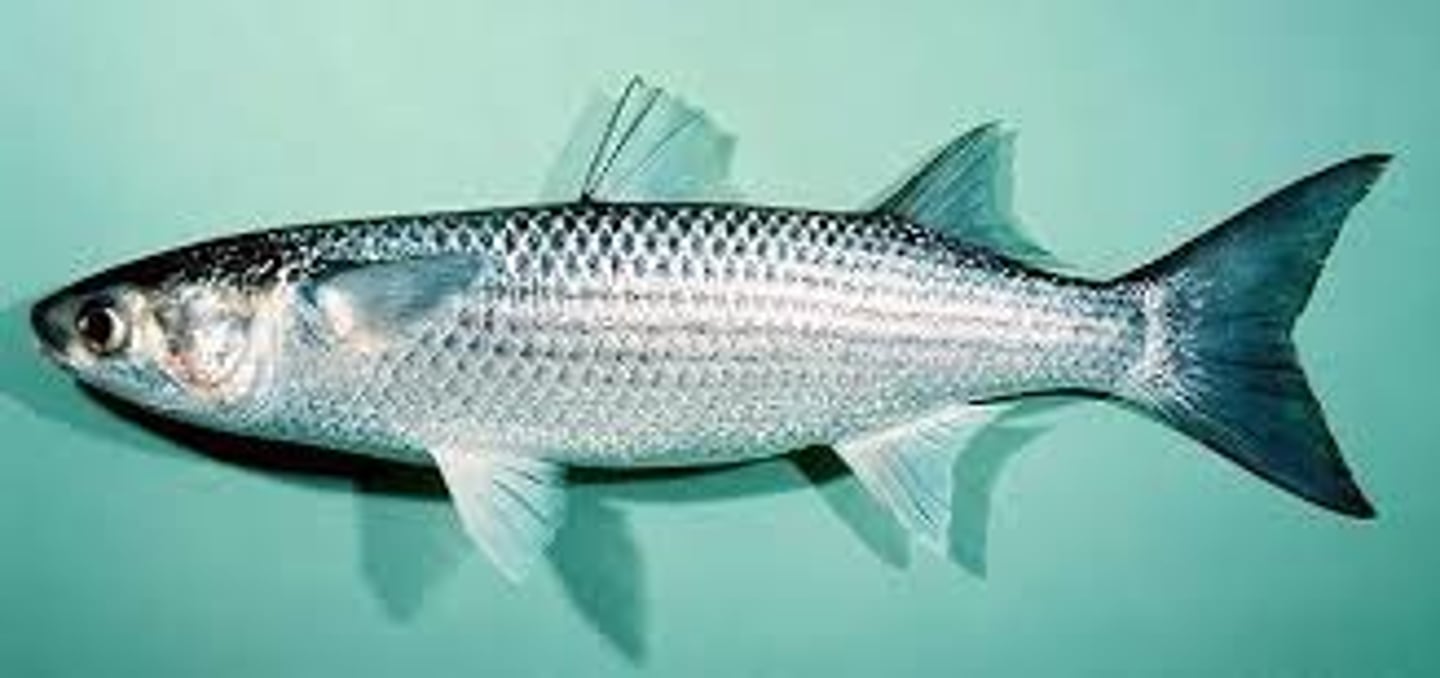
Order Mugiliformes
Series percomorpha
Superorder Acanthopterygii
Mullets
- 2 widely separated dorsal fins
-subabdominal pelvic fins
-small triangular mouth
-gizzard like stomach
Order Cichliformes
Series percomorpha
Superorder Acanthopterygii
Cichlids
-single nostril on each side
-lateral line interrupted
-fastest adaptive radiation

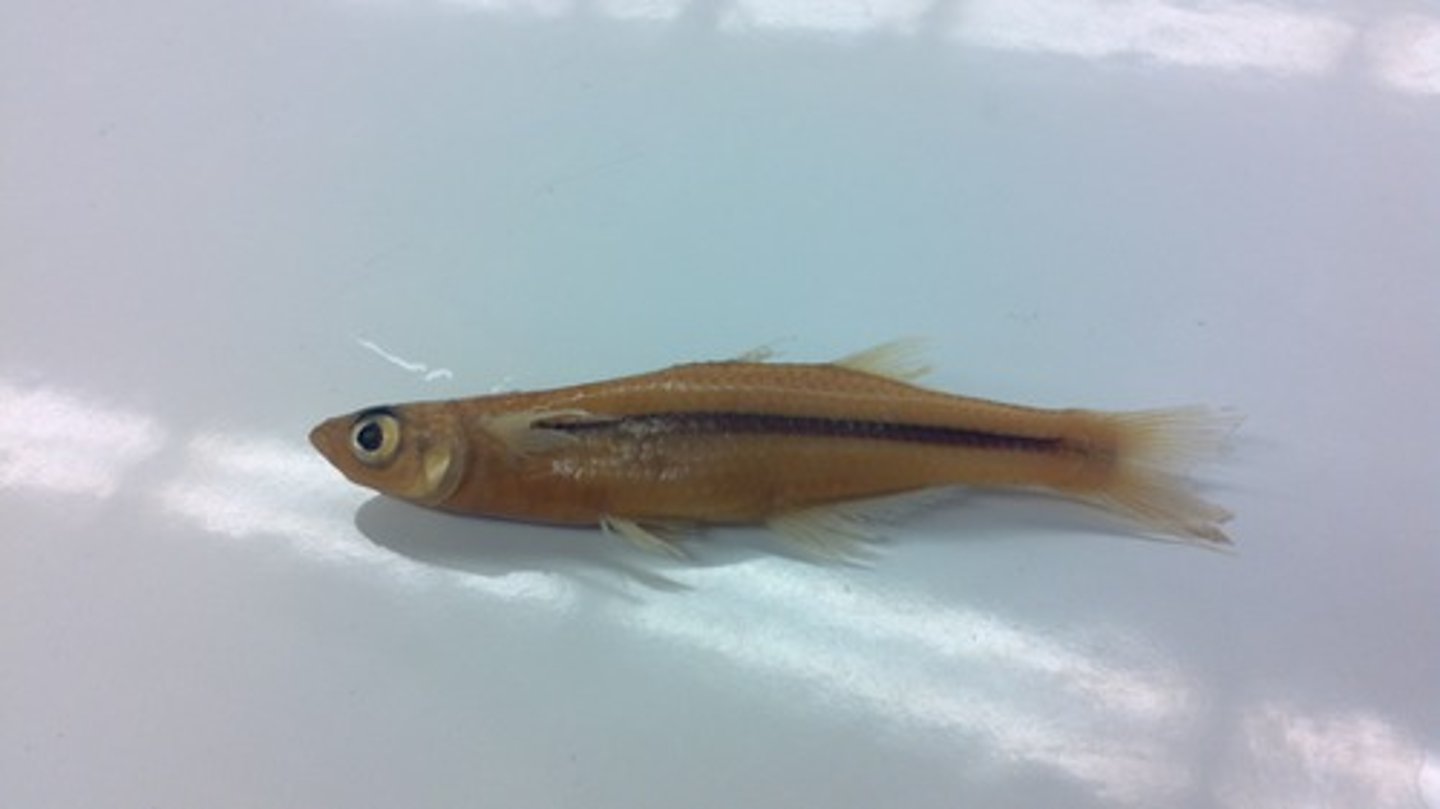
Order Atheriniformes
Series percomorpha
Superorder Acanthopterygii
Silversides and Rainbowfishes
-Environmental sex determination
-sperm dependent asexual fish
-2 dorsal fins
-abdominal pelvic fins
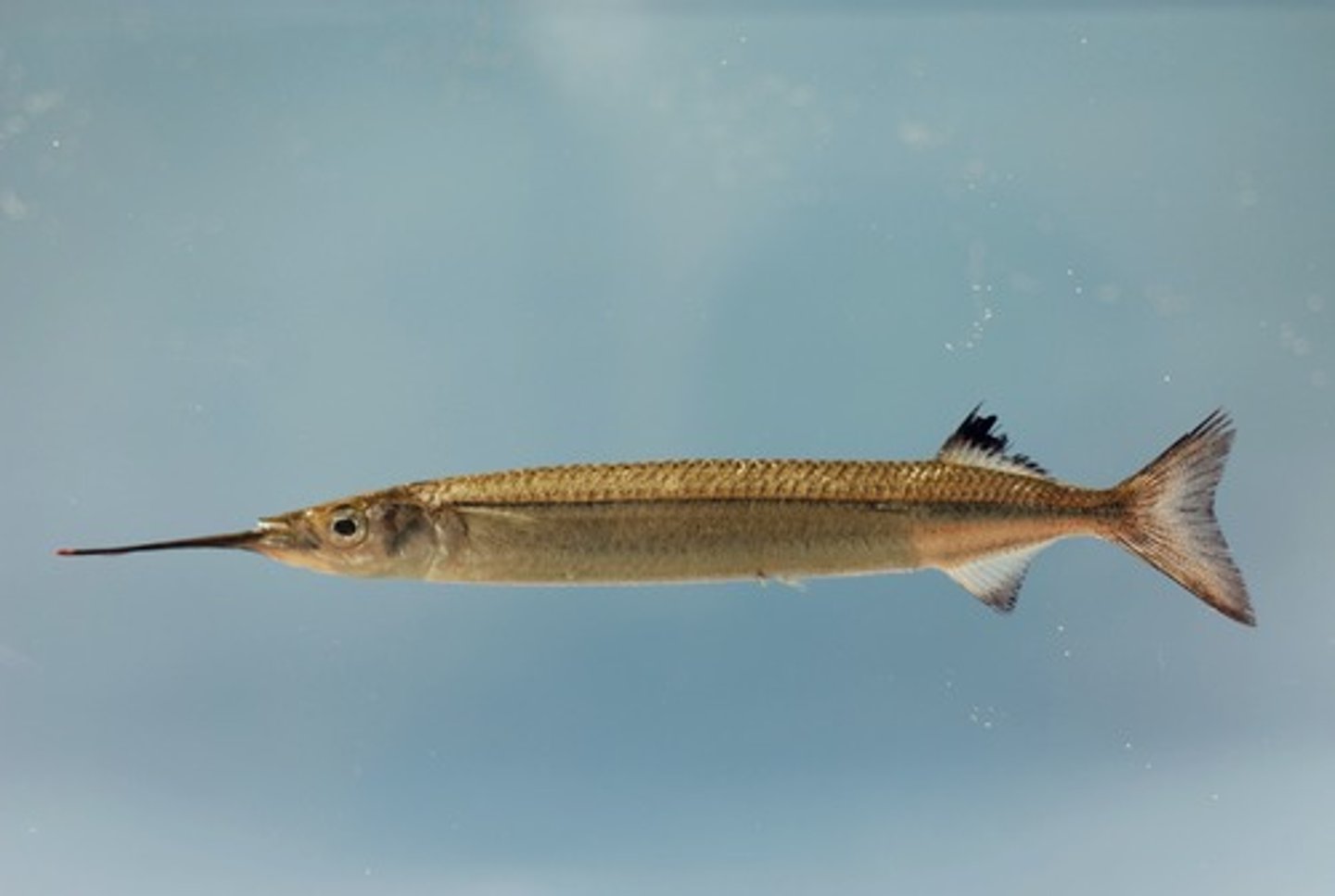
Order Beloniformes
Series percomorpha
Superorder Acanthopterygii
Needlefishes, flying fishes
-lack spines
-nonprotusible upper jaw
-lower caudal lobe more rays
Order Cyprinodontiformes
Series percomorpha
Superorder Acanthopterygii
topminnows, killifishes
-symmetrical caudal fin supported by single bone
-first rib attached to second
-some w/ fast lifecycles
-single dorsal fin

Order Pleuronectiformes
Series percomorpha
Superorder Acanthopterygii
Flatfishes
-Metamorphosis driven by thyroid hormone (takes day to a month)
-body highly compressed
-migration of one eye
-dorsal fin anteriorly placed
-can blend in w/ surroundings
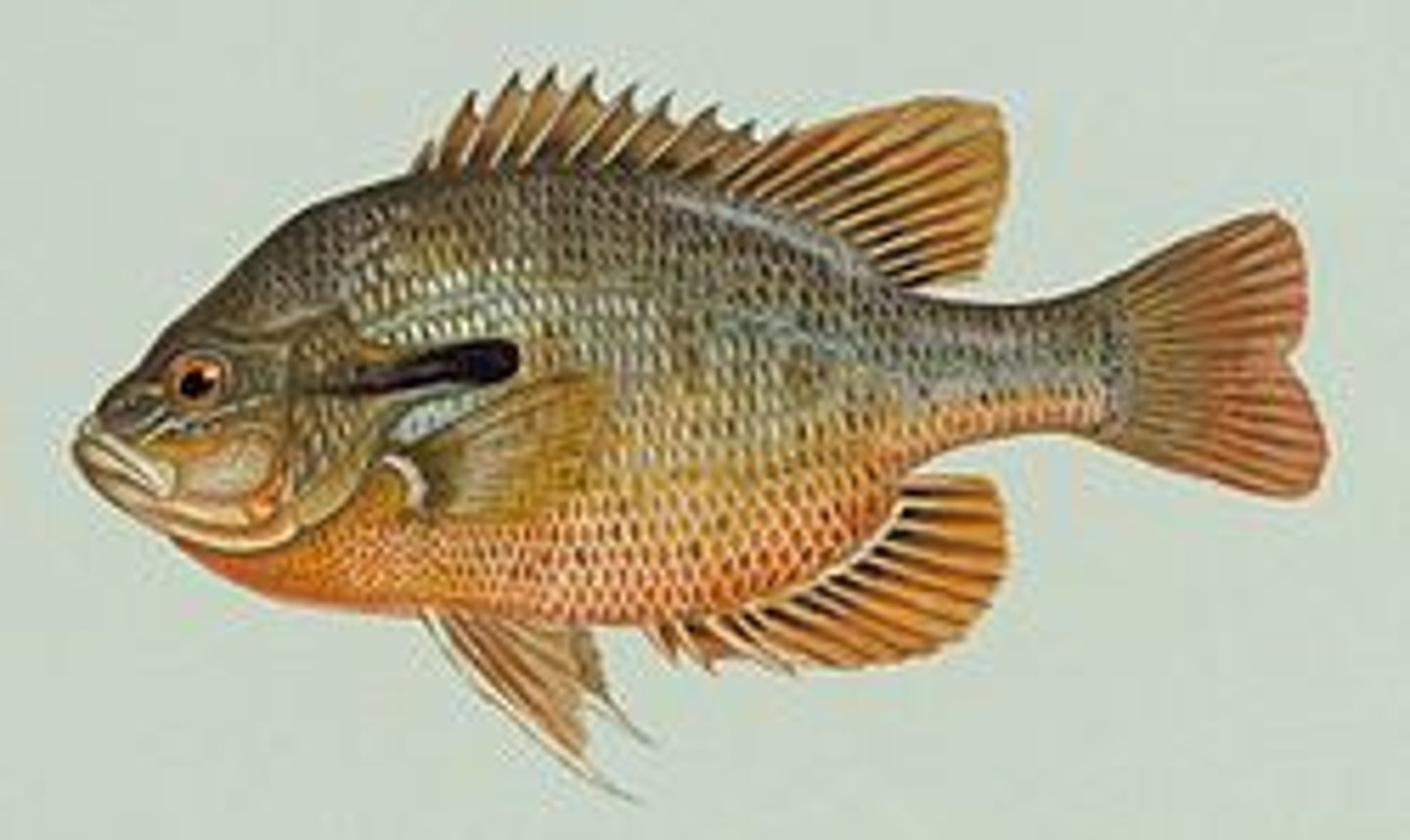
Order Perciformes
Series percomorpha
Superorder Acanthopterygii
perch-like fishes
- Most diverse group of vertebrates
- Pelvic fins with one spine and five or less soft rays
- Ctenoid scales in most
- Gas bladder physoclistous or absent
-vertebrae 24 or fewer
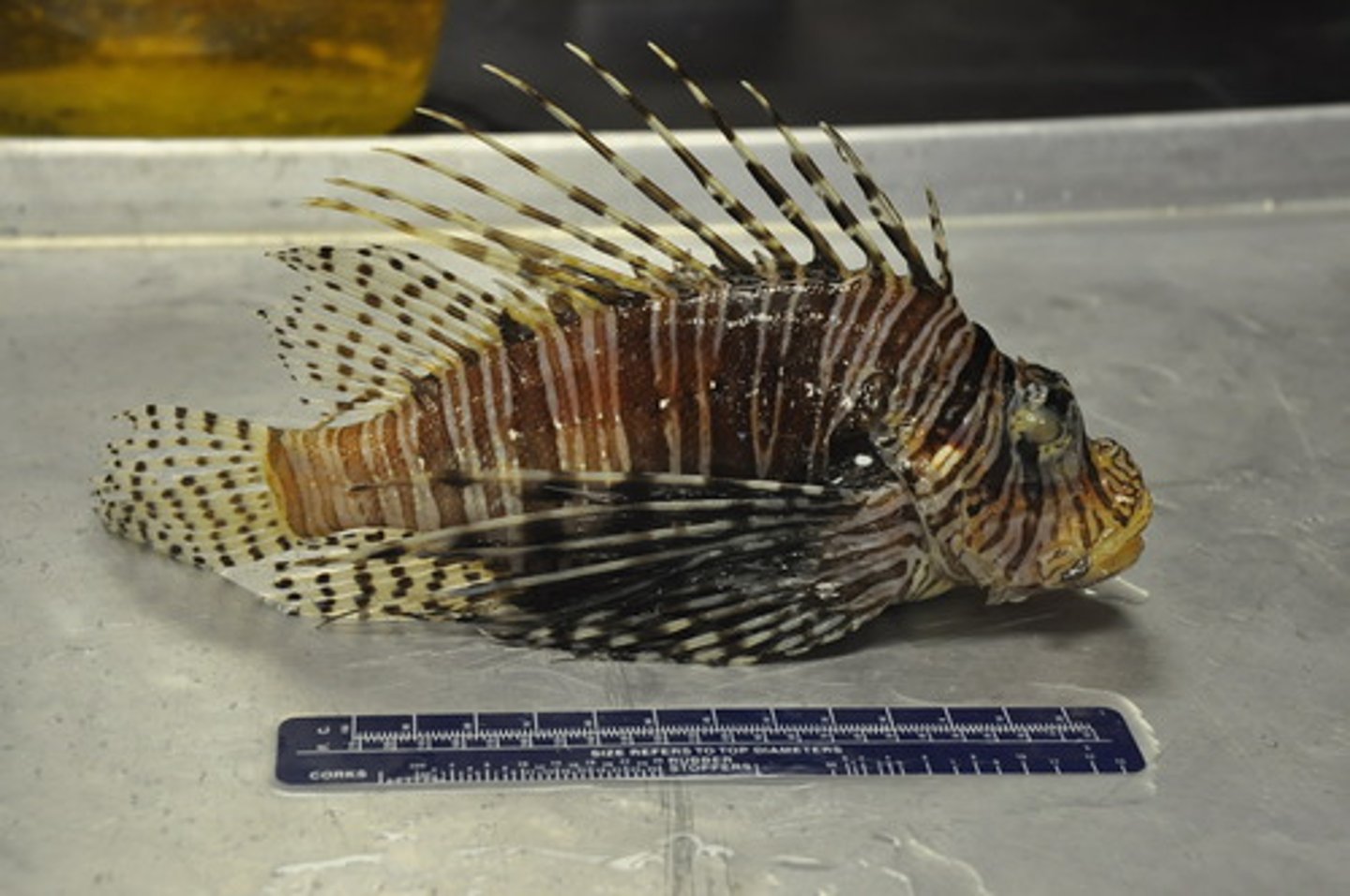
Order Scorpaeniformes
Series percomorpha
Superorder Acanthopterygii
scorpionfishes and sculpins
-Mail cheeked
-Spiny head and body
-backwardly directed opercular spine
-venomous spines
-SNAIL FISHES
Order Lophiiformes
Series percomorpha
Superorder Acanthopterygii
Frogfishes, batfishes, angler fishes
-1st dorsal ray transformed into illicium and esca
-small gill opening behind pectoral fin base
-pelvic infront of pectorals
-no ribs

Order Tetraodontiformes
Series percomorpha
Superorder Acanthopterygii
Triggerfishes, Trunkfishes, Puffers, Molas
-vertebrae 21 or fewer
-restricted gill openings
-scaled modified into spines
-many jaw bones fused into a beak