Anti-Infectives
 Call Kai
 Learn
Learn Practice Test
 Spaced Repetition
 Match
Match Flashcards
 Knowt Play
1/158

There's no tags or description
Looks like no tags are added yet.
Name | Mastery | Learn | Test | Matching | Spaced | Call with Kai | Chat |
|---|
No analytics yet
Send a link to your students to track their progress
159 Terms
what are antibiotics?
- chemical substance originating from various species of microorganisms(bacteria, fungus, actinomyces) that suppresses growth or destroys other microorganisms
are antibiotics safe or toxic?
- among safest, least toxic drugs used in medication
how are highest ocular concentrations delivered?
- Highest ocular concentrations are delivered locally (topical, contact lens, injection etc.)
what does dose depend on?
- Dependent on weight, height, organ function, therapeutic drug levels
does longer duration always mean it is better?
- Longer isn't always better; see resistance
what should be considered for the drug safety from antibiotics?
- Consider special populations –pregnancy, children, geriatrics
- Liquid antibiotics are among the few drug formulations that are not recommended for use after expiration dates = Fanconi Syndrome
What is Faconi syndrome?
- disorder of kidney tubules, can't absorb things back into blood stream, gets release into urine
what are the known/unknown allergies to antibiotics?
- penicillin
- sulfa
what should be considered for the preservation of resident flora when using antibiotics?
- Select GI flora are reduced in DM-2, obesity
- Gender-based population profiles of GI flora affect the risk of developing auto-immune disease (females more prone, also more prone to yeast infections)
- Supra-infection by H pylori has been linked to duodenal and gastric ulcers
what should be done for resident flora when taking an antibiotic?
- take probiotic
Do most acute red eyes involve a bacterial infection?
- no
- usually ocular surface disease
when would you use ophthalmic antibiotics?
Mucopurulent discharge
− No discharge = No infection
− Putrid smelling discharge =anaerobic infection
• Diffuse conjunctival injection (think active infection)
− Sectoral injection = No infection (usually immune response)
Corneal compromise
− Significant corneal damage renders it increasingly susceptible to infection
is corneal epithelium part of adaptive or innate immune system?
- innate
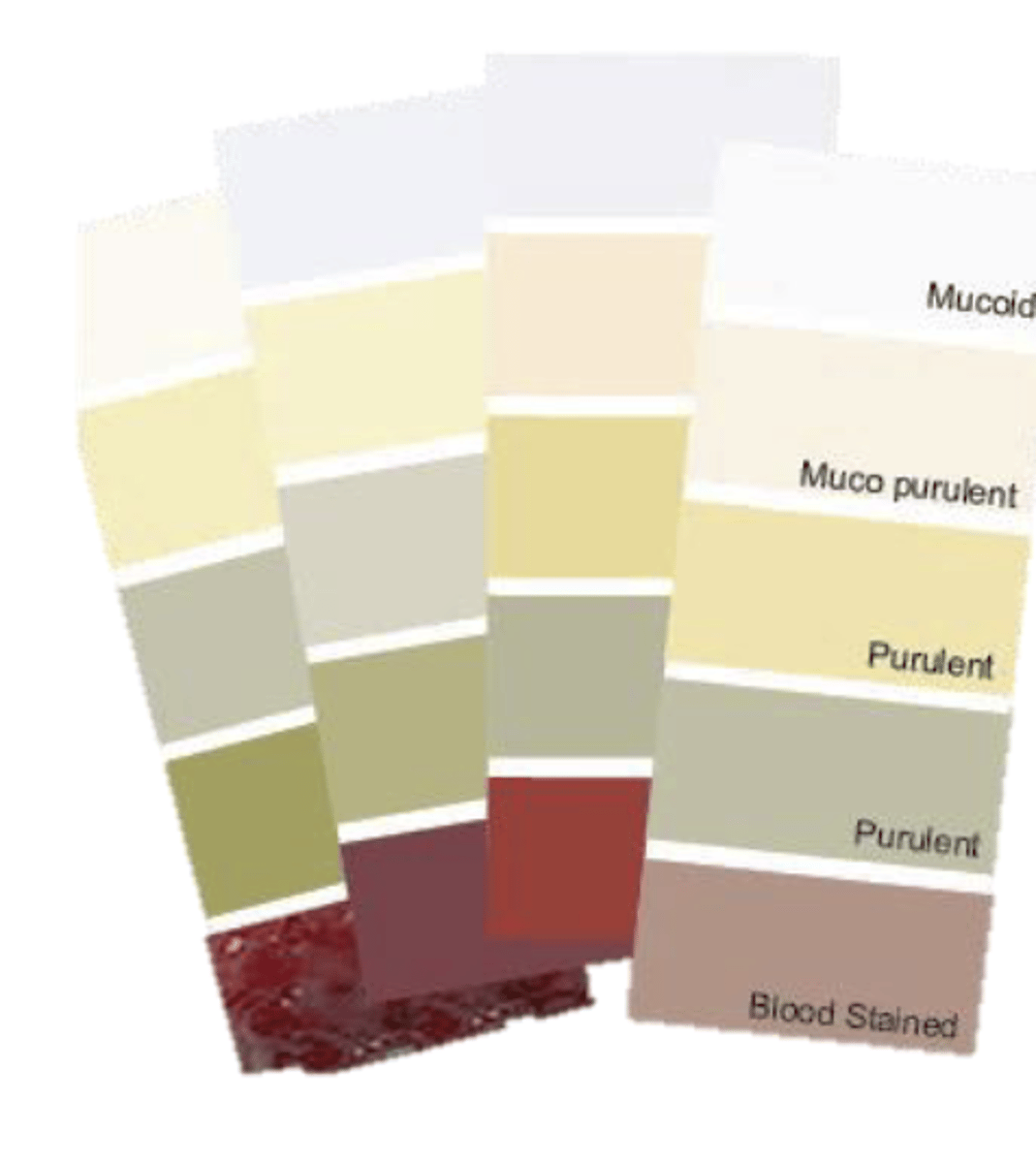
- mucoid: mucus only, white or clear discharge, does not mean bacterial infection, mainly allergic or viral issue
- muco purulent: combines mucus with purulent discharge, indicates bacterial infection
- purulent: indicates bacterial infection
- green purulent: specific species of bacterial
- blood stained: dealing with hemorragic conjunctivitis, usually caused by virus
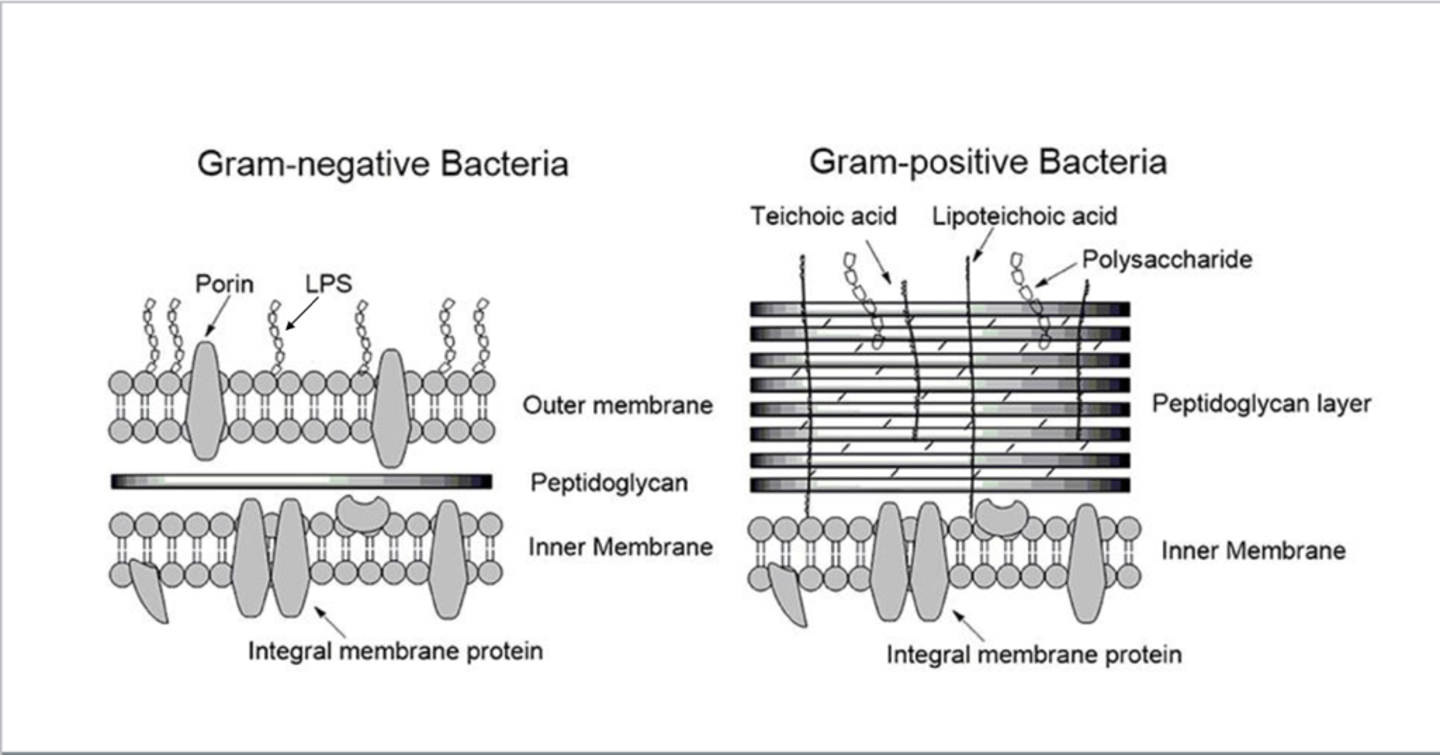
- gram (-) has LPS that protect it, prevents antibiotics from attaching properly, LPS could also cause immune response
- gram (+) has cell wall to protect it, layers and layers of peptidoglycan
what do both gram positive and gram negative bacteria release?
- Secrete unique antigenic non-enzymatic heat sensitive protein exotoxins
- mainly gram (+)
- do illicit strong immune response
what do gram (-) release?
- Release pyretic, heat stable, mildly antigenic endotoxin(LPS) upon lysis
- triggers fever
what are the metabolic profiles of bacteria?
- Aerobic (main ones on the eye)
- Anaerobic (facultative vs obligate): commonly indigenous flora thriving in a poorly perfused environment (difference between facultative and obligate is that facultative can survive in aerobic and anaerobic, obligate means purely anaerobic and will die in high oxygen areas)
- Obligate intracellular species (need host cell to survive and replicate)
what are the types of cocci gram (+) bacterial?
- Staphylococcus (skin/mucous membranes)
• aureus: more virulent (MRSA)
• Perhaps the most common nosocomial infection (infections occurring in healthcare setting)
• An opportunistic pathogen: seeks altered gut flora or a weakened immune system
• epidermidis; more abundant (MRSE)•
- Streptococcus
• pneumoniae: corneal ulcer, pediatric conjunctivitis
- Enterococcus (intestinal)
• Some virulent strains (VRE)
what are the gram (+) rod bacteria?
• Nocardia (oral microflora)
• asteroides: post-LASIK keratitis
what are the gram (-) rod bacteria?
- Haemophilus Influenzae: pediatric otitis media, conjunctivitis
what are the enteric bacteria?
- UTI, corneal ulcer
− Escherichia coli
− Serratia marcescens
− Proteus
− Pseudomonas aeruginosa: (gram -)
• Considered the 2nd most common nosocomial infection
• An opportunistic pathogen seeks altered gut flora or a weakened immune system
what are the sexually transmitted eye infections?
- gonorrhea
- chalmydia
- syphilis
what is gonorrhea?
- Neisseria Gonorrhea
- cocci, gram (-)
- corneal ulcer
- hyper purulent (most discharge you have ever seen)
What is chlamydia?
- gram (-)
− Chlamydia trachomatis
• Finger/fomite - to eye infection => trachoma
• Genitals - to eye infection => inclusion conjunctivitis
• Mother-to-child
what is syphilis?
- gram (-)
− Treponema pallidum (spirochaete)
• 4 stages of infection
• Mother-to-child => syphilis
- can cause retinitis
- can be within CSF, cerebral aqueduct is right near edinger westphal nucleus, bc of infection in area, pupils might not react to light, will restrict to accommodation (called near light association, argyl robson pupil)
what is the function of bacteriostatic antibiotics?
- prevent target cell replication
what are the categories of bacteriostatic antibiotics?
• Tetracyclines
• Macrolides
• Sulfonamide
• Trimethoprim
• Chloramphenicol
what are bactericidal antibiotics?
- kills target cells, cells may lyse or remain intact
what medications are bactericidal?
- penicillin / cephalosporins
- bacitracin
- polymyxin B
- aminoglycosides
- fluoroquinolones
- antibiotics work by attaching certain sites
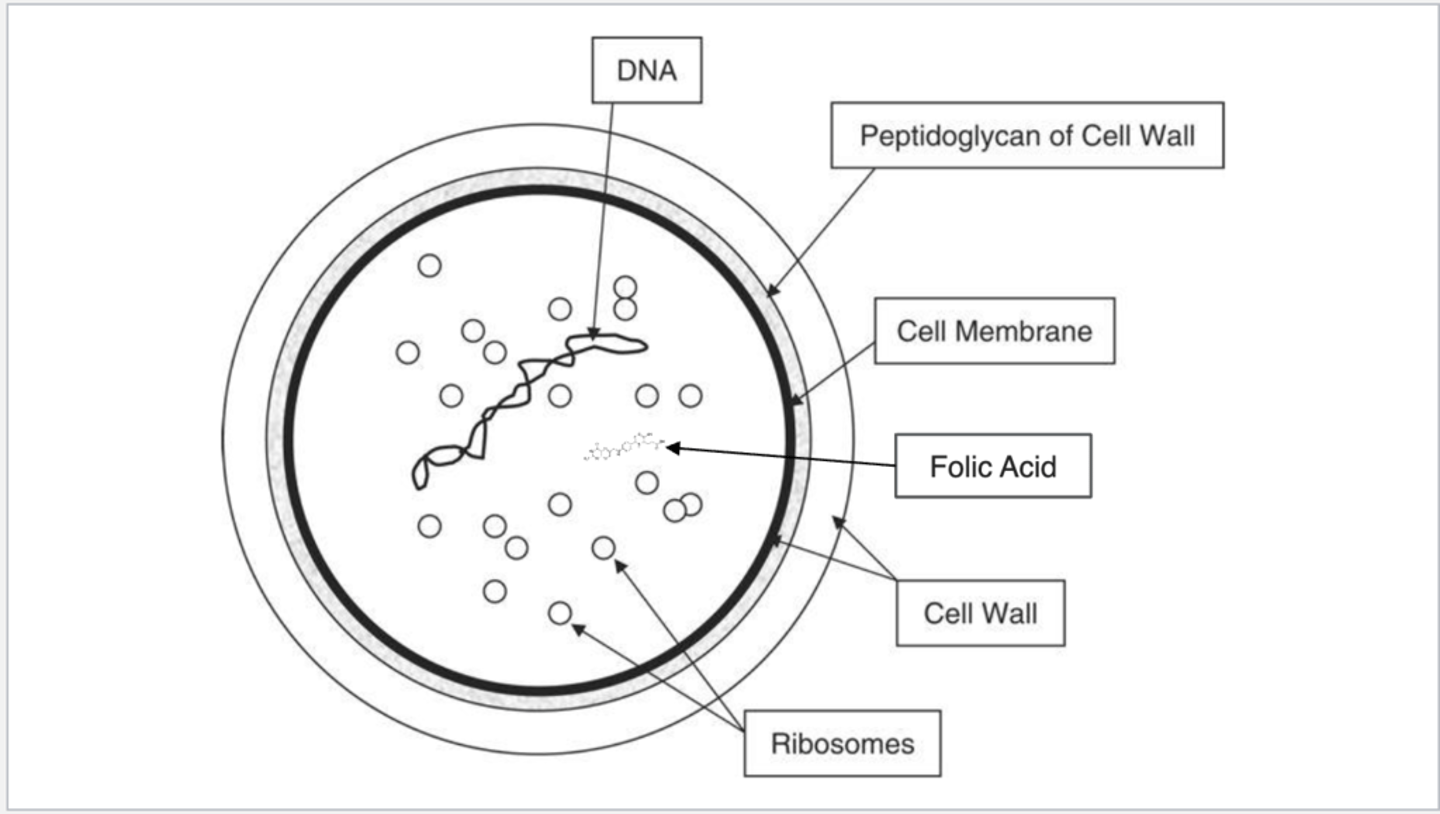
- attack the cell wall and cell membrane
- red means own medication, black means it is a class of antibiotics
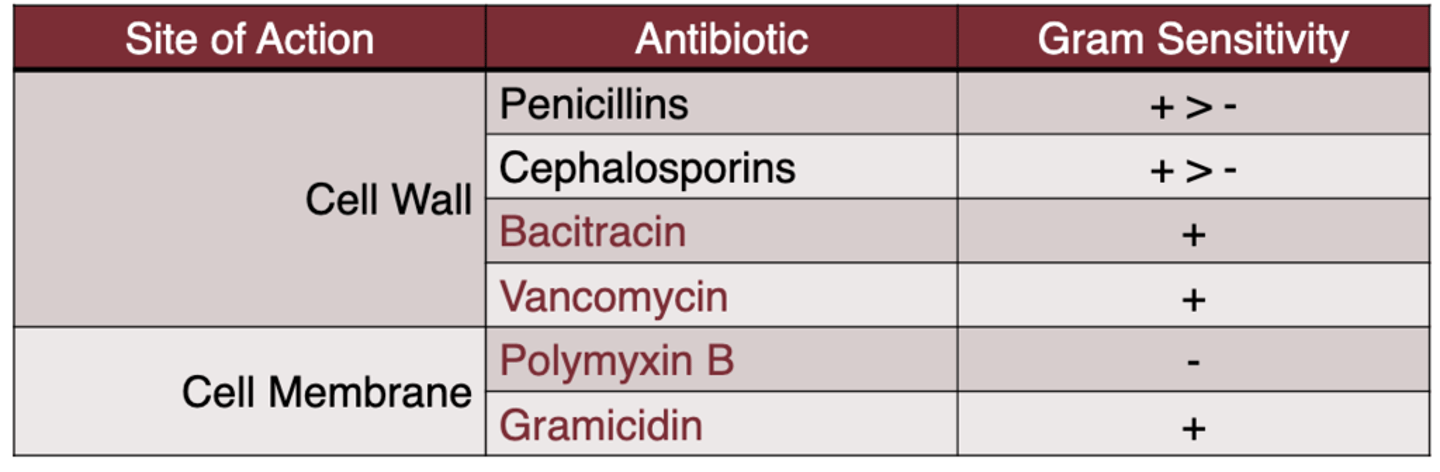





what medications are cell wall inhibitors?
B lactam antibiotics:
- penicillin (+)
- cephalosporins (+)
stand alone:
- bacitracin (+)
- vancomycin (+)
how does the tear film help with fighting against bacteria?
- Tear-film lysozymes break down cell wall bonds and therefore exist as part of the body's own antibiotic system
- b-lactam ring is active site for penicillins and cephalosporins
- bacteria has began creating b-lactamase to combat b-lactam, it cleave b-lactam ring
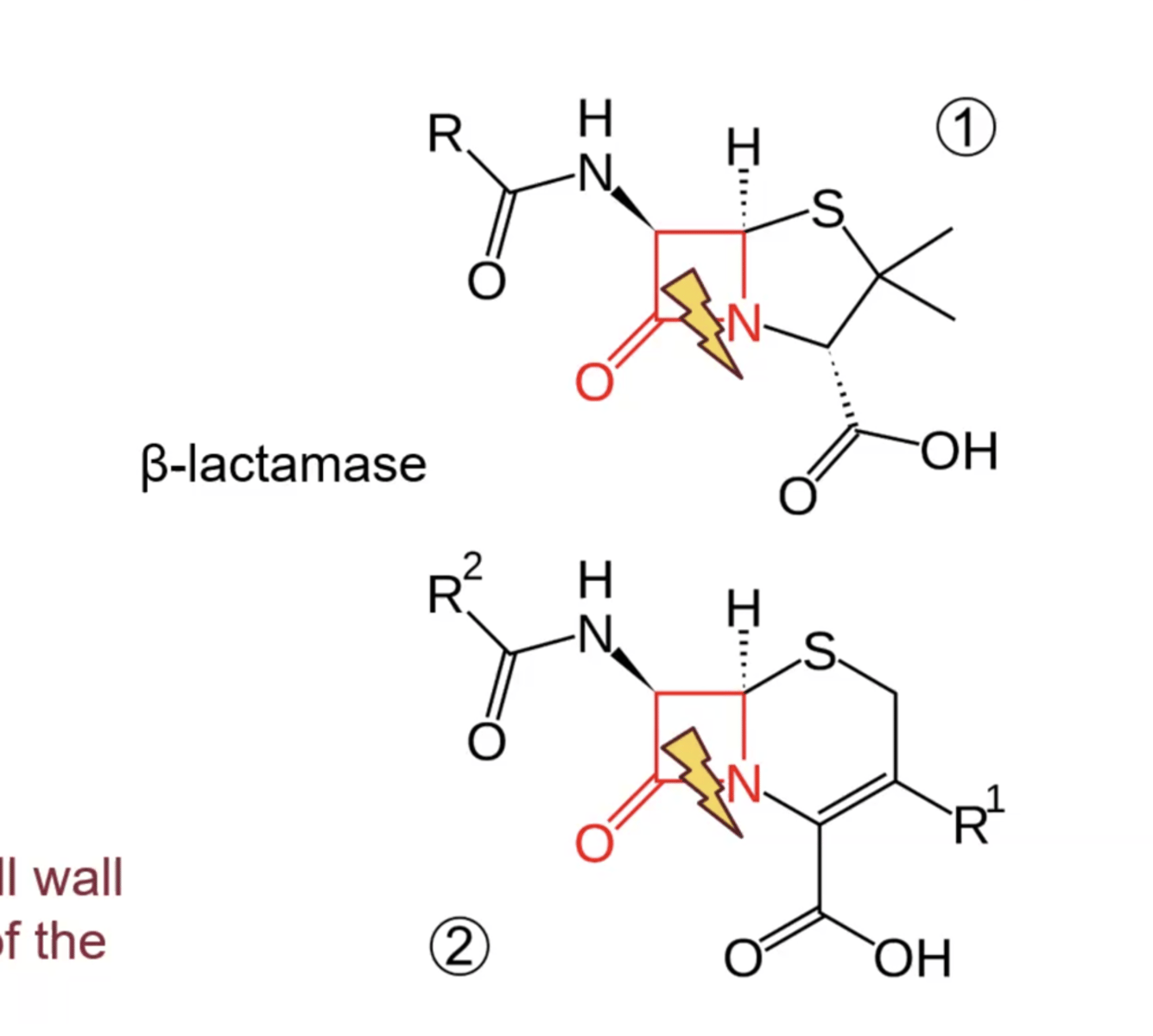
what is b-lactamase also called?
- penicillinase
what is used to combat b-lactamase?
- clavulanate
what is augmentin?
- Amoxicilin and Clavulanic Acid
what type of bacteria is penicillin effective against?
- Predominantly useful for treating Gram+ infections and anaerobic infections
What are the PCNase sensitives medications?
- Pen G (IV, IM), drug of choice still for syphilis
- Pen V (PO)
- the original penicillins
- susceptible to cleaving by b-lactamase
what are the PCNase resistant medications?
- methicillin (IV,IM), know bc of MRSA
- cloxacillin
- dicloxacillin
(not as susceptible to be cleaved by b-lactamase)
what are the aminopenicillins?
- Ampicillin
- Amoxicillin
(amoxicillin + clavulanate is augmentin)
what is clavulanate?
- A beta-lactamase inhibitor
- Prevents breakdown of beta lactams
- Sulbactam or Clavulanate inhibit PCNase and are therefore often combined with PCNase sensitive formulas
- acts as decoy
what are Anti-Pseudomonal (Gram-) Coverage medications?
- Carboxypenicillins: Carbenicillin and Ticarcillin
- disrupt peptidoglycan
what pregnancy category are penicillins?
- Category B
why are there no topical formulations for penicillin?
- allergy risk is too high
what are the adverse reactions to penicillin?
Hypersensitivity all types
− I: Anaphylaxis
− II: Hemolytic anemia
− III: Serum sickness
− IV: Steven's Johnson Syndrome
- a low but notable cross-reactive allergy risk exist with 1st generations cephalosporins (both have B-lactam rings)
what are the differences between cephalosporins vs penicillins?
- these drugs also have a β-lactam ring structure with 6 members (vs 5)
− In contrast to PCN, these drugs are less susceptible to PCNase
what generations of cephalosporins include oral formulations?
- first 3 of 4 generations
what is dosing for cephalexin(keflex)?
- 500mg bid PO x 7d for eyelid infections (hordeolums, mild cases preseptal ceullulitis)
do topical formulations for cephalosporins exisit?
- no
how do newer generations of cephalosporins differ compared to older generations?
- Newer generations have greater Gram (-) coverage
what is the nomenclature for cephalosporins?
- usually have Cef or Ceph
what medications are 1st gen cephalosporins?
- cefazolin
- cephalexin
- cefadroxil
(CEF/CEPH followed by A, in most cases)
what medications are 2nd gen cephalosporins?
- cefamandole
- cefoxitin
- cefaclor
- cefuroxime
- loracarbef
- cefotetan
(CEF/CEPH followed by O,U,)
what medications are 3rd gen cephalosporins?
- cefotaxime
- cefpodoxime
- ceftizoxime
- ceftriaxone
- ceftazidime
- cefoperazone
(CEF/CEPH followed by T, in most cases)
what medications are 4th gen cephalosporins?
- cefepime
- cefozopran
- cefpirome
- cefquinome
(CEF/CEPH followed by E, only need to know cefepime)
what are the adverse reactions to cephalosporins?
- hypersensitivity reactions are the same as penicillin
- 1st gen are cross reactive w/ penicillin (higher generations are less cross reactive)
- vitamin K deficiency can result from destruction of bacterial flora that play a role in vitamin K absorption
- blood dyscrasia: cytopenia
what are the contraindications to the use of cephalosporins?
- hemophillia (bleeding disorder)
- Cephalosporins cause decrease in vit K (if you lack vitamin K, you will have excess bleeding)
- this will make the condition even worse
what pregnancy category are cephalosporins?
- category B
why is bacitracin only found in topical formulation?
- due to nephrotoxicity
what are the types of bacitracin?
- AK-Tracin® Ointment
− Gram+ coverage
− Well suited for staphylococcus blepharitis
• Polysporin® Ointment
−Additionally contains Polymyxin B
− The combination provides additional Gram (-)
- coverage including pseudomonas
what is the drug of choice for MRSA and MRSE?
- vancomycin (I.V), poor oral absorption
- also endophthalmitis
what type of bacterial is vancomycin effective in treating?
- Gram (+) only
what are the adverse reactions to the use of vancomycin?
− Ototoxicity & nephrotoxicity
− Red Man Syndrome: IV-induced mast cell degranulation
why are cell membrane toxins only available topically?
- due to systemic toxicity
what are the cell membrane toxins?
- polymyxin-B (-)
- Gramicidin (+)
what is polymyxin-B?
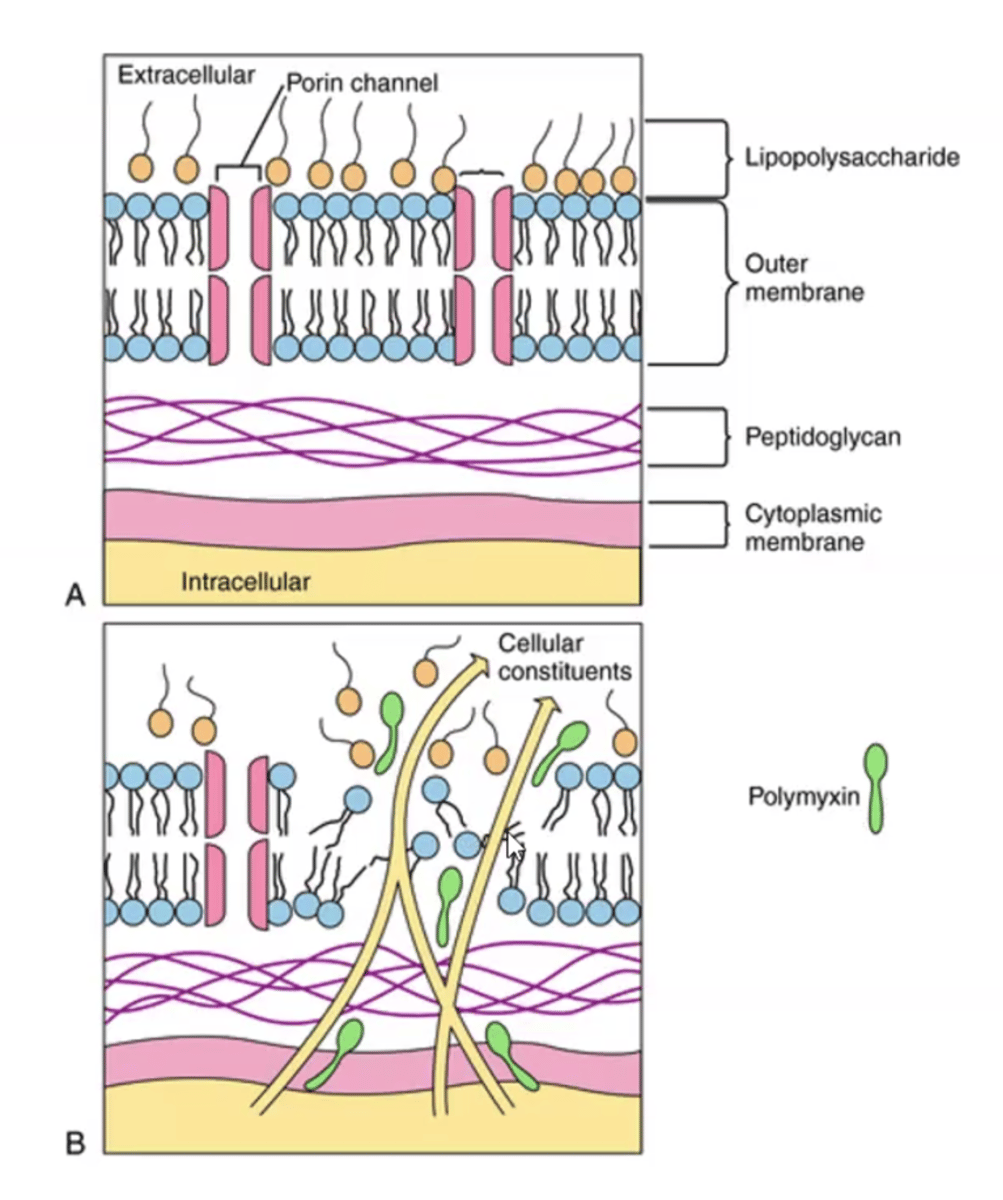
- cationic detergent/surfactant
- topical use only, never stand-alone
What is gramicidin?
− Similar mechanism of action as Polymyxin B
− Often found in combination products
- cellular membrane
- polymycin B disrupts cell membrane
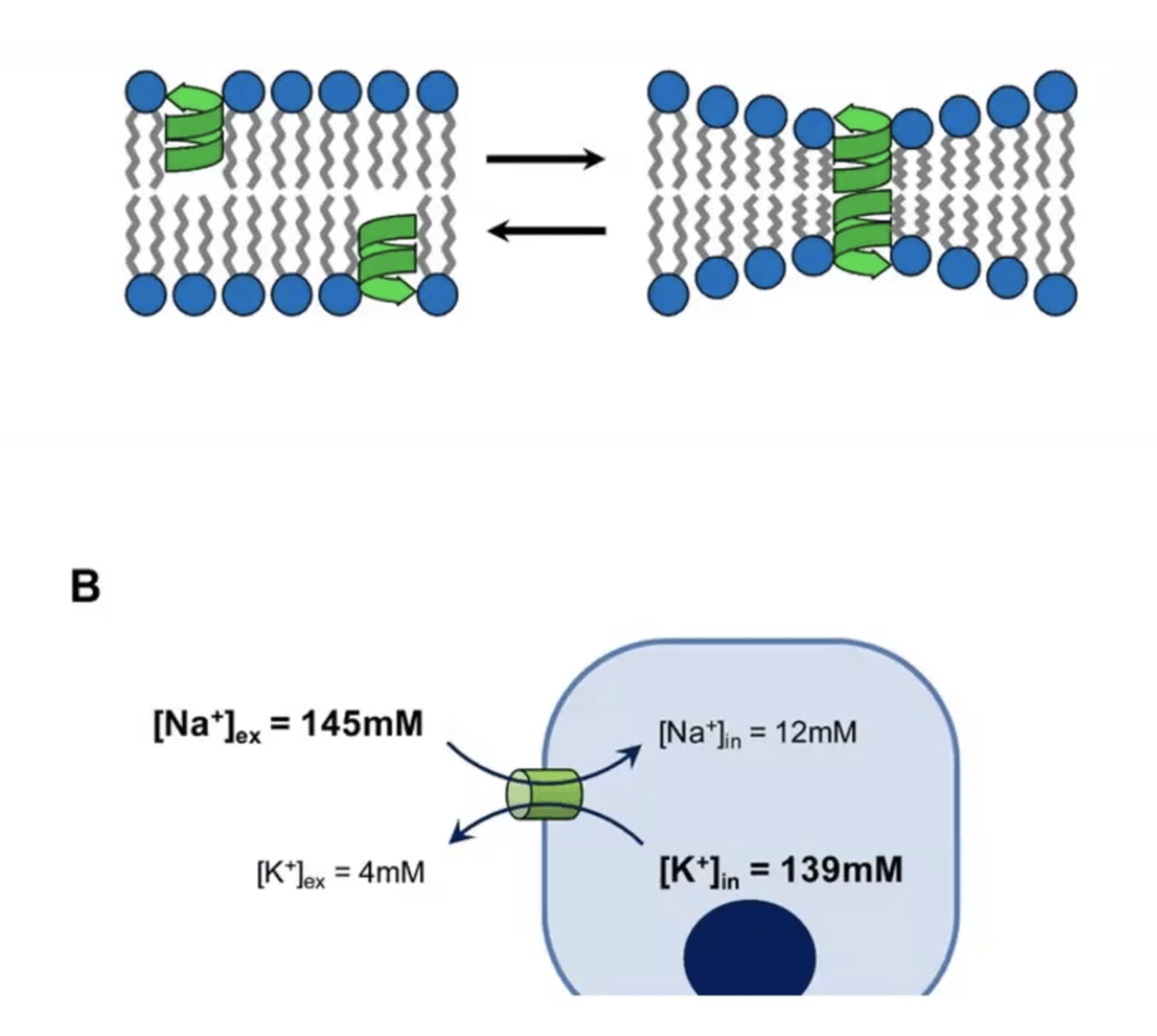
- gramicidin
- kills gram (+)
- forms little pores that allows potassium to come out of the cell and sodium to go into the cell
- once potassium goes out and sodium goes in, bacteria dies
what are the types of polymyxin-B combos?
- Polymyxin-B + Trimethoprim
- Polysporin Ointment
- Neosporin Ointment
- Neosporin Solution
what is polymyxin-B + trimethoprim used for?
- most common pediatric ocular infections: H.influenzae and S pneumoniae
- good option for MRSE and MRSA infections
- polymyxin will kill gram (-) and trimethoprim will kill gram (+)
what is polysporin ointment?
- polysporin B + Bacitracin
what is neosporin ointment?
- polysporin B + neomycin + bacitracin
what is neosporin solution?
− Polymyxin B + Neomycin + Gramicidin
how do protein synthesis inhibitors work?
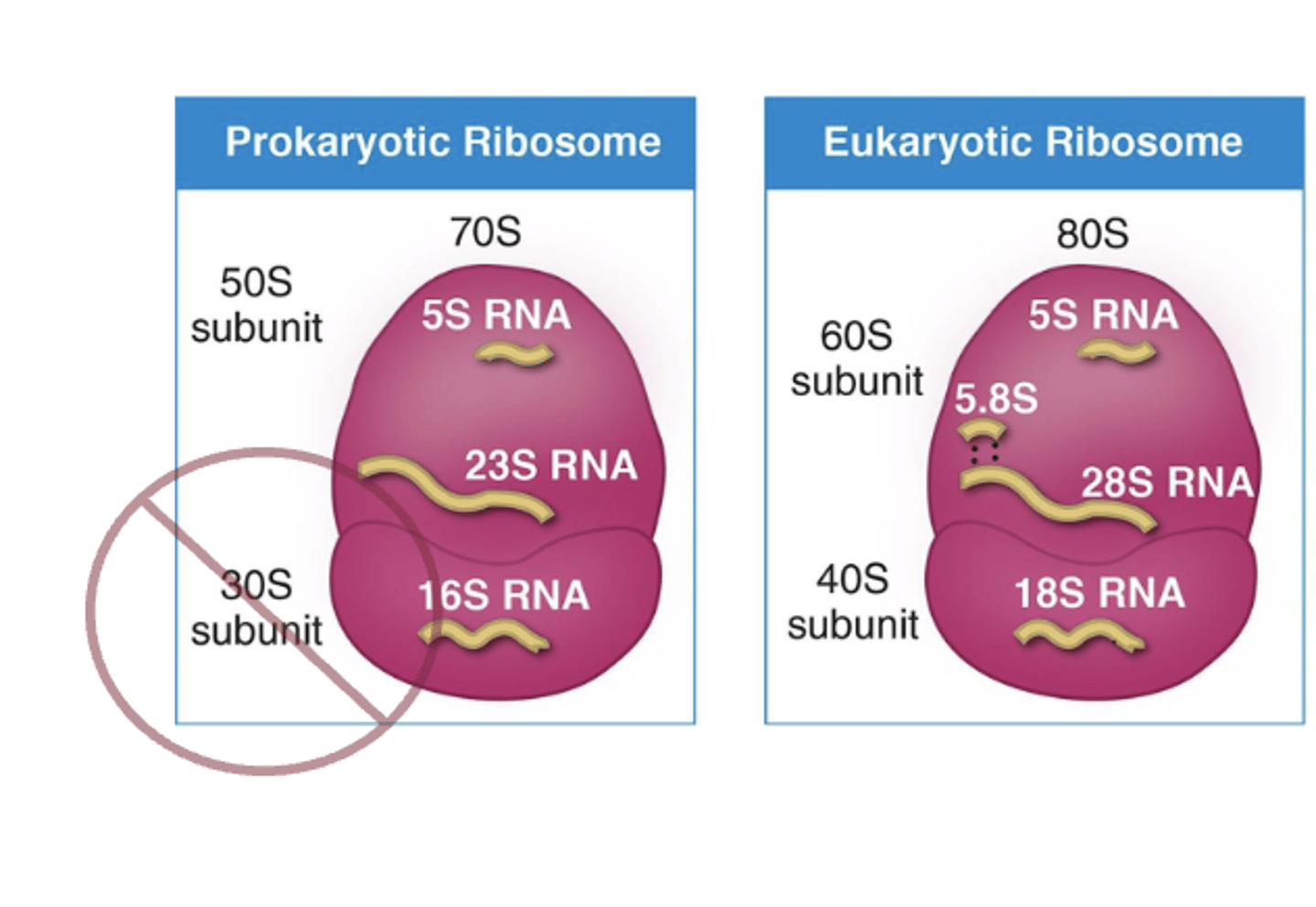
- Act by binding to and inhibiting the 30S or 50S ribosomal subunit
- humans have an overall 80s ribosome with 60s and 40s ribosomal subunit
- bacterial have overall 70s ribosome and 50s and 30 ribosomal subunit
- protein synthesis inhibitors attack the ribosome and prevent protein synthesis
- still have side effects
what are the 30s protein synthesis inhibitors?
- Aminoglycosides
- Tetracyclines
what are the 50s protein synthesis inhibitors?
−Macrolides
−Lincosamides (Lincomycin, Clindamycin- effective against anaerobes)
− Chloramphenicol
what are the types of aminoglycosides?
- Neomycin
- Gentamicin
- Tobramycin
- end in mycin
what is neomycin?
- oldest aminoglycoside
- topical use only, never stand alone
- broad spectrum coverage except pseudomonas
- slighly more gram (-)
what is gentamycin used for?
- ung/solution
- used for severe infections
what is tobramycin?
- ung/solution
- similar use as gentamycin
- 2nd most effective against ocular MRSA, following trimethoprim
what is the most effective in treating topical MRSA?
- trimethoprim + sulfa
- for systemic use vancomycin
what pregnancy category are aminoglycosides?
topically: B
systemically: D
why is aminoglycosides only available topically?
- poorly absorbed from the gastrointestinal tract, so when used systemically they must be given parenterally
what are the adverse reactions to the use of aminoglycosides?
• SPK & delayed re-epithelialization (toxic to the cornea)
• Nephrotoxicity: accumulation in renal cortex
• Neurotoxicity: auditory and vestibular (ototoxicity)
• Neuromuscular junction blockade (do not use in patients with Myasthenia Gravis)
• Interferes with Ca++ channel
• Type IV Delayed Hypersensitivity reaction
what are the adverse reactions for the use of neomycin?
− 5-10% contact dermatitis risk: avoid routine use
− Allergy: 50% patients are X-reactive w/ Gentamicin
what are the adverse reactions for the use of gentamycin?
- corneal epithelial toxicity most pronounced
what are tetracyclines?
- 30s ribosomal inhibitors
why do tetracyclines have anti-inflammatory benefits?
- arise through inhibition of MMPs, neovascularization & bacterial lipases
- MMPs are matrix metallic protieases, responsible for causing neovacularization and are bacterial lipases that break down our lipids
- antibiotic effects are becoming reduced due to bacteral resistance, still used for anti-inflammatory
- MMPs have zinc as part of their structure and tetracyclines chelate (bind) the zinc, therefor it blocks the enzymes function
- since tetracyclines chelate metals, they can also chelate other things that we ingest, which is why we do not take it with food
Is tetracyline long or short acting?
- short acting
what are the long acting tetracylines?
- Doxycycline
- Minocycline
− Oracea
what is oracea used for?
- ®a 40 mg doxycycline capsule; 30 mg is immediately released; 10 mg is delayed release; indicated for rosacea