Biology Lab (Microscope Chapter)
 Call Kai
 Learn
Learn Practice Test
 Spaced Repetition
 Match
Match Flashcards
 Knowt Play
1/19

There's no tags or description
Looks like no tags are added yet.
Name | Mastery | Learn | Test | Matching | Spaced | Call with Kai | Chat |
|---|
No analytics yet
Send a link to your students to track their progress
20 Terms
Why is it important to start with the scanning objective rather than the high-power objective?
Scanning provides the largest FOV, so the specimen is easier to locate
True or false: The coarse-focus knob should be used with the scanning, low-power, and high-power objectives.
False. Only high-power objective
if 4x objective is used, what is the microscope’s total magnification?
40x
Which objective lens provides the greatest resolving power?
Oil immersion
To move a specimen to the upper left, which way must you move the slide?
Down and to the right
As magnification increases, does the amount of light increase or decrease?
Decrease
What happens to the field of view as magnification increases?
Field of view decreases
__ __ is the distance between the objective lens and the specimen
Working distance
Why is a coverslip placed on a slide at a 45 degree angle?
Allows the liquid to spread beneath it while preventing air bubbles
Why are wet mounts used to view biological specimens in the laboratory?
Used to view living specimens
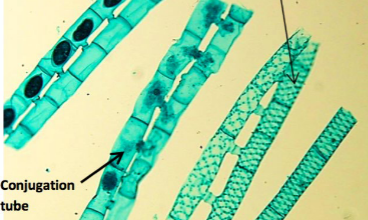
What is this?
A) Spirogyra
B) Volvox
C) Euglena
D) Anabaena
A) Spirogyra
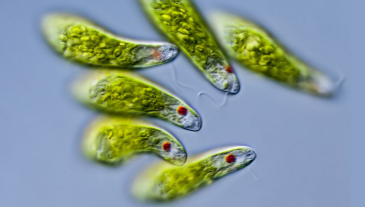
What is this?
A) Spirogyra
B) Volvox
C) Euglena
D) Anabaena
C) Euglena
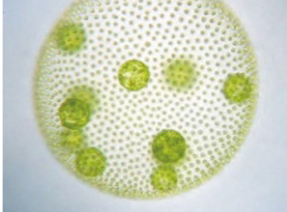
What is this?
A) Spirogyra
B) Volvox
C) Euglena
D) Anabaena
B) Volvox
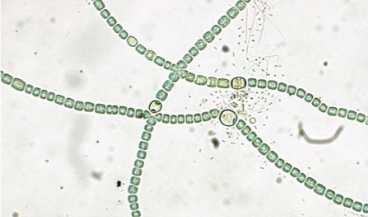
What is this?
A) Spirogyra
B) Volvox
C) Euglena
D) Anabaena
D) Anabaena
Taxonomy is the study of ___ and ___ organisms. Each named group is called a ___.
naming, classifying, taxa
Taxonomy has two steps:
1. ___ and ___ the organism
Place it into a ____ system
Define, describe
classification
Systematics is the study of ___ and how they ___ relate. Cladistics ___ and ___ the relationship. Taxonomy ___ and ___ them.
organisms, evolutionarily, compares, determines, organizes, names
Carolus Linnaeus created a method called ___ ___. The scientific name is made of the ___ (capitalized) and the ___ ___ (uncapitalized). Names can be derived from ___, ___, ___, or other sources. The purpose of such is to give each species a ___ ___ name.
binomial nomenclature, genus, specific epithet, people, places, traits, universally recognized
Organisms are classified into eight ranks, what are they?
Hint: Dear King Phillip Came Over For Good Soup
Domain, Kingdom, Phylum, Class, Order, Family, Genus, Species
What are the 3 domains?
Bacteria, Archaea, and Eukarya