5. Kawasaki Disease
 Call Kai
 Learn
Learn Practice Test
 Spaced Repetition
 Match
Match Flashcards
 Knowt Play
1/21

There's no tags or description
Looks like no tags are added yet.
Name | Mastery | Learn | Test | Matching | Spaced | Call with Kai | Chat |
|---|
No analytics yet
Send a link to your students to track their progress
22 Terms
what is kawasaki disease?
inflammation of medium-sized blood vessels throughout the body (cute systemic vasculitis)
can involve coronary arteries

what age group is most commonly affected by kawasaki disease?
children 6 months to 5 years old
why is kawasaki disease a major cardiac concern in children? *
it’s the leading cause of acquired heart disease in children
coronary artery dilation or aneurysms are major complications
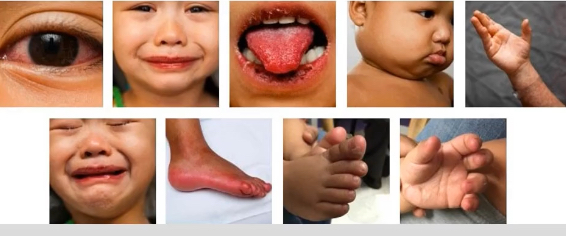
what assessment findings suggest kawasaki disease?
prolonged high fever and irritability
red eyes without drainage
bright red, chapped lips
strawberry tongue
red, inflamed oral mucosa and pharynx
swollen hands and feet, red or peeling palms and soles
nonblistering rash
enlarged lymph nodes
bilateral joint pain
peeling skin in the perineum
enlarged liver; tachycardia, gallop, or murmur
what fever pattern suggests kawasaki disease? *
high fever lasting 5 days to 2 weeks, unresponsive to antipyretics or antibiotics
what can tachycardia, a gallop, or a murmur indicate in kawasaki disease?
tachycardia may result from fever
gallop or murmur may indicate cardiac involvement
what laboratory findings are expected in kawasaki disease?
anemia
🔺 WBC count in active phase
thrombocytosis, (increased platelets) in the later phase
elevated erythrocyte sedimentation rate (ESR)
elevated C-reactive protein (CRP)
what cardiac tests are used in kawasaki disease?
echocardiogram at diagnosis
establishes a baseline and assesses coronary involvement
repeat echocardiograms to monitor changes
cardiac catheterization if more information is needed
what are the treatment goals for kawasaki disease?
reduce coronary artery inflammation
prevent coronary thrombosis (clot)
what medications treat acute kawasaki disease?
high-dose aspirin in 4 divided doses daily
high-dose intravenous immunoglobulin (IVIG) infusion
why is aspirin used to treat kawasaki disease?
reduces inflammation, fever, and pain
inhibits platelet aggregation (clots)
what serious risk is associated with aspirin and viral illness in children? *
Reye syndrome
how does aspirin therapy change as kawasaki disease improves?
high dose until the child is afebrile
lower dose afterward until the platelet count normalizes, often 6–8 weeks
when should intravenous immunoglobulin (IVIG) be started for kawasaki disease? *
within the first 10 days of illness for the best treatment response
when should kawasaki symptoms improve after intravenous immunoglobulin (IVIG)?
within 36 hours, a second dose may be needed if symptoms do not improve
what monitoring is needed during intravenous immunoglobulin treatment for kawasaki disease?
follow hospital monitoring policy during and after the infusion
watching for allergic reactions because it is a donor product
how long should live vaccines be delayed after intravenous immunoglobulin (IVIG) for kawasaki disease? *
11 months
what if a child received a live vaccine less than 14 days before intravenous immunoglobulin? *
repeat the vaccine after the 11-month waiting period
what comfort measures help children with kawasaki disease?
acetaminophen for pain and fever (don’t add more nsaids)
quiet environment and clustered care
cool cloths on painful joints
vaseline on dry, cracked lips
soft diet and soothing cool foods or fluids
why is acetaminophen preferred over ibuprofen during aspirin treatment for kawasaki disease? *
avoid adding another NSAID while the child is receiving aspirin
what diet and oral comfort measures help children with kawasaki disease?
soft diet for inflamed oral tissues
ice pops or developmentally safe ice chips
cool, moist washcloth for an infant to suck on
what follow-up teaching is essential for families of children with kawasaki disease? *
follow the medication regimen
keep healthcare provider and cardiology appointments
obtain repeat labs to monitor platelets and guide aspirin discontinuation
continue diet and comfort measures
mouth and joint pain can last up to 8 weeks