ORBG 5005- Dental Anatomy Exam 1
 Call Kai
 Learn
Learn Practice Test
 Spaced Repetition
 Match
Match Flashcards
 Knowt Play
1/127

There's no tags or description
Looks like no tags are added yet.
Name | Mastery | Learn | Test | Matching | Spaced | Call with Kai | Chat |
|---|
No analytics yet
Send a link to your students to track their progress
128 Terms
Dentition
the natural teeth in the maxillary and mandibular dental arch
primary, mixed, permanent
three types of dentition
primary dentition
deciduous dentition
Mixed dentition
(6-12 years) when primary and permanent dentition are mixed
Maxillary arch
upper jaw; part of the hard palate
non moveable
Maxillary arch: moveable or non-moveable?
Tuberosity area
Behind maxillary molars
mandibular arch
What is the only moveable bone of the skull?
retromolar area
space located to the rear of the mandibular molars
Permanent dentition
succedaneous teeth; 32 teeth total
8 teeth per quadrant ; 2 incisors, 1 canine, 2 pre-molars, 3 molars
List teeth per quadrant in permanent dentition
20 teeth ; 5 teeth per quadrant ; 2 incisors, 1 canine, 2 molars
Primary Denition;
How many teeth? How many per quadrant? List teeth per quadrant
no pre-molars or third molars
WHat teeth are missing in primary dentition?
Universal Numbering System ; AJ and KT
What system does primary dentition follow? Who are the "cutie little patients"?
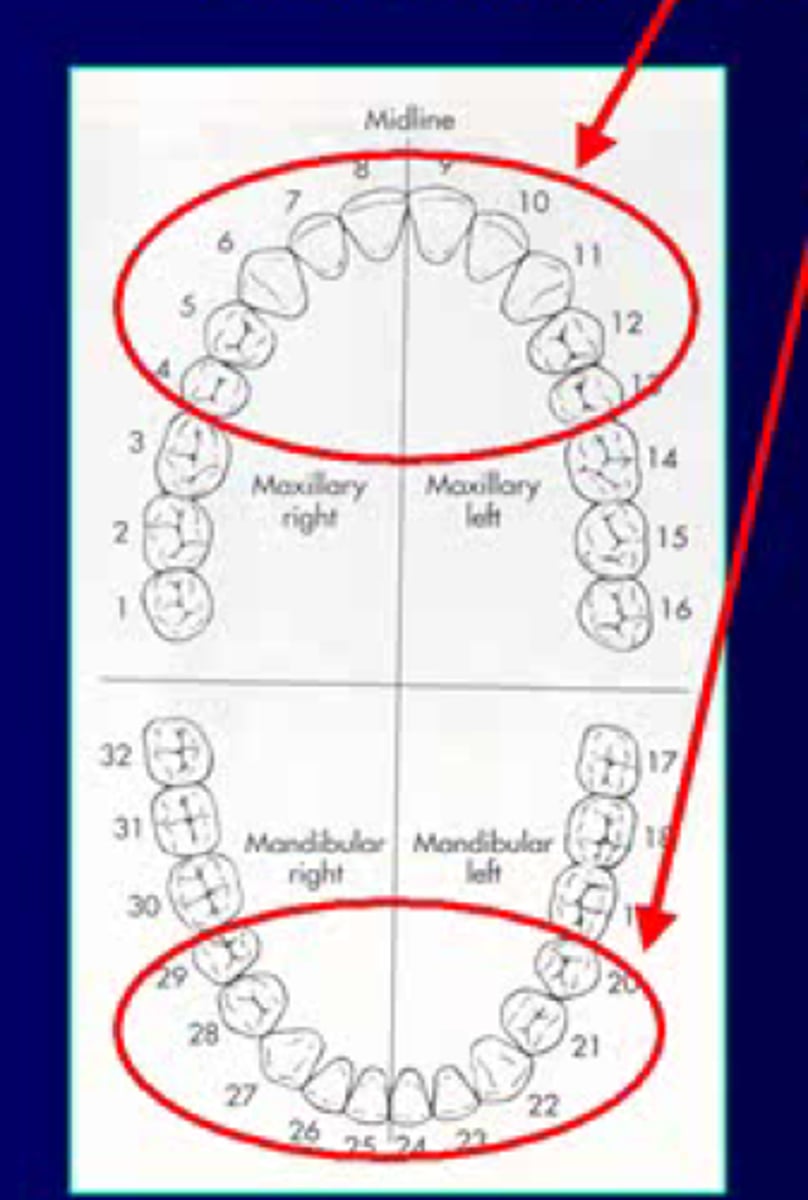
Universal numbering system
1-32 UR to UL, LL to LR
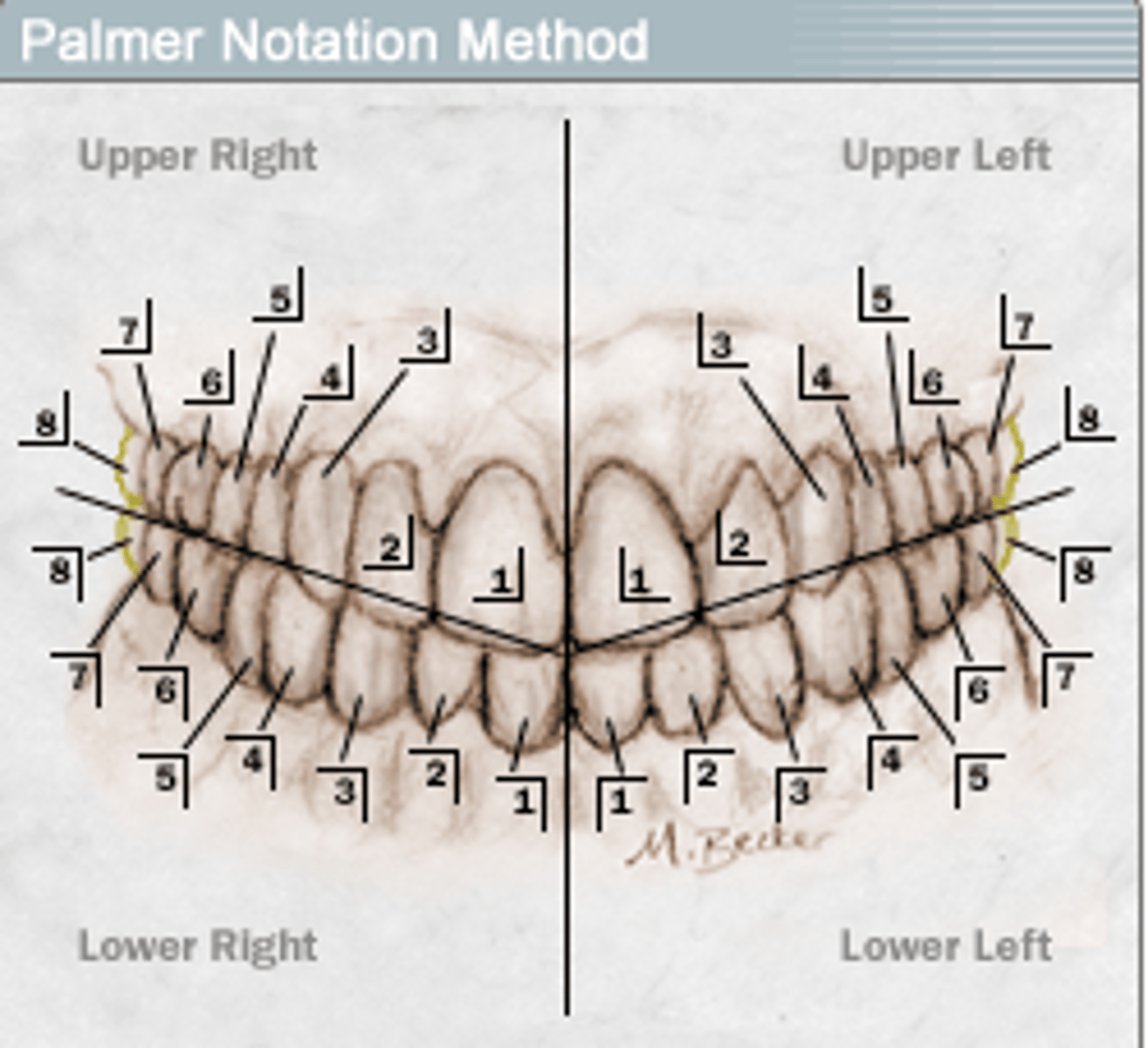
Palmer notation
Each quadrant has a brack location, then numbers 1-8
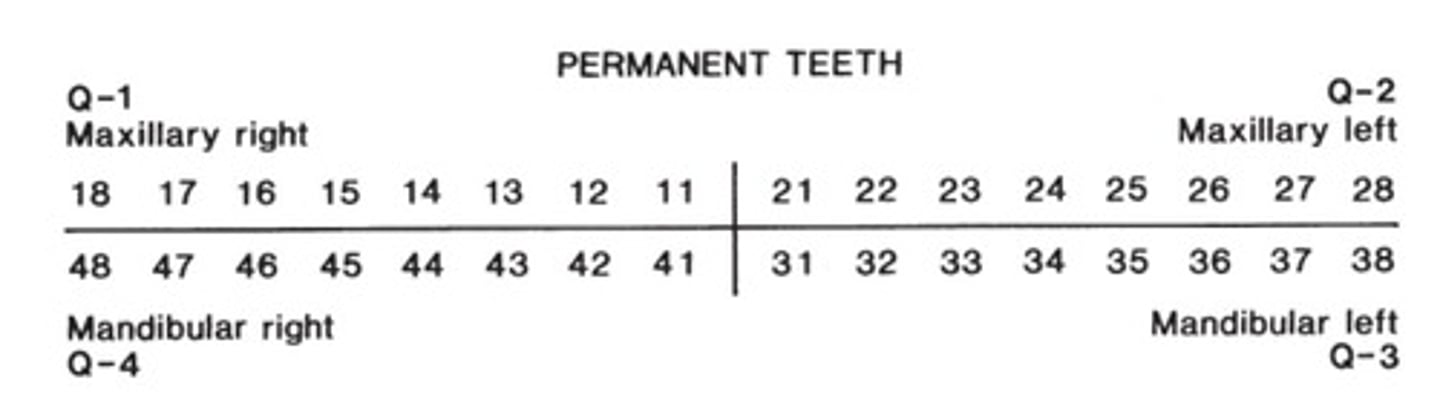
International system
1st #: UR=1, UL=2, LL=3, LR=4
2nd #: 1 (central incisors)- 8 (third molars)
21
Name the left maxillary central incisor using the international system
designed to cut
Incisors function
designed to cut, tear, pierce
Canines function
designed for tearing, holding, grinding
Premolar function
designed for grinding, crushing
Molar function
cuspids; bicuspids
Canines alternate name ;
Premolars alternate name
succedaneous replace primary molars
Premolars: succedaneous or non-succedaneous
non-succedaneous
Molars: succedaneous or non-succedaneous
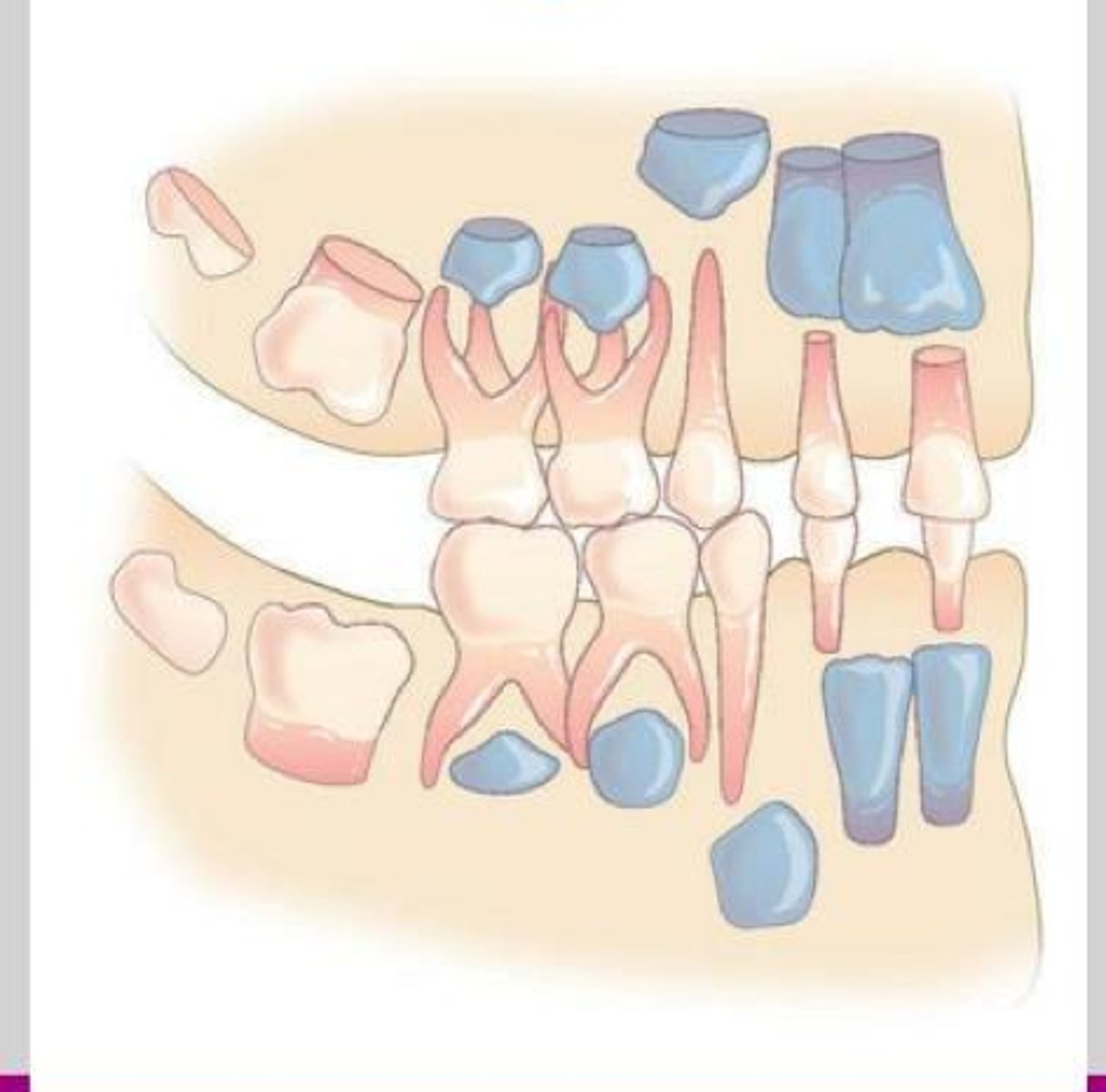
Exfoliation
shedding or loss of primary tooth
Succedaneous
permanent tooth that replaces primary tooth
Non-succedaneous
permanent teeth that do not replace primary (1st, 2nd, 3rd molars)
Midline
an imaginary line that divides the body into right and left halves
occlusion
the physiological mechanism in which maxillary and mandibular teeth contact
Mastication
the act of chewing or grinding
Periodontium
anchors supports and protects teeth
gingiva
gum tissue surrounding teeth and alveolar bone
attached gingiva
gingiva bound to underlying alveolar bone
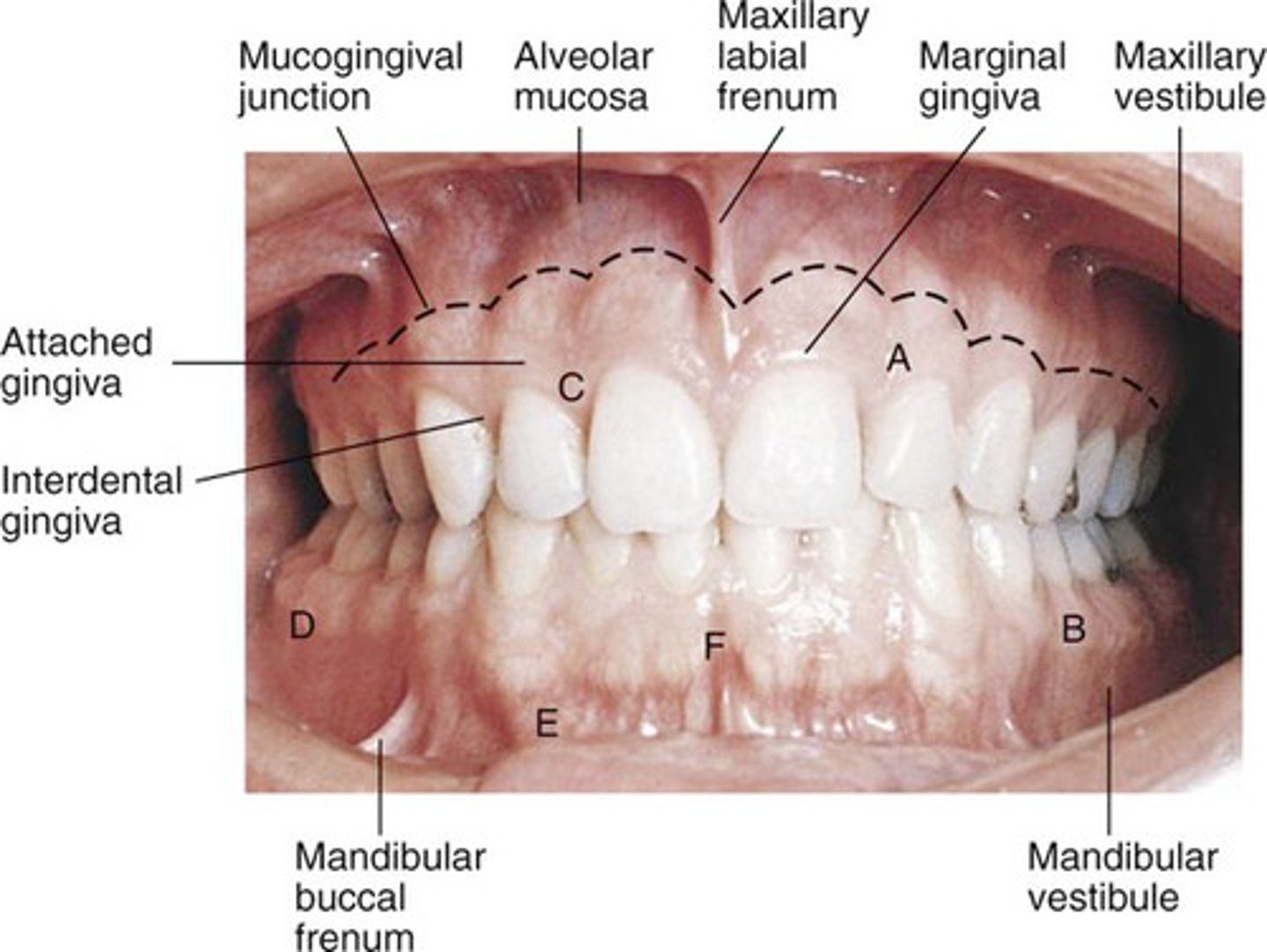
free gingiva
the collar of thin gingiva that surrounds each tooth
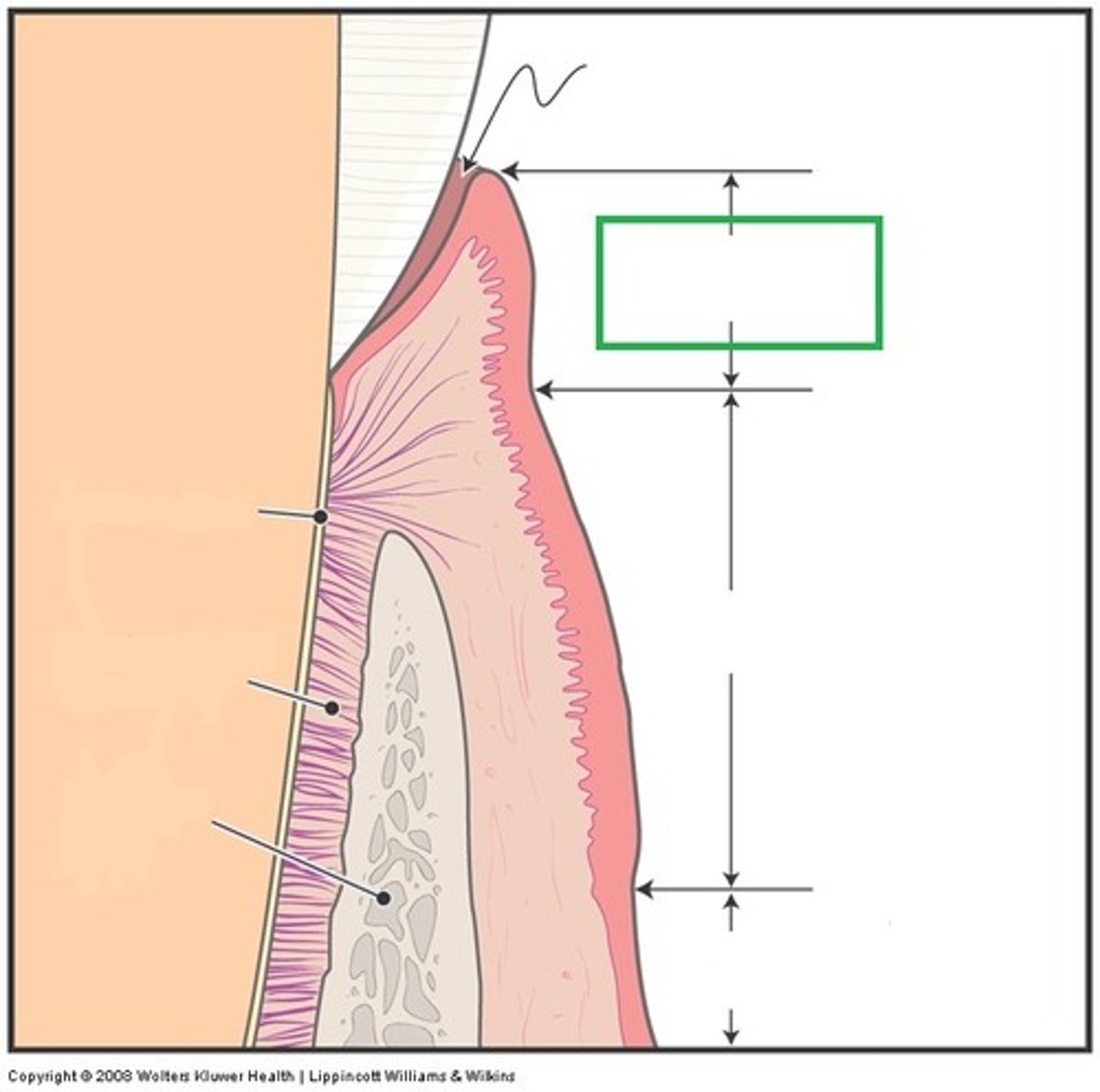
Interdental papilla
the part of the gingival collar that extends between proximal (adjacent) teeth, also unattached gingiva
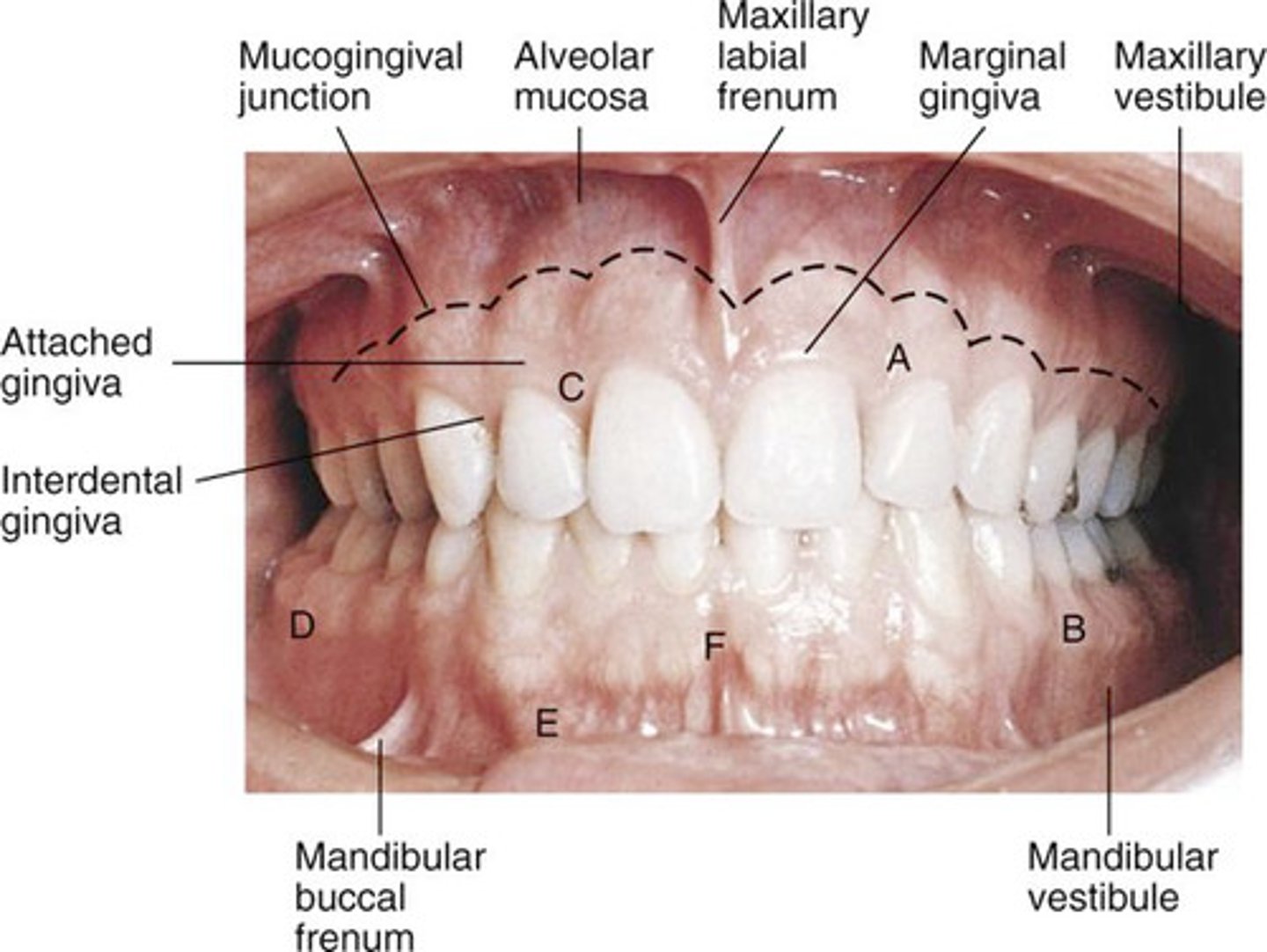
Alveolar bone (alveolar process)
bone that forms sockets for teeth
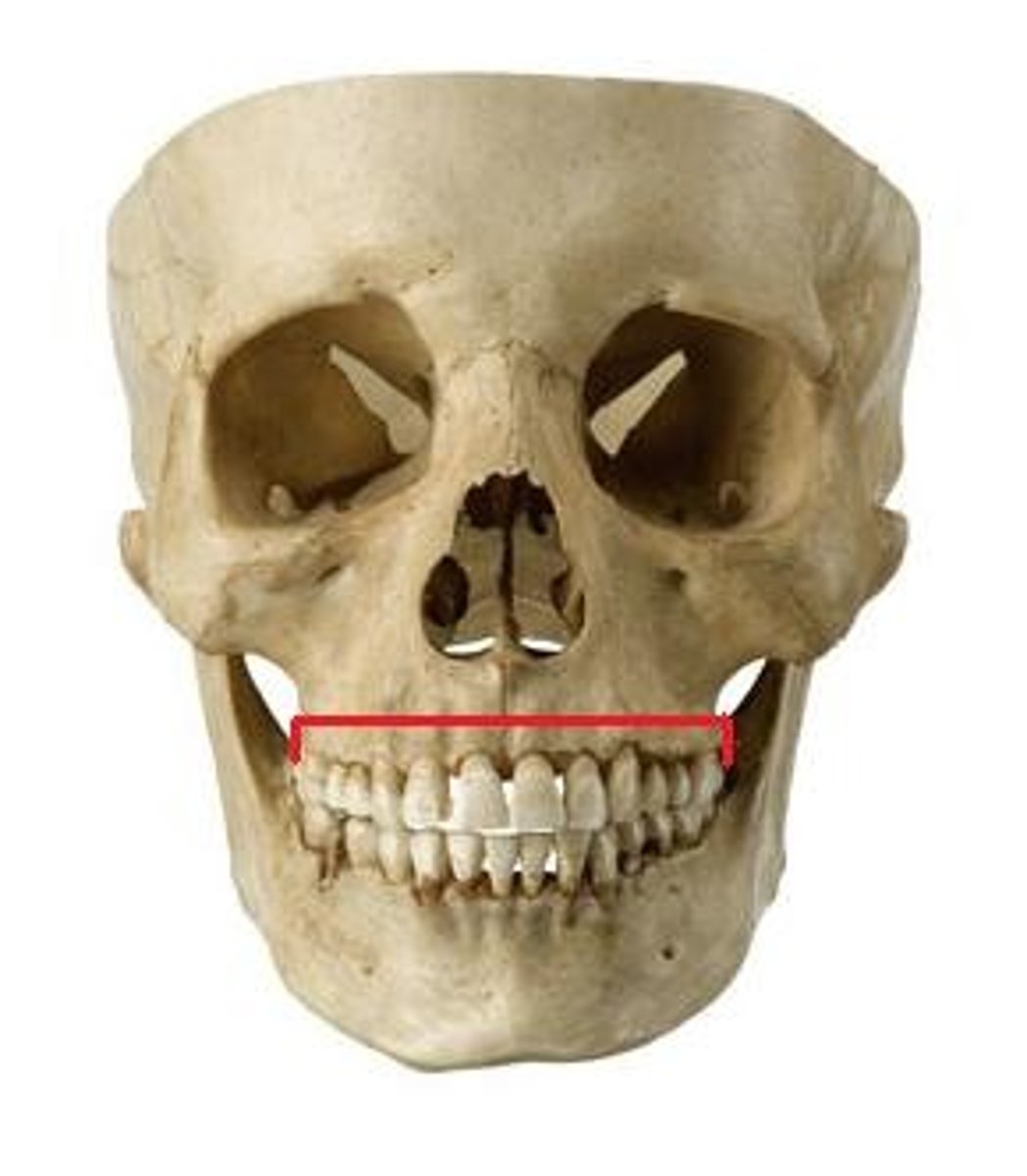
alveolus
socket/cavity where the root of the tooth is held
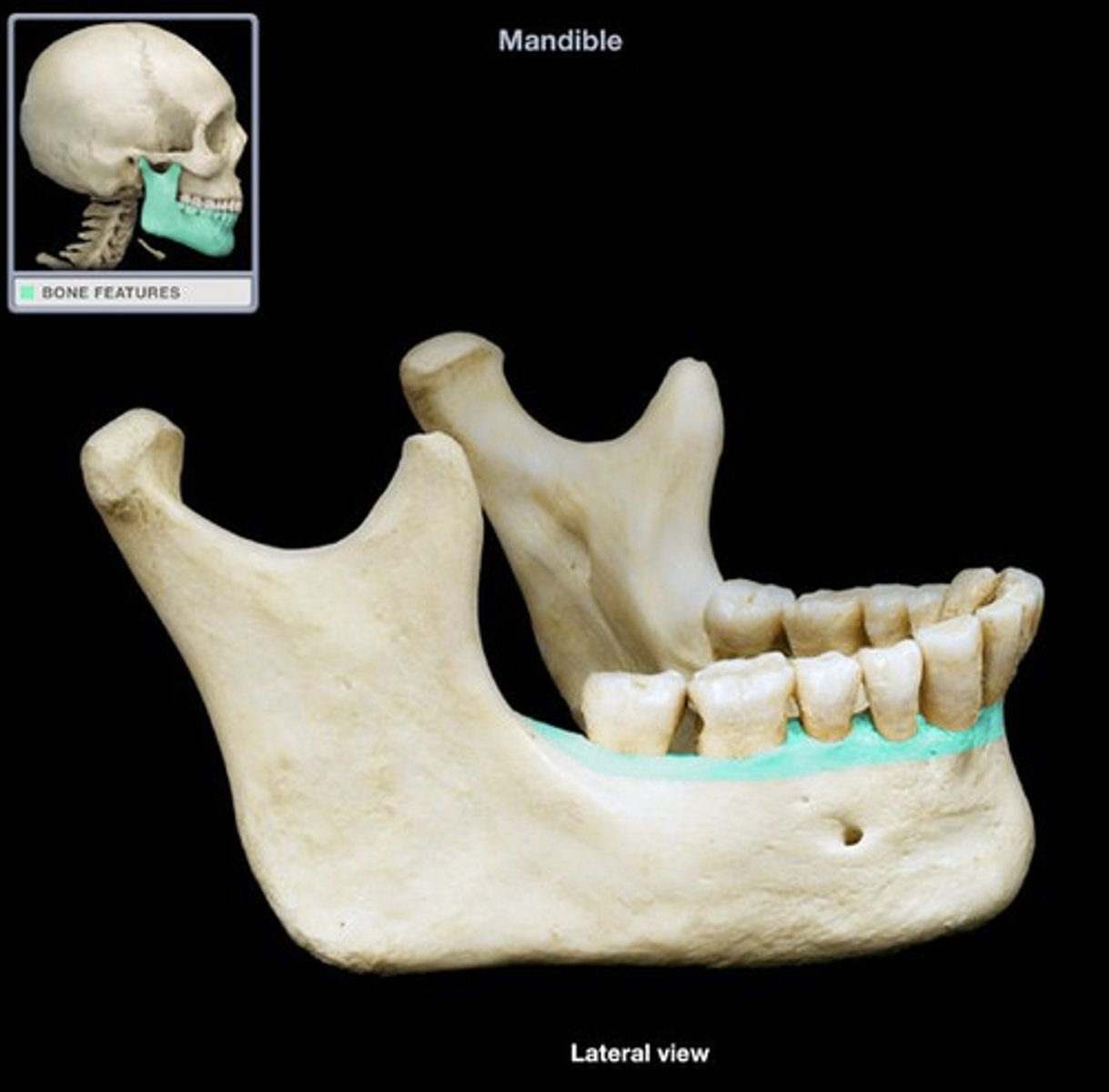
cementum, periodontal ligament, alveolar bone
list the parts of the attachment apparatus
periodontal ligament
fibers connecting the cemetum to the bone
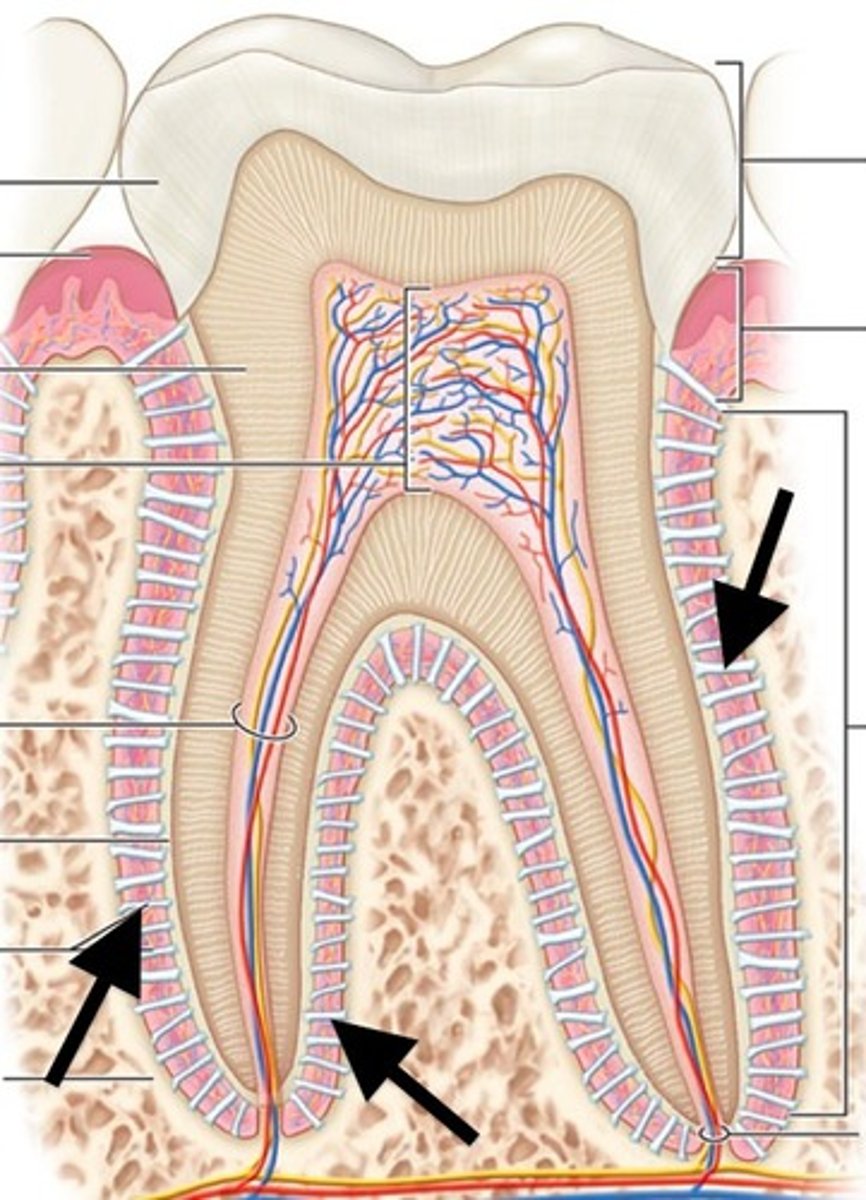
cementum (tooth) to bone (alveolar process)
What does the PDL connect?
enamel, dentin, pulp
list the 3 parts of the crown
dentin, cementum, pulp
list the 3 parts of the root
Dentintoenamel Junction (DEJ)
the inner surface of enamel where enamel joins dentin
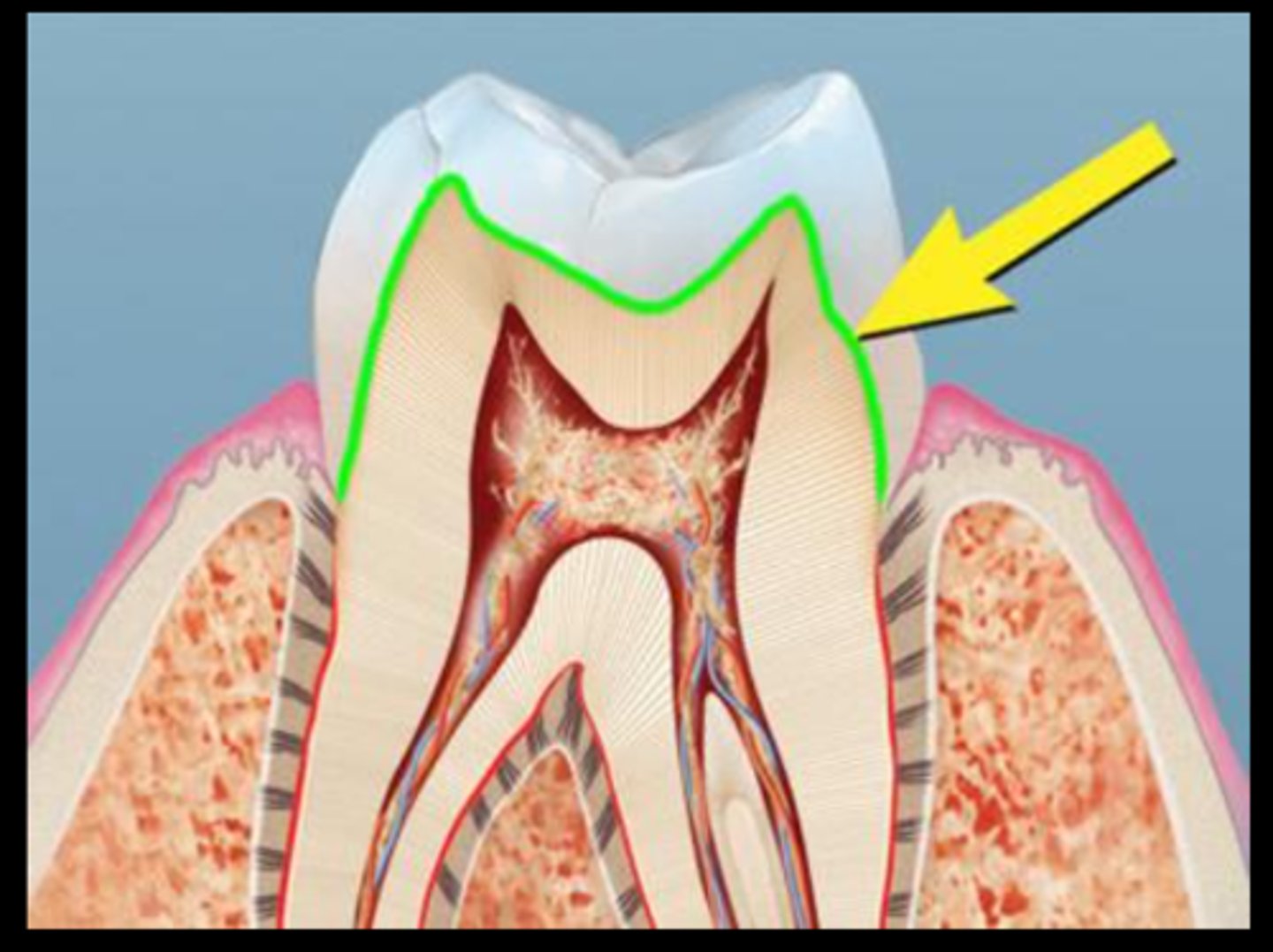
Cementoenamel Junction (CEJ)
the inner surface if enamel where enamel joins dentin
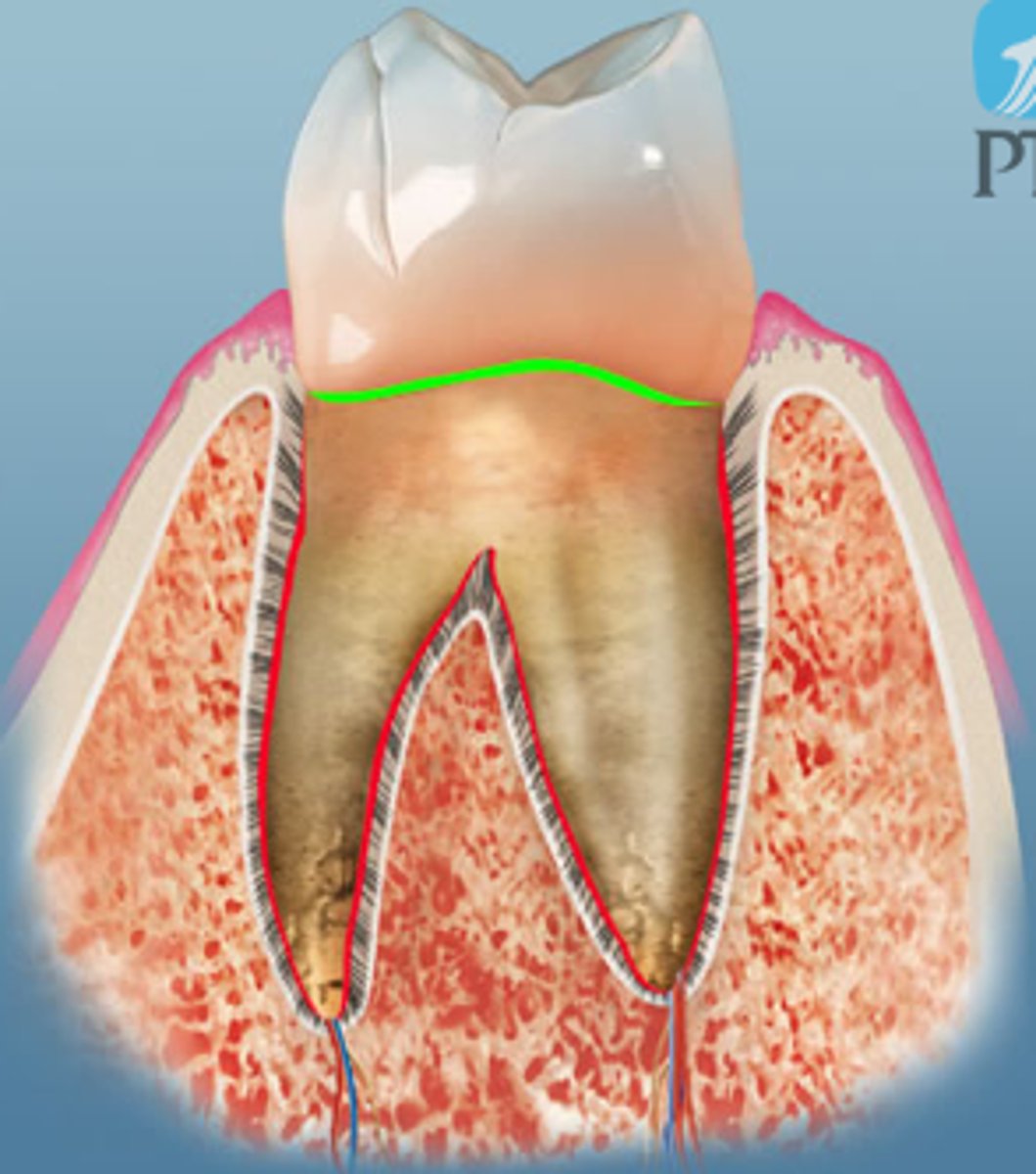
pulp
soft, nonmineralized connective tissue containing a rich supply of blood vessels and nerves located in the center of the crown and root
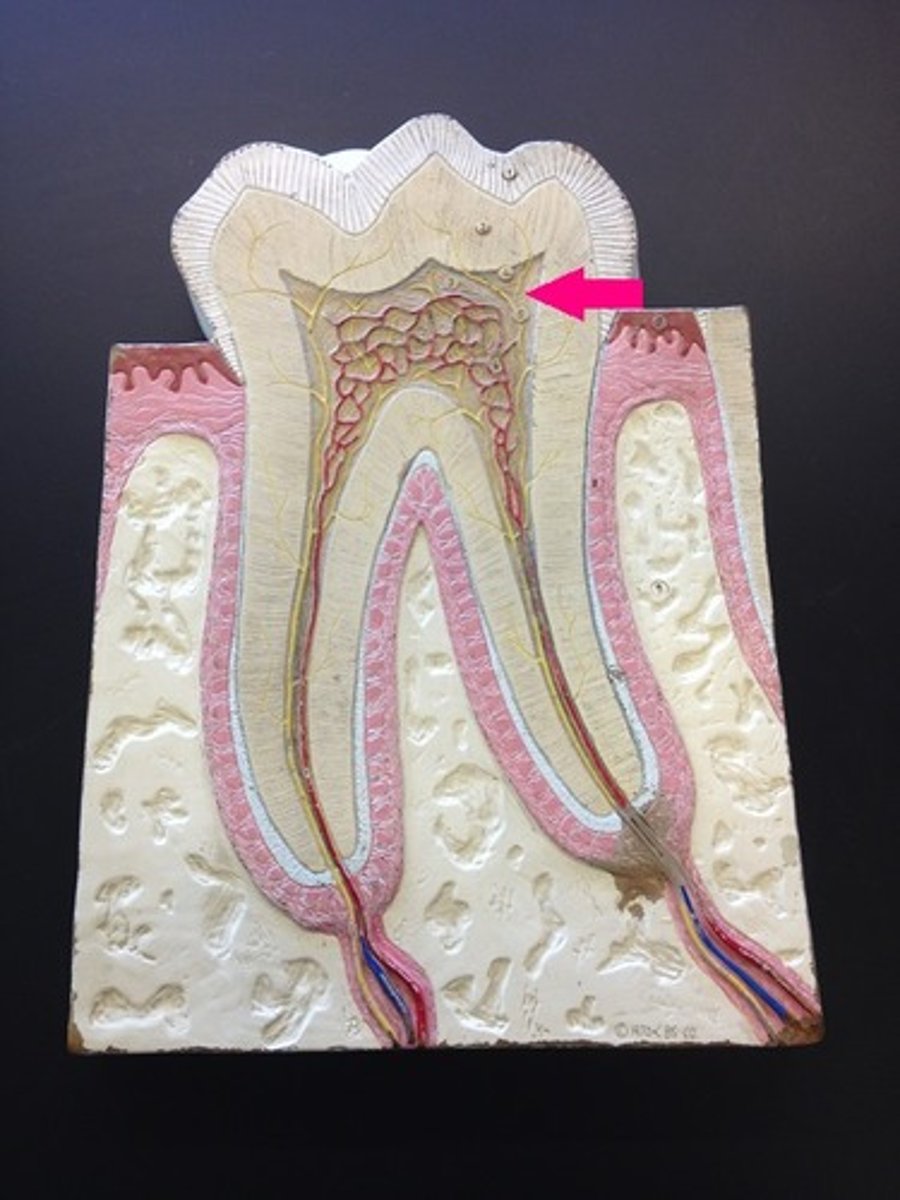
pulp chamber, pulp horns, pulp canal
List the 3 parts of the pulp cavity
pulp chamber
coronal portion of the nerve
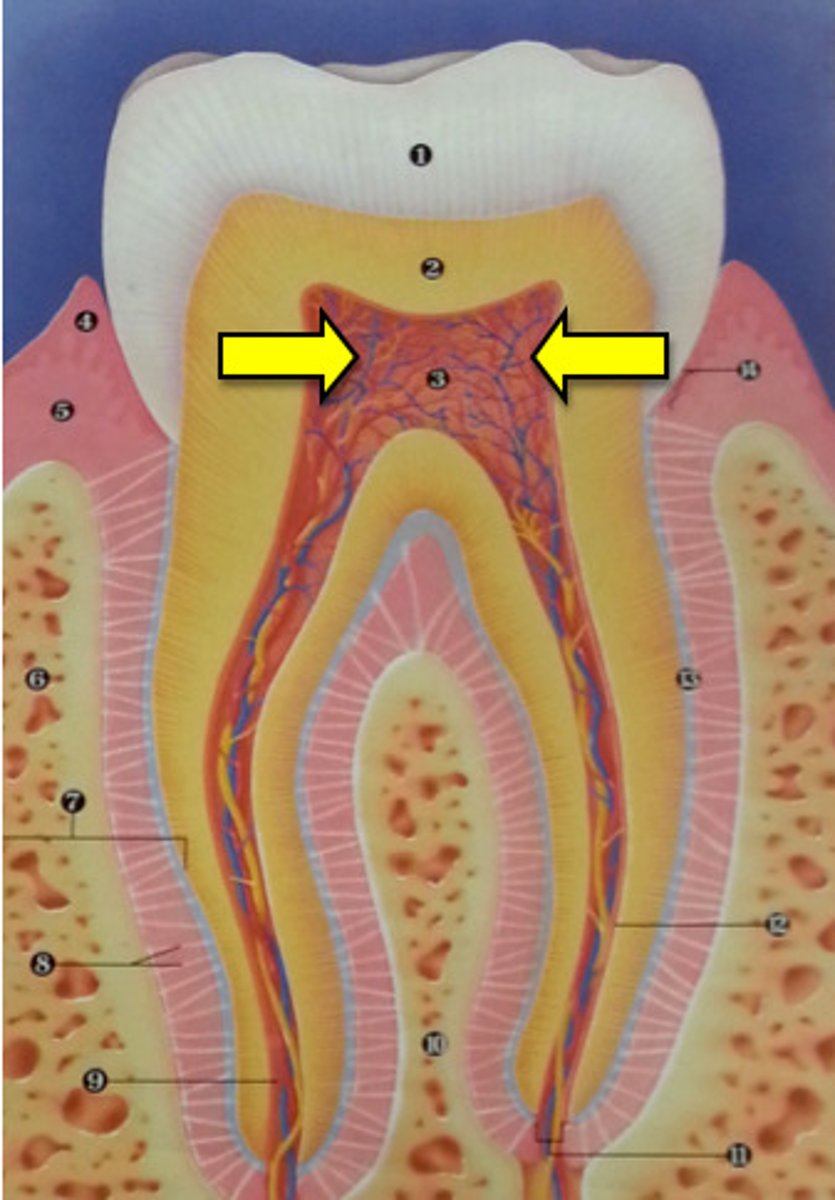
Pulp horns
horns on top of the pulp chamber
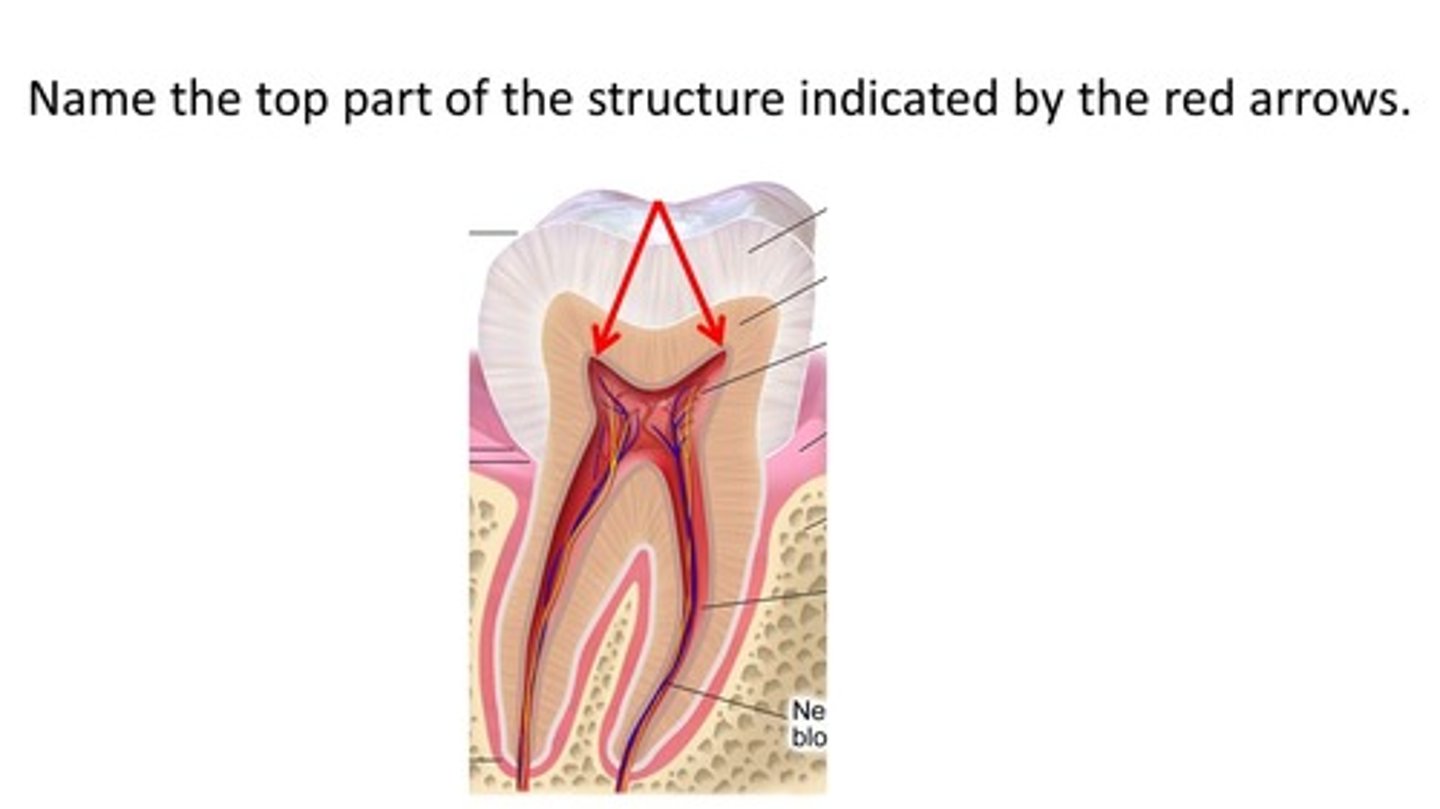
pulp canal (root canal)
root portion of the nerve
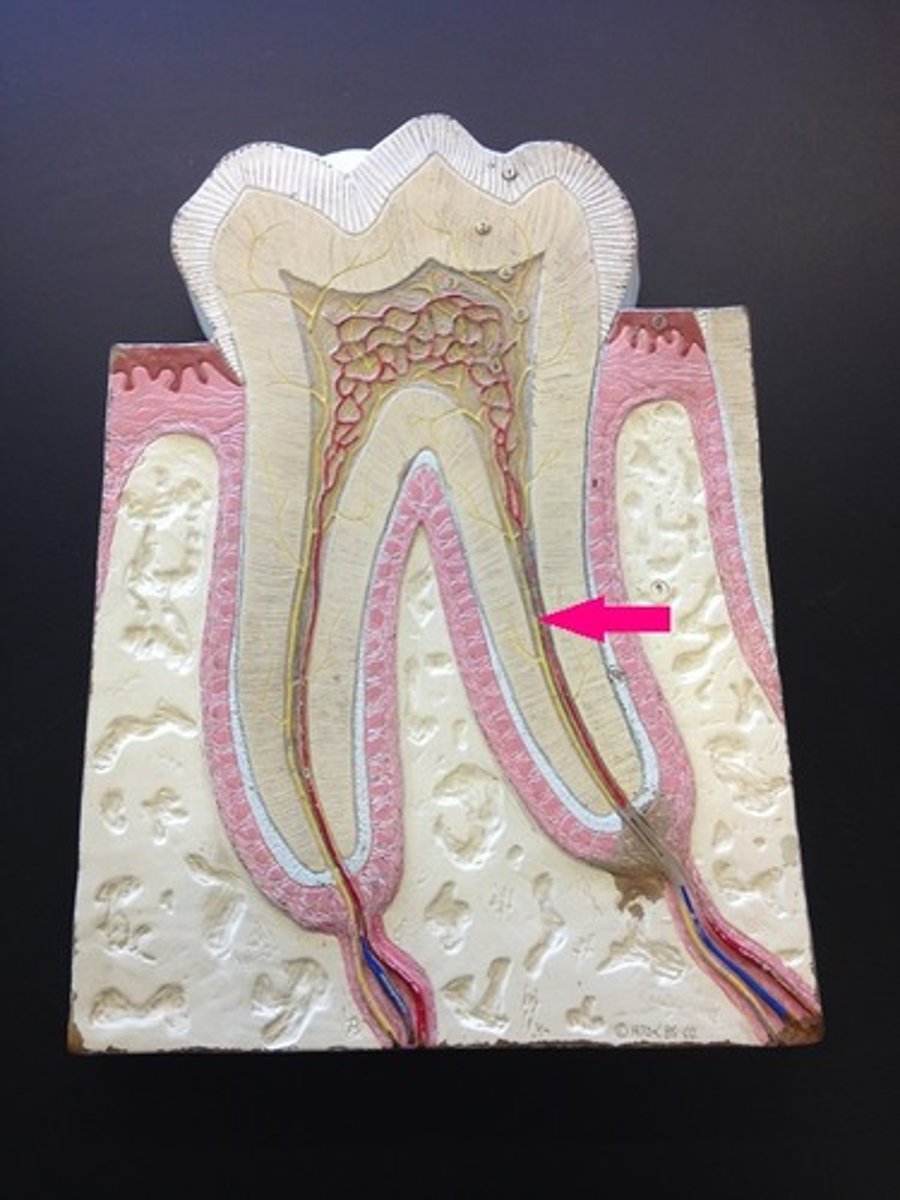
apical foramen
opening at the tip of the root, pulp passes through
vestibule
extends from the inside of the lips onto the alveolar process of both arches
Mucobuccal fold
where buccal mucosa meets alveolar mucosa
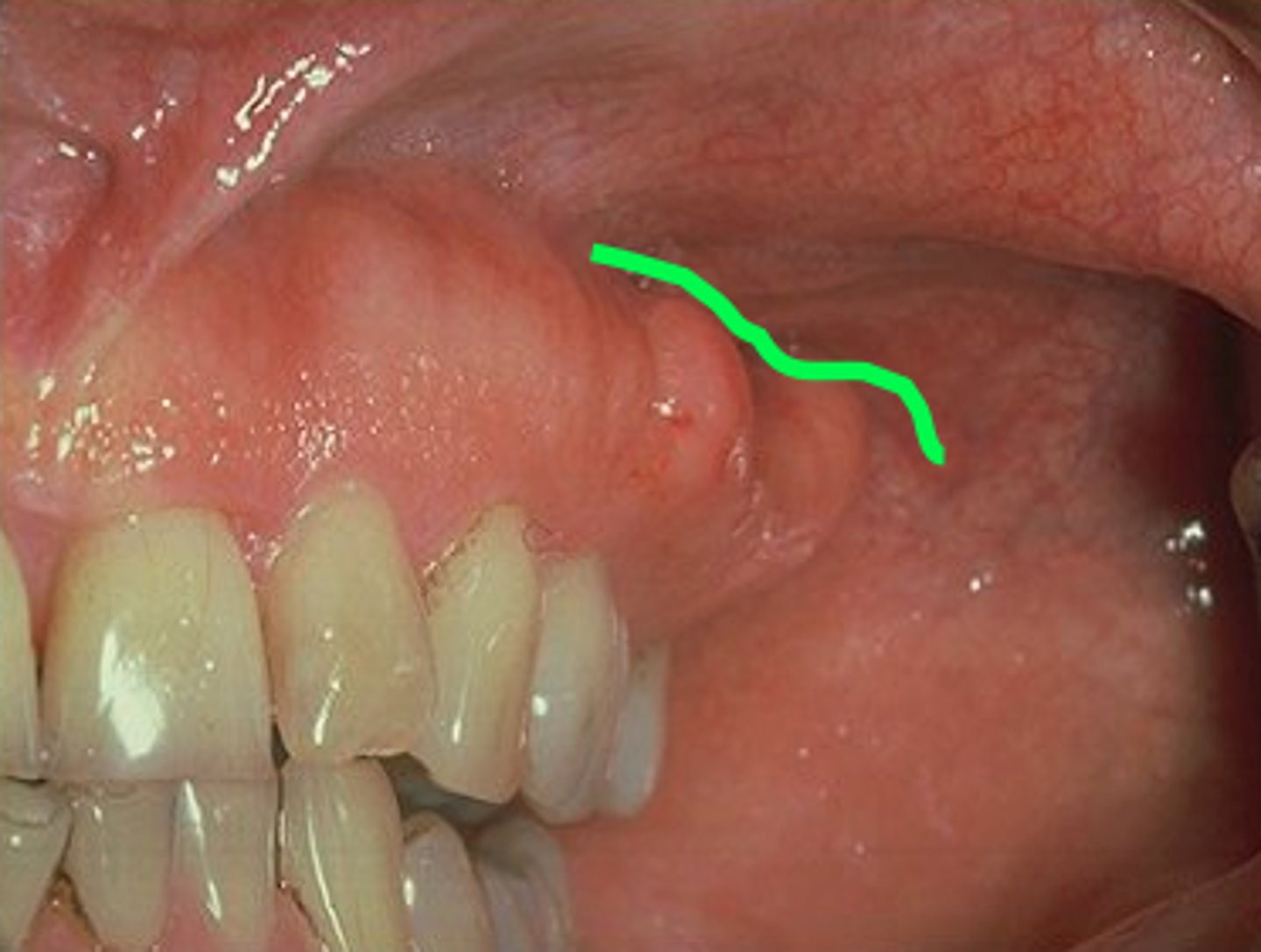
Frenum
a narrow band of tissue that cinnects two structures
vermilion
red part of the lips ; covered with a specialized stratified squamous epithelium, which is in continuity with the oral mucosa of the gingivolabial groove
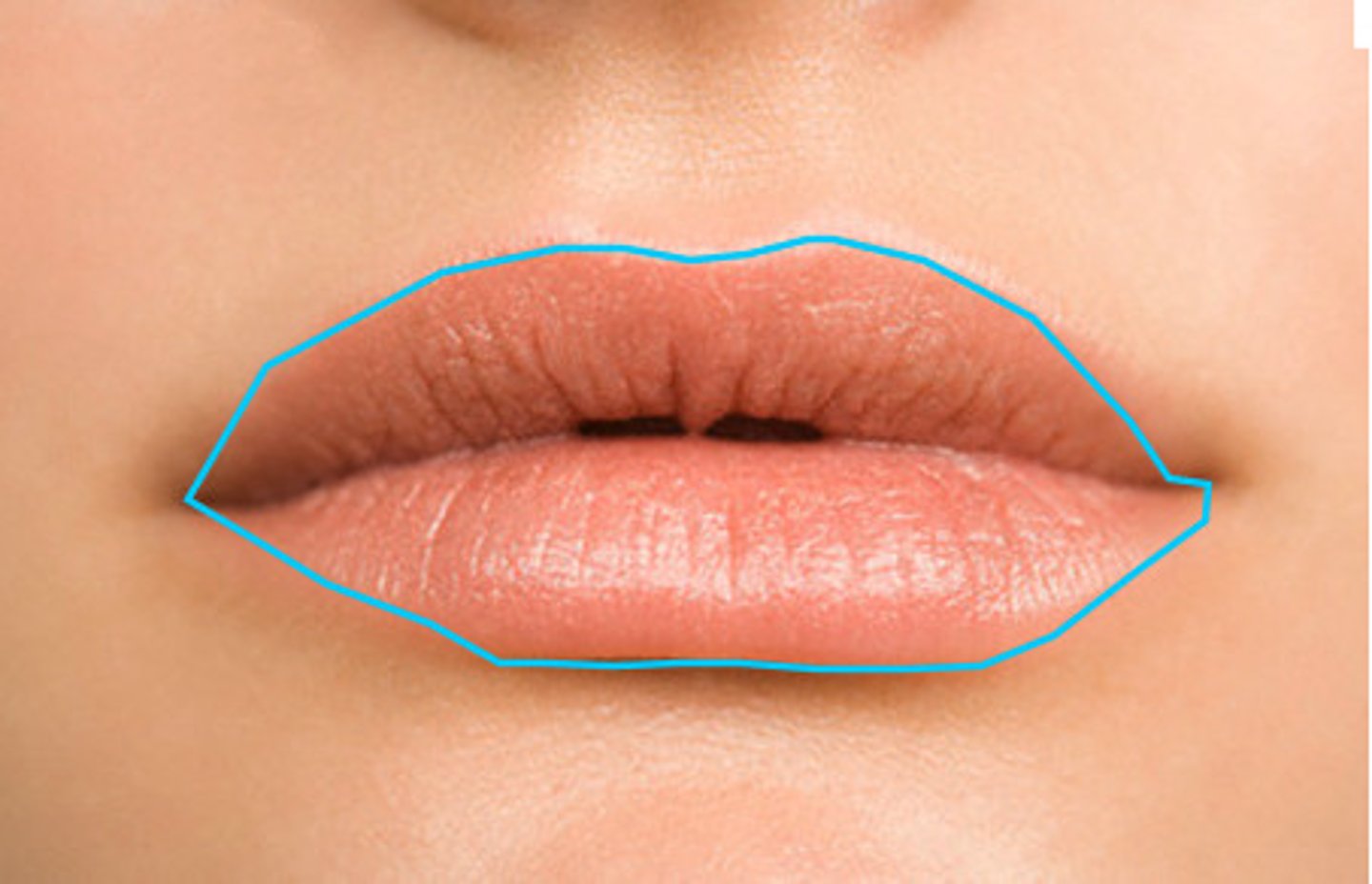
the lips
What is the vermilion also refered to?
vermilion border
the rim of paler skin that demarcates the vermilion from the surrounding skin
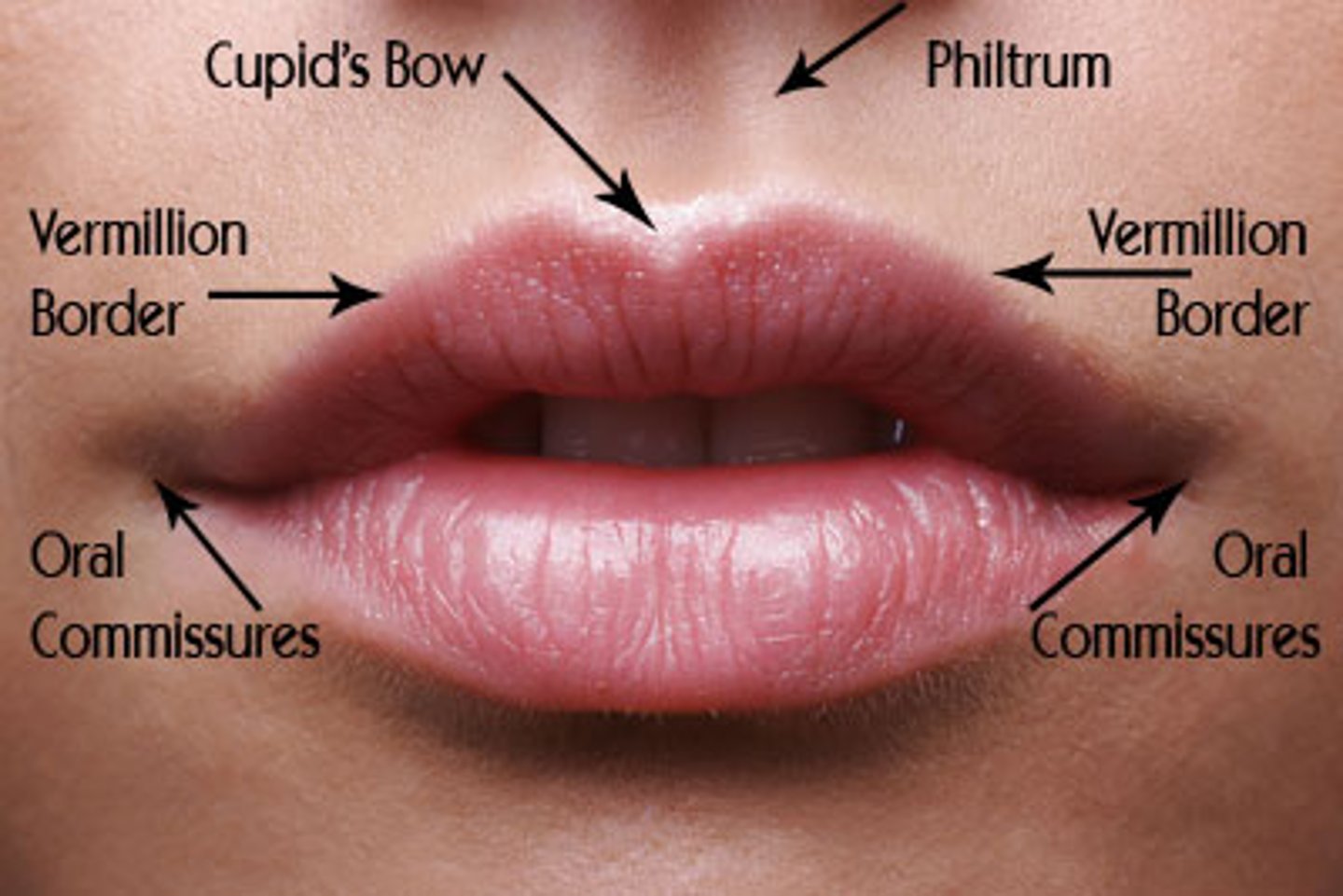
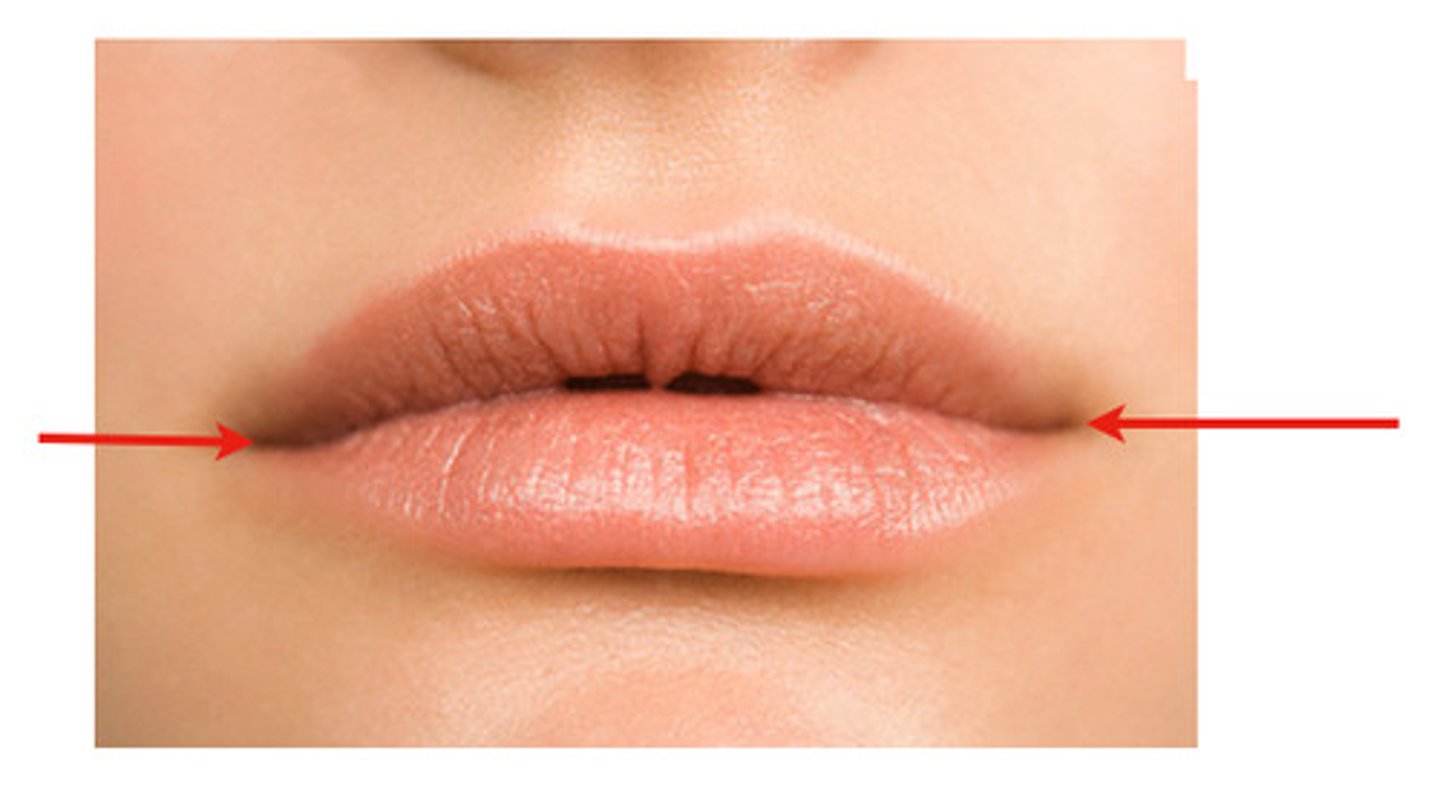
labial commissure
the place where the lateral aspects of the vermilion of the upper and lower lips join
linea alba
chronic (long-term) friction between your teeth and the lining of your cheek, also known as your buccal mucosa
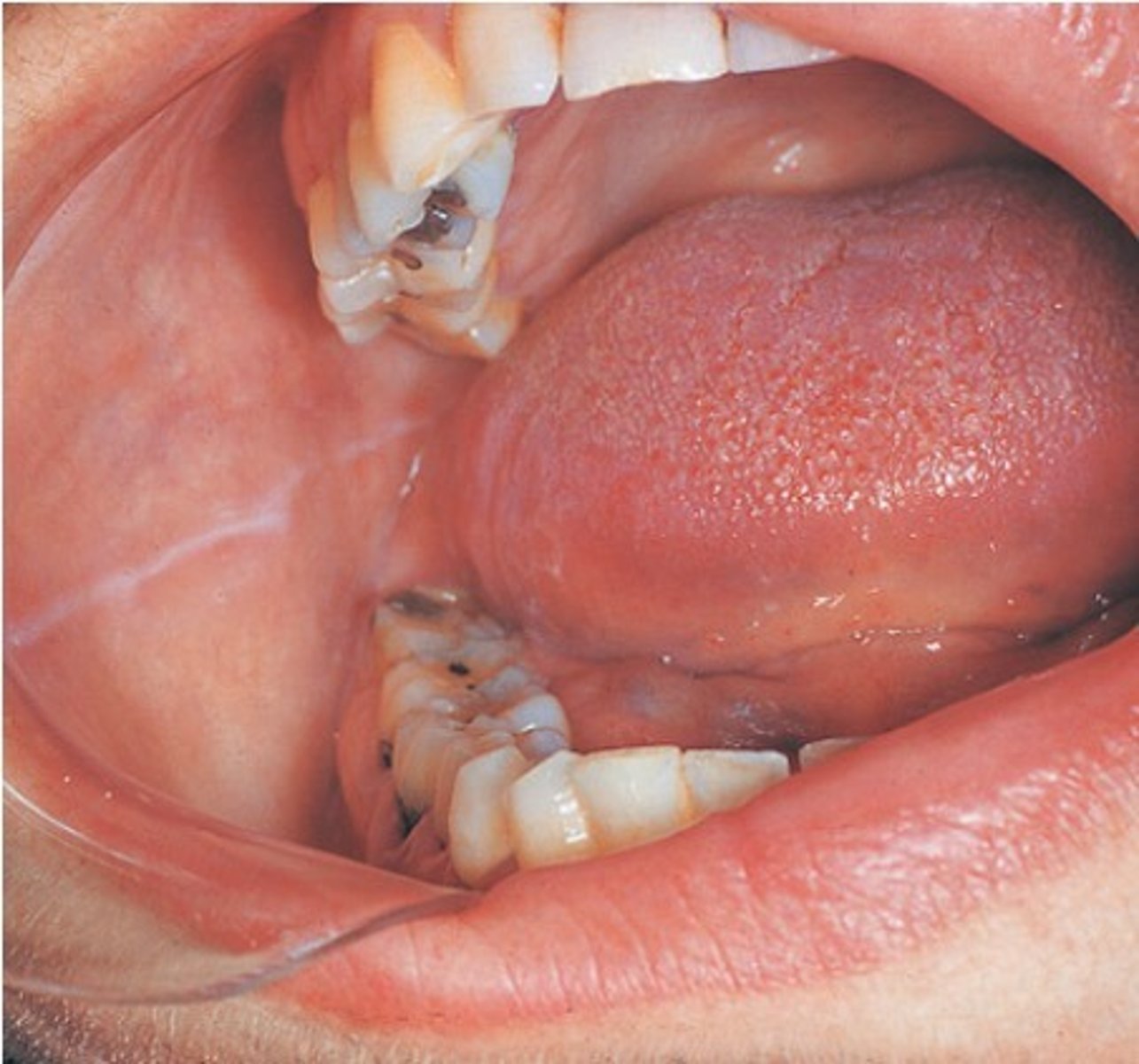
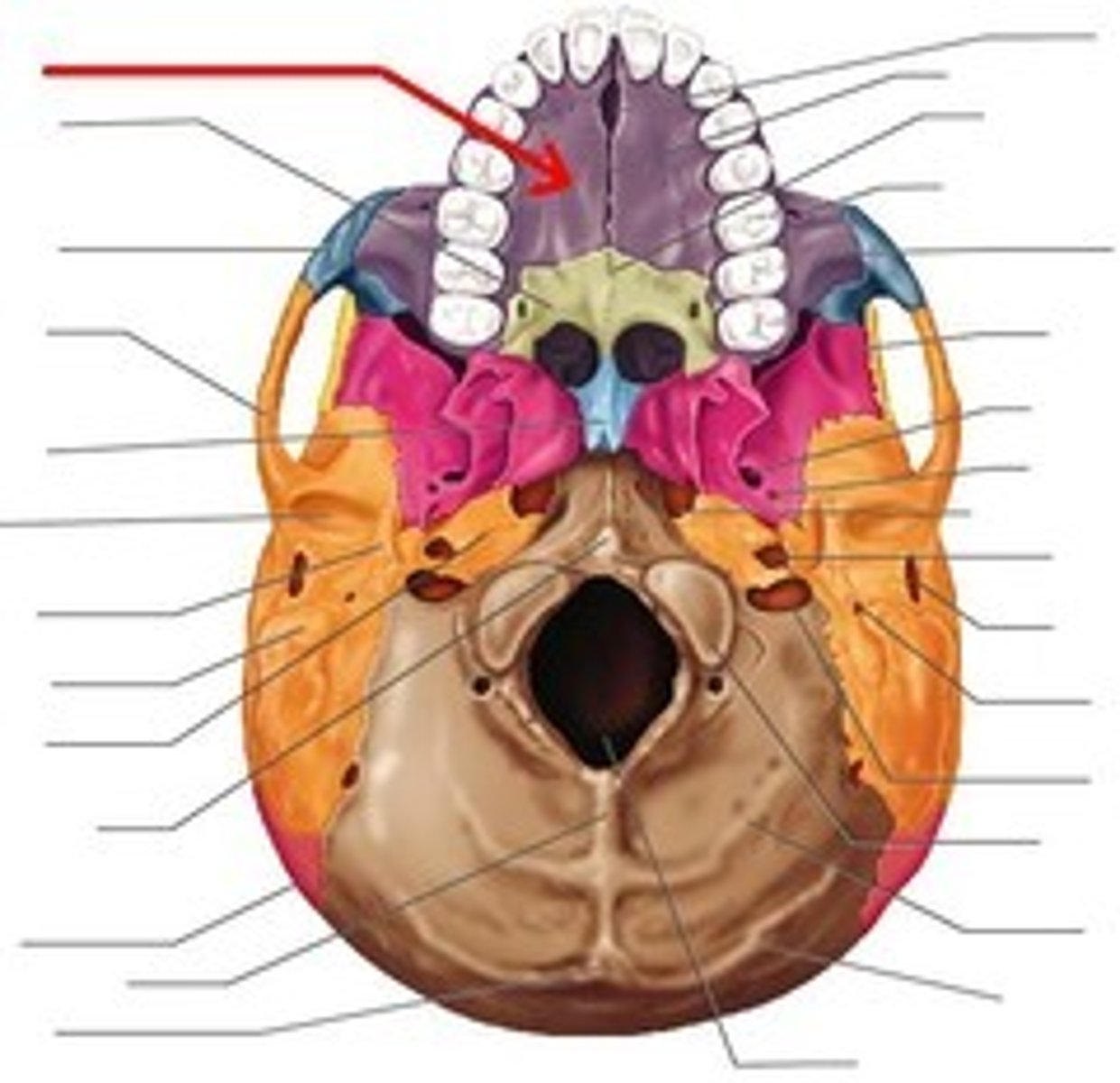
hard palate
bony part of the palate
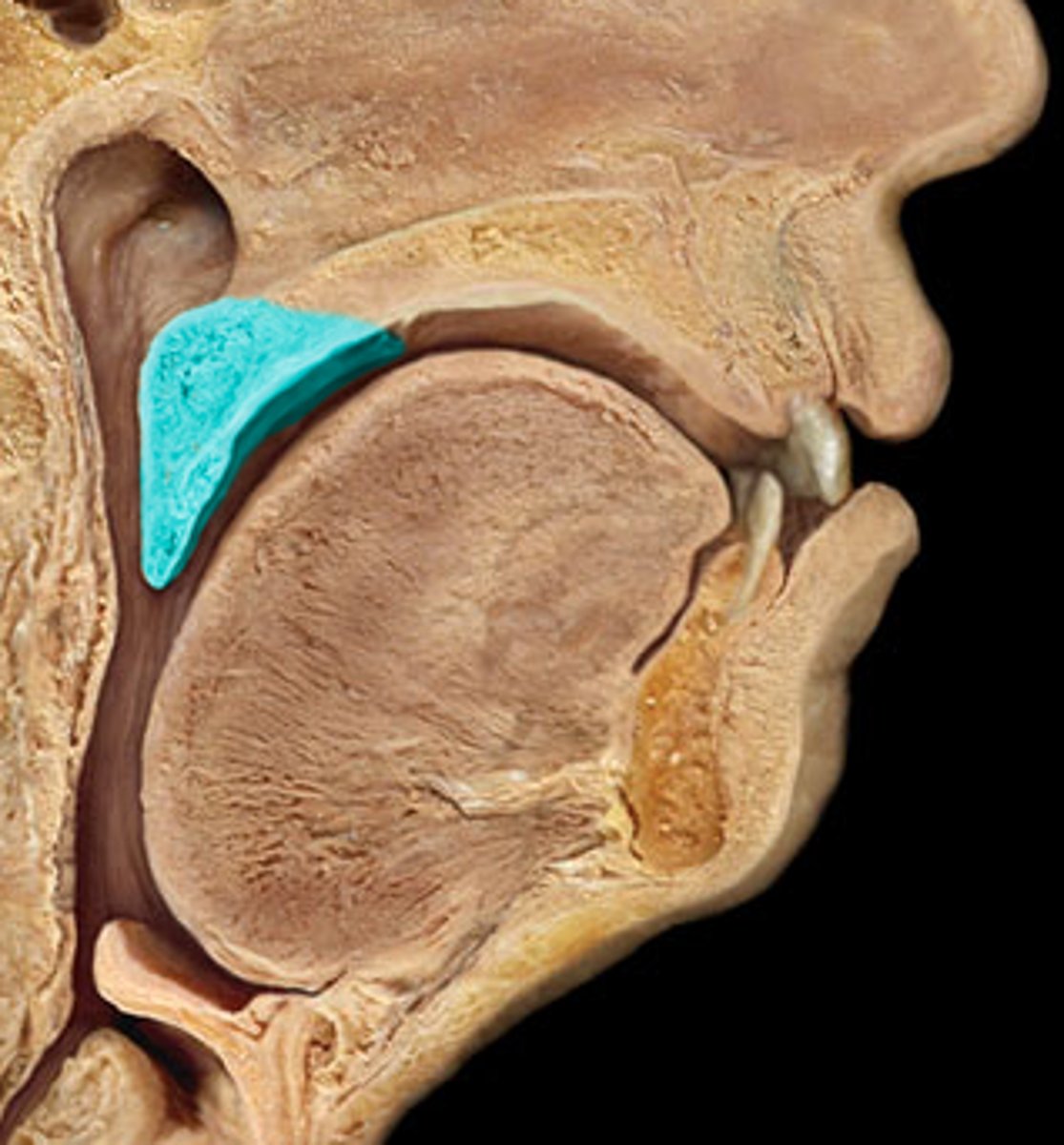
soft palate
the fleshy flexible part of the palate toward the back of the mouth
papillae
contains sensory organs for taste and touch
filiform
gray threadlike TOUCH
fungiform
red globular TASTE
circumvallate
more prominent papillae in the posterior tongue, V-shaped TASTE
filiform papillae
What type of papillae is responsible for touch?
fungiform and circumvallate
What type of papillae is responsible for taste?
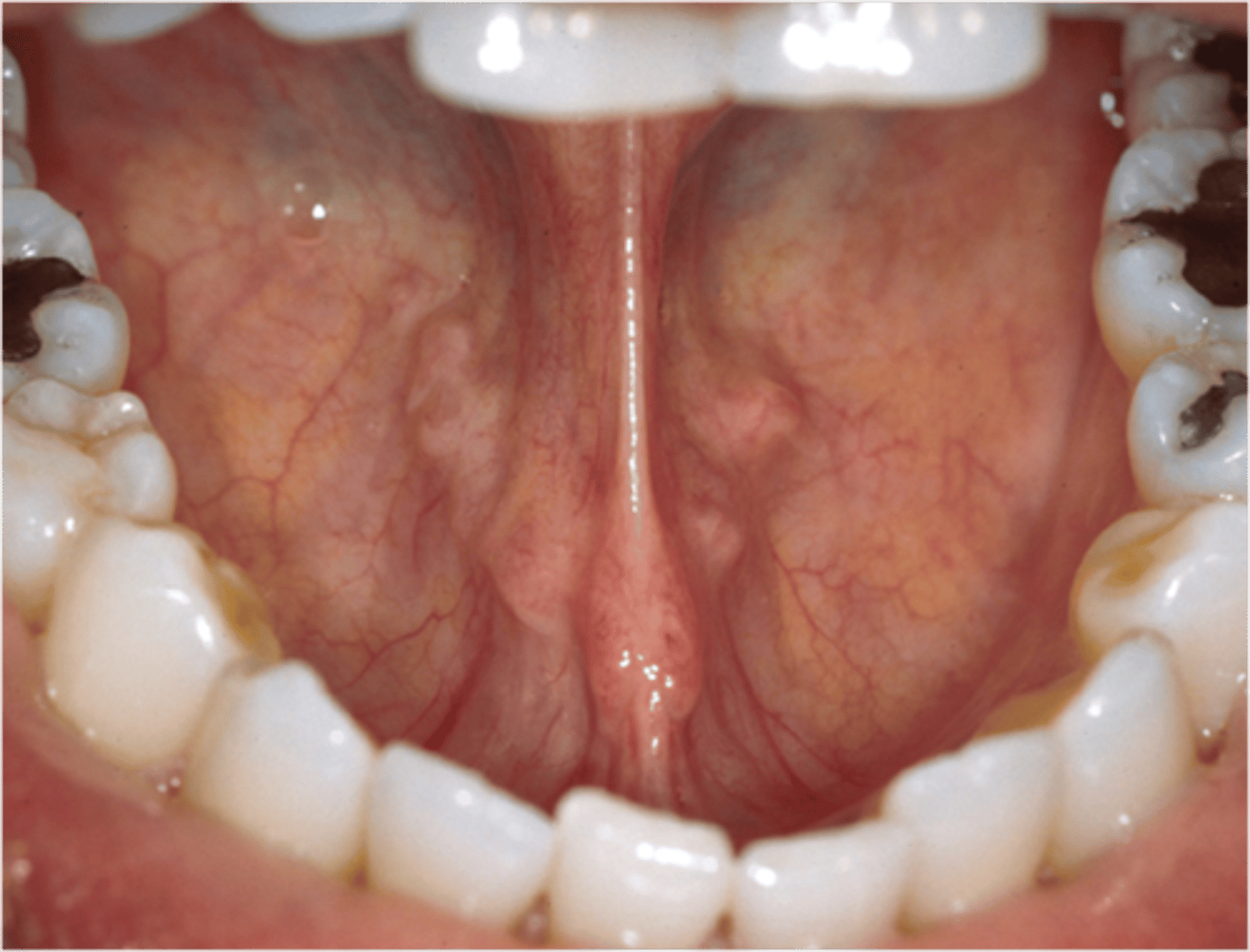
sublingual surface
Contains the: lingual, frenum, lingual veins, salivary glands
facial
front surfaces toward the face (anterior or posterior)
buccal
the facial surface of posterior teeth
labial
the facial surface of anterior teeth
lingual
The surface nearest to the tongue on a mandibular or maxillary tooth
palatal
maxillary tooth surface closest to the palate
proximal surfaces
the sides of a tooth next to the adjacent tooth
groove
developmental line separating parts of a tooth
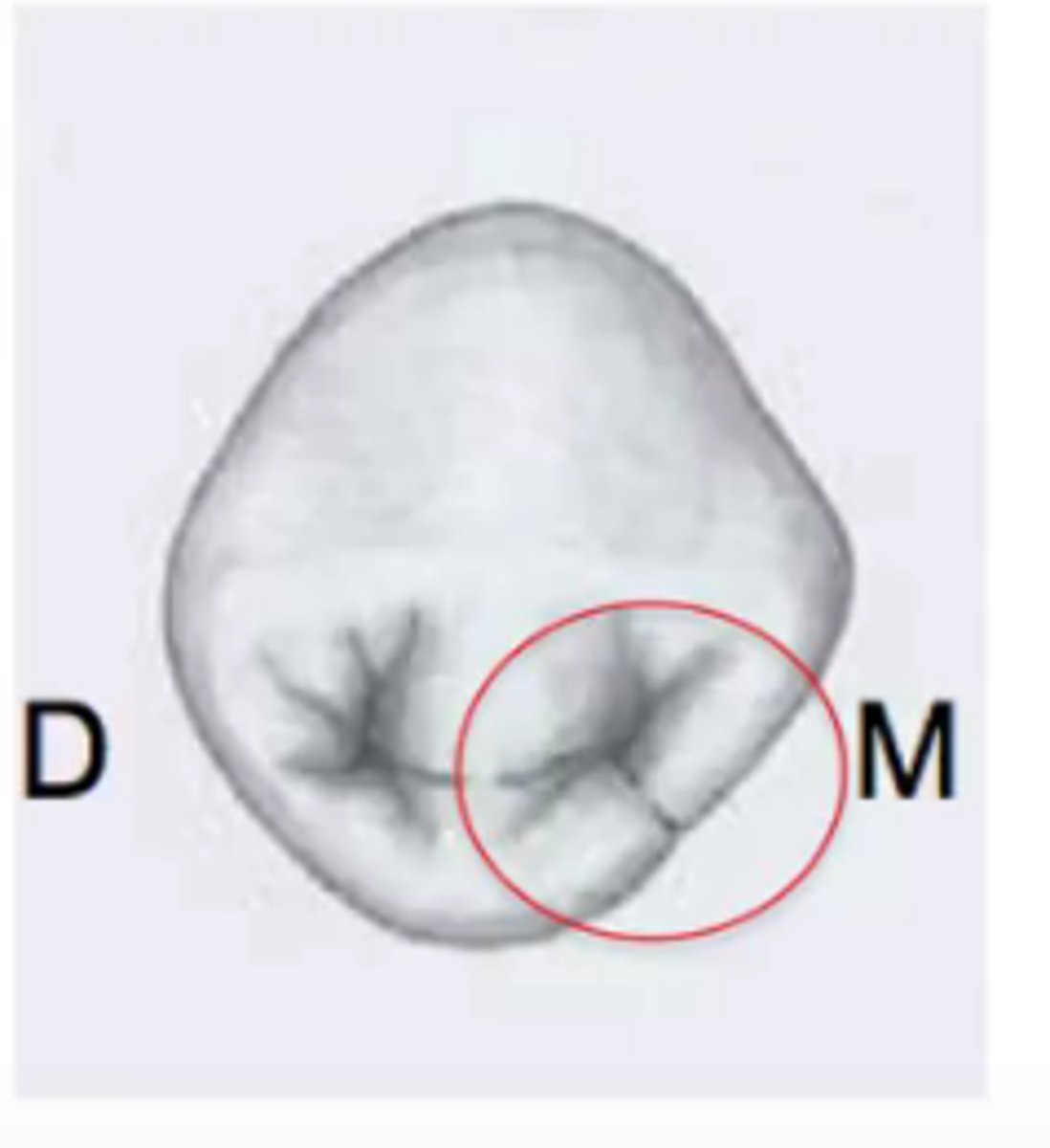
Fossa
rounded or angular depression/concavity on a tooth surface; where grooves "meet up"
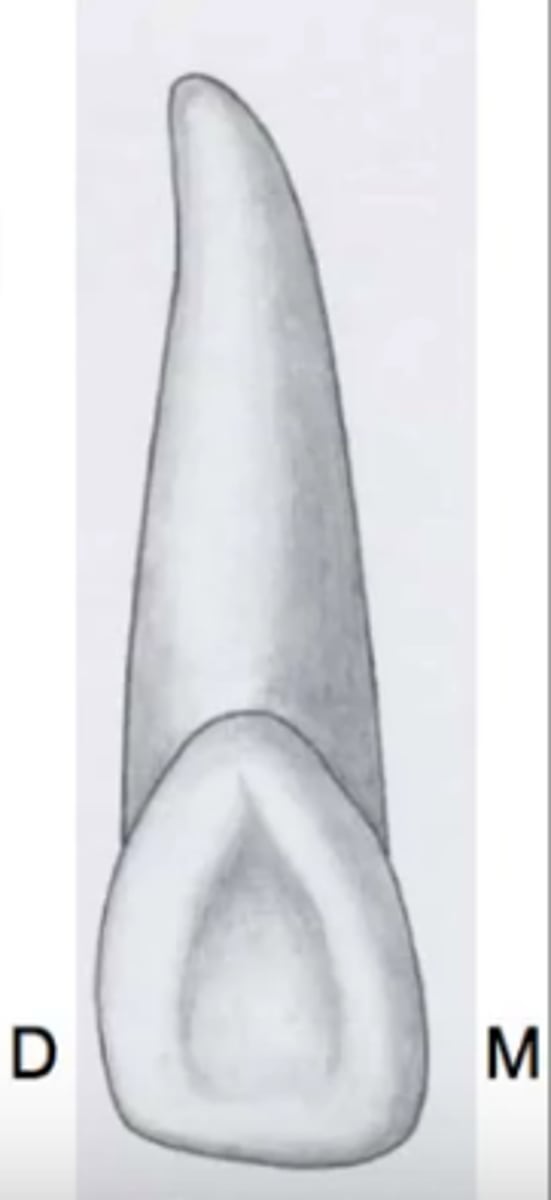
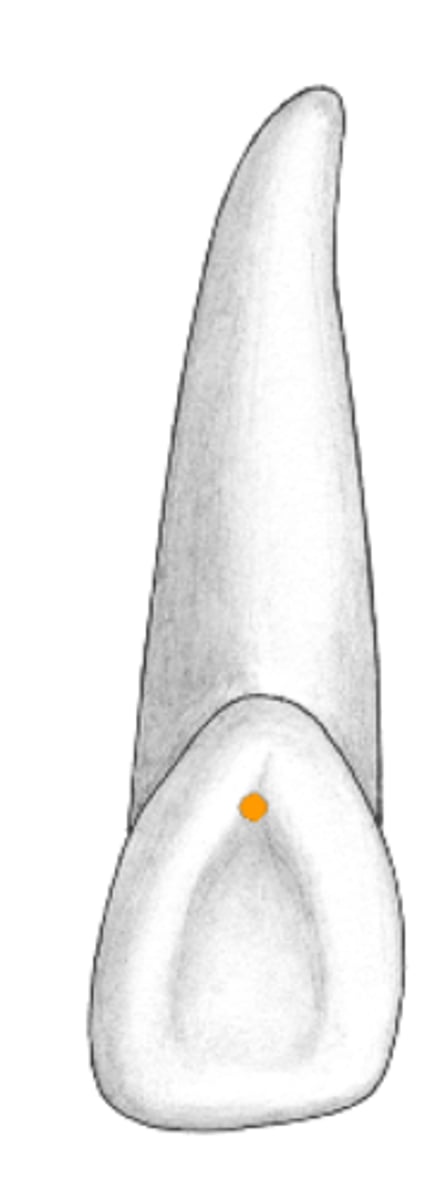
pits
small pinpoint depressions located at the junction of developmental grooves or at terminals of those grooves
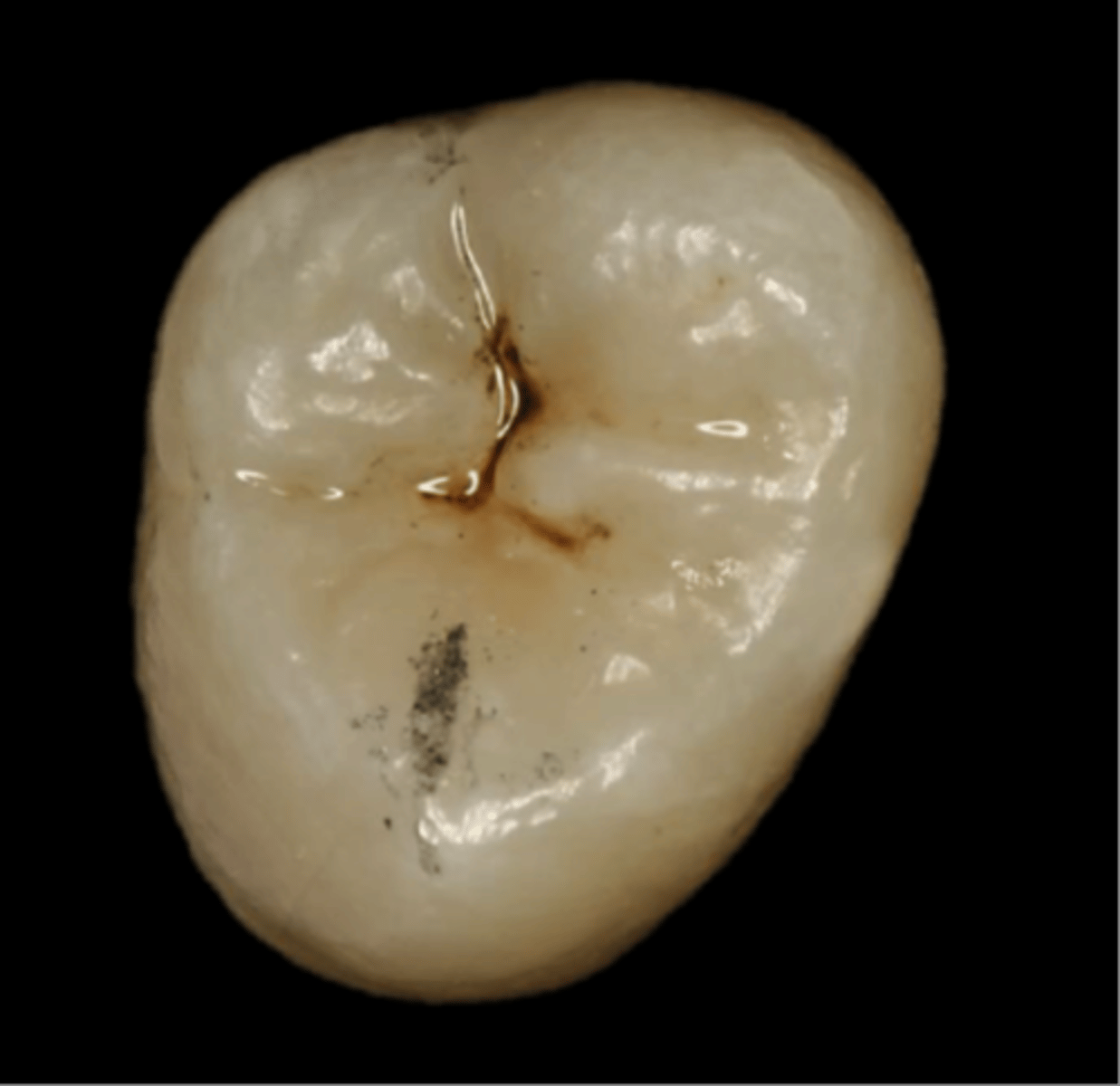
fissure
a fault occuring along a developmental groove caused by incomplete joining of the lobes
cusp
pronounced elevation on a tooth
canines, premolars, and molars
Which teeth have cusps?
ridge
linear elevation on a tooth surface
marginal ridges
located along the borders of enamel for the mesial and distal margins
transverse ridges
the union of two triangular ridges, when a buccal and a lingual triangular ridge join
oblique ridges
What type of ridge are present on maxillary molars?
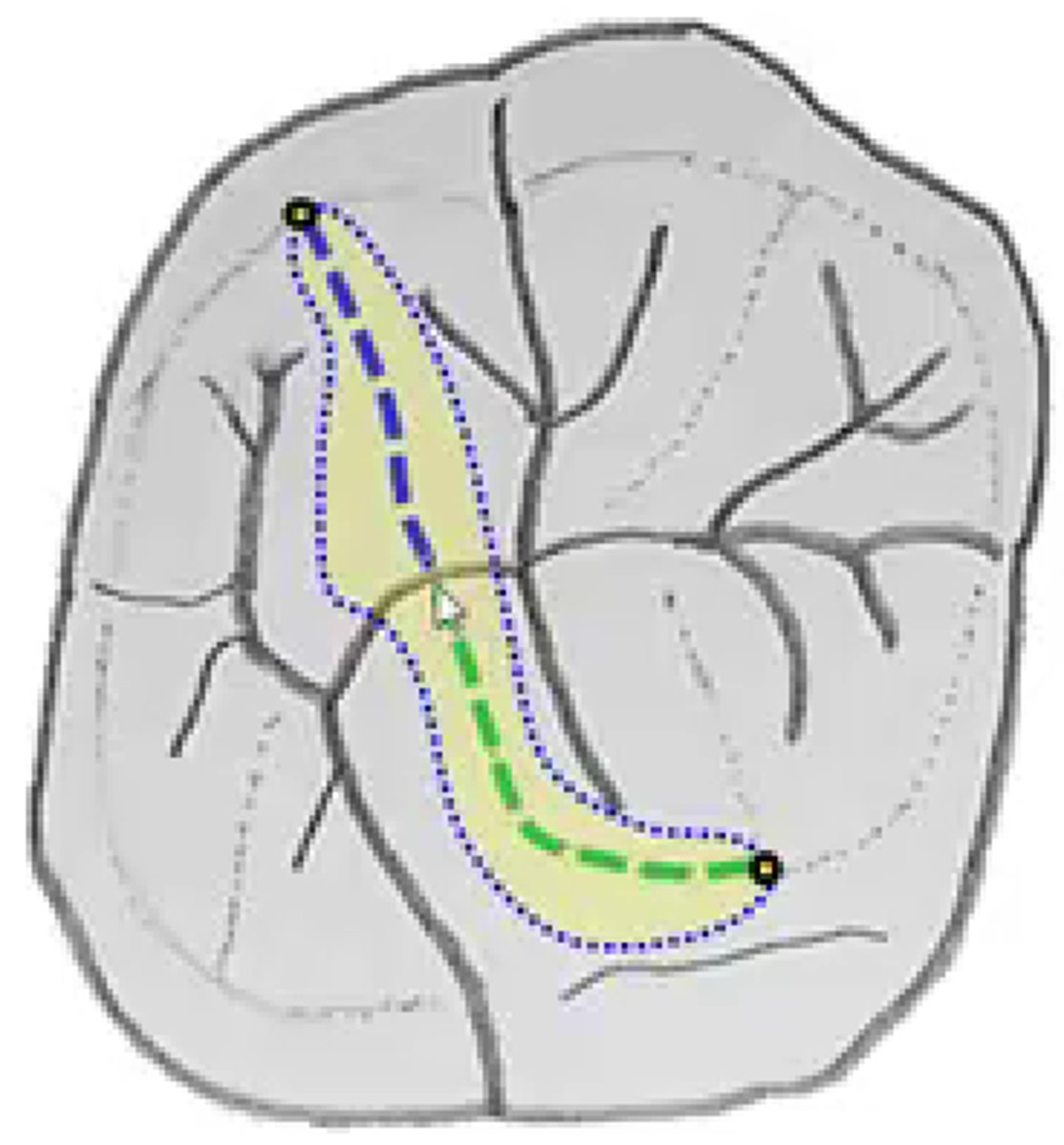
triangular ridge
located on major cusps of posterior teeth; extends from the cusp tip toward the depression (sulcus) toward the middle of the occulsal surface
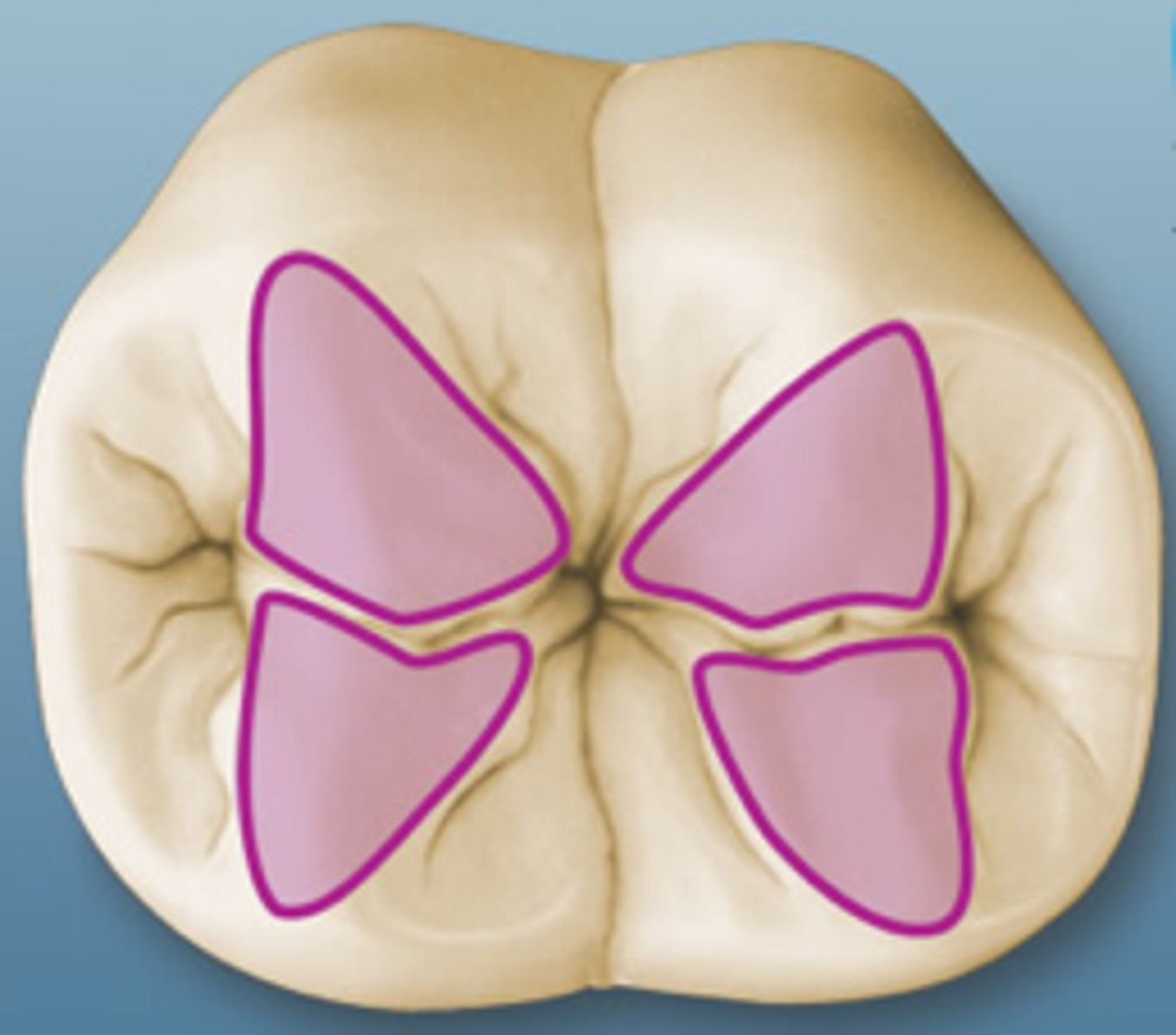
Tubercle
small elevation similar to a cusp
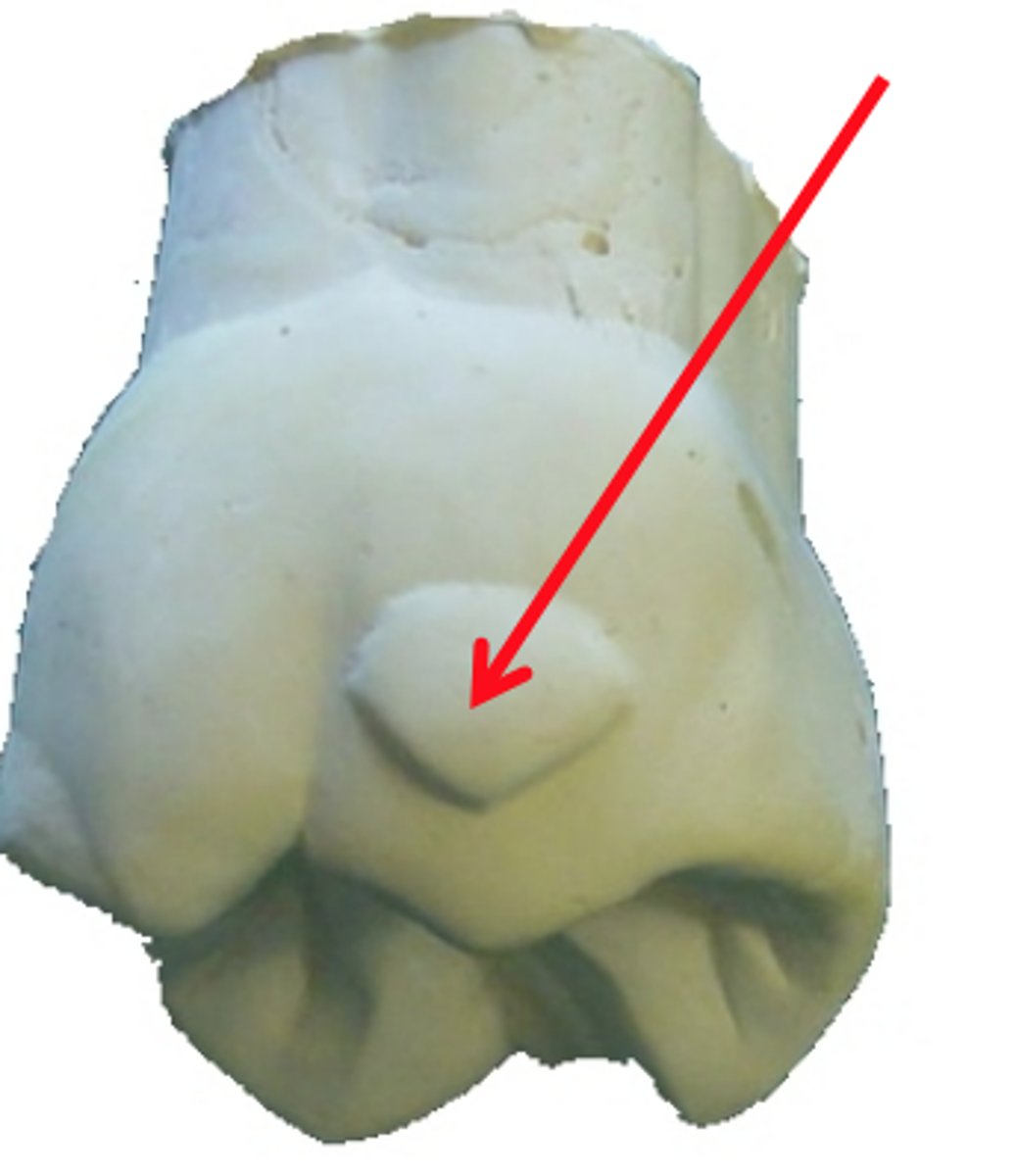
Cingulum
bulge or prominence of enamel found in the cervical third of an anterior tooth's lingual surface
height of contour
bulge or widest point, as viewed from any surface of the tooth
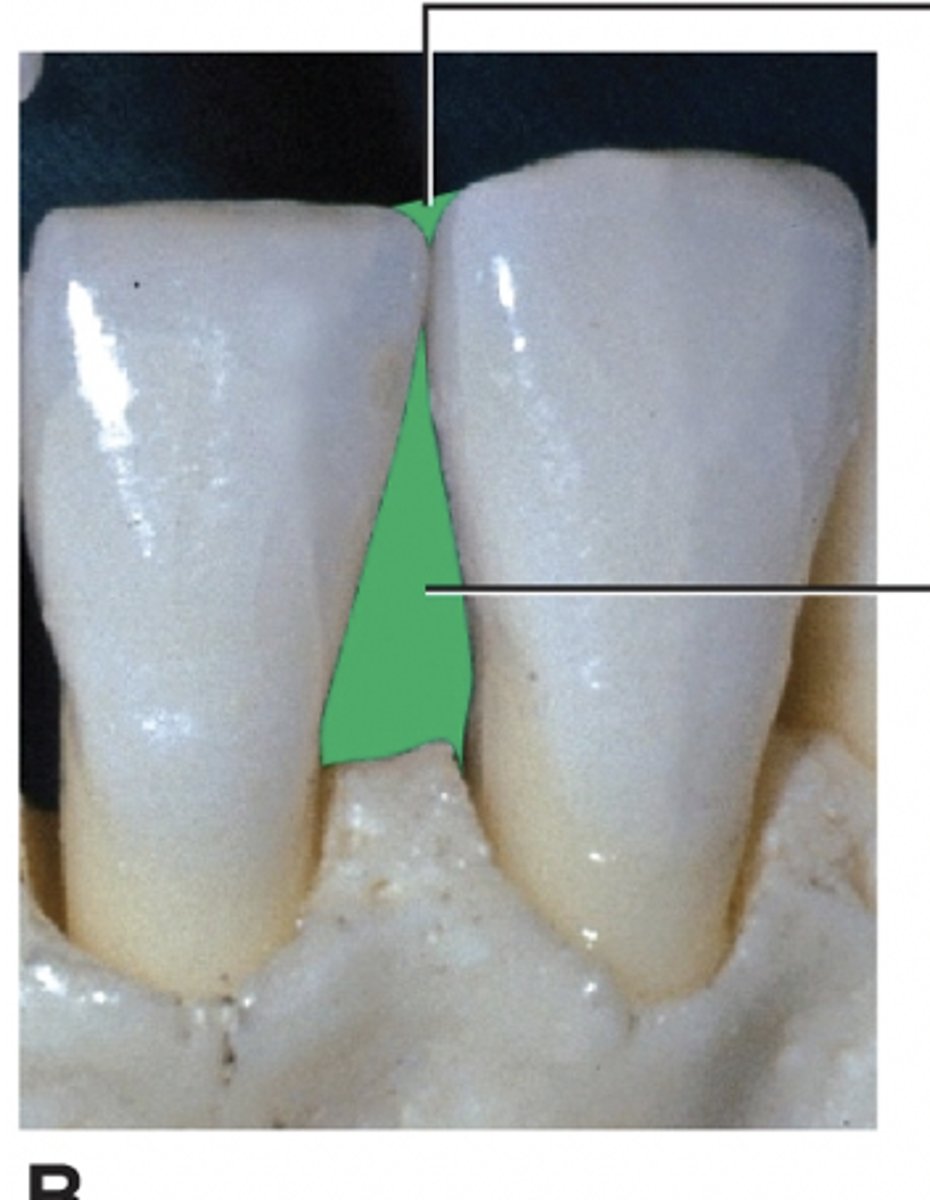
embrasure spaces
triangular spaces surrounding a contact point of two teeth, as viewd from buccal/lingual and occlusal/incisal
Line angle
formed by the junction of two surfaces
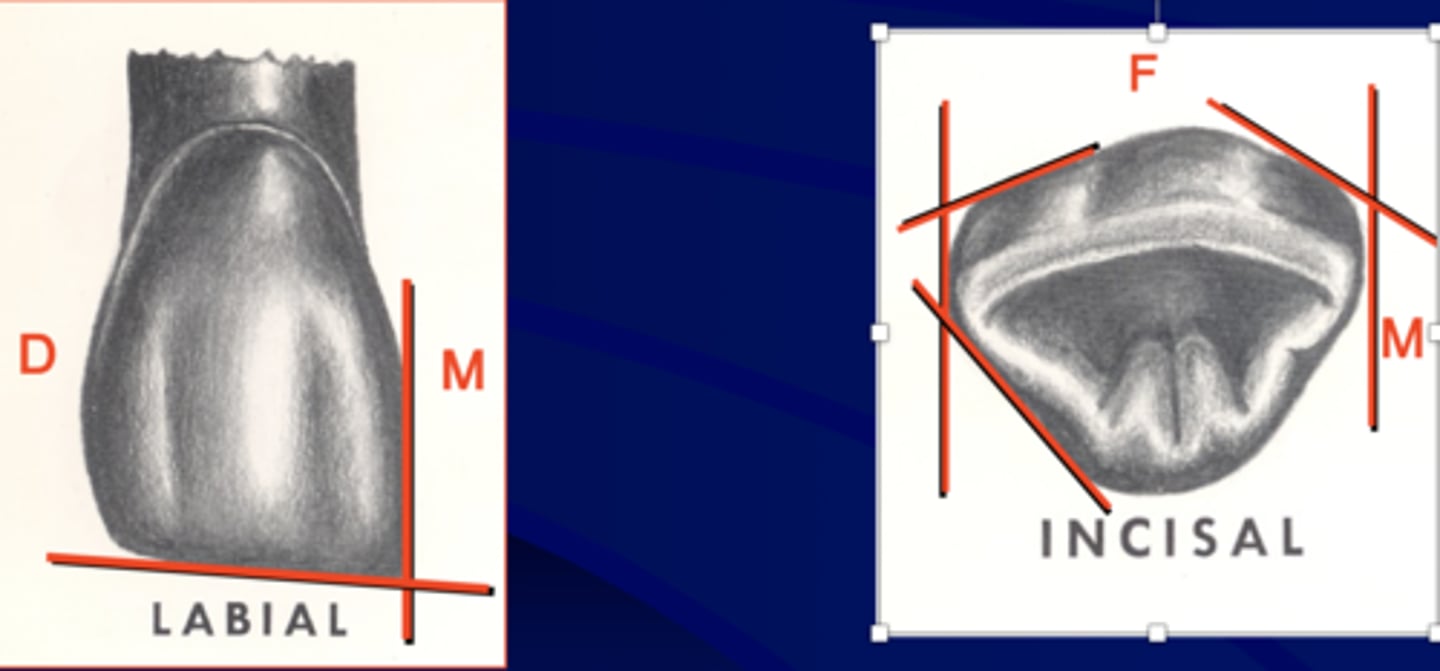
Point angle
the angle formed by the junction of three surfaces at one point
mastication: chewing esthetics: appearance phonetics: speech
list the three functions of teeth and what they mean
crown
erupts through bone and gingival tissue
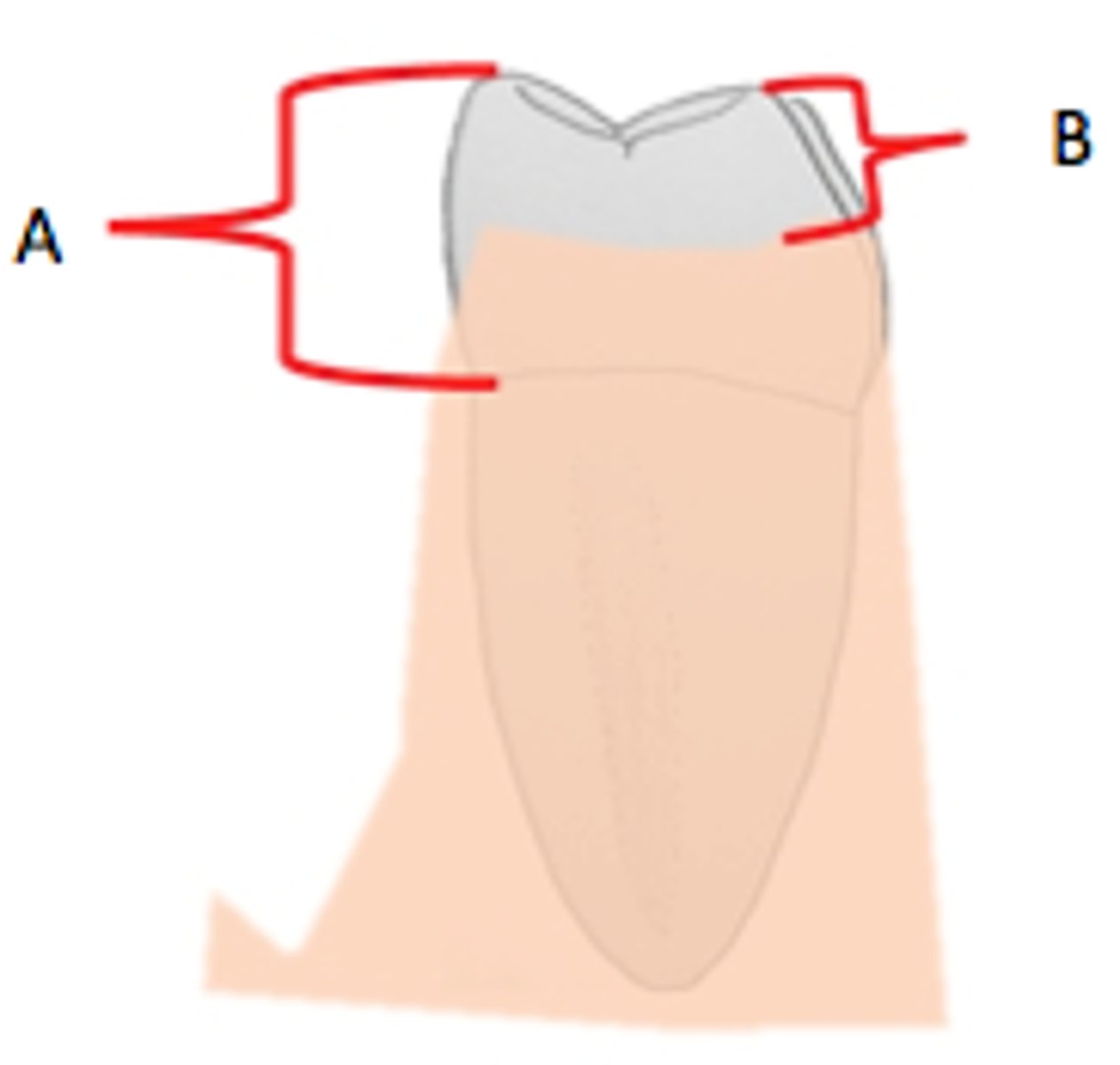
Anatomic crown
a whole crown of the tooth covered with enamel; partially covered by gingiva
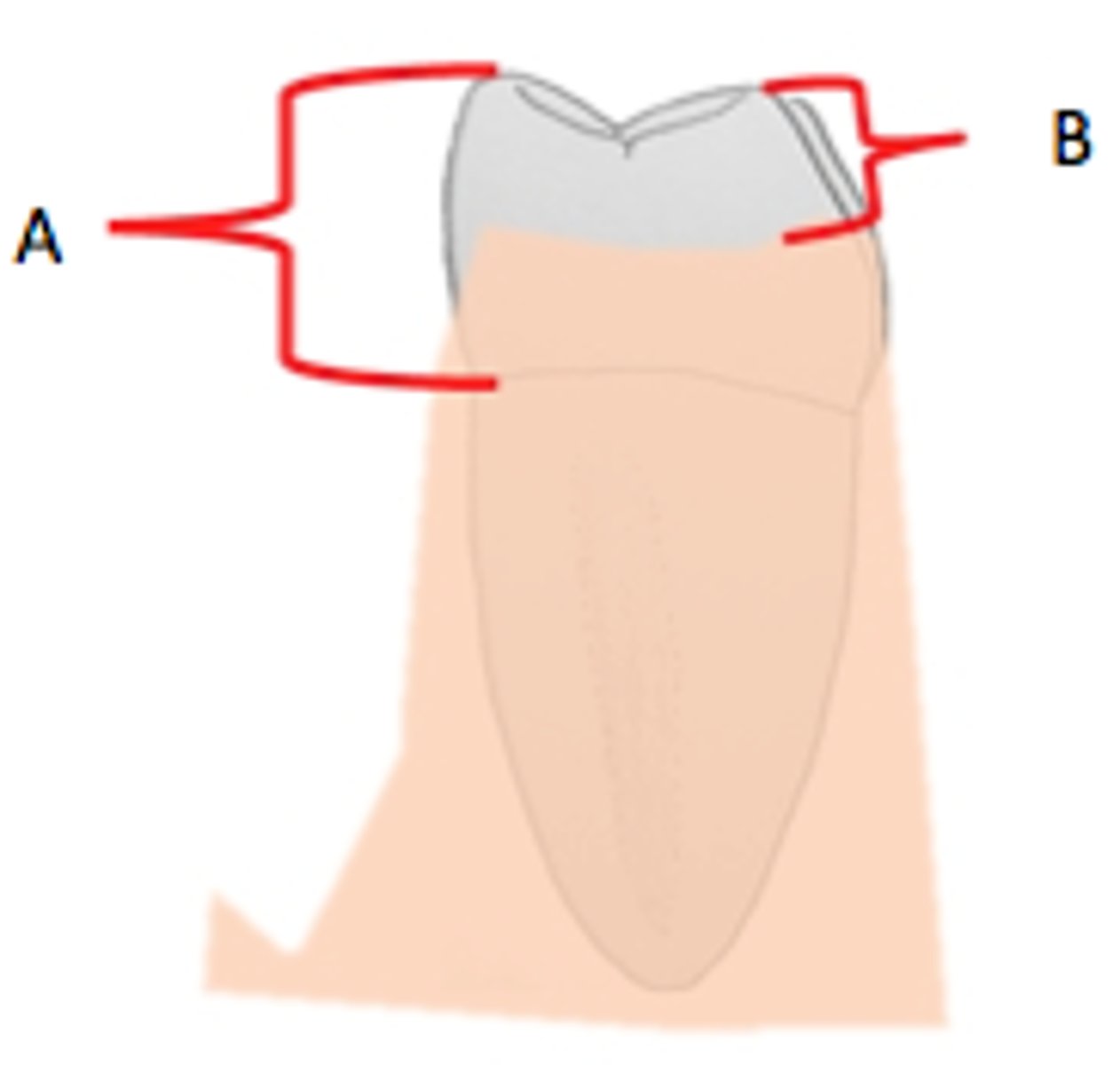
Clinical crown
the part of the crown seen above the gingiva
Furcation
area of root that splits
mandibular molars and maxillary first premolar
Which teeth are an example of a bifrucation?
maxillary molars
Which teeth are an example of a trifurcation?
enamel
hard, mineralized tissue covering the anatomic crown; very brittle
Hardest living body tissue
Special fact about enamel