L15- Potassium homeostasis
 Call Kai
 Learn
Learn Practice Test
 Spaced Repetition
 Match
Match Flashcards
 Knowt Play
1/18

There's no tags or description
Looks like no tags are added yet.
Name | Mastery | Learn | Test | Matching | Spaced | Call with Kai | Chat |
|---|
No analytics yet
Send a link to your students to track their progress
19 Terms
where is most of K in our body
In muscle 2600 mmol
Functions of K
Trancellular (difference in K inside and out)
maintian resting portential
cardiac pacemaker
neuromuscular excitability
Intracellular (high K levels inside than outside)
pH regulation
cell vol maintance
cell enzyme reactions
what is it called when have too high or too low K levles
too high → hyperkaleimia
too low → hypokaleimia
K homeostasis
absorbe by GI tract same amount of K in ECF ~70mmol
short term use this absorbed to buffer amount of K in ECF by liver, muscle, bone, RBC → traslocation
long term excess K is excreated by kidenys - excreate same anoynt of K we injest
helps keel K in ECF within narrow range
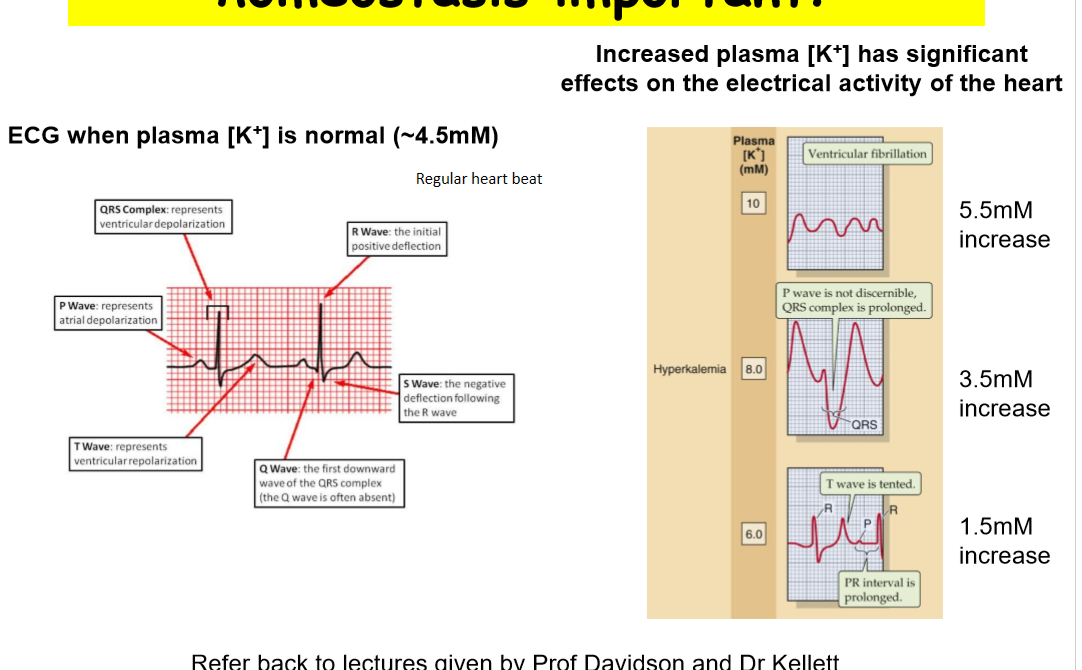
why is K regulation important
when have incraesed plasma K leads to absormal rhythm in gthe heart - heart doesnt beat correctly
lcan lead to death so need to have tightly regulated K levles
what can chnage K homeostasis
eating highly K foods like bananas eating a lot is dangerous
K loss → urine, GI tract by diareahha, burn paitenst low K conc in ECF
redictribution of K between fluid compartments → cell lysis all K in cells lost, exercise, plasma osmolarity
Intestinal K absorption
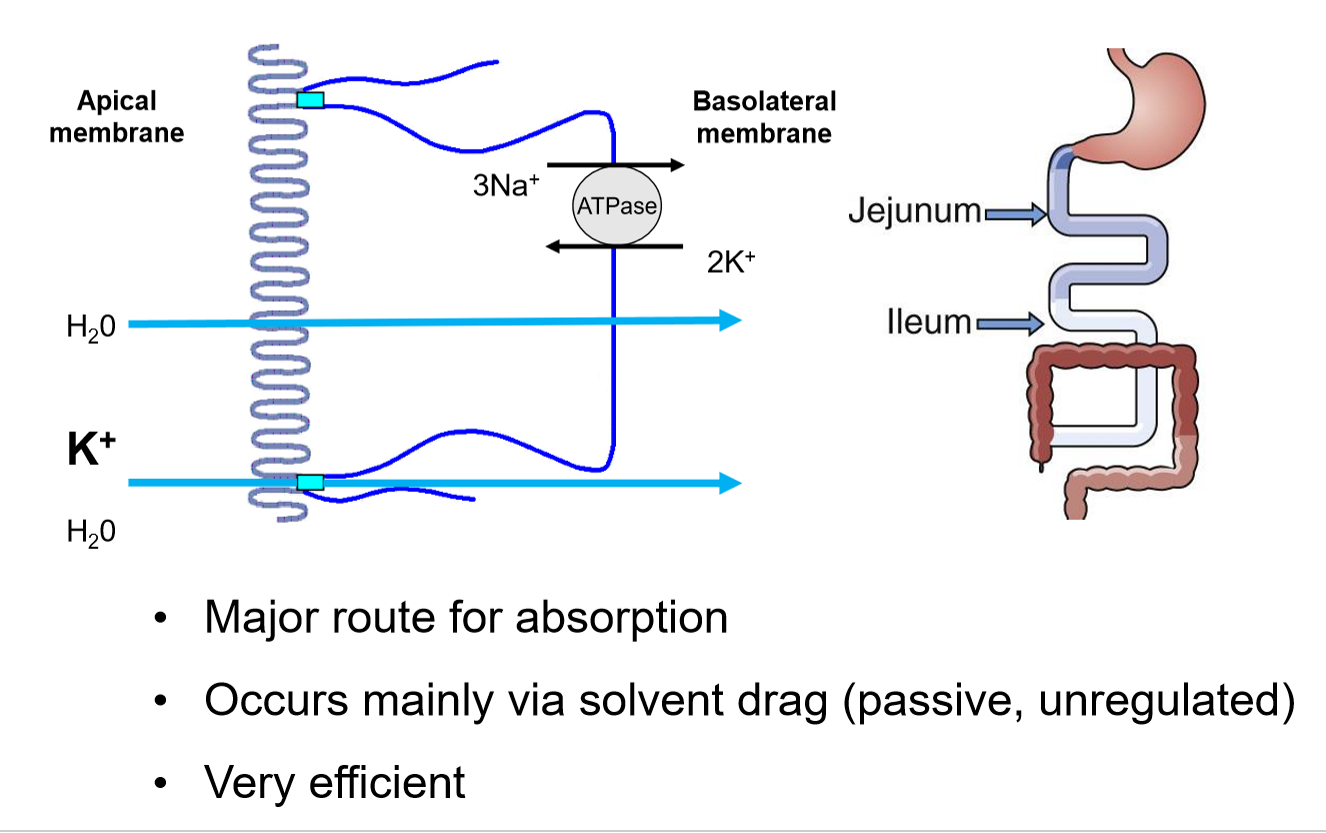
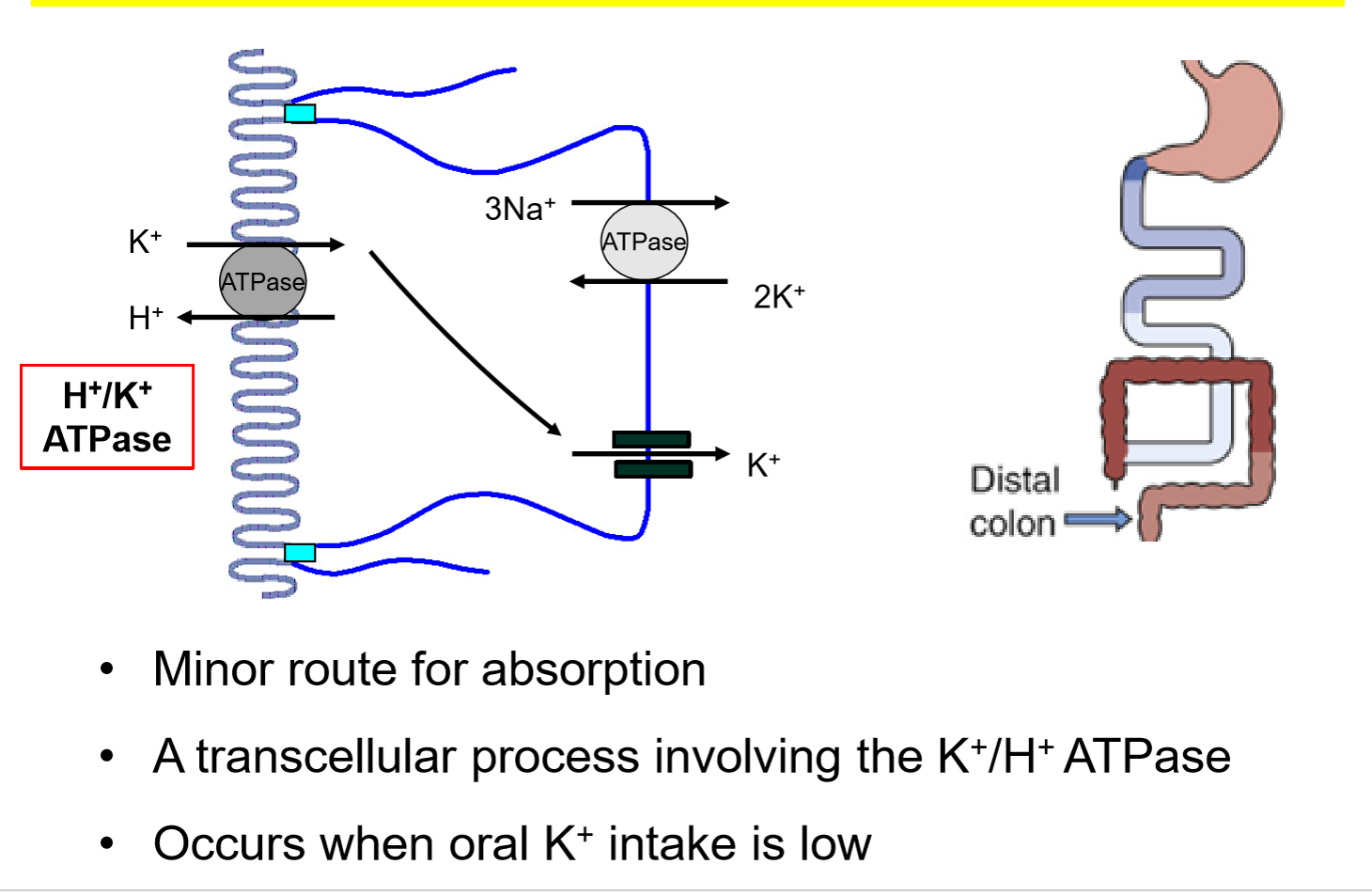
85% of ingested K absorbed
have paracellular absoption of jejonum and ileum
can also have tracellular absorption by distal colon in cases when injest low K can scavange nad loow for it here
in usuall cases kidney able to adapt to high K intake GI is not regulated under normal physiological conditions
K absorption in jejunum and ileum
K absorption in distal colon
what happens to the absorbed dietry K levles after a meal
can cause ECF K levles to double very quickly so
1- get traslocation mainly into skeltal msucle within minutes (then release K after 2-14h after meal)
2- kidney excreation - 90%
3- Gi excreation 10%
what hormones are important in traslocation
Insulin → glucose in a meal triggers B cells to secraete insulin, inslin acts on msucle cells to uptake K
Adrenaline → repeated AP cause K to be release form cell, adrenlaine helps uptake fo K by cells to maintain ECF conc
Aldrestrone → dont knwo the mechnism but its important
Tralocationa nd insluin
After a meal get increase in Insulin
Na/K ATPase higest abundance in skeletal msucle
Insulin binding to recptor on skesltal msucle calsues incraese abundance of NA/K ATPase by increasing membarne tarfficning
also causes phosphrylation of FXYD1 (normally inhibts NAk atpase) leading to increase function of NA/KATPASE
more K moves itno cell minutes after eacting
role of adrenaline in traslocation
when muscle contracting alot release K inot ECF
adrenlaine also reciced during exercise
binds to its recptor cuasing increase in cAMP and so more Na/KATPase to move to the surface so more K into the cell
so get tarslocation of K within minutes
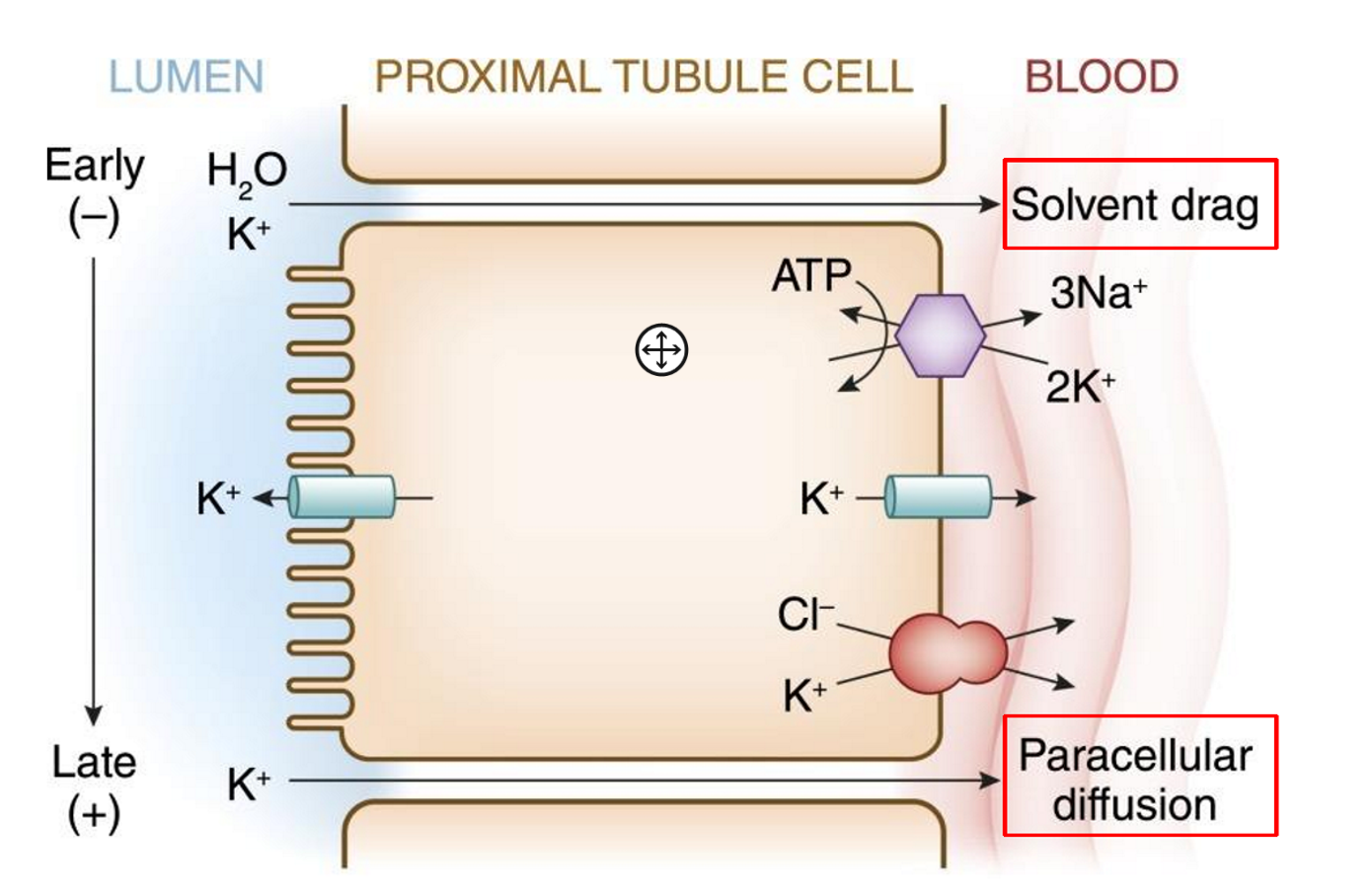
where is the K absorbed in kidey
proximal tubule (most) 70%
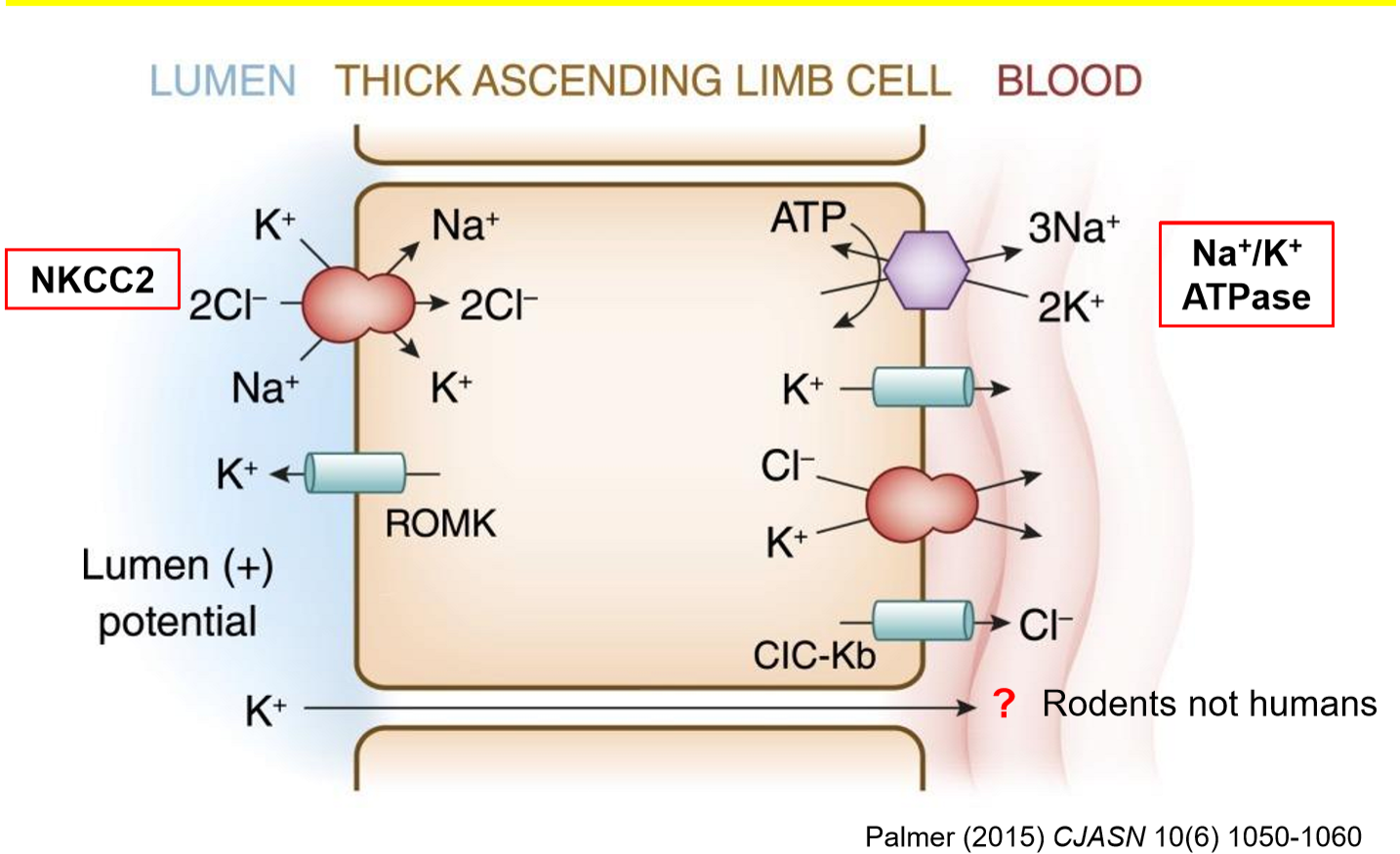
Think asending limb 25%
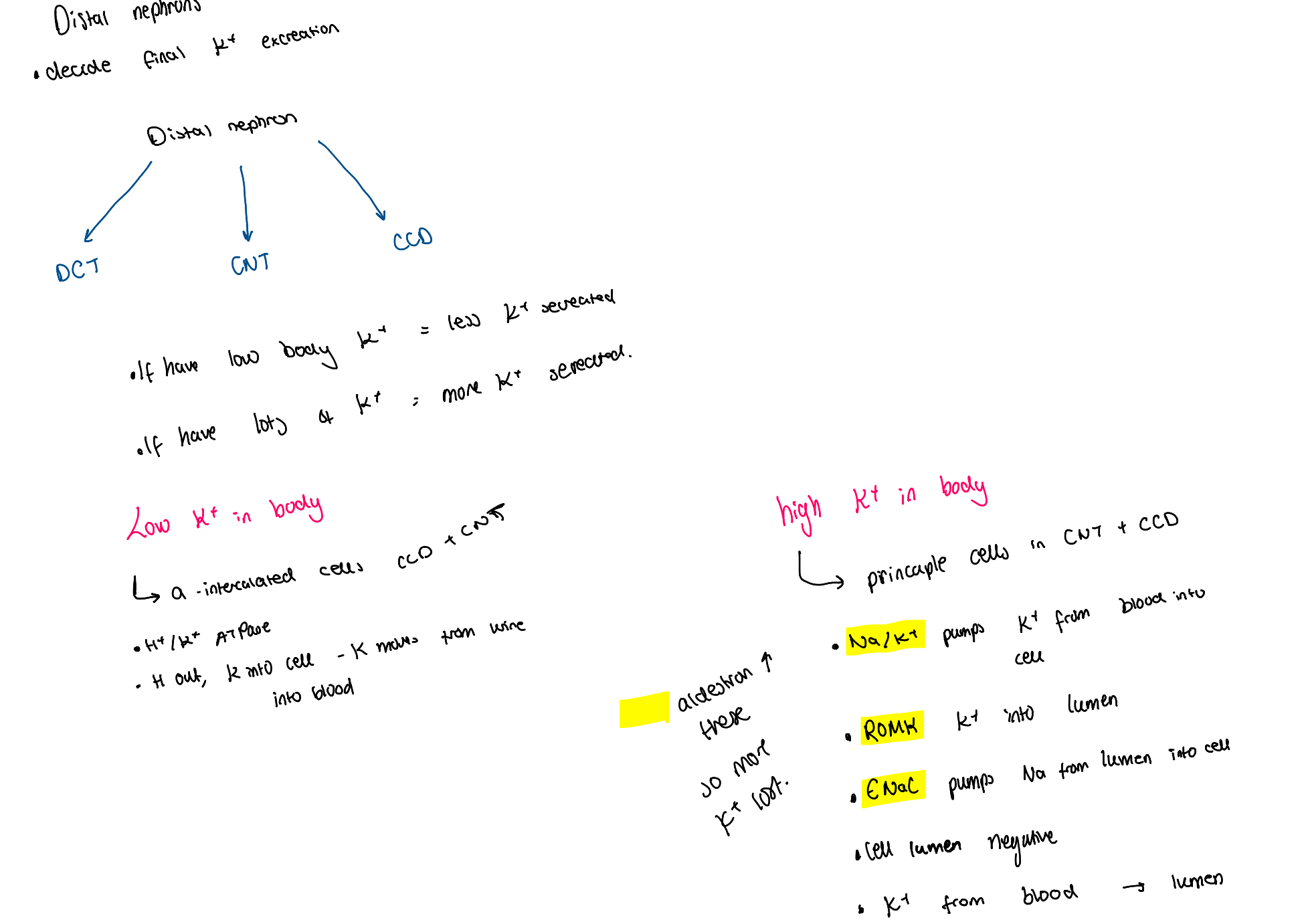
distal tubule 10% → secreations - when have too high K in blood
REabsorption in proximal tubule
reabsorption in thick assending limb
K secreation in distal tubule
what does aldestrone do
binds to minero cortico reseptor
activates SGK1
increases membarne proetins levels
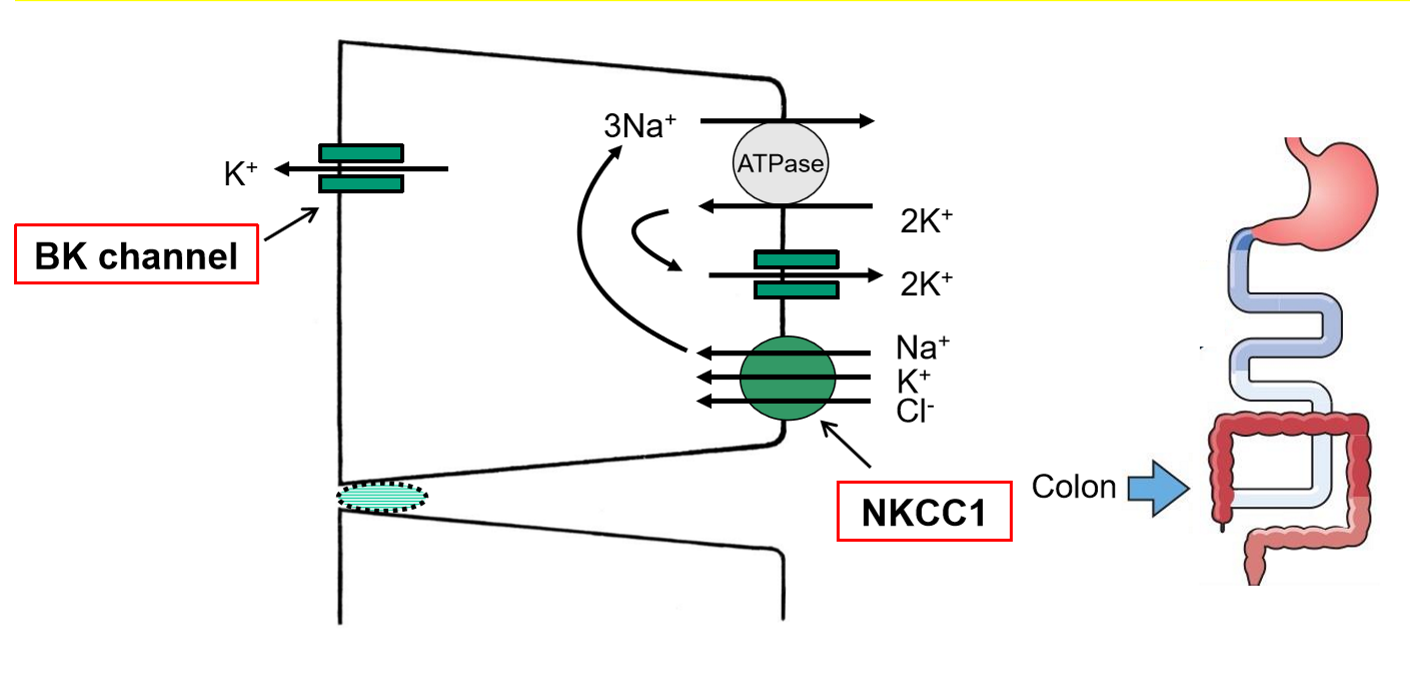
K secreation in clolon
NKCC1 brings K from blood into cell
BK channel allows K into lumen more K excreated
aldestrone enhances it but cannot incraese K secreation by alot