FIU Biochemistry Summer 2024
 Call Kai
 Learn
Learn Practice Test
 Spaced Repetition
 Match
Match Flashcards
 Knowt Play
1/29

There's no tags or description
Looks like no tags are added yet.
Name | Mastery | Learn | Test | Matching | Spaced | Call with Kai | Chat |
|---|
No analytics yet
Send a link to your students to track their progress
30 Terms
DNA can be described as:
a) one type of protein
b) a class of molecules known as macromolecules
c) a single-celled microorganism
d) a low-molecular-weight molecule
e) a metabolite
b) a class of molecules known as macromolecules
Assume a single strand of DNA contains the 10-base pair segment -AGTGGCATAG-. When the strand is paired with its antiparallel strand, how many hydrogen bonds are present in this segment?
a) 10
b) 18
c) 25
d) 20
c) 25
The partial negative charge at one end of a water molecule is attracted to the partial positive charge of another water molecule. This attraction is called:
a) covalent bond
b) hydration shell
c) hydrogen bond
d) hydrophobic bond
e) ionic bond
c) hydrogen bond
What types of atomic interactions do you find in double helix DNA?
a) covalent bonds and ionic interactions
b) hydrogen bonds and van der Waals interactions
c) the hydrophobic effects and hydrogen bonds
d) covalent bonds, ionic interactions, hydrogen bonds, van der Waals interactions, and the hydrophobic effect
d) covalent bonds, ionic interactions, hydrogen bonds, van der Waals interactions, and the hydrophobic effect
The thermodynamic quantity that expresses the degree of disorder in a system is:
a) entropy
b) internal energy
c) heat flow
d) enthalpy
e) bond energy
a) entropy
The Henderson-Hasselbach equation explains the representation between:
a) pH and pOH
b) pH and pKa
c) pH and log Ka
d) pOH and Ka
b) pH and pKa
What group of amino acid does the amino acid shown below belong to?
a) hydrophobic
b) polar
c) negatively charged
d) positively charged
b) polar
The molecular interaction called "hydrophobic effect" is best described as:
a) the inherent attractive force between nonpolar molecules
b) the tendency of nonpolar molecules to avoid interactions with water and thus aggregate
c) the result of the interaction between two charged molecules
d) caused by the induction of dipole moments in polarizable molecules
b) the tendency of nonpolar molecules to avoid interactions with water and thus aggregate
Which statement is true regarding protein quaternary structure?
a) Examples of quaternary structures include alpha-helices and beta-sheets
b) The smallest quaternary structure assembly is a tetramer
c) Formation of quaternary structures is largely driven by packing hydrophobic residues in the protein interior
d) Quaternary structures are held together by numerous noncovalent bonds
c) Formation of quaternary structures is largely driven by packing hydrophobic residues in the protein interior
Protein folding:
a) occurs by random searching
b) occurs by progressive stabilization of intermediate structural elements
c) leads to the accumulation of structural intermediates between unfolded and folded forms
d) is not a cooperative process
e) occurs on the timescale of minutes to hours
b) occurs by progressive stabilization of intermediate structural elements
Which of the following statements accurately describes the conformational structure of hemoglobin and myoglobin?
a) Both hemoglobin and myoglobin have a quaternary structure composed of four subunits
b) Myoglobin has a tertiary structure, while hemoglobin has both tertiary and quaternary structures
c) Due to the structural conformation, hemoglobin and myoglobin both primarily function as oxygen transport proteins in the blood
d) Hemoglobin's tertiary structure consists of a single polypeptide chain while myoglobin's quaternary structure consists of four polypeptide chains
e) The tertiary structure of myoglobin and hemoglobin is identical, different only in their quaternary structure
b) Myoglobin has a tertiary structure, while hemoglobin has both tertiary and quaternary structures
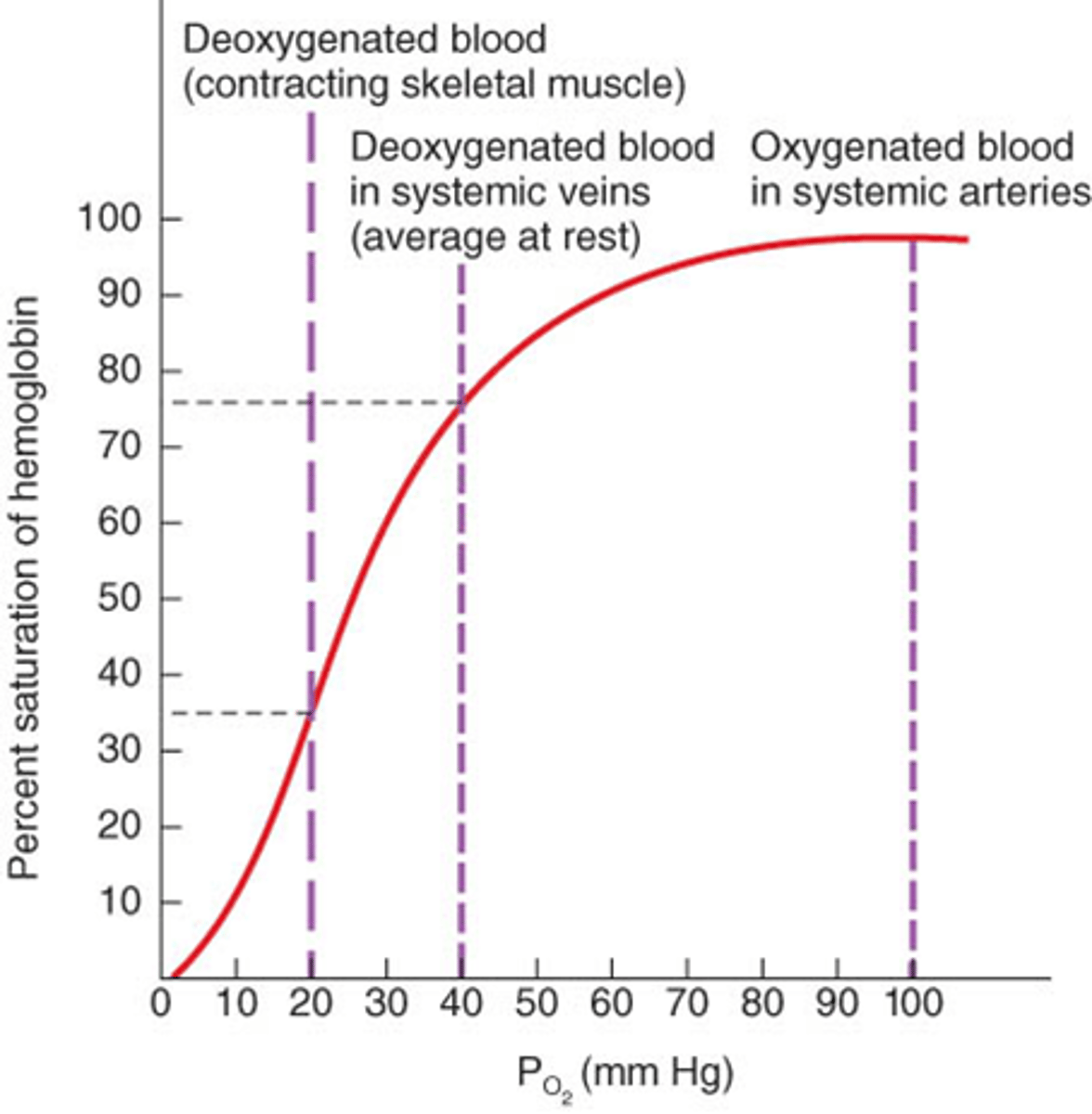
What is the partial pressure of oxygen in the tissues in actively metabolizing tissue?
a) 10 torr
b) 20 torr
c) 30 torr
d) 98 torr
e) 40 torr
b) 20 torr
When a bond is formed between oxygen and iron in heme:
a) myoglobin shifts from an extended structure to a globular structure
b) the proximal histidine of myoglobin shifts into the fifth coordination site
c) myoglobin exists in the deoxymyoglobin form
d) the iron ion moves into the plane of the porphyrin
e) a partial transfer of an electron from oxygen to the ferrous ion occurs
d) the iron ion moves into the plane of the porphyrin
The Bohr effect primarily facilitates:
a) the binding of oxygen to hemoglobin in the lungs
b) the release of oxygen from hemoglobin in the tissues
c) the binding of carbon dioxide to hemoglobin in the tissues
d) the release of carbon dioxide from hemoglobin in the lungs
b) the release of oxygen from hemoglobin in the tissues
What is the relationship between the affinity of fetal hemoglobin (HbF) for oxygen and CRISPR-based treatments for sickle cell diseases?
a) Fetal hemoglobin has a higher affinity for oxygen compared to adult hemoglobin
b) Increased levels of fetal hemoglobin can improve oxygen delivery to tissues in patients with sickle cell disease
c) CRISPR can be used to increase the production of fetal hemoglobin in patients with sickle cell disease
d) The higher affinity of fetal hemoglobin for oxygen contributes to its therapeutic potential in treating sickle cell disease
e) All the affirmative answers are correct
e) All the affirmatives are correct
How many polypeptide chains make up the IgG antibody molecule?
a) one light chain and two heavy chains
b) two light chains and one heavy chain
c) two light chains and two heavy chains
d) four light chains and four heavy chains
e) none are correct
c) two light chains and two heavy chains
Which type of microscopy is commonly used for imaging with fluorescently labeled antibodies?
a) electron microscopy
b) light microscopy
c) phase-contact microscopy
d) confocal microscopy
d) confocal microscopy
Which statement is true?
a) Each phosphodiester bridge in a nucleic acid backbone has a positive charge
b) Nucleosides consist of a base bonded to a sugar
c) The bases in DNA are adenine (A), thymine (T), guanine (G), and uracil (U)
d) Nucleic acids are written in the 3'-5' direction
e) RNA contains the sugar deoxyribose, whereas DNA contains ribose
b) Nucleosides consist of a base bonded to a sugar
If a segment of DNA has the sequence 5'-ATCGGCTAAGC-3', what is the complementary sequence (written in the 3'-5' direction)?
a) GATTCGGCTTA
b) GCTTAGATTCG
c) GCTTAGCCGAT
d) TAGCCGATTCG
d) TAGCCGATTCG
DNA replication:
a) is called conservative because each new helix retains both of the parental strands
b) only occurs when the temperature is increased above the Tm
c) requires hydrogen bonds to be disrupted
d) is accompanied by a decrease in absorption of 260nm light
e) results in second-generation daughter molecules that do not contain any of the original parental strands
c) requires hydrogen bonds to be disrupted
If a template strand of DNA has the sequence 3'-TCAAGGCGA-5', what is the corresponding mRNA sequence (written in the 5'-3' direction)?
a) 5'-AGTTCCGCT-3'
b) 5'-AGUUCCGCU-3'
c) 5'-AGTUCCGCT-3'
d) 5'-TCGCCTTGA-3'
e) 5'-UCGCCUUGA-3'
b) 5'-AGUUCCGCU-3'
For the codon AAA, what is the correspondent amino acid?
a) Arg
b) Val
c) Ser
d) Lys
e) Ala
d) Lys
Most genes in eukaryotes:
a) are continuous
b) are transcribed and spliced to generate a primary transcript, which is then modified by cap and poly(A) addition
c) are randomly spliced to generate multiple proteins
d) contain introns that may or may not encode for protein
e) contain exons ordered in the same sequence in mRNA as in DNA
e) contain exons ordered in the same sequence in mRNA as in DNA
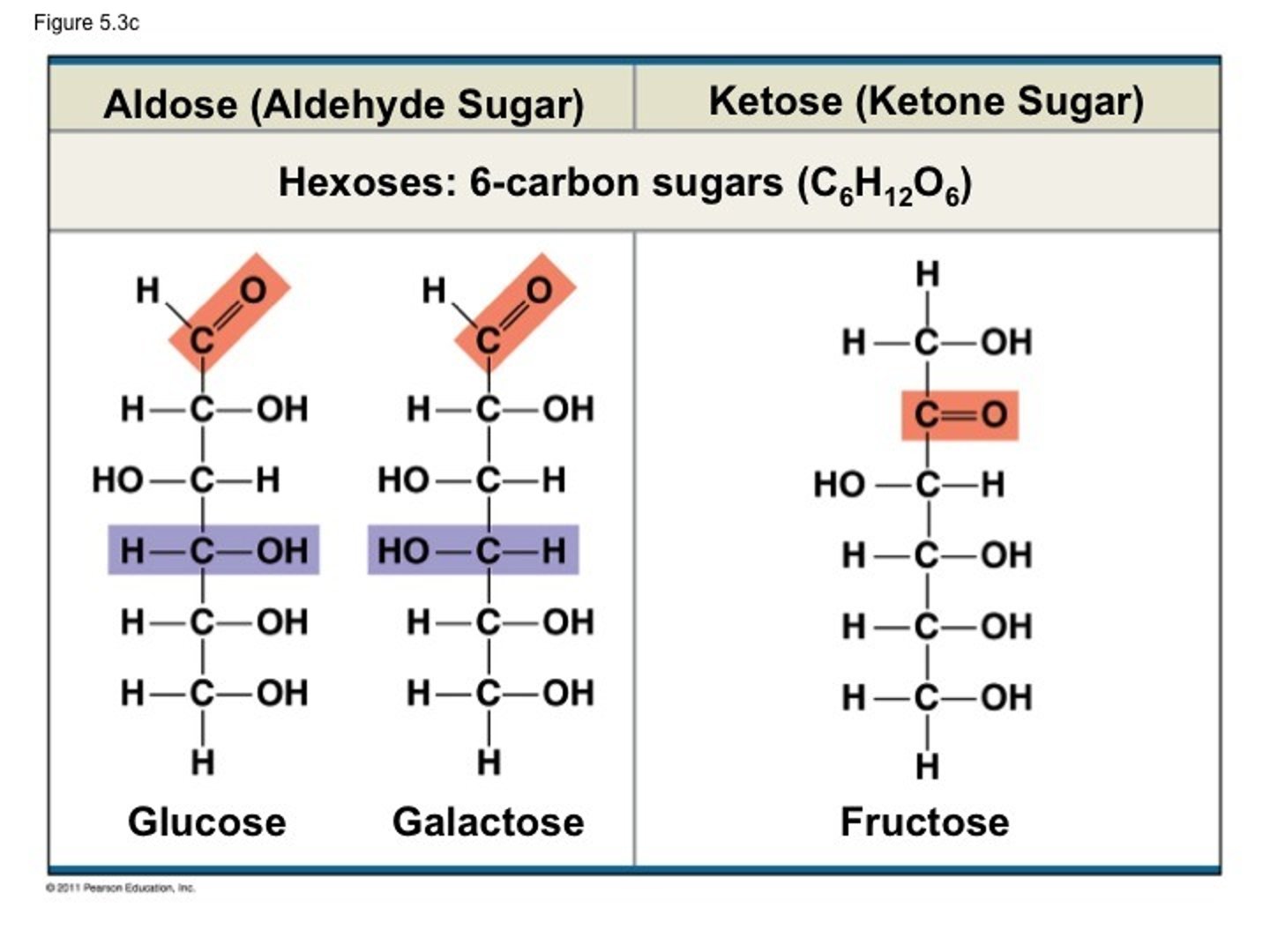
Identify the asymmetric carbon atoms in the monosaccharides.
a) red
b) blue
b) blue
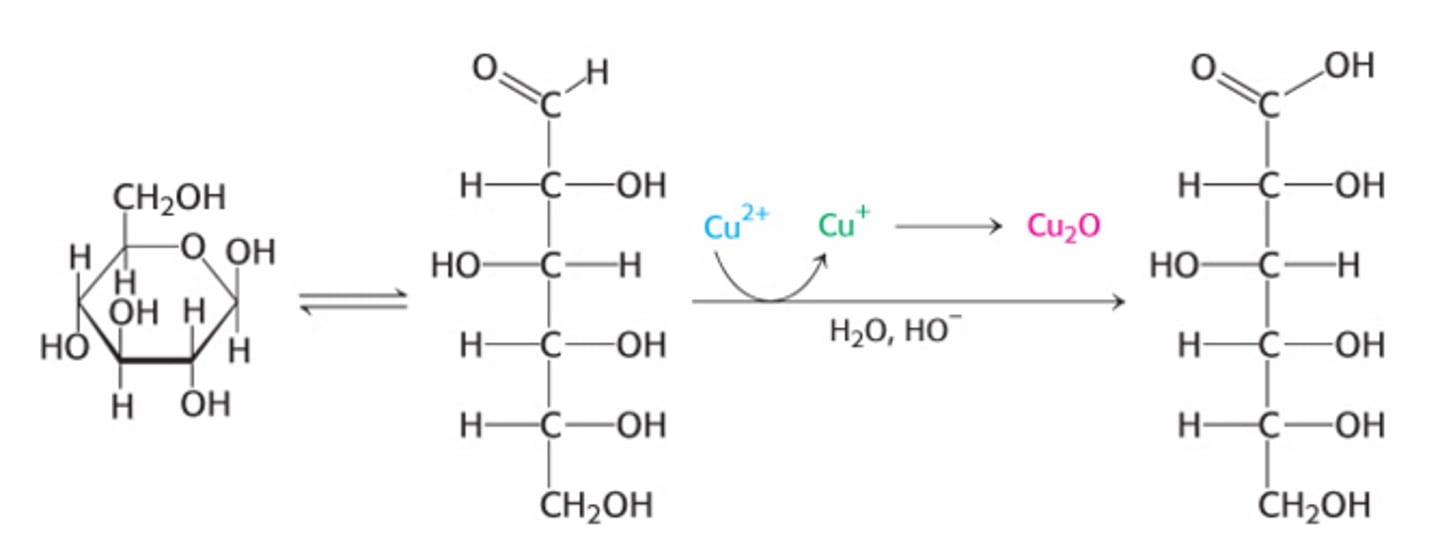
Reducing sugars:
a) can be tested using a solution of Cu+ called Fehling's solution
b) often react specifically with free amino groups on proteins
c) undergo enzyme-catalyzed glycosylation with proteins
d) react with reducing agents when in their linear form
e) include all monosaccharides that can access their linear structures in solution
e) include all monosaccharides that can access their linear structures in solution
Cartilage contains:
a) proteoglycan monomers that emerge laterally from opposite sides of a central hyaluronate filament
b) multiple polymers of heparin and dermatan sulfate
c) covalent bonds between the G1 domain of aggrecan and the central polymer of hyaluronate
a) proteoglycan monomers that emerge laterally from opposite sides of a central hyaluronate filament
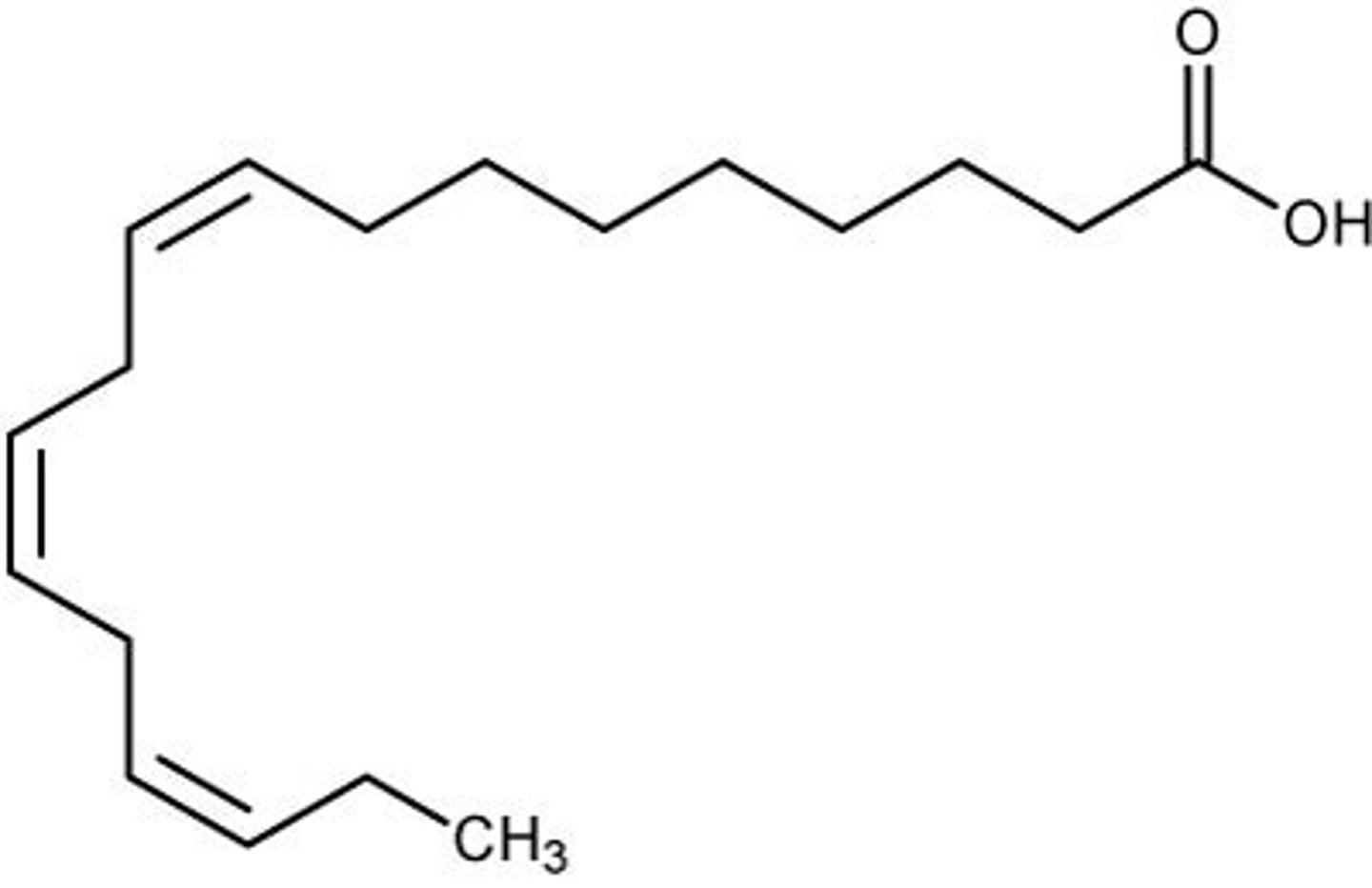
Where is the omega-carbon atom of linolenate?
Answer: the omega-carbon is always the furthest from the carboxylate
Phospholipids are composed of:
a) One or more fatty acids, a glycerol or sphingosine platform, a phosphate, and a carbohydrate attached to the phosphate
b) One or more fatty acids, a glycerol or sphingosine platform, a phosphate, and an alcohol attached to the phosphate
c) Two or more fatty acids, a glycerol or sphingosine platform, a phosphate, and a lipid attached to the phosphate
b) One or more fatty acids, a glycerol or sphingosine platform, a sulfate, and an alcohol attached to the sulfate
b) One or more fatty acids, a glycerol or sphingosine platform, a phosphate, and an alcohol attached to the phosphate
Where is the hydrophilic part of this membrane?
In between the phosphate heads
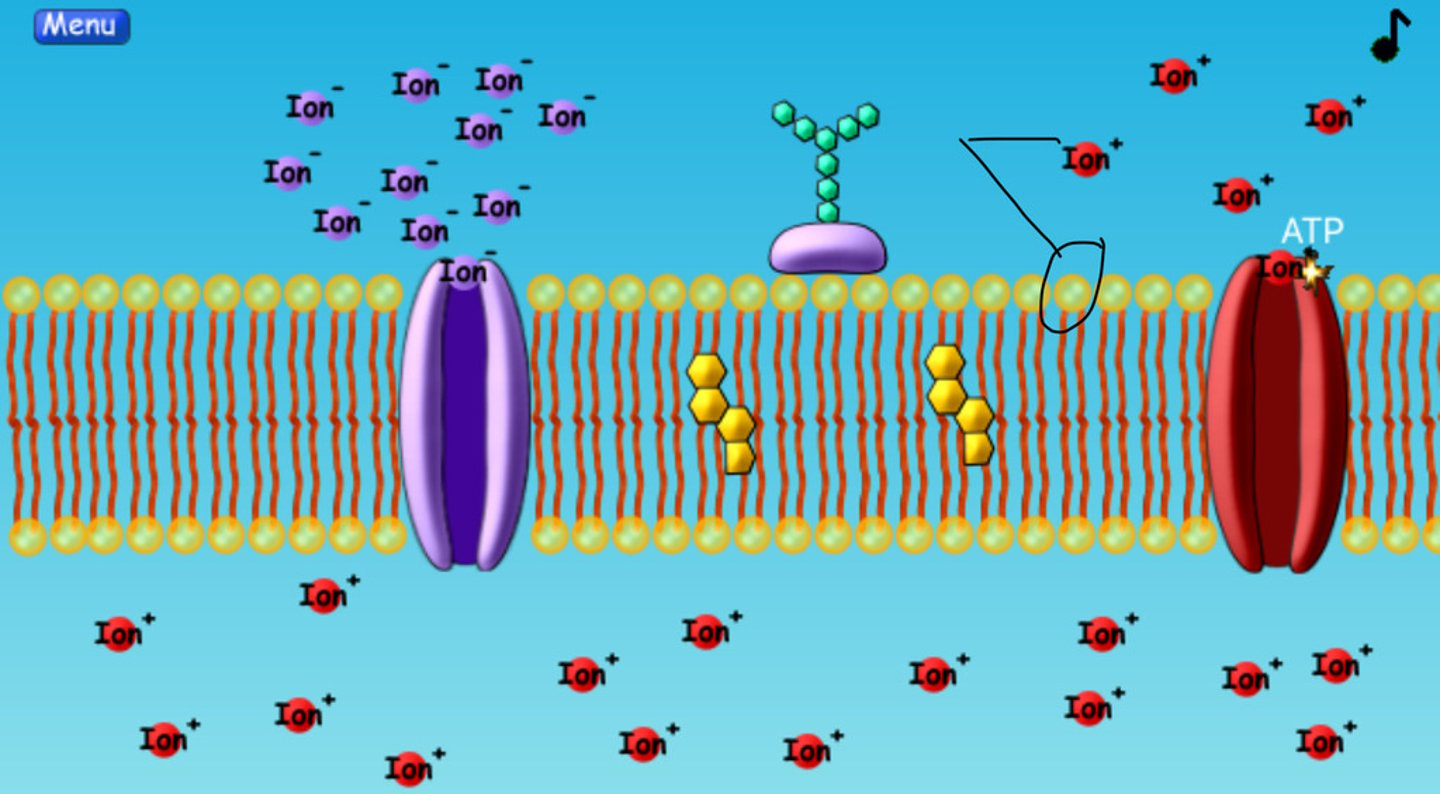
Which of these proteins could be a porin?
Transmembrane proteins