Upper Respiratory Tract Infections
 Call Kai
 Learn
Learn Practice Test
 Spaced Repetition
 Match
Match Flashcards
 Knowt Play
1/26

There's no tags or description
Looks like no tags are added yet.
Name | Mastery | Learn | Test | Matching | Spaced | Call with Kai | Chat |
|---|
No analytics yet
Send a link to your students to track their progress
27 Terms
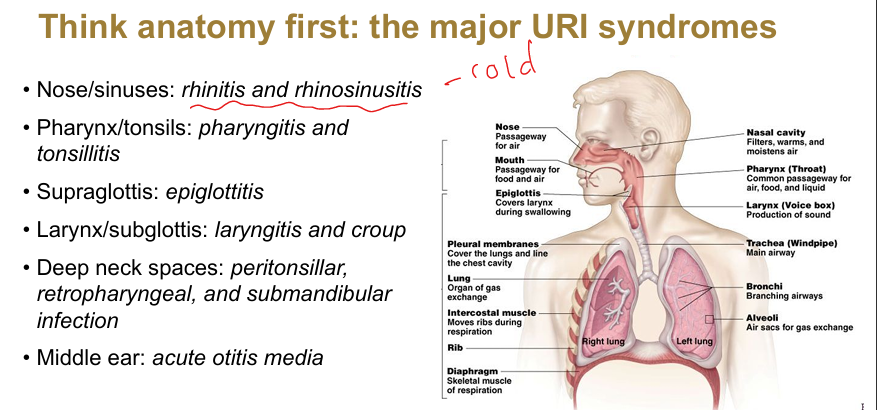
What are the major anatomic locations for upper respiratory syndromes?
Nose/sinuses (rhinitis, rhinosinusitis)
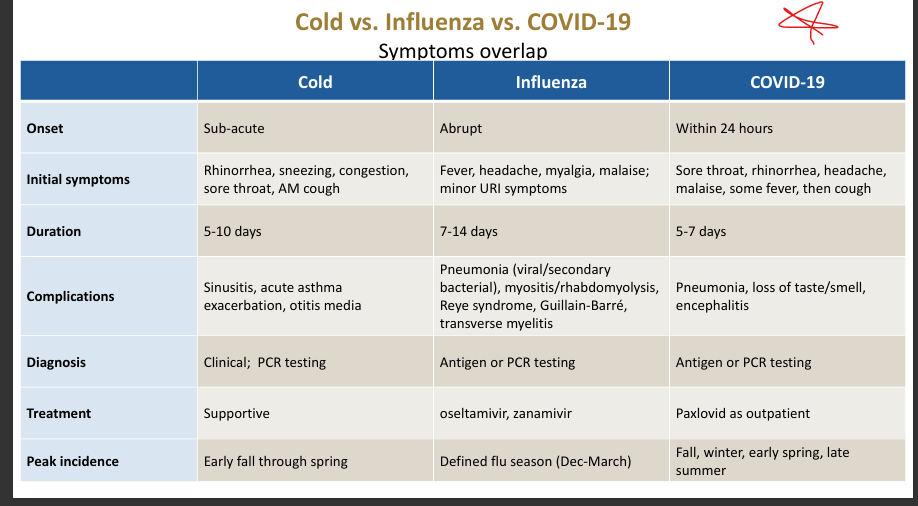
How do you distinguish a viral URI from influenza?
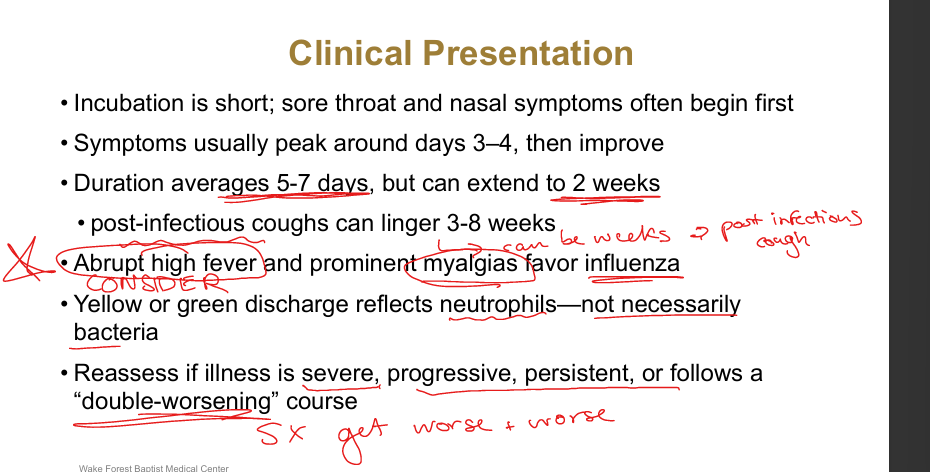
Viral URI: subacute onset, nasal symptoms first, mild systemic symptoms.
Influenza: abrupt onset with high fever, prominent myalgias, headache, malaise.
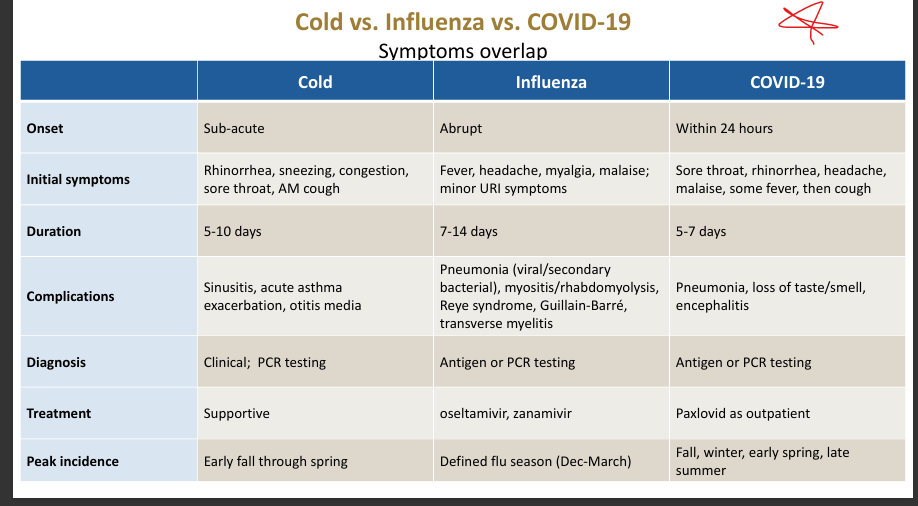
How do you distinguish a viral URI from COVID‑19?
COVID‑19: sore throat, rhinorrhea, headache, malaise, some fever → then cough
What illness pattern suggests uncomplicated viral URI?
Symptoms peak at days 3–4, improve by day 5–7
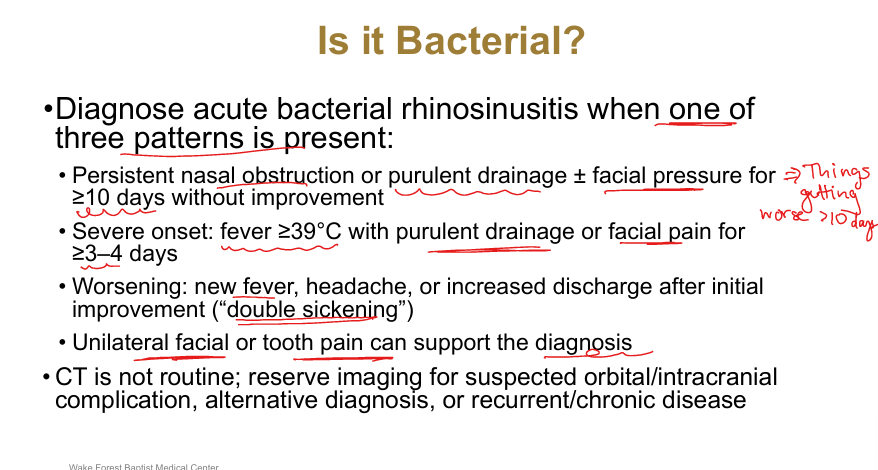
What clinical patterns suggest bacterial sinusitis rather than viral URI?
≥10 days persistent symptoms without improvement
What is the most common cause of the common cold?
Rhinovirus.
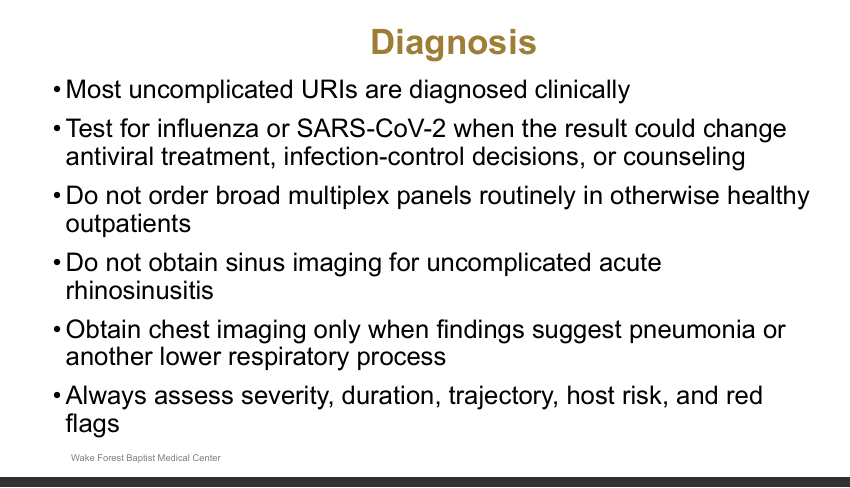
What testing should be done for uncomplicated viral URI?
None routinely. Test for influenza or SARS‑CoV‑2 only if results change antiviral treatment or infection‑control decisions.
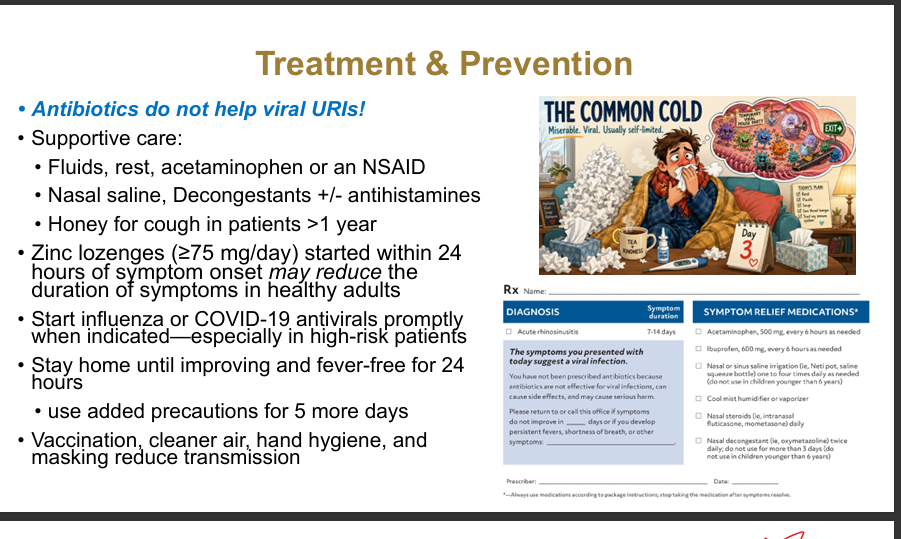
What is first‑line treatment for uncomplicated viral URI?
Supportive care: fluids, rest, acetaminophen/NSAID, nasal saline, decongestants ± antihistamines, honey (>1 year), zinc lozenges if started within 24 hours. Antibiotics do NOT help viral URIs.
What clinical features make Group A Strep pharyngitis unlikely?
Cough, rhinorrhea, hoarseness, oral ulcers, conjunctivitis — these favor viral pharyngitis.
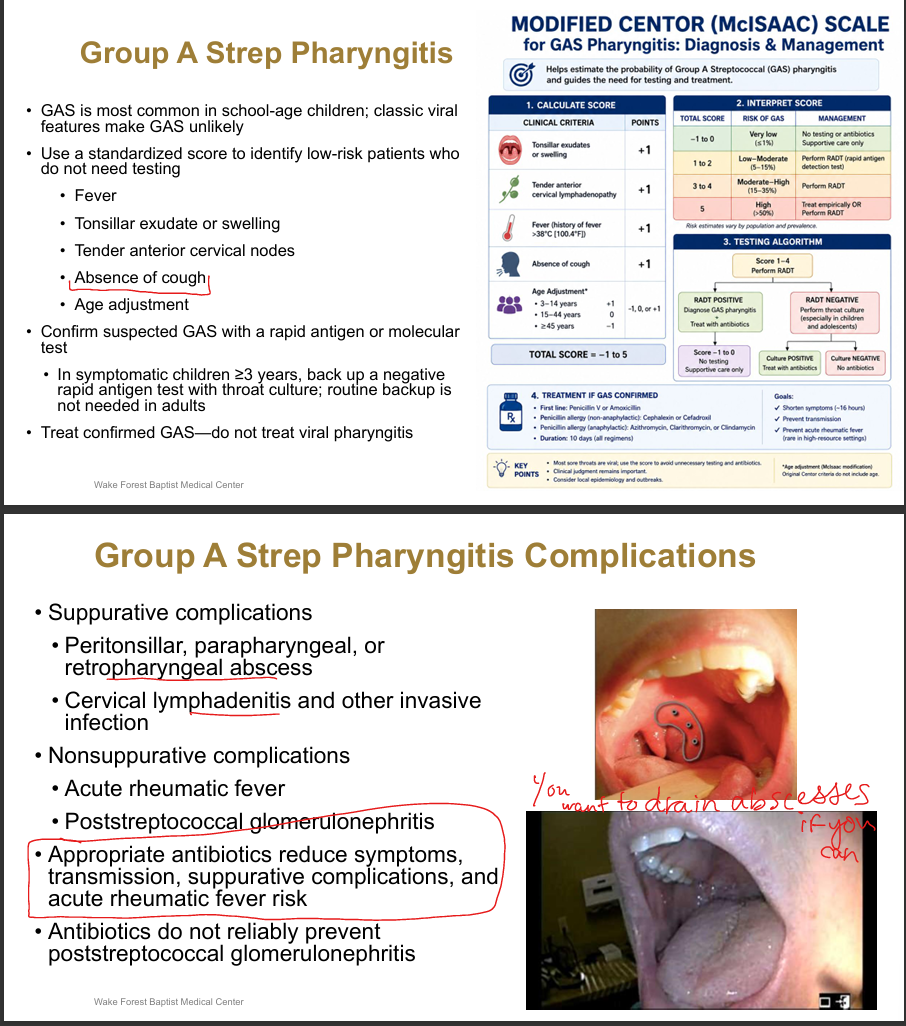
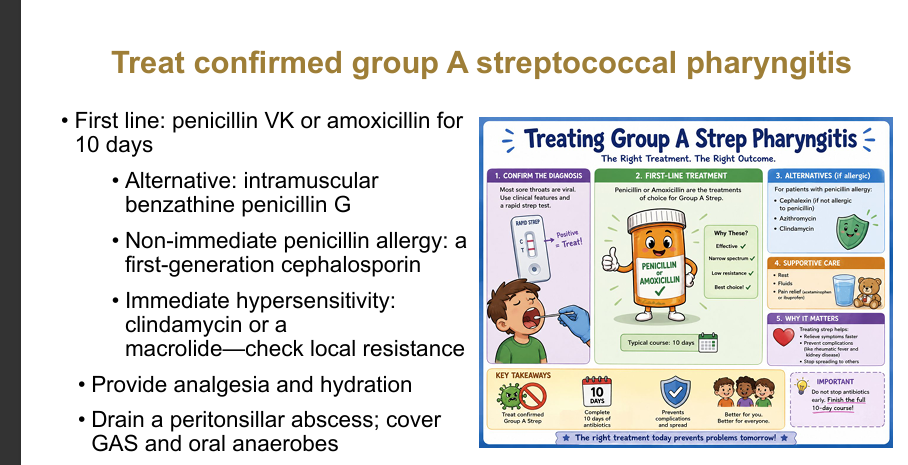
What is first‑line therapy for confirmed GAS pharyngitis?
Penicillin VK or amoxicillin for 10 days.
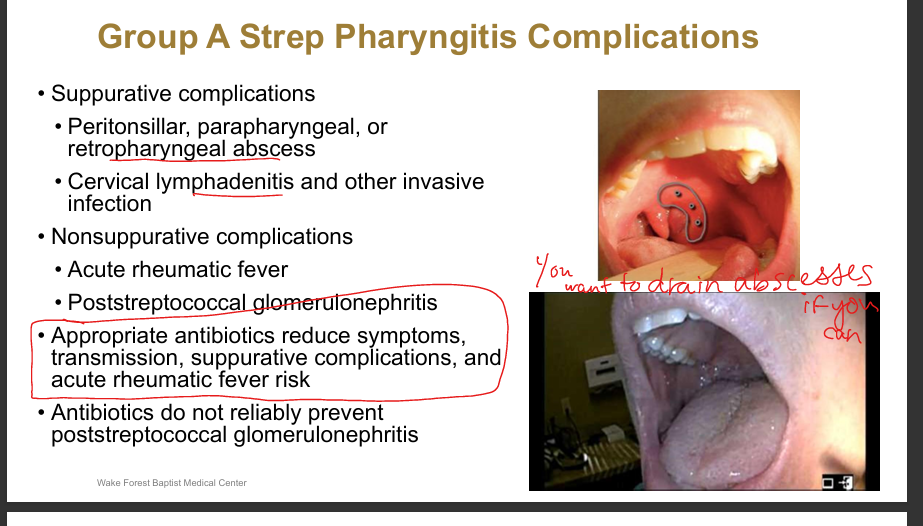
What complications can GAS pharyngitis cause?
Suppurative: peritonsillar, parapharyngeal, retropharyngeal abscess
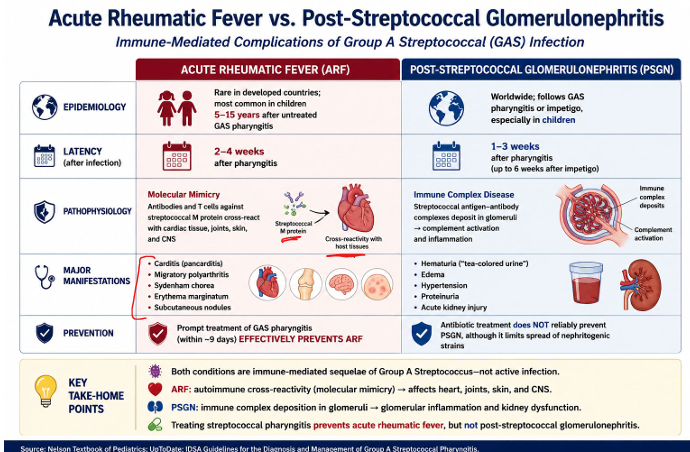
Which Group A Strep complication is prevented by antibiotics?
Acute rheumatic fever (if treated within ~9 days). Antibiotics do NOT reliably prevent Post Strep Glomerulonephritis (PSGN).
What are key airway emergencies in URIs?
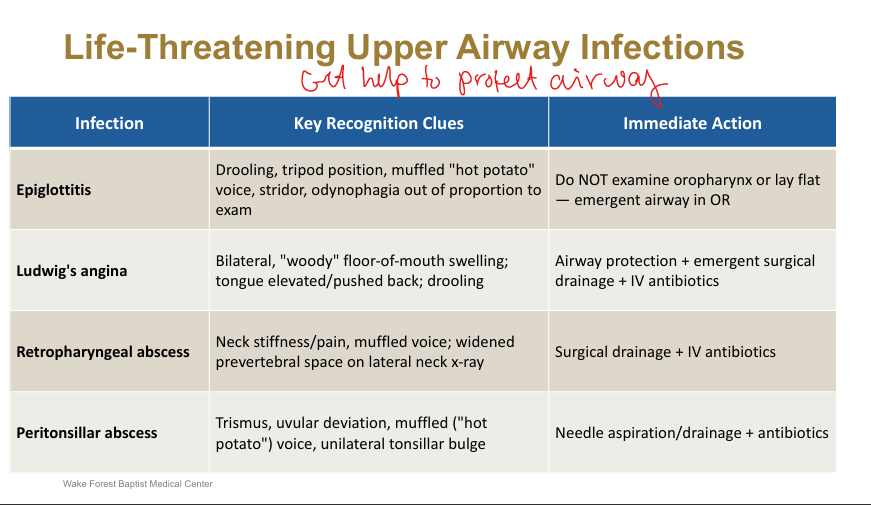
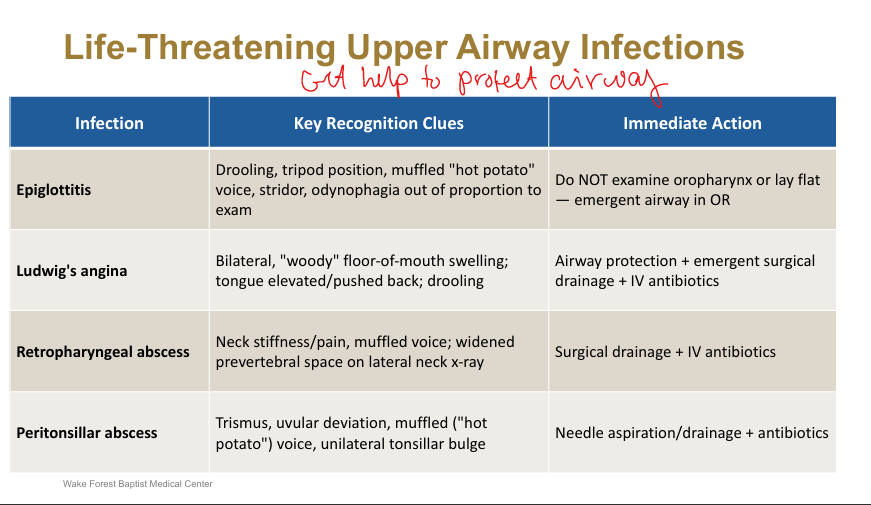
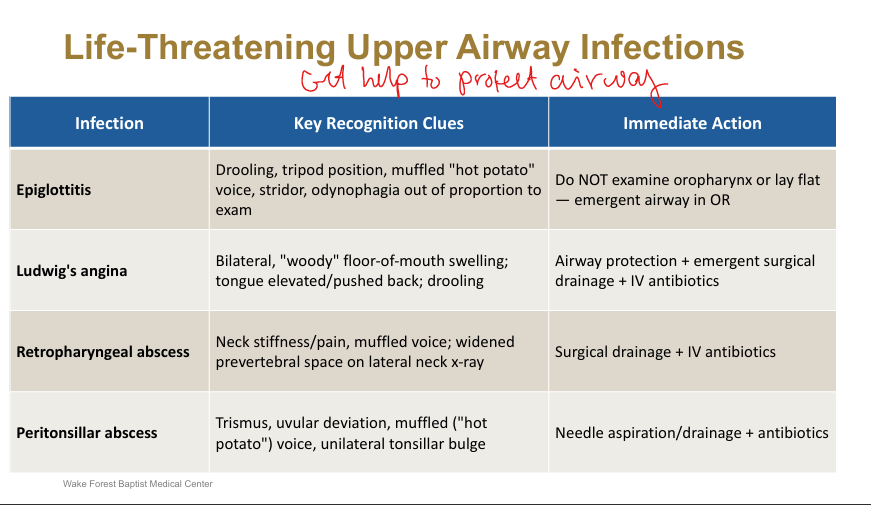
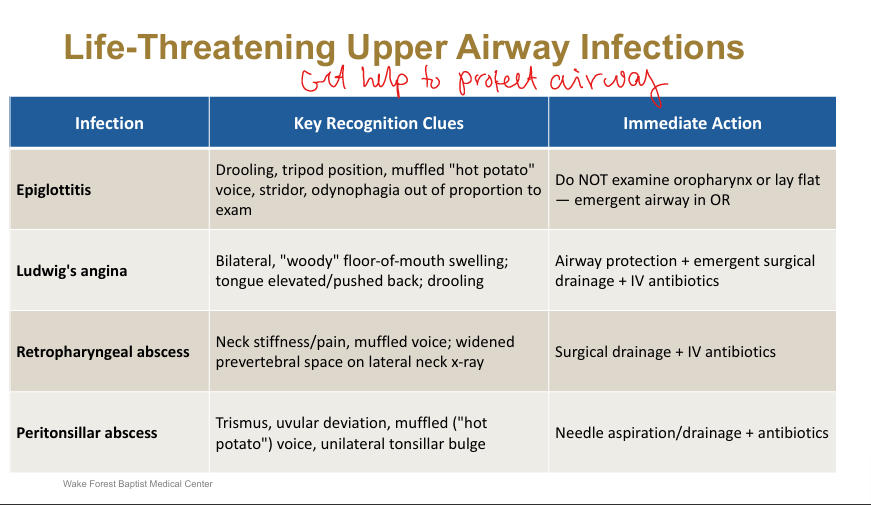
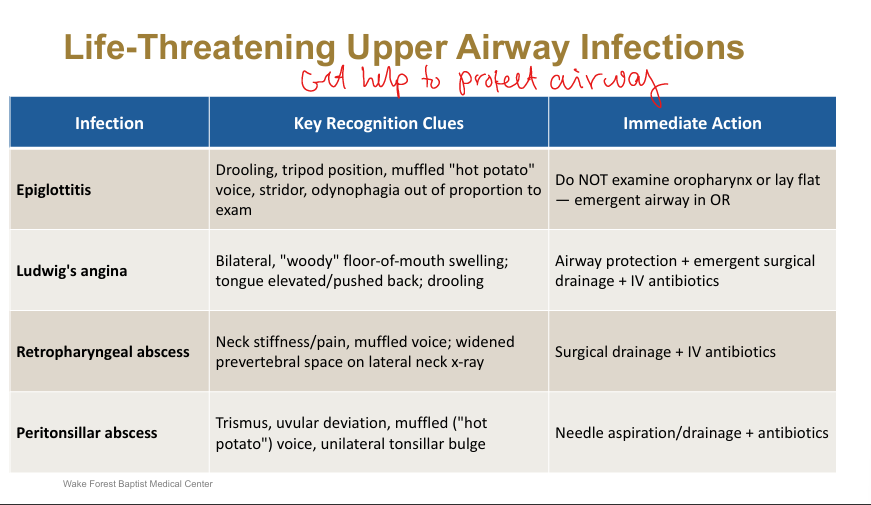
Epiglottitis, Ludwig’s angina, retropharyngeal abscess, peritonsillar abscess. All require urgent airway protection and specialist involvement.
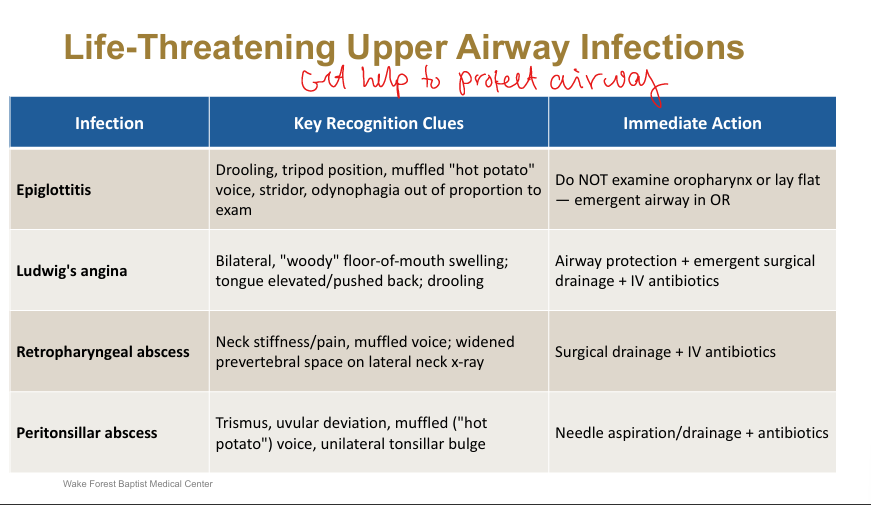
What are recognition clues for epiglottitis?
Drooling, tripod posture, muffled “hot potato” voice, stridor, severe odynophagia out of proportion to exam.
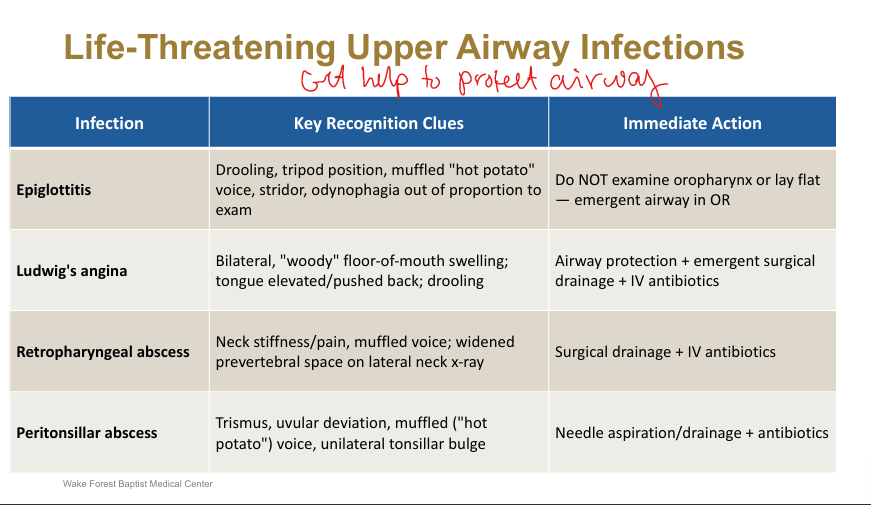
What is the immediate action for suspected epiglottitis?
Do NOT examine the oropharynx
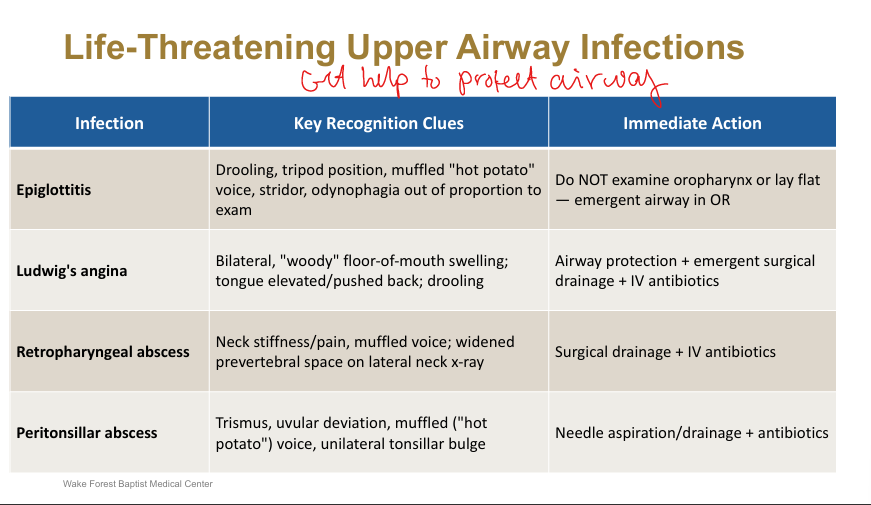
What are recognition clues for Ludwig’s angina?
Bilateral “woody” floor‑of‑mouth swelling, tongue elevation, drooling, muffled voice, neck swelling
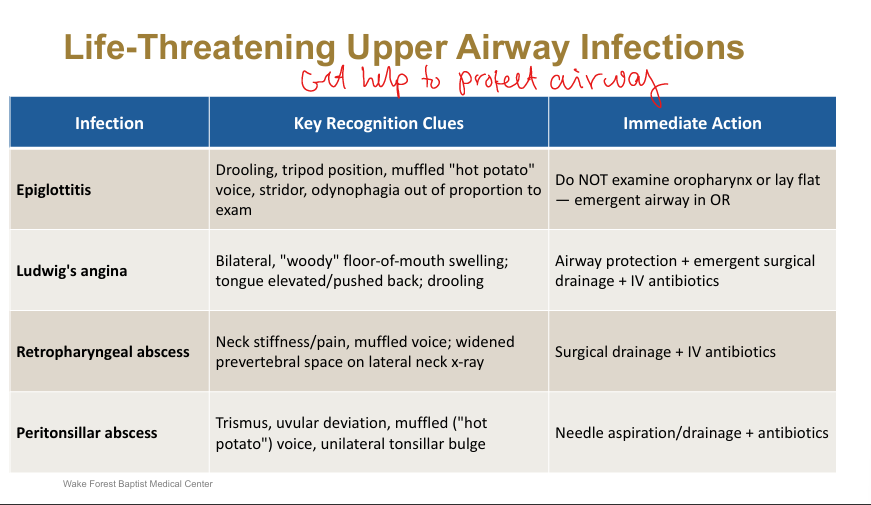
What is the immediate action for Ludwig’s angina?
Airway protection, emergent surgical drainage, IV antibiotics covering oral streptococci + anaerobes
What are recognition clues for retropharyngeal abscess?
Neck stiffness/pain, muffled voice, widened vertebral space on neck X ray
What is the immediate action for retropharyngeal abscess?
Surgical drainage + IV antibiotics.
What are recognition clues for peritonsillar abscess?
Trismus, uvular deviation, unilateral tonsillar bulge, muffled “hot potato” voice.
What is the immediate action for peritonsillar abscess?
Needle aspiration/drainage + antibiotics covering GAS + anaerobes.
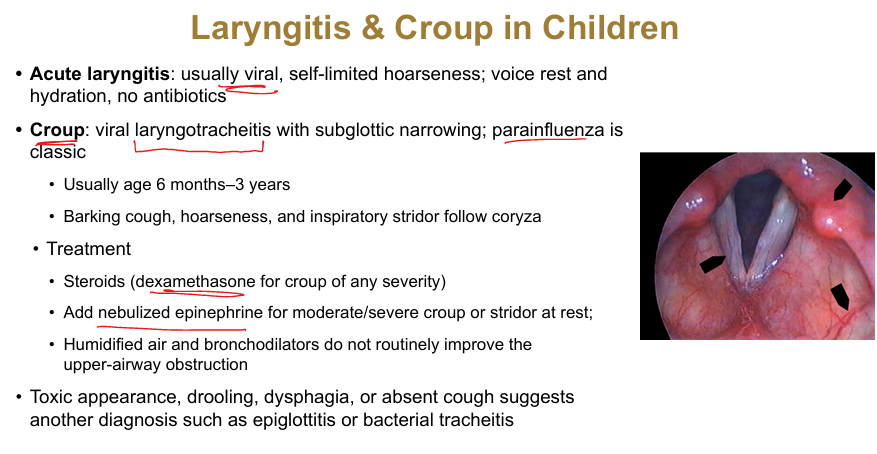
What is the classic presentation of croup?
Barking cough, hoarseness, inspiratory stridor following coryza(runny nose)
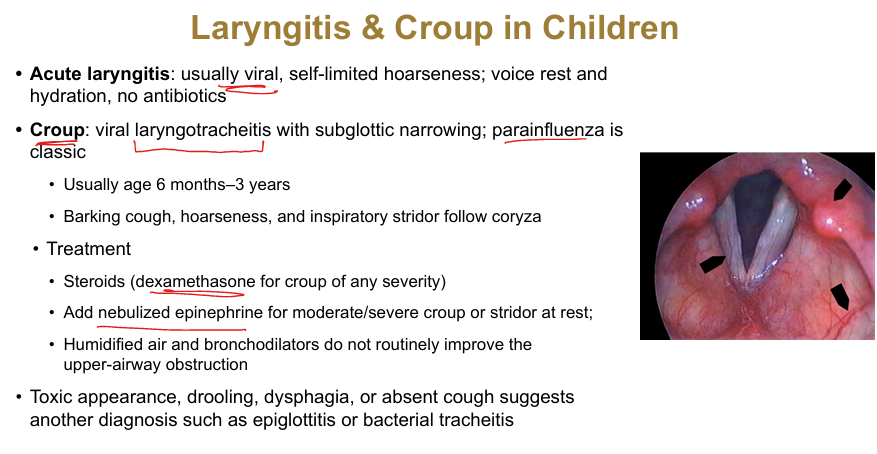
What is first‑line treatment for croup?
Dexamethasone for any severity
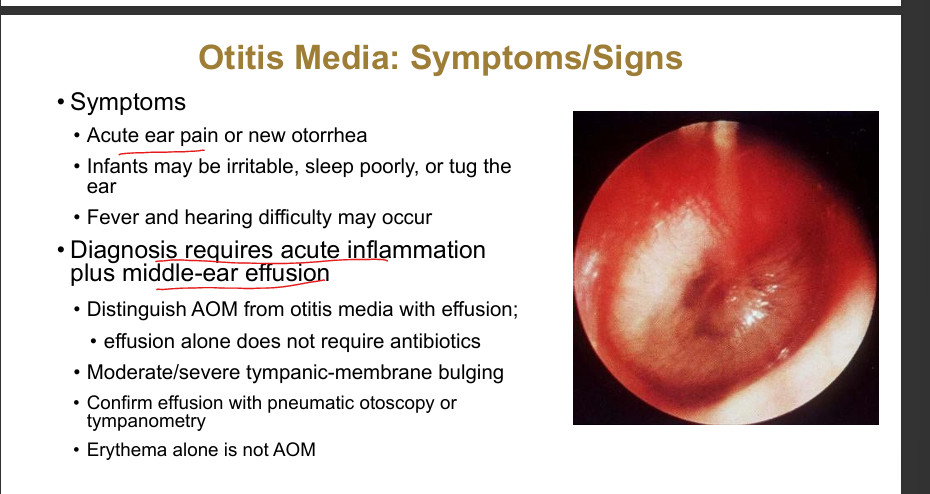
What findings distinguish Acute Otitis Media from otitis media with effusion?
AOM requires acute inflammation + middle‑ear effusion with moderate/severe TM bulging
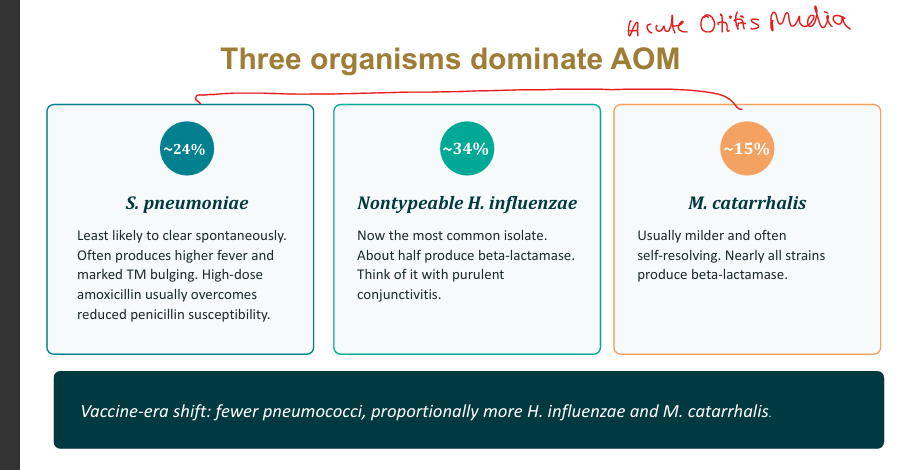
What are the three dominant pathogens in Acute Otitis Media?
Nontypeable H. influenzae (~34%), S. pneumoniae (~24%), M. catarrhalis (~15%).
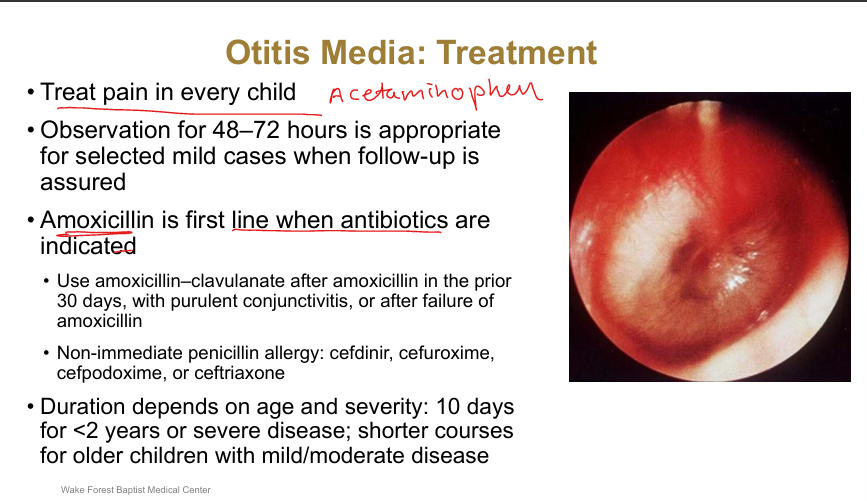
What is first‑line therapy for Acute Otitis Media?
Amoxicillin. Use amoxicillin‑clavulanate if prior amoxicillin in 30 days, purulent conjunctivitis, or treatment failure.
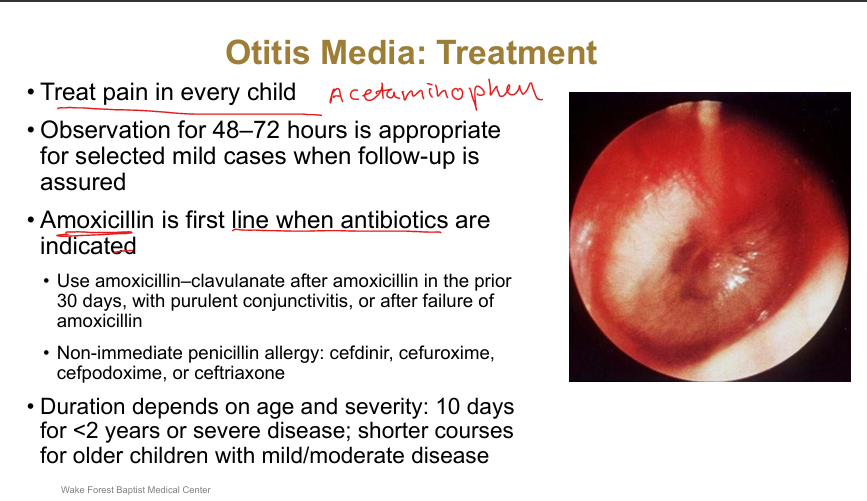
What determines antibiotic duration for Acute Otitis Media?
10 days for <2 years or severe disease