econ theme 3
 Call Kai
 Learn
Learn Practice Test
 Spaced Repetition
 Match
Match Flashcards
 Knowt Play
1/82

There's no tags or description
Looks like no tags are added yet.
Name | Mastery | Learn | Test | Matching | Spaced | Call with Kai | Chat |
|---|
No analytics yet
Send a link to your students to track their progress
83 Terms
what is a derived demand
demand for a good or FOP is a consequence of demand for something else
eg. labour is demanded because of good/service they make
what is demand for labour
number of workers firms are willing and able to employ at given wage
demand for labour curve
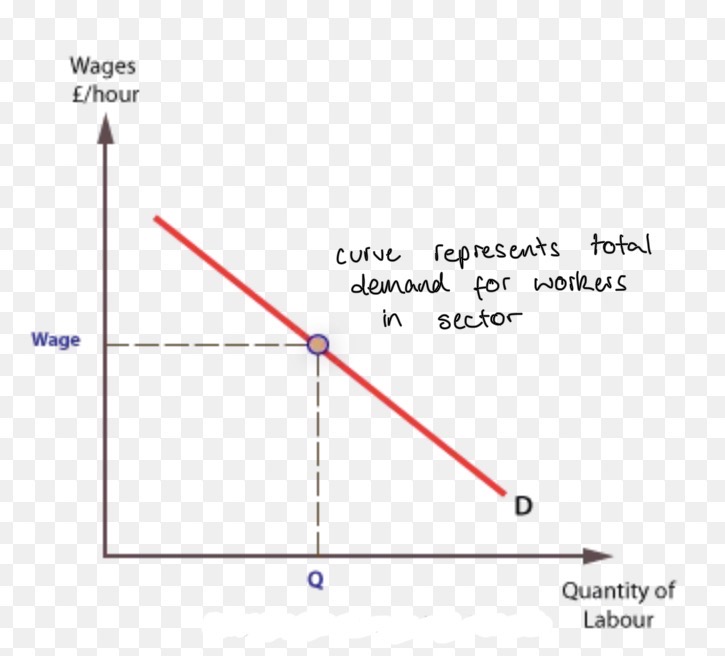
how does wage rate affect demand of labour
higher wage rate → costs for firms increase → less likely to hire workers → lower demand for labour
vice versa
how does demand for product affect demand for labour
increase demand for product increases demand for labour that makes product
how does price of product affect demand for labour
price increase → marginal revenue product of labour increases → increased demand for labour
how does change in technology affect demand for labour
new technology becomes available → fall in demand for labour
labour is a substitute for capital
businesses choose cheaper option
how does price of other inputs affect demand for labour
increase in price of raw materials/overhead → increases costs → reduced demand for labour
how does productivity affect demand for labour
productivity rises → firms more profitable → increased demand for labour
how does legislation affect demand for labour
increase in NMW → decrease in employment
eg. legislation making it easier to hire/fire workers
what is MRP
marginal revenue product
additional revenue gained when extra unit is produced by adding an additional worker
how do you calculate MRP
marginal revenue x marginal product
what is total product
total sum of output produced by given number of inputs over period of time
what is marginal product
number of extra units of output produced by additional factor input
what is marginal revenue
additional revenue brought in when additional product is sold
when do firms determine the number of employees to employ
when MRP = marginal cost of labour
what is the law of diminishing marginal returns
variable FOP is added to fixed FOP → productivity increases increases initially → decreases after certain point
what is the reason for diminishing marginal returns
labour is variable while capital is fixed
initially there is increase bcs of division of labour → more efficient → more output
new worker learns from older worker
MRP graph

what are the features of a perfectly competitive market
many workers
labour is homogenous
perfect information
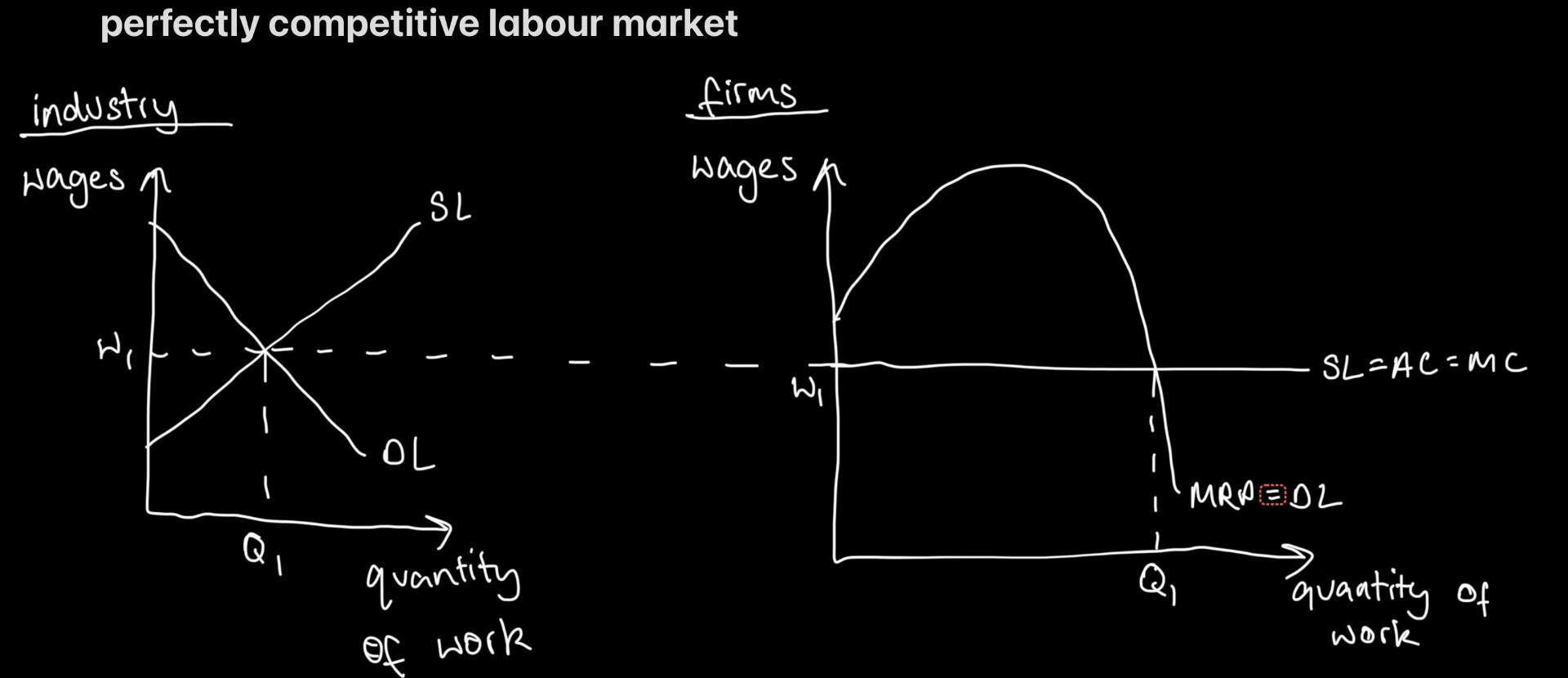
firms are wage takers
no barriers to entry
what is the implications of many workers
more production
lower wage rate
what is homogenous labour
identical skill set/qualifications across the labour force
what is the implications of a homogenous labour force
addresses occupational immobility
what is the implications of having perfect information
addresses geographical immobility
workers know cost of labour → cannot be exploited
what is the implications of firms being wage takers
wage has to be at market equilibrium
perfectly competitive labour market graph
what is supply of labour
number of people willing and able to supply working hours at given wage rate/given time
supply of labour curve
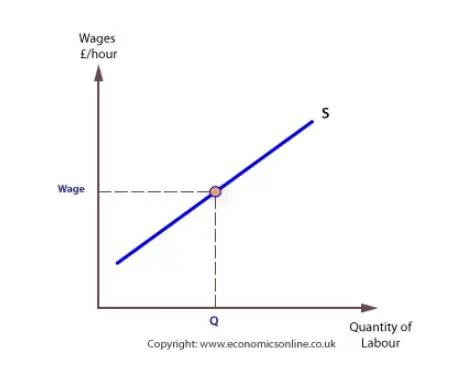
how does wage rate affect supply of labour
higher wages → more incentive to work → higher supply of labour
vice versa
how do comparative wage rates affect supply of labour
higher comparative wage rates in substitute labour markets → lower supply of labour
vice versa
how do birth and death rates affect supply of labour
determines future labour supply
how does training affect supply of labour
determines how many people are employable
how does training period affect supply of labour
long training periods are a barrier of entry
how does level of welfare benefits affect supply of labour
higher level of benefits → less incentive for low-skilled workers to supply their labour
vice versa
how does income tax affect supply of labour
at certain level, income taxes disincentivise households from offering labour
how does trade union power affect supply of labour
workers consider benefits of joining them
eg. determine wage rates and incentive to work
how do changes in migration policy affect supply of labour
policy increases net migration rate → supply of labour increase
what are the other factors which affect the supply of labour
income
working conditions
legislation
benefits of future education
optimism about pensions
social trends
what is geographical immobility
ease with which workers can move around country and find work
what causes geographical immobility
house prices (rent is more expensive in South - sometimes unaffordable)
family/social ties
higher percentage of home ownership → excess demand for property in South → PES of homes is inelastic
lack of information
infrastructure
what policies affect geographical immobility
improving transport links (address problem of family ties and prevents people selling homes → excess supply of homes → prices fall)
relaxation of planning laws
increasing construction of social housing
housing subsidies for key workers where house prices are high
improving operation of job centres
eg. HS2, remove stamp duty, right to buy scheme, maximum rent, lifetime ISAs
what is occupational immobility
ease with which workers are able to change jobs
what causes occupational immobility
de-industrialisation
insufficient education/training/skills/work experience
what policies affect occupational immobility
training schemes
increasing provision of further education
ie. vocational courses for school leavers
increasing provision of higher education
ie. tertiary courses specific to market needs
backwards bending supply curve
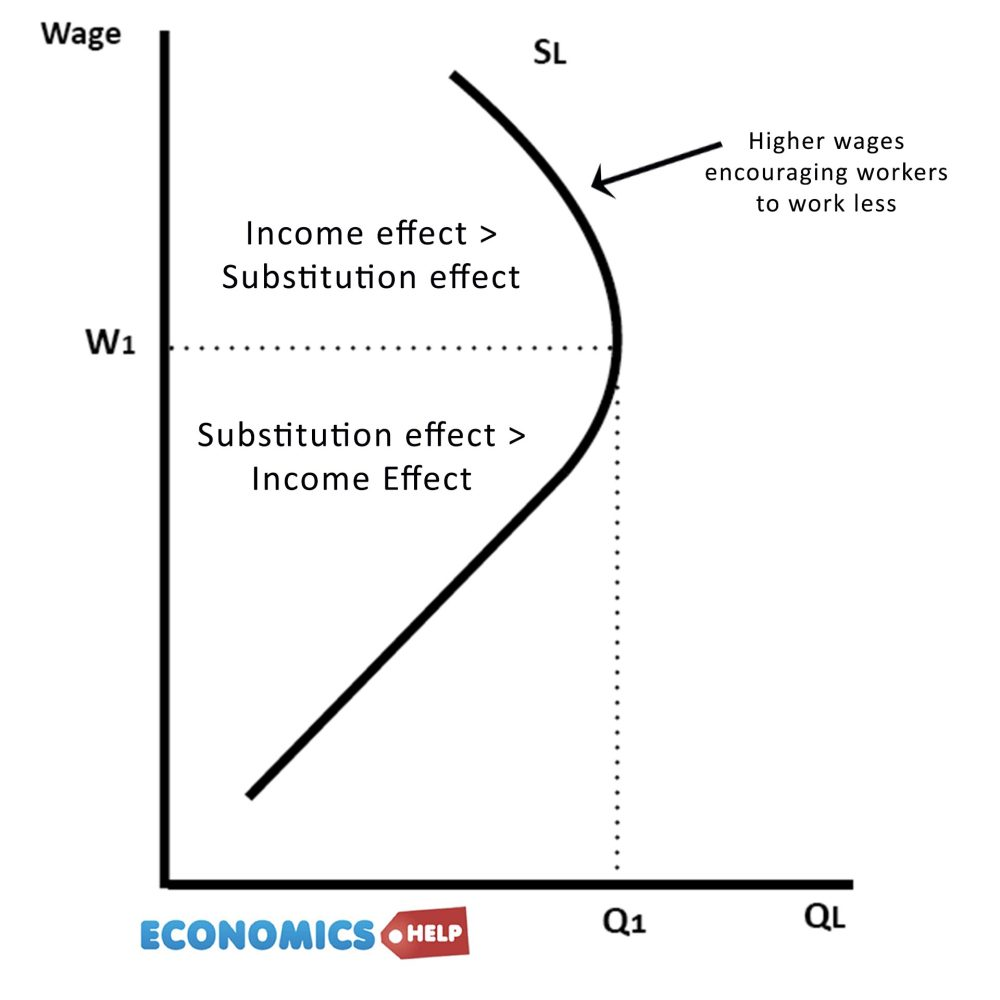
what is the analysis of the backwards bending supply curve
increases in wages brings up hours worked up until target wage is met
when wages high → workers want to work less
what is the substitution effect
rise in real wage increases opportunity cost of leisure → incentive to work longer
what is the positive income effect
wages increase → work more → increase income to meet target income
what is the negative income effect
target income is met → work less (even if wages increase) → want to enjoy leisure time
what is wage elasticity of demand for labour
measures responsiveness of quantity demanded for labour given change in wages
what is the reasons for wage differentials
skills/qualifications/experience
discrimination - gender/race/nepotism
location
age
national minimum wage
type of work - compensating wage rate (ie. radiologist)
exploitation
elasticity of job
MRP
monopsony power
profits of firm
bargaining power
what is minimum wage
wage rate set by govt above market equilibrium that must be paid by law to employees
what is the economic impact of minimum wage
increases quantity supply of labour → due to substitution effect and positive income effect
increases business costs → demand for labour decreases → demand for capital increases
depends on labour intensity and initial cost of capital increases
benefit of not paying wages is felt in the long-term
excess supply of labour (unemployment)
what are the advantages of minimum wage
incentive to work
increases productivity → workers feel compensated for labour
reduces relative poverty and inequality
increases MPC with positive multiplier effect
lowest income earners have higher MPC and lower MPS
insignificant job losses
what are the disadvantages of minimum wage
increases business costs → reduces profits → fall in firm investment
firms are less competitive → increased prices
reduced working hours → decreases productivity
increases unemployment in long-term → reduced job creation → disincentivises new firms due to costs
may cause poverty
increases cost-push inflation → wage-price spiral
affects young, unskilled and low productivity jobs
however demand for youngest workers is higher as costs are lower
what is the maximum wage
wage ceiling imposed by govt set below market equilibrium wage
what is the economic impact of maximum wage
decreases quantity supplied of labour → less incentive to work especially for high-skilled workers → human-capital flight
decreases business costs
increases quantity demanded of labour → excess demand → increases employment
depends if labour is cheaper than quality
what are the advantages of maximum wage
helps decrease inflation rates → prevents wage-price spiral
limits inequality by narrowing income gap
reduces labour costs for firms → lower prices → benefit for consumers
what are the disadvantages of maximum wage
reduction in productivity → no incentive to work hard
reduces supply of labour → high skilled workers incentivised to emigrate → reduced skill set in economy
unfair (normative)
what factors affect wage elasticity of demand for labour
SECT
how does substitutability of capital for labour affect wage elasticity of demand for labour
if high → labour is elastic
(vice versa)
what does the substitutability of capital for labour depend on
if a sector is labour intensive → inelastic
(vice versa)
productivity of machinery
cost of machinery
improvement in technology
how does elasticity of product sold affect wage elasticity of demand for labour
if product is PED inelastic → still need to produce → labour is inelastic
(vice versa)
how does cost of labour as percentage of total cost affect wage elasticity of demand for labour
if high → firms more likely to get rid of workers when wages increases → labour is elastic
(vice versa)
how does time period affect wage elasticity of demand for labour
inelastic in short-term
elastic in long-term as technology improves
what is the wage elasticity of labour supply
measures responsiveness of labour supplied given change in wage rate
what factors affect wage elasticity of labour supply
nature of skills required
nature of job
time
how does the nature of skills required affect wage elasticity of labour supply
lots of skills/qualifications needed → high barriers to entry → labour is inelastic
ie. length of training period
how does the nature of job affect wage elasticity of labour supply
when job is not enjoyable and wages fall → elastic
(vice versa)
how does time affect wage elasticity of labour supply
inelastic in short -term
elastic in long-term
effected by contracts like notice periods
what is a monopsony
market structure dominated by one main buyer of labour (employer)
ie. govt, NHS
what are the problems with monopsonies
monopsonist has wage setting power
exploits workers
no incentive to improve working conditions
restrict job availability → purposely employs less than what market needs → excess supply of labour → no wage bargaining power
what are the benefits of monopsonies
national minimum wage fixes it by making the wage setter a wage taker and it makes employment
what are the solutions to monopsonists
national minimum wage
trade unions