Breeds

0.0(0)
Studied by 0 people
call kaiCall Kai
Locked
learnLearn
examPractice Test
spaced repetitionSpaced Repetition
heart puzzleMatch
flashcardsFlashcards
GameKnowt Play
Card Sorting

1/53

encourage image

There's no tags or description

Looks like no tags are added yet.

Last updated 9:21 PM on 9/9/26
Name
Mastery
Learn
Test
Matching
Spaced
Call with Kai
Chat

No analytics yet

Send a link to your students to track their progress

54 Terms

1
New cards

*Ayrshire

Dairy breed from Scotland, came to the US in 1822. Average milk production. Reddish brown and white. Known for excellent udders.
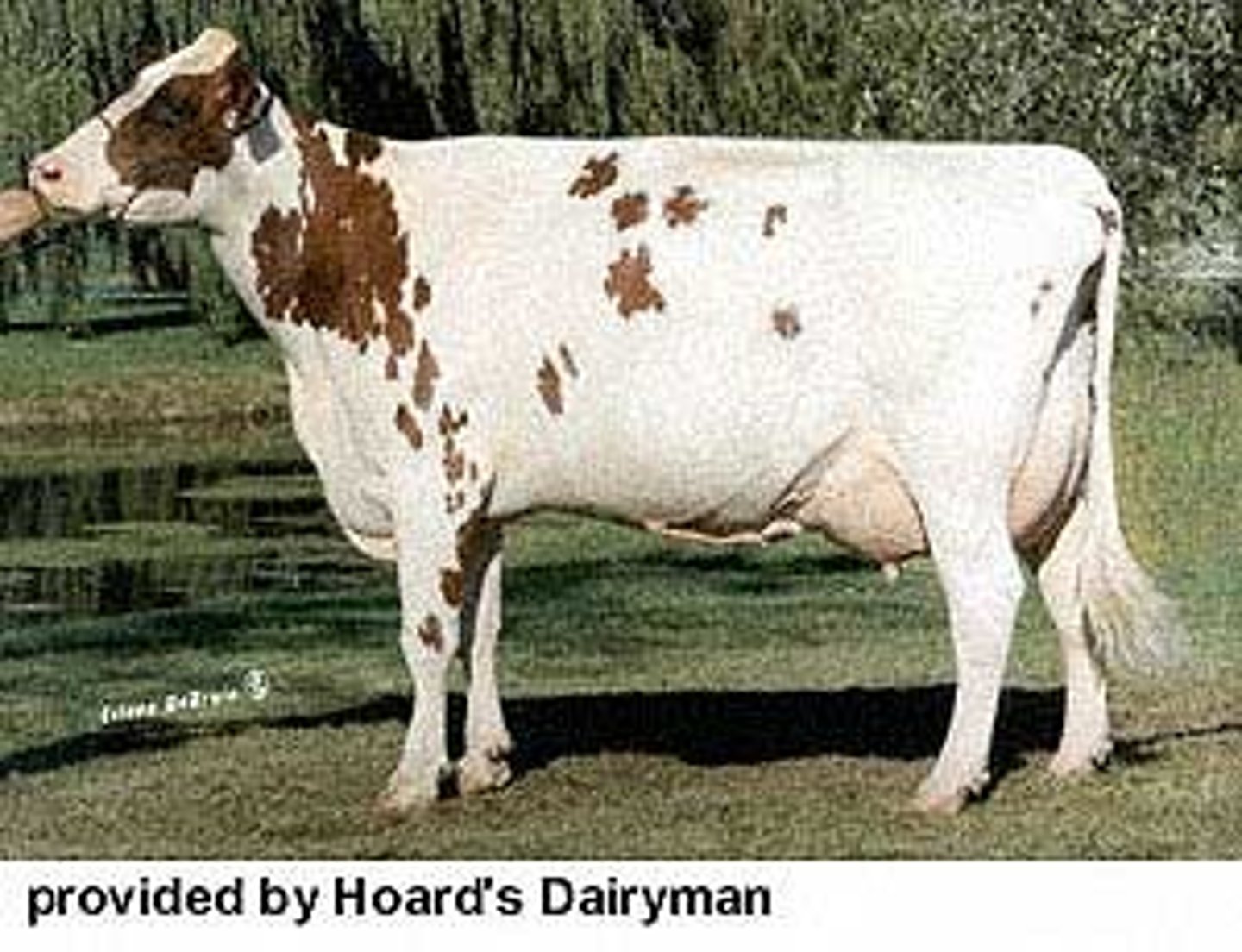
<p>Dairy breed from Scotland, came to the US in 1822. Average milk production. Reddish brown and white. Known for excellent udders.</p>
2
New cards

*Brown Swiss

Dairy breed from Switzerland, came to the US in 1869. Second highest in milk production. Light brown/grey in milk production. Known for being great grazers.
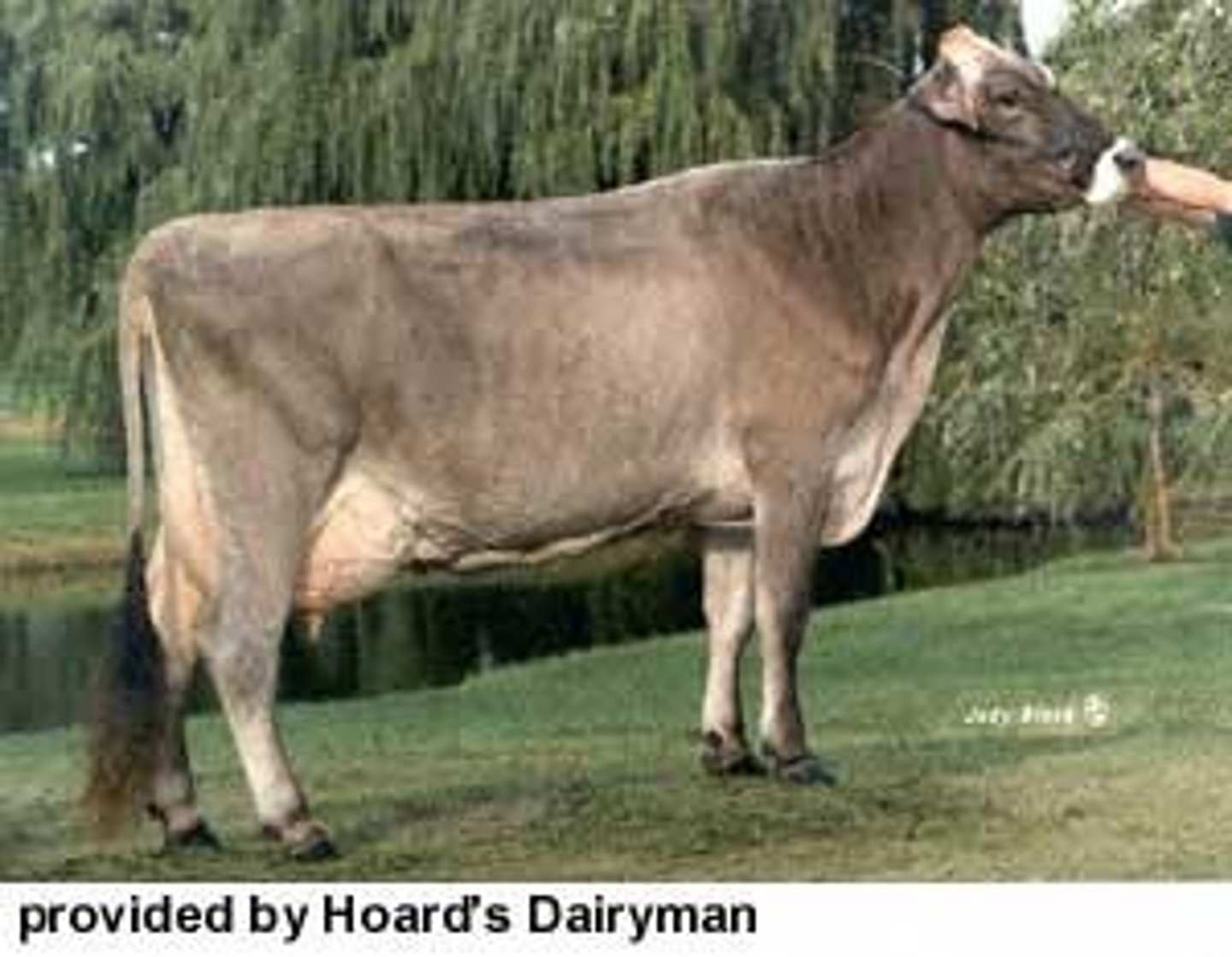
<p>Dairy breed from Switzerland, came to the US in 1869. Second highest in milk production. Light brown/grey in milk production. Known for being great grazers.</p>
3
New cards

*Jersey

Dairy breed from islands in the English Channel, came to the US in 1850. Smallest breed in stature. Average milk production but known for high butterfat content and heat tolerance. Grey, fawn, and black in color.
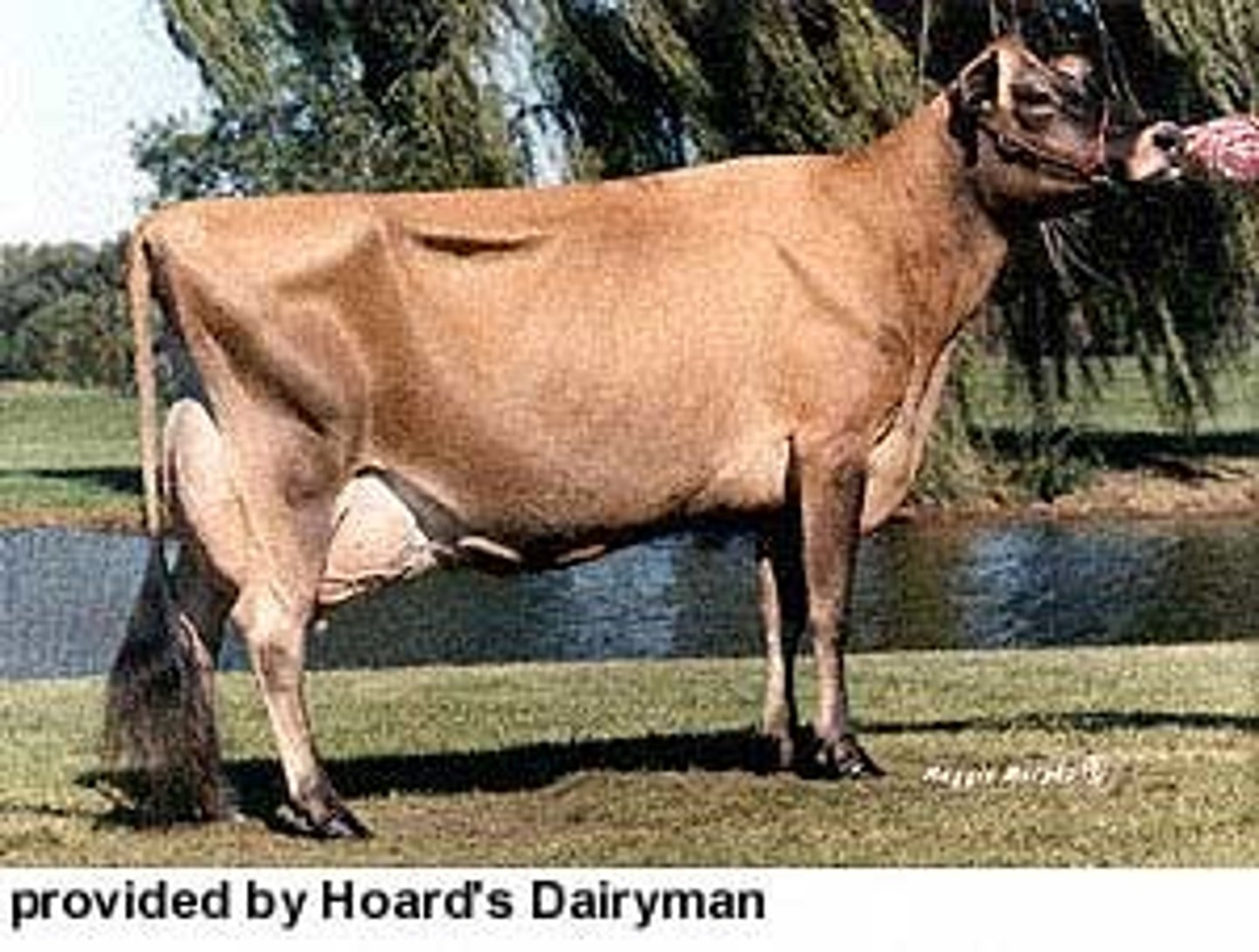
<p>Dairy breed from islands in the English Channel, came to the US in 1850. Smallest breed in stature. Average milk production but known for high butterfat content and heat tolerance. Grey, fawn, and black in color.</p>
4
New cards

*Guernsey

Dairy breed from the islands in the English Channel, Came to the US in 1830. Average milk production with yellow colored milk from a high beta carotene content. Tan and white in color.
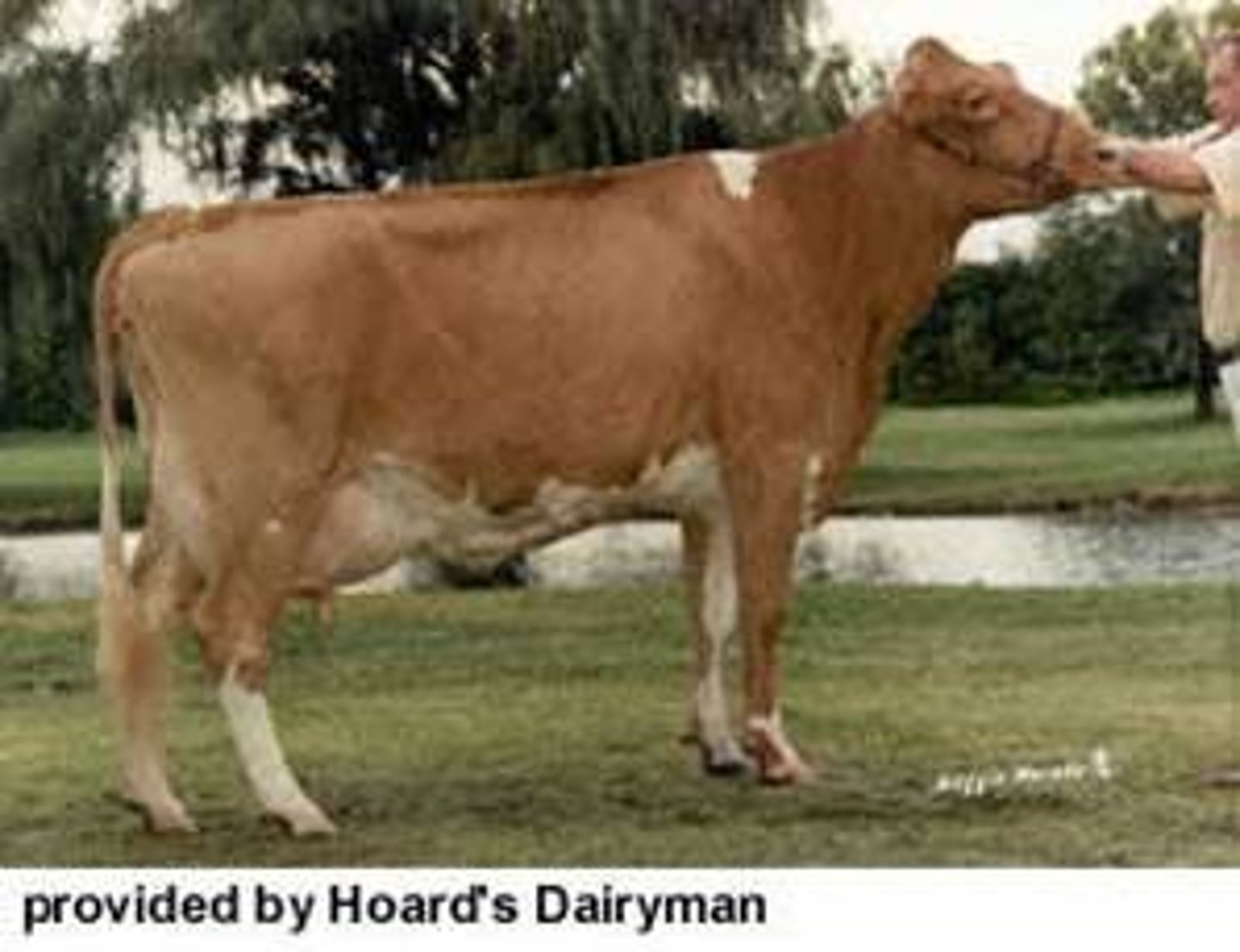
<p>Dairy breed from the islands in the English Channel, Came to the US in 1830. Average milk production with yellow colored milk from a high beta carotene content. Tan and white in color.</p>
5
New cards

*Milking Shorthorns

Dairy breed from England, came to the US in the late 1800's. Lowest milk production, initially a dual purpose breed. Red, white, or roan in color. This breed makes up less the 0.5% of all dairy cows.
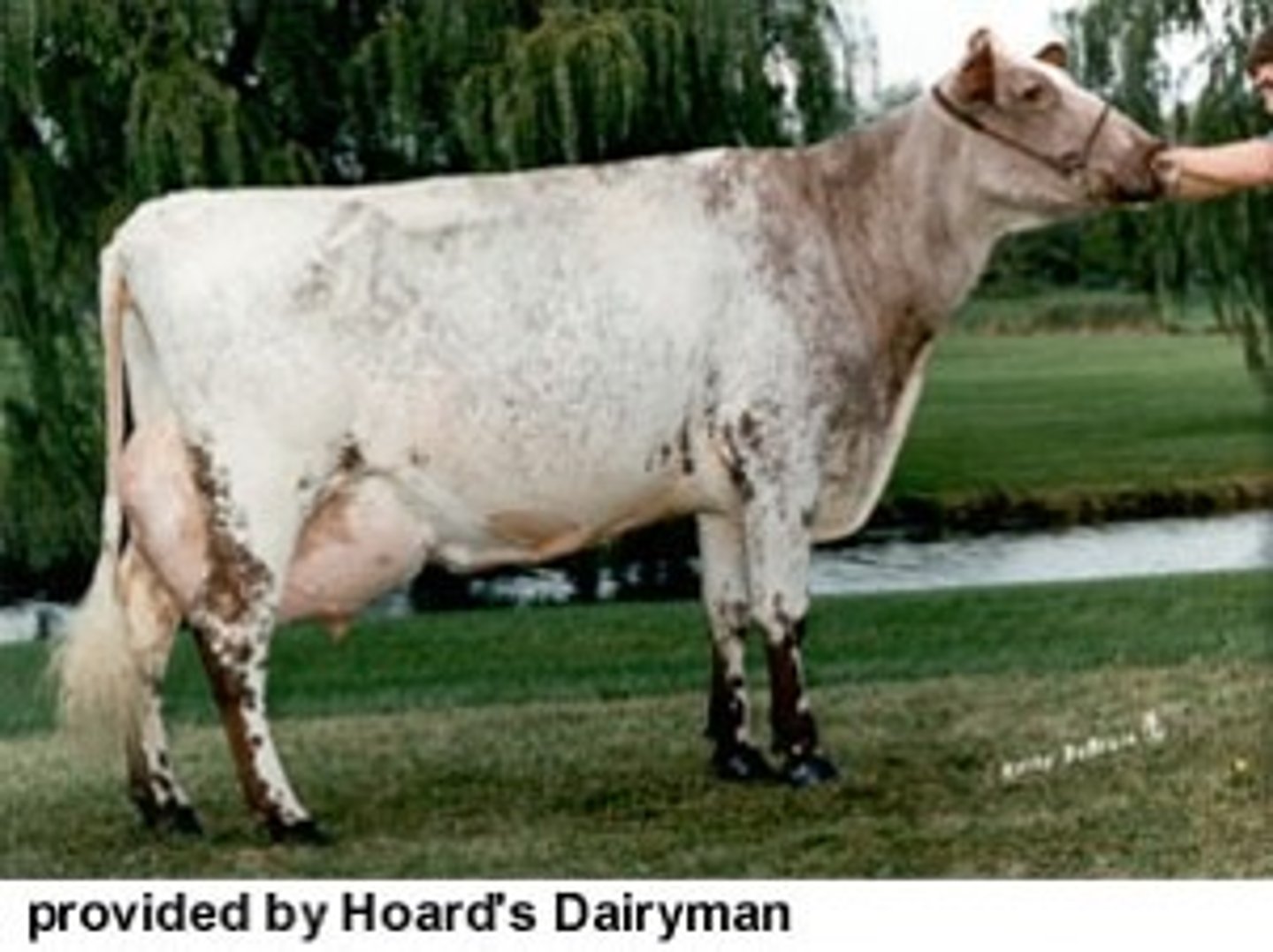
<p>Dairy breed from England, came to the US in the late 1800's. Lowest milk production, initially a dual purpose breed. Red, white, or roan in color. This breed makes up less the 0.5% of all dairy cows.</p>
6
New cards

*Holstein

Dairy breed from Holland, came to the US in 1795. This breed makes up 90% of the dairy cow population in the US and ranks highest in milk production. Large in stature (1500lbs) and has 2 different color schemes, black and white and red and white.
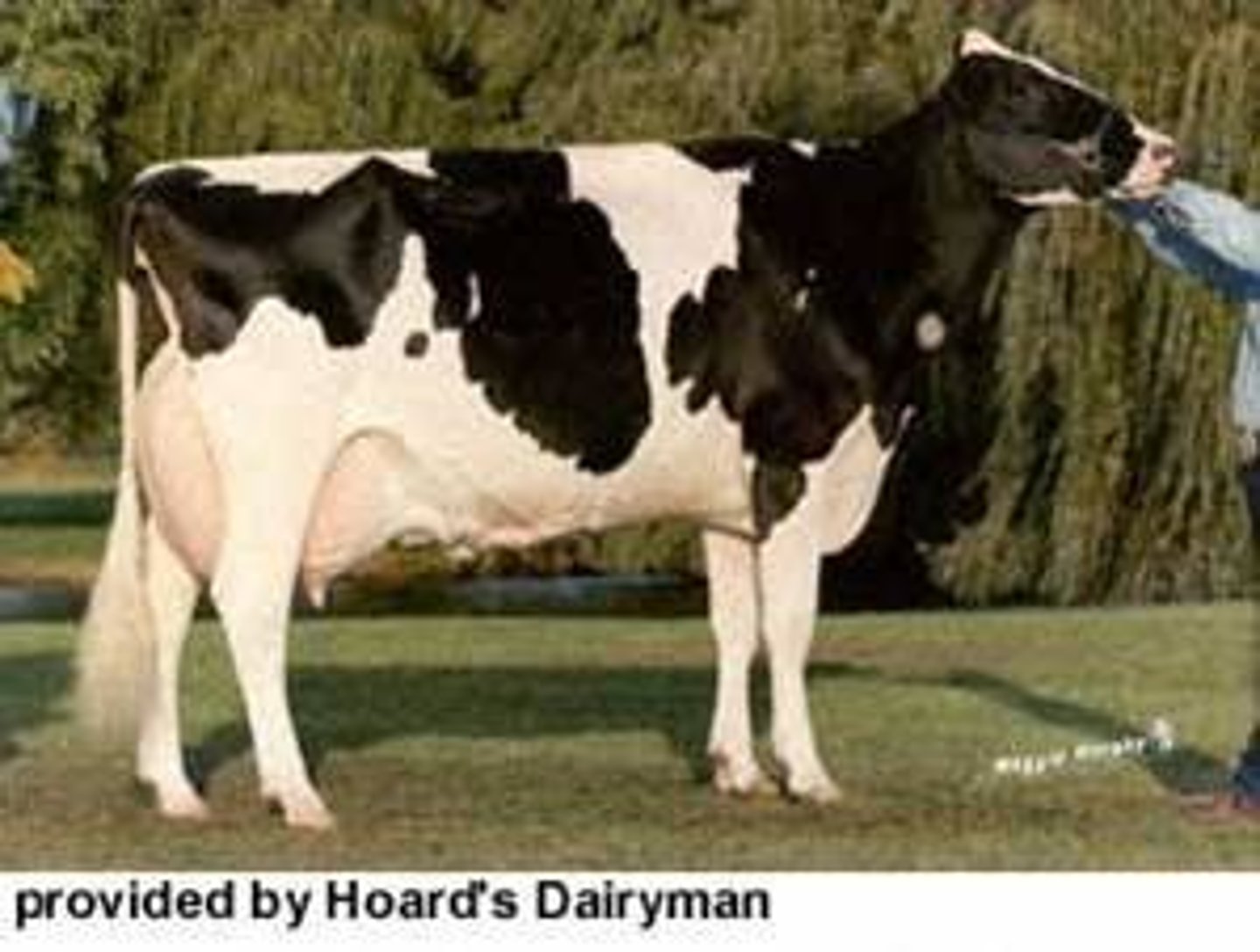
<p>Dairy breed from Holland, came to the US in 1795. This breed makes up 90% of the dairy cow population in the US and ranks highest in milk production. Large in stature (1500lbs) and has 2 different color schemes, black and white and red and white.</p>
7
New cards

*Angus

- Beef breed from Scotland ("English" and "maternal" breed)

- "maternal" breed.

- Small to moderate in size

- Always polled, no scurs

- Red and black varieties

- Most popular breed in US
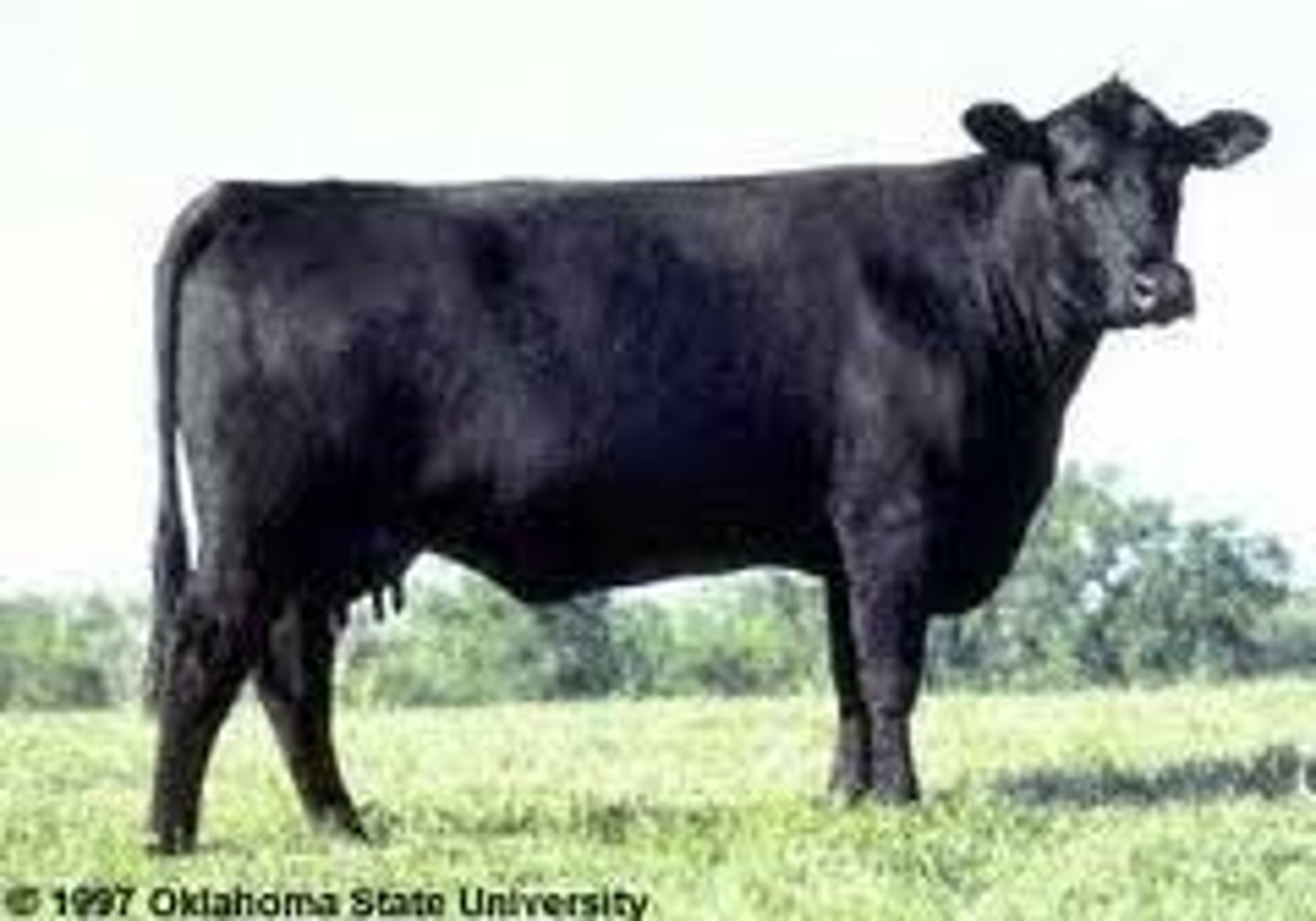
<p>- Beef breed from Scotland ("English" and "maternal" breed)</p><p>- "maternal" breed.</p><p>- Small to moderate in size</p><p>- Always polled, no scurs</p><p>- Red and black varieties</p><p>- Most popular breed in US</p>
8
New cards

*Hereford

- Beef breed from England ("English" and "maternal" breed)

- Red with white face and points

- Moderate size

- can range from dark red to almost yellow

- can be horned (distinguished, downward curve) or polled

- western range cow with moderate milk, breeds easy
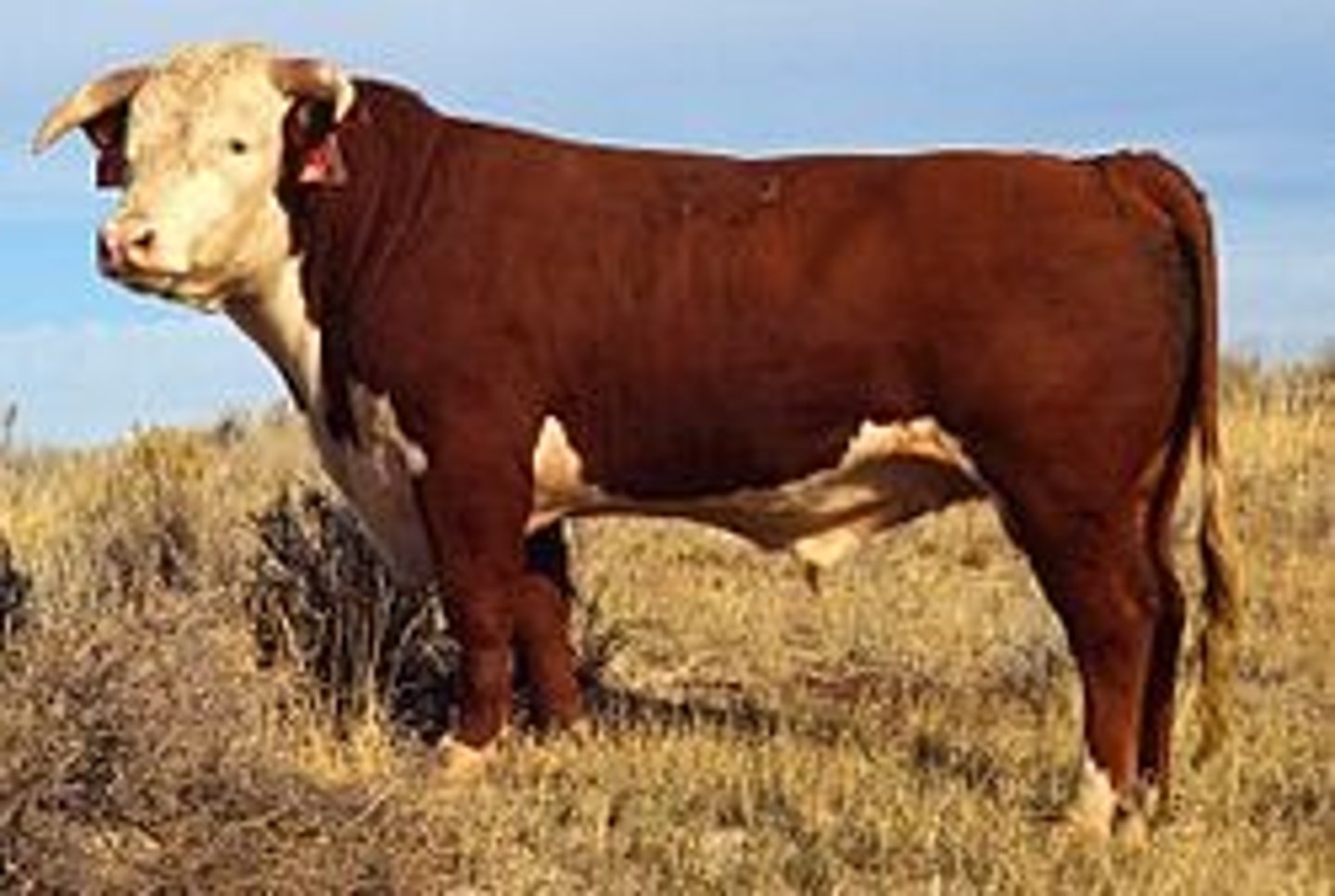
<p>- Beef breed from England ("English" and "maternal" breed)</p><p>- Red with white face and points</p><p>- Moderate size</p><p>- can range from dark red to almost yellow</p><p>- can be horned (distinguished, downward curve) or polled</p><p>- western range cow with moderate milk, breeds easy</p>
9
New cards

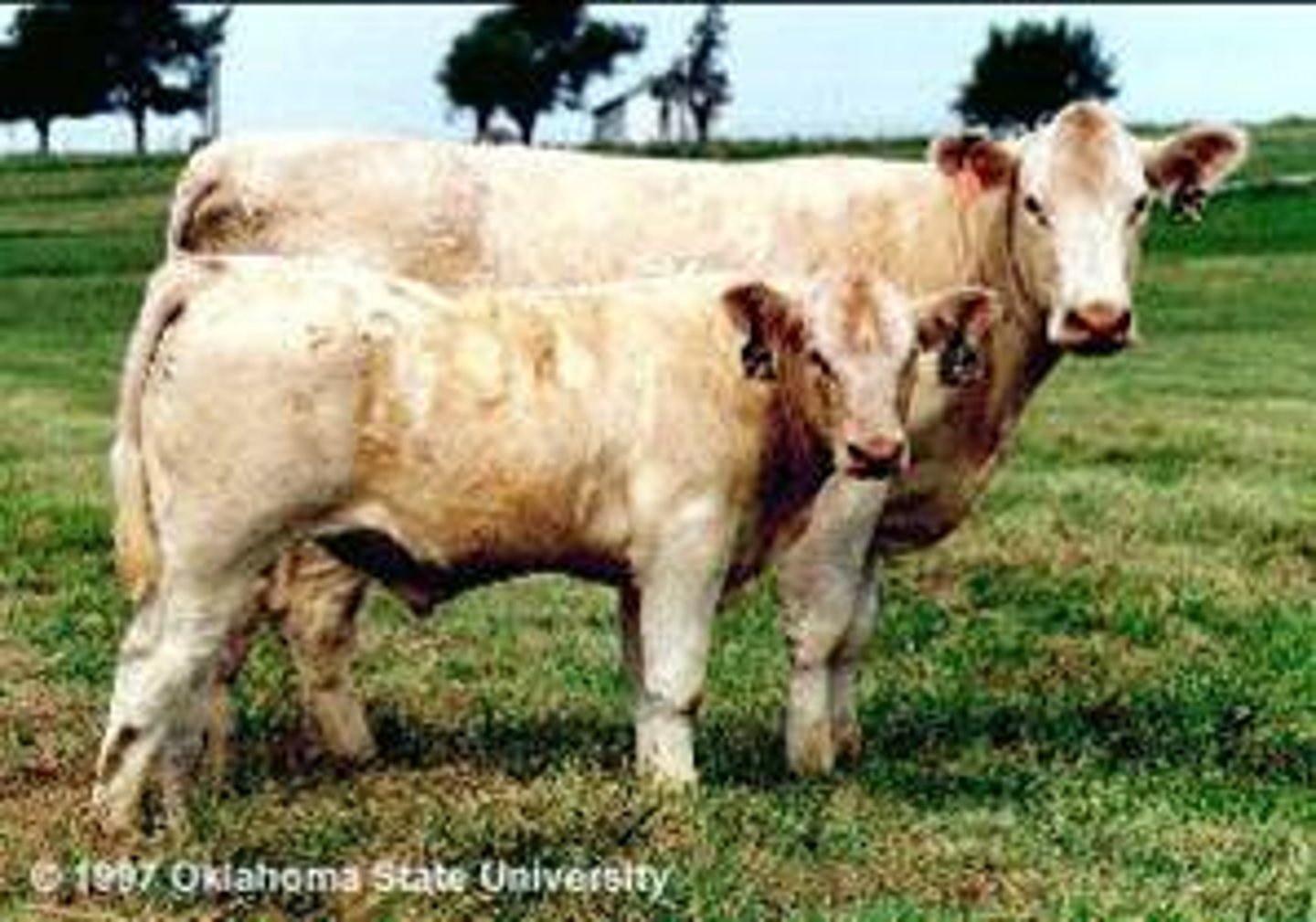
*Charolais

- Beef breed from France ("Continental/exotic" and "paternal" breed)

- White with reddish pigment in skin

- Heavy muscling and large framed

- White color is co-dominant to other color genes (not usual among cattle) which gives a diluted color to calves born from a cross
<p>- Beef breed from France ("Continental/exotic" and "paternal" breed)</p><p>- White with reddish pigment in skin</p><p>- Heavy muscling and large framed</p><p>- White color is co-dominant to other color genes (not usual among cattle) which gives a diluted color to calves born from a cross</p>
10
New cards

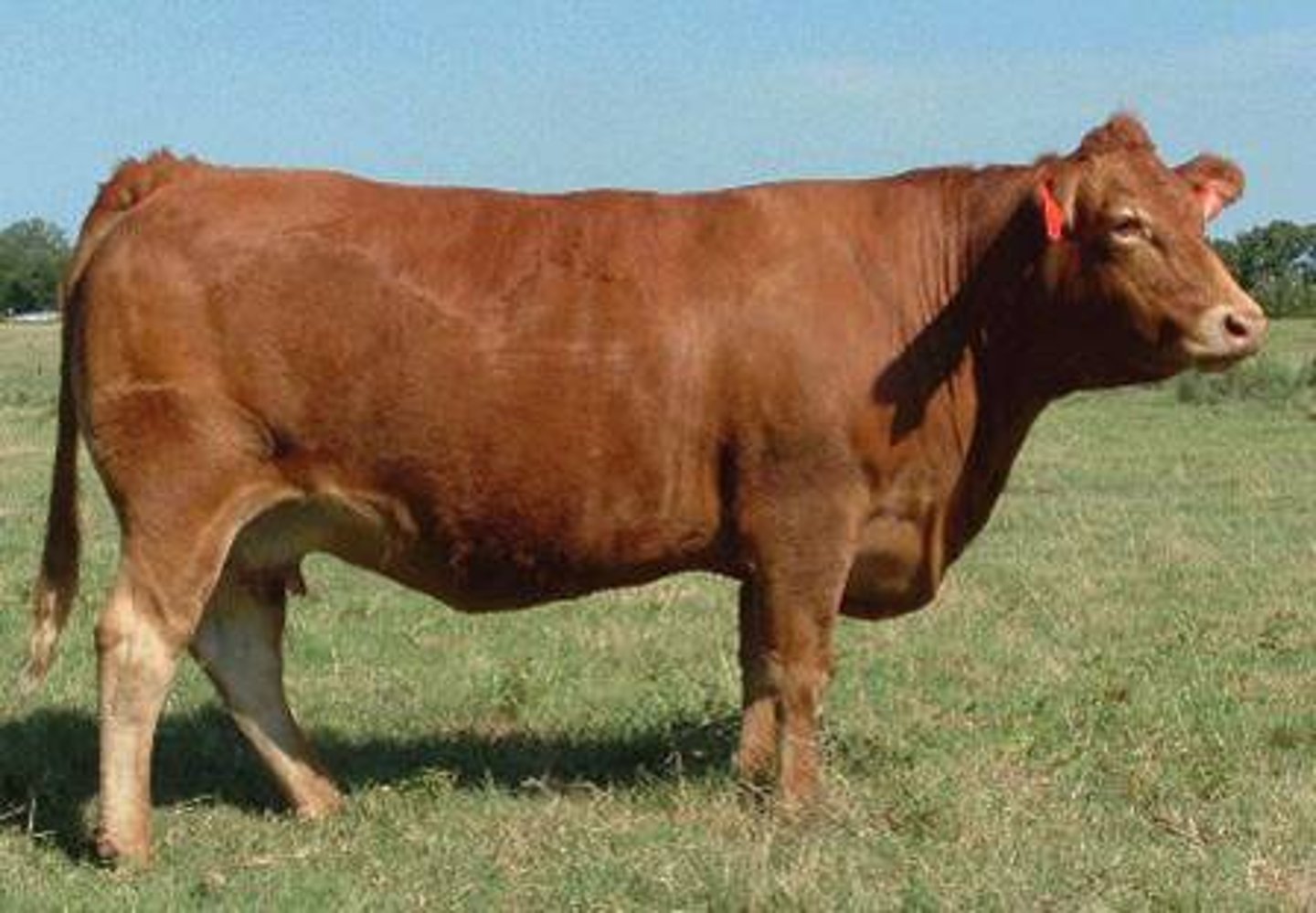
Limousin

- Beef breed from France ("Continental/exotic" and "paternal" breed)

- Originally red, but black lines now exist as well

- Large and heavily muscled with rounded quarters
<p>- Beef breed from France ("Continental/exotic" and "paternal" breed)</p><p>- Originally red, but black lines now exist as well</p><p>- Large and heavily muscled with rounded quarters</p>
11
New cards

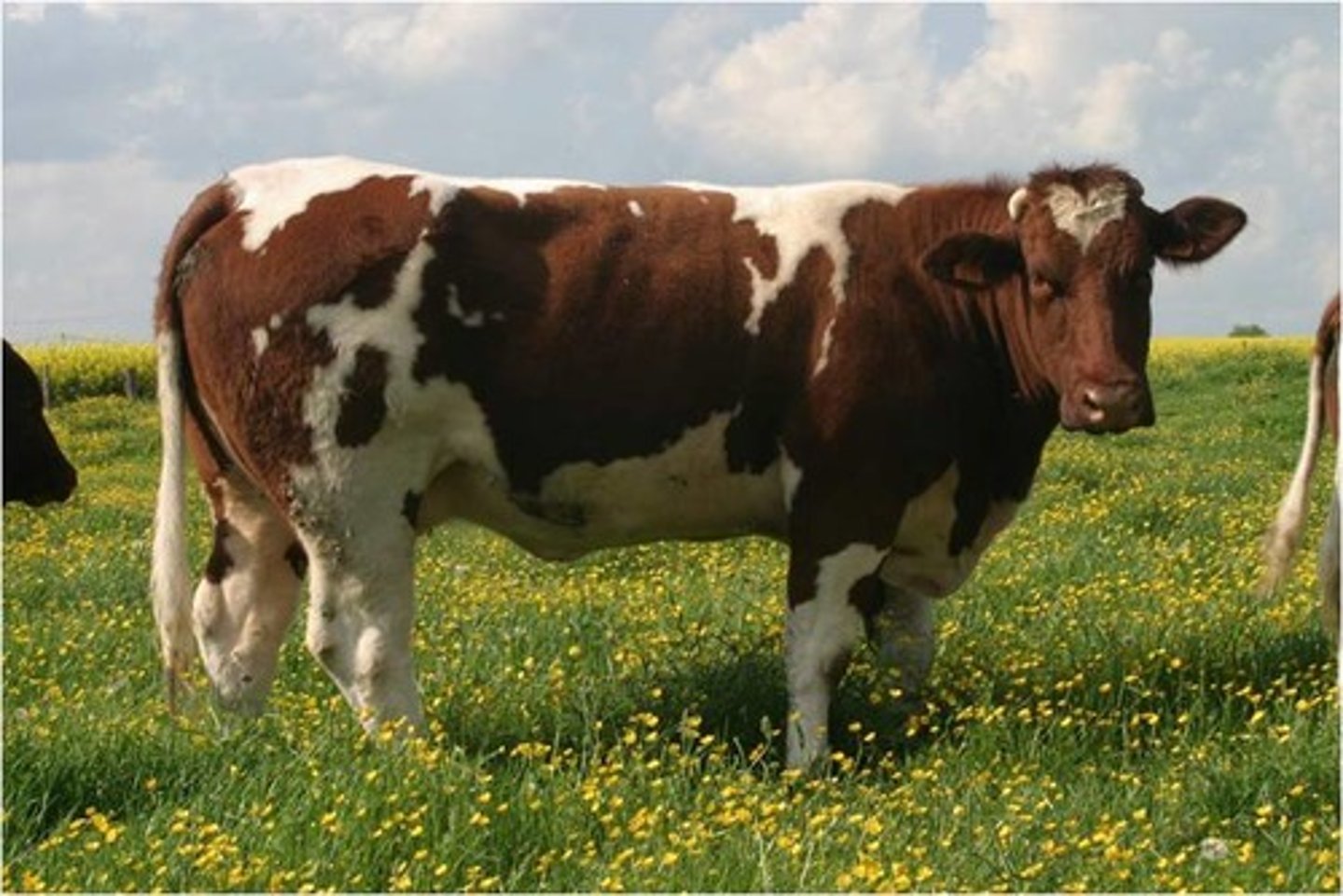
Maine Anjou

- Beef breed from France (paternal breed)

- Usually very large framed and big headed with rough shoulders and weak top

- Traditionally red and white spotted

- Can see roan and small when heavily influenced with American Shorthorn
<p>- Beef breed from France (paternal breed)</p><p>- Usually very large framed and big headed with rough shoulders and weak top</p><p>- Traditionally red and white spotted</p><p>- Can see roan and small when heavily influenced with American Shorthorn</p>
12
New cards

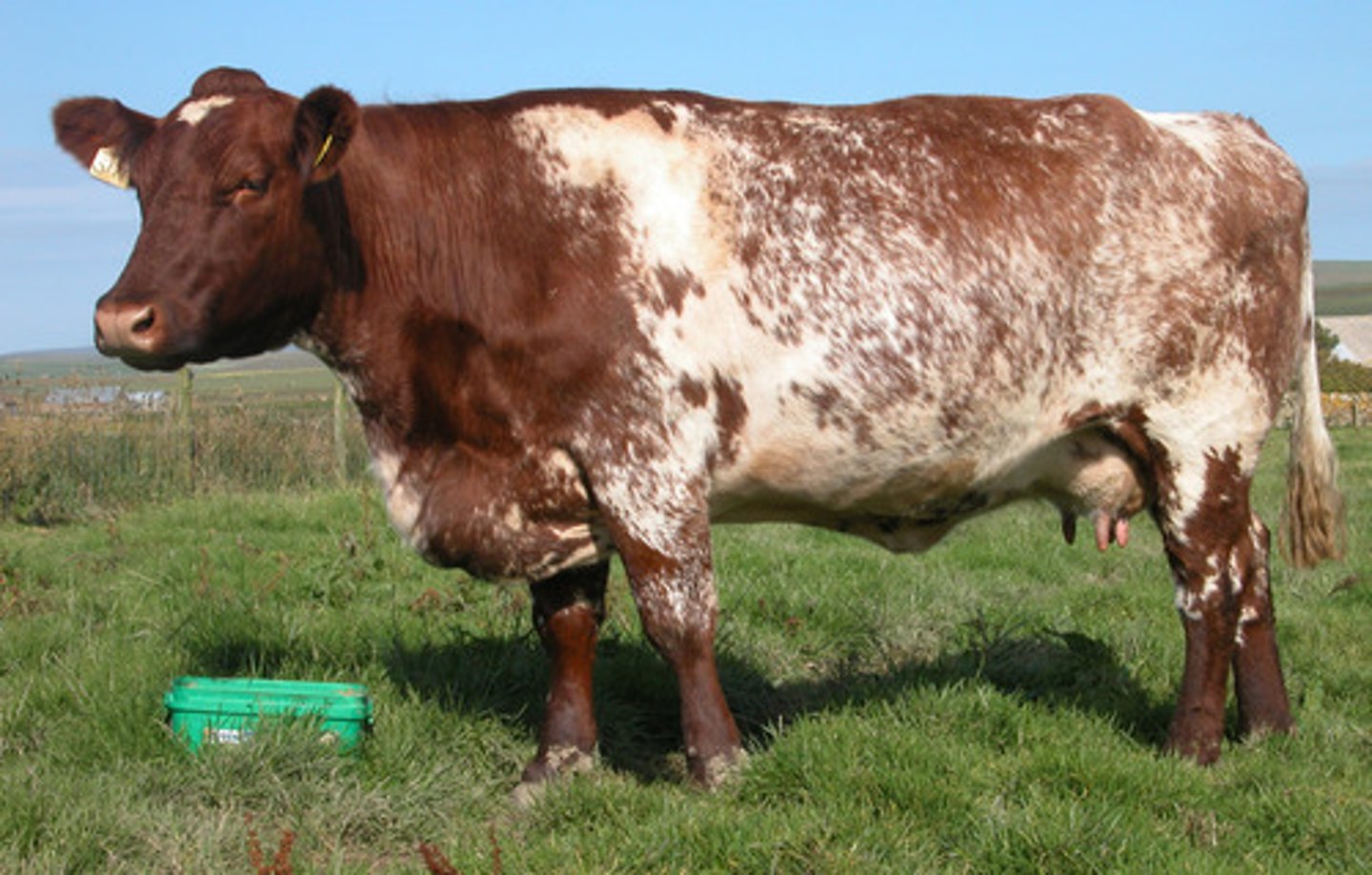
*Shorthorn

- Beef breed from NE coast of England, Scotland

- Maternal breed

- Red, roan, or white in color

- Dual purpose breed however, it is more common to use this breed for dairy
<p>- Beef breed from NE coast of England, Scotland</p><p>- Maternal breed</p><p>- Red, roan, or white in color</p><p>- Dual purpose breed however, it is more common to use this breed for dairy</p>
13
New cards

*Brahman

- Beef breed developed in the US but derived from a breed from India

- Maternal breed

- Long, down ears, large dewlap, and a hump (crested neck)

- Colors range from dark to light grey

- Seen often in bull riding events

- Popular in the southern US due to their tolerance of heat

- Very strong resistance to parasites
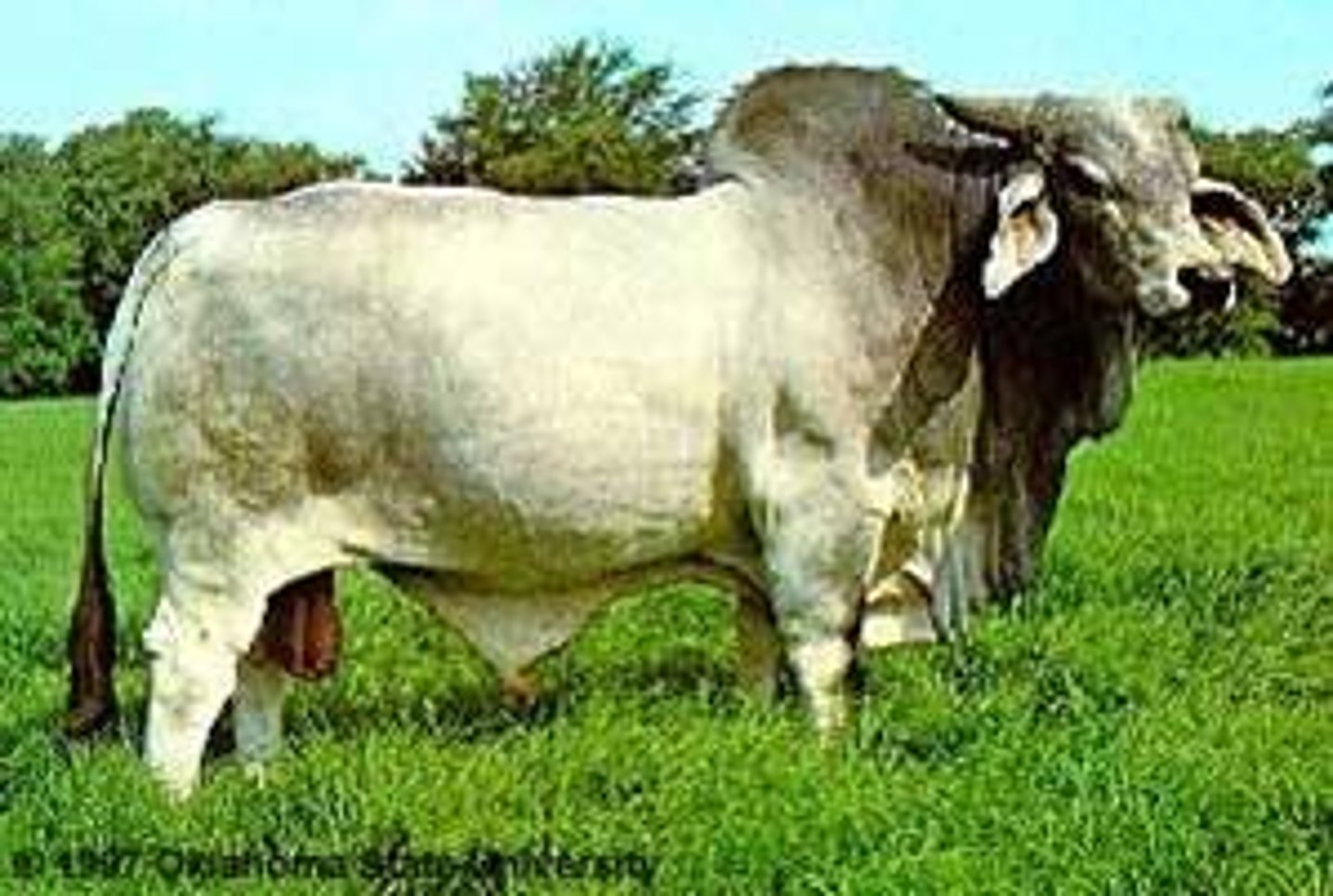
<p>- Beef breed developed in the US but derived from a breed from India</p><p>- Maternal breed</p><p>- Long, down ears, large dewlap, and a hump (crested neck)</p><p>- Colors range from dark to light grey</p><p>- Seen often in bull riding events</p><p>- Popular in the southern US due to their tolerance of heat</p><p>- Very strong resistance to parasites</p>
14
New cards

*Brangus

- US composite, made up of 5/8 angus and 3/8 brahman

- black with slight appearance of hump

- Maternal breed

15
New cards

Gelbvieh

- Originated in southern german in the late 1700s

- Can be maternal OR paternal breed, varies by operation

- Red color with strong skin pigmentation

- Black lines developed in US

- More moderate in size than other European imports

- Commonly heavier dewlap

- Known best for high reproductive performance compared to other European imports

- Is able to restrict blood flow to sites of heavy parasite infestation, kills the parasite
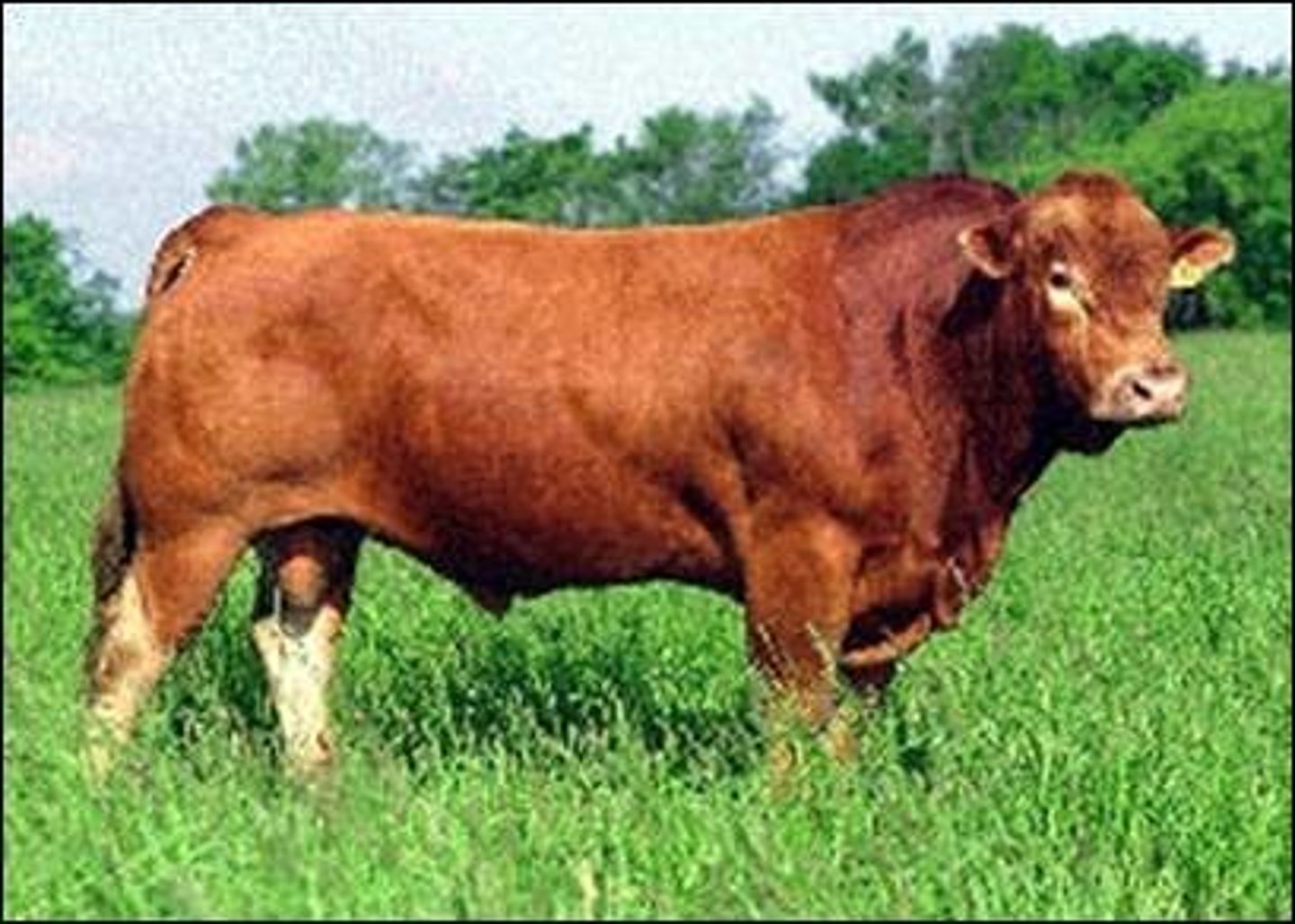
<p>- Originated in southern german in the late 1700s</p><p>- Can be maternal OR paternal breed, varies by operation</p><p>- Red color with strong skin pigmentation</p><p>- Black lines developed in US</p><p>- More moderate in size than other European imports</p><p>- Commonly heavier dewlap</p><p>- Known best for high reproductive performance compared to other European imports</p><p>- Is able to restrict blood flow to sites of heavy parasite infestation, kills the parasite</p>
16
New cards

*Longhorn

- Originated in the US, derived from Crillio cattle that were left feral from Spanish explorers

- Maternal breed

- Moderate to small in size

- Colored with various levels of white, red, and black mixing

- Very long and distinguished horns

- Durable in tough environmental conditions

- Easy to calve
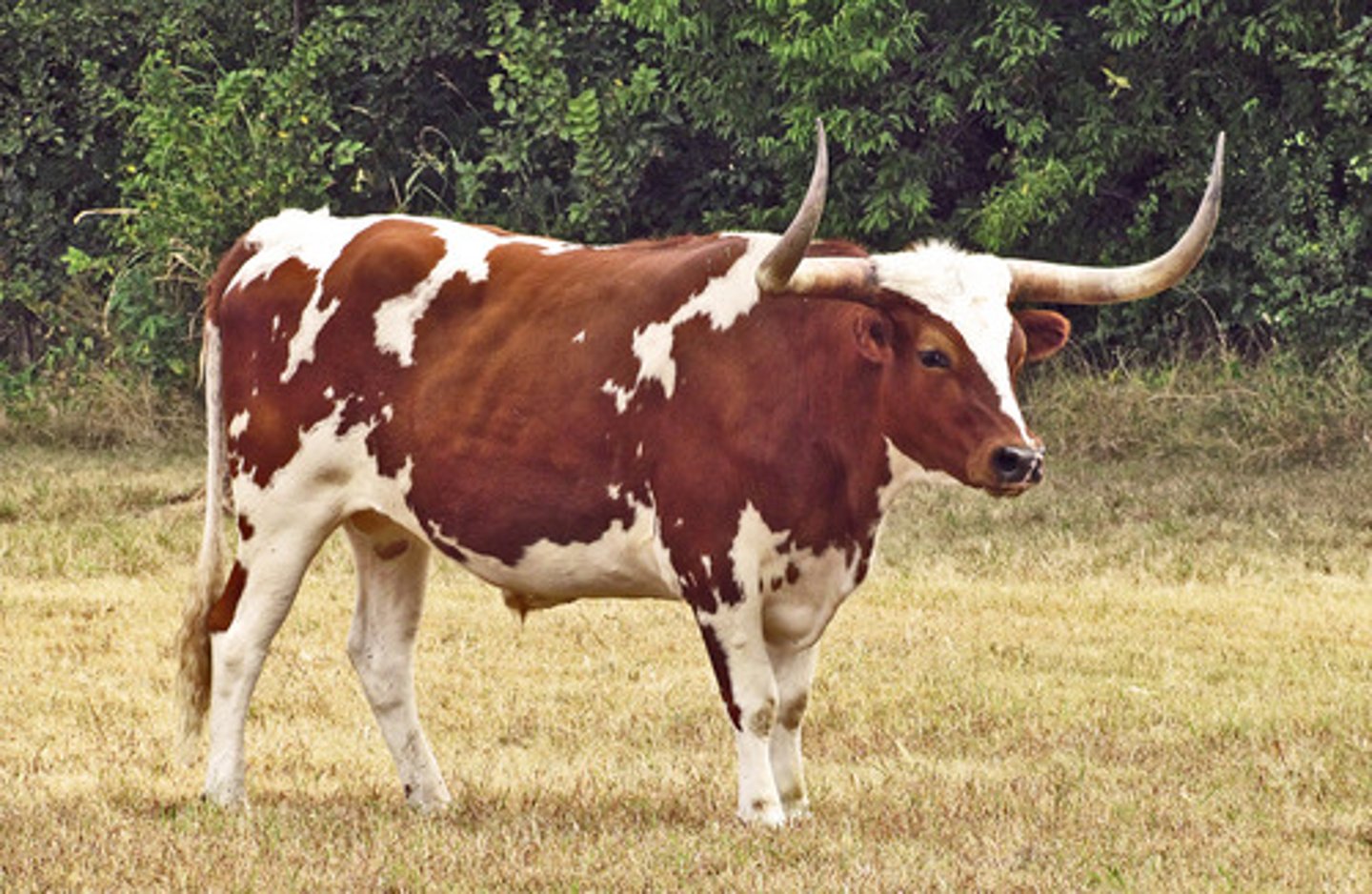
<p>- Originated in the US, derived from Crillio cattle that were left feral from Spanish explorers</p><p>- Maternal breed</p><p>- Moderate to small in size</p><p>- Colored with various levels of white, red, and black mixing</p><p>- Very long and distinguished horns</p><p>- Durable in tough environmental conditions</p><p>- Easy to calve</p>
17
New cards

Simmental

- Originated from Switzerland, but German lines also exist

- Paternal and continental/exotic breed

- Usually very large

- Traditionally yellow or red spotted, German lines usually solid red, and American lines can be black or grey

- Bred for triple purpose in Europe, but represented world wide with many different strains and names
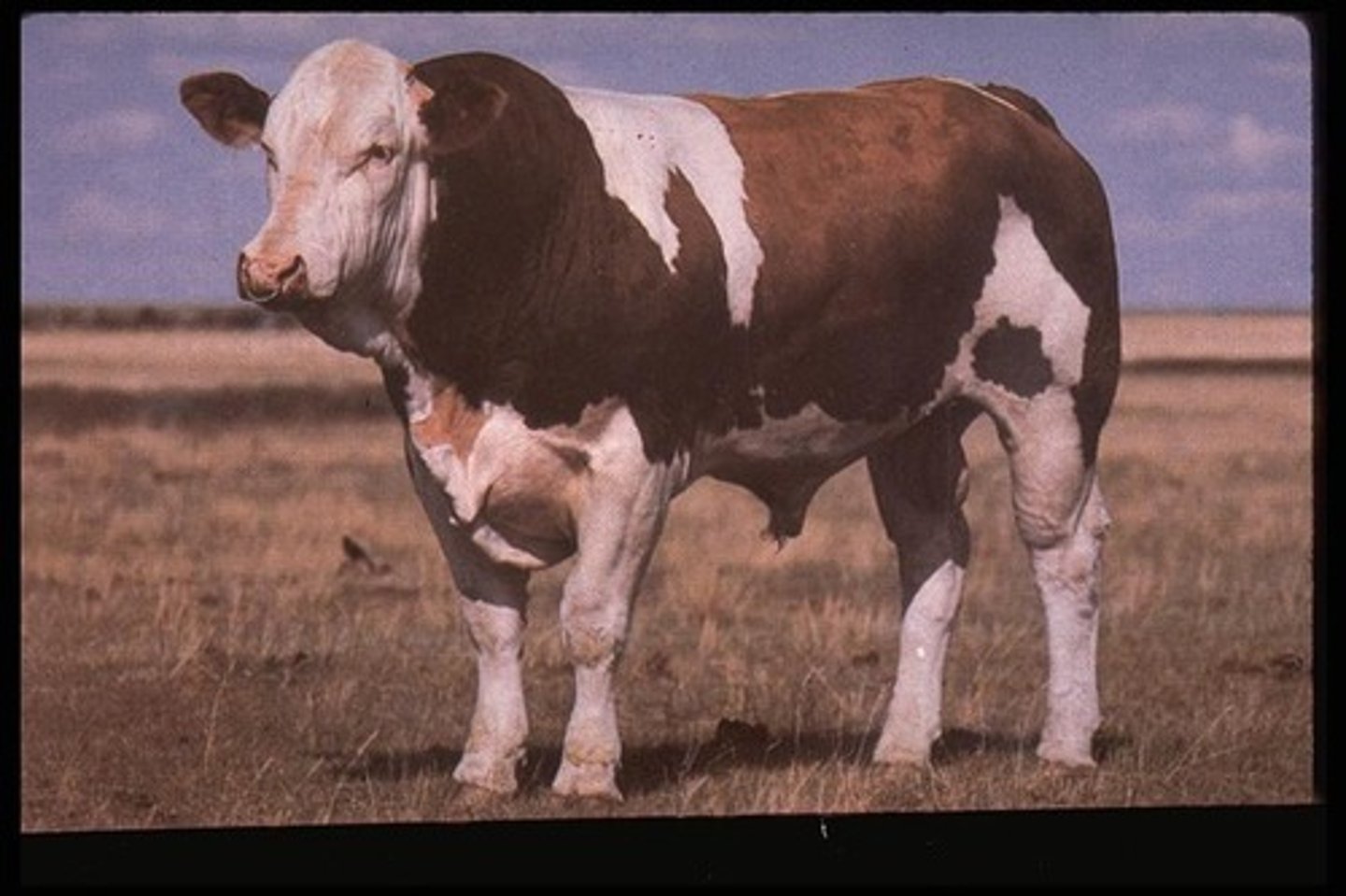
<p>- Originated from Switzerland, but German lines also exist</p><p>- Paternal and continental/exotic breed</p><p>- Usually very large</p><p>- Traditionally yellow or red spotted, German lines usually solid red, and American lines can be black or grey</p><p>- Bred for triple purpose in Europe, but represented world wide with many different strains and names</p>
18
New cards

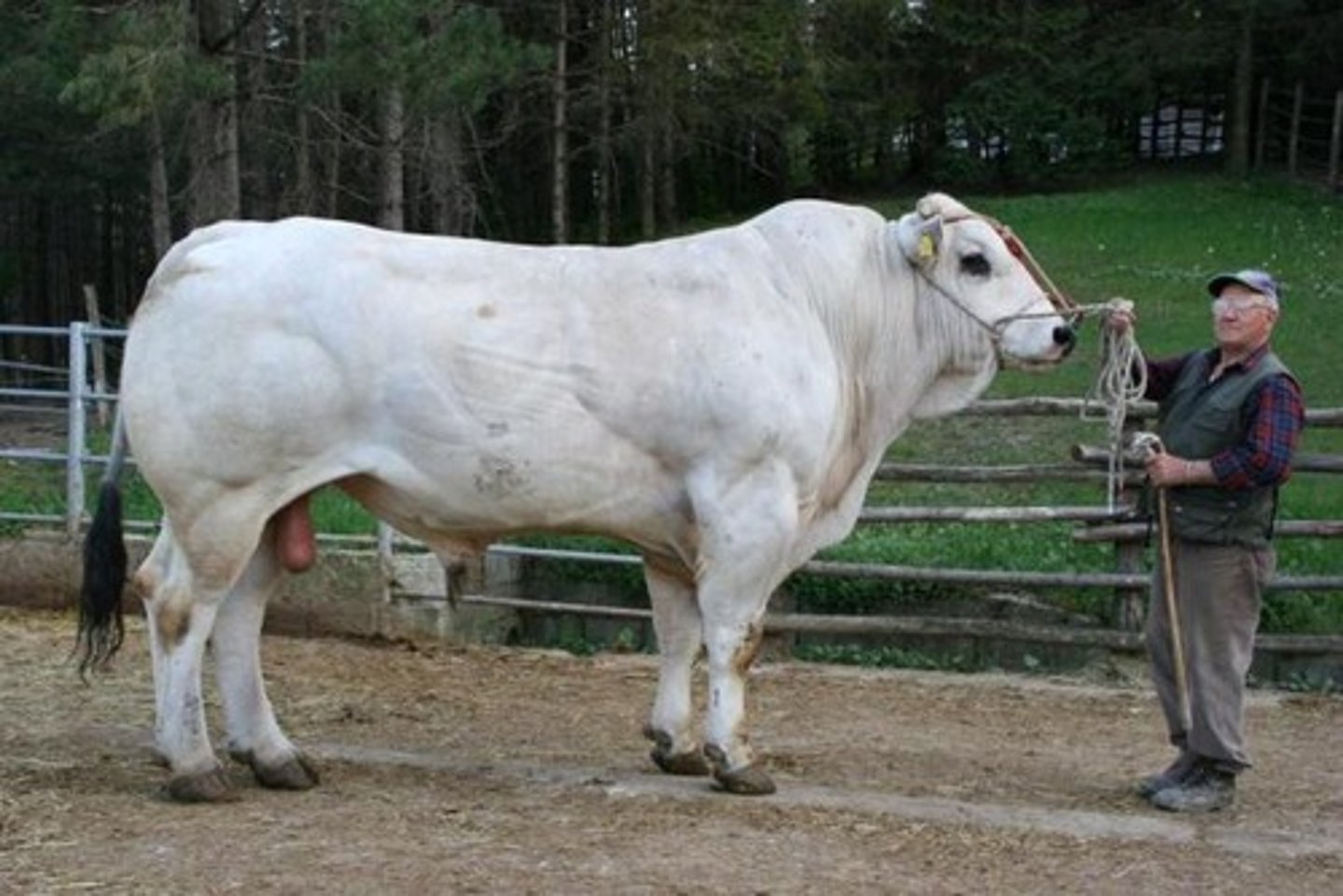
*Chianina

- Originated from Italy

- Paternal breed

- White with black eyes and switch

- American lines are small and black to suit youth show industry

- Crosses with brahman lines tend to have a striped or brindle pattern
<p>- Originated from Italy</p><p>- Paternal breed</p><p>- White with black eyes and switch</p><p>- American lines are small and black to suit youth show industry</p><p>- Crosses with brahman lines tend to have a striped or brindle pattern</p>
19
New cards

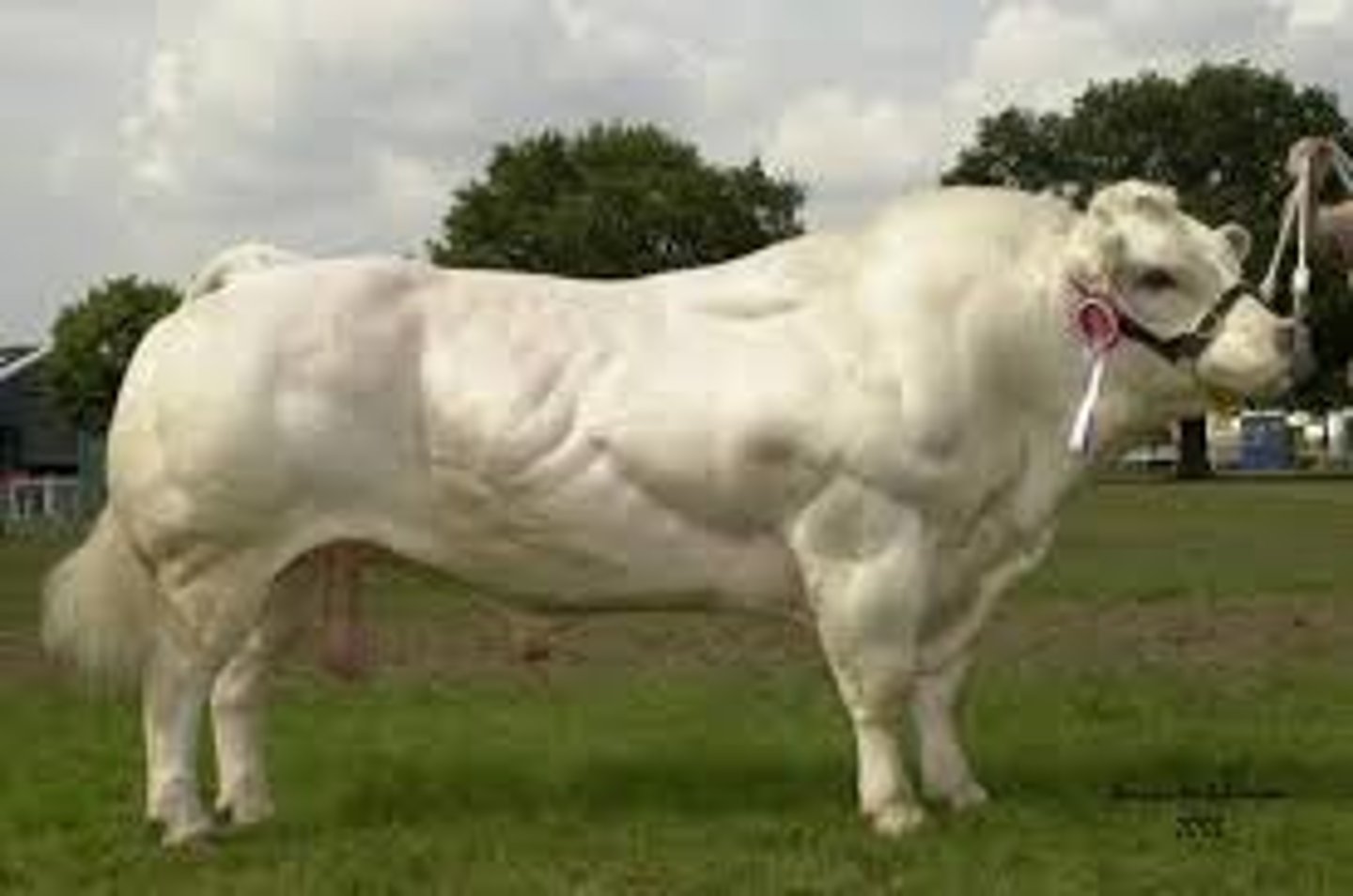
Belgian Blue

- Originated from Belgium

- Paternal and Exotic/continental breed

- Spotted to white with usual roan pigment

- Double muscled

- Often shown sheared off to show extreme muscle expression

- Produces unusually tender meat
<p>- Originated from Belgium</p><p>- Paternal and Exotic/continental breed</p><p>- Spotted to white with usual roan pigment</p><p>- Double muscled</p><p>- Often shown sheared off to show extreme muscle expression</p><p>- Produces unusually tender meat</p>
20
New cards

Maternal Breeds

- Basis of the cow herd

- Cost effective, forage efficient

- Sensibly sized, low input, easy fleshing (important traits for survival and reproductive fitness, milking ability matches the environment)

21
New cards

Paternal Breeds

- Larger, later maturing, faster growing

- Leaner at typical slaughter weights and produce great carcass characteristics

- More expensive to maintain/not as functional in the environment in which the cow herd must produce

22
New cards

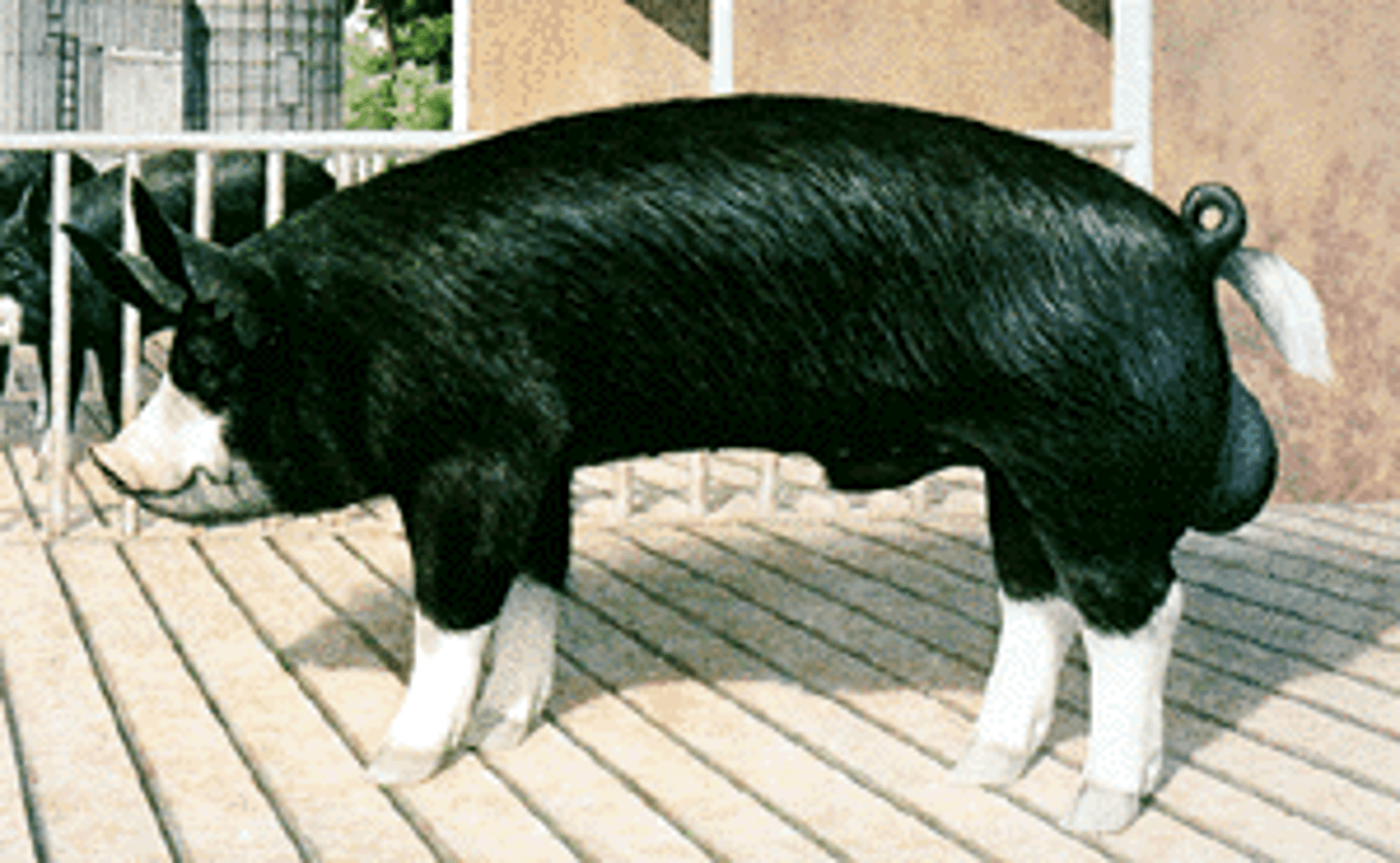
*Berkshire

- Terminal breed

- Came to America in 1823

- Can be identified by white markings on legs, muzzle, and tail, and the erect ears
<p>- Terminal breed</p><p>- Came to America in 1823</p><p>- Can be identified by white markings on legs, muzzle, and tail, and the erect ears</p>
23
New cards

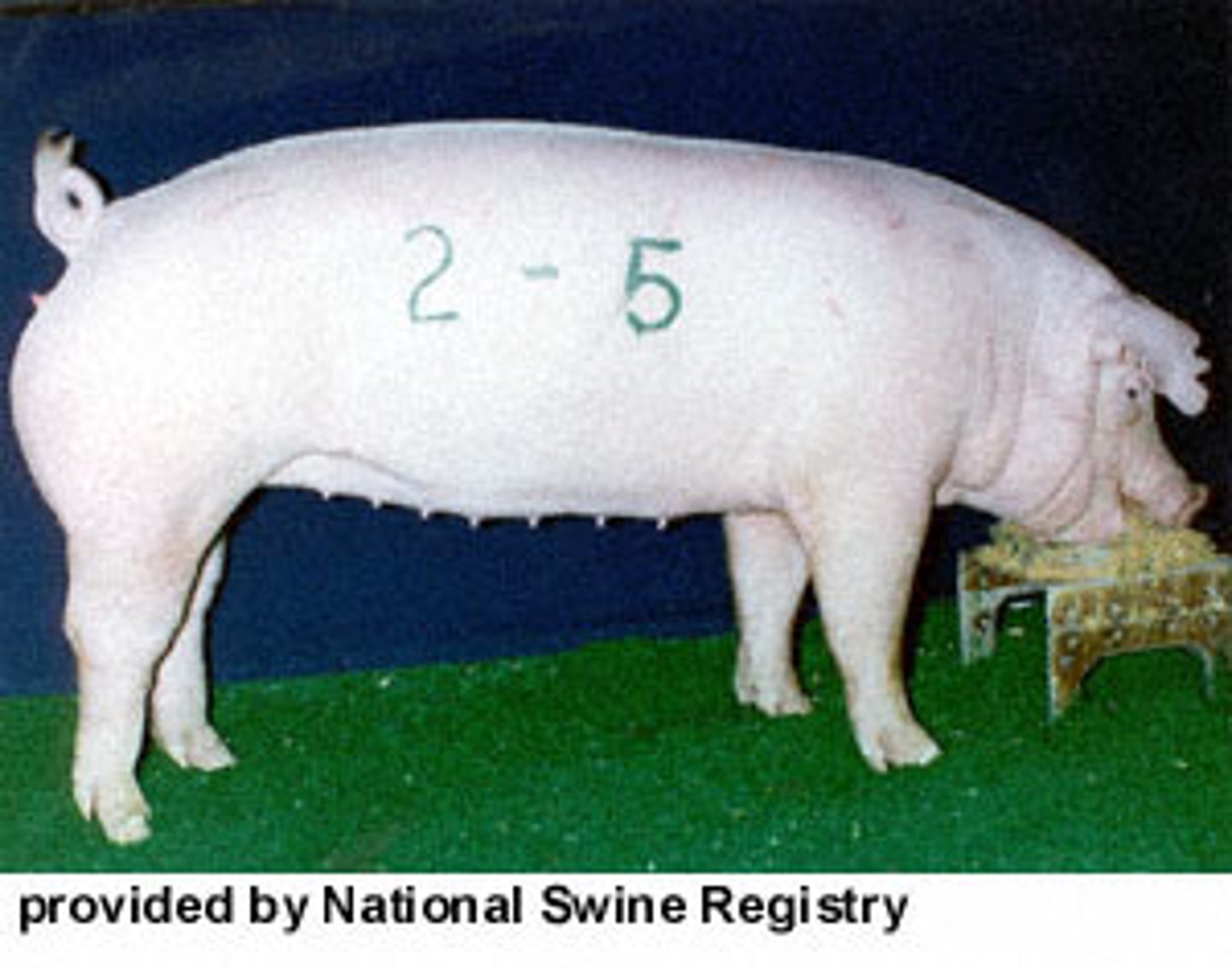
Chester White

- Maternal breed

- Originated in America in the late 1810s

- All white and has down ears
<p>- Maternal breed</p><p>- Originated in America in the late 1810s</p><p>- All white and has down ears</p>
24
New cards

*Duroc

- Terminal breed

- Originated in America in the early 1800s

- Can be identified by their solid red color and down ears
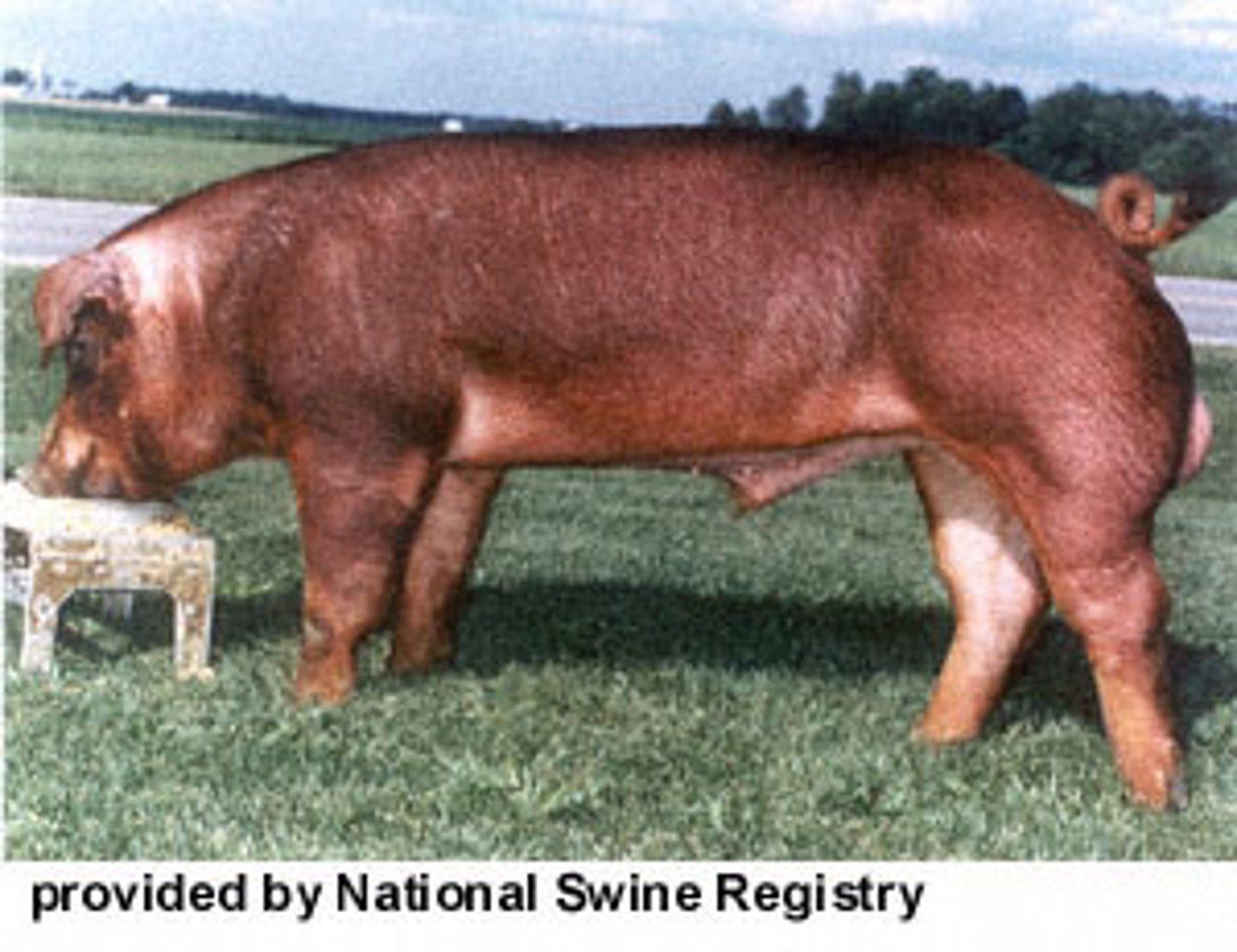
<p>- Terminal breed</p><p>- Originated in America in the early 1800s</p><p>- Can be identified by their solid red color and down ears</p>
25
New cards

*Hampshire

- Terminal breed

- Can be identified by its black body with a white belt on its shoulders and front legs, and its erect ears.
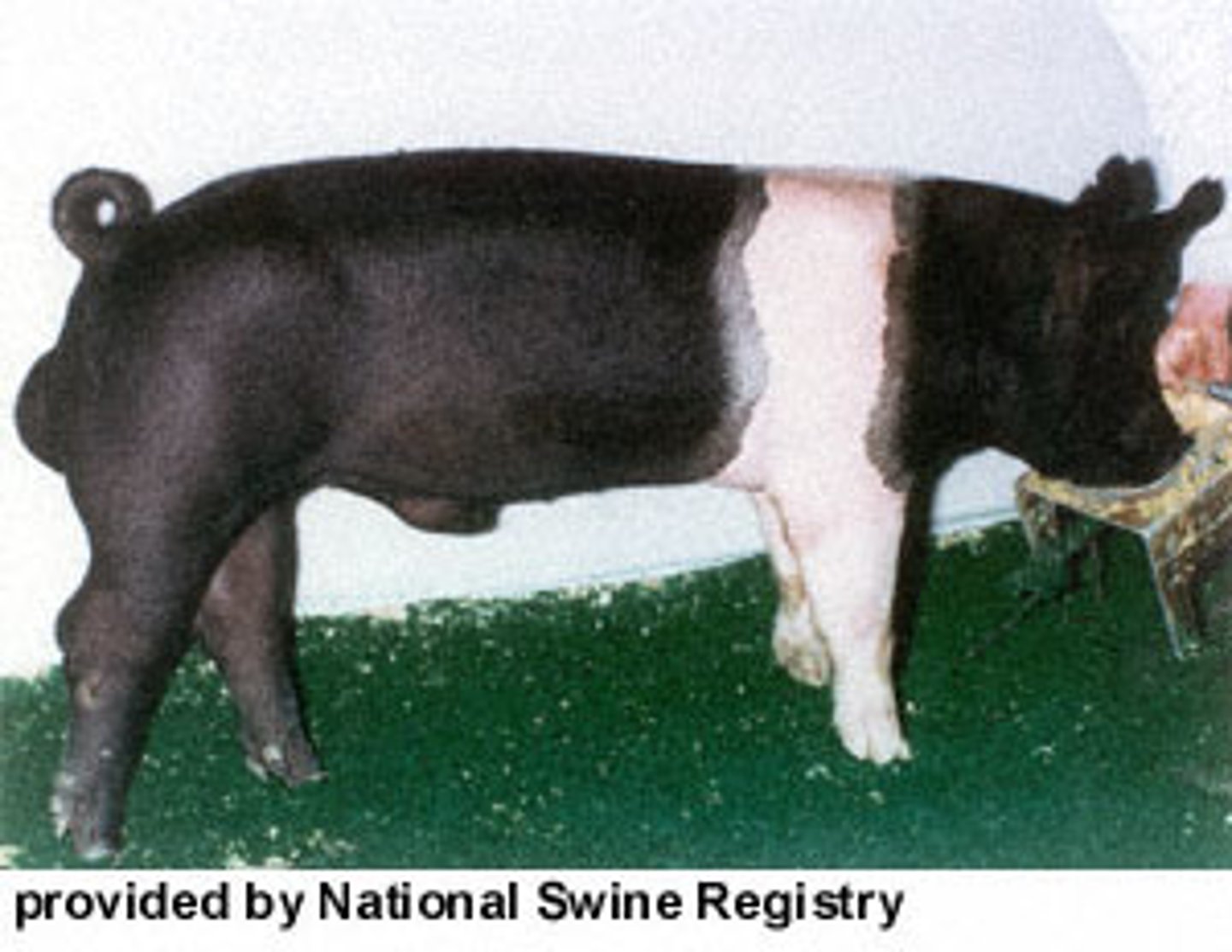
<p>- Terminal breed</p><p>- Can be identified by its black body with a white belt on its shoulders and front legs, and its erect ears.</p>
26
New cards

Hereford

- Terminal breed

- Can by identified by its red body and white face and legs, and down ears
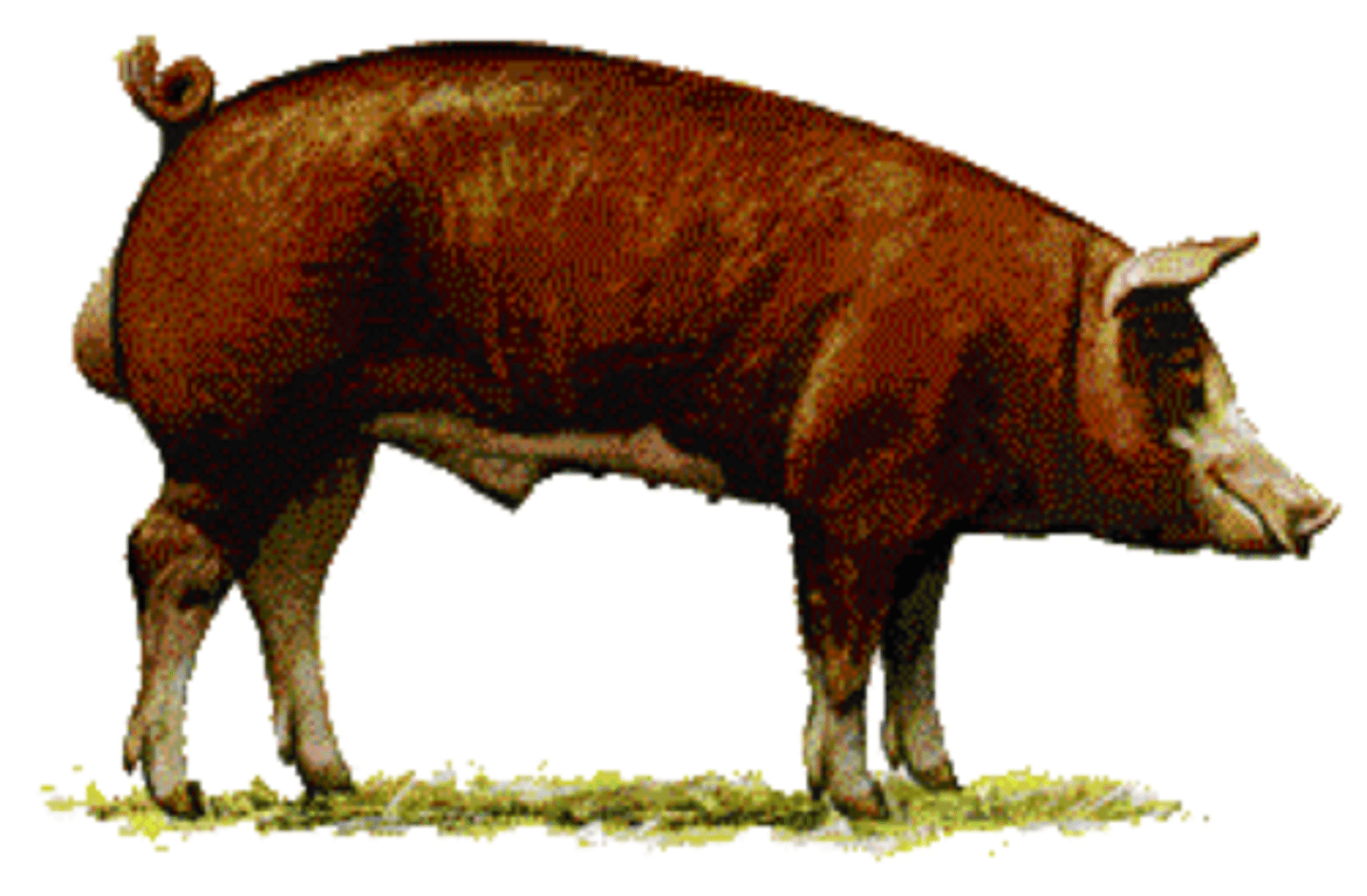
<p>- Terminal breed</p><p>- Can by identified by its red body and white face and legs, and down ears</p>
27
New cards

*Landrace

- Maternal breed

- Down ears

- Solid white in color, long in the body, less pronounced arch in the back compared to most other breeds
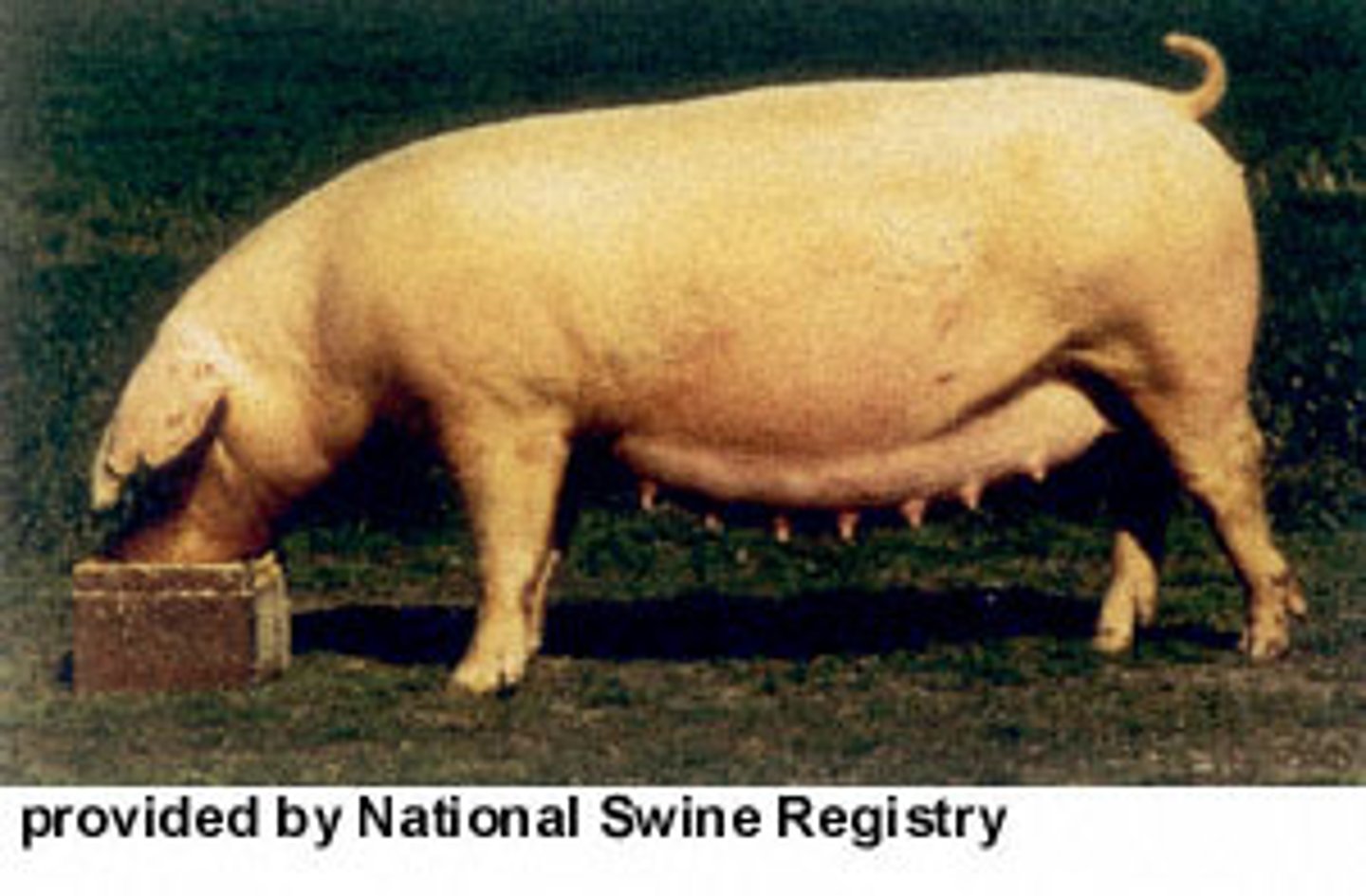
<p>- Maternal breed</p><p>- Down ears</p><p>- Solid white in color, long in the body, less pronounced arch in the back compared to most other breeds</p>
28
New cards

Meishan

- Maternal breed

- Known for its wrinkles in the face and skin and their high embryo survival rate
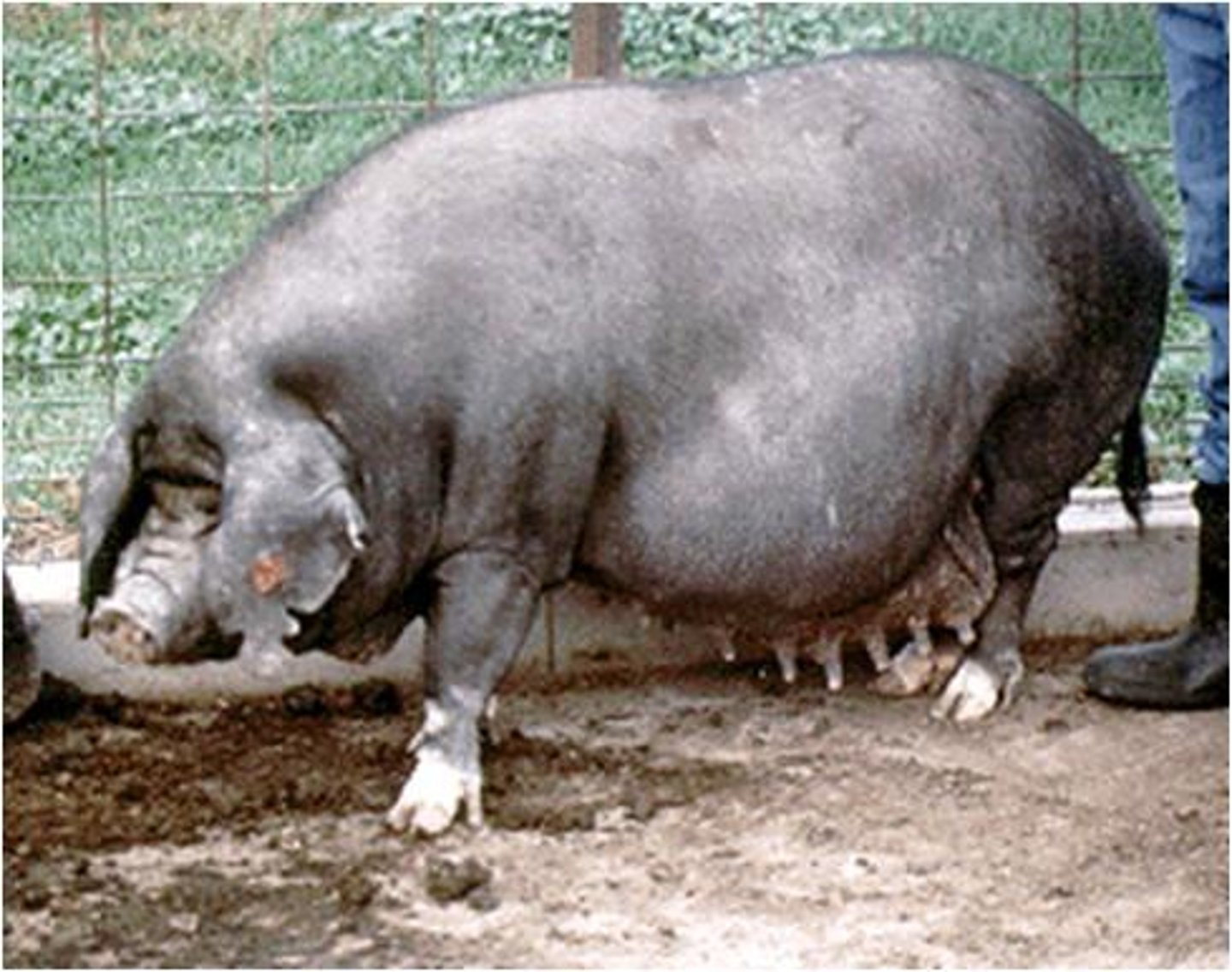
<p>- Maternal breed</p><p>- Known for its wrinkles in the face and skin and their high embryo survival rate</p>
29
New cards

Pietrain

- Terminal breed

- Originated in Belgium

- Known for their ability to improve pork quality in crosses

- Identified by their shorter legs, light spots, and erect ears
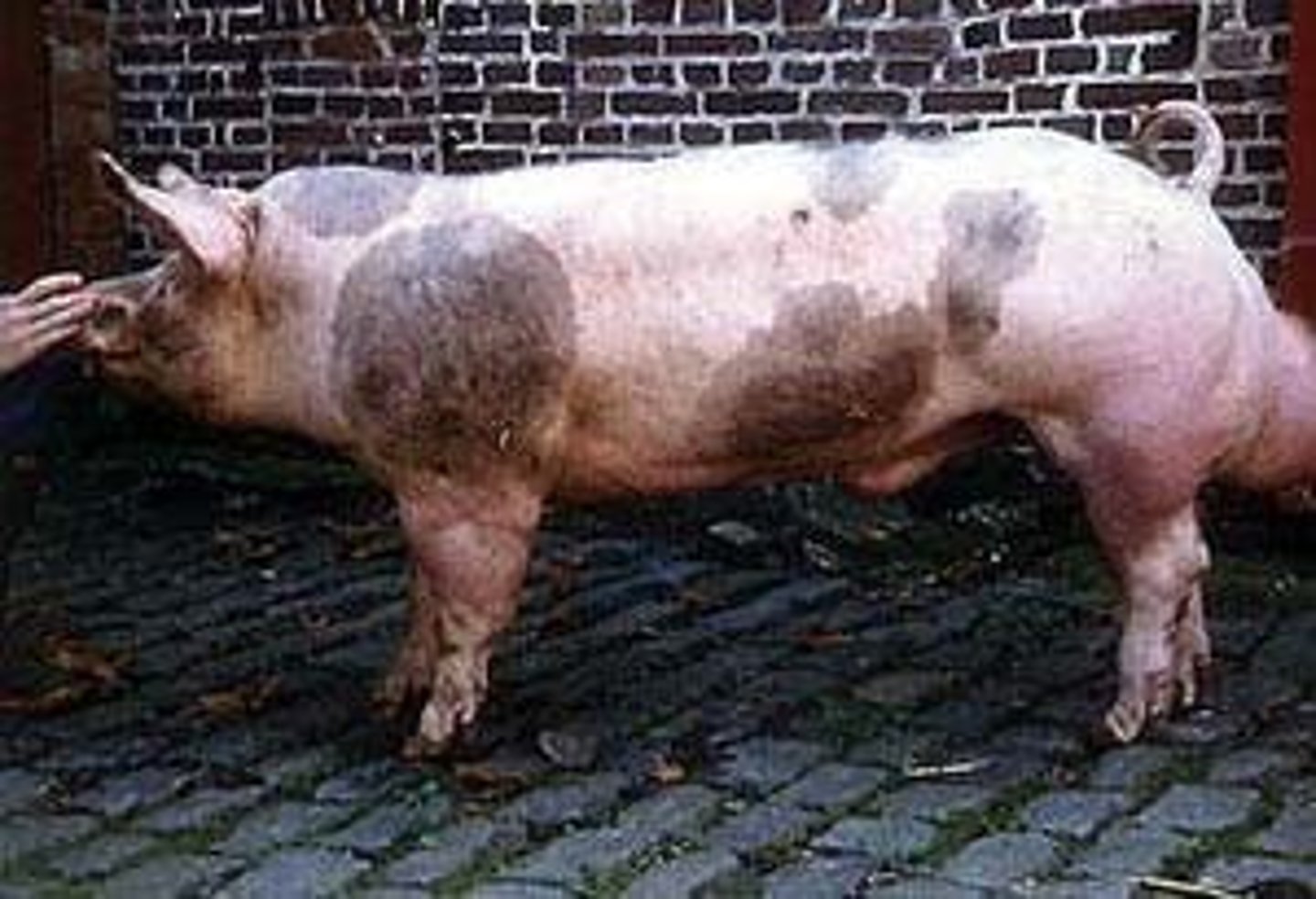
<p>- Terminal breed</p><p>- Originated in Belgium</p><p>- Known for their ability to improve pork quality in crosses</p><p>- Identified by their shorter legs, light spots, and erect ears</p>
30
New cards

*Spotted

- Terminal Breed

- Known for dark black spots
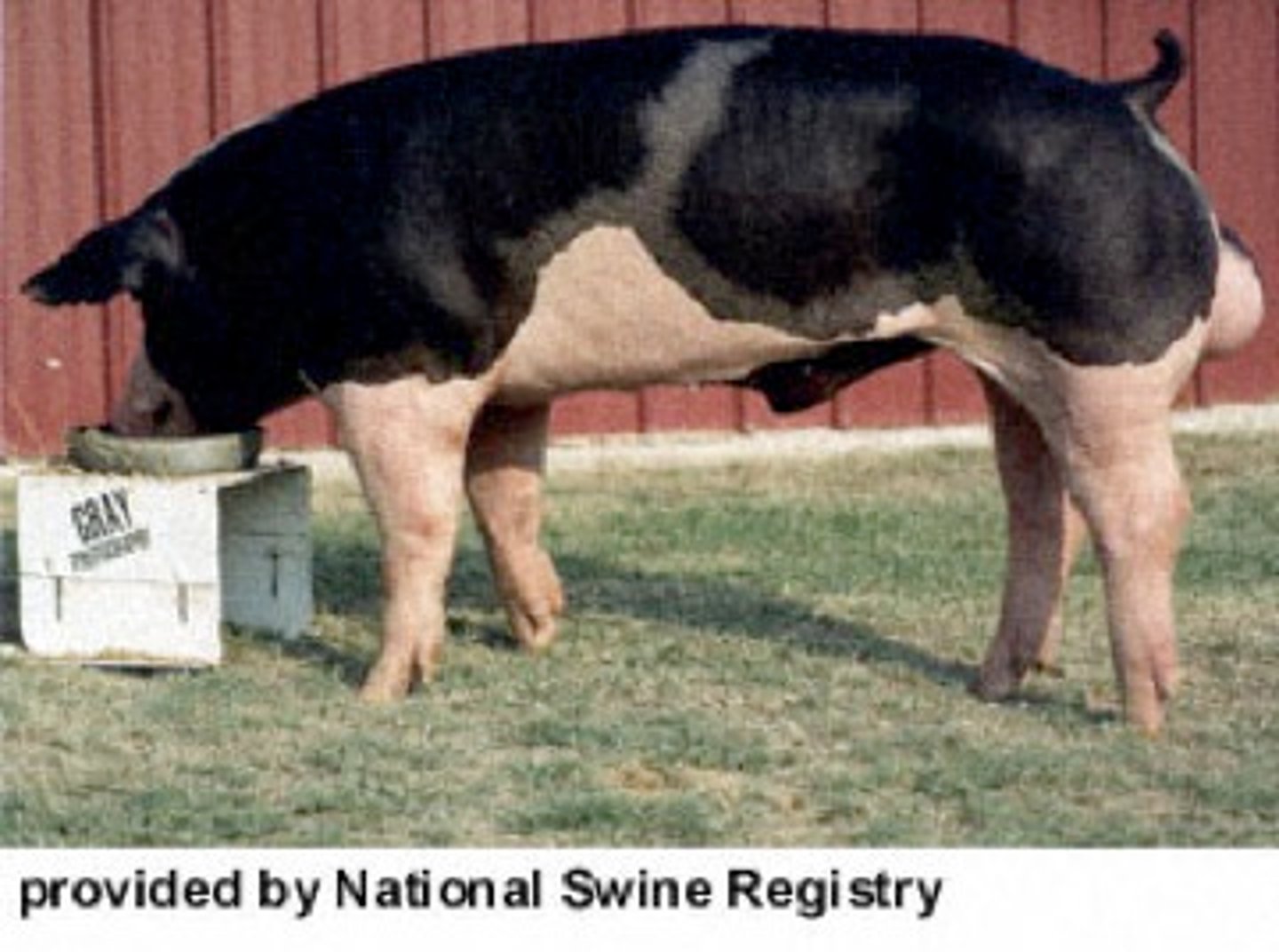
<p>- Terminal Breed</p><p>- Known for dark black spots</p>
31
New cards

*Yorkshire

- Maternal breed

- Known by their large, white bodies and erect ears
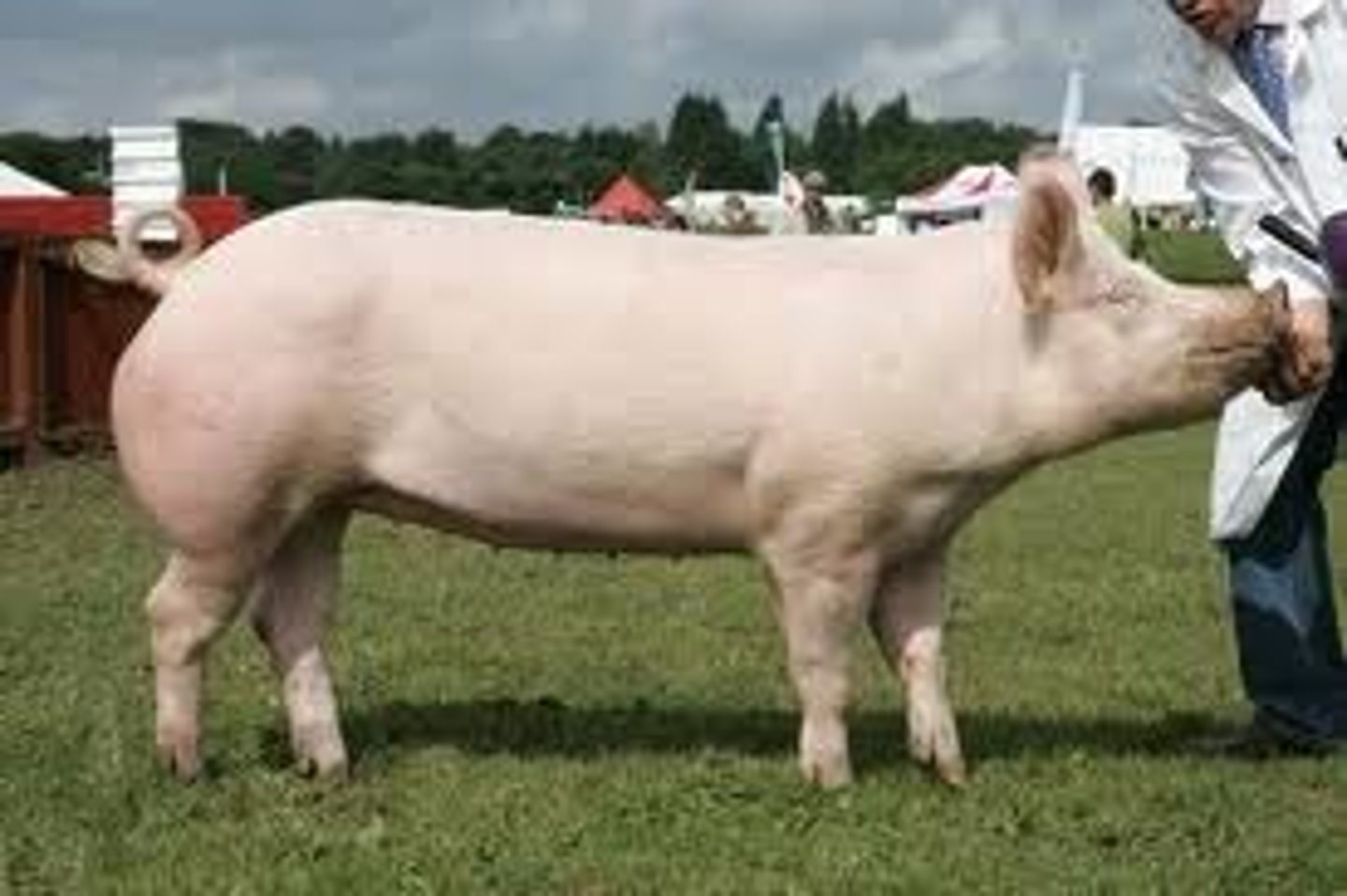
<p>- Maternal breed</p><p>- Known by their large, white bodies and erect ears</p>
32
New cards

Tamworth

- Originated from England

- Came to US in 1882

- Comparatively long in the neck and legs, and lacks width.

- Noticeably firm jowl, underline, and fleshing.
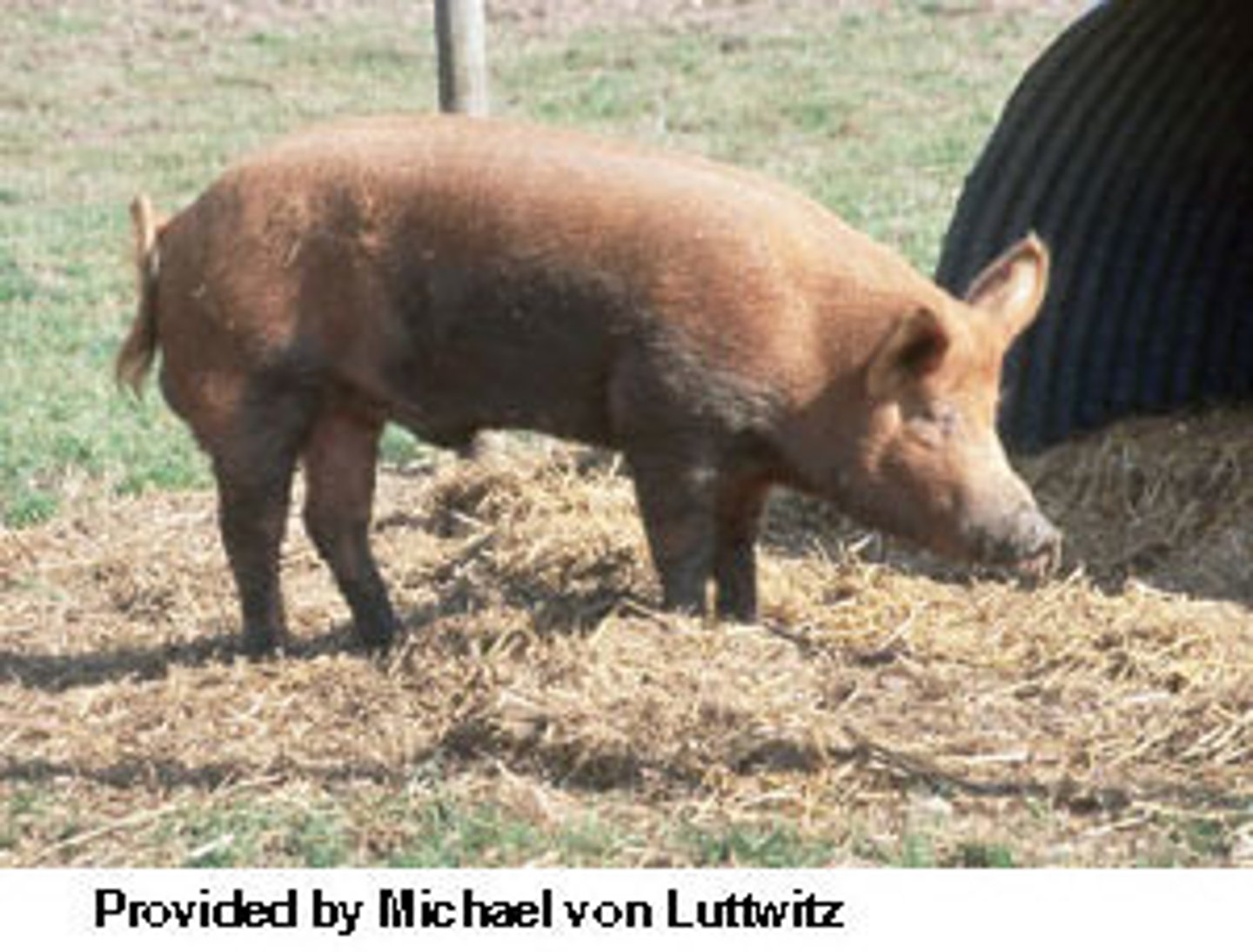
<p>- Originated from England</p><p>- Came to US in 1882</p><p>- Comparatively long in the neck and legs, and lacks width.</p><p>- Noticeably firm jowl, underline, and fleshing.</p>
33
New cards

Poland China

- Lean, heavy muscled

- Black breed with six white points and down ears

- Known to be excellent feeders and gain readily under good care and management
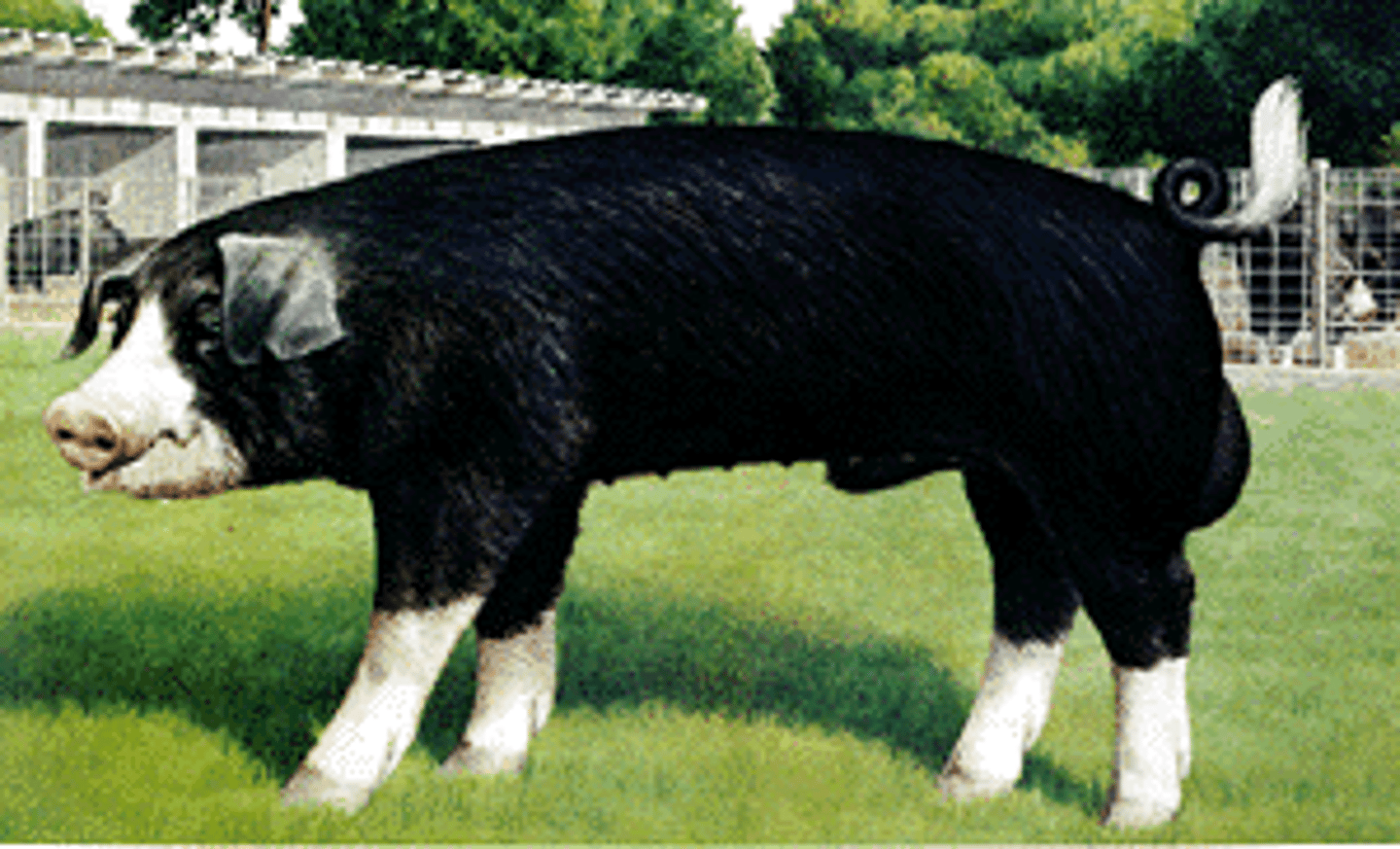
<p>- Lean, heavy muscled</p><p>- Black breed with six white points and down ears</p><p>- Known to be excellent feeders and gain readily under good care and management</p>
34
New cards

Aracauna

- Mostly black body with red saddle and cape, small size and muscle, often considered rumpless

- Pea comb

- Blue and/or green shades of eggs

- Good egg laying compatibility
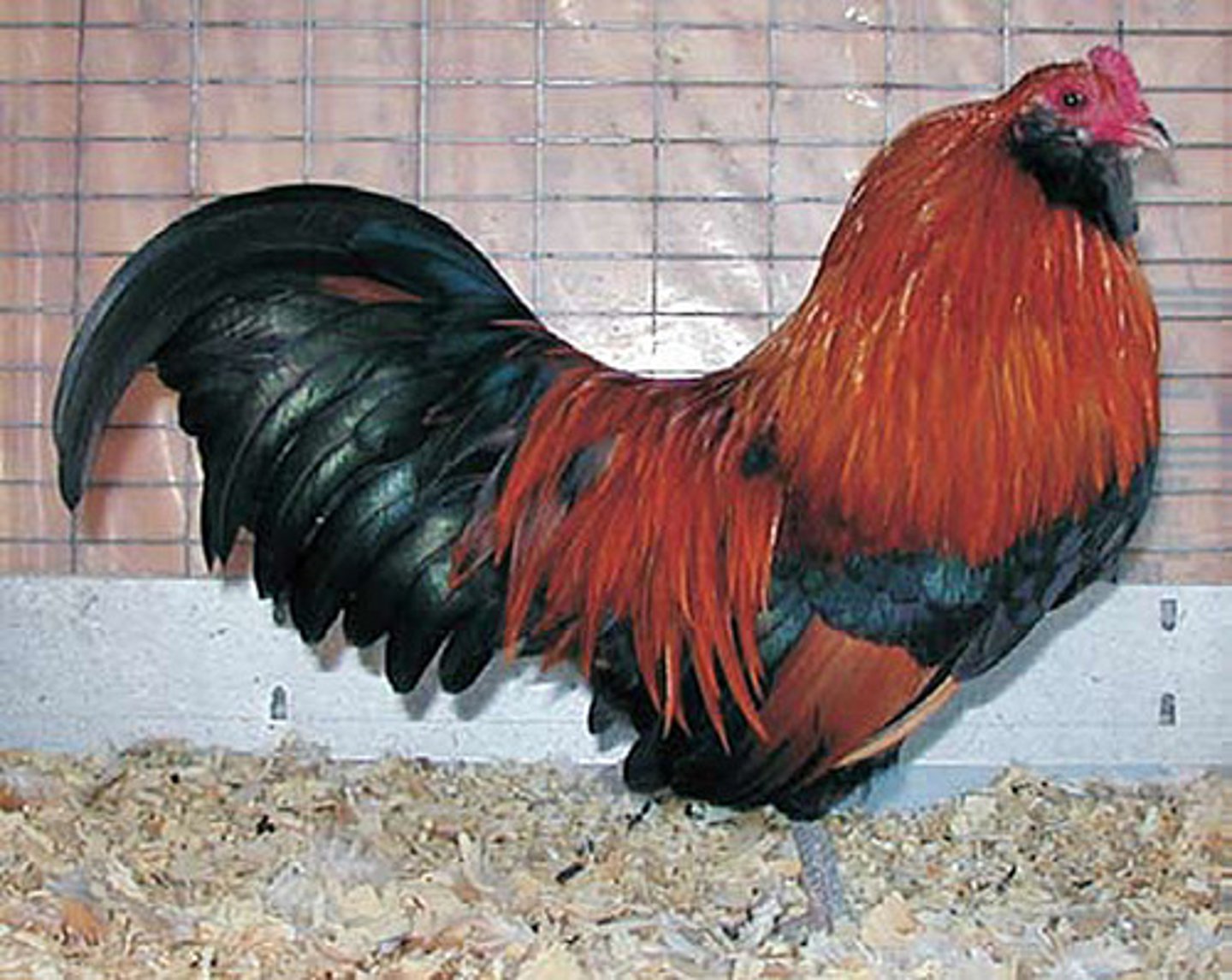
<p>- Mostly black body with red saddle and cape, small size and muscle, often considered rumpless</p><p>- Pea comb</p><p>- Blue and/or green shades of eggs</p><p>- Good egg laying compatibility</p>
35
New cards

*Polish

- Yellow skin with a variety of different feather colors possible

- small in size

- have crest, beard, muffs, and are soft feathered

- fairly active despite limited vision due to their large 'headgear"

- lays white eggs and has pea comb

- Broiler type
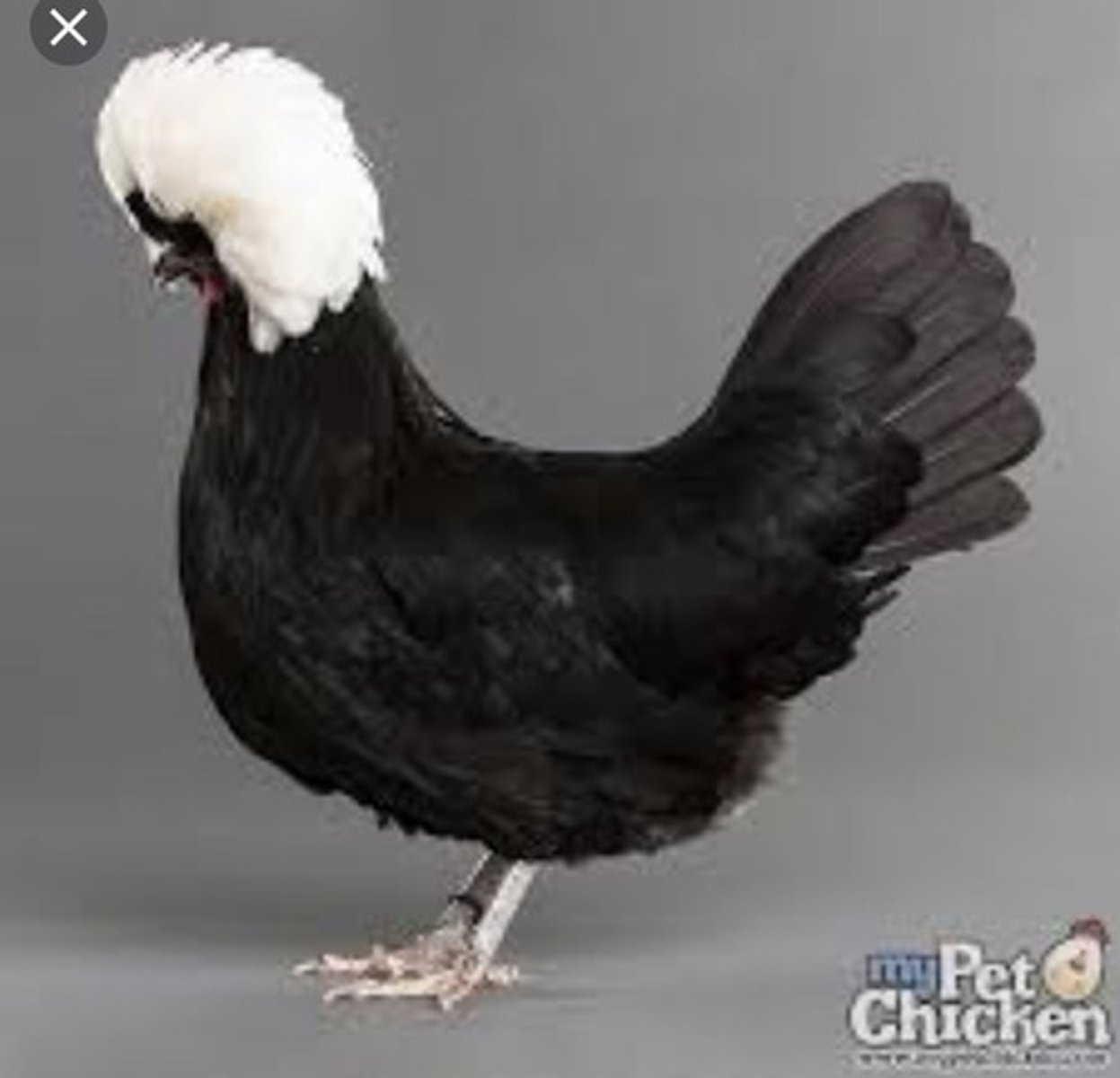
<p>- Yellow skin with a variety of different feather colors possible</p><p>- small in size</p><p>- have crest, beard, muffs, and are soft feathered</p><p>- fairly active despite limited vision due to their large 'headgear"</p><p>- lays white eggs and has pea comb</p><p>- Broiler type</p>
36
New cards

*Plymouth Rock

- Barred, white, buff, and numerous other colors recognized

- Moderate to large and broad breasted

- Non-aggressive and tame easily

- Loose feathers

- Lays brown eggs and has a single comb

- developed in US for balanced farm flock bird with meat and egg production capability
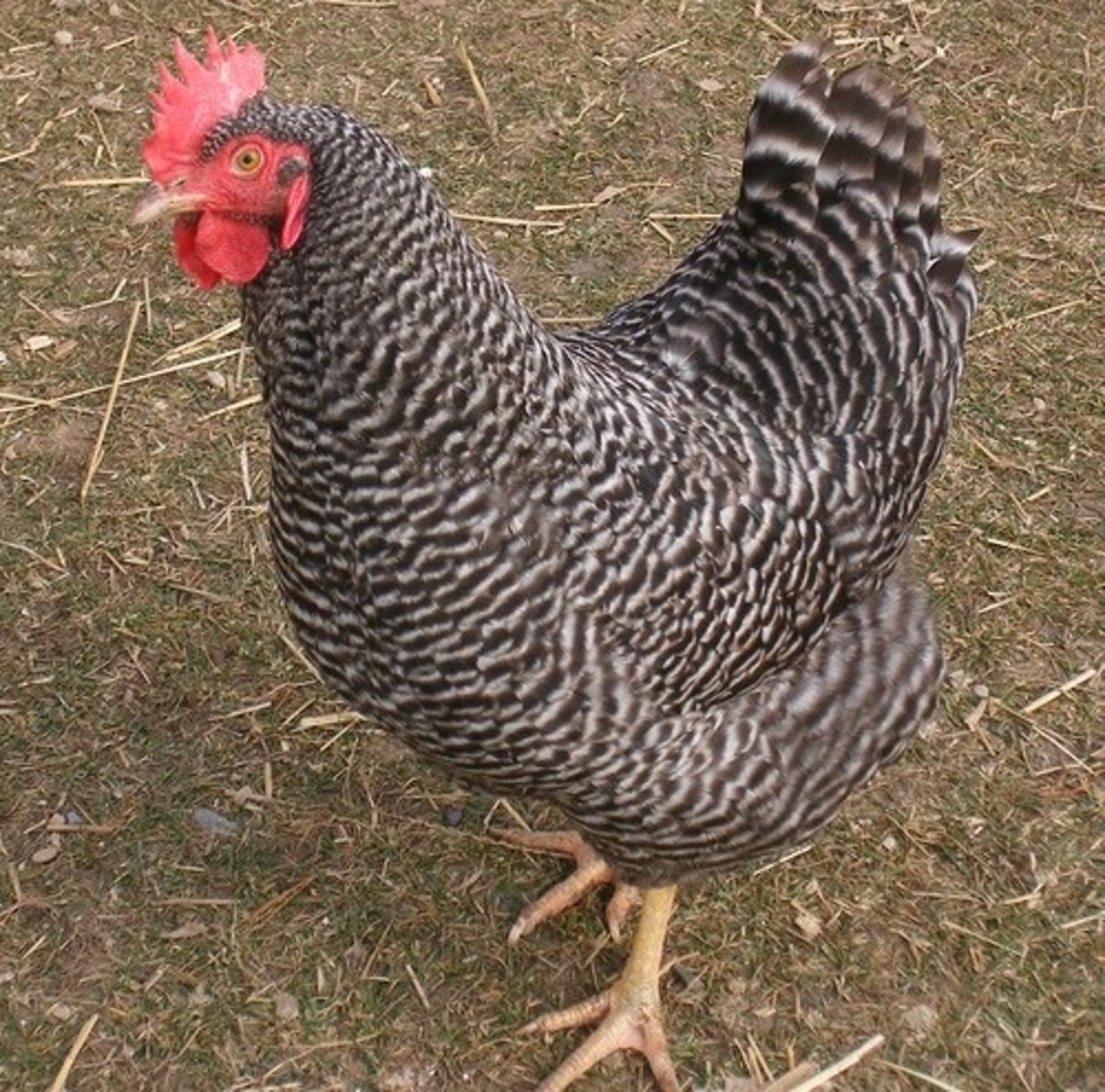
<p>- Barred, white, buff, and numerous other colors recognized</p><p>- Moderate to large and broad breasted</p><p>- Non-aggressive and tame easily</p><p>- Loose feathers</p><p>- Lays brown eggs and has a single comb</p><p>- developed in US for balanced farm flock bird with meat and egg production capability</p>
37
New cards

Brahma

- Light or dark (black) markings with intricate white patterns

- Large body with average muscle

- Feathered shanks with red wattles

- Lays brown eggs and has a pea comb

- Broiler type, good capon breed, but show purpose is prevalent
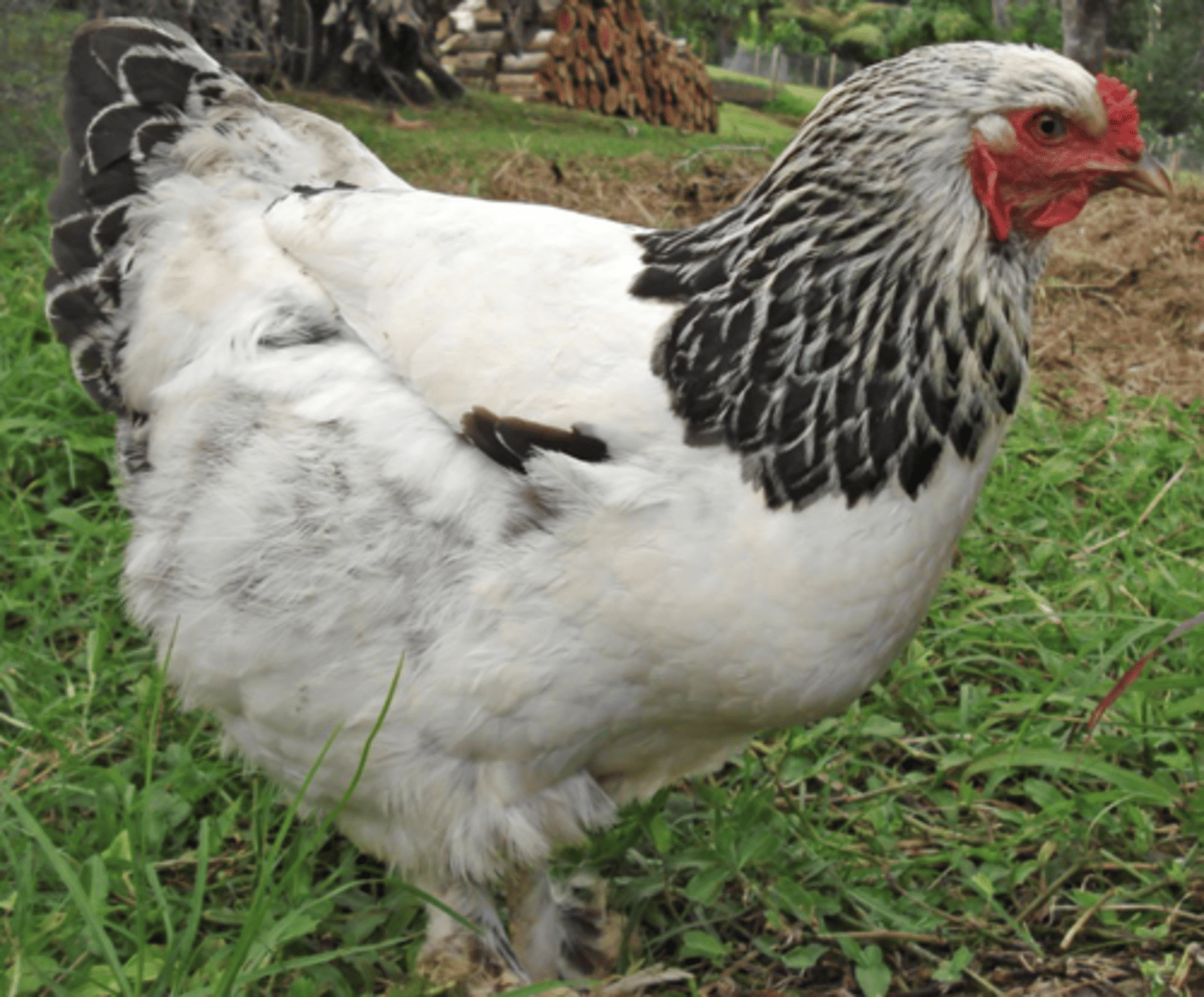
<p>- Light or dark (black) markings with intricate white patterns</p><p>- Large body with average muscle</p><p>- Feathered shanks with red wattles</p><p>- Lays brown eggs and has a pea comb</p><p>- Broiler type, good capon breed, but show purpose is prevalent</p>
38
New cards

*Leghorn

- Can be white, brown, red, or bronze

- Small size, early maturing, and light muscled body type

- Single comb and lays white eggs

- Layer lines are are prominent
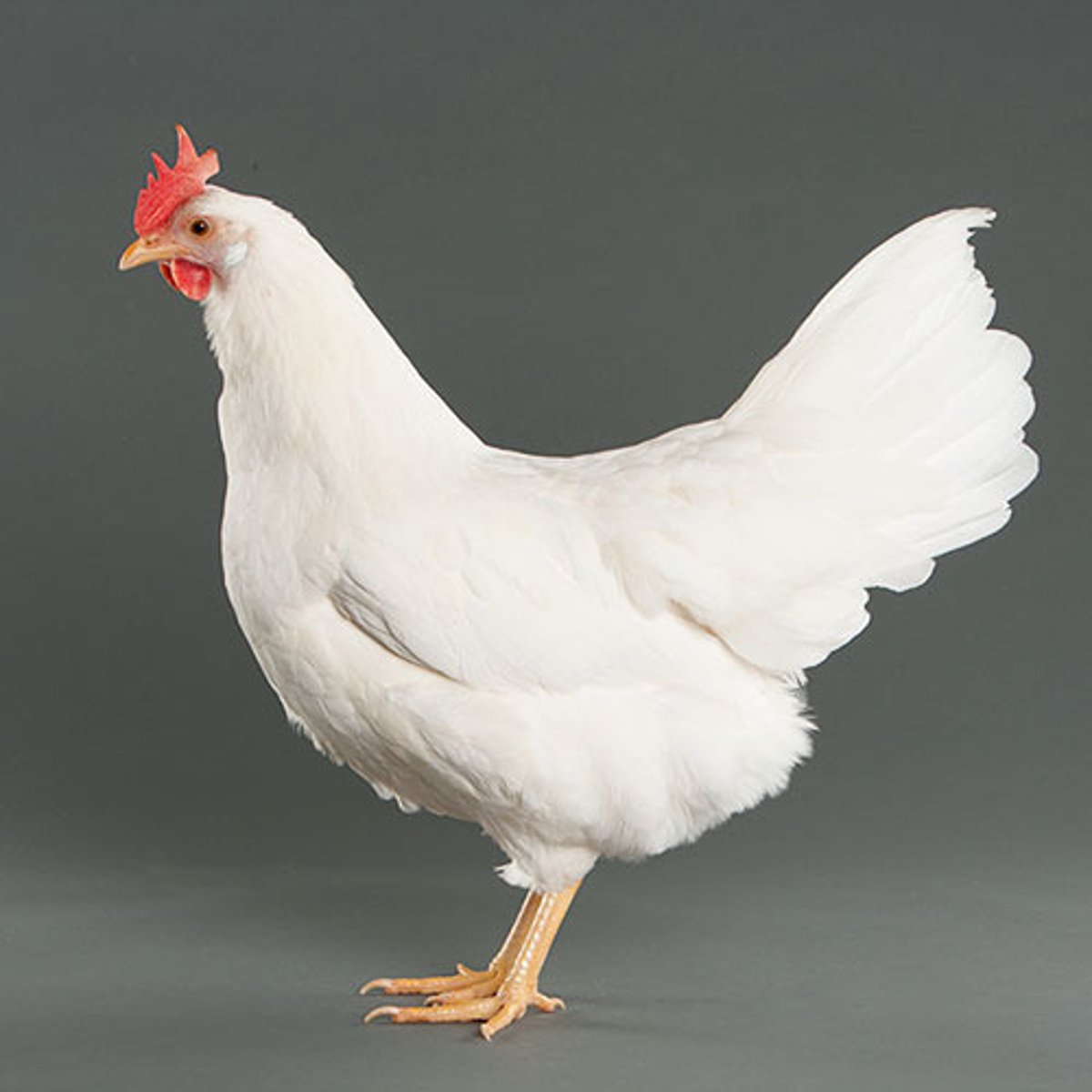
<p>- Can be white, brown, red, or bronze</p><p>- Small size, early maturing, and light muscled body type</p><p>- Single comb and lays white eggs</p><p>- Layer lines are are prominent</p>
39
New cards

*Cornish

- Can be white, red, black, laced, or buff colored and has yellow skin

- Tall, large birds with heavy muscling with short feathers held closely to the body

- Lays brown eggs and has a pea comb

- basis for most commercial broilers in the US
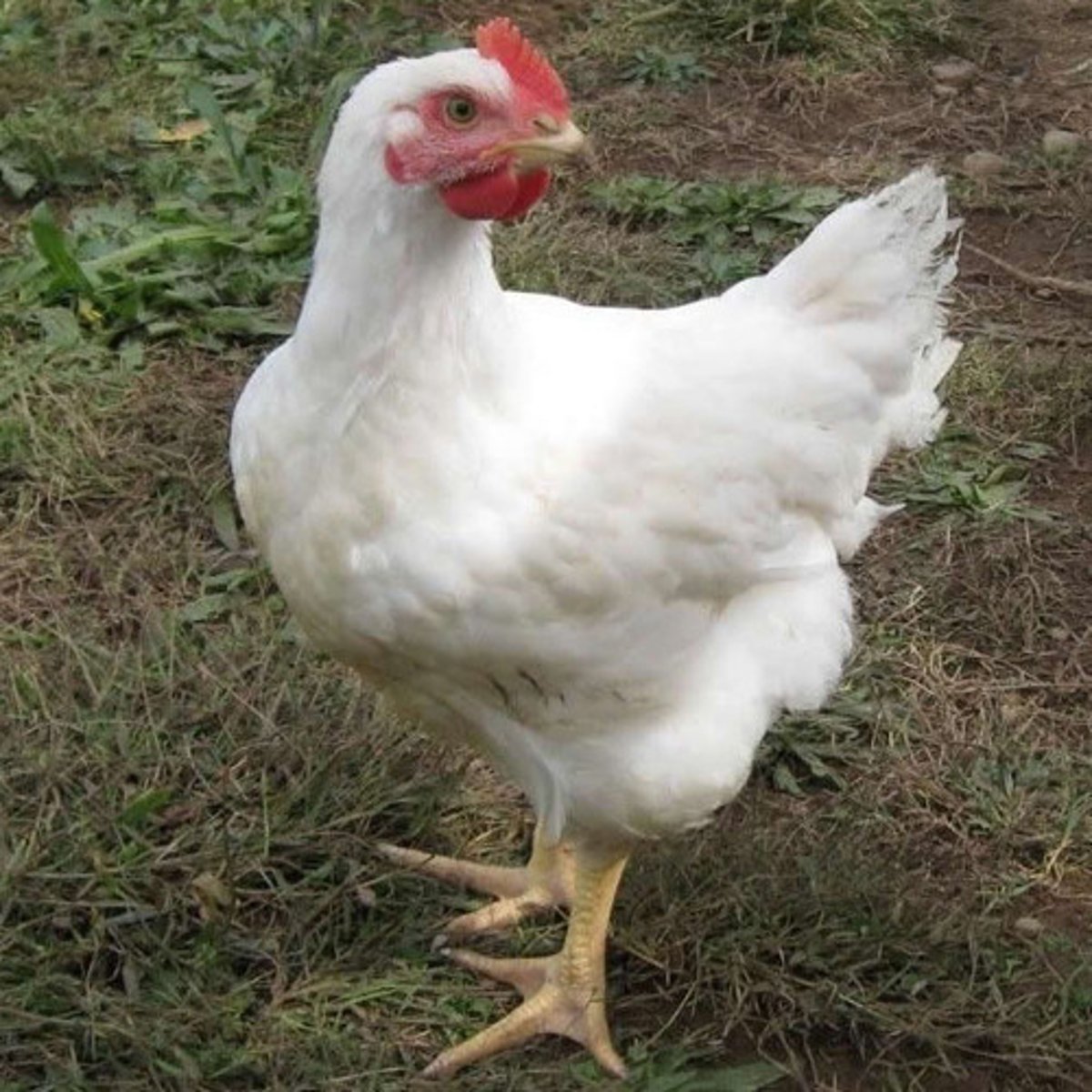
<p>- Can be white, red, black, laced, or buff colored and has yellow skin</p><p>- Tall, large birds with heavy muscling with short feathers held closely to the body</p><p>- Lays brown eggs and has a pea comb</p><p>- basis for most commercial broilers in the US</p>
40
New cards

*Suffolk

- Large framed, heavy muscled paternal breed

- Clean head (no wool cap) and black face

- Originally from England and is one of the most popular farm-flock breeds and terminal sire breeds in the US
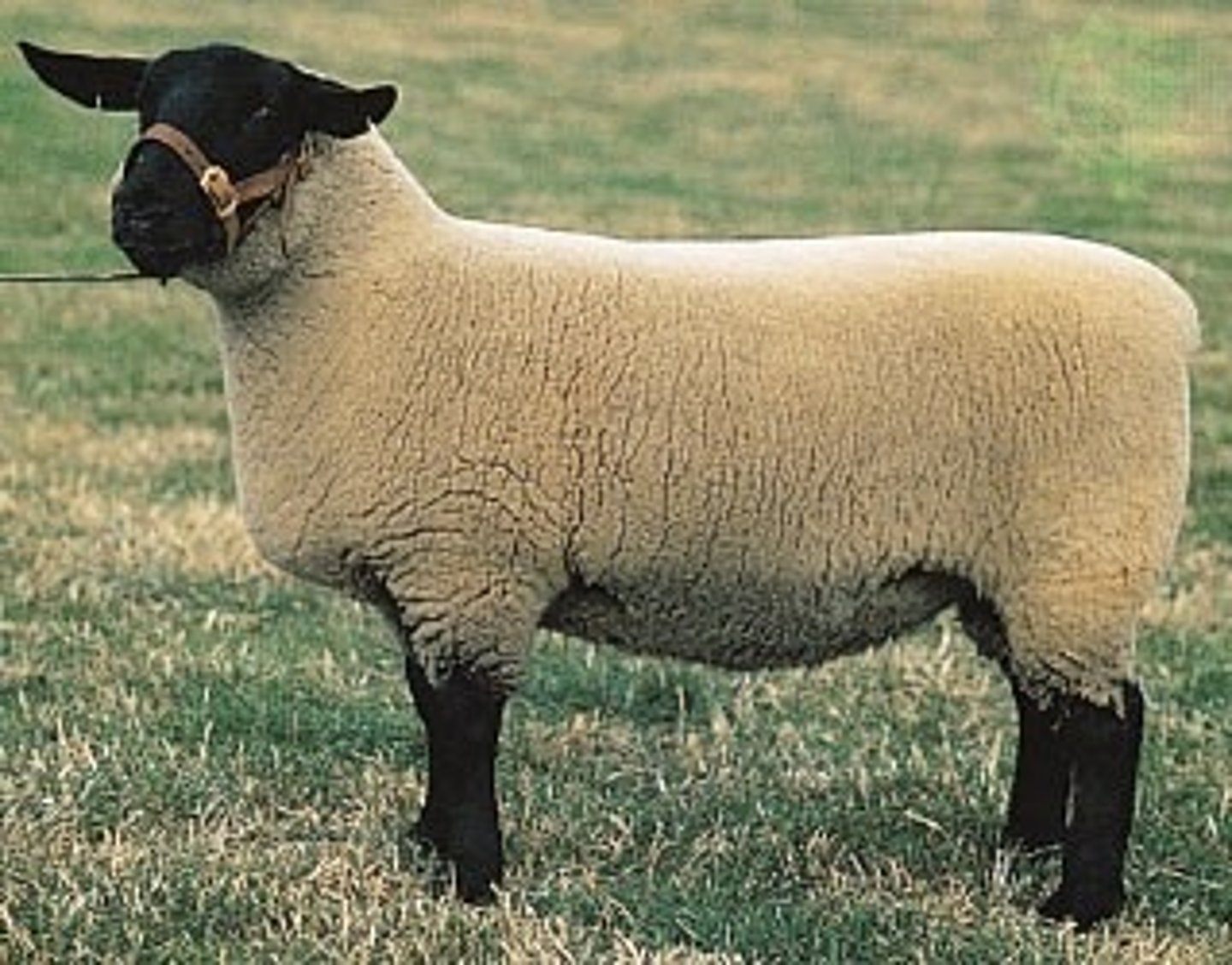
<p>- Large framed, heavy muscled paternal breed</p><p>- Clean head (no wool cap) and black face</p><p>- Originally from England and is one of the most popular farm-flock breeds and terminal sire breeds in the US</p>
41
New cards

*Rambouillet

- All white and mostly horned, though some polled lines exist

- Not heavily muscled, known more for the high quality and volume of their wool

- Bred in France from Merino lines
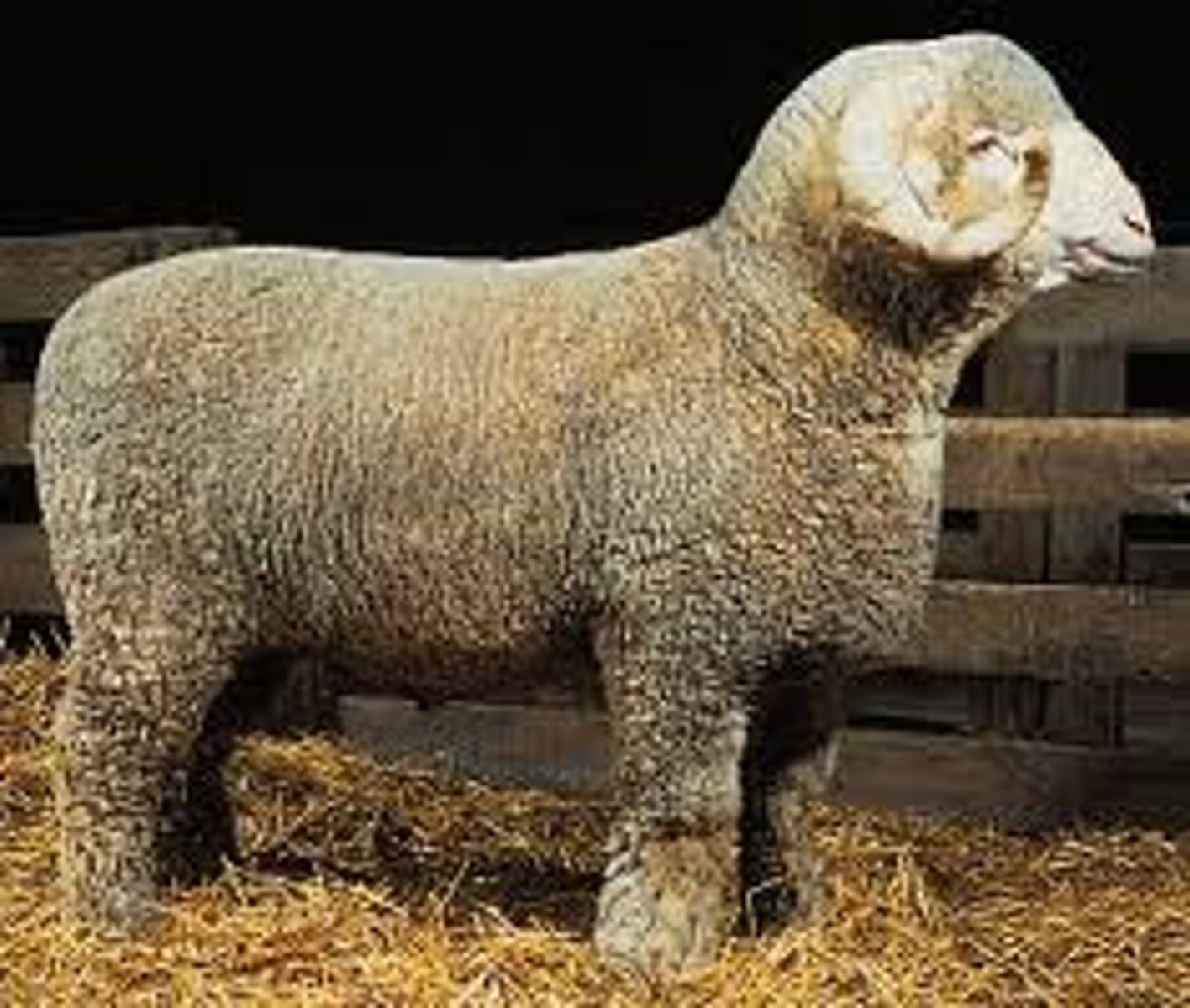
<p>- All white and mostly horned, though some polled lines exist</p><p>- Not heavily muscled, known more for the high quality and volume of their wool</p><p>- Bred in France from Merino lines</p>
42
New cards

*Polypay

- Maternal breed, typically used to build western rangeland ewe flocks

- White face

- Derived from the crossing of Finnsheep, Rambouillet, Targhee, and Dorset breeds
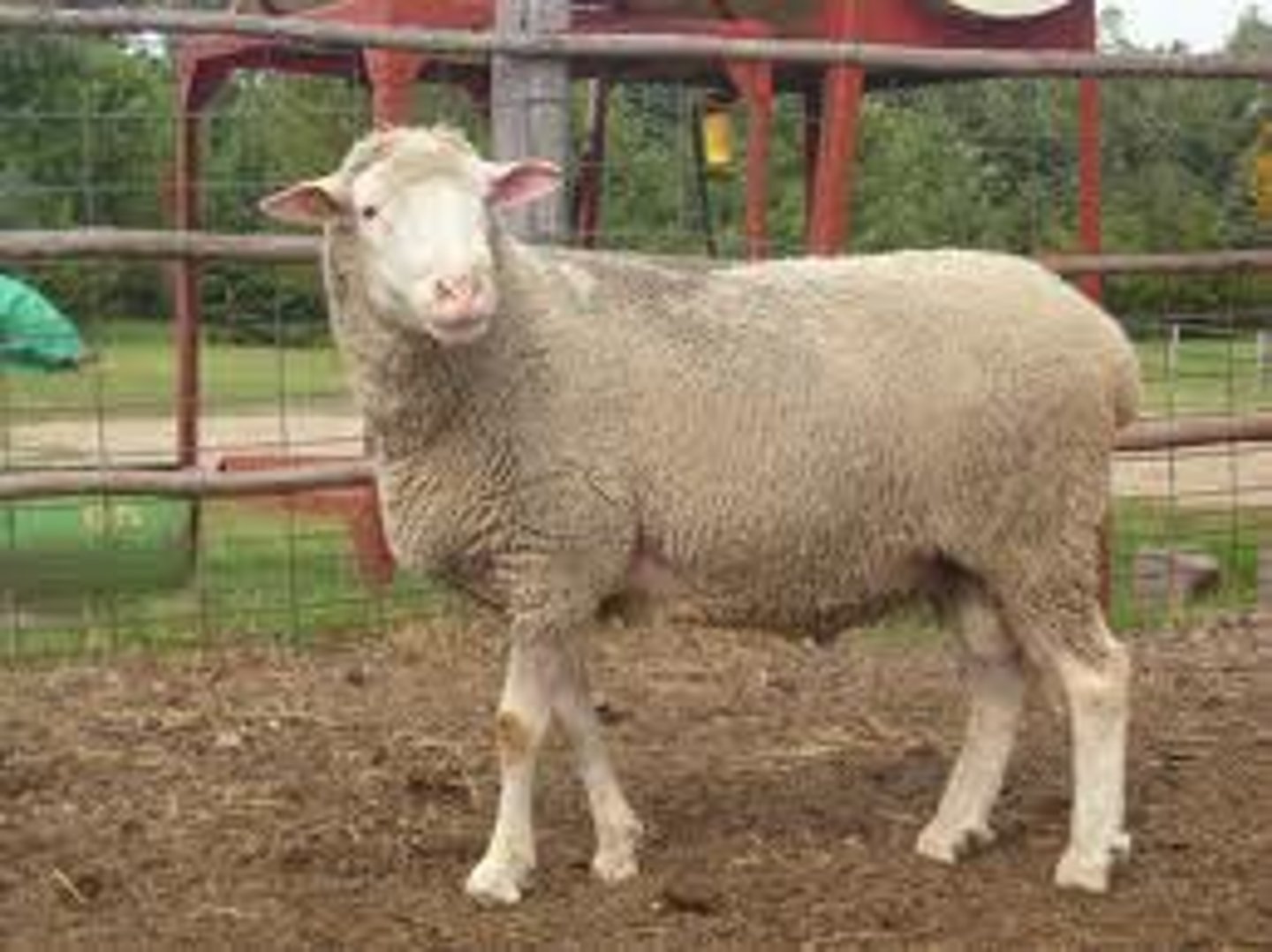
<p>- Maternal breed, typically used to build western rangeland ewe flocks</p><p>- White face</p><p>- Derived from the crossing of Finnsheep, Rambouillet, Targhee, and Dorset breeds</p>
43
New cards

*Targhee

- Maternal breed, typically used to build western rangeland ewe flocks

- White face

- Developed in the US in the 1930s
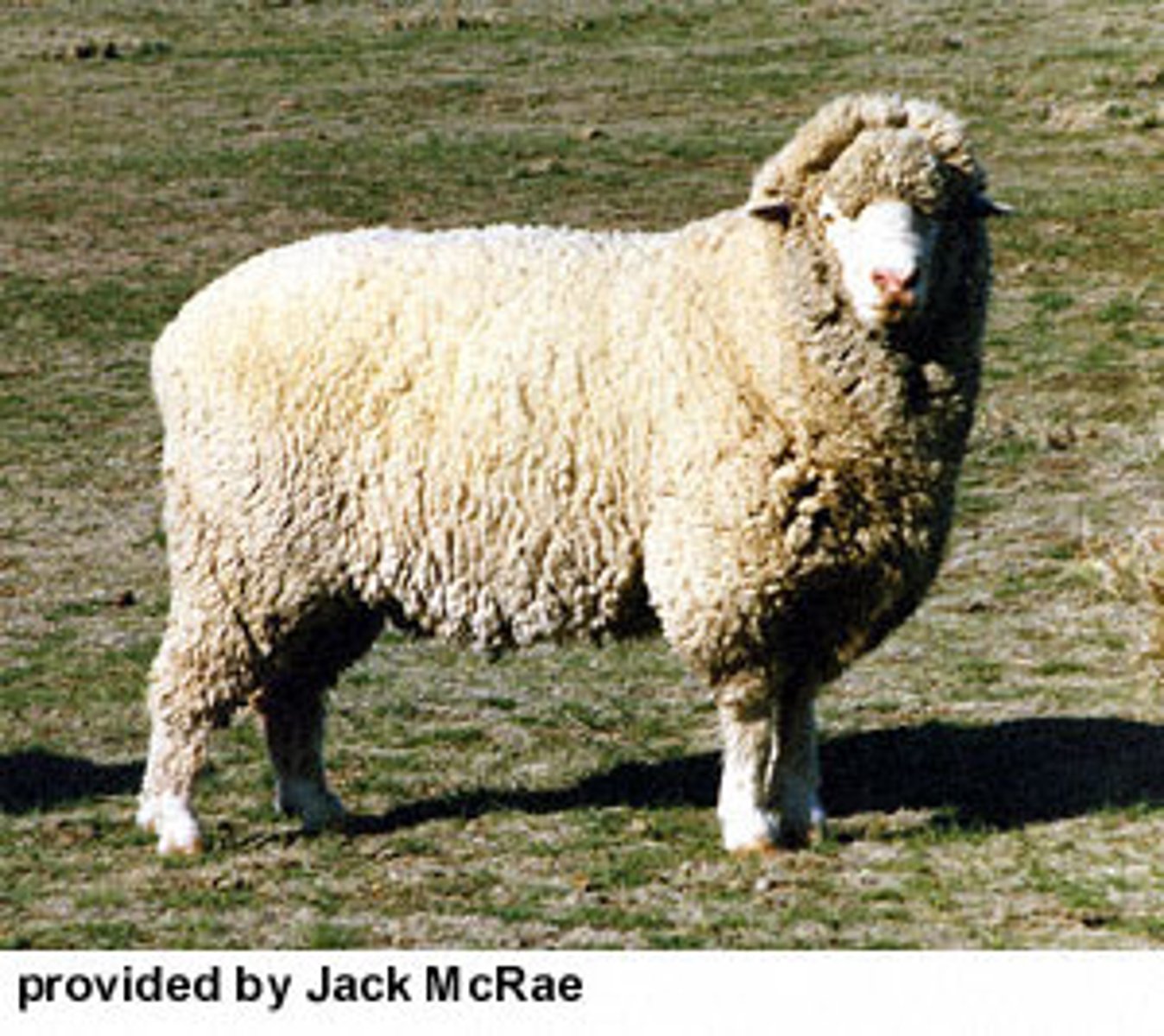
<p>- Maternal breed, typically used to build western rangeland ewe flocks</p><p>- White face</p><p>- Developed in the US in the 1930s</p>
44
New cards

*Hampshire

- Paternal, white face breed, with a large body

- Usually polled

- Originated in the southern part of England
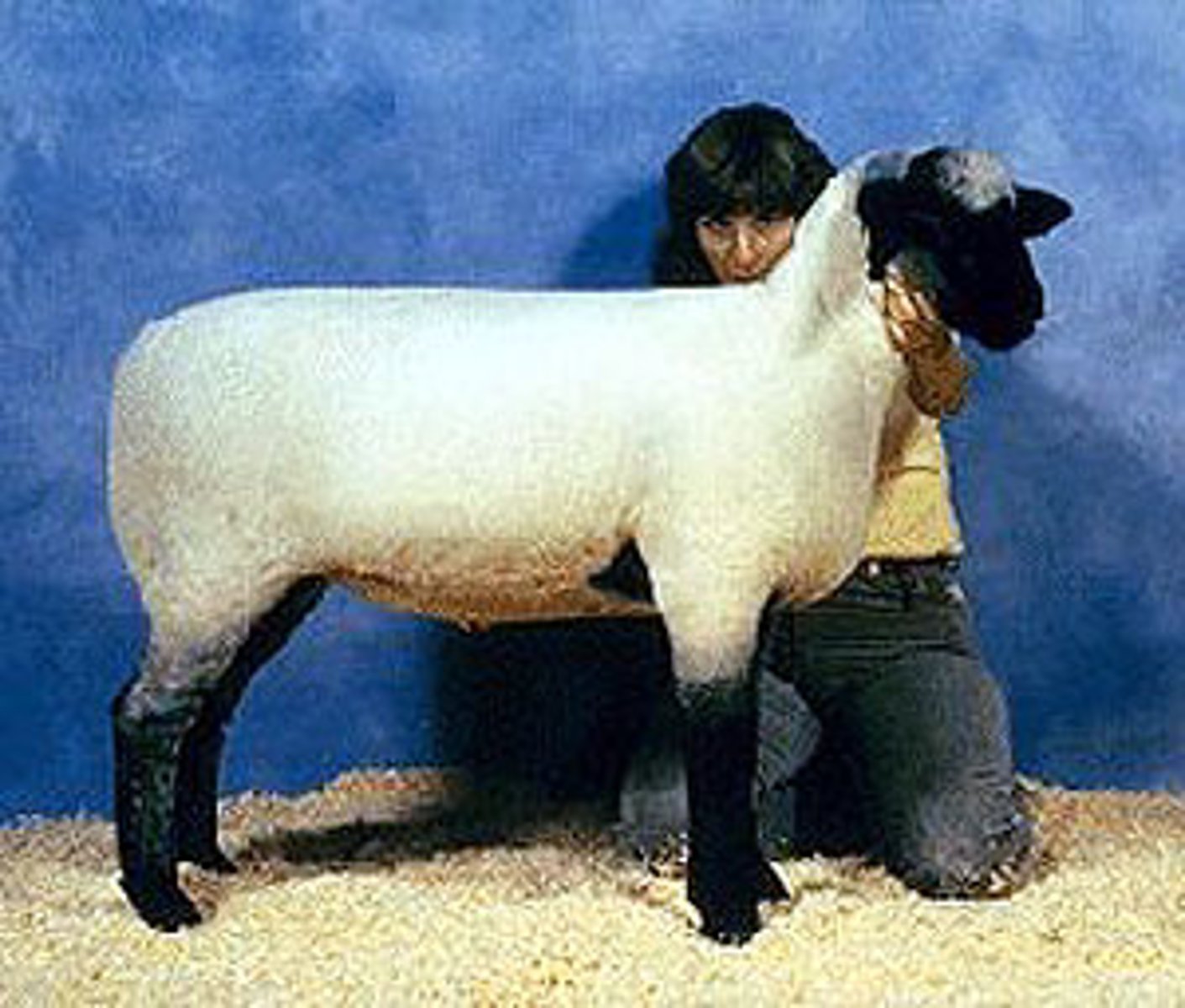
<p>- Paternal, white face breed, with a large body</p><p>- Usually polled</p><p>- Originated in the southern part of England</p>
45
New cards

*American Quarter Horse

- Original to US

- derived from East Coast Chickasaw and the English Thoroughbreds

- Extensively bred for ranch work in Western US

- Largest numbers in US
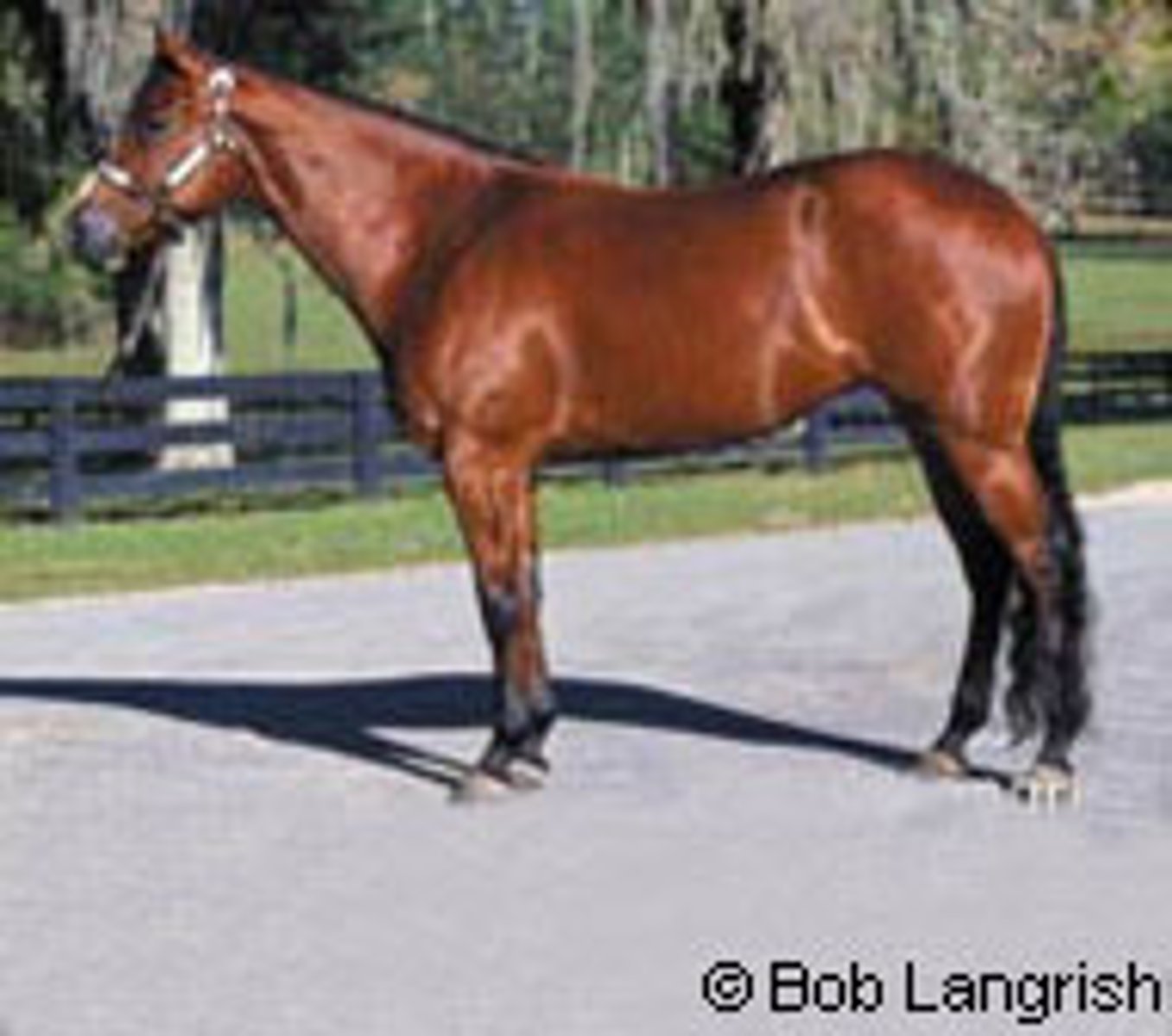
<p>- Original to US</p><p>- derived from East Coast Chickasaw and the English Thoroughbreds</p><p>- Extensively bred for ranch work in Western US</p><p>- Largest numbers in US</p>
46
New cards

*Arabian

- Oldest breed, original to Arabian desert lands

- Bred for endurance, spirit, and elegance

- Ancestral to many breeds

- Extensively bred for ranch work in Western US

- Head shape is very different and makes the breed easy to identify
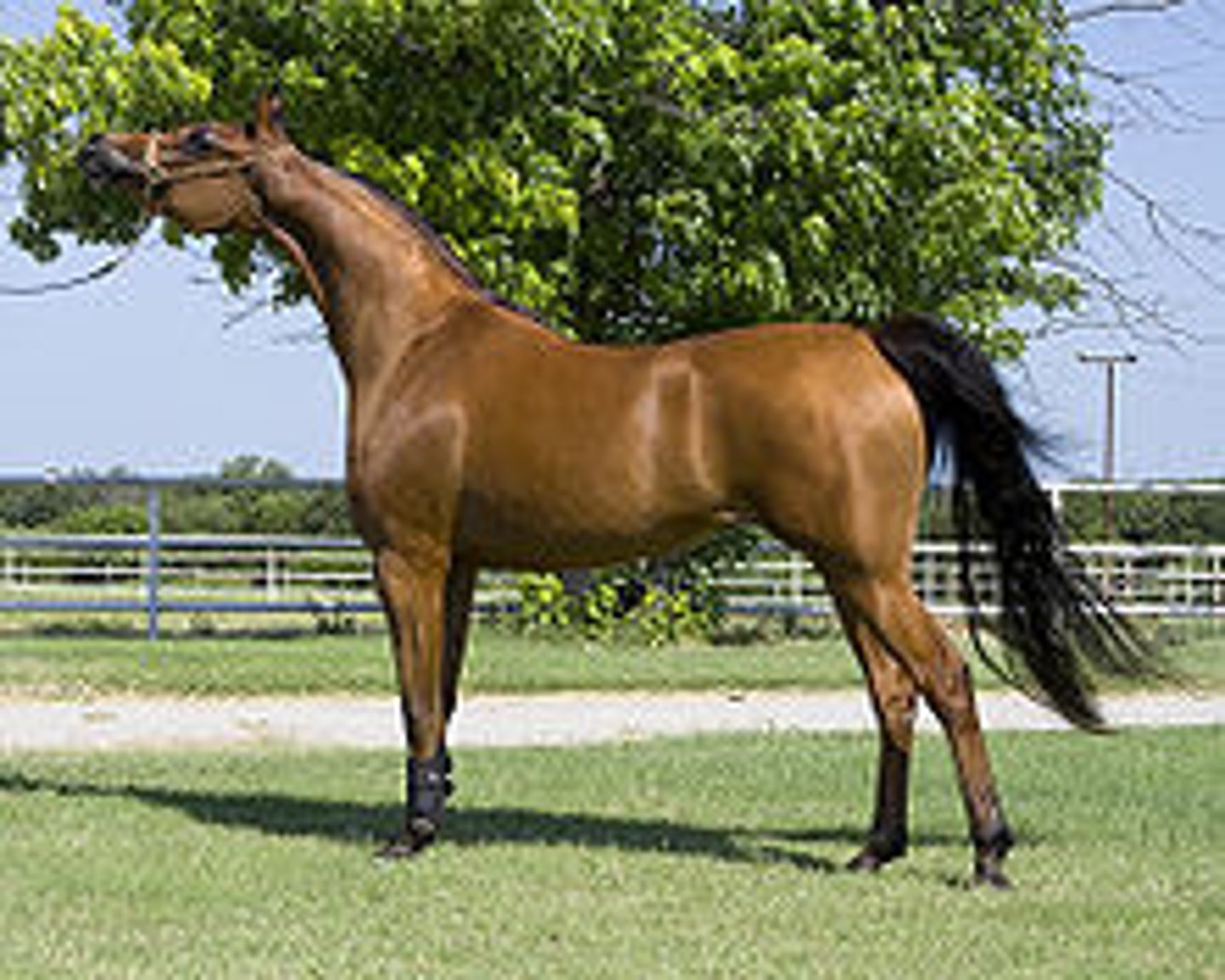
<p>- Oldest breed, original to Arabian desert lands</p><p>- Bred for endurance, spirit, and elegance</p><p>- Ancestral to many breeds</p><p>- Extensively bred for ranch work in Western US</p><p>- Head shape is very different and makes the breed easy to identify</p>
47
New cards

*Belgian

- Original to Belgium from medieval Flemish breeding

- Came to US for farm work

- Largest numbers of draft registrations in US
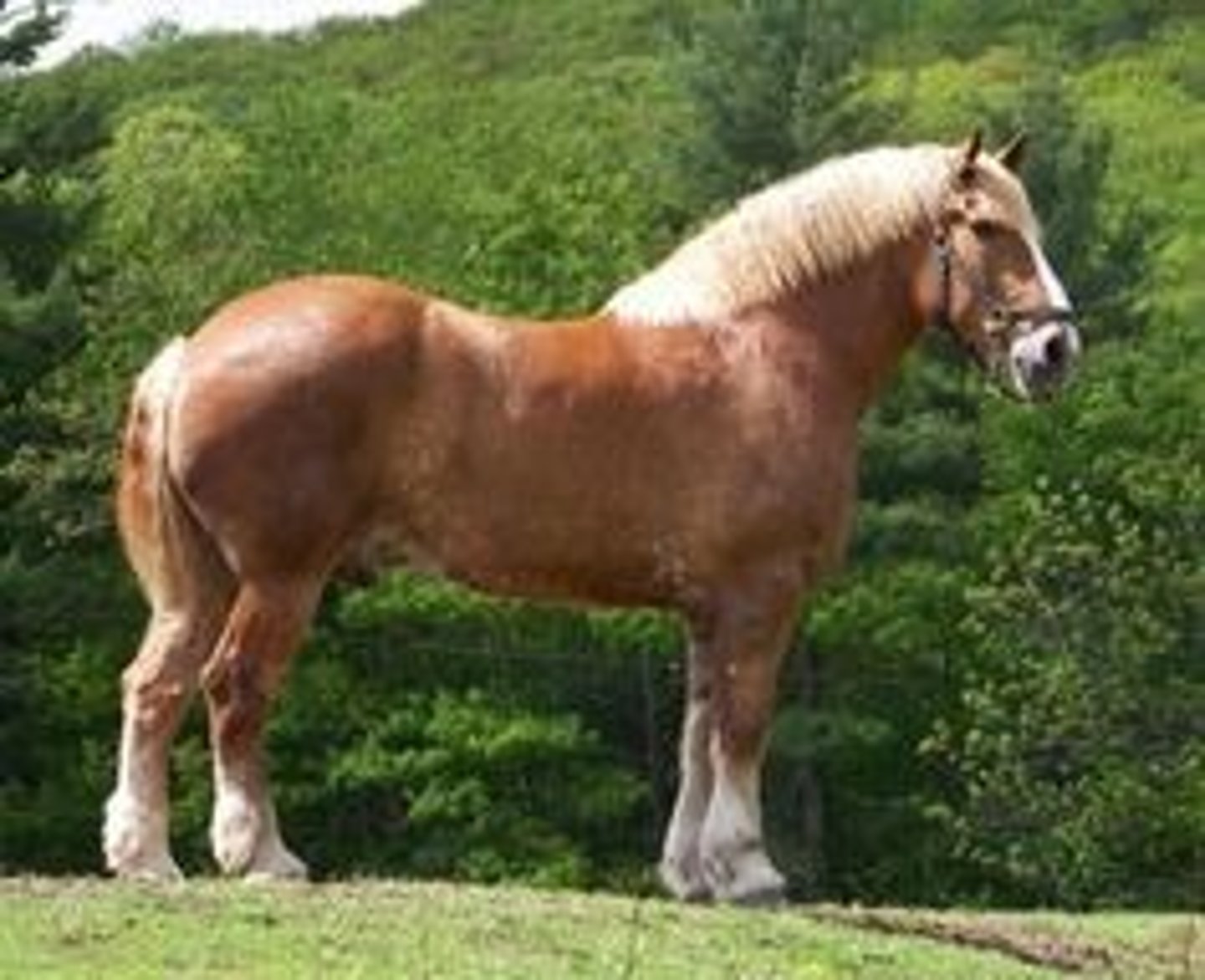
<p>- Original to Belgium from medieval Flemish breeding</p><p>- Came to US for farm work</p><p>- Largest numbers of draft registrations in US</p>
48
New cards

Pony of the Americas

- Original to Iowa in 1954

- From Shetland x Appaloosa cross, but now has other breed influences

- Bred for larger pony riders not yet ready for a full sized horse

- Second largest numbers in US for ponies
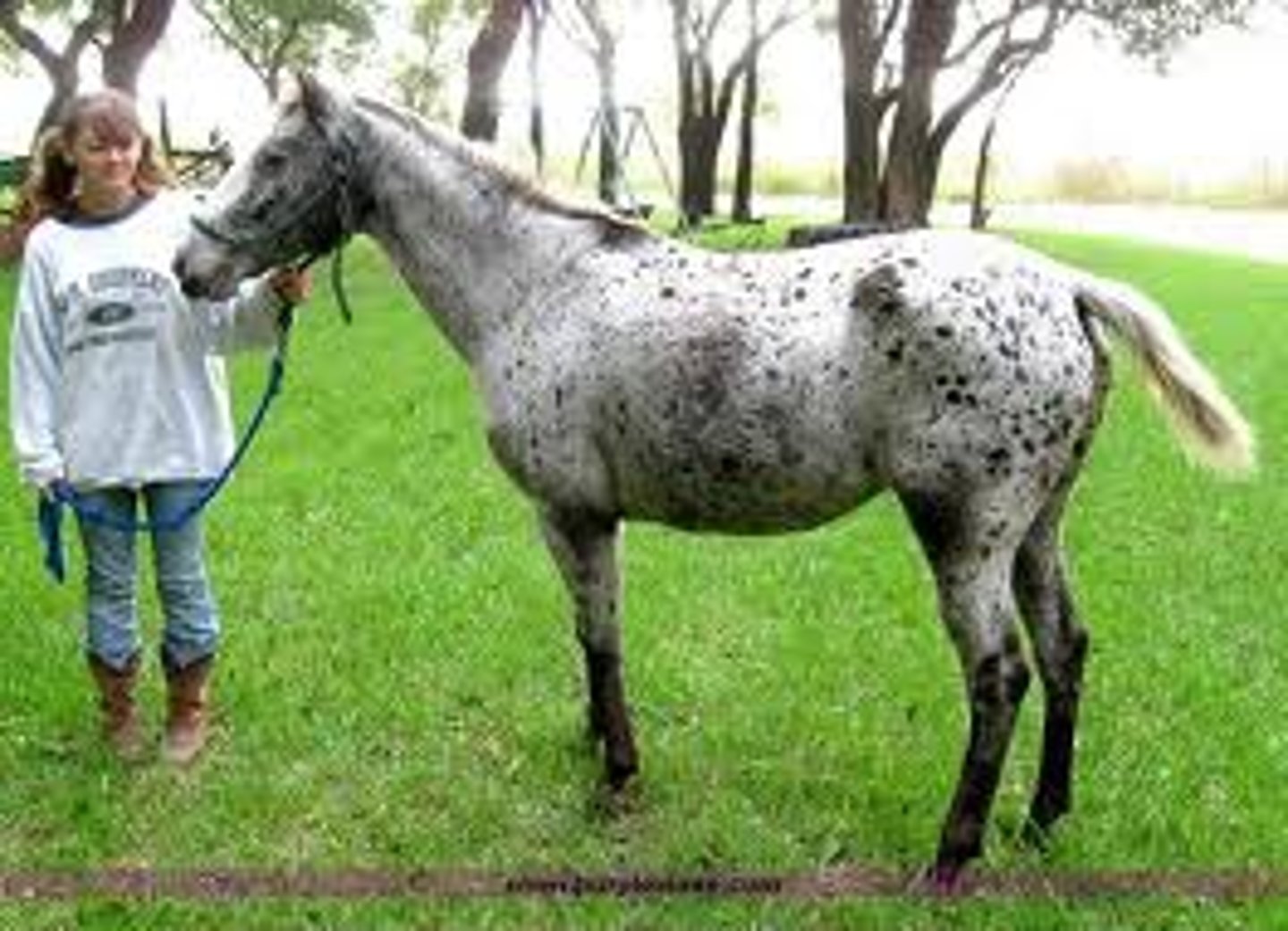
<p>- Original to Iowa in 1954</p><p>- From Shetland x Appaloosa cross, but now has other breed influences</p><p>- Bred for larger pony riders not yet ready for a full sized horse</p><p>- Second largest numbers in US for ponies</p>
49
New cards

*Paint Horse

- Original to US but from Spanish explorers with "two-toned" horses

- Bred for ranch work in US

- Second largest numbers in US today
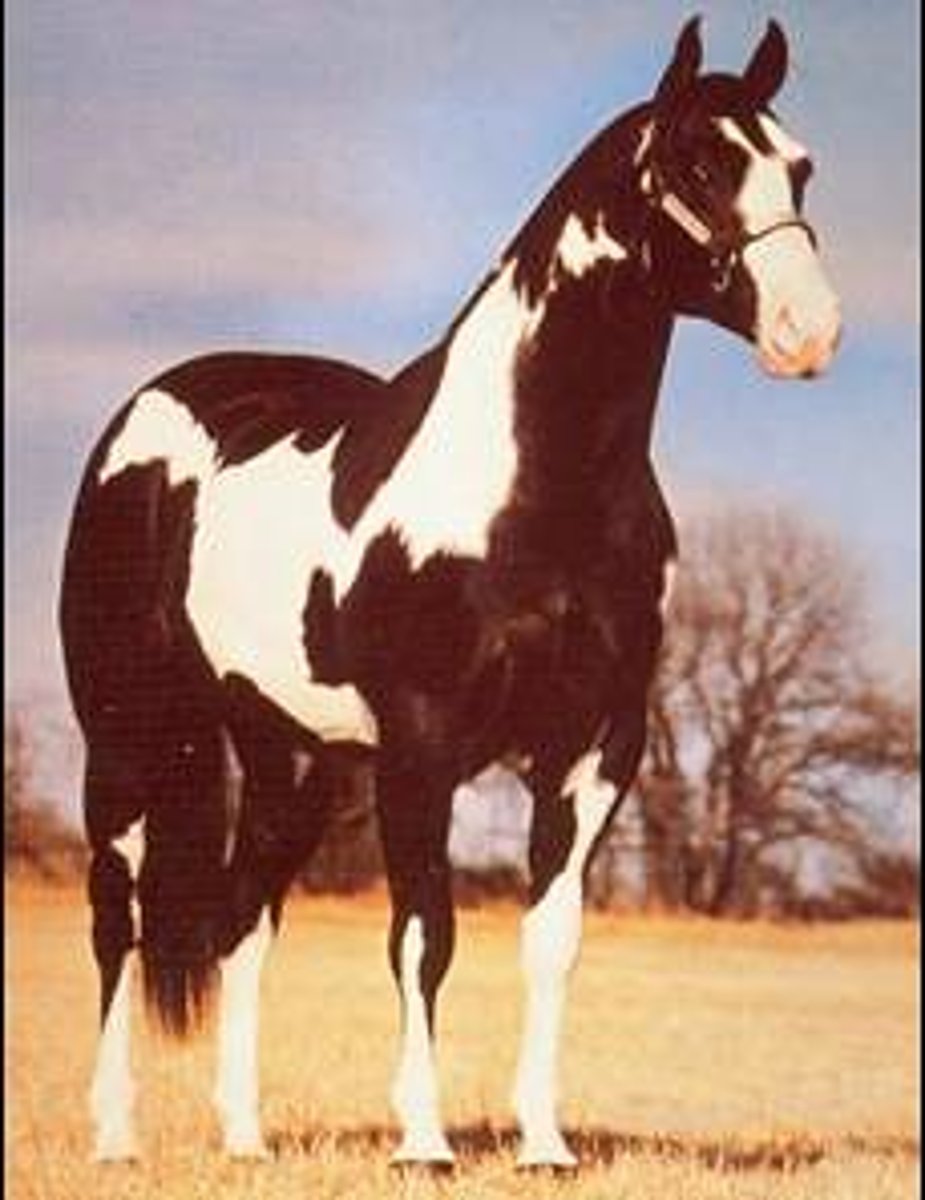
<p>- Original to US but from Spanish explorers with "two-toned" horses</p><p>- Bred for ranch work in US</p><p>- Second largest numbers in US today</p>
50
New cards

*Clydesdale

- Original to Scotland

- Bred for faster gait pulling wagons, big hoof diameter

- Came to US in early 1800s, not as popular for farm work due to feathers and size
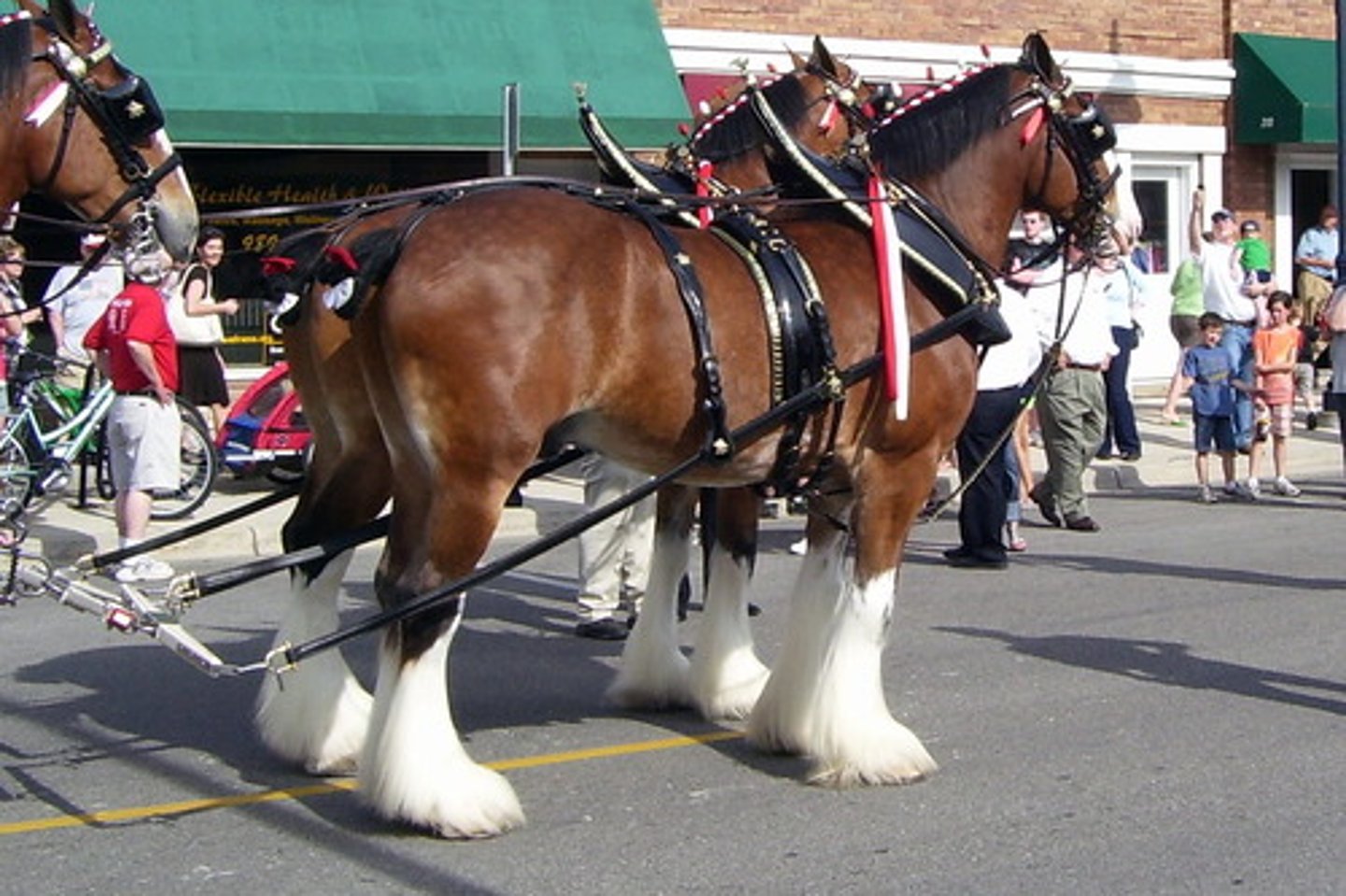
<p>- Original to Scotland</p><p>- Bred for faster gait pulling wagons, big hoof diameter</p><p>- Came to US in early 1800s, not as popular for farm work due to feathers and size</p>
51
New cards

*Shetland Pony

- Original to Shetland Islands in England

- Bred for coal mine draft work

- Modern lines are less shaggy, more refined and often used in English style equitation events, most notable harness/carriage events and halter shows
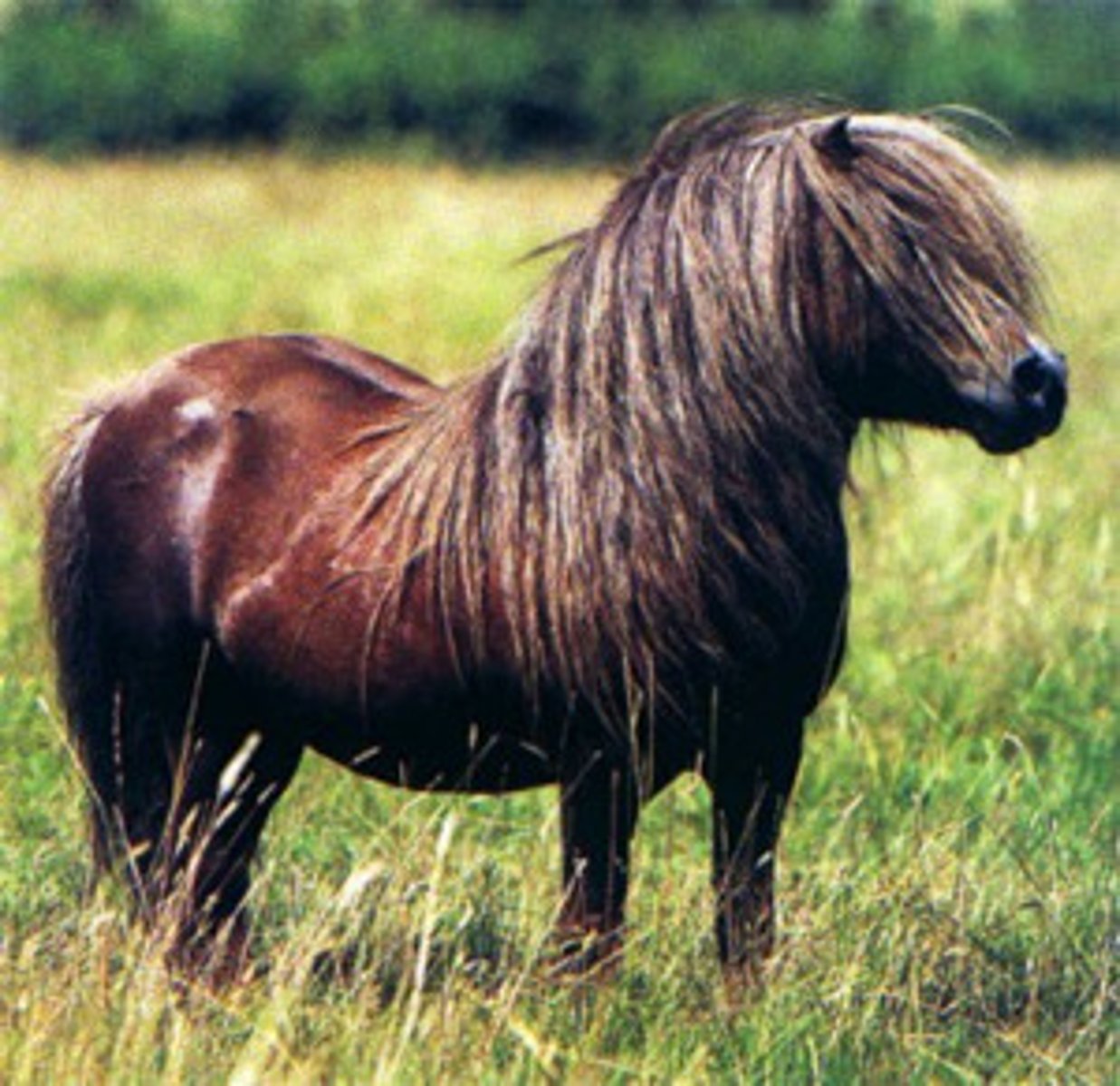
<p>- Original to Shetland Islands in England</p><p>- Bred for coal mine draft work</p><p>- Modern lines are less shaggy, more refined and often used in English style equitation events, most notable harness/carriage events and halter shows</p>
52
New cards

*Appaloosa

- Original to US from Spanish horses developed by the Nez Perce Indians of northwest US in 1700s

- Same colors noted in European cave paintings of 15,000BC

- Endurance and color at tissue in breed
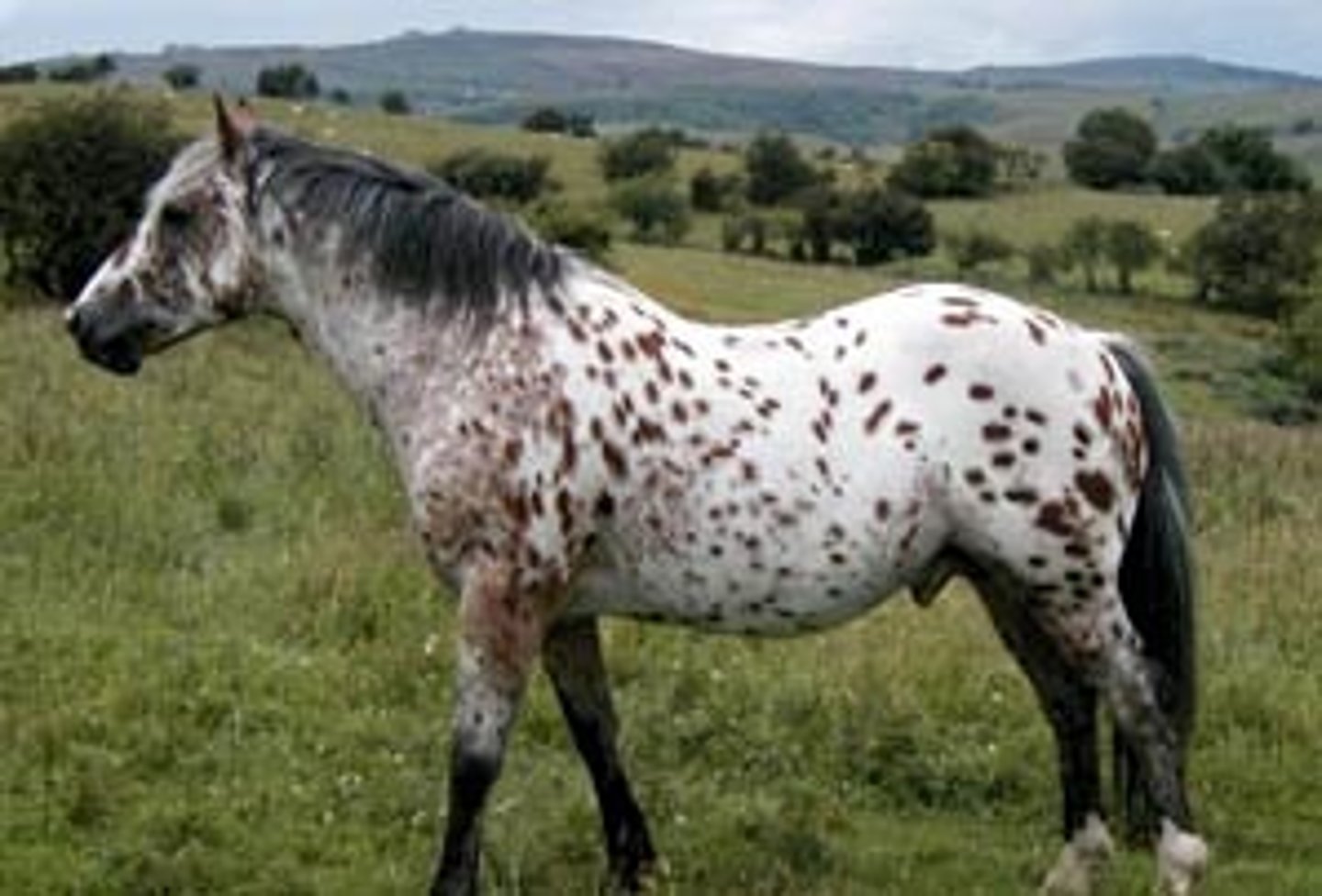
<p>- Original to US from Spanish horses developed by the Nez Perce Indians of northwest US in 1700s</p><p>- Same colors noted in European cave paintings of 15,000BC</p><p>- Endurance and color at tissue in breed</p>
53
New cards

*Percheron

- Ancient origins, from France with some Arab horse ancestry

- Came to US in 1839, later than other drafts however, 3 times as many other breeds combined by WWII

- Bred for farm and city labor

- ISU famous for breeding program in early 1900s
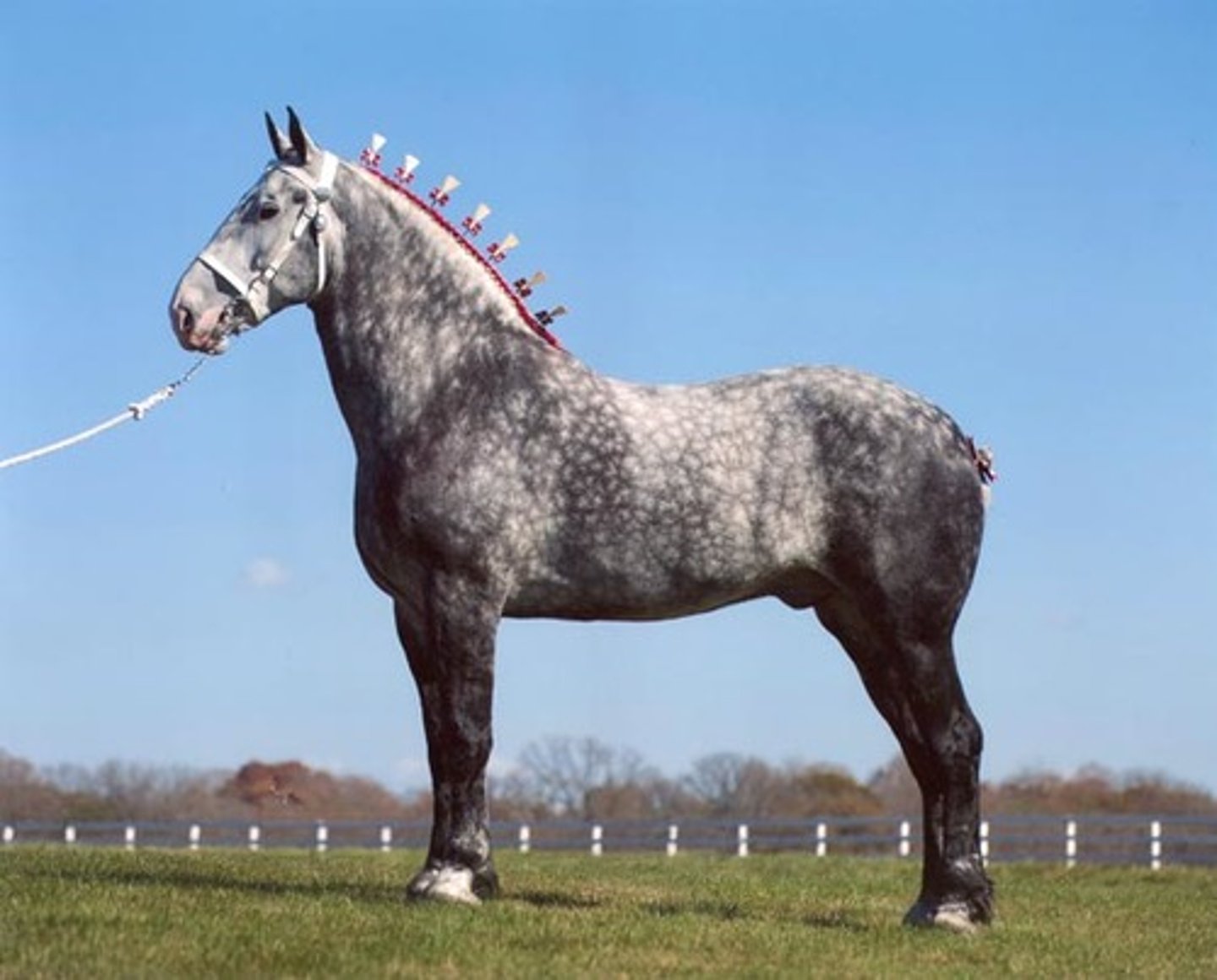
<p>- Ancient origins, from France with some Arab horse ancestry</p><p>- Came to US in 1839, later than other drafts however, 3 times as many other breeds combined by WWII</p><p>- Bred for farm and city labor</p><p>- ISU famous for breeding program in early 1900s</p>
54
New cards

Thoroughbred

- To US in 1700s from old English influence breeding of Arabians

- Popular in eastern states for longer distance and endurance racing

- Some lines and crosses popular in stadium jumping and field events
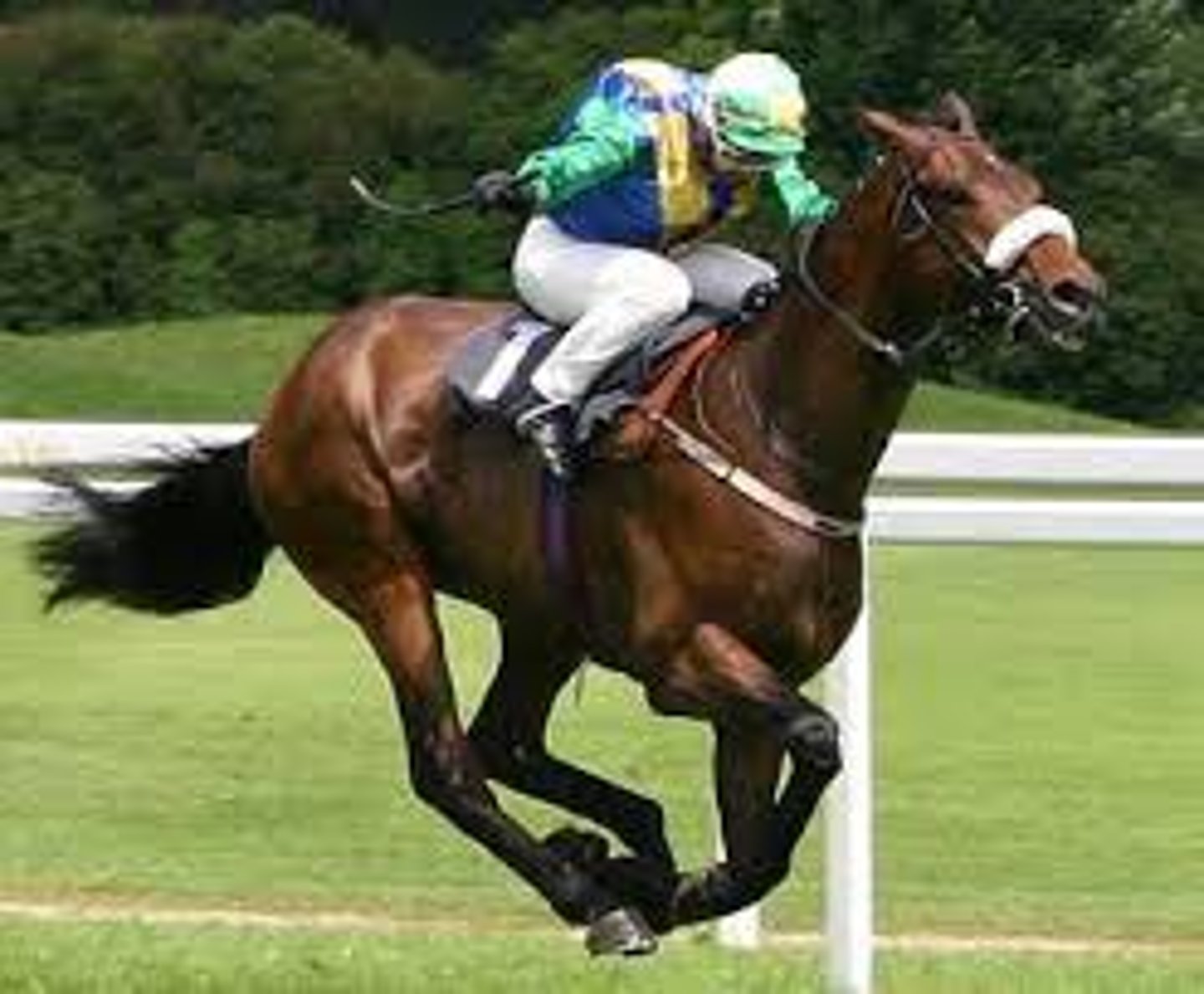
<p>- To US in 1700s from old English influence breeding of Arabians</p><p>- Popular in eastern states for longer distance and endurance racing</p><p>- Some lines and crosses popular in stadium jumping and field events</p>



