Chapter 1 Major Themes of A&P
 Call Kai
 Learn
Learn Practice Test
 Spaced Repetition
 Match
Match Flashcards
 Knowt Play
1/36

There's no tags or description
Looks like no tags are added yet.
Name | Mastery | Learn | Test | Matching | Spaced | Call with Kai | Chat |
|---|
No analytics yet
Send a link to your students to track their progress
37 Terms
Palpation inspection
Feelings with hands
auscultation
listening to sounds
Percussion
tapping
Cadaver Dissection
Cutting and Seperation of tissues to reveal relationships
Exploratory surgery
open the body
Medical imagining
or radiology - viewing the body without surgery
gross anatomy
study structure that can be seen with the naked eye
histology
examination of cells with microscope
Histopathology
microscopic examination of tissues for disease
vestigial organs
remnants of organs that were functional for ancestors but no longer serve a purpose
Reductionism
theory that a large, system like the human body can be understood by studying simpler components
Holism
there are emergent properties of the whole organism that cannot be predicted from seperate parts
Homeostasis
bodies ability to detect change and activate mechanism that oppose to maintain stable conditions
Negative Feedback Loops
Body senses change and activates mechanisms to reverse them
The brain senses change in blood temperature
if too warm vessels dilate (vasodilation) in the skin, and sweating begins (heat-losing mechanism)
Baroreceptors
sensory nerve ending in the arteries near the heart alert the cardiac center in the brains stem
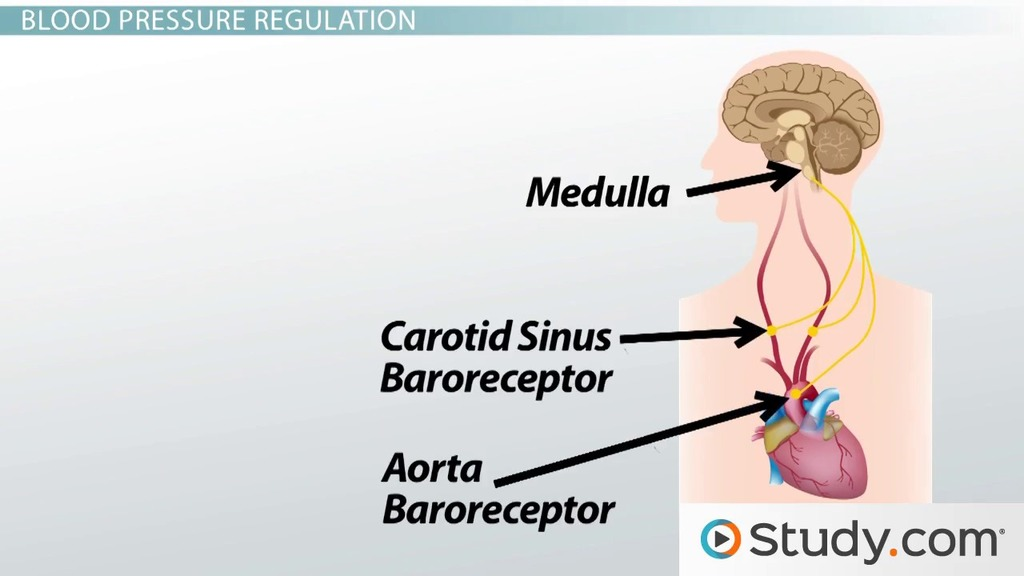
Cardiac Center
sends nerve signals that increase the heart rate and return the blood pressure to normal to regulate the heart rate

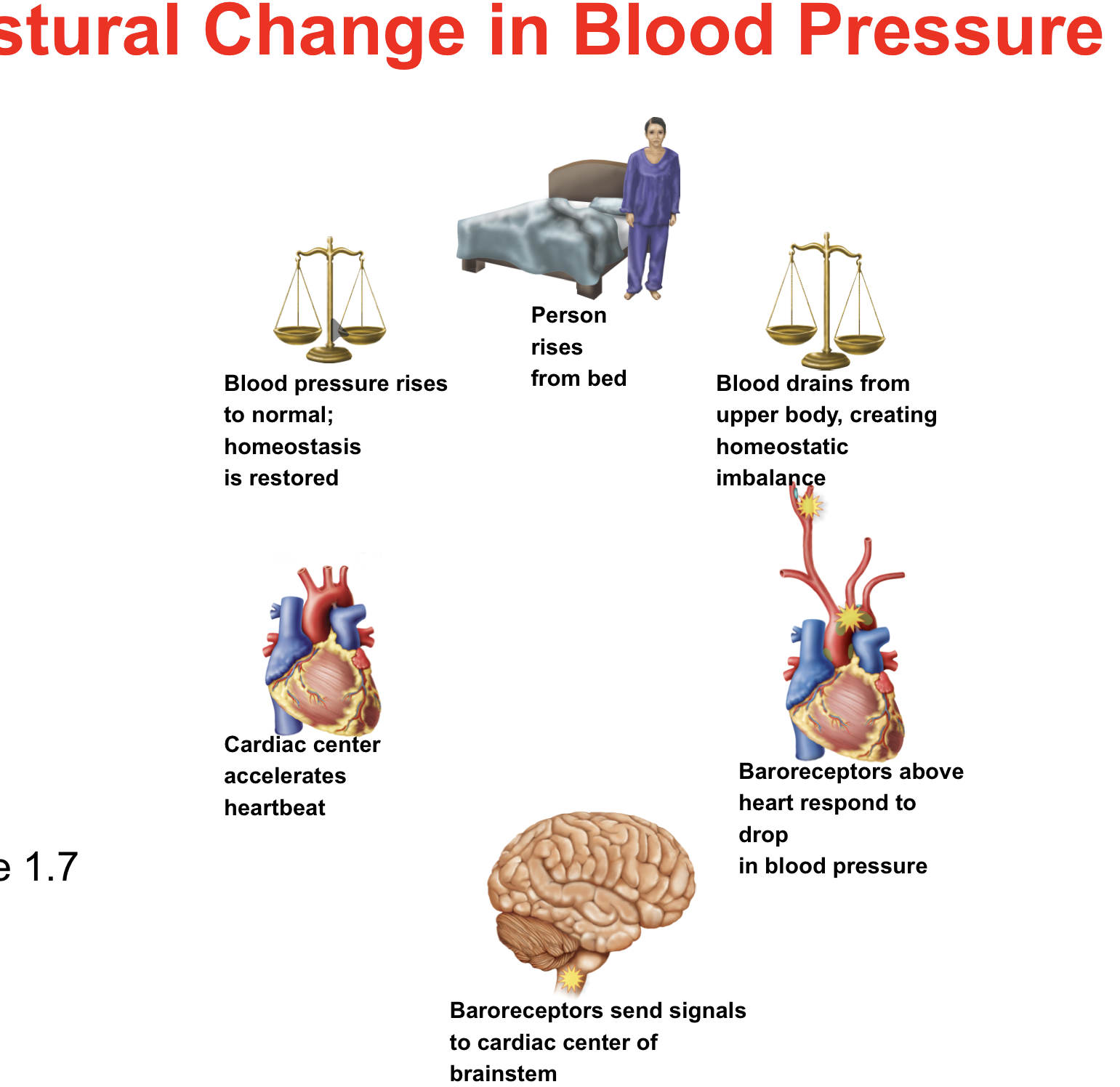
What type of feedback?
Negative feedback.
receptor
senses change in the body stretch receptors that monitor blood pressure
Integrating control center
processes the sensory information to make the decision to direct response
Effector
carries out final corrective action to restore homeostasis in a negative feedback
positive feedback
leads to greater change in the same direction and the loop is repeated
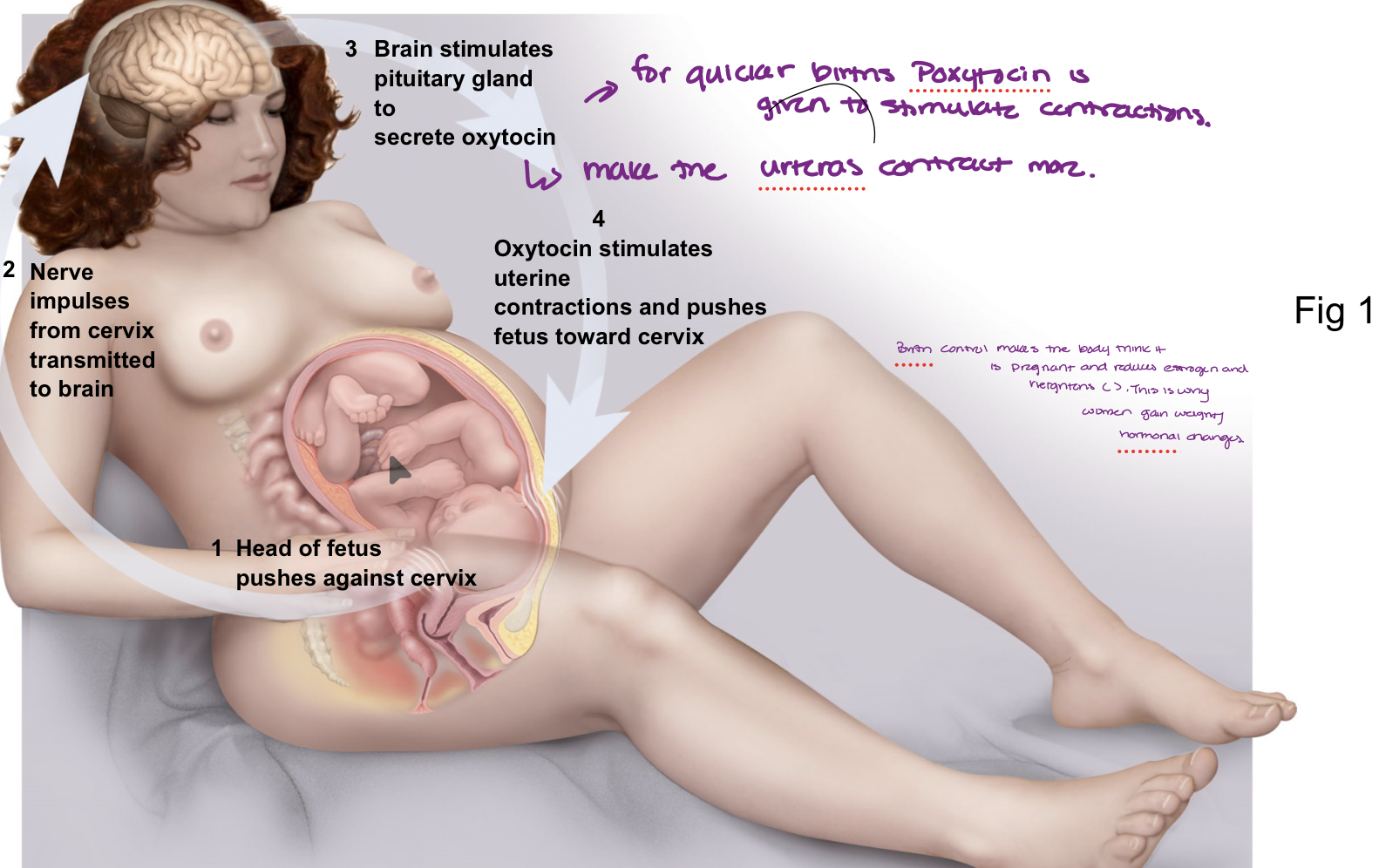
During childbirth, the head of the fetus pushes against the cervix and stimulates its nerve endings the hormone oxytocin is secreted from the pituitary gland, oxytocin travels through the bloodstream to the uterus, stimulating it the cervix more, causing the
Positive Feedback
Gradient
difference in chemical concentration charge, temperature, or pressure between two points.
Matter and Energy tend to flow——- Gradients
Down
Chemicals , Partical in electrical gradient, and heat in thermal gradients
In a gradient from high to low concentration
radiography X-ray
penetrate tissues to darken film beneath body to view bones
angiography
imagining to view blood vessels by contrast (dye material) and x-rays
Looking for narrowed or blocked coronary arteries
angriogram
Computed Tomography
multiple x-ray images and computers to create detailed cross-sectional images of the body
Scan the head to check for serious injuries and internal bleeding after serious accident
CT Scan
MRI Magenetic resonance imagining
uses strong magnetic feild and radio waves to create detailed image of soft tissue
detailed scanning of ligaments and cartilage
MRI scan
PET- Positron Emission Tomography scane
using radioactive tracer to show how tissues and organ are functioning
Seeking to look at active cancer in th ebody
PET scan
Sonography (ultrasound)
high frequency sounds waves to create image of structure in the body