2.4 impression material
 Call Kai
 Learn
Learn Practice Test
 Spaced Repetition
 Match
Match Flashcards
 Knowt Play
1/90

There's no tags or description
Looks like no tags are added yet.
Name | Mastery | Learn | Test | Matching | Spaced | Call with Kai | Chat |
|---|
No analytics yet
Send a link to your students to track their progress
91 Terms
What are the two types of impression material?
non elastic rigid
elastic non rigid
what are the types of non elastic rigid dental impressions?
hard
Thermoplastic
What are types of elastic rigid dental impressions?
elastomers
hydrocolloids
define impression materials
creates negative replica of soft/hard tissue which can be filled in by dental stone or other model materials for a positive copy to be achieved
What are the two types of self curing/photo resins?
Type 1 and Type 2
What is Type 1 self curing/photo resins used for?
full crown impression
impression of partially and completely edentulous jaws
impressions trays
Can self curing/photo resins record undercuts?
no because it’s non elastic which means fractures can be caused during removal
what are ingredients of self curing/photo resins?
natural resin
waxes
stearic acid
fillers
inorganic pigments
what can cause dimensional differences for self curing/photo resins?
It has high coefficient of thermal expansion which can cause dimensional differences between the impression and mouth
what are the actual non elastic rigid dental impressions?
impression plaster
Zinc oxide eugenol
self curing/ photo resin
what is main use of zinc oxide eugenol?
dentures on edentulous ridges with minor/no undercuts
wash impression over compound
bite registration
composition of zinc oxide eugenol?
base paste: zinc oxide, oil and hydrogenated rosin
Accelerator paste: 12-15% eugenol, oils, rosin and filler (talc or kaolin)
how does the temperature and humidity affect the setting time of zinc oxide eugenol?
Zinc oxide, in presence of moisture, reacts with eugenol to form zinc eugenolate
increase in temperature and humidity causes shorter setting time
what is the percentage shrinkage experienced by zinc oxide euugenol?
0.1% shrinkage
how can you determine the two pastes of zinc oxide eugenol have been thoroughly mixed?
the two pastes have contrasting colours
What is a non eugenol paste?
it is a paste used for sensitive patients as eugenol can cause a burning sensation in some
eugenol is replaced by carboxylic acid
what is eugenol replaced by in non eugenol paste?
carboxylic acid
what should model or cast of non eugenol paste ONLY be made of?
What should be done once stone is set?
gypsum-type plaster or stone. After stone has set, impression is immersed in warm water, 600 C, to ease its removal from the cast
Advantages of zinc oxide eugenol
high accuracy of soft tissue impression, due to low viscosity
stable after setting
good surface detail reproduction
inexpensive
adheres well to dental impression compound
Disadvantages of zinc oxide eugenol
Messiness
Variable setting due to temperature or humidity
Eugenol is irritating to soft tissues
Nonelastic and may fracture if undercuts are present
What are the elastic non rigid impression materials?
reversible agar hydrocolloids, irreversible alginate hydrocolloid Polysulfide, polyether, silicone,
What is reversible agar hydrocolloid used for?
full-mouth impression
quadrant impressions without deep undercuts
Single impression
Fixed partial denture impression
what forms is agar hydrocolloid available?
tray
syringe consistencies
what does the gel of agar hydrocolloid consist of and what do they help with?
12-15% Agar - gelling agent
1-2% Potassium sulfate - for good surfaces on gypsum models and dies
0.2% Borax - improve strength
0.1% Alkylbenzoates - preservatives
Traces of colouring and flavouring agents - ease of reading impression and aesthetic
~85% water - balances formulation
How is the syringe consistency of agar hydrocolloid prepared?
by increasing water content and decreasing the agar content
How can the solid gel of agar hydrocolloid be turned into a liquid?
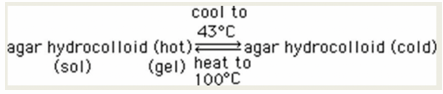
What are the steps to the use of a water bath for agar hydrocolloid?
Heat in 100 C water for 8-12 minutes
Store in 65 C water
Place in tray (with cooling coils) at 65 C
Temper in 46 C water for 2 minutes before taking impression
After seating the tray, cool it with water at no less than 13 C until gelation occurs
What is a potential issue faced when using agar hydrocolloid?
Thermal shock
what does thermal shock entail?
When warm agar comes into contact with cool water during gelation process it can cause sudden temperature change.
Can be uncomfortable or painful for patients with metal restorations (crowns, fillings etc)
Metal conducts heat and col more effectively, lead to sensitivity or discomfort
How to minimise the risk of thermal shock?
Ensure gradual transition from warm to cool temperatures during gelation process, this can be done by controlling water temperature and allowing enough time for the agar to adjust.
Advantages of agar hydrocolloid
Inespencive
No unpleasant odour
Nontoxic, nonstaining
No custom tray required
No mixing
Hydrophilic, can be used in moist conditions
Displaces water and body fluids
Easily poured in stone
Easy removal of stone cast from impression
Disadvantages of agar hydrocolloid
Requires expensive equipment
must be prepared in advance
tendency to tear
immediate pour required
dimensionally unstable
loss of detail possible due to tray movement
impression stability crucial for accurate results
What is non reversible alginate hydrocolloid used for?
removable partial denture
preliminary impressions for complete dentures
orthodontic models
study models
can alginate hydrocolloid be used for fixed partial dentures?
no because they are not accurate enough
what form does alginate hydrocolloid come in and what does it consist of?
comes in powder form
Contains: 12-15% sodium/potassium alginate, 8-12% calcium sulfate dihydrate
what are the two main reactions that occur when the alginate hydrocolloid powder is mixed with water?
Sodium phosphate reacts with calcium sulfate which provides adequate working time for the impression (2Na3PO4 + 3CaSO4 → Ca3(PO4)2 + 3Na2SO4)
Remaining calcium sulfate react with sodium alginate. Forms calcium alginate which combines with water to create a cell-like consistency
How accurate is alginate hydrocolloid and what is its elastic recovery?
Less accurate than agar hydrocolloid, silicone and polyether
97.3% elastic recovery value
What is the combination impression technique?
Combining alginate tray material with agar syringe material to create dental impression, this is done to utilize the detailed reproduction and compatibility of agar hydrocolloid with gypsum qualities
Are additional eqipments’s needed in combination impression technique?
No, a simple heater can be used to prepare the syringe material
water cooler tray is no longer needed
what is the actual procedure of combination impression technique?
Placing alginate in a tray
syringing agar around the preparation
seating alginate on top of agar
What is important to be wary of when choosing agar and alginate for combination impression technique?
To choose an agar-alginate pair with suitable bond strengths, best to follow the manufacturers recommendations for combinations
Advantages of alginate hydrocolloids
Inexpensive
easy to manipulate
pleasant tasting
displaces blood and body fluid
hydrophilic
easily poured in stone
compatible withs stock trays
Disadvantages of alginate hydrocolloids
Tendency to tear
Immediate pouring required after removal
Limited detail reproduction
dimensionally unstable
suitable only for single casts
Variable gypsum compatibility
Incompatibility with some epoxy resin die materials
Why is polysulfide rubber called a thiokol rubber?
as it is derived from thiols
What is polysulfide rubbers also known as?
Mercaptan
what is polysulfide rubbers commonly used for?
fixed partial denture applications
Why is polysulfide rubbers preferred?
high accuracy and low cost
What viscosities is polysulfide available in?
low, medium and high
when is polysulfide rubbers particularly useful?
for multiple impressions that require extra time
What form is polysulfide rubber available?
Two-paste form
what does the base paste and catalyst paste of polysulfide rubber consist of?
Base paste - polysulfide polymer, fillers and plasticiser
Catalyst paste - lead dioxide 30%
What is the process that polysulfide rubbers go through?
Condensation polymerisation
What is the condensation polymerisation of polysulfide rubber catalysed by?
lead dioxide
What occurs during condensation reaction of polysulfide rubbers?
The -SH (sulfhydryl) groups at the ends and branches of the rubber molecules react with other -SH groups on different molecules. This leads to lengthening of the polymer chains and the formation of cross-links
Causes material to change form paste-like consistency to a rubbery one
What is the by-product of teh condensation polymerisation os polysulfide rubbers?
water
How is the condensation polymerisation of polysulfide rubbers accelerated?
higher temperatures and the presence of moisture accelerates the reaction
What is the elastic recovery of polysulfide rubbers?
about 96%, which si slightly lower that other rubber impression materials
What is the tear strength of polysulfide rubbers?
It has the highest tear strength of the rubber materials, which allows their use in deep subgingival areas where removal is difficult
What is polyether used for?
for accurate impression of a few teeth without sever undercuts
in what viscosities is polyether available in?
low, medium and high
what form is polyether available in?
2 paste system
what does the base plate and catalyst paste of polyether consist of?
Base plate - low molecular weight polyether with ethylene imine terminal groups
Catalyst paste - contains aromatic sulfonic acid ester
what is the shrinkage value of polyether?
0.3% in 24 hours
What is the elastic recovery of polyether?
average 98.5%
What is the flexibility of polyether like?
low
advantages of polyether
pleasant handling
ease of mixing
higher accuracy compared to polysulfide or condensation silicone materials
good surface detail reproduction
easy to pour in stone
dimensionally stable up to 1 week if kept dry
disadvantage of polyether
high cost
short working and setting time
high stiffness after setting
limitations on use due to stiffness
bitter taste to some patients
cannot be left in disinfectant solutions for long periods
tearing may occur if rubber thickness is inadequate (at least 4mm)
what is condensation silicone rubber used for?
mainly for fixed partial denture impressions
ideal for single-unit inlays
what viscosities is condensation silicone rubber available in?
low, medium, high and very high (putty)
what forms is condensation silicone rubber available in?
two-paste
paste-liquid
what is the base paste and catalyst of condensation silicone rubbers?
base paste - contains poly(dimethylsiloxane) with terminal hydroxy groups -OH
Catalyst paste or liquid - metal organic esters, such as tin octoate
what are the two reactions that occur for condensation silicone rubbers?
chain extension
cross-linking
what does the two reactions of condensation silicone rubbers entail?
Chain extension occurs through condensation of the terminal -OH group in a siloxane
Cross-linking happens between chains with the help of orthoalkylsilicate molecules
alcohol by-product
what is the elastic recovery of condensation silicone rubber?
99%, excellent
what is the shrinkage of condensation silicone rubber?
0.2-1% in 24 hours
how is accuracy of condensation silicone rubbers improved and shrinkage reduced?
first taking impression with a highly filled silicone putty, after setting, taking a second impression with a light-bodied silicone. thus the final shrinkage is lower
advantage of condensation silicone rubbers
clean and pleasant for patient
highly elastic
setting time controllable with accelerator
putty-wash system improves accuracy
eliminates need for custom tray
disadvantage of condensation silicone rubbers
very hydrophobic
requires a dry field
difficult to pour in stone
does addition silicones have higher accuracy than condensation silicones?
yes
how is addition silicones more accurate than condensation silicones?
Instead of polymerisation to addition and eliminating alcohol by-product which evaporates and causes shrinkage
what forms is addition silicone rubbers avaialble in?
two paste system
what viscosities is addition silicone rubber available in?
low, medium, heavy and very heavy (putty)
What are addition vinyl silicones based on?
silicone prepolymers
what does prepolymers (which addition vinyl silicones is based on) consist of?
vinyl and hydrogen side groups, allowing them to undergo addition polymerisation
how is addition polymerisation initiated in addition vinyl silicones?
the platinum catalyst, chloroplatinic acid, initiates the reaction
how is hydrogen produced by addition vinyl silicone rubbers?
other than addition polymerisation, other reactions may occur during polymerisation process
what is the issue with hydrogen being released by other reaction during polymerisation process of addition vinyl silicones? How can its effects be reduced?
it can rarely cause porosity in materials
Some manufacturers include hydrogen absorbers in their formulation to eliminate the problem.
Some products have finely divided palladium added to absorb the hydrogen to prevent bubbles forming on stone die surfaces
what is the difference between addition silicones compared to condensation silicones?
addition silicones don’t produce a volatile by-product, so it has greater dimensional stability compared to condensation silicone
does condensation or addition silicone have greater dimensional stability?
addition silicones have greater dimensional stability
what are some properties of addition silicones?
really stretchy and don’t shrink much when stored
easy to work with (like condensation silicone)
what you avoid wearing when handling addition silicones?
avoid mixing addition silicones with laterx gloves