BLOCK 3 lecture 1
 Call Kai
 Learn
Learn Practice Test
 Spaced Repetition
 Match
Match Flashcards
 Knowt Play
1/13

There's no tags or description
Looks like no tags are added yet.
Name | Mastery | Learn | Test | Matching | Spaced | Call with Kai | Chat |
|---|
No analytics yet
Send a link to your students to track their progress
14 Terms
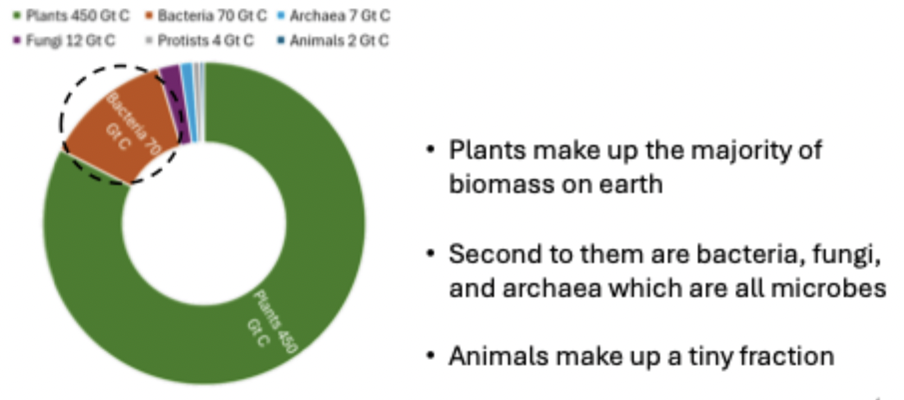
dominant life forms on earth
what is metabolism
the set of chemical reactions that all cells/organisms use to:
extract energy from the environment
synthesise the macromolecules that make up all life
catabolism and anabolism
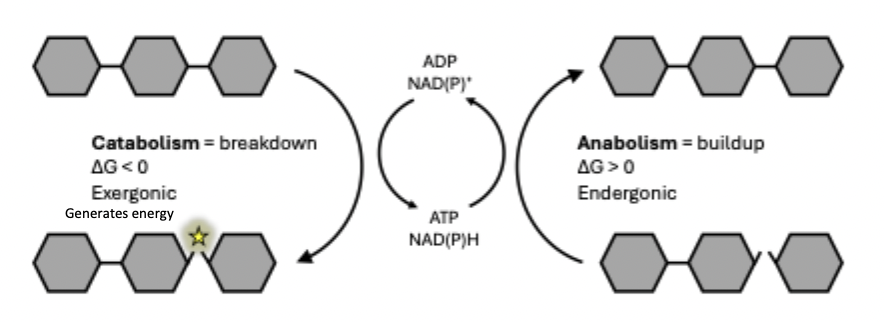
Delta G less than 0 means a reaction is going to release energy
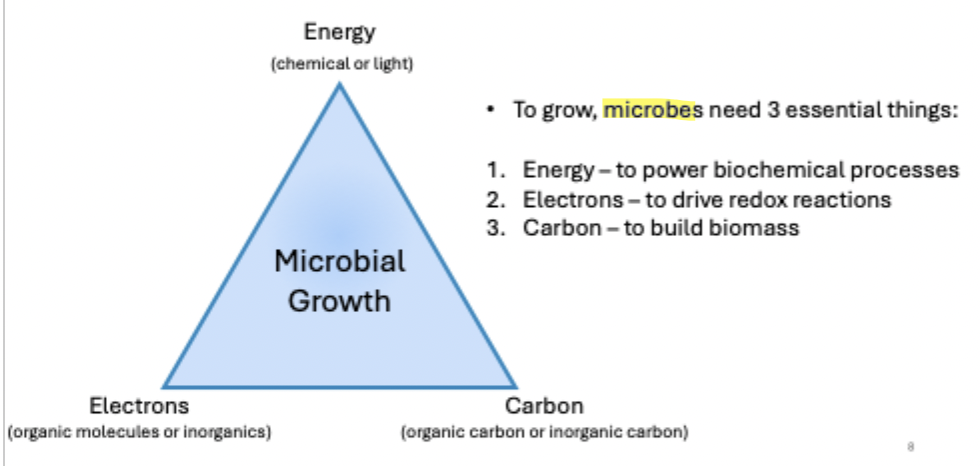
the metabolic triangle
trophic groups
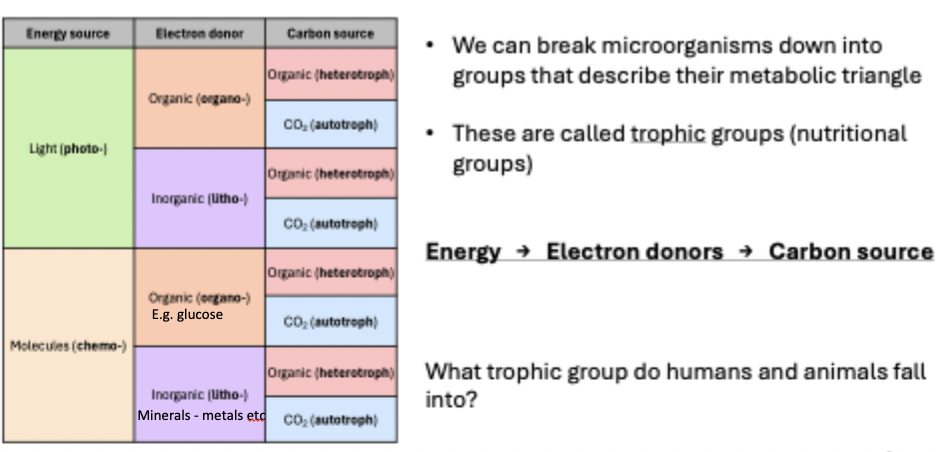
Classify microbes basically on where they get the stuff from the triangle
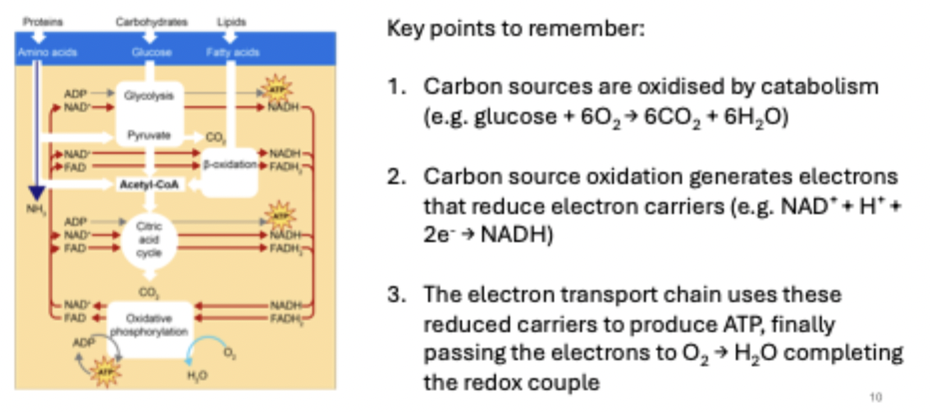
metabolism key points
why use oxygen
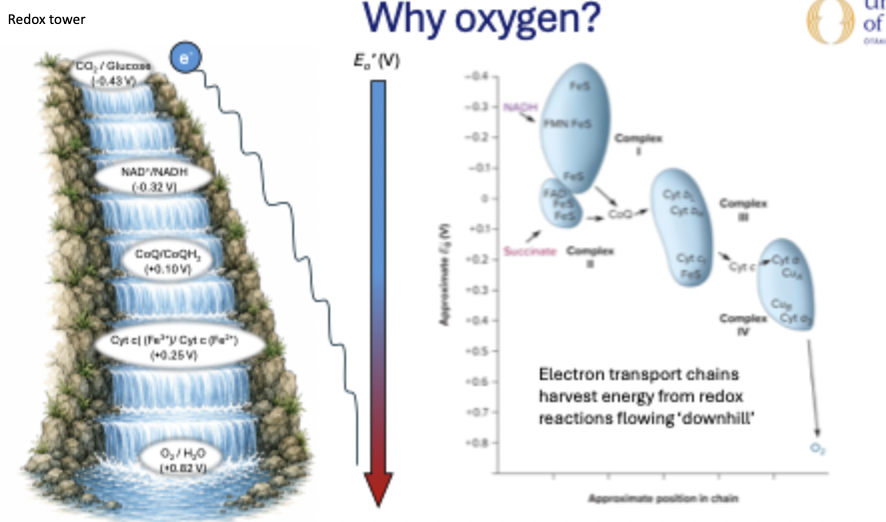
Glucose sits at the top of the tower - means it has a lot of potential to generate energy
In comparison oxygen is at the bottom - but really wants to take electrons from those at the top
Metabolism has evolved steps so this still happens but we can capture energy before we get to oxygen - through the electron transport chain
basic molecules of life
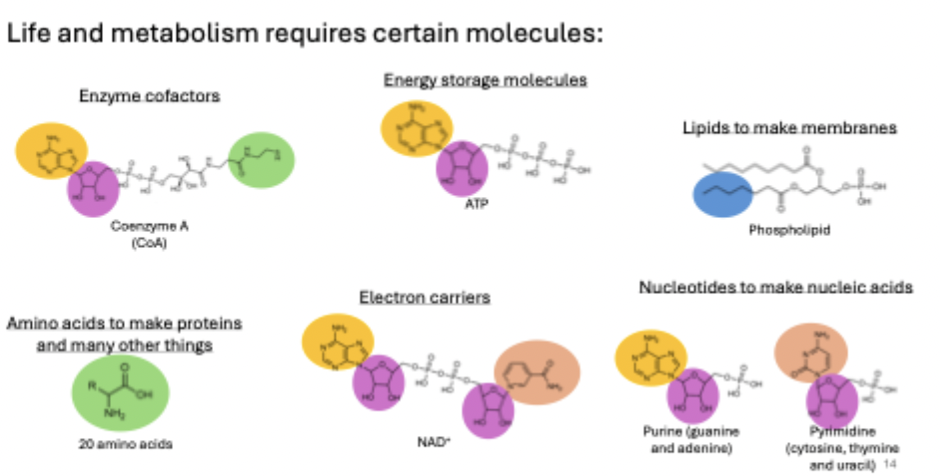
A lot of crossover of what these look like - ring structure, amino acids, etc
So can produce all of these from a small subset of things - 12 molecules
12 fundamental molecules
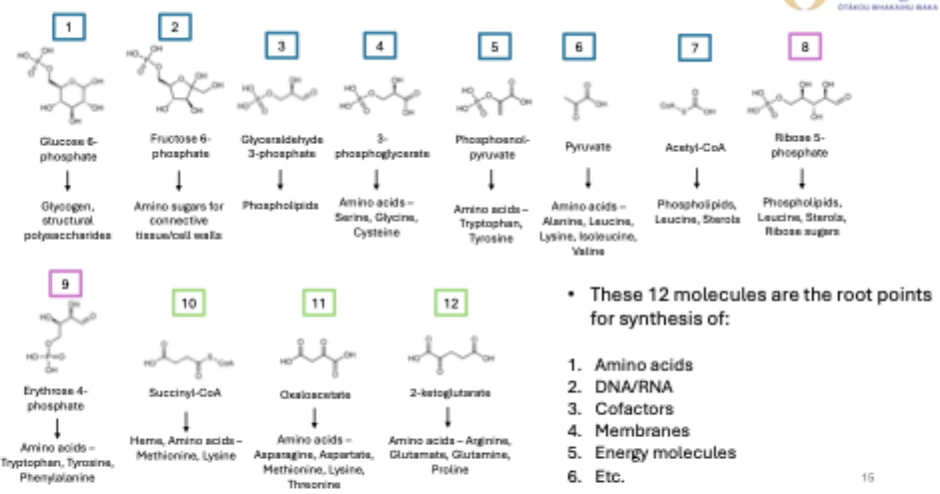
Can make all of the above from just these molecules
pathways
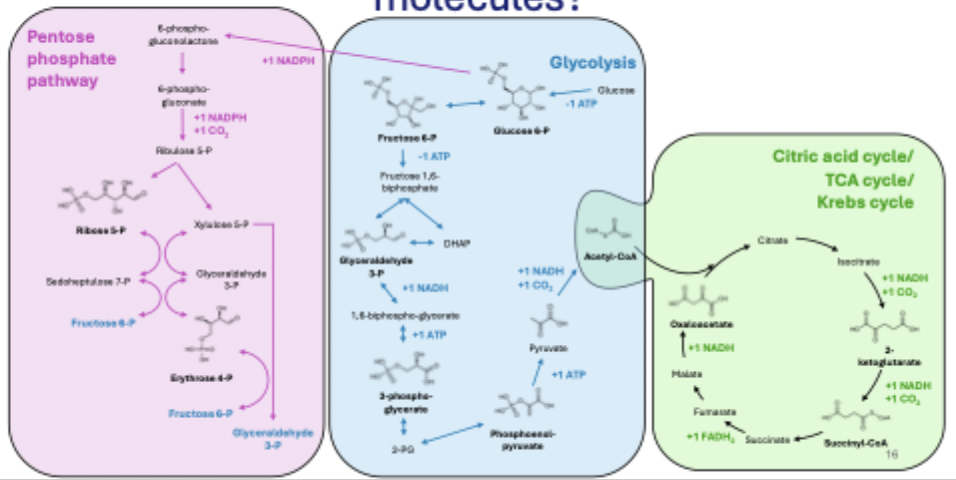
A lot of the molecules above come from glycolysis
3 from TCA
Only 2 from pentose phosphate pathway (takes glucose-6-phosphate through, mainly to generate ribose-5-phosphate which is essential - makes up sugar molecules in nucleotides)
But also generates erythrose-4-p which is an important precurosor
Also generates a different energy carrier (NADPH) than glycolysis (NADH)
NADH goes to ETC (so mainly for catabolism), NADPH is mainly for anabolism
anaplerotic reactions
refuel the TCA cycle
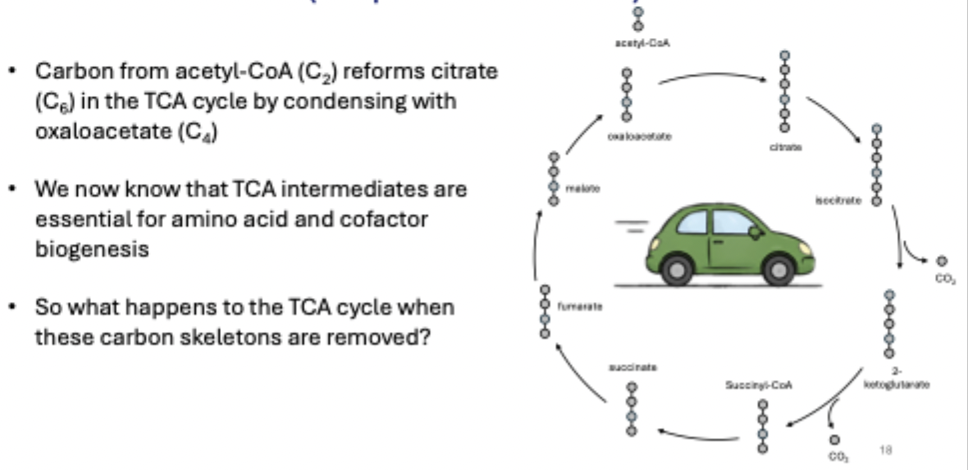
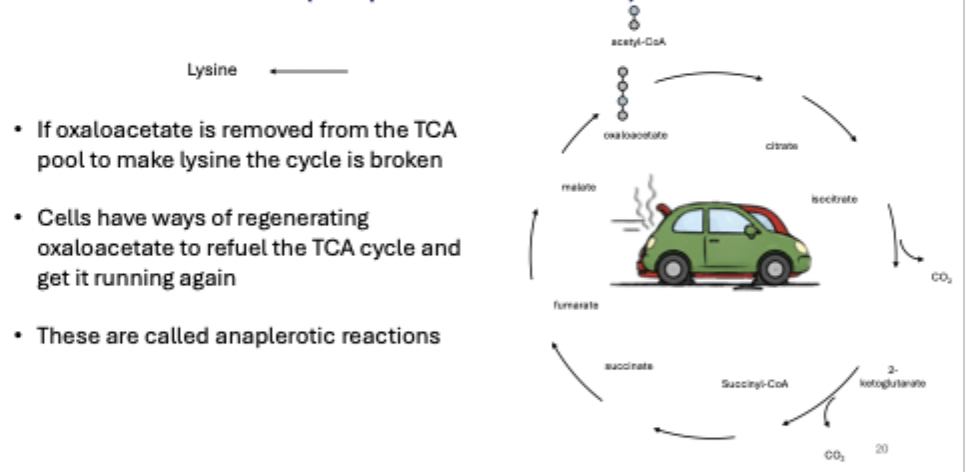
Acetyl coA would have nothing to bind to - cycle is stalled
So cells need to be able to regenerate TCA intermediates to refuel and keep it reunning
the two anaplerotic reactions
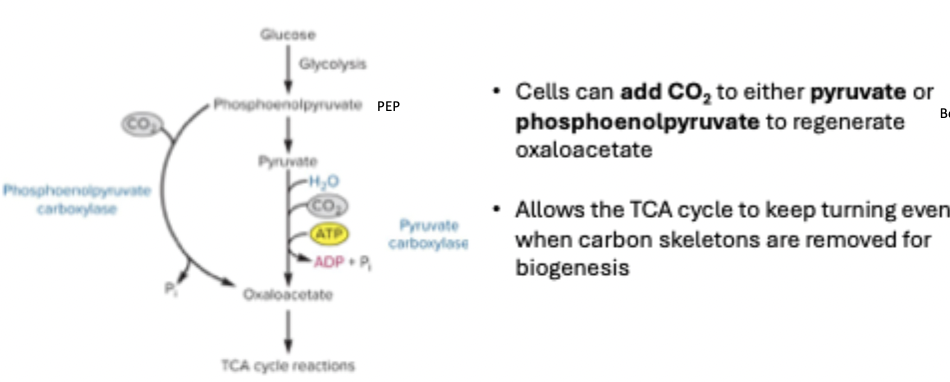
Both glycolysis intermediates
Through regeneration of oxaloacetate
This is wasting carbon but it is necessary in order to keep TCA running
the glyoxylate cucle
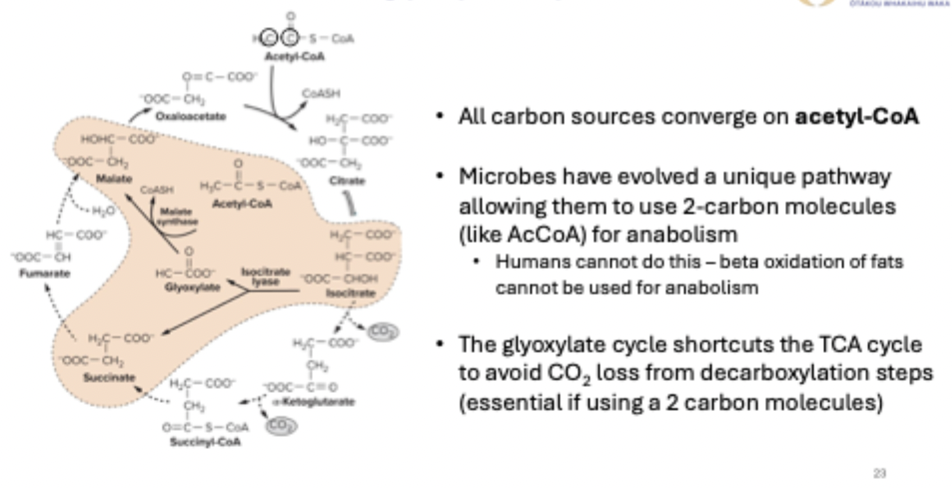
Humans do not have the ability to do this - only microbes
2 steps of decarboxylation - CO2 is released
Input of two carbon but lose two carbon - cycle cannot continue as no net gain
So to avoid this microbes have evolved a shortcut to evolve this steps
They take isocitrate and break it apart using isocitrate lyase into succinate (which is next molecule of TCA so skipped a few steps) and glyoxylate (2C molecule)
2nd step facilitated by malate synthesase which makes malate by condensing a glycoxylate with ann acetyl-CoA
This allows the cycle to continue without the decarboxylase steps
This doesn’t happen for every molecule - as need to make some succinyl-CoA and alpha ketoglutarate for growth - have to balance how much is going through the shortcut vs not to balance growth versus energy
Aerobic as required ETC even though it may not seem it
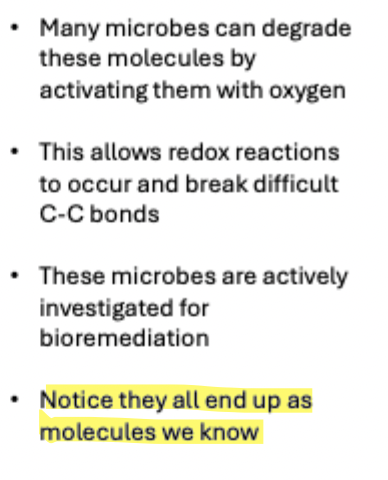
other uses for oxygen - degrading BTEX pollutants
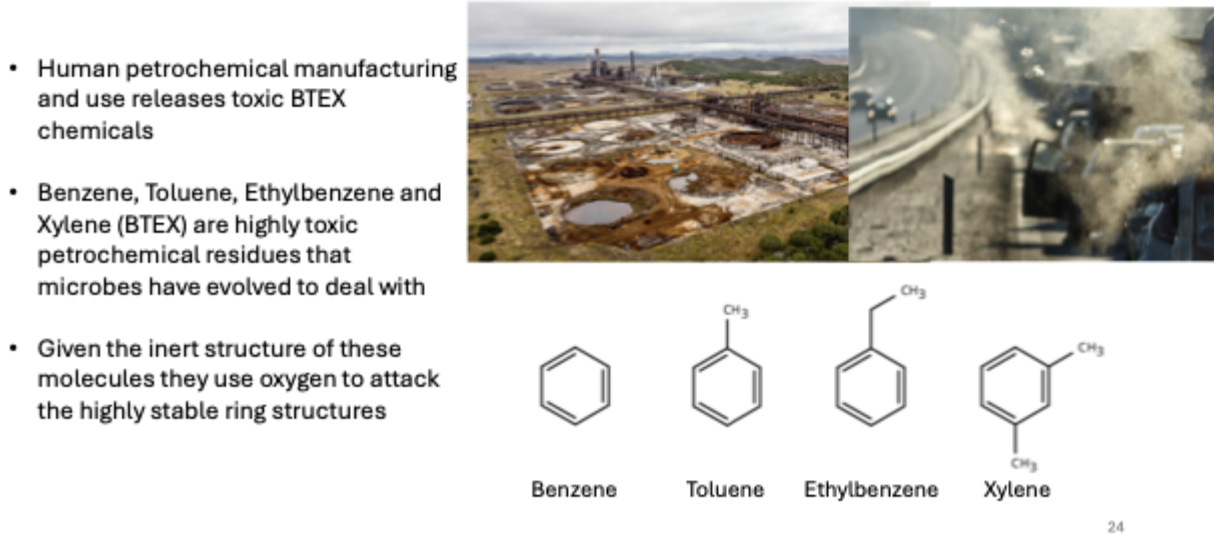
These molecules have become abundant quickly - they never were in the past
Microbes have been able to quickly adapt to be able to use these as carbon sources
These molecules only contain carbon and hydrogen
Ring structure is very stable so hard to break down
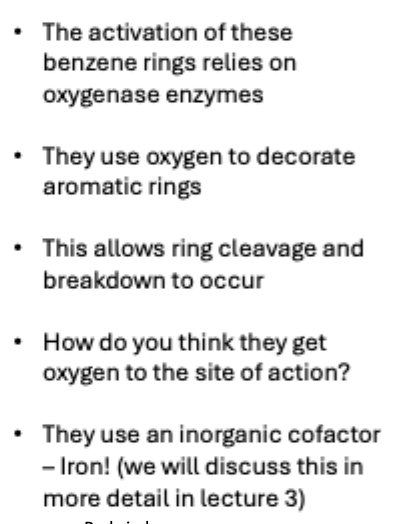
So bacteria use oxygen to attack these bonds to break them down