ecology final exam
 Call Kai
 Learn
Learn Practice Test
 Spaced Repetition
 Match
Match Flashcards
 Knowt Play
1/379

There's no tags or description
Looks like no tags are added yet.
Name | Mastery | Learn | Test | Matching | Spaced | Call with Kai | Chat |
|---|
No analytics yet
Send a link to your students to track their progress
380 Terms
what is reciprocal/pairwise selection involved in?
coevolution
what is reciprocal/pairwise selection?
selection imposed by one interacting species on another, which in turn exerts a selective pressure on the first
what does antagonistic mean in coevolution?
one species suffers a negative effect from the reciprocal selection, leading to an evolutionary arms race
what is an example of antagonistic coevolution?
predator and prey; host and parasite
what is coevolution?
result of evolutionary arms race between predator and prey or host and parasite - results from the symbiont reciprocally effecting each other and leading to selection on the opposite symbiont
___ and ___ incur a strong fitness cost from parasitism and predation
host and prey
___ must infect a host to reproduce and/or continue their life cycles
___ must eat prey to survive
parasites and predators
in ___, evolutionary arms races result in species reciprocally affecting each others evolution
coevolution
what is predation/parasitism?
symbiosis where one organism benefits (the predator or parasite) while the other is negatively affected (the prey or the host)
contrast predation and parasitism
predation is a shorter interaction where a predator obtains energy by killing and consuming another organism (its prey) - parasitism is a longer-term symbiosis
the main distinction between predation and parasitism is ___
the duration of symbiosis
what is schistosoma mansoni?
parasite that infects humans, lives in host tissue for years to decades
coevolution involves ___
the reciprocal selective pressures and responses exhibited by interacting species
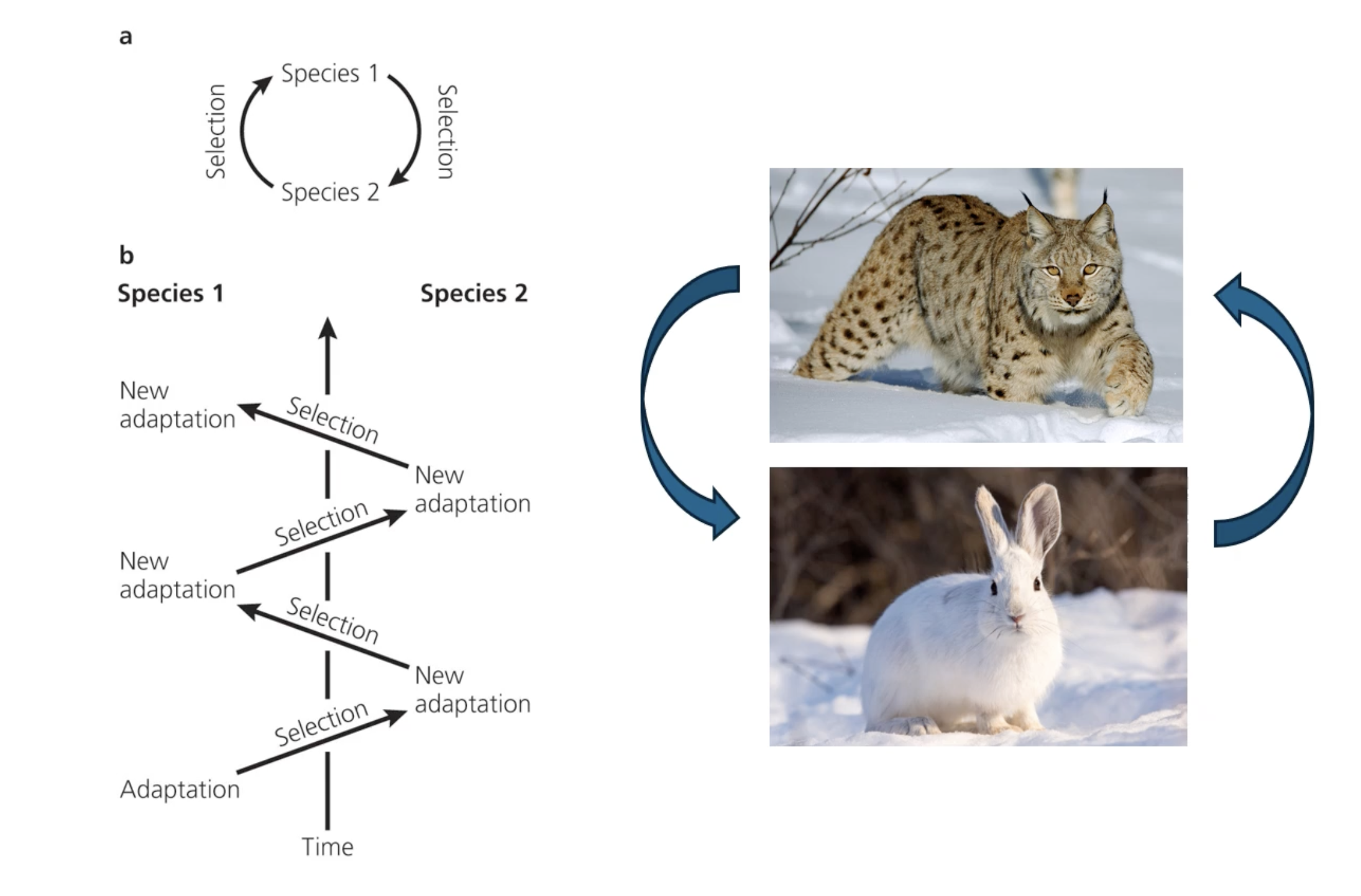
explain an example of coevolution in the hare and lynx
the predator (lynx) evolve adaptions that make them better at hunting the prey (hare) causes the hare to evolve adaptations that make them better at hiding or avoiding the predator, the lynx becomes quieter/more stealthy and then the hare adapts better hearing etc.
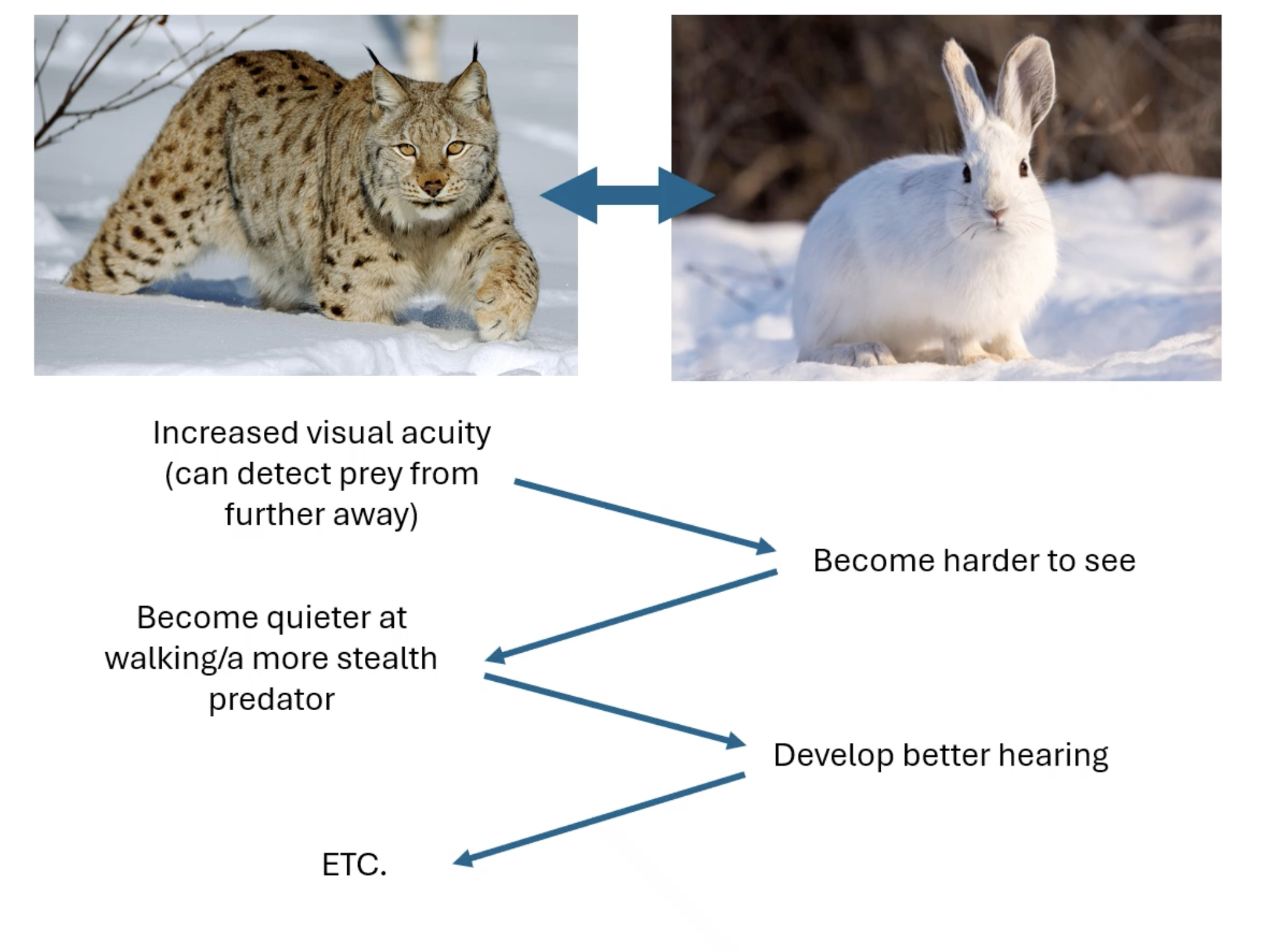
what is the red queen hypothesis?
“it takes all the running you can do to stay in the same place” - members of co-evolutionary symbiosis must continually adapt to try and keep up with their antagonist
what is the life-dinner principle?
the concept that the selective pressures of prey on predators and predators on prey are often not equal - the selective pressures on prey are higher since death or injury is a potential outcome of predation, for predators the outcome of not catching prey is loss of a meal not loss of a life
is there greater selective pressure on prey or predators?
prey
what are selective pressures on predators?
-be faster
-be sneakier
-be able to detect prey from farther away
-develop weapons (claws or teeth)
what are selective pressures on prey?
-be faster
-be less easy to see
-be able to detect predator from father away
-have defensive weapons
-be unpalatable (not taste good)
-take a long time to handle (shells) so less energy can be taken in per unit time
what are species that echolocate?
some bats and odontocetes (toothed whales and dolphins)
how has echolocation evolved in taxa?
evolved twice in the two taxa (bats and odontocetes)
what is echolocation?
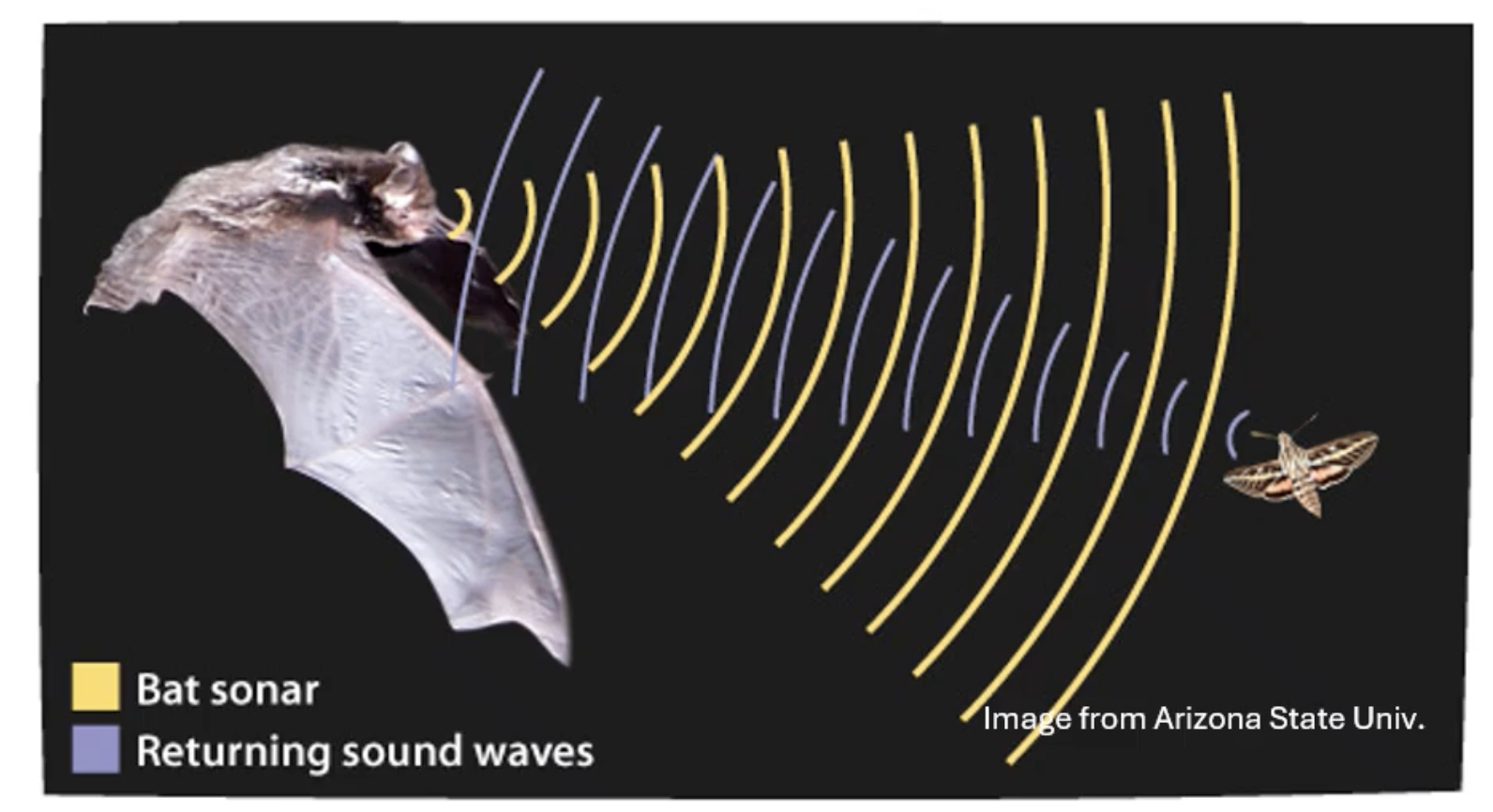
they produce sound and listen/gain information from returning echoes - this information is used to locate prey and navigate the environment
what do insectivorous bats predate?
flying insects
how do bats find prey?
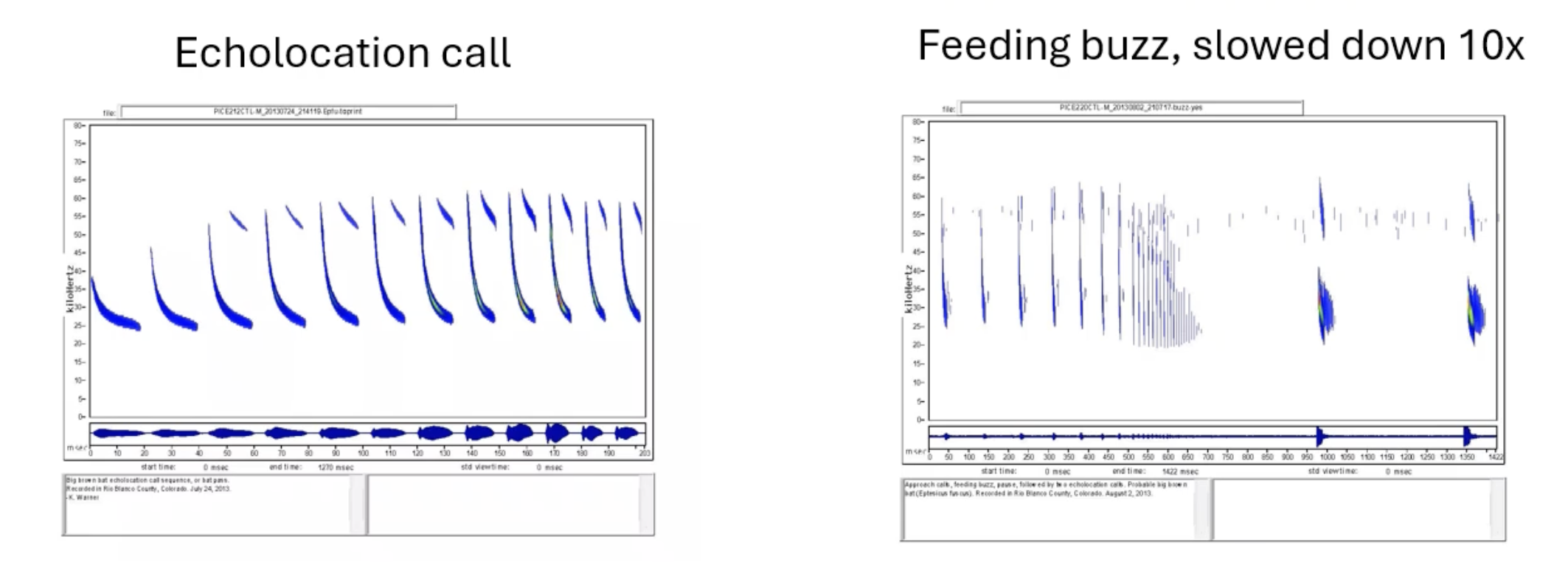
bats echolocate by producing high pitched sounds that then bounce off prey and aspects of the environment
what happens when bats hear a returning call they identify as prey?
they produce a feeding or terminal buzz (extremely fast sound production that can be > 100 buzz/second)
what is a feeding or terminal buzz?
an extremely fast sound production (>100 buzz/second) that bats produce when they hear a returning call they identify as prey
what is the difference between echolocation call and feeding buzz?
echolocation call is what bats use to find the prey item and navigate its environment - feeding buzz is used to narrow in on the specific location of the prey items
what is an evolutionary response of insects to predation?
invertebrate groups have evolved highly sensitive ears many times in different taxa (crickets and katydids, flies, mantids, some beetles, moths)
how have lepidopteran evolved due to bat predation?
-lepidopteran ears are often sensitive to ultrasound like echolocation
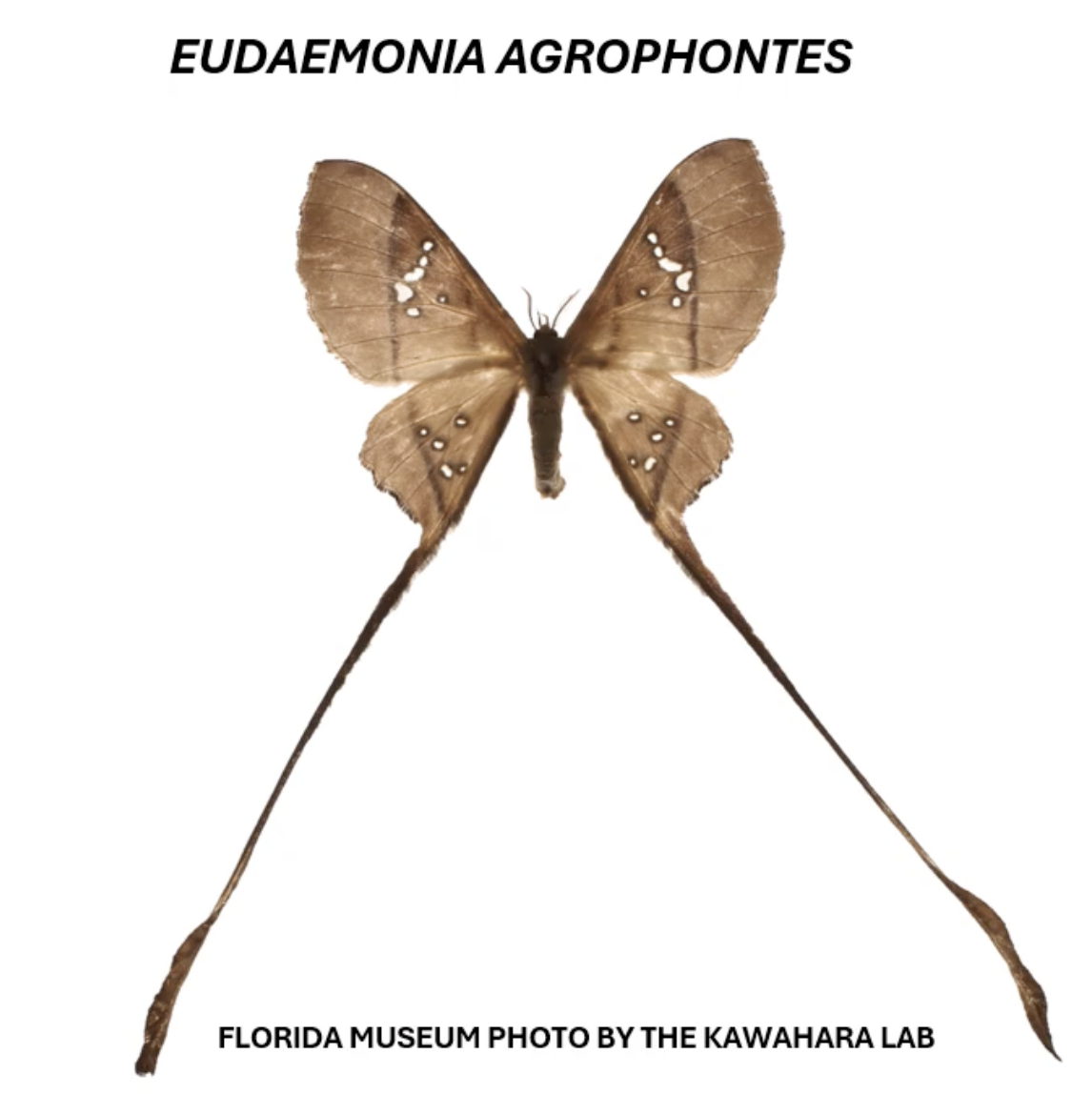
-silk moths (family Saturniidae) have long tails to deflect sonar, this makes bat predation less successful since bats will miss the moth’s body and instead strike their tail
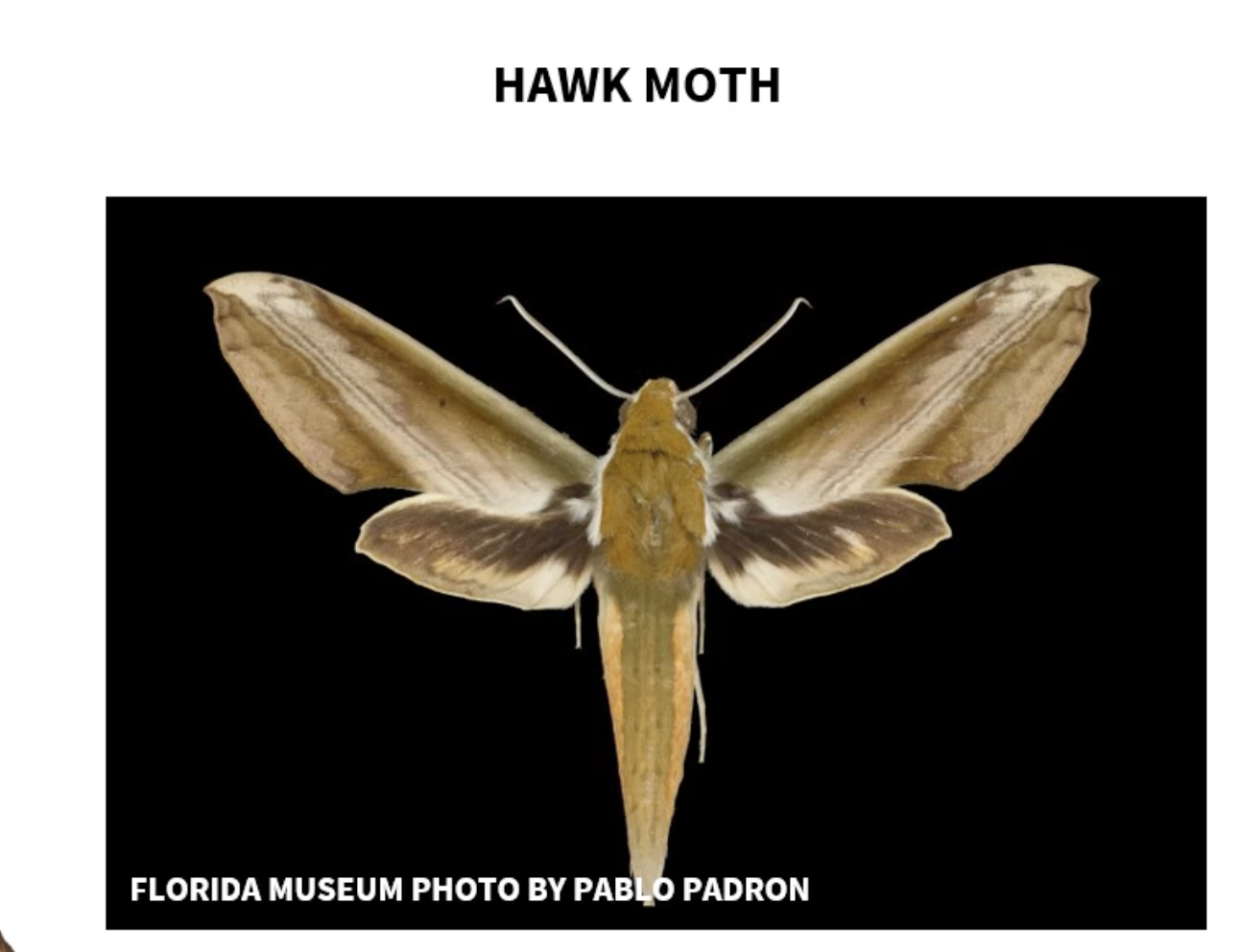
-hawk moths produce sonar themselves (sonar jamming) to confuse and interrupt bats who are trying to predate them
what is the evolutionary response of silk moths (family Saturniidae) to predation?
long tails to defect sonar, this tends to make bat predation less successful since bats will miss the moth’s body and instead strike their tail
what is the evolutionary response of hawk moths to predation?
produce sonar themselves (phenomenon called sonar jamming) to confuse and interrupt bats who are trying to predate them
what is solar jamming?
producing sonar themselves to confused and interrupt bats who are trying to predate them (done by hawk moths on bats)
how have pit vipers increased success of predation?
pit vipers detect infrared radiation using their innervated pit organs - pit organs are connected via a thin, innervated membrane (TRPA1 is the temperature sensitive ion channel) - pit vipers can detect changes in temperature as small as 0.003 degrees celcius
what do pit vipers use to detect infrared radiation?
innervated pit organs
how are pit organs connected?
via a thin, innervated membrane
what is the temperature sensitive ion channel in pit vipers?
TRPA1
what changes in temperature can pit vipers detect?
changes in temperature of about 0.003 degrees C
why is it advantageous for pit vipers to detect subtle difference in temperatures?
detect heat given off by different species so they can narrow in on the location of their prey items
some plants and animals can either ___ or ___ toxic substances to deter predation or herbivory
accumulate or produce
what is a prey adaption of monarchs?
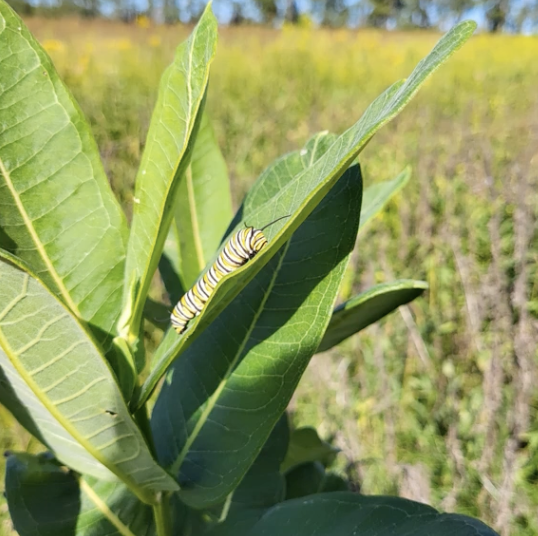
monarchs feed on milkweed as caterpillars - they accumulate cardiac glycosides from the milkweed plants that can be toxic to predators, so predators avoid predating monarchs
what is aposematic coloration?
warnings to predators that a species contains dangerous/noxious chemicals
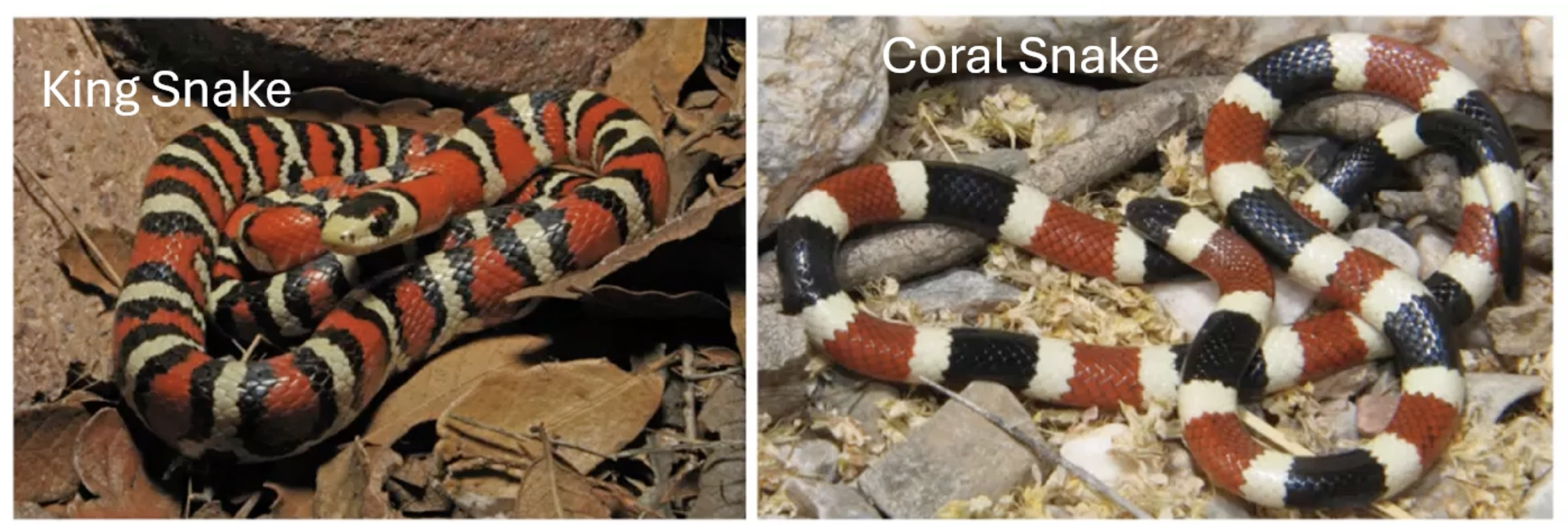
what is batesian mimicry?
a non-toxic species mimics a toxic species to avoid predation - the mimic benefits since predators will avoid good mimics to avoid ingesting toxins
what is an example of batesian mimicry?
non-venomous king snake mimicking a venomous coral snake
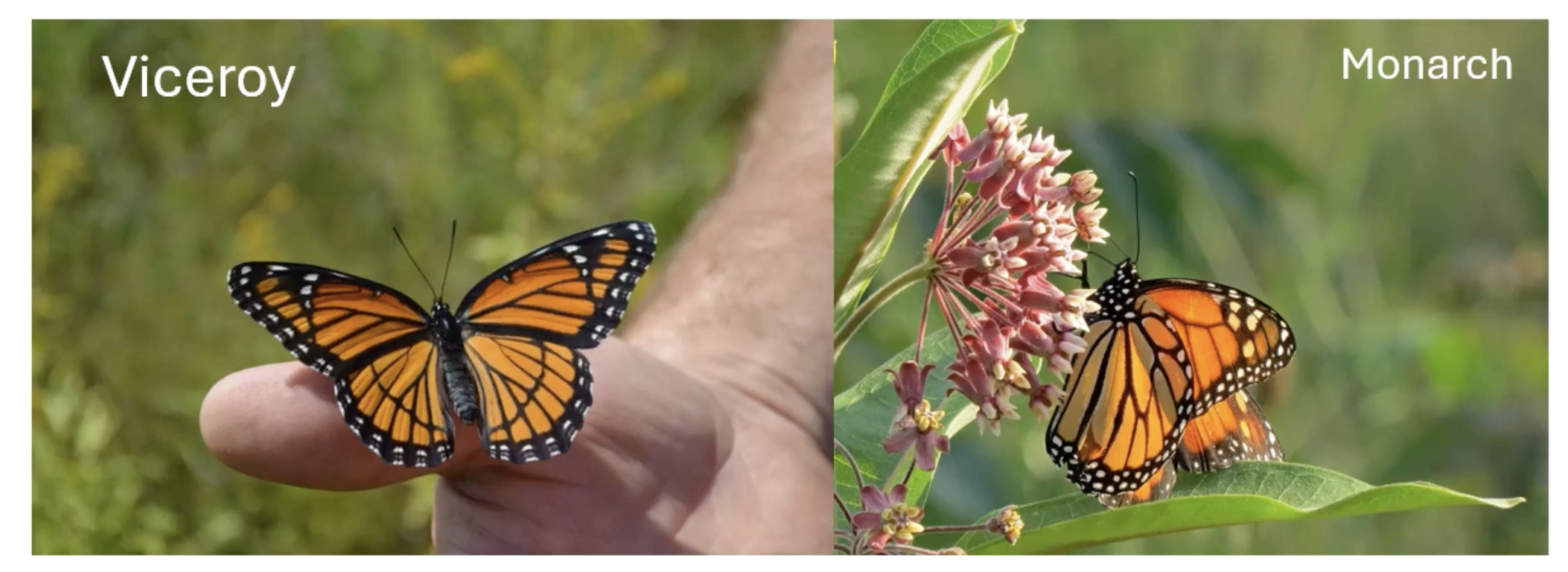
what is mullerian mimicry?
when two noxious or toxic species evolve a similar coloration pattern to warn predators that they are dangerous, thus preventing predation
what is an example of mullerian mimicry?
viceroys and monarchs
___ obtain energy from the tissue of another living organism (the host) but does not result in the immediate death of the host
parasites
what are types of parasites?
ectoparasites and endoparasites
what are ectoparasites?
live and feed on the host (ex. on the skin and feathers)
what are examples of ectoparasites?
lice, mites, ticks, flees
what are endoparasites?
live within the host
what are examples of endoparasites?
flatworms, roundworms, pinworms, tapeworms, heart worms, protozoal parasites, fungal/bacterial/viral pathogens
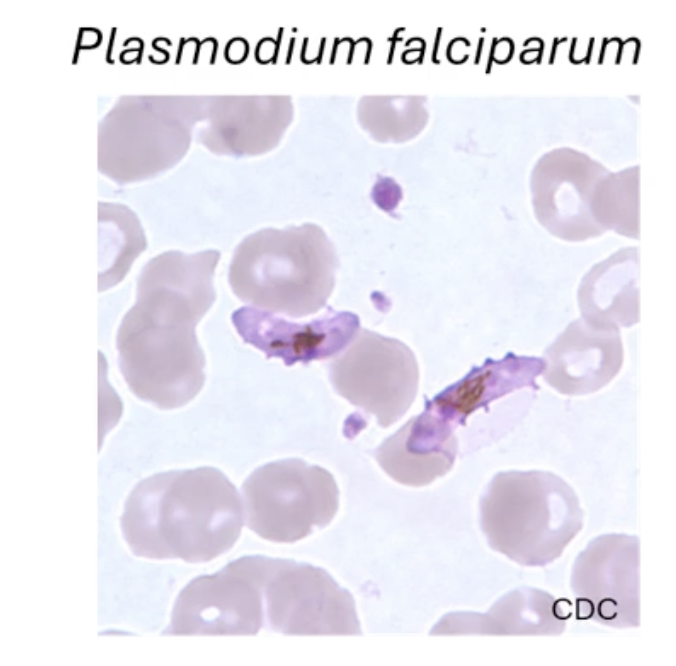
what is plasmodium falciparum?
endoparasite (protozoal parasite) that causes malaria
parasites make up ___ of the world’s diversity
40%
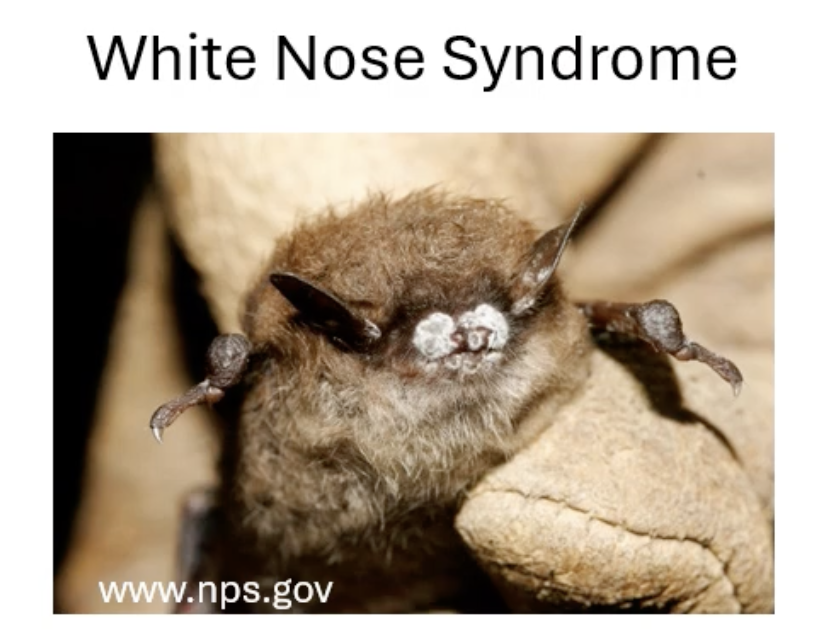
what is white nose syndrome?
fungal pathogen that causes bats to wake up when they are supposed to be hibernating which burns through their energy
complex life cycles are common in which parasite taxa?
-apicomplexans: protists, include toxoplasma gondii and plasmodium
-helminths: flatworms, some round worms, some tapeworms
what do complex lifecycles of parasites include?
-alternate between different host species to mature from larvae of the parasite, to the adult form
-may include resting stages (ex. cysts)
-may alternate between sexual and asexual reproduction
what is an avian schistosome?
a flatworm that has a complex life cycle - alternates between sexual and asexual reproduction
what are the hosts for avian schistosome?
definitive host: waterfowl
first intermediate host: aquatic snail
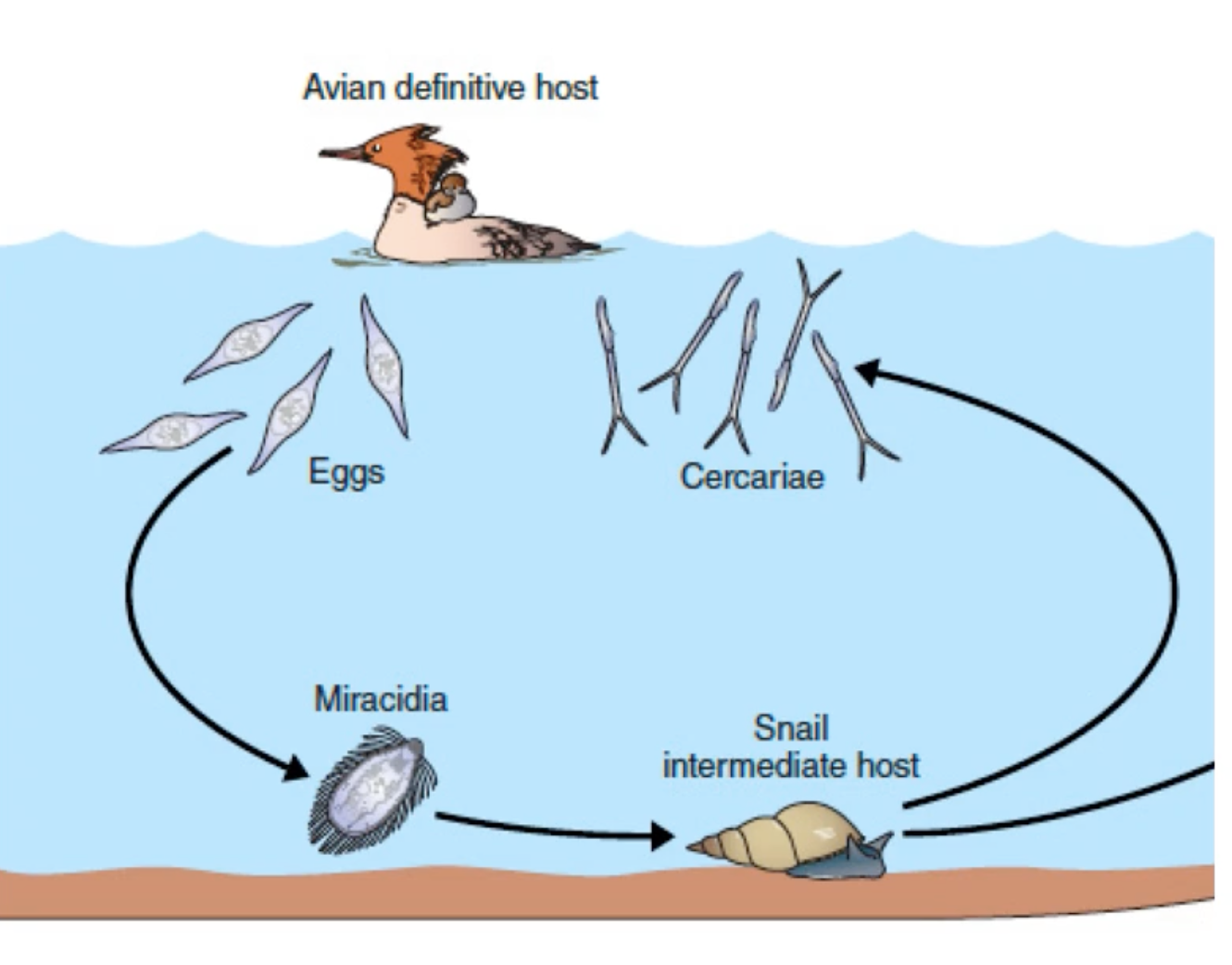
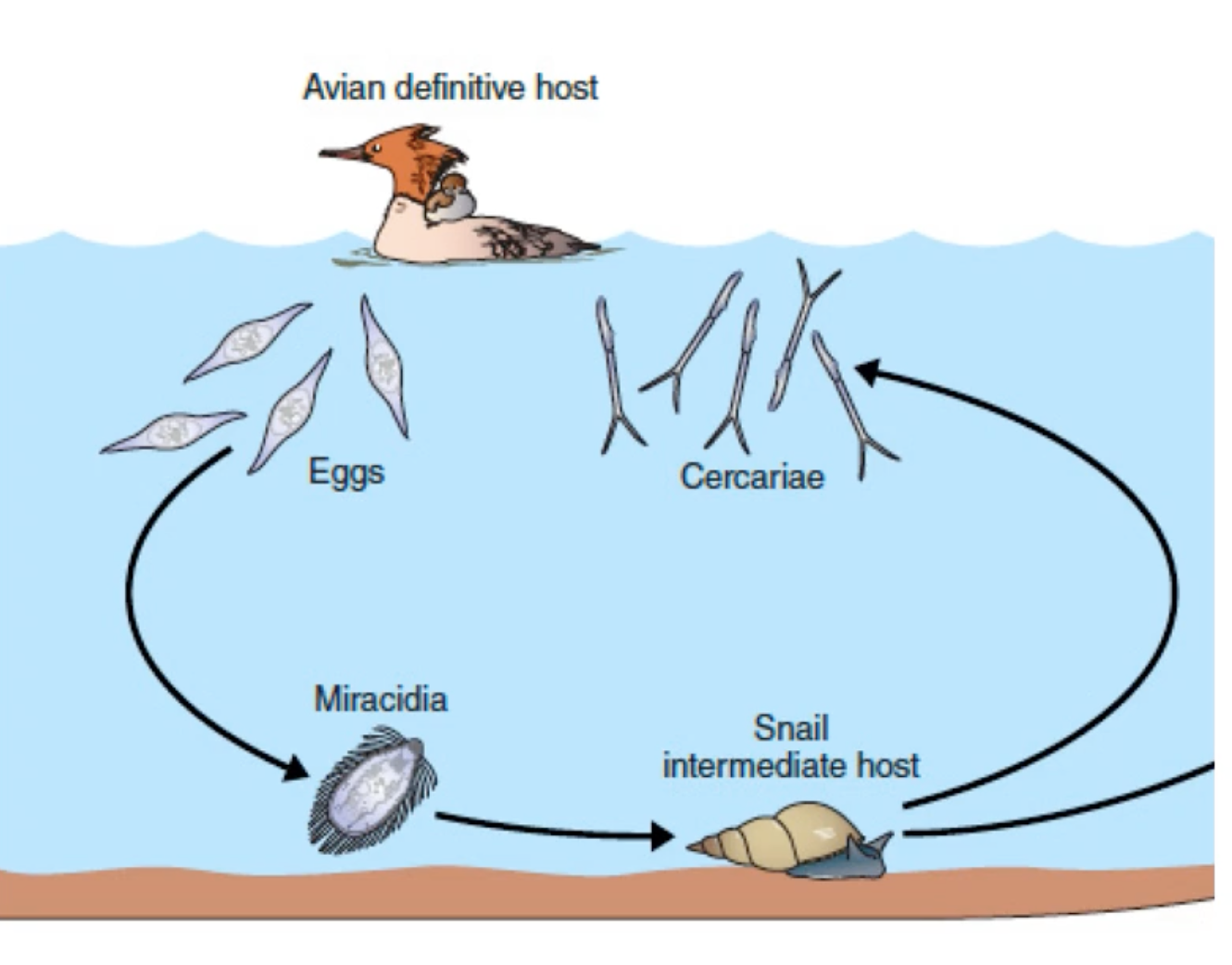
explain the complex life cycle of avian schistosome
the definitive host (waterfowl) becomes infected by cercariae that eventually mature to the adult worm to undergo sexual reproduction and release eggs, the eggs hatch to release free living miracidia that infect a snail, miracidia develop and undergo asexual reproduction within the snail host to produce cercariae, cercariae seek out and infect waterfowl through their skin and the cycle continues
what is a ribeiria ondatrae?
a flatworm with a complex life cycle and three hosts
what are the host for ribeiroia ondatrae?
definitive host: waterfowl
first intermediate host: snail
second intermediate host: tadpole
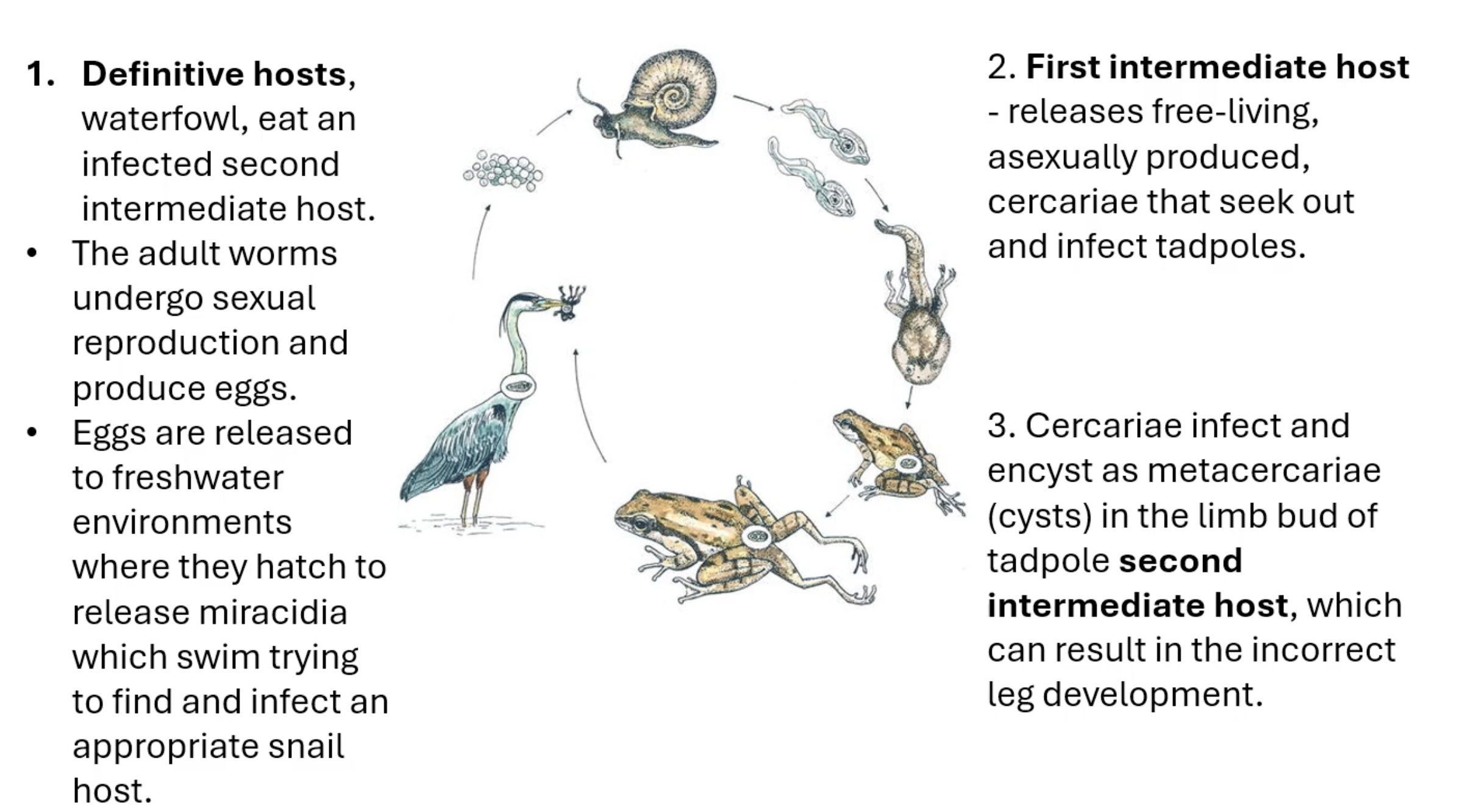
explain the complex life cycle of ribeiroia ondatrae
waterfowl (definitive host) eat an infected second intermediate host (tadpole/frog), adult worms undergo sexual reproduction and produce eggs that are released to freshwater environments where they hatch to release miracidia that swim to try to infect a snail host (first intermediate host), the the first intermediate host they reproduce asexually to form cercariae that seek out and infect tadpoles, cercariae infect and encryst as metacercariae (cysts) in the limb bud of tadpoles (second intermediate host) which results in incorrect leg development
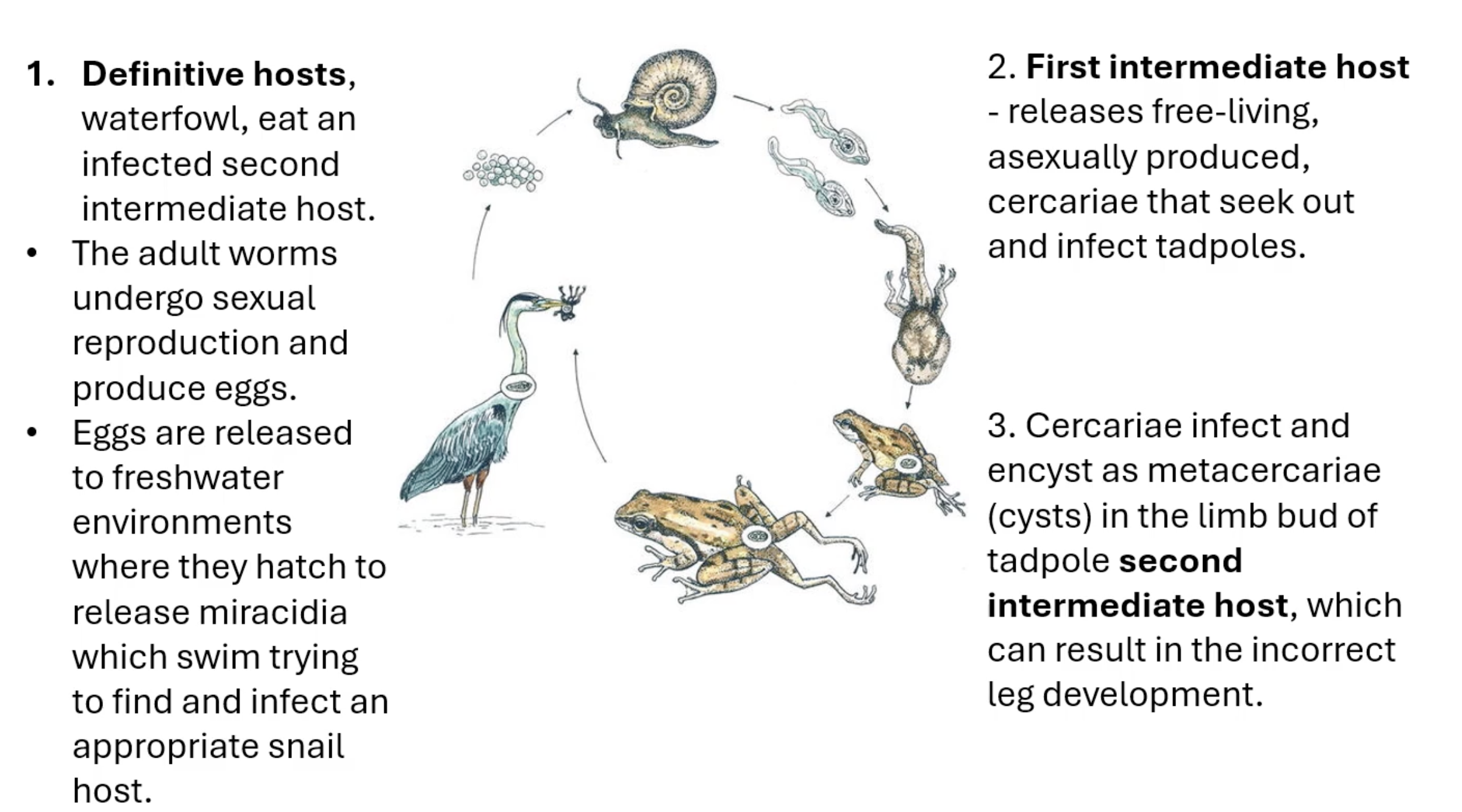
where does sexual and asexual reproduction occur for avian schistosome and ribeiroia ondatrae?
sexual reproduction: waterfowl
asexual reproduction: snail
what is the difference between complex life cycles of avian schistosome and ribeiroia ondatrae?
avian schistosome have 2 hosts while avian schistosome and ribeiroia ondatrae have 3 hosts
what is a metacercariae?
cyst
what is a hypothesis for why frogs with incorrect leg development is advantageous?
they are more likely to be predated by the waterfowl because they cant hop or swim as fast, increasing their transission
what are examples of host adaptations to parasites?
-adaptations to resist infection (prevent an infection from establishing)
-immune response to infection
-change behavior to avoid areas with high levels of parasites or pathogens
-change behavior to clear infection (ex. behavioral fever)
what are the immune responses?
-limit the infection or disease spread (TH1 immune response)
-cope with a longer-term infection and repair damaged tissue (TH2 immune response)
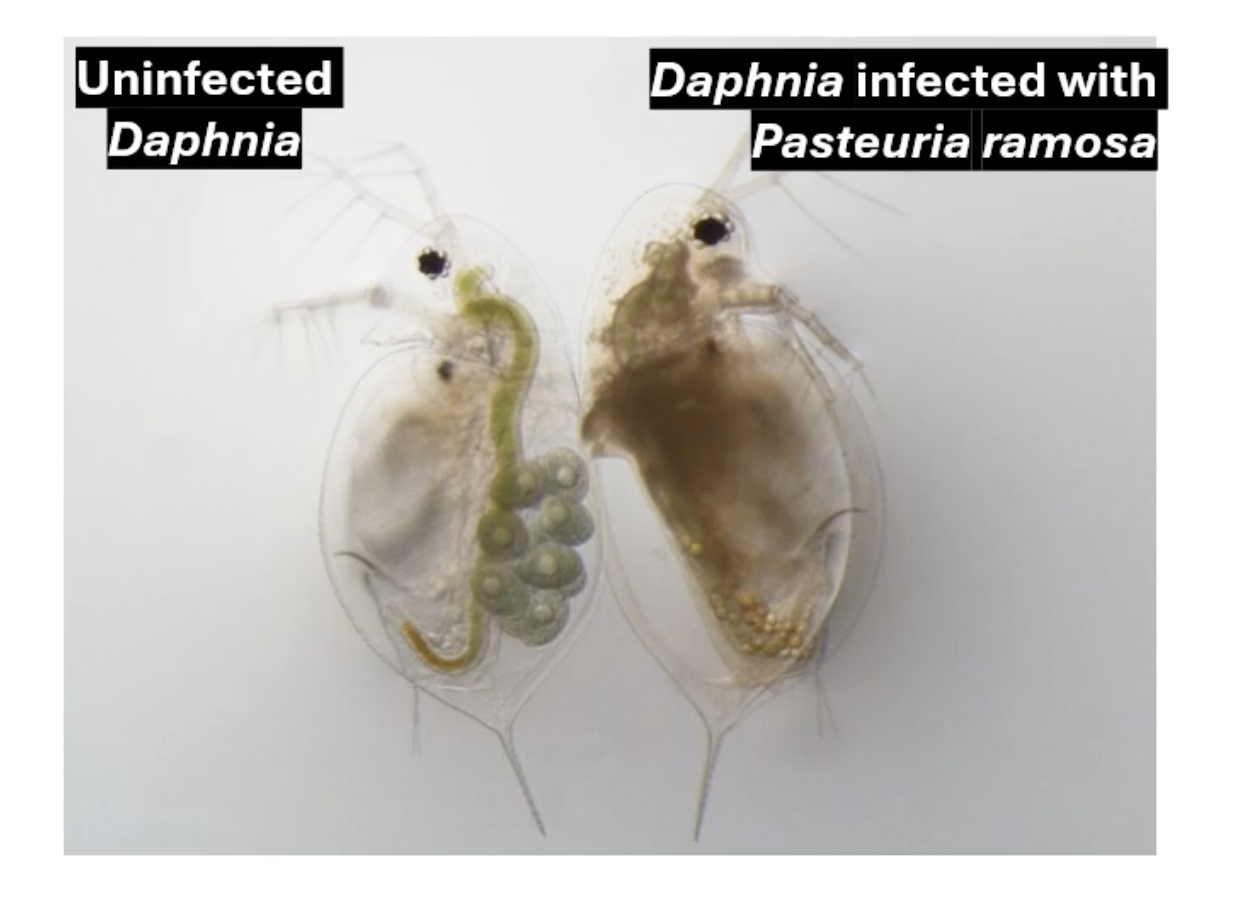
explain the relationship between daphnia and pasteuria ramosa
pasteuria ramosa is a bacterial pathogen of daphnia - it castrates the host, eventually killing the host, releasing bacterial spores
how were researchers able to study daphnia and pasteuria ramosa?
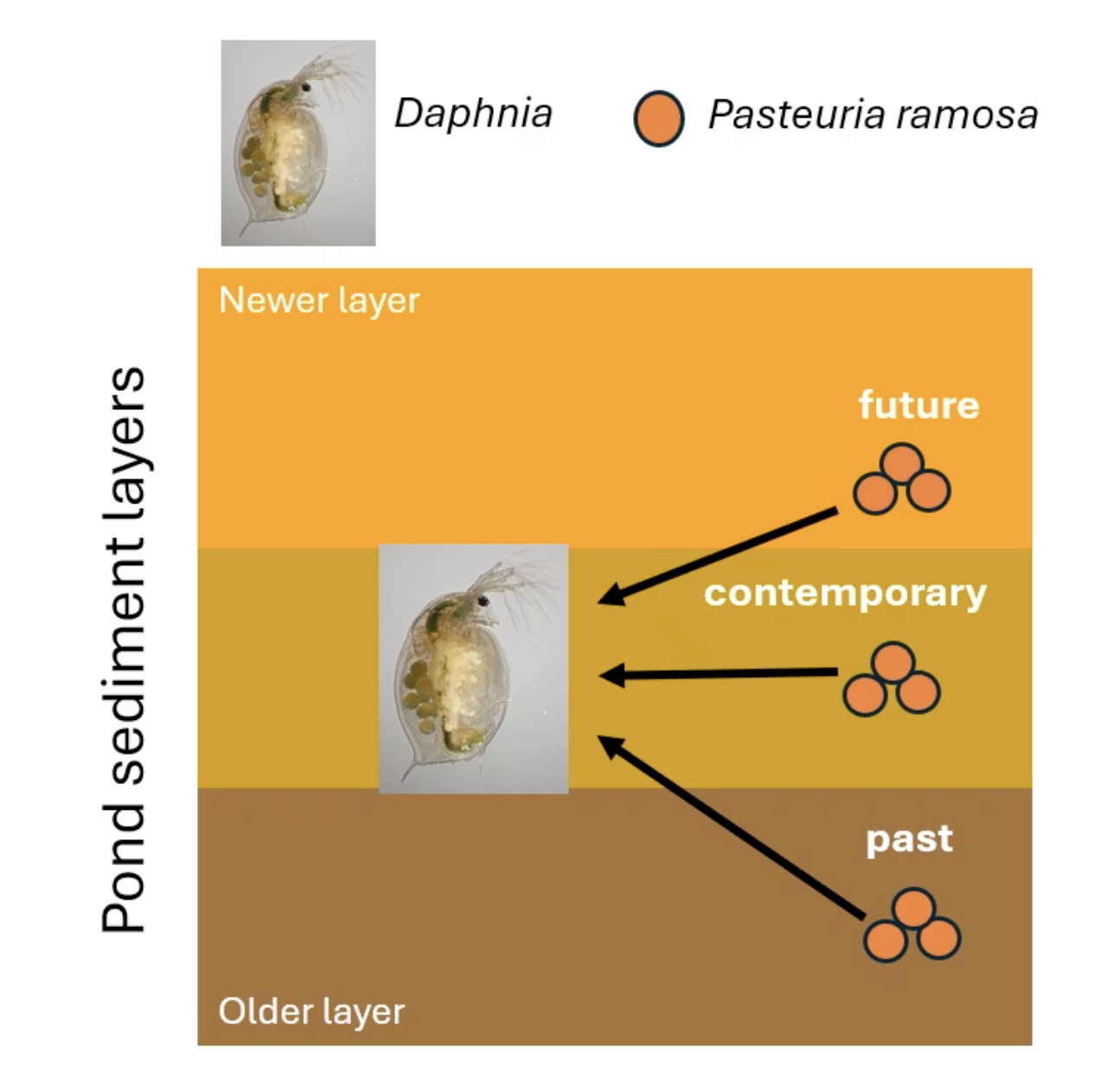
ponds have sediment layers that contain sequentially older daphnia and p. ramosa so they were able to be obtained from different years
Daphnia were exposed to sediment from ___
-one sediment layer below them (past pathogen)
-the same sediment layer (contemporary pathogen)
-one layer above them (future pathogen)
author hypothesized that ___ is acting on the hosts and predators
frequency dependent selection
what was the prediction for the daphnia and pasteuria ramosa?
pathogens should be more infectious to contemporary hosts, higher infectivity since there are more successful infections
hosts should be more resistant to past parasites, lower infectivity due to fewer infections
what were the results found for the daphnia and pasteuria ramosa?
higher infectivity in contemporary hosts (0.65), lower infectivity in past hosts (0.55), adaptation was lost one generation later (future infectivity of 0.57)
if there was no coevolution, we would expect infectivity to ___ over time
remain constant
contrast snail and daphnia reproduction
snails are often simultaneous hermaphrodites capable of self-crossing and outcrossing
daphnia undergo cyclical parthenogenesis alternating between parthenogenesis (asexual) and sexual reproduction
what are the costs of sexual reproduction?
-finding a mate
-the potential for contracting a disease from potential mates
-the potential to break up useful genotypes
what are the benefits of sexual reproduction?
-genetic diversity via recombination and random assortment of chromosomes during meiosis
-genetic diversity may lead to novel, potentially useful, phenotypes
in good conditions (ample food and space), daphnia reproduce ___; in bad conditions (fall/winter weather and crowding), daphnia reproduce ___
asexually and sexually
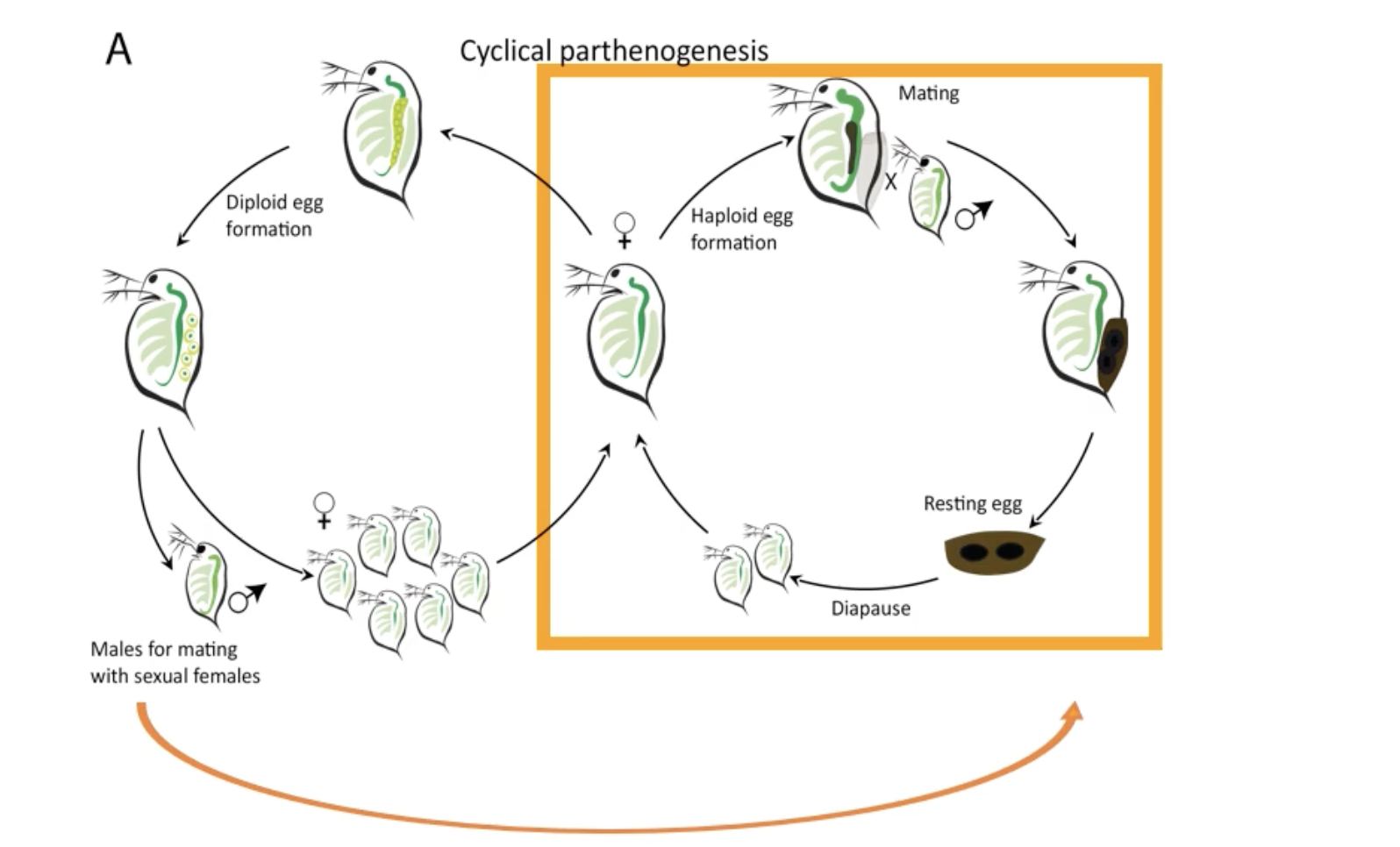
daphnia produce ___ in sexual reproduction under ___ conditions
ephippia, bad
sexual reproduction in daphnia is correlated with ___
the proportion of infected hosts, the density of infected hosts, and parasite species richness (aka stressors)
parasites and host have strong ___ on each other
selective forces
what are the selective pressures on trematode parasites and snails?
trematode snails must infect a snail to continue their life cycle so they are under selective pressure to successfully infect and reproduce within a host
trematodes infect the snail’s reproductive/digestive tissue eventually castrating them so they are under selective pressure to resist infection and mount a successful immune response to avoid castration and death
what was the study on dioecious new zealand mud snails, potamopyrgus antipodarum about?
study what drove sexual reproduction because because some snail lineages reproduce asexually via parthenogenesis while others via sexual reproduction with dioecious male and female snails
snails are heavily parasitized by ___
20 trematode parsites
where are snails found?
lakes and streams
where were the hypotheses for sexual reproduction in snails?
-temporal variation hypothesis: sexual reproduction is more favored in unpredictable environments (sexual reproduction should be higher in streams than lakes)
-spatial variation hypothesis: sexual reproduction is favored by populations with a history of intraspecific competition in spatially variable environments (sexual reproduction should be higher in lakes than streams)
-red queen hypothesis: populations that have higher risk of parasitism should be more likely to undergo sexual reproduction
what were the results for the reason for sexual reproduction in snails (potamopyrgus antipodarum)?
presence of sexual reproduction did not correlate with environmental stability or variability (lake vs stream) but did show a positive correlation with trematode parasite (stegodexamene and microphallus) prevalence - supports the red queen hypothesis
the snail and trematode study was support for the ___
red queen hypothesis
how was the environmental effects eliminated in the study on snails and trematodes?
exposed uninfected snails to a controlled parasite dose in the lab, ensured that the dosage was the same and that differences in susceptibility resulted purely from host-parasite interactions (without the effects of the environment)
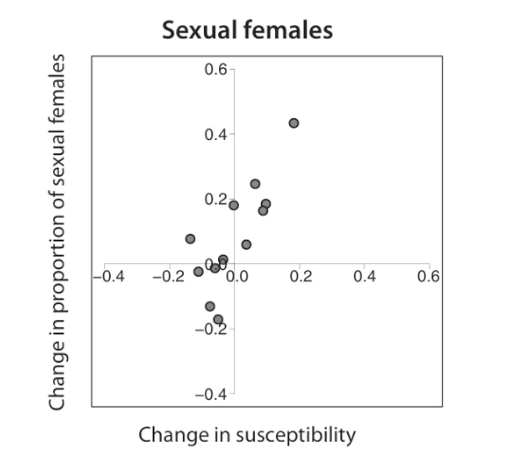
there is a ___ between mean susceptibility and the proportion of sexual female snails
positive correlation
as susceptibility (pressure from co-evolving parasites) increased, so did ___
the proportion of sexual female snail hosts (support for the red queen hypothesis because pressure from co-evolving parasites is a driver of sexual reproduction)
asexual or sexual lineages are more likely to succumb to evolving symbionts?
asexual
what gives a slight advantage in antagonistic symbiotic relationships?
genetic variation resulting from sexual reproduction
fitness costs of virulent parasites and predation ___ the benefits of sexual reproduction
outweigh
___ and ___ affect species distributions
physical environment and biotic interactions
what are tolerance limits?
the physical environment and conditions that a species can live
what are important factors in the physical environment?
temperature, precipitation, soil characteristics
what are biotic interactions?
-food
-predators
-competitors
-parasites
-diseases
what is temperature driven by?
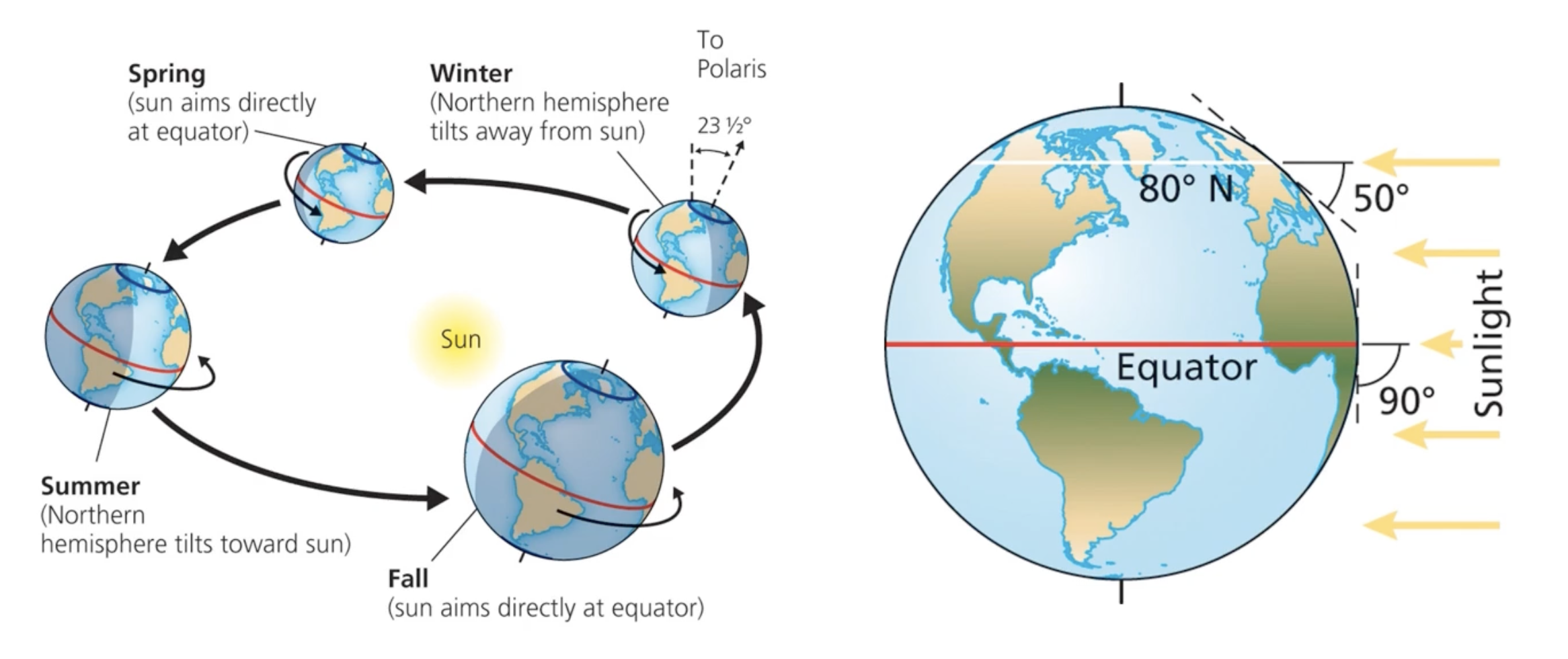
the angle of the sun rays relative to the earth surface