Art History Quiz # 4
 Call Kai
 Learn
Learn Practice Test
 Spaced Repetition
 Match
Match Flashcards
 Knowt Play
1/14

There's no tags or description
Looks like no tags are added yet.
Name | Mastery | Learn | Test | Matching | Spaced | Call with Kai | Chat |
|---|
No analytics yet
Send a link to your students to track their progress
15 Terms

Though he wanted to be remembered more as a sculptor, Michelangelo received his initial training in which artist's workshop?
In 1488, at the age of 13, Michelangelo was officially apprenticed to DG for what was originally intended to be a three-year term. During this period, he learned the fundamentals of drawing, draftsmanship, and fresco technique. However, because his passion lay firmly in sculpting marble rather than painting, he left the studio after only about a year to study classical sculpture in the Medici gardens
Domenico Ghirlandaio’s

Leonardo da Vinci is known to have worked as an apprentice in the workshop of which earlier artist?
Around 1466, when Leonardo was roughly 14 or 15 years old, his father recognized his artistic talents and arranged for him to enter this artist’s highly renowned studio. In this multi-disciplinary environment, Leonardo received a comprehensive education that went far beyond painting. He learned:
A famous legend from this period, recorded by Renaissance biographer Giorgio Vasari, claims that when a young Leonardo painted one of the angels in Verrocchio’s The Baptism of Christ, his execution was so profoundly beautiful that a humbled AdV resolved never to touch a paintbrush again.
Andrea del Verrocchio
![<p>Raphael studied under which artist, from which city?<br><br><br>Raphael studied under the master painter PP, who was based in the city of <span><strong><u>Perugia</u></strong></span>. [1, 2]</p><p>His training and early years follow a fascinating path:</p><ul><li><p><span><strong>The Perugino Apprenticeship:</strong> Around 1500, a teenage Raphael joined the workshop of PP in the Umbria region's prominent hub of <strong><u>Perugia</u></strong>. <u>PP</u> was celebrated across Italy for his mastery of perspective and gentle, harmonious compositions</span></p><p><span>.</span></p></li></ul><p></p>](https://assets.knowt.com/user-attachments/4bc5c8b0-5513-48af-b72c-b882b89fb4a7.jpg)
Raphael studied under which artist, from which city?
Raphael studied under the master painter PP, who was based in the city of Perugia. [1, 2]
His training and early years follow a fascinating path:
The Perugino Apprenticeship: Around 1500, a teenage Raphael joined the workshop of PP in the Umbria region's prominent hub of Perugia. PP was celebrated across Italy for his mastery of perspective and gentle, harmonious compositions
.
Pietro Perugino

What form of painting did the Venetians innovate in favor of working in fresco?
While central Italian hubs like Florence famously relied on frescoes (painting directly onto wet lime plaster), Venice’s unique island geography presented severe challenges. The city's high humidity and salty lagoon air caused plaster walls to stay damp, preventing frescoes from drying properly and causing them to rapidly peel, crack, and mold. Wood panel alternatives were also impractical for grand-scale civic artwork because massive panels were heavy, expensive, and warped in the damp climate.
By the late 15th century, the Venetians abandoned fresco almost entirely and turned to this form of painting. This choice was highly practical: Venice was a supreme maritime power, meaning high-quality sailcloth linen (cs) was abundant and affordable
Oil painting on canvas
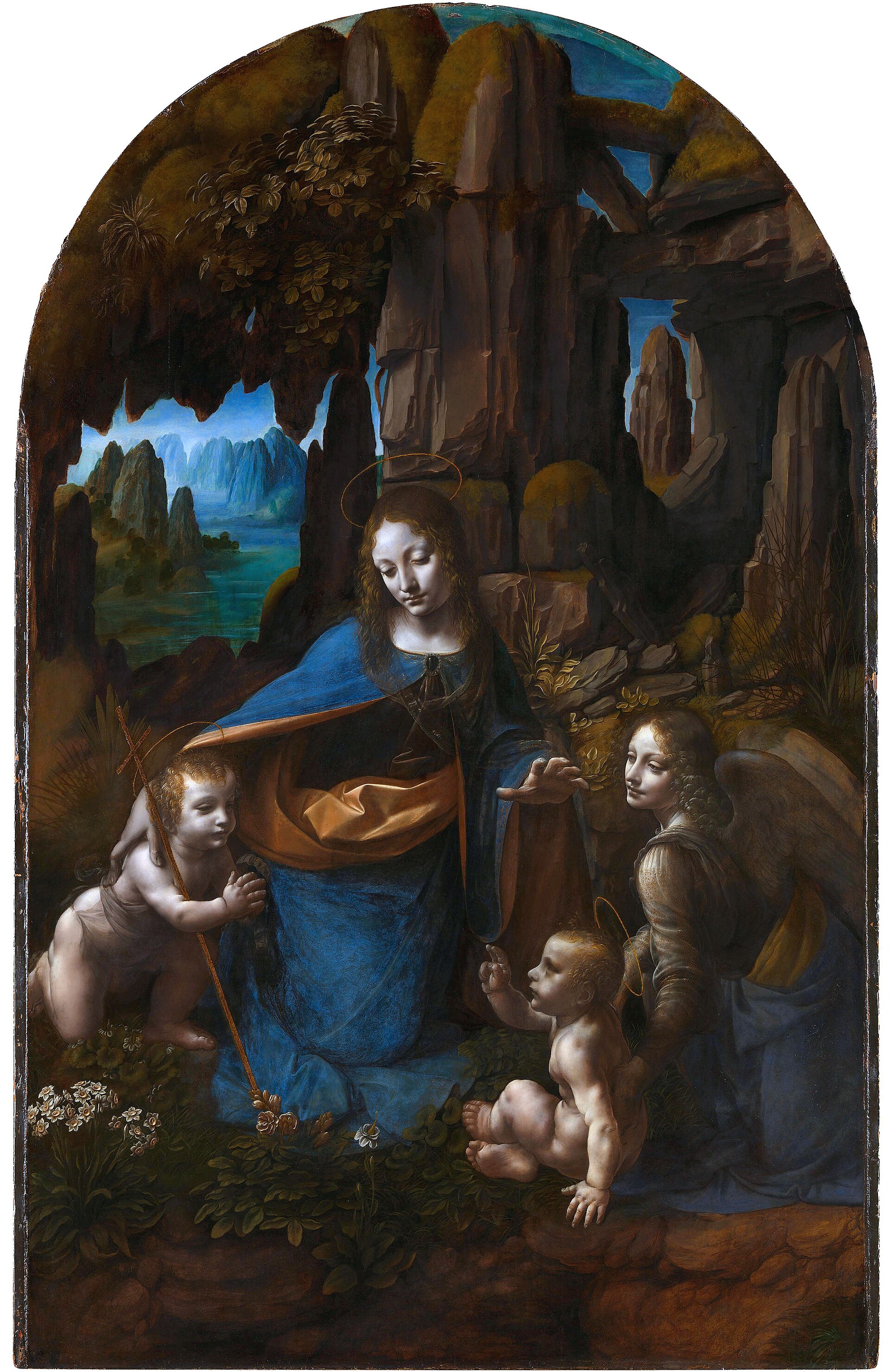
What is the Italian term that refers to modeling forms in light and dark to create the illusion of a three-dimensional object?
Literally translating to "light-dark" (chiaro meaning clear/light, and scuro meaning obscure/dark), this technique uses strong contrasts between light and shadow to give two-dimensional drawings and paintings a three-dimensional volume. It was pioneered and mastered during the Renaissance by artists like Leonardo da Vinci and later intensified by Caravaggio.
Chiaroscuro


Which artist and biographer wrote what was essentially the first art history book in 1550?
GV- The Lives of the Artists is packed with drama, artistic rivalries, and wild stories that make it read more like a Renaissance tabloid than a dry textbook. If a rumor made an artist look more tortured, heroic, or villainous, Vasari ran with it. He essentially created the reality-TV version of art history, and because his book was the only major record for centuries, his drama became historical "fact" for generations. He indeed was the ultimate Renaissance drama frog.
GV was a student and close friend of Michelangelo, whom he practically worshipped. Including the creation of Adam, which is located in the ceiling of the Sistine Chapel.
Giorgio Vasari

Originally from Verona, which painter who worked mainly in Venice was called before the Inquisition concerning the content of one of his paintings?
In July 1573, he was famously hauled before the Holy Office of the Inquisition to defend a monumental, 42-foot-wide canvas he had painted for a monastery refectory,
The painting was originally commissioned to depict The Last Supper. However, PV loved luxury, crowds, and theatrical pageantry. Instead of painting a solemn, spiritual meal, he filled the massive canvas with a bustling, glamorous Venetian party.
The Inquisitors were furious about its lack of religious decorum.
Paolo Veronese

What is the name for the purely decorative, muscular nude men surrounding the main scenes on the Sistine Chapel ceiling?
IG is that they are the primary reason Michelangelo was accused of turning the most sacred chapel in the world into a Renaissance gym brochure.
The controversy over all these nudes outlived Michelangelo. In 1564 (the year Michelangelo died), the Council of Trent decided the chapel was indeed too scandalous. They hired a painter named Daniele da Volterra to paint underwear, loincloths, and fig leaves over the exposed genitals of Michelangelo's figures. Because of this job, poor Volterra was mocked by the entire city of Rome and earned the permanent, humiliating nickname Il Braghettone—"The Underpants Maker."
Ignudi

What is the name of the smoky effect used to model objects and figures in Leonardo's paintings, where no brushstrokes can be seen?
The Lens Comparison: Sfumato is essentially the 16th-century version of a portrait mode filter or an "out-of-focus" camera lens.
Sfumato
Which artist claimed that he wanted to join the drawing of Michelangelo with the coloration of Titian in his own paintings?
TT was so serious about this artistic manifesto that he actually painted the motto right above the door of his workshop: [1]
"Il disegno di Michelangelo e il colorito di Tiziano"
("The drawing of Michelangelo and the coloring of Titian")
When T was around 12 years old, he secured a highly coveted apprenticeship in Titian's workshop. However, he was so naturally talented and fiercely independent that Titian reportedly became incredibly jealous—or just deeply annoyed by the boy's aggressive personality—and kicked T out of his studio after just 10 days! [1, 2, 3]
Tintoretto
Raphael's best-known works from his time in Rome—the decoration of the Stanze—were created for what specific patron?
Pope Julius II
Bronzino is believed to have assisted which other Mannerist painter in the decoration of the Capponi Chapel?
Pontormo
What is the term used for an image depicting the dead adult Christ on the lap of his mourning mother?
Pietà
The authorship of some paintings by which two Venetian painters is often confused and disputed by scholars?
Giorgione and Titian
What anti-Classical movement arose after the death of Raphael, marked by figures with elongated proportions, enigmatic gestures, and artificial poses?
Mannerism