acute neurological disorders (seizures) | NURS240
 Call Kai
 Learn
Learn Practice Test
 Spaced Repetition
 Match
Match Flashcards
 Knowt Play
1/57

There's no tags or description
Looks like no tags are added yet.
Name | Mastery | Learn | Test | Matching | Spaced | Call with Kai | Chat |
|---|
No analytics yet
Send a link to your students to track their progress
58 Terms
what are the triggers for headache?
diet (haven’t eaten anything or is eating inconsistently)
stress
hormonal shifts
sensory stimulation (e.g., bright light, loud sound, strong odor, etc)
changes in the environment (e.g., temperature, seasonal allergies)
what are the key features of a tension headache?
most common type of headache
feels like pressure, tightness, or band-like pain around the head
often affects the entire head (bilateral)
pain severity can vary from mild to moderate
usually occurs without associated symptoms (no nausea, aura, etc)
what are the common triggers of tension headaches?
stress/anxiety
muscle tension (neck/scalp)
fatigue
poor posture
eye strain
lack of sleep
how is a tension headache different from a migraine?
tension headache:
pressure/tightness
whole head
no nausea or aura
mild to moderate
migraine:
throbbing/pulsating
often one-sided
nausea, light sensitivity aura possible
what are the available treatment of tension headache?
rest and relaxation
pain control (use acetaminophen first, than resort to NSAIDS and ASA if acetaminophen doesn’t work)
trigger control
what are the key features of a migraine headache?
often unilateral (one-sided)
usually frontotemporal location
throbbing/pulsating pain
moderate to severe intensity
can interfere with daily activities
one-side pounding headache
what symptoms are commonly associated with migraines?
anorexia (loss of appetite)
nausea/vomiting
photophobia (light sensitivity)
phono-phobia (sound sensitivity)
fatigue
how long do migraines usually last for?
usually from 4-72 hours if untreated or not fully relieved
what causes migraines?
exact causes is not fully understood, but linked to:
neurovascular changes in the brain
changes in neurotransmitters (especially serotonin)
genetics/family history
triggers (stress, hormones, foods, sleep changes, etc)
how is a migraine different from a tension headache?
throbbing (as opposed to tightness/pressure)
often one-sided (as opposed to the whole head)
nausea/light/sound sensitivity
more severe and often can require using medications to relieve symptoms
what are the key features of a migraine without aura?
no aura before headache
early signs may include mood changes
then headache pain + at least one of these: (1) nausea/vomiting, (2) photophobia (light sens), (3) phonophobia (sound sens)
common triggers/timing: early morning, stress, PMS/hormonal changes, and fluid retention
what are the three phases of migraine with aura?
prodromal phase (the first 15-60 minutes)
early warning symptoms before aura/headache
mood changes, fatigue, food cravings, irritability
often accompanied with warning signs like visual changes, spot in vision, partial vision loss
second phase (aura phase)
temporary neurologic symptoms before headache
visual changes (flashing lights, zigzags, blind spots)
numbness, tingling, speech difficulty possible
third phase (headache phase)
throbbing headache with nausea, photophobia, phonophobia
true or false: migraine with aura are also known as classic migraine
true
what is the difference between a migraine with aura vs. one without aura?
with aura:
neurological warning signs before headache
without aura:
no neurologic warning signs
both may have:
throbbing pain
nausea/vomiting
light/sound sensitivity
what is an aura in migraines?
an aura is a temporary reversible neurologic disturbance that happens before or during the migraines (e.g., visual disturbances, tingling/numbness, and speech changes)
review the treatment available for migraine…
prevent the migraine by identifying triggers
medications → preventive therapy may include beta blockers and select AEDs → abortive therapy may include NSAIDs, ditans, triptans, ergotamines (causes vasoconstriction), and anti-emetics → botulism toxin A injections can reduce muscle tension which reduces occurrences of migraine and CGPR monoclonal antibody
adjuvant therapy: rest, relaxation, darkened/quiet room, and complementary therapies
what are the key features of a cluster headache?
severe unilateral headache
usually oculo-temporal or oculo-frontal (around or behind one eyes)
sharp, piercing, burning pain
very intense but shorter duration than migraine
stabbing pain around one eye
what is the headache pattern of cluster headaches?
occur in clusters: 1-3 headaches/day and last for 4-12 weeks then followed by a remission period
each episode lasts for about 30-120 minutes
what symptoms are associated with cluster headaches?
usually on the same side as the headache (ipsilateral)
tearing
rhinorrhea (runny nose)
ptosis (drooping eyelid)
flushing or pallor
patient often feels better walking or pacing
onset often related with relaxation, napping, REM sleep
what is the treatment for cluster headache?
pain medication (Rx or OTC)
oxygen therapy
decrease light exposure/glare
maintain a consistent sleep/wake cycle
what are the different type of headaches and their descriptions?
sinus: pain is usually behind the forehead and/or cheekbones
cluster: pain is in and around one eye
tension: pain is like a band squeezing the head
migraine: pain, nausea, and visual changes are typical of classic form
what is the difference between a seizure and epilepsy?
seizure = a single episode of abnormal, excessive electrical activity in the brain
epilepsy = a chronic disorder with recurrent, unprovoked seizures
one seizure does not always mean epilepsy
what causes seizures (primary and secondary)
primary (idiopathic epilepsy): no clear identifiable cause and are often genetic
secondary (acquired seizures): head trauma, stroke, brain tumor, infection, electrolyte imbalance, drug/alcohol withdrawal
what history is important when evaluating seizures?
age of onset
description of seizure activity
duration
any precipitating factors
presence of an aura
post-ictal period (confusion, sleepiness after seizures)
what is the difference between a focal onset and a generalized onset seizures?
focal onset: one hemisphere; the patient can have motor or non-motor symptoms with focal to bilateral tonic-clonic; the patient can either be aware or have impaired awareness
generalized onset: both hemispheres; the patient presents with a tonic clonic or other motor symptoms with no non-motor symptoms; the patient has impaired awareness
what are the three phases of a seizures?
beginning: prodromal (occurs hours or das before involving mood changes, anxiety, lightheadedness, sleep difficulties) → aural (early ictal - the immediate warning signs before the seizures such as strange smells/taste, visual/auditory changes, and fear)
middle (ictal - active seizure): last for a few minutes; can occur with loss of consciousness, convulsion (rhythmic jerking/shaking, stiffening (tonic phase), staring spells, or automatic behaviors like lip-smacking
ending (post-ictal): followed the end of the seizure with confusion, extreme fatigue, headache, muscle soreness → the person may fall asleep, feel disoriented (reorientation is very important!) or have no memory of the event or retain partial consciousness
true or false: low blood glucose can be a trigger for a seizures
true
what are the 3 main classification of seizures?
generalized seizures → involve both hemispheres of the brain
focal seizures → begin in one area of the brain
unknown onset seizures → start is not witnessed or unclear
what are the features of an absence (petit mal) seizures?
common in children
brief loss of awareness → seen like they are mentally “absent” or “paused” → looks like they are zoning out
blank starting
no post-ictal confusion → they seem to just snap back to their previous stage with some memory loss of event happen right before like what they were saying
returns to baseline immediately
what are the key features of a tonic-clonic (grand mal) seizures?
last 2-5 minutes
tonic phase: stiffening, rigidity, LOC
clonic phase: rhythmic jerking of extremities
post-ictal: fatigue, confusion, lethargy (up to 1 houe)
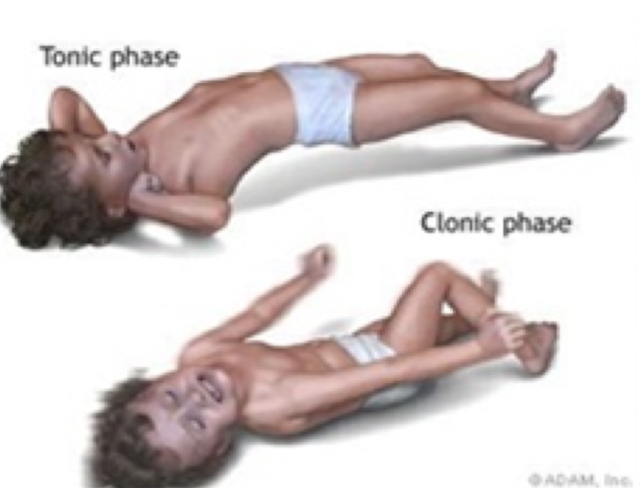
what are the nursing interventions for patient who is actively seizing?
lay the patient down on their side
cushion their head and remove glasses
time the seizure with a watch
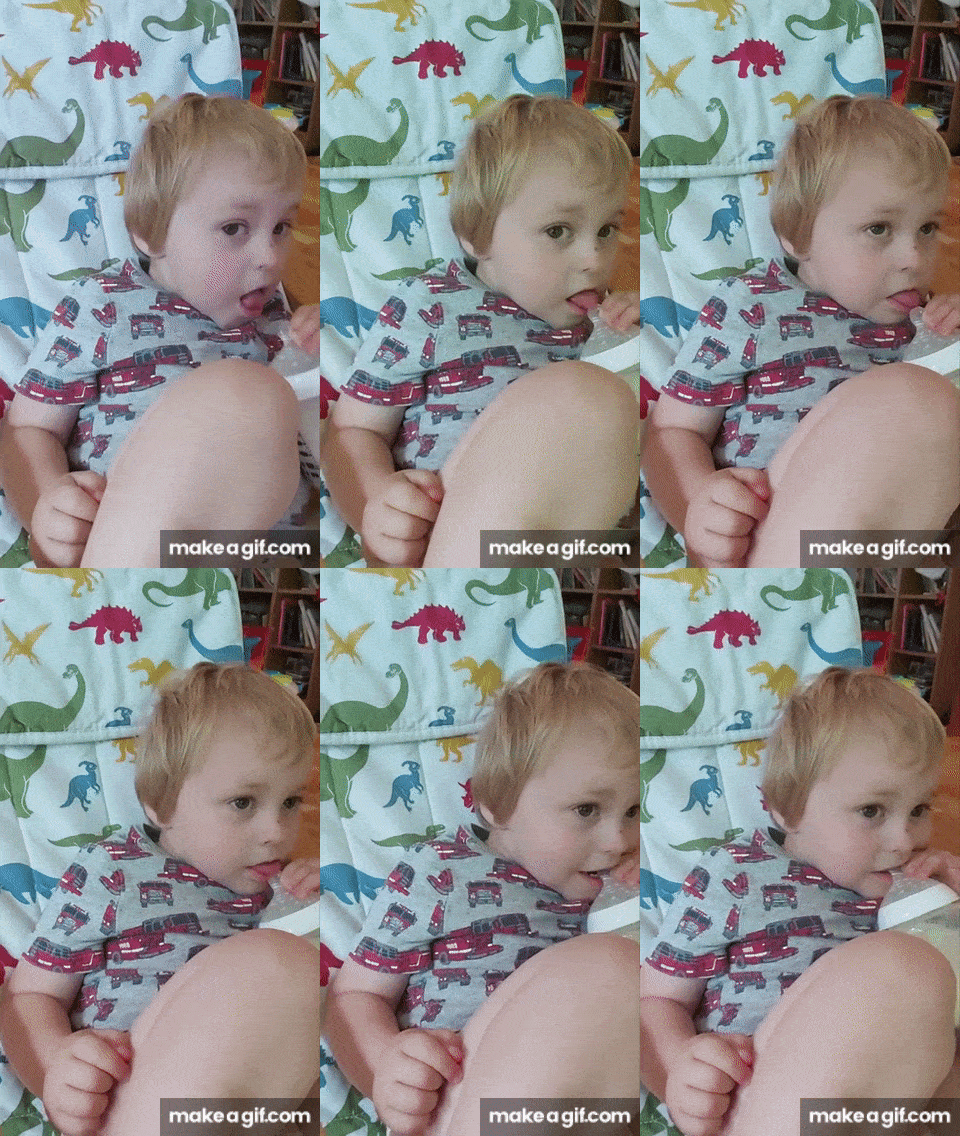
what are the key features of a myoclonic seizure?
brief jerking of stiffening of extremities (often the head or the upper extremities)
last only seconds → no post-ictal
can be symmetrical or asymmetrical
have aura
kind of like a sudden muscle jerk
review the pharmacologic treatment for seizures?
anti-epilepsy drugs that potentiate GABA action: clonazepan, diazepam, gabapentin, pregabalin, phenobarbital, topiramate
AEDs that suppress sodium influx: carbamazepine, lamotrigine, phenytoin, valproic acid (mono-therapy is generally successful with side effects over efficacy but there are many drug and food interaction so be careful!
review the surgical treatment options for seizures…
vagus nerve stimulation
responsive neurostimulation therapy
resective surgery
disconnection surgery
what are the features of an atonic seizure?
sudden loss of muscle
patient may collapse (drop attack!)
last seconds
may have post-ictal period
this is associated with a high injury risk due to falls potential
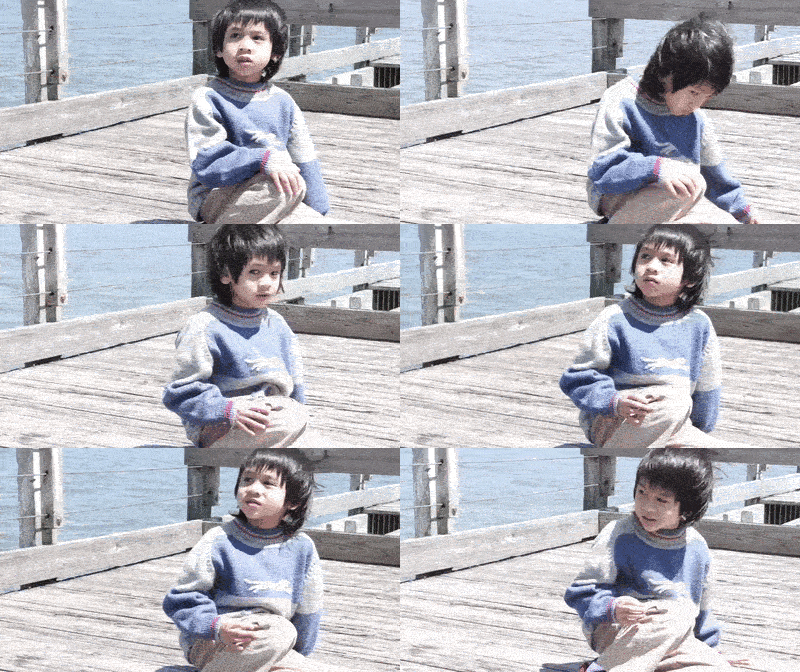
what are the features of a focal onset aware seizure (simple focal/partial)?
starts in one area of the brain
awareness usually preserved
may have aura
unilateral movement of one extremity
unusual sensations (smell, tingling, fear)

what are the features of a focal onset impaired awareness seizure?
aura may be present
decreased awareness or LOC
automatism (lip smacking, picking, repetitive movements)
amnesia after seizure
post-ictal drowsiness or sleep
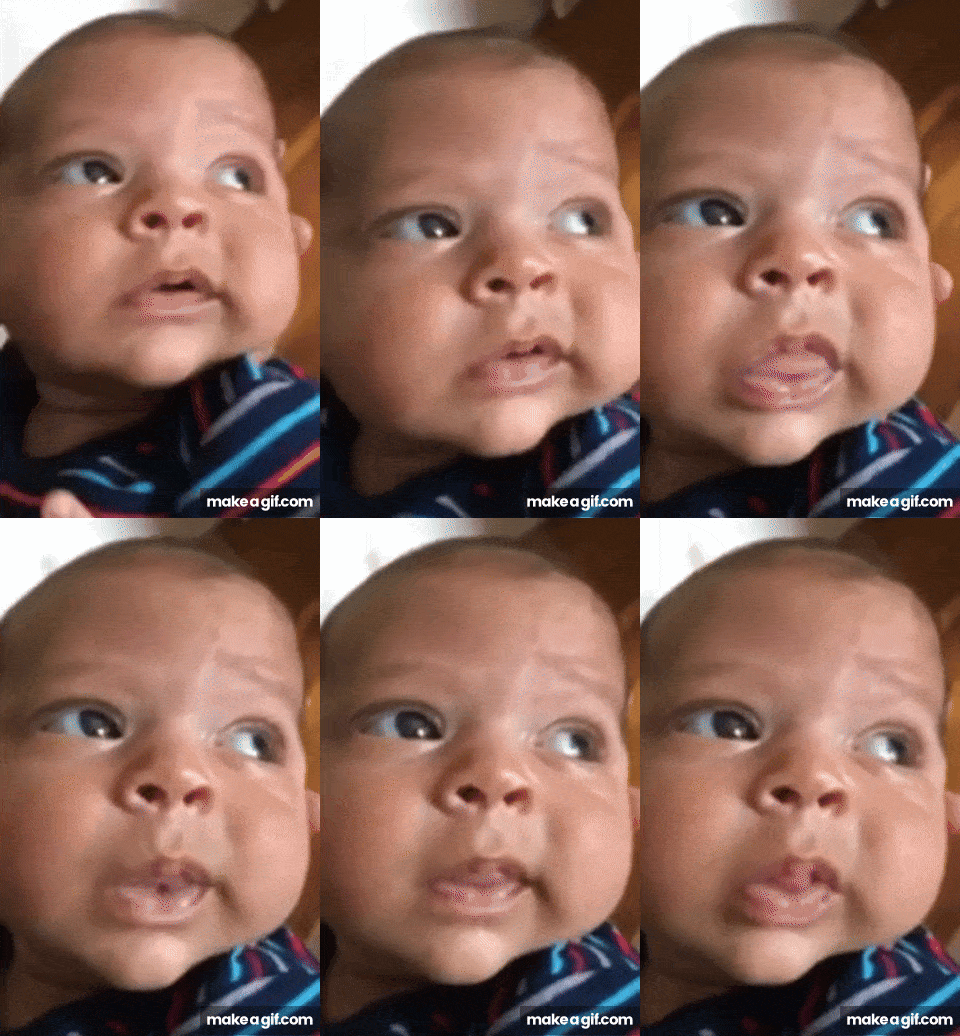
what is an unknown onset seizure?
beginning of seizure is not known
often not witnessed
can later be reclassified if more info becomes available may be motor or non-motor
how do I quickly distinguish seizure types?
absence = stare
tonic-clonic = stiff + jerk
myoclonic = quick jerk
atonic = drop
focal aware = conscious
focal impaired = confused + automatisms
what are the essential patient teaching for seizures?
identify triggers
inform the patient about their medications
ID card/bracelet
state law regarding driving and operating machinery while living with seizure conditions
what are febrile seizures?
transient seizures associated with fever
usually occur during a rapid rise in the body internal temperature
often happen with URI (upper respiratory infection) or GI infections
common age: 3 months to 3 years
what causes febrile seizures?
high fever, especially with infection such as: upper respiratory infections (URI) and gastrointestinal (GI) infection → it is often the fever itself, not the infection directly, that triggers the seizure
It is often the fever itself, not the infection directly, that triggers the seizures
are febrile seizures dangerous?
most are brief and benign
usually children can recover fully
evaluate if seizure is prolonged, repeated, or child appears very ill
what is status epilepticus? what causes status epilepticus?
a seizure that last for more than 5 minutes or repeated seizures over 30 minutes without full recovery between them
this is a medical emergency
these following can cause status epilepticus: medication nonadherence/abrupt withdrawal, alcohol withdrawal, infection, head trauma, cerebral edema
how is status epilepticus treated?
priority = ABCs
airway protection
oxygen
IV access
rapid anticonvulsant medications: diazepam, lorazepam, phenytoin
why is status epilepticus dangerous?
prolonged seizures can cause:
hypoxia
brain injury
acidosis
hyperthermia
death if untreated
true or false: febrile seizure are often found in children?
fever in toddlers
what are the key features of viral meningitis?
peak season: summer/fall
often caused by enteroviruses
may also occurs with mumps, measels, herpes simplex, herpes zoster
causes meningeal swelling
CSF negative for organisms
usually self-limiting (3-10 days)
what are the key features of bacterial meningitis?
more common in fall/winter
common causes: streptococcous pneumoniae, neisseria meningitidis
causes severe inflammation + exudate
can damage the brain tissues
CSf positive for organisms
this is MEDICAL EMERGENCY
what skin findings may occur with meningococcal meningitis?
petechial rash = small red/purple pinpoint spots from microhemorrhages under the skin from tiny broken capillaries
caused by vascular injury and bleeding associated with neiserria meningiditis
can progress rapidly and may indicate meningococcemia/sepsis
what are the most common signs of meningitis?
headache
fever
changes in mental status
photophobia
nausea/vomiting
seizures
what signs suggest meningeal irritation?
nuchal rigidity (stiff neck)
brudzinski’s sign (flex the patient’s neck forward while lying flat → a positive signs would be the patient’s hips and knees flex involuntarily) → neck flexions stretches inflamed meninges, causing the legs to bend to reduce pain
Kernig’s sign (the patient lies flat and flex hip and knee to 90 degrees and as they try to straighten the knee, there would be pain, resistance, or inability to extend the knee at all)
what serious complications can occur with meningitis?
increased intracranial pressure (ICP)
vascular dysfunction
seizures
brain injury
septic shock (especially meningococcal disease)
what laboratory tests are used to assess meningitis?
CSF analysis (most important) → cell count, protein, glucose, cultures
CBC
electrolytes
CSF helps identify viral vs. bacterial meningitis
why is CSF analysis important in meningitis?
a lumbar puncture checks cerebrospinal fluid for:
WBC count → infection/inflammation
protein → often elevated with meningitis
glucose → often low in bacterial meningitis
culture → identifies organism causing infection
what imaging studies may be used in meningitis assessment?
chest X-Ray (CXR) → look for respiratory infection source
sinus X-Rays → evaluate sinus infection source
CT head → assess swelling, complications, or contraindications before LP
what are the key nursing interventions for a patient with meningitis
frequent neuro checks (q2-4 hr)
assess cranial nerves
assess vascular system
seizure precautions
manage pain
detect complications early and support brain functions
why are frequent neurological checks important in meningitis?
monitor level of consciousness
detect worsening infection or increased ICP
identify new neurological deficits early
changes in neuro status can signal deterioration