Lab 4: Muscles, Ligaments & Tendons, Vasculature, Nerves
 Call Kai
 Learn
Learn Practice Test
 Spaced Repetition
 Match
Match Flashcards
 Knowt Play
1/35

There's no tags or description
Looks like no tags are added yet.
Name | Mastery | Learn | Test | Matching | Spaced | Call with Kai | Chat |
|---|
No analytics yet
Send a link to your students to track their progress
36 Terms
flat muscles
Have parallel fibers often with an aponeurosis. Ex: the external oblique. The sartorius is a narrow __ muscle with parallel fibers

pennate muscle
Feather-like in the arrangement of their fascicles and may be unipennate, bipennate, or multipennate. Ex: extensor digitorum longus (unipennate), rectus femoris (bipennate), and deltoid (multipennate)

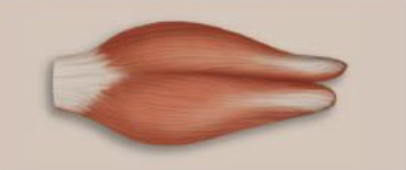
fusiform muscle
Spindle shaped with a round, thick belly (or bellies) and tapered ends. Ex: biceps brachii

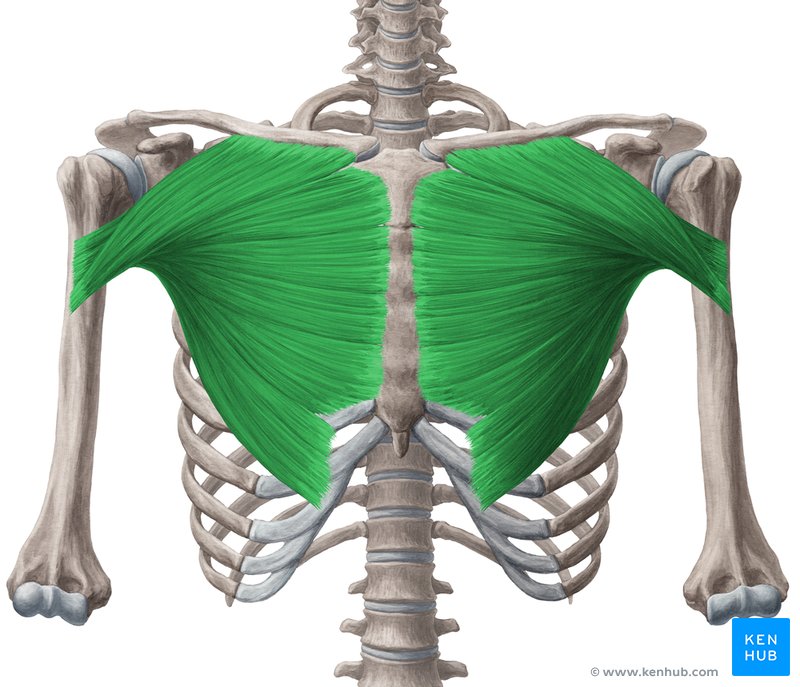
convergent muscle
Arise from a broad area and converge to form a single tendon. Ex: pectoralis major
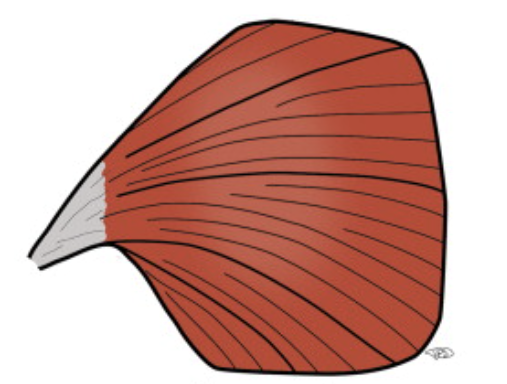
quadrate muscle
Have four equal sides. For example: the rectus abdominis, between its tendinous intersections

circular or sphincteral muscle
Surround a body opening or orifice, constricting it when contracted. Ex: orbicularis oculi

multiheaded or mulitbellied muscles
Have more than one head of attachment or more than one contractile belly, respectively. Ex: biceps brachii (two heads), triceps brachii (three heads), digastric and gastrocnemius muscles (two bellies)

flat muscle

unipennate muscle

bipennate muscle

multipennate muscle

fusiform muscle

convergent muscle
quadrate muscle

multibellied muscle
What is a tendon
tough, cord-like band of fibrous connective tissue that connects skeletal muscles to bone
What is a ligament
tough, fibrous band of connective tissue that connects bones to other bones to stabilize joint
What is an aponeurosis
broad, flat sheet of dense fibrous connective tissue that acts like a flathead tendon to attach muscles to bones, fascia, or other muscles
What is the relationship of structure to function in the tendon of long head of biceps brachii
The structure of the LHBT directly supports its dual role in transmitting muscle force and acting as a passive stabilizer for the shoulder joint
What is the relationship of structure to function in the deltoid tendon
directly dictate its ability to lift, rotate and stabilize the shoulder joint across multiple directions
What is the relationship of structure to function in the latissimus dorsi tendon
allows it to focus tremendous muscular force onto a tiny attachment point on the humerus to power major arm and trunk movements
What is the relationship of structure to function in the thoracolumbar fascia
directly enables global load transfer, core stabilization, and independent muscle gliding
What is the relationship of structure to function in the flexor retinaculum of the wrist
it is a tough and thick fibrous band that bridges the bony concavity of the wrist to form the roof of the carpal tunnel which directly links with its function of protection and stability
What is the relationship of structure to function in the semitendinosus
the distal attachment on the medial side of the tibia creates a mechanical line of pull that medially rotates the lower leg when the knee is flexed
What is the relationship of structure to function in the semimembranosus
the unique membraneous and multi-branches structure directly dictates it dual role as a powerful joint mover and complex knee stabilizer
What is the relationship of structure to function in the palmaris longus
the tendon inserts directly into the palmar aponeurosis, this structure is suited for tensioning and tightening the skin and fascia of the palm
What is the relationship of structure to function in the achilles tendon
the specialized hierarchial fibrous structure enables it to transfer massive mechanical loads from the calf muscles to the heel bone for efficient walking, running, and jumping
Describe the appearance and feel of a nerve
Shiny, white cord-like thread that feels firm, tough, springy and rubbery
Discussion the organization of nerves from the spinal cord to innervation
spinal roots (dorsal: sensory, ventral: motor) to spinal nerves (trunks) to nerve plexuses (networks) to peripheral nerves (final destination/innervation)
Muscular nerves
Motor; carry signals from brain to cause muscles to move
Cutaneous nerves
sensory; carry information like touch, pain, and temperature from skin back to brain
Describe the appearance and feel of a vein in a cadaver
Appears flat, dark and flimsy and feels thin and highly compressed
Describe the appearance and feel of an artery in a cadaver
Appears pale white, light gray, or yellowish tan and feels firm, rubbery, rigid, and without a pulse
How are arteries named
using specific anatomical patterns that describe their location, the organ they supply, adjacent bone structures, or their pathway through the body
Describe the appearance and feel of a vein in a living body
appear green, blue, or purple and feel soft and bouncy
Describe the appearance and feel of an artery in a living body
Appear red or pink and feel resilient and warm as well as pulsatile