Cell Signaling: Apoptosis, Auxin Pathways & Signal Transduction & Techniques in Cells Modules 13-14 Final
 Call Kai
 Learn
Learn Practice Test
 Spaced Repetition
 Match
Match Flashcards
 Knowt Play
1/266

There's no tags or description
Looks like no tags are added yet.
Name | Mastery | Learn | Test | Matching | Spaced | Call with Kai | Chat |
|---|
No analytics yet
Send a link to your students to track their progress
267 Terms
Cell Signaling
The process through which cells communicate with each other.
Extracellular Messenger Molecules
Molecules that facilitate communication between cells.
Autocrine Signaling
A type of signaling where a cell responds to the messenger it releases.
Paracrine Signaling
A type of signaling where messenger molecules travel short distances through extracellular space.
Endocrine Signaling
A type of signaling where messenger molecules reach their target cells through the bloodstream.
First Messenger/Ligand
A molecule that binds to the receptor.
Receptors
Proteins in target cells that receive an extracellular message.
Signal Transduction Pathways
Pathways activated by either a diffusible second messenger or recruitment of cytoplasmic proteins.
Effector
An enzyme that generates a second messenger in response to a signal.
Second Messengers
Small molecules that act as activators or inhibitors of specific proteins.
Protein Conformation
The three-dimensional shape of a protein, which is altered during signaling pathways.
Phosphorylation
The process of adding phosphate groups to proteins, altering their conformation.
Kinases
Enzymes that add phosphate groups to proteins.
Phosphatases
Enzymes that remove phosphate groups from proteins.
Human Genome
Encodes more than 500 protein kinases and approximately 150 protein phosphatases.
Soluble Cytoplasmic Proteins
Proteins that can be found freely in the cytoplasm, some of which are kinases or phosphatases.
Integral Membrane Proteins
Proteins that are embedded in the cell membrane, some of which are kinases or phosphatases.
G-protein Coupled Receptors
Receptors that play a key role in signaling pathways by activating G-proteins.
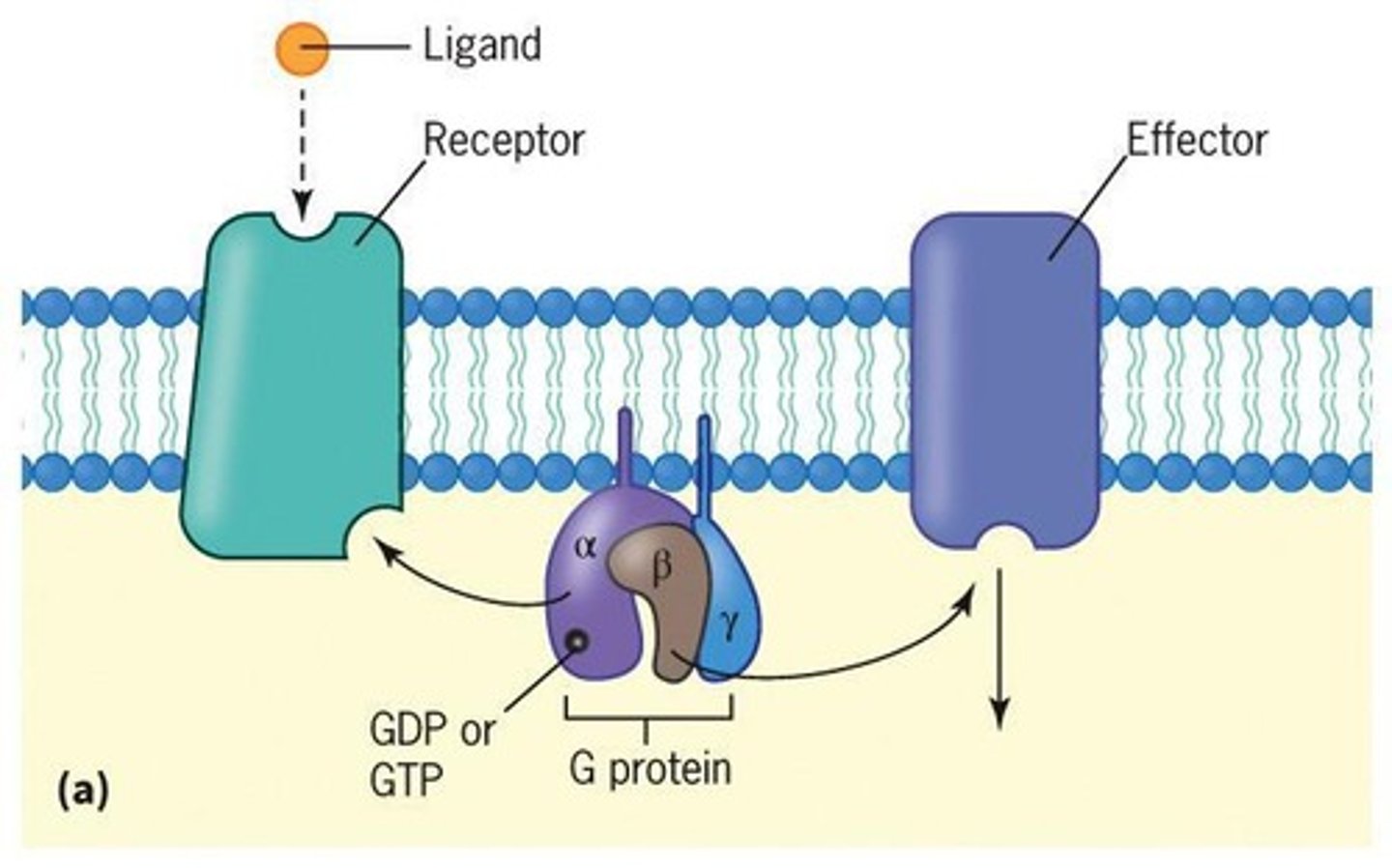
Heterotrimeric G Protein
A protein complex composed of three subunits (Gα, Gβ, Gγ) that binds to effector molecules.
Gα Subunit
The subunit of the heterotrimeric G protein that binds to the effector molecule to activate it.
Gβ Subunit
One of the three subunits of the heterotrimeric G protein, involved in signaling.
Gγ Subunit
One of the three subunits of the heterotrimeric G protein, involved in signaling.
Signal transduction pathway
A pathway consisting of protein kinases and protein phosphatases with catalytic actions that change the conformations, and thus the activities, of the proteins they modify.
Protein phosphorylation
A process that can change protein behavior in different ways by activating or inactivating an enzyme, increasing or decreasing protein-protein interactions, changing the subcellular location of the protein, or triggering protein degradation.
Changes in cellular activities
Includes changes in gene expression, alteration of the activity of metabolic enzymes, reconfiguration of the cytoskeleton, an increase or decrease in cell mobility, changes in ion permeability, activation of DNA synthesis, and cell death.
Extracellular messengers
Include small molecules such as amino acids and their derivatives, gases, steroids, eicosanoids, and various peptides and proteins.
G-protein coupled receptors (GPCRs)
The largest superfamily of proteins encoded by animal genomes, characterized by seven α-helical transmembrane domains and the ability to interact with heterotrimeric G Proteins.
Natural ligands for GPCRs
Include hormones (both plant and animal), neurotransmitters, opium derivatives, and chemoattractants (odorants, tastants, and photons).
Physiological response
The outcome of ligand activation of receptors that stimulate effectors, resulting in a specific physiological effect.
Epinephrine
A ligand that activates the beta-Adrenergic receptor, stimulating adenylyl cyclase and resulting in glycogen breakdown.
Serotonin
A ligand that activates the serotonin receptor, stimulating adenylyl cyclase and resulting in behavioral sensitization and learning in Aplysia.
Light
Stimulates rhodopsin, leading to activation of cGMP phosphodiesterase and visual excitation.
IgE-antigen complexes
Activate the mast cell IgE receptor, stimulating phospholipase C and resulting in secretion.
f-Met peptide
A ligand that activates the chemotactic receptor, stimulating phospholipase C and resulting in chemotaxis.
Acetylcholine
A ligand that activates the muscarinic receptor, stimulating a potassium channel and resulting in slowing of pacemaker activity.
Steroid hormones
Regulate sexual differentiation, pregnancy, carbohydrate metabolism, and excretion of sodium and potassium ions.
Eicosanoids
Nonpolar molecules derived from fatty acid, arachidonic acid, that regulate processes including pain, inflammation, blood pressure, and blood clotting.
Receptor protein-tyrosine kinases (RTKs)
A type of receptor involved in cell signaling that phosphorylates tyrosine residues on target proteins.
Ligand gated channels
Receptors that open or close in response to the binding of a ligand, allowing ions to flow across the membrane.
Steroid hormone receptors
Receptors that bind steroid hormones and mediate their effects on target cells.
Specific receptors
Receptors that are tailored to bind specific ligands and initiate a cellular response.
G Protein-Coupled Receptors (GPCRs)
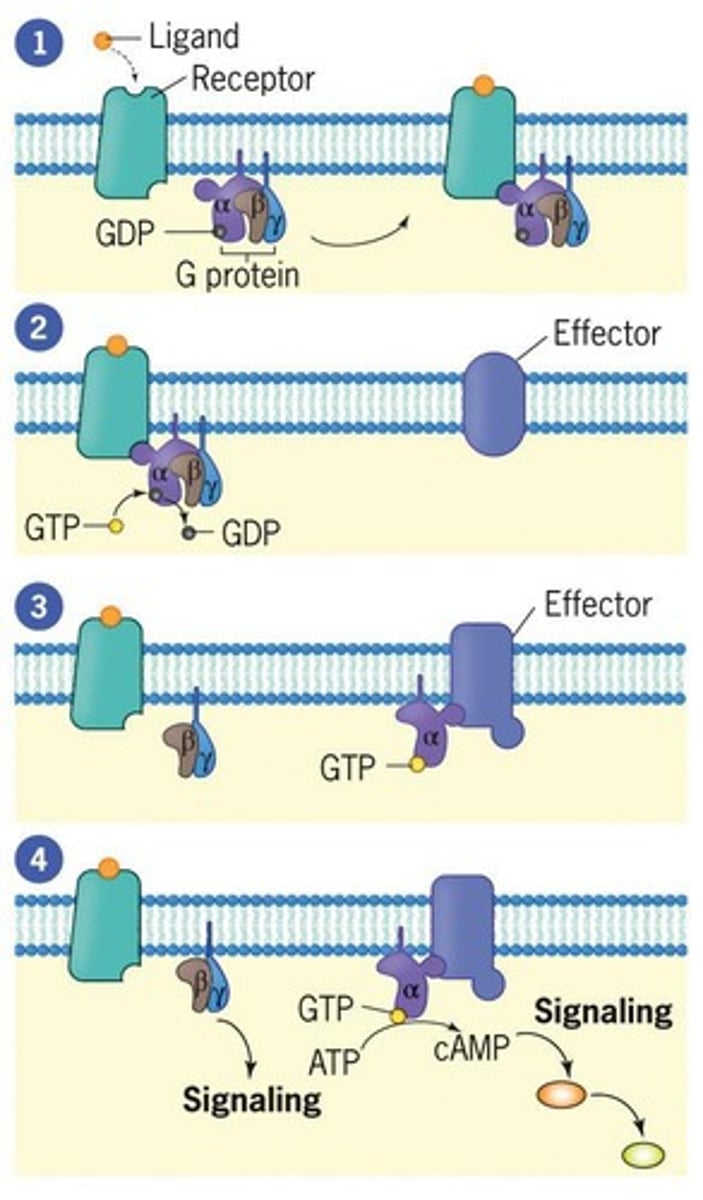
Receptors that mediate signal transduction by binding ligands and activating G proteins.
Signal Transduction
The process by which a signal is transmitted through a cell via GPCRs and G proteins.
Ligand
A molecule that binds to a receptor to initiate a signal transduction pathway.
Gα subunit
The subunit of a G protein that releases GDP and binds GTP upon receptor activation.
Gβγ complex
The dimeric complex of G protein subunits that remains after Gα dissociates.
Adenylyl cyclase
An effector enzyme activated by Gα that converts ATP to cyclic AMP (cAMP).
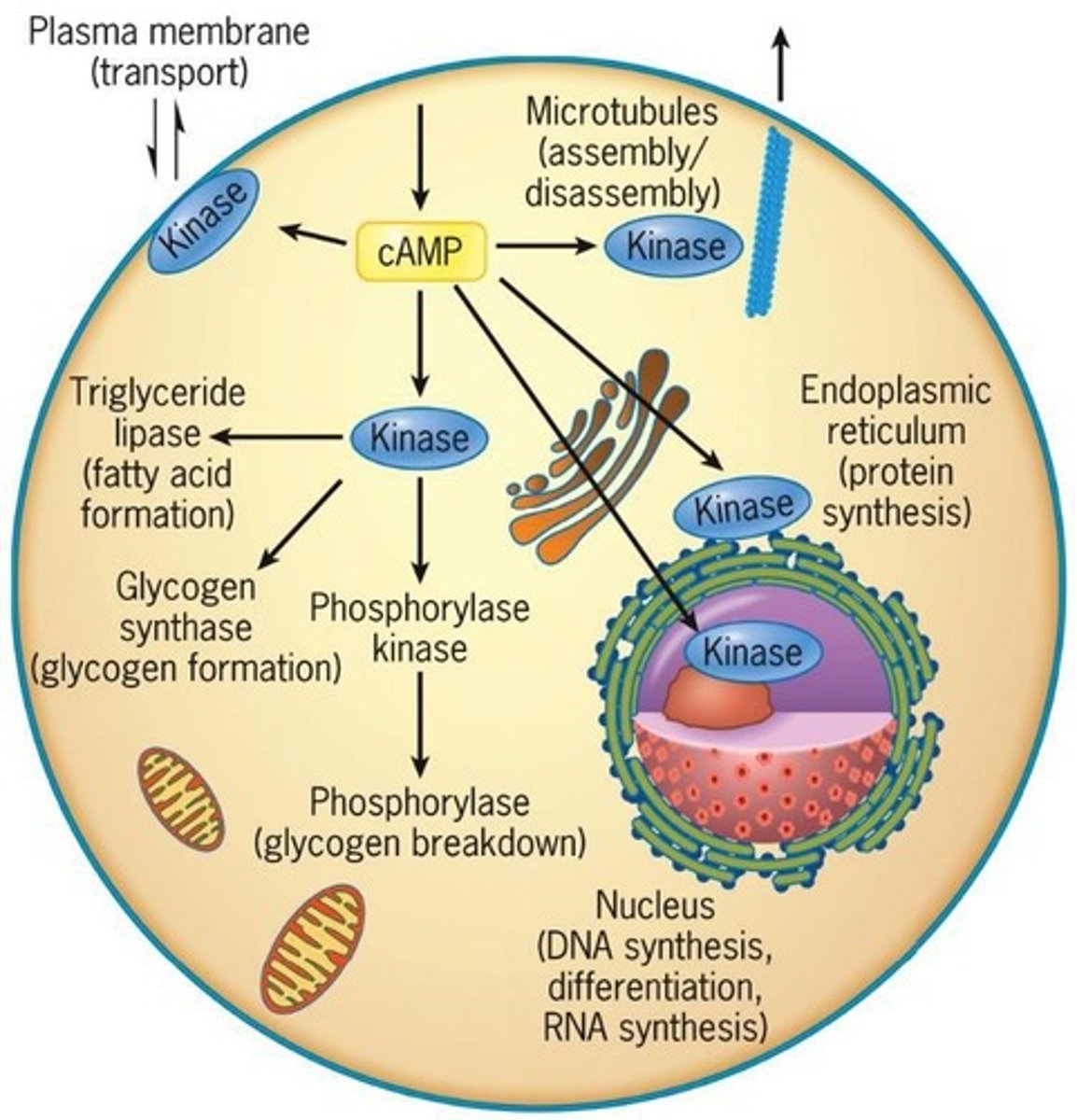
Cyclic AMP (cAMP)
A second messenger produced by adenylyl cyclase that mediates various cellular responses.
Desensitization
The process that prevents active receptors from continuing to activate G proteins.
G protein-coupled receptor kinase (GRK)
An enzyme that phosphorylates active GPCRs, initiating desensitization.
Arrestin
A protein that binds to phosphorylated GPCRs to inhibit their activity and promote internalization.
Endocytosis
The process by which cells internalize receptors bound to arrestin.
Resensitization
The process by which recycled receptors return to the cell surface and regain sensitivity to ligands.
Clathrin-coated pits
Structures that facilitate the internalization of arrestin-bound GPCRs into the cytoplasm.
Endosomes
Membrane-bound compartments that contain internalized GPCRs and arrestins.
MAPK cascade
A signaling pathway that can be assembled by arrestins in endosomes.
Heterotrimeric G proteins
G proteins composed of three subunits (Gα, Gβ, Gγ) that mediate signal transduction.
GTP hydrolysis
The process by which Gα subunits turn themselves off by converting GTP to GDP and Pi.
Gs family
G protein family members that couple receptors to adenylyl cyclase.
Gq family
G protein family members that activate phospholipase C (PLCβ).
Gi subunits
G protein subunits that inhibit adenylyl cyclase activity.
G12/13 members
Less well-characterized members of the heterotrimeric G protein family.
Cholera toxin
A bacterial toxin that modifies Gα subunits to activate adenylate cyclase, causing intestinal water loss.
Pertussis toxin
A bacterial toxin that inactivates Gα subunits, inhibiting immune defense.
Effector molecule
The target molecule that is activated by the Gα subunit in the signaling pathway.
G-protein coupled receptors
Receptors that play a role in signaling pathways by activating G proteins upon binding with a ligand.
Signal transduction pathways
The process by which a cell responds to signals from outside its membrane, often involving a series of molecular events.
Cyclic AMP
A second messenger that is synthesized following the binding of a first messenger to a receptor, enabling a large-scale cellular response.
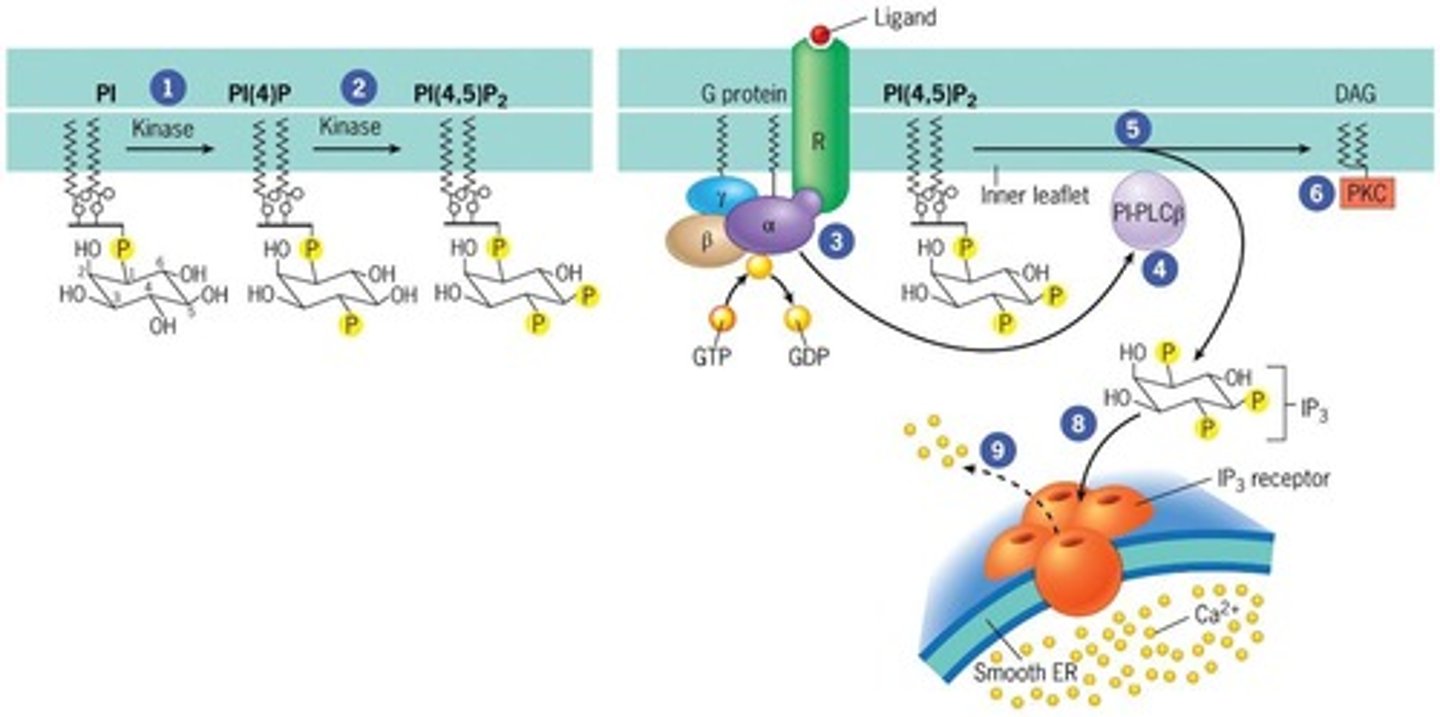
Second messengers
Molecules that relay signals received at receptors on the cell surface to target molecules inside the cell.
Phosphatidylinositol (PI)
A phospholipid that can be phosphorylated to form PIP2, which is involved in generating second messengers.
Phospholipase C-β (PLCβ)
An enzyme that splits PIP2 into inositol 1,4,5-trisphosphate (IP3) and diacylglycerol (DAG) in response to receptor activation.
Inositol 1,4,5-trisphosphate (IP3)
A second messenger that triggers calcium ion release from the smooth endoplasmic reticulum.
Diacylglycerol (DAG)
A second messenger that recruits protein kinase C (PKC) to the membrane and activates it.
Calcium ions (Ca2+)
Second messengers that bind to various target molecules, triggering specific cellular responses such as muscle contraction.
Phospholipases
Enzymes that convert phospholipids into second messengers by splitting lipid molecules.
Phosphoinositide kinases
Enzymes responsible for phosphorylating inositol molecules, contributing to the formation of second messengers.
Phospholipid kinases
Enzymes that phosphorylate phospholipids, converting them into active second messengers.
Phospholipid phosphatases
Enzymes that dephosphorylate phospholipids, playing a role in the regulation of second messenger pathways.
Study case
An assessment component worth 8% of the total grade.
Discussion board
An assessment component worth 5% of the total grade.
Exams
Assessment components that account for 69% of the total grade, consisting of four exams.
Quizzes
Assessment components that account for 10% of the total grade, consisting of ten quizzes.
Analytical assignments
Assessment components that account for 8% of the total grade, consisting of four assignments.
Final exam
The last assessment occurring between April 28th and May 1st, with no cumulative content from earlier modules.
Module 11-14
The content covered in the course that is not cumulative for the final exam.
Vascular smooth muscle
Contraction
Stomach smooth muscle
Contraction
Slime mold
Cyclic GMP formation, actin polymerization
Blood platelets
Shape change, aggregation
Salamander rods
Modulation of light response
Xenopus oocytes
Calcium mobilization, membrane depolarization
Sea urchin eggs
Membrane depolarization, cortical reaction
Lacrimal gland
Increased potassium current
Epinephrine binding to β-adrenergic receptor
Activates Gαs subunit, stimulates cAMP production, increases rate and force of contraction
Epinephrine binding to α-adrenergic receptor
Activates Gαi subunit, inhibits cAMP production, leads to muscle relaxation
Glucagon and epinephrine hormones
Bind to different receptors on the same cell, stimulate glycogen breakdown, inhibit its synthesis
cAMP
Activated by the G protein of both hormone receptors
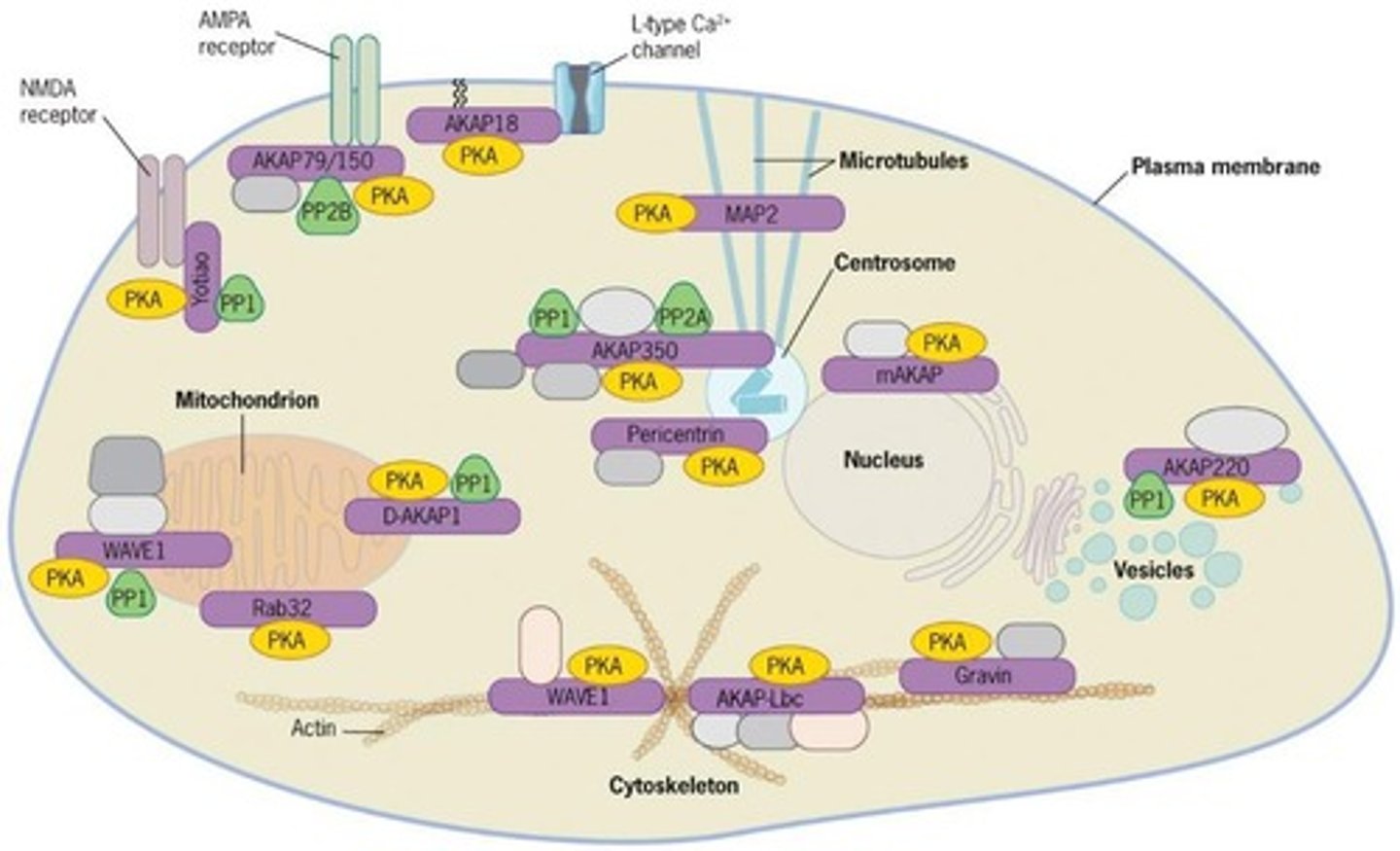
cAMP-dependent protein kinase (PKA)
Activated by cAMP, phosphorylates specific proteins in response to stimuli
PKA substrates
Over 100 have been described, affected by changes in cAMP concentration
PKA-anchoring proteins (AKAPs)
Facilitate signaling complexes operating in different subcellular compartments