Chapter 18
 Call Kai
 Learn
Learn Practice Test
 Spaced Repetition
 Match
Match Flashcards
 Knowt Play
1/34

Earn XP
Description and Tags
Proteins
Name | Mastery | Learn | Test | Matching | Spaced | Call with Kai | Chat |
|---|
No analytics yet
Send a link to your students to track their progress
35 Terms
Amino Acids
Compounds that contain both an amine and a carboxylic acid
Alpha carbon
The alpha of the carbon connecting everything. #spiderman keeping nyc together
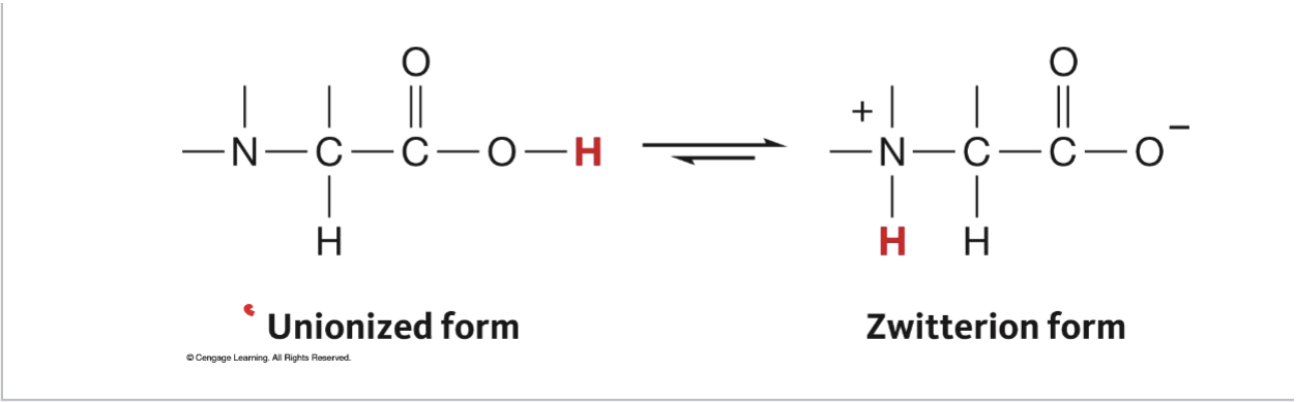
Zwitterion
When a compound contains both an amine and an acid, the hydrogen ion will move form the acid to the amine, resulting in a structure with one positive charge and one negative charge
means hybrid; mix of two different charges
Unique proteins
most proteins are built from a combination of 20 different amino acids
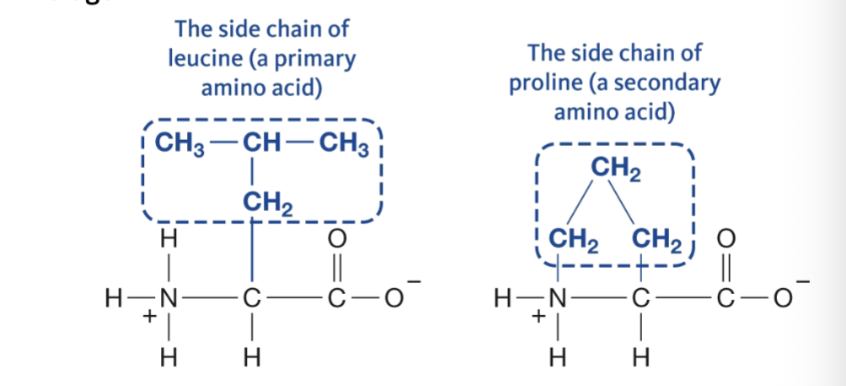
Unique because they have different side chains attached to the alpha carbon
Side chain denoted as “R”
Usually side chains only connect to alpha carbon except for proline
Proline
a ring that connects the alpha carbon to the amine nitrogen
everyone connects to only alpha carbon but proline connects it to the nitrogen too
Hydrophobic (nonpolar) amino acids
side chains are nonpolar and thus NOT attracted to water
Hydrophilic (polar) amino acids
Side chains are polar and thus ARE attracted to water
Amino acids → side chain
classified base on side chain
Side chains with OH, SH, or an amide are considered polar neutral
Side chains with a carboxylic acid are further classified as acidic
Side chains with an amine are also classified as basic
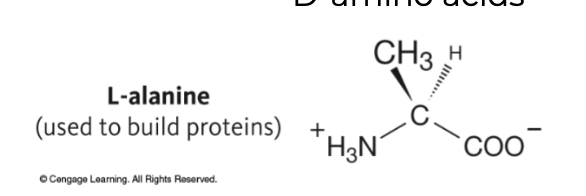
Chirality of Amino acids
Same atoms different order. It looks the same but they aren’t the same if you flip them. Example: like your shoe is the same but if you flip it, you can’t fit the right shoe on left foot. But its the same thing, just a different order.
Carbon atom is chiral if it is bonded to 4 completely different groups
All of the amino acids contain a chiral alpha carbon EXCEPT GLYCINE
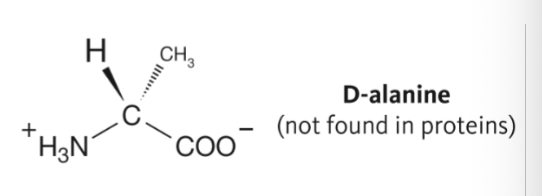
Enantiomers
It’s the atoms of the chirality. Like when it talkes about same atom different order the enantiomers is the atom. Example: the shoes are the enantiomer.
L-amino acids
Naturally occurring amino acids
D-amino acids
Enantiomer of L-amino acids (so it looks the same but where the molecule on the carbon is is not the same place) not found naturally
Peptide bond
Any chain of amino acids linked together by peptide bonds
more amino acids can be added to create dipeptide → tripeptide → tetrapeptide, etc.
Prefix indicates how. many are present. di=2 tri=3 tetra=4
Dipeptide bond
Peptide that consists of exactly two amino acids joined by one peptide bond
Polypeptide
Large number of amino acids linked together
proteins are polypeptides typically with 100-500 amino acids
Primary Structure
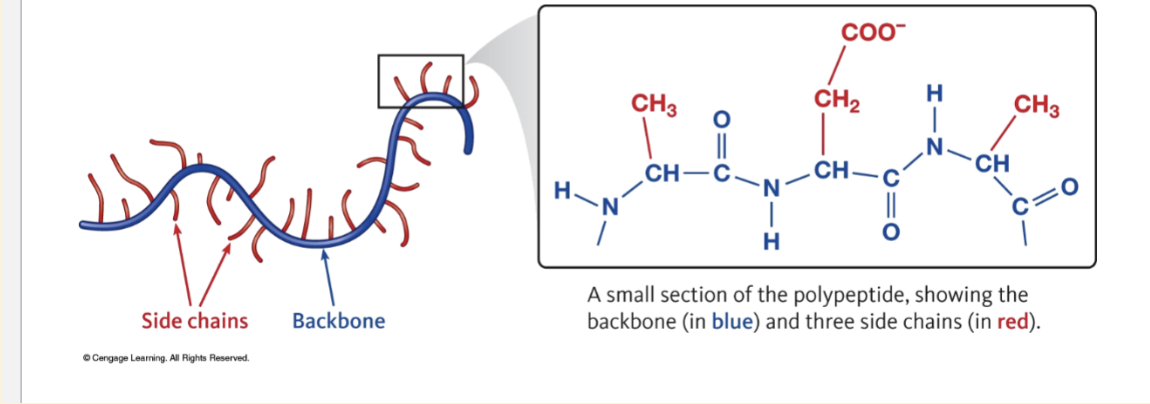
Amino acids in protein are linked in a certain order
Written from the N-terminus (free amino group) to the C-terminus (free carboxyl group).
Second Structure
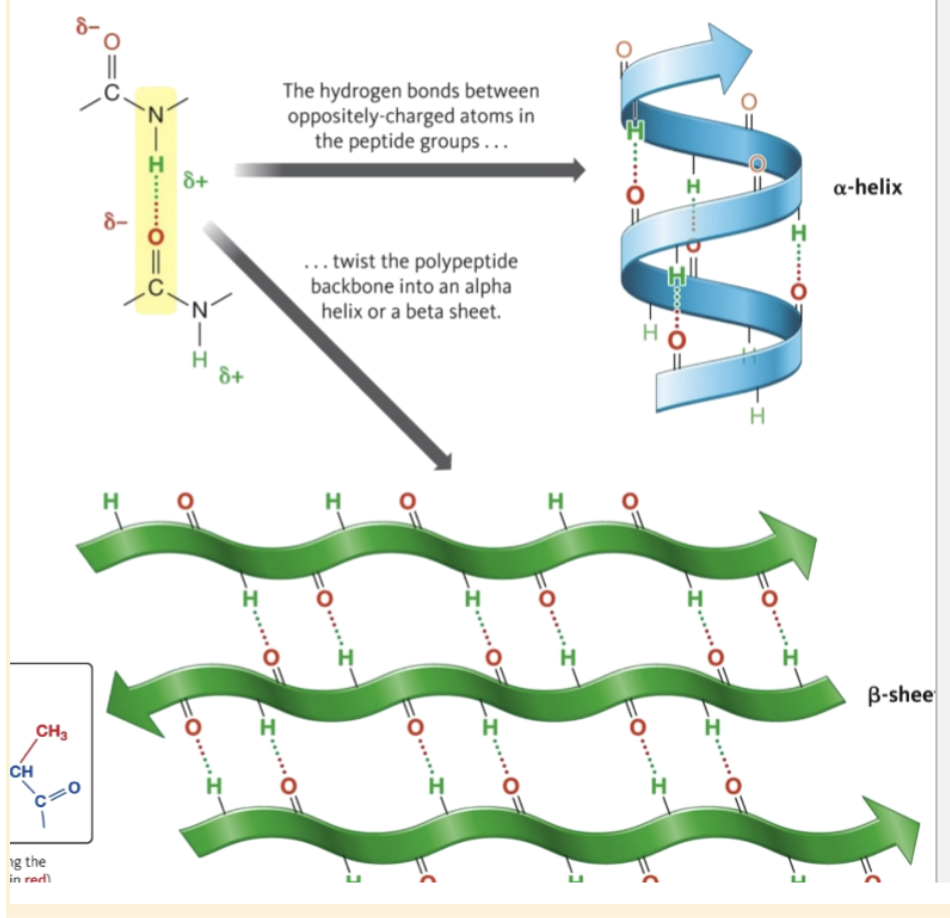
Hydrogen bonds between peptide groups of the backbone commonly form two secondary structures, the alpha helix and the beta sheets
Tertiary Structure
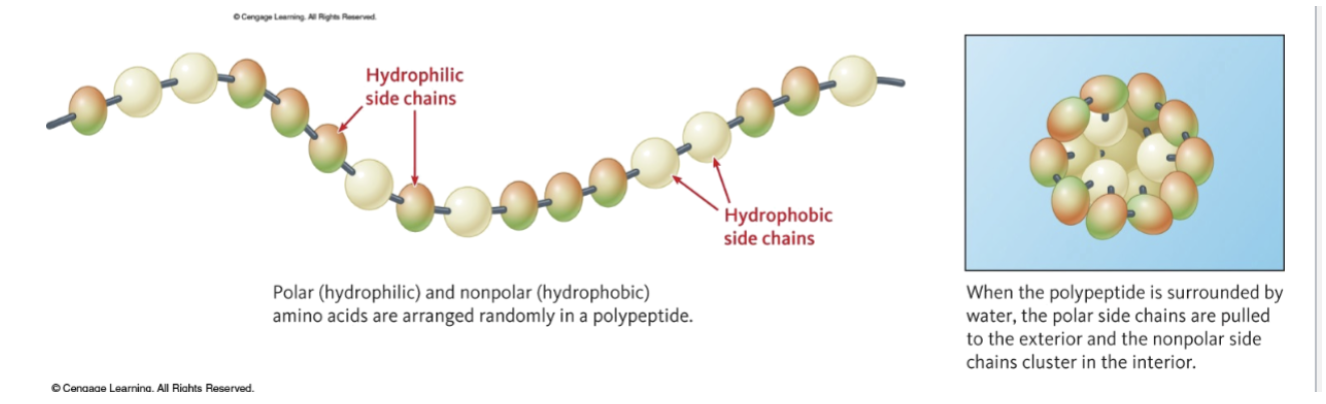
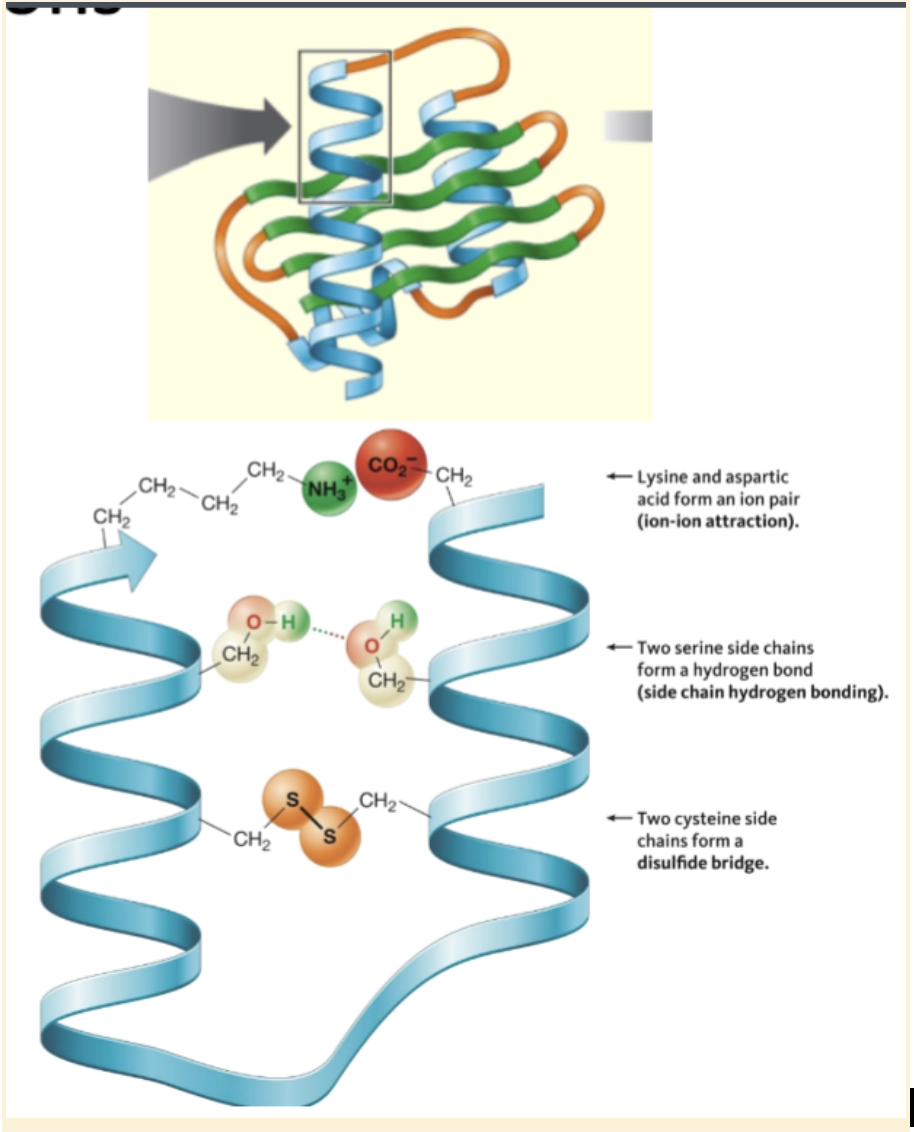
Interactions between side chains of the amino acids in the proteins determine the final shape of a protein
Globular proteins (haha glob in glob shape)
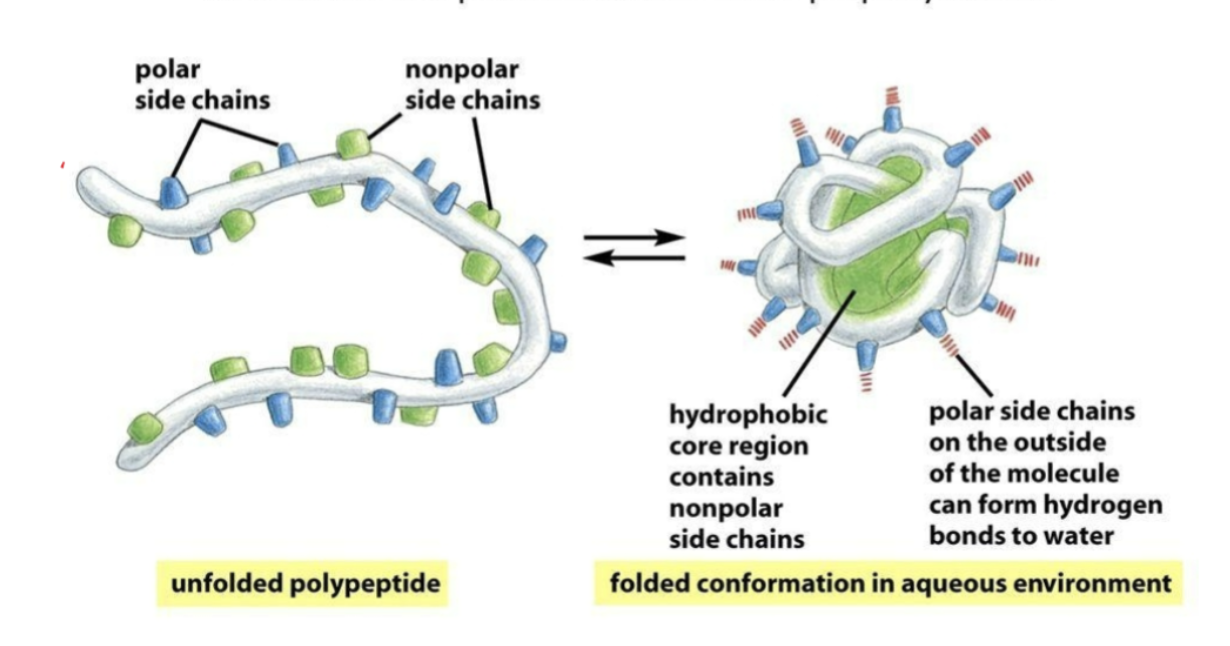
Hydrophobic amino acids tend to cluster together in the interior of a folded protein
Hydrophilic amino acids tend to be on the surface of a folded protein
Ionized acidic and basic amino acids are often found near each other
A cysteine side chain can form a disulfide bond with another cysteine side chain
Other side chain interactions
Some hydrophilic side chains can form side chain hydrogen bonding
Ionized acidic and basic side chains can form a disulfide bridge
Disulfide bridge formation is an oxidation reaction that requires either O2 or a redox coenzyme like NAD+
Quaternary Structure
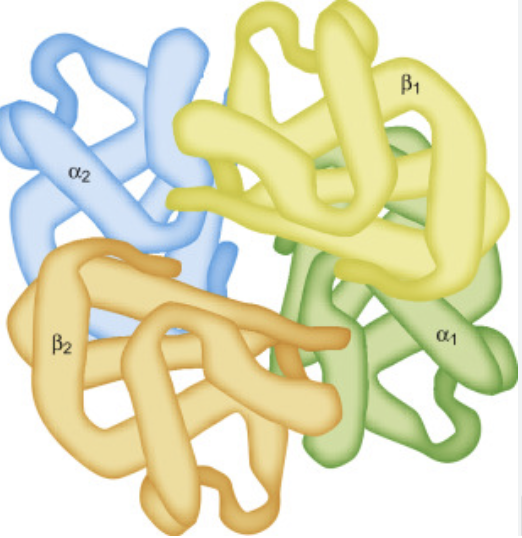
Formed when two or more polypeptides join to form an active protein like in hemoglobin
Some proteins contain more than one polypeptide chains
These chains are held together with a variety of the side chain interactions
Globular (hahaha glob)
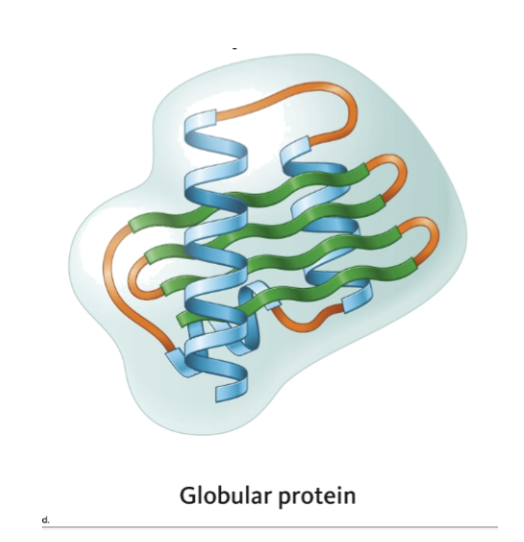
Proteins are folded into a compact shape. Most water soluble proteins are globular
Fibrous
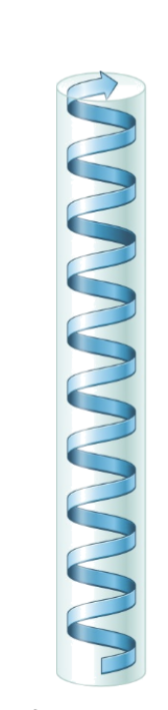
long narrow water insoluble protein
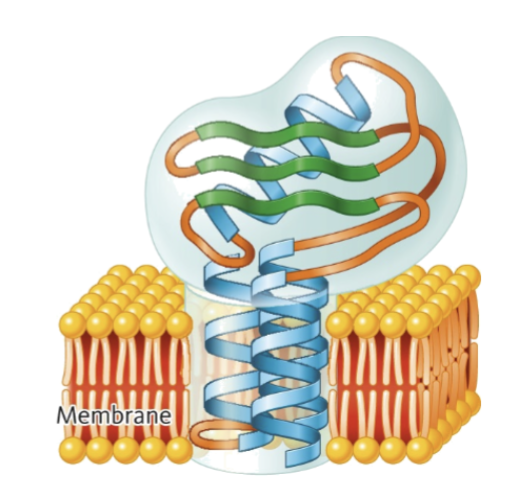
Membrane
proteins anchored in membrane
Enzymes
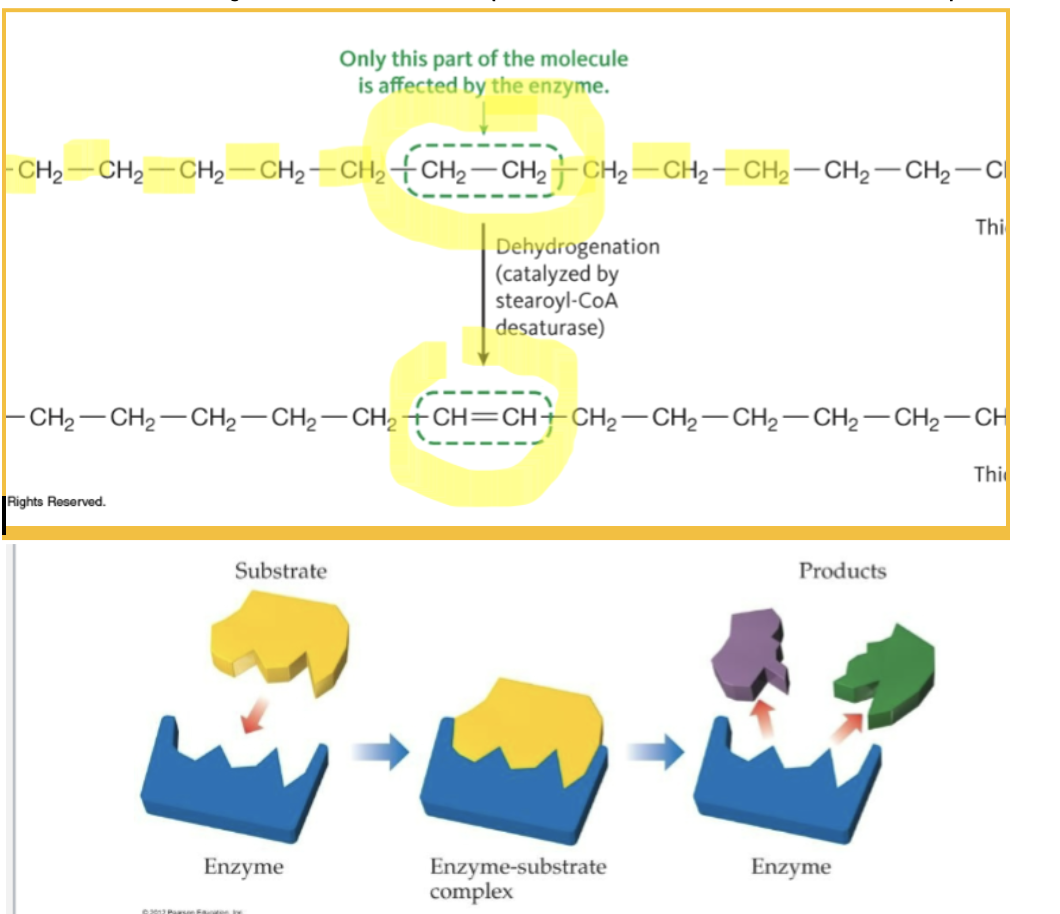
Proteins catalyst that speed up biological reactions
highly specific and will only allow one of many possible products to form. (in a molecule, only happens in one spot)
the substrate fits into the active sites of the enzyme much like a key fits into a lock (must be exact shape or won’t fit)
Substrate
the reactant in a biochemical reaction
Methods of Denaturation
Changing the solvent
Changing pH
Raising the temperature
Violent Agitation
Adding ionic substances
Changing the solvent
Organic solvents will shift the positions of hydrophobic and hydrophilic side chains
Hydrophobic side chains will move to the exterior to interact with the nonpolar solvent
Hydrophilic side chains will cluster in the interior
In water all of the nonpolar side chains are forced to the interior of the protein
In ethanol, mny of the nonpolar side chains move to the exterior of the protein
Changing pH
if the pH of the solvent is changed, the ionization of the acidic and basic side chains will change and ion-ion attraction will be disrupted
Lowering the pH will protonate (add a proton to) carboxylic acid side chains. Increasing the pH will deprotonate the amine side chain
At pH 7, aspartic acid and lysin have opposite charges and form an ion pair
At pH 2 (lowering pH), aspartic acid and lysins attract one another, but they cannot form an ion pair
Raising the temperature and Violent Agitation
Increasing rate of temp or shaking violently will increase rate of denaturation
raising temp and shaking violently speeds up the molecule movement
vibrations will denature most proteins at 50-70 degrees F
vigorous whipping of a protein solution will denature a protein
Adding ionic substances
Addition of high concentrations of ionic compounds will interrupt ion-ion attraction
Soaps will interrupt ion-ion attractions and hydrophilic and hydrophobic interactions
Heavy metal ions such ads the ions of lead and mercury are strongly attracted to sulfur and will disrupt disulfide bridges (aka covalent bonds)
Essential amino acids
AMINO ACIDS BODY CAN’T MAKE SO HAS TO FIND IN DIET
Nonessential amino acid
AMINO ACIDSBODY MAKES IT SO YOU DONT HAVE TO FIND IN DIET
Animal products
COMPLETE proteins → CONTAINS ALL ESSENTIAL AMINO ACIDS
Most grains
INCOMPLETE proteins → LACK some essential amino acids