Trophoblastic Disease
 Call Kai
 Learn
Learn Practice Test
 Spaced Repetition
 Match
Match Flashcards
 Knowt Play
1/20

There's no tags or description
Looks like no tags are added yet.
Name | Mastery | Learn | Test | Matching | Spaced | Call with Kai | Chat |
|---|
No analytics yet
Send a link to your students to track their progress
21 Terms
Molar Pregnancy
Approximately 1/1000 - 1200 pregnancies is a molar pregnancy.
More common under 20 years of age and over age 35

Gestational trophoblastic disease (GTD)
a group of interrelated tumors originating from the placenta
Trophoblast
A thin layer of cells that helps a developing embryo attach to the wall of the uterus, protects the embryo, and forms a part of the placenta
Rapid enlargement of the uterus
with the expulsion of cystic vesicles through the vagina.
Grossly elevated beta
hCG levels
Hyperemesis gravidarum
A severe type of nausea and vomiting during pregnancy
Uterine bleeding
in the first trimester
other clinical findings for GTD
Theca-lutein cysts
Onset of pre-eclampsia
Hyperthyroidism
Complete Hydatidiform Mole
the most common form of gestational trophoblastic disease and occurs in 1 in 1200 pregnancies in the United States

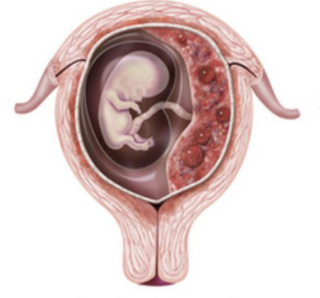
partial mole

mole with coexisting fetus
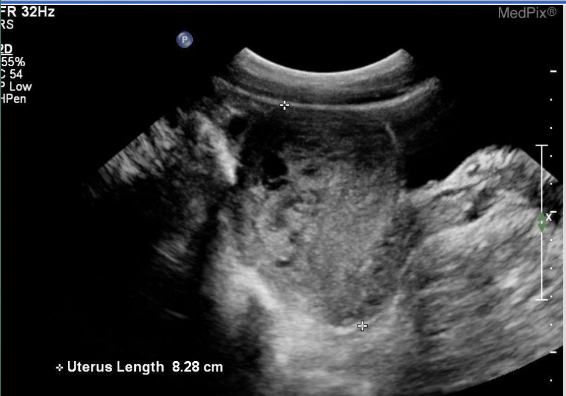
Complete Hydatidiform Mole sonographic signs
Filling of the endometrial cavity with heterogeneous echogenic material
A vesicular appearance
Increased uterine size
Fluid collections surrounding a molar mass (not
always but sometimes)
Appearance that mimics a degenerating myoma


High hCG causes multiple theca lutein cysts in approx
50% of case
Partial Mole Sonographic Signs
Grossly enlarged placenta with variously sized cystic
areas within (molar placenta)
Focal or diffuse areas of increased echogenicity in or
about the placenta
Presence of coexisting fetal tissue (in which case the
diagnosis is virtually certain). Grossly abnormal fetus
(triploidy malformations)

Hydropic Degeneration of the Placenta
A pathologic phenomenon characterized by the presence of numerous cystic areas within a generally enlarged placenta

Persistent Trophoblastic Neoplasia
A complication of pregnancy that most commonly follows gestational
trophoblastic disease by can also (uncommonly) occur after normal
term delivery, spontaneous abortion, or even ectopic pregnancy
Gestational Trophoblastic Neoplasia
Gynecologic tumors that originate in trophoblastic tissue
Gestational Trophoblastic Neoplasia Classifications
invasive Mole
Uterine Choriocarcinoma
Placental site trophoblastic
tumors (PSTTs)
Epithelioid trophoblastic
neoplasia
Invasive Mole aka chorioadenoma destruens
Rare, molar tissue invades the myometrium or adjacent
anatomic structures

Uterine Choriocarcinoma aka gestational choriocarcinoma
considered the malignant, metastatic form of gestational trophoblastic disease
Placental Site Trophoblastic Tumor
A rare form of gestational trophoblastic disease that may occur after delivery of a normal pregnancy, following evacuation and treatment of a hydatidiform mole, or even after a terminated pregnancy
