Physio: Membrane
 Call Kai
 Learn
Learn Practice Test
 Spaced Repetition
 Match
Match Flashcards
 Knowt Play
1/40

There's no tags or description
Looks like no tags are added yet.
Name | Mastery | Learn | Test | Matching | Spaced | Call with Kai | Chat |
|---|
No analytics yet
Send a link to your students to track their progress
41 Terms
briefly describe the cell membrane
amphipathic phospholipid bilayer
interior is hydrophobic
exterior is polar
contains cholesterol
maintains membrane fluidity and stability
describe the 2 types of proteins in plasma membranes
integral proteins
peripheral proteins
describe integral plasma membrane proteins
tightly associated within the bilayer
inserted halfway or all the way through
describe peripheral plasma membrane proteins
located at the membrane surface
loosely attached
what separates the extracellular fluid and interstititial fluid with the intracellular fluid comparments
plasma membrane
responsible for the differences in the compositions
describe the four major membrane transport mechanisms
simple diffusion
facilitated diffusion
primary active transport
secondary active transport
describe simple diffusion
movement of molecules from high concentration to low concentration
passive process because it is thermodynamically favorable
no ATP used
will diffuse until there is NO FLUX
equal speed and distribution
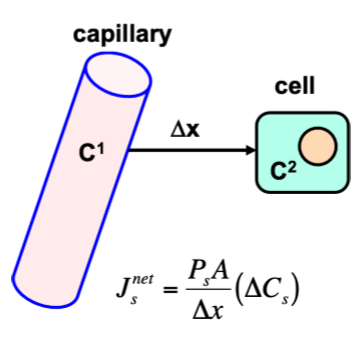
in regards to magnitude and direction of diffusion across a cells membrane, what is the net flux directly proportional to?
fick’s law
concentration difference
the larger the difference, the greater the net flux
permeability co-coefficient
the lipid solubility and molecule
area of membrane
greater area means more available space for diffusion

describe the types of molecules that are permeable to the phospholipid bilayer
hydrophobic
small
what is net flux indirectly proportional to?
distance
the greater the flux, the shorter the distance
how is this addressed?
most cells are close to capillary so length of time for a substance to diffuse from substance to capillary is short
describe ion channels
the main method of facilitated simple diffusion for ions
show selectivity for the type of ion
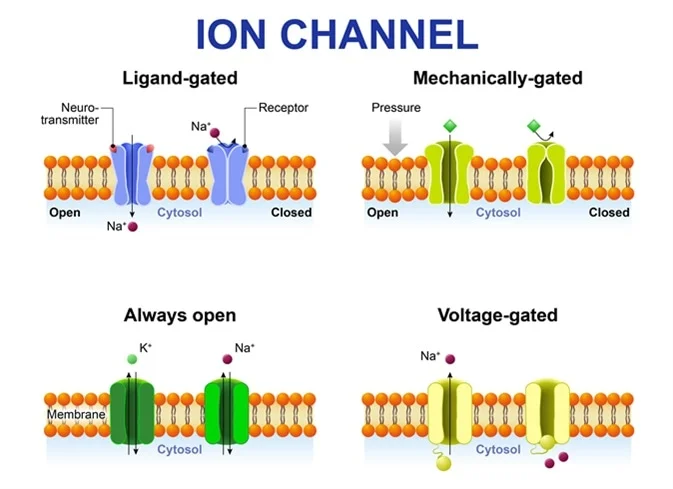
describe ligand gated ions
activated in response to a chemical messenger binding to them

describe mechanically gated ion channels
activated by the physical deformation of the surrounding plasma membrane

describe voltage gated ion channels
activated by changes in the membrane potential
where does membrane potential come from
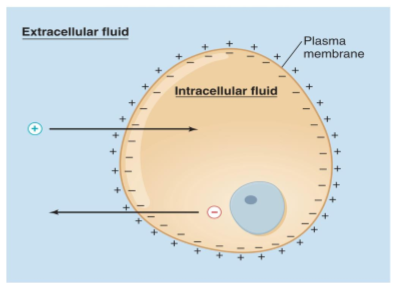
membrane potentials exists across plasma membranes caused by a separation of electrical charges
provides electrical force that influences movement of ions across the membrane

the charge of the extracellular environment is…
positive

the charge of the intracellular environment is…
negative
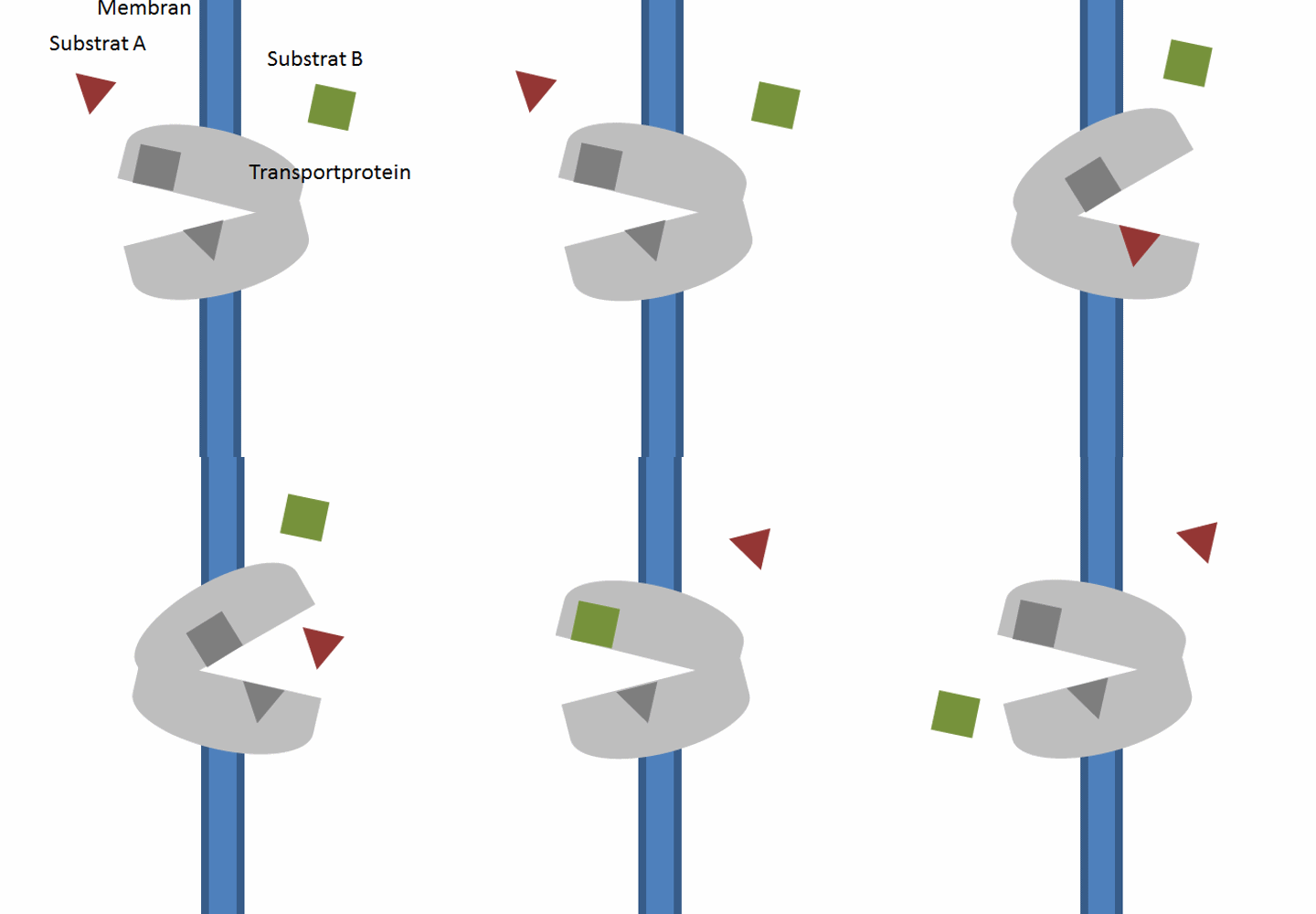
describe facilitated diffusion
a type of simple diffusion that occurs down a concentration gradient
not coupled to ATP
movement is bidirectional
ion channels are a type of…
facilitated diffusion
no energy is needed
glucose transporters are a type of…
facilitated diffusion
no energy needed
describe glucose facilitated diffusion
glucose binds to a specific site on the GLUT transporter
undergoes conformational change
glucose is released into the cell
describe active transport
utilizes energy to move an ion or solute against its electrochemical gradient
make possible the large differences in the concentrations of substances of intracellular and extracellular compartments
describe primary active transport
uphill transport across the membrane coupled to ATP hydrolysis
example
NA+/K+ ATPase
3 2 1 NOKIA
3 Na OUT
2 K IN
1 ATP used
what are examples of primary active transporter pumps
Sodium potassium pump
Calcium pump
Hydrogen ion pump
Hydrogen potassium pump
what maintains the concentration gradients between the ICF and ECF
Sodium potassium pump
keeps the intracellular K+ concentration high
keeps the extracellular Na+ concentration low
describe the primary active transport mechanism of the sodium potassium pump
ATP binds to pump
3 Na+ from the inside bind to the pump
ATP is broken down and pump is phosphorylated
phosphorylation triggers conformational change and releases 3 Na+ from inside to outside
2 K+ binds to pump
Pump is dephosphorylated
Dephosphorylation triggers conformational change and releases 2 K+ from outside to inside

describe secondary active transport
transport proteins utilize the passive energy gradient for one solute to facilitate the uphill transport of a second solute
has two binding sites

what kind of energy is used in secondary active transport
indirect
no ATP hydrolysis is directly used, but ATP was used to SET the gradient for the first solute

describe the step by step mechanism of the secondary active transport pump
sodium potassium pump used ATP to set up a Na+ gradient (Na+ high concentration outside)
Na+ and solute bind to transporter
pump undergoes conformational change
both Na+ and solute comes out the other side
describe how the Na+ gradient is used to power secondary active transport systems
Na+ concentration AND voltage gradient favor Na+ entry into cells
Sodium potassium pump maintains a relatively low ICF Na+ concentration
there is a negative charge inside the cell
describe secondary symport/co-transport
both solute and Na+ are being transported in the same direction

describe secondary anti-port
the solute and Na+ are being transported in opposite directions
describe endocytosis
membrane bound vesicles entering cells WITHOUT passing through the plasma membrane

describe exocytosis
membrane bound vesicles exiting cells WITHOUT passing through the plasma membrane
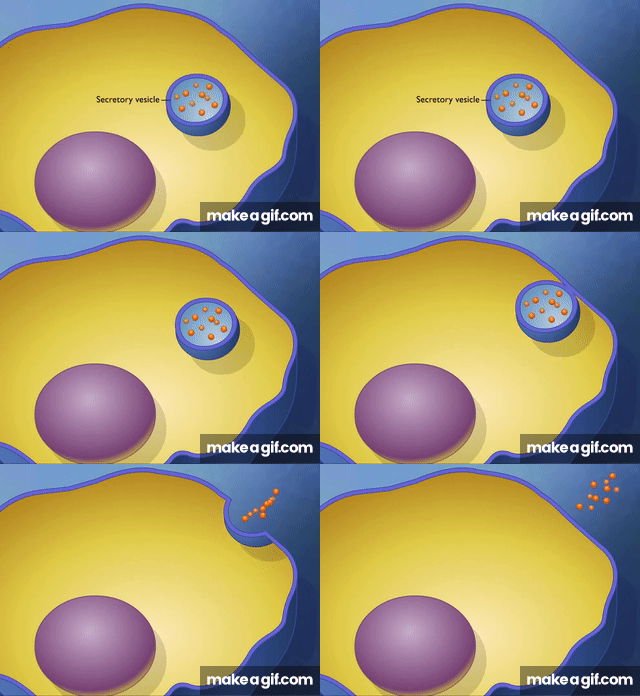
Describe pinocytosis
vesicles engulf extracellular fluid

describe phagocytosis
immune cells engulfing bacteria

describe receptor-mediated endocytosis
specific proteins on the outer surface of plasma membrane recognize a ligand and activate membrane invagination

describe transcellular transport
movement into a cell, through the cytosol, and exit across the opposite membrane
apical and basolateral membrane contain different transporters for this
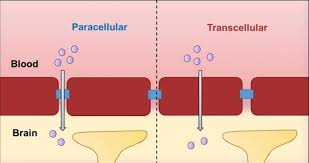
describe paracellular transport
diffusion between epithelial cell layers
limited by tight junctions that form a seal around the apical ends of
describe the capillary endothelium
wall of capillary composed of a single layer of epithelial cells
separates the plasma from the ISF
has a very high permeability to solutes and water


what is the implication of the high permeability of the capillary endothelium
differences in the composition of plasma and interstitial fluid are small
EXCEPT higher protein content in plasma
