DNA Repair
 Call Kai
 Learn
Learn Practice Test
 Spaced Repetition
 Match
Match Flashcards
 Knowt Play
1/47

There's no tags or description
Looks like no tags are added yet.
Name | Mastery | Learn | Test | Matching | Spaced | Call with Kai | Chat |
|---|
No analytics yet
Send a link to your students to track their progress
48 Terms
Consequences of DNA damage
Cell death, cell cycle arrest, senescence
Mutations
heritable change in the sequence of nucleotides in DNA that causes a permanent alteration of genetic information.
20% of human tumours have activating point mutations in what protein
RAS
What do mutations do to RAS & its action
These mutations all compromise the GTPase activity of RAS.
This prevents the hydrolysis of GTP on RAS, causing RAS to accumulate in the GTP-bound, active form
Almost all RAS activation in tumours is accounted for by mutations in codons ___, ___, ___
12, 13 & 61
DNA damage can have endogenous or exogenous sources. Give examples of each

Damaging agents can be intrinsic or extrinsic. Give examples of both

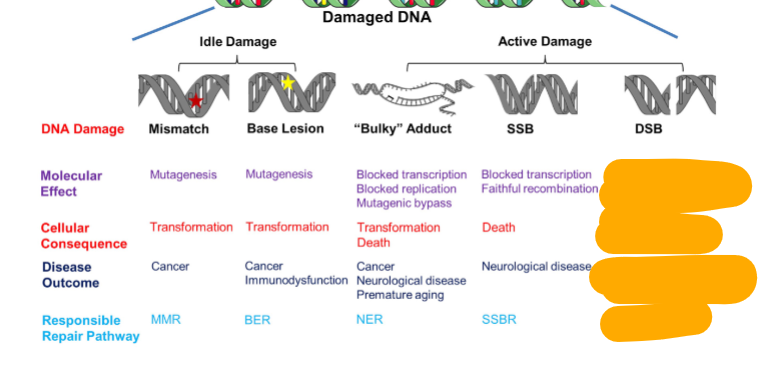
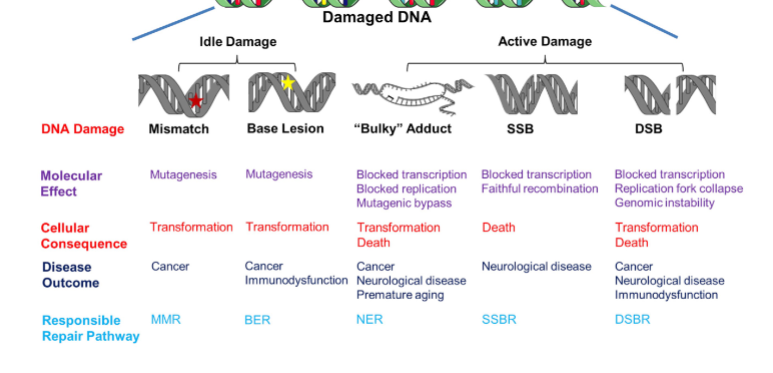
Give 5 examples of DNA damage separated into idle damage & active damage

What is cisplatin
A chemotherapy drug
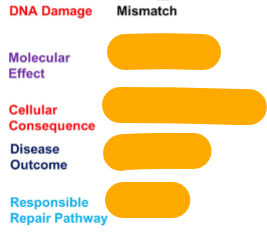
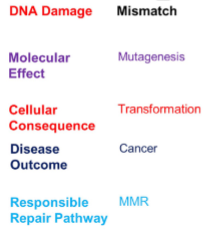
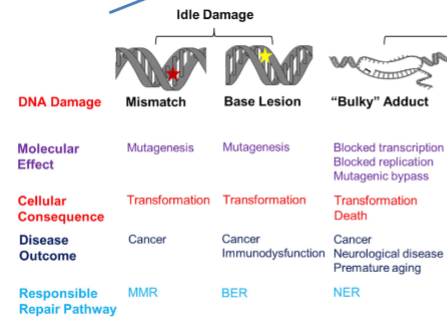
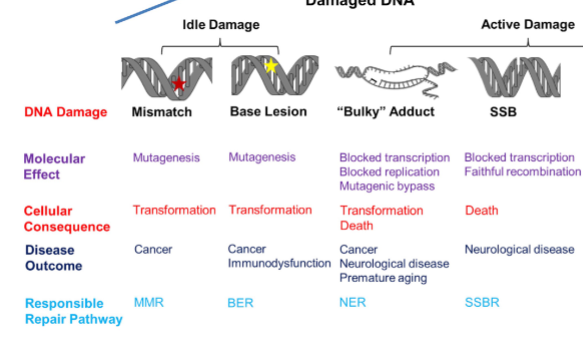
If the DNA damage that occurs is mismatch, what are the effects…
MMR = mismatch repair
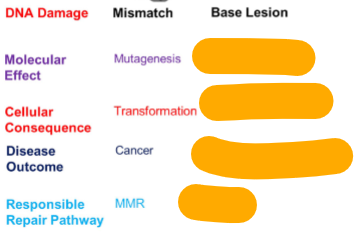
BER = Base Excision Repair
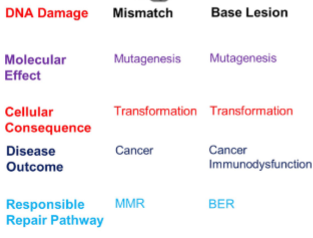
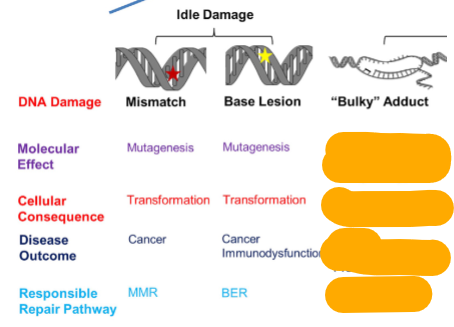
NER = Nucleotide Excision Repair
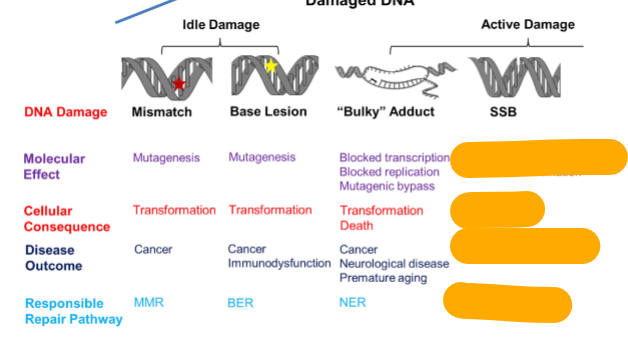
SSBR = Single-Strand Break Repair
Name 4 base modifications (damage) that occur in our cells normally
Generation of abasic (apurinic/ apyrimidinic- AP) sites
Deamination
Oxidative damage
Alkylation damage
How does generation of abasic (apurinic/ apyrimidinic- AP) sites occur
Through hydrolytic cleavage of N-glycosidic bond linking sugar to base
(Very common: 2000 – 10,000 /cell/day)
How does Deamination occur
Cytosine undergoes spontaneous deamination to form Uracil (100-500/cell/day)
Adenine undergoes spontaneous deamination to form Hypoxanthine: (10–50 /cell/day)
How does Oxidative damage damage occur
ROS causes the formation of 8-oxo-deoxyguanine (8-oxo-dG)
What does Alkylation damage cause
Formation of O⁶-methylguanine (a mutagenic DNA lesion)
Why are base modifications dangerous to the cell?
They cause abnormal base pairing, distort DNA structure, and lead to mutagenesis if unrepaired.
How does benzo[a]pyrene in cigarette smoke damage DNA?
Cytochrome P450 converts benzo[a]pyrene into its reactive form, benzo[a]pyrene diolepoxide (BPDE) by 2 successive oxidation reactions
BPDE can attack a number of chemical sites in DNA bases, forming bulky adducts that distort DNA and cause mutations.
How does alcohol consumption cause DNA damage?
Ethanol is metabolized by alcohol dehydrogenase (ADH) to acetaldehyde, a mutagen that reacts with DNA to form adducts such as N2-ethylidene-dG (most common) and 1,N2-propano-dG (most mutagenic), leading to mutations and increased cancer risk.
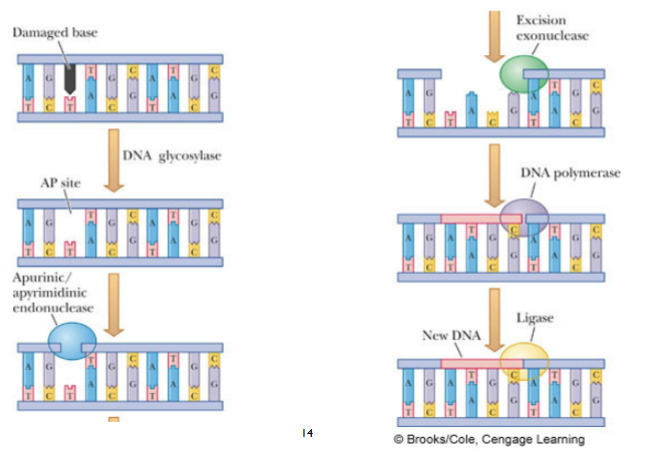
What are the main steps of BER (Base Excision Repair)?
DNA glycosylase recognises damaged base and removes it, leaving an abasic (AP) site.
AP endonuclease cleaves the DNA at this AP site.
DNA polymerase carries out repair synthesis.
DNA ligase rejoins the sugar-phosphate backbone.
What kind of DNA damage does Nucleotide Excision Repair (NER) fix?
DNA lesions that strongly distort DNA structure.
Especially UV-induced lesions such as CPDs & thymidine dimers
How frequent is UV-induced DNA damage?
A skin cell exposed to strong sunlight (UV of 200 – 320 nm) can sustain ~40,000 UV-induced DNA lesions per hour.
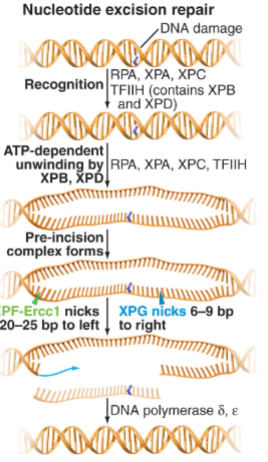
Explain the steps of the Nucleotide excision repair mechanism
XPA/XPC complex recognises DNA distortion from damaged bases
XPB/ XPD unwinds the DNA helix
XPF/ERCC1 and XPG cut the 5′ & 3′ ends of the lesion.
DNA polymerase δ / ε synthesizes the excised sequence (fills in the gap)
DNA ligase seals the repaired strand.
What is Xeroderma pigmentosum
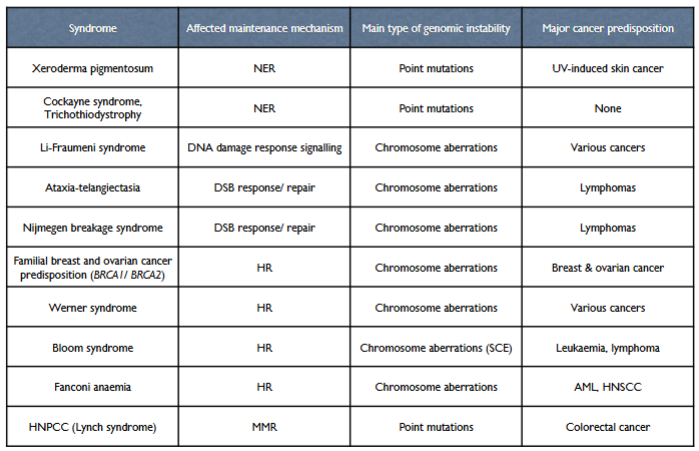
Lack of DNA repair of UV-damage results in skin hypersensitivity to light
Xeroderma pigmentosum (XP) is a rare human disease caused by what
inherited mutations in XP genes
Risks associated with Xeroderma pigmentosum
Leads to extreme susceptibility to skin cancer (melanoma, squamous cell carcinoma) arising from solar UV-induced DNA damage
The human genome contains how many base pairs
3 x 10⁹
What errors are corrected by mismatch repair?
Mistakes made by DNA polymerase
a) misincorporated nucleotides
b) small indels (insertion/deletions)
What proteins detect mismatches in MMR(mismatch repair)?
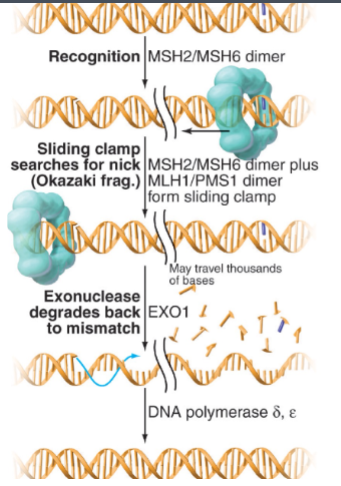
MSH2/MSH6 complex detects mismatched bases.
Outline the steps of MMR ( mismatch repair)
MSH2/MSH6 detect the error
A sliding clamp forms and locates the nearest single-strand nick.
DNA is exonucleolytically degraded until the mismatch
DNA polymerase δ/ε resynthesizes the correct strand.
DNA ligase seals the nick
How does defective mismatch repair promote cancer?
It causes microsatellite instability and accumulation of lots of mutations, predisposing to tumor formation.
Which cancer is classically linked to MMR defects?
Hereditary Non-Polyposis Colon Cancer (HNPCC, or Lynch syndrome), due to germline mutations in MSH2 or MLH1.
What molecular effect occurs in HNPCC cells?
Mutations in microsatellite regions of the TGF-β receptor sequence cause loss of growth inhibition signals (from TGF-β)
What makes double-strand breaks particularly dangerous?
They disrupt both DNA strands, risking loss of large genomic regions
If unrepaired, they cause cell death.
If misrepaired, they cause mutations and chromosomal rearrangements.
What are the main causes of DSBs?
Ionising radiation (x-rays, gamma rays)(short wavelength, high energy)
Replication forks collapsing
How can DSBs sometimes be useful
Can be used in cancer therapy!
Leads to cell death; used in radiotherapy.
Localised doses can be very high (50Gy), but >5Gy whole-body irradiation is lethal.
Radiomimetic chemotherapeutic drugs (topoisomerase II inhibitors, e.g. doxorubicin/ adriamycin)
What is the principal DSB repair mechanism in mammalian cells
Non-homologous end-joining
What are the key steps in NHEJ
Ku70/Ku80 dimer binds the DNA ends.
DNA ligase IV and XRCC4 ligate the ends
Why is NHEJ potentially mutagenic?
It can lead to small insertions or deletions at the repair junctions.
What physiological process relies on NHEJ?
V(D)J recombination in immune system development.
What distinguishes homologous recombination from NHEJ?
HR uses an undamaged homologous DNA template, ensuring accurate repair.
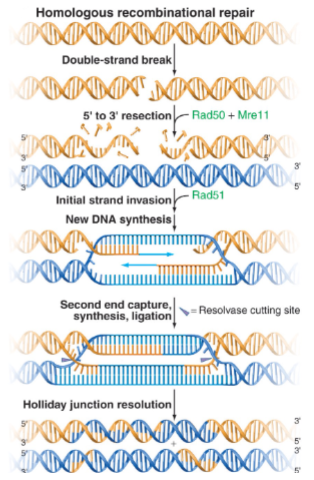
What are the steps of HR?
Resection exposes single-stranded DNA.
RAD51 coats the ssDNA in a nucleoprotein filament and searches for homology.
Strand invasion and DNA synthesis occur.
Holliday junctions are cleaved to yield the repaired sequence.
Which key tumor suppressor genes are required for HR?
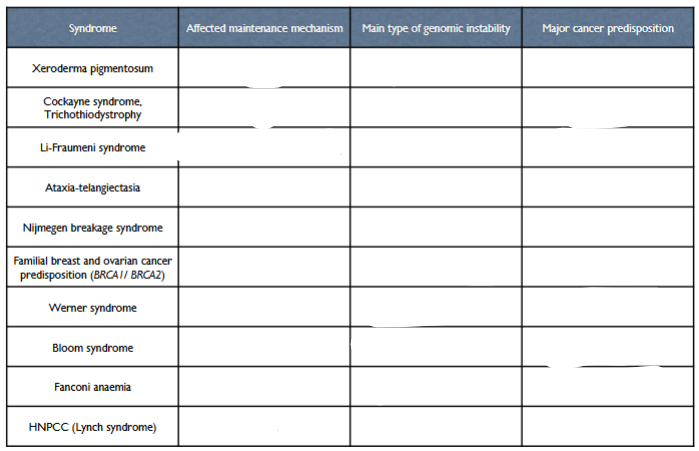
BRCA1 and BRCA2.
How can BRCA-deficient tumors be targeted therapeutically?
BRCA-deficient cells rely on PARP1-mediated repair. Inhibiting PARP1 causes lethal DNA damage accumulation — a principle known as synthetic lethality.
This can be used to specifically kill cells with cancer.