Enlightenment to Modernism Final
 Studied by 0 people
 Call Kai
 Learn
Learn Practice Test
 Spaced Repetition
 Match
Match Flashcards
 Knowt Play
1/8

There's no tags or description
Looks like no tags are added yet.
Name | Mastery | Learn | Test | Matching | Spaced |
|---|
No study sessions yet.
9 Terms
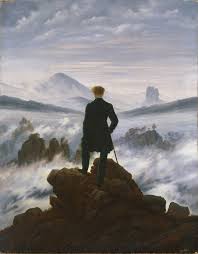
Wanderer Above the Sea of Fog - Friedrich
Quintessential romantic painting that depicts the titular wanderer, a common character of romantic-era paintings, wondering about his future path, overlooking a dense, foggy landscape that otherwise blocks his view of what’s ahead.
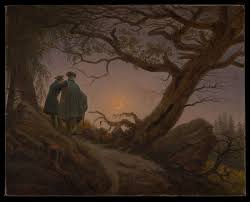
Two Men Contemplating the Moon - Friedrich
The dark landscape highlights humanity’s smallness in the vast universe, allowing for a contemplative view of the work itself, much like the two men contemplating the moon.
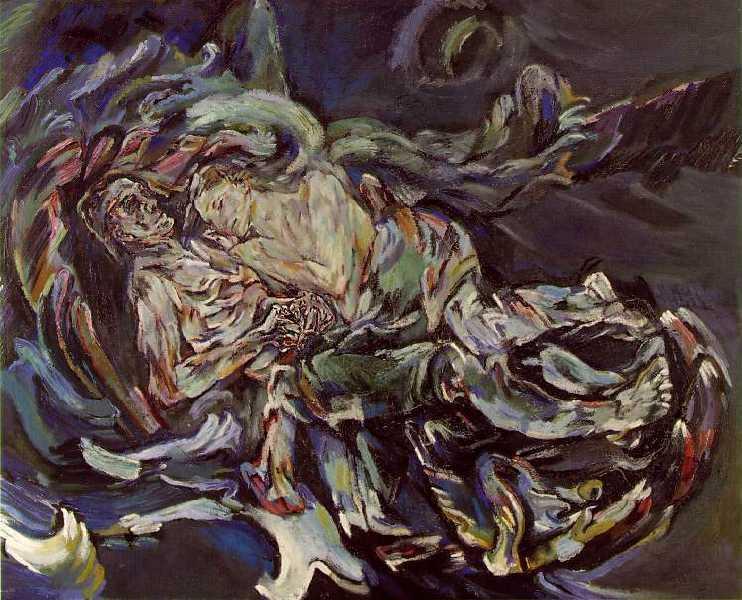
Bride of the Wind - Kokoschka
A sorrowful painting depicting the painter and Alma Mahler, Mahler’s wife, in their affair, yet knowing that it won’t last.
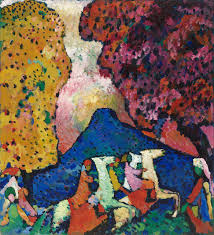
Blue Mountain - Kandinsky
Representative of Kandinsky’s desire to transform art into a mode of spiritual expression, through the crusading rider on horse depicted in the painting, a common motif of his.

Composition VII - Kandinsky
According to Kandinsky, this painting represents “The Flood” from the Bible. There’s almost no realistic symbolism, with a storyline only visible from viewing the previous sketches, such as the trumpets, whale, and ships.
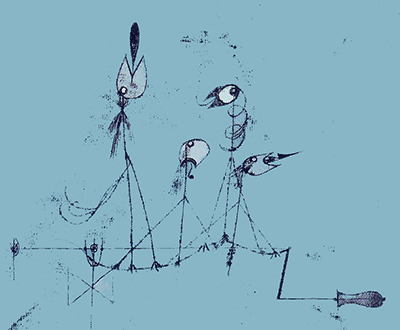
Twittering Machine - Klee
A whimsical yet critical view of the effects of machine-reliance in society, inspired by Klee seeing machines like the one depicted in his day-to-day life.
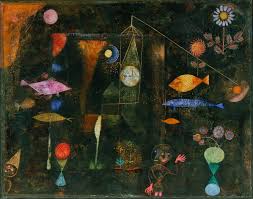
Fish Magic - Klee
Represents Klee’s mystic view of life, with the fish seemingly coming and going from nowhere. Various symbols are seen throughout, and the painting has an overall dreamlike manner.
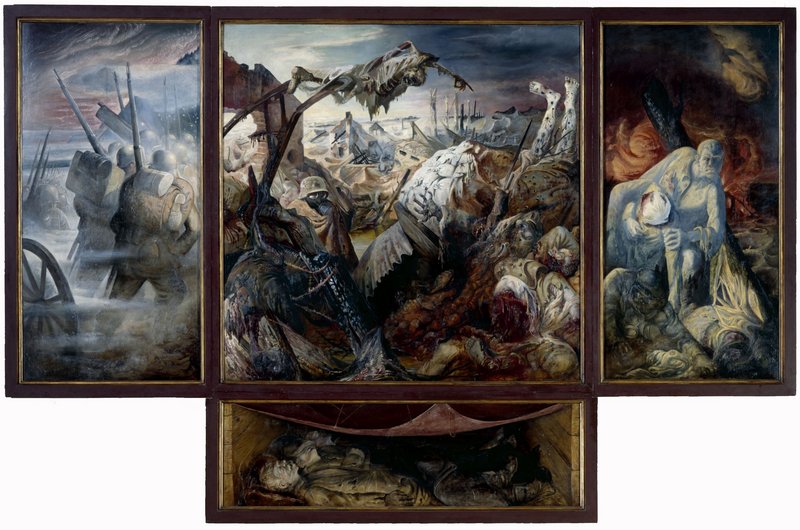
The War - Dix
Painted to depict the reality of trench warfare by veteran and painter Otto Dix. He later cut the painting into a triptych to preserve it from being destroyed by the Nazis during their art purges.
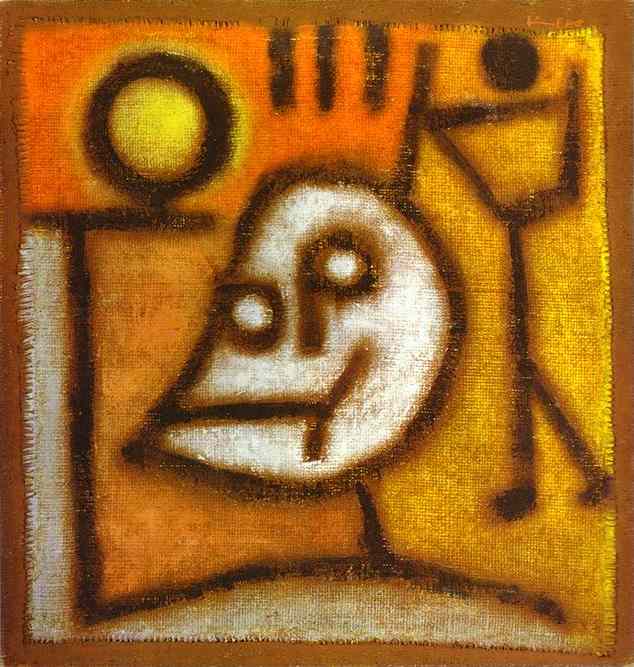
Death by Fire - Klee
One of the last paintings by Klee, representing his overall pain from his skin condition and seeming knowledge of his impending death, with the German word “Tod” spelled throughout.