EZ-IO
 Call Kai
 Learn
Learn Practice Test
 Spaced Repetition
 Match
Match Flashcards
 Knowt Play
1/14

Earn XP
Description and Tags
Intraosseous crap
Name | Mastery | Learn | Test | Matching | Spaced | Call with Kai | Chat |
|---|
No analytics yet
Send a link to your students to track their progress
15 Terms
Name the three sizes of IO needles and their correspondent weight limits.
The three sizes of IO needles are 15 mm for patients weighing up to 39 kg (86 lbs), 25 mm for patients weighing between 40 kg (88 lbs) and 80 kg (176 lbs), and 45 mm for patients weighing more than 80 kg (176 lbs).
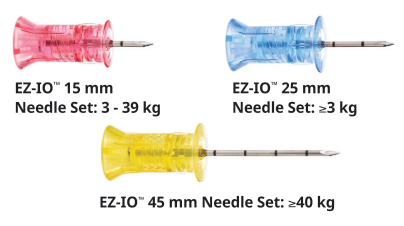
How do you determine you’ve selected the right needle size?

Name the insertion sites for adult patients and put them in order for preferred usage.

Name the insertion sites for pediatric patients and put them in order for preferred usage.

When establishing an IO in the proximal humerus, what two methods of arm positioning must you use before inserting the needle?

Explain the process of identifying the proper landmarking required for a proximal humerus IO.

Explain the process of identifying the proper landmarking required for a proximal tibia IO in both adult and pediatric patients.

Explain the process of identifying the proper landmarking required for a distal femur IO in both adult and pediatric patients.

Explain the process of identifying the proper landmarking required for a distal tibia IO in both adult and pediatric patients.

When do you stop drilling?
Drilling should stop once you feel a decrease in resistance, indicating that you have reached the desired depth and entered the medullary cavity, or if you see the drill stop rotating with an audible pop.
Why is proper placement of the needle particularly important for pediatric patients?
Proper placement is crucial in pediatric patients due to the existence of growth plates located near the ends of their long bones.
How can you tell an IO is not placed correctly?
You can tell an intraosseous (IO) line is not placed correctly ifyou encounter resistance or swelling during a saline flush, or if the needle wobbles instead of standing firmly on its own
What are the contraindications for IO placement?
The primary contraindications for intraosseous (IO) access include a fracture or injury at or proximal to the insertion site, active infection or burn over the site, and severe underlying bone diseases.
What are the lidocaine doses for prophylactic pain management in conscious IO placements by age?

List the contraindications for lidocaine.
