JSR - Bio 101 - Enzymes with Protein Review
 Call Kai
 Learn
Learn Practice Test
 Spaced Repetition
 Match
Match Flashcards
 Knowt Play
1/36

There's no tags or description
Looks like no tags are added yet.
Name | Mastery | Learn | Test | Matching | Spaced | Call with Kai | Chat |
|---|
No analytics yet
Send a link to your students to track their progress
37 Terms
Active site
Location where substrate binds to.
Denaturing
The shape or structure of the enzyme is changed due to extremes in temperature, pH or salinity; enzyme is unable to execute its function.
lock and key theory
One substrate fits one enzyme;
enzymes can only catalyze one biochemical reaction.
Enzyme
globular protein;
Catalyzes chemical reactions
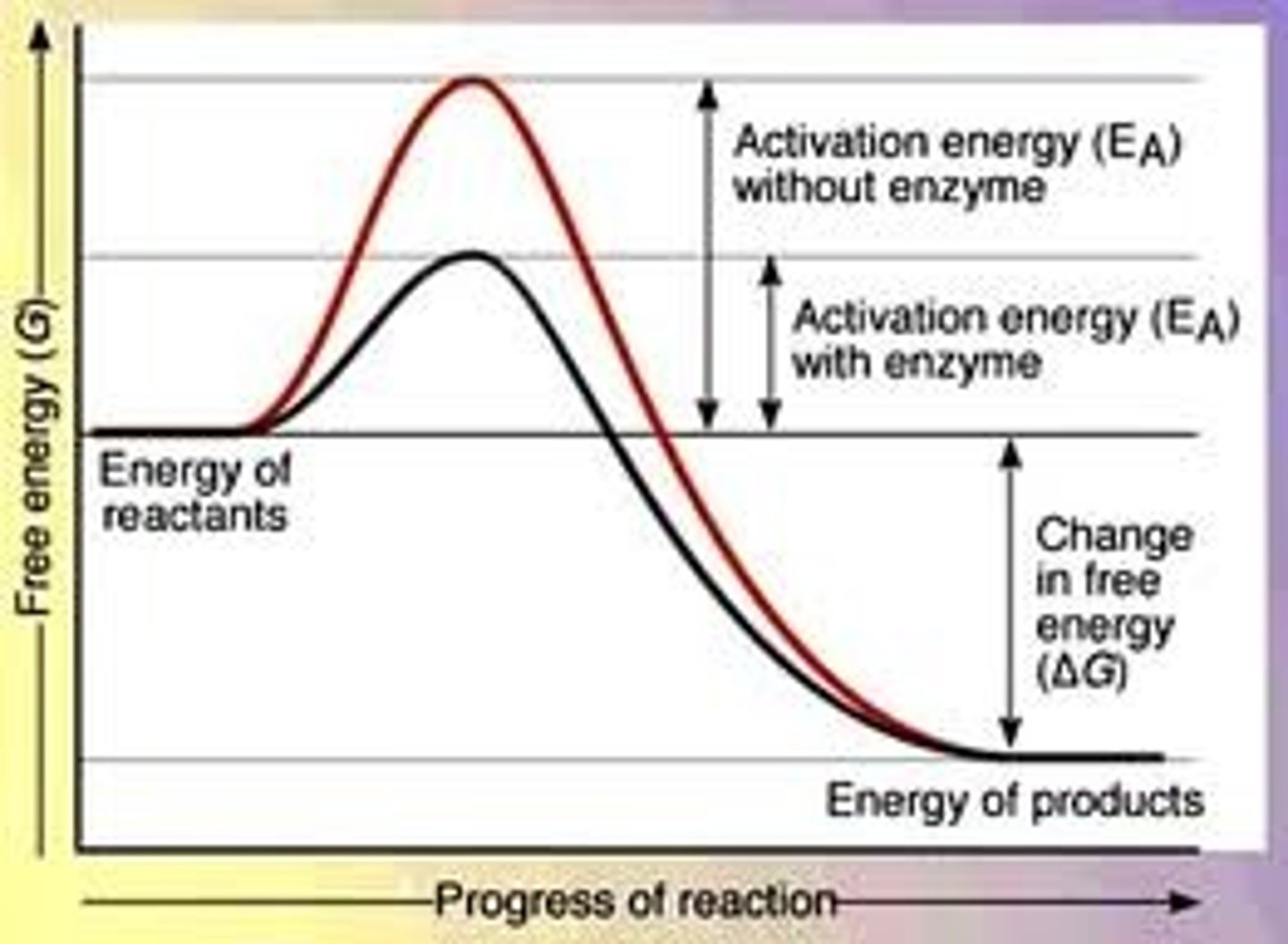
Activation energy
the energy put into reactants to get a reaction started
Induced fit model
model that describes how enzymes may act on one or more similarly-shaped substrates and catalyze similar reactions
Substrate
reactant that binds to the enzyme's active site
Primary Structure
sequence of amino acids connected by peptide bonds
Secondary structure
one of two shapes formed as a result of hydrogen bonding between the carboxyl of one amino acid and the amine of another. .
Alpha Helix
coiled shape held together by hydrogen bonding between every fourth amino acid
Beta pleated sheet
accordion shape formed due to hydrogen bonds.
Tertiary Structure
complex globular shape due to R group interactions.
Quaternary structure
Two or more polypeptide chains held together by R group interactions
Insulin
Hormone (sends signals) - Controls sugar level
Antibodies (Immunoglobulins)
Defense - Part of immune response.
Spider Silk
Strong structural protein
Collagen
Strength and structure in skin
Amino acid sequence of polypeptides is coded for by ______________.
DNA
temperature
increases cause increasing activity up to the optimum; beyond optimun rapid denaturing occurs
pH
denaturing occurs on either side of optimum as increases or decreases disrupt hydrogen bonds
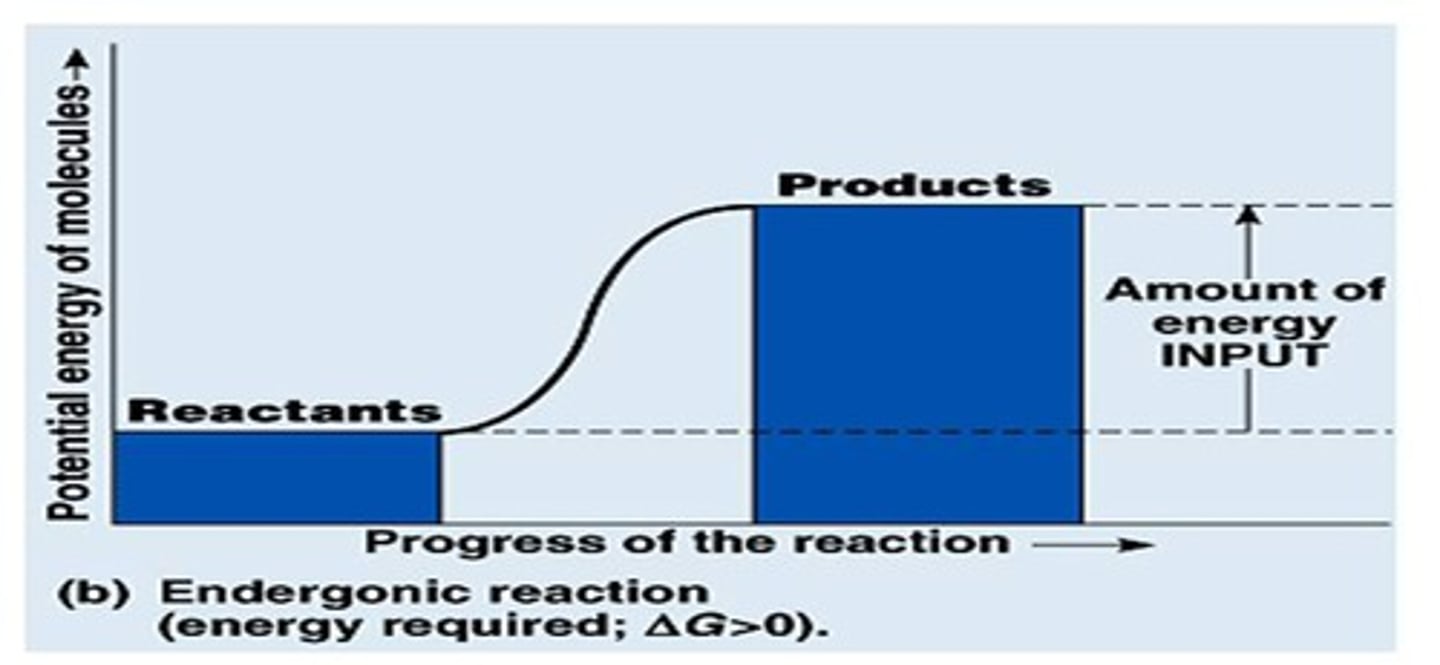
endergonic
reactions where products store more energy than the reactants
exergonic
reactions that release energy
metabolism
the sum of all chemical processes that occur in an organism
competitive inhibitor
A substance that reduces enzyme activity by binding to the active site in place of the substrate.
noncompetitive inhibitor
A substance that reduces enzyme activity by binding to a location away from the active site. Binding changes the shape of the active site so that the substrate can not bind.
example of a competitive inhibitor
sarin gas bind to the active site on acetylcholinesterase; prevents muscle contraction.
example of non-competitive inhibitor
cyanide binds to cytochrome c in cellular respiration; changes the shape of the active site such that the substrate cannot bind.
How can competitive inhibition be overcome?
add more substrate
end product inhibition
The regulation of metabolic pathways where the last product in a sequence of enzyme-controlled reactions becomes an inhibitor of one of the enzymes earlier in the sequence; prevents the production of two much product.
Number of amino acids used by living things to make proteins
20
condensation
process that combines amino acids into dipeptides or polypeptides by removing water
hydrolysis
process that breaks polypeptides or dipeptides into amino acids by adding water
denaturing
changing the shape of a protein through, pH, temperature, or salt concentration changes thus making it ineffective
metabolic pathway
chains or cycles of enzyme-mediated reactions
graph showing an endergonic reaction
graph showing an exergonic reaction
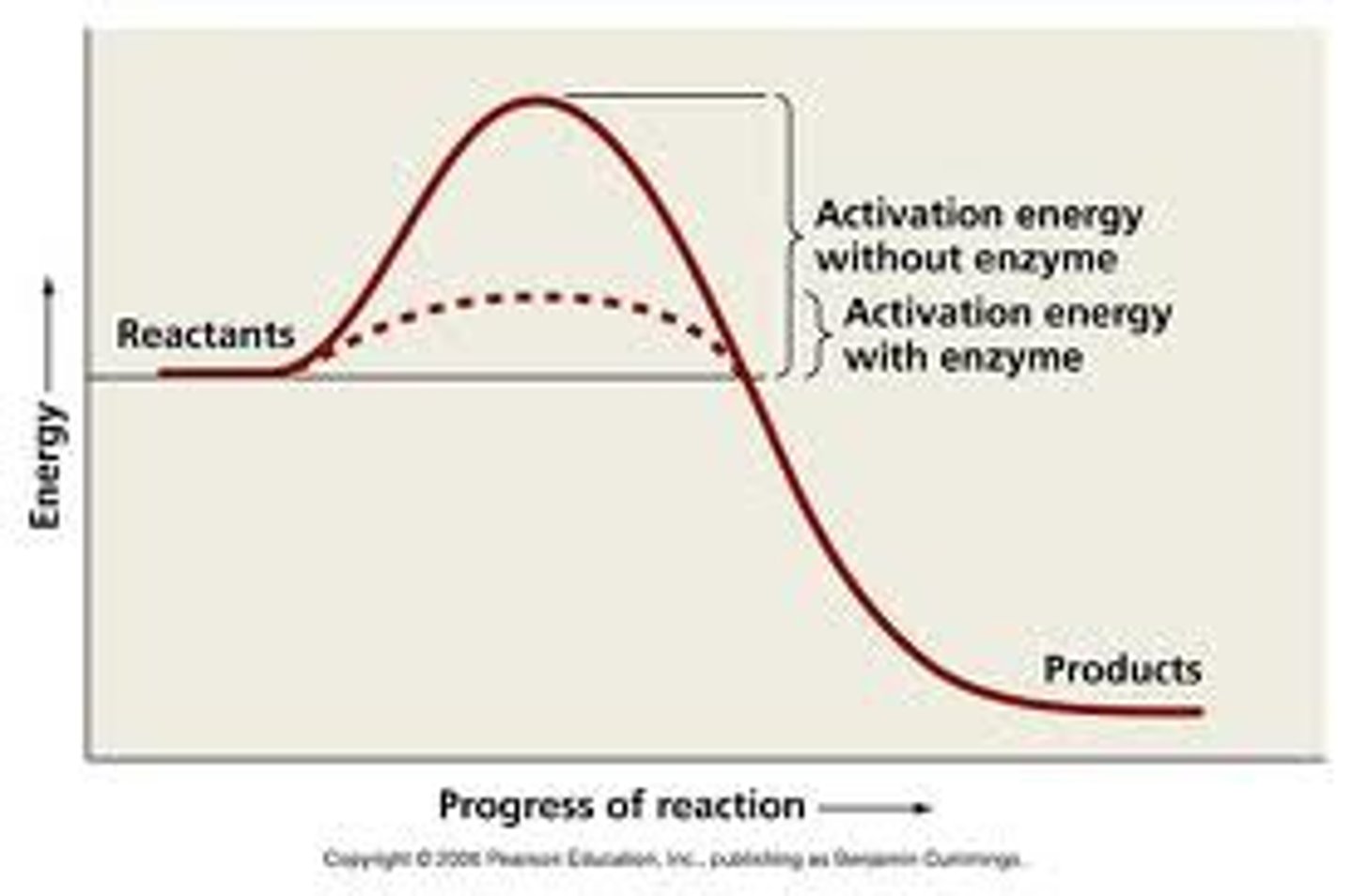
graph showing activation energy