week 2: seminar - clinical judgement, assessments, and safety
 Call Kai
 Learn
Learn Practice Test
 Spaced Repetition
 Match
Match Flashcards
 Knowt Play
1/31

There's no tags or description
Looks like no tags are added yet.
Name | Mastery | Learn | Test | Matching | Spaced | Call with Kai | Chat |
|---|
No analytics yet
Send a link to your students to track their progress
32 Terms
what is the clinical judgment measurement model?
recognize cues → analyze cues → prioritize hypothesis → generate solutions → take action → evaluate outcomes
what is the nursing process?
assessment → analysis → planning → implementation → evaluation
assessment
subjective
objective data
i.e. health history
analysis
data analysis
identify priority concerns
problem identification
what is normal vs abnormal
unstable vital signs and ABC
planning
priorities of care
identifying outcomes (what are we hoping to do?)
determine interventions
what am I going to do about this?
implementation
carry out interventions
nurse vs physician initiated?
evaluation
outcomes met?
better/no changes/worse?
reassess vital signs
able to identify?
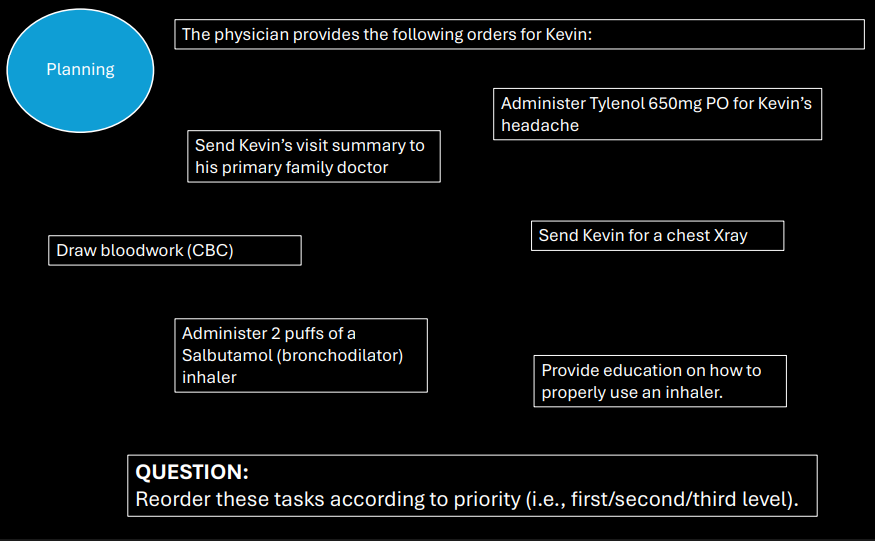
Kevin is a 67-year-old male. He visits the nursing station complaining of a cough and “tight feeling in his chest” for the last 2 weeks.

Sort the tasks according to which can be independent vs. require an order:
Administer bronchodilator inhaler medications to the patient
Reassess vital signs & focused respiratory assessment
Reposition the patient
Draw bloodwork (CBC)
Send the patient for a chest x-ray (CXR)
order
independent
independent
order
order
Kevin’s bloodwork is normal, and his chest x-ray indicates he is having a flare of his asthma. The physician orders 2 more puffs of the bronchodilator Salbutamol, and 2 puffs of Flovent (a longer-term corticosteroid inhaler). You are ordered to “reassess Kevin in an hour; if he has improved, then he is discharged to go home”.
QUESTION: What/how will you reassess with Kevin?
vital signs → esp. respiratory
general survey
focus assessment
subjective complaints
What findings would indicate Kevin is improved and ready to go home? What about findings that might show he is getting worse?
signs of improvement
SP02 increases
no more tight chest feeling
lowered RR
signs of decompensation (getting worse)
further decreased SPO2
increased RR
posture still in tripod
clipped sentences
cyanosis or pallord
general survey
what
why
when
how
a critical observation
patient safety
are there any signs of immediate concern?
every time we interact with the patient\
observations
H2T
what
why
when
how
gain through understanding o our patients current condition
baseline understanding
what do I need to prioritize with my patient
at start of a shift
after major event (i.e. fall, surgery)
top of head and work your way down using IPPA
standardized H2T tool
system/focused assessment
what
why
when
how
in depth focus on specific system
to assess/reassess areas of concern
change in condition, after an intervention
IPPA
advanced or more in depth assessment techniques
if you get an abnormal vital sign what should you do?
first & foremost how does your patient look/respond?
unresponsive/not breathing/severe distress → HELP
verify & validate → is the number correct?
was the technique/equipment used properly?
can you repeat it on another limb? manually?
what is their baseline normally?
assess for other clinical manifestations
report and critically think about the cause
document honestly
common errors
wrong patient errors
wrong dose errors
wrong medication errors
wrong time errors/missed dose
failure to follow checks/verification
documentation errors
procedural errors
safety events (non-medical)
academic/professional integrity
wrong patient errors
medication given to wrong patient (multiple incidents, including full morning meds, furosemide, hydromorphone, etc.)
almost gave insulin pen/patch/meds to the wrong patient (caught on final check) → near miss
wrong IV fluid hung for pediatric patient
wrong dose orders
Overdose (e.g., 4x HM dose, double lasix miscalculation, wrong titration dose, wrong ciprofloxacin/cefotaxime/vancomycin/indapamide/K citrate/Keppra preparations).
Underdose (e.g., gave half of ampicillin, pulled half tramadol dose, wrong tacrolimus dose, metoprolol not split correctly).
wrong medication errors
Gave Resource instead of Nova Renal.
Confused nicotine patch with nitro patch.
Prepared wrong RL solution (contained KCl).
Pulled levothyroxine without order
wrong time errors/missed doses
Medications given very late or very early (e.g., 1400 meds at 0800, dalteparin at wrong times, insulin at wrong meals, B12 not split, multiple insulin doses missed, Tylenol and PRNs late).
Forgot to give scheduled medications (e.g., metformin, gliclazide, gabapentin, vancomycin, thiamine, misty spray, Septra)
failure to follow checks/verification
Missed second nurse check for high-alert meds (insulin, hydromorphone, opioids).
Failed to complete 3rd check for furosemide, hydromorphone, and potassium chloride.
Did not double-check IV fluid compatibility.
Signed MAR inaccurately or not at all. •Gave meds without CEF present when required.
documentation errors
Failed to sign MAR (or signed late/incorrectly).
Failed to record insulin doses, PRNs, or discontinued meds properly.
Confusion with MAR transcription/handwritten notes
procedural errors
Near misses with IV pushes (wrong rate, wrong route, missed compatibility).
Did not follow NG tube skill competency but gave meds anyway.
Incorrect pill splitting/crushing.
Did not label or prepare tube feed meds correctly.
Missed accuchecks before insulin.
safety events (non-medication)
Needlestick injuries (heparin, dalteparin, IV start).
Postpartum fall due to residual epidural effects.
Omitted patient care task (brief change).
academic/professional integrity
AI used in prep guides despite being told not to (x2).
Shared prep guides with partner despite instruction not to (x2).
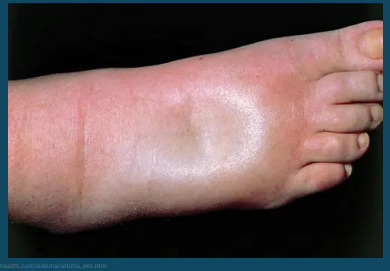
pitting edema
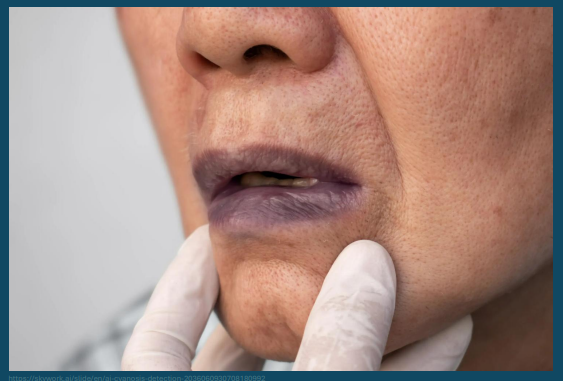
cyanosis
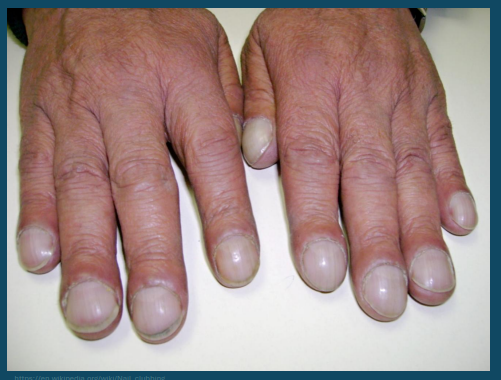
clubbing

tripod position

jaundice

pallor

jugular vein distension