AP Psych Parts of the Ear
 Call Kai
 Learn
Learn Practice Test
 Spaced Repetition
 Match
Match Flashcards
1/15

There's no tags or description
Looks like no tags are added yet.
Name | Mastery | Learn | Test | Matching | Spaced | Call with Kai | Chat |
|---|
No analytics yet
Send a link to your students to track their progress
16 Terms
middle ear
the chamber between the eardrum and cochlea containing three tiny bones (hammer, anvil, and stirrup) that concentrate the vibrations of the eardrum on the cochlea's oval window
cochlea
a coiled, bony, fluid-filled tube in the inner ear through which sound waves trigger nerve impulses
inner ear
the innermost part of the ear, containing the cochlea, semicircular canals, and vestibular sacs
hammer
a tiny bone that passes vibrations from the eardrum to the anvil
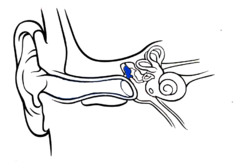
anvil
a tiny bone that passes vibrations from the hammer to the stirrup
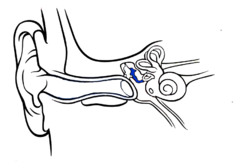
stirrup
a tiny U shaped bone that passes vibrations from the anvil to the cochlea
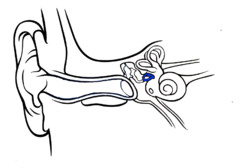
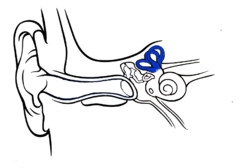
semicircular canals
three canals within the inner ear that contain specialized receptor cells that generate nerve impulses with body movement
sound waves
a longitudinal wave consisting of compressions and rarefactions, which travels through a medium
auditory canal
the area that sound waves pass through to reach the eardrum
eardrum
a thin membrane that marks the beginning of the middle ear; sound waves cause it to vibrate
auditory nerve
the nerve that carries impulses from the inner ear to the brain, resulting in the perception of sound
oval window
membrane that covers the opening between the middle ear and inner ear
outer ear
the outermost part of the ear, consisting of the pinna and the external auditory canal
pinna
the visible part of the ear
round window of ear
one of the two openings from the middle ear into the inner ear. It is sealed by the secondary tympanic membrane (round window membrane), which vibrates with opposite phase to vibrations entering the inner ear through the oval window.
Ear bones (ossicles)
malleus (hammer), incus (anvil), and stapes (stirrup); smallest bones in body.