Excitation and Inhibition
 Call Kai
 Learn
Learn Practice Test
 Spaced Repetition
 Match
Match Flashcards
 Knowt Play
1/37

There's no tags or description
Looks like no tags are added yet.
Name | Mastery | Learn | Test | Matching | Spaced | Call with Kai | Chat |
|---|
No analytics yet
Send a link to your students to track their progress
38 Terms
What’s a gap junction?
pore that exists between the pre and post synaptic membrane in electrical synapse
formed by sets of proteins existing in both membranes
align to create conguate
2nm in size
Pros of an electrical synapse?
fast
more detail
Cons of an electrical synapse?
not plastic
cannot attenuate
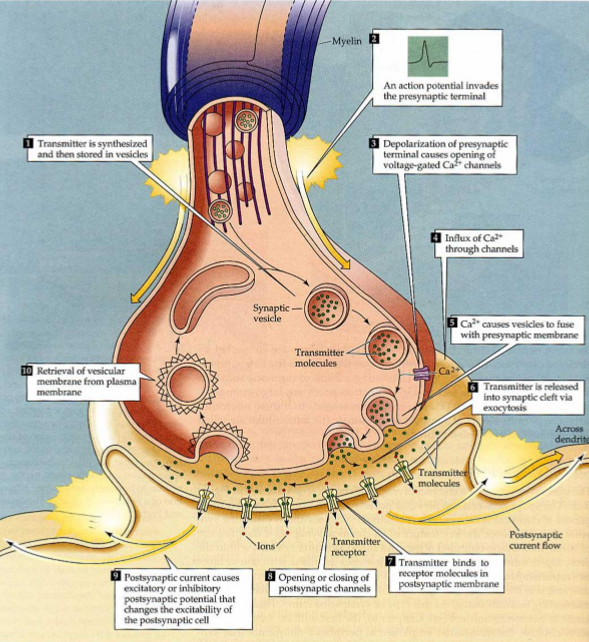
General mechanisms of chemical transmission at synapse?
What defines fast neurotransmission?
ionotropic receptor
ligand gated by transmitter
aorund 1 or 2 ms
Mechanisms of fast neurotransmission?
Transmitter released
Diffuses across cleft
Binds to receptors
These open and allow ions to flow
EPSP - takes resting potential to more depolarised value
Is an EPSP guaranteed at CNS synapse?
no
often require collective effort from many synapses
spatial summation (in absence won’t fire)
in NMJ it is guaranteed
What is the converse of EPSPs and how is it generated?
IPSP
hyperpolarising so moving membrane potential further from the threshold for AP generation
What is the common mechanism for IPSPs to be generated?
influx of chloride ions
from ionotropic GABAa receptor
What’s another way to make it less liekly to generate an AP?
increase the amount of conductance for potassium ions
makes membrane require more current in order to depolarise it
Do axons have one synapse or more?
can have thousands
dound along axon like beads on a necklace
shows how we can compute something complicated
boutons release the neurotransmitters
What does slow neurotransmission happen from?
metabotropic G protein couple receptors
What is the synthesis of acetylcholine like?
Choline is from diet
Has transporter from blood brain barrier to get in easily
Use AcCoA with an acetyl transferase enzyme can catalyse the placement of an acetyl group onto choline to reduce to acetylcholine
Acetylcholine - quaternary amine
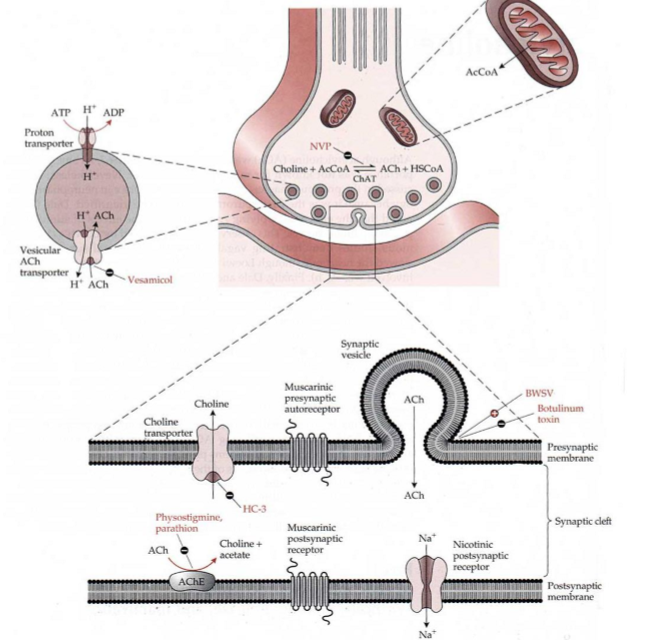
What is the storing and releasing of neurotransmitters from vesicles like?
Dedicated pump in vesicular membrane to get acetycholine in
Driven by exchange of protons out of vesicel for acetylcholine in
Proton gradient dependent on ATP …
Vesicles highly acidic environment
Pump protons in, hydrolyse ATP
Exhange protons for acetylcholine
Influx of calcium drives fusion process
Liberation into cleft
What is the degradation of neurotransmitters/acetylcholine like?
Broken down enzymatically
Choline transported back into pre
Re-acetylated by the enzyme
This is unusual - don’t usually break down the neurotransmitter
May be because NMJ needs to be broken down because release lots - requires more than just transporters
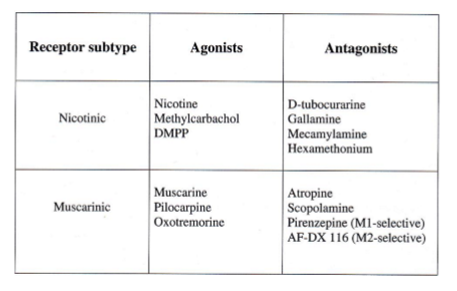
Picture of the agonists and antagonists of the receptors?
What is main example of catecholamine?
dopamine
What is similar about transmission process for dopamine as acetylcholine?
loading to vesicles
vesicle has proton transport
highly acidic
requires proton exchange to charge vesicle
transporter now transports dopamine
What is the synthesis of dopamine like?
tyrosine from diet
tyrosine hydroxylase translates into LDOPA
then converted to dopamine
Are dopamine receptors ionotropic or metabotropic?
metabotropic
How does break down happen?
pumped back into pre terminal for recharging into vesicle via dopamine transporter
What does monoamine oxidase do?
breaks down neurotransmitters
can keep levels of neurotransmitters appropriately regulated
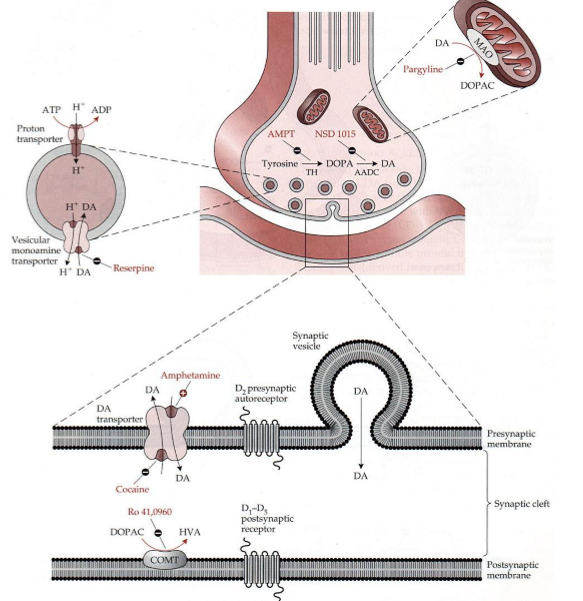
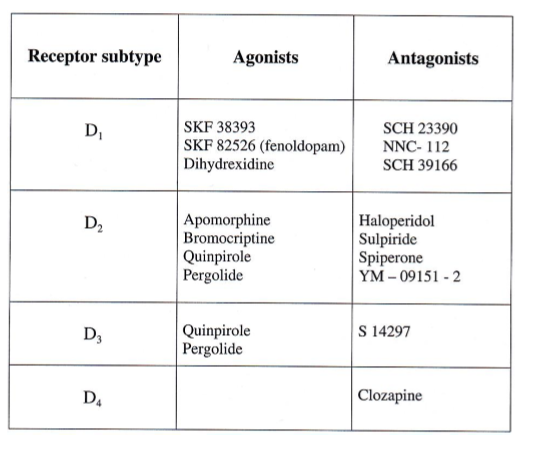
Examples of agonists and antagoists on dopamine receptors?
haloperidol - commonly used in treatment of schizophrenia
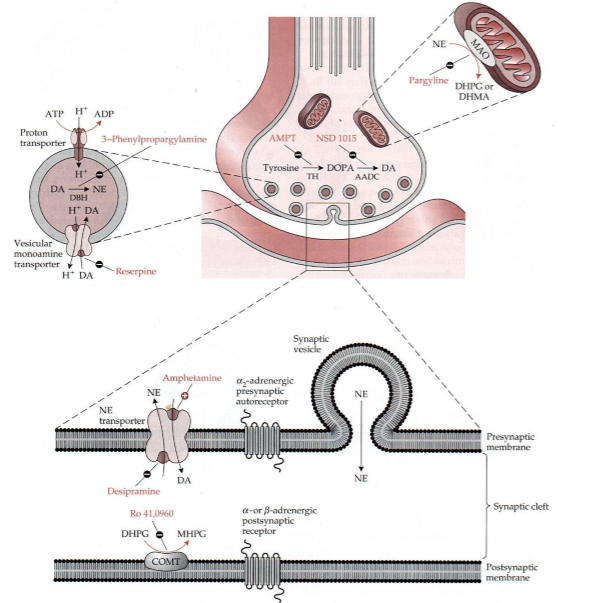
Norepinephrine diagram I think?
converted to NE from dopamine within vesicle not before
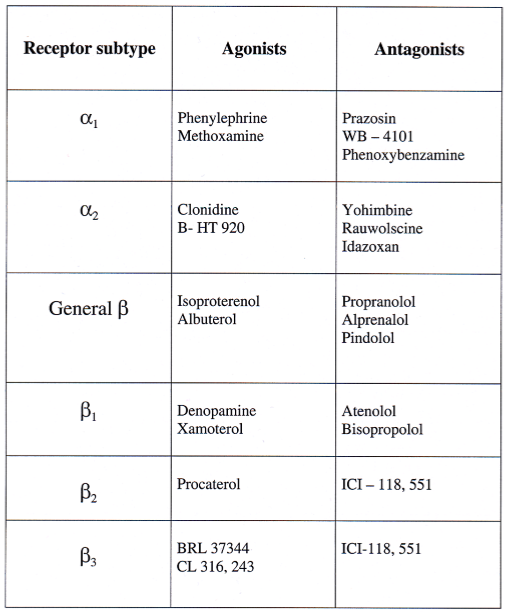
Examples of agonists and antagonists for norepinephrine?
What is the precursor for serotonin?
tryptophan
essential amino acid which cannot be synthesised itself so muct come through diet
How is serotonin synthesised?
tryptophan
tryptophan hydroxylase
to 5-HTP
then carboxylase to 5-HT
Whats a common modification of the 5-HT transporter?
antidepressants - SSRI eg prozac
fancy name = fluoxetine
Examples of agonists and antagonists of serotonin receptors?
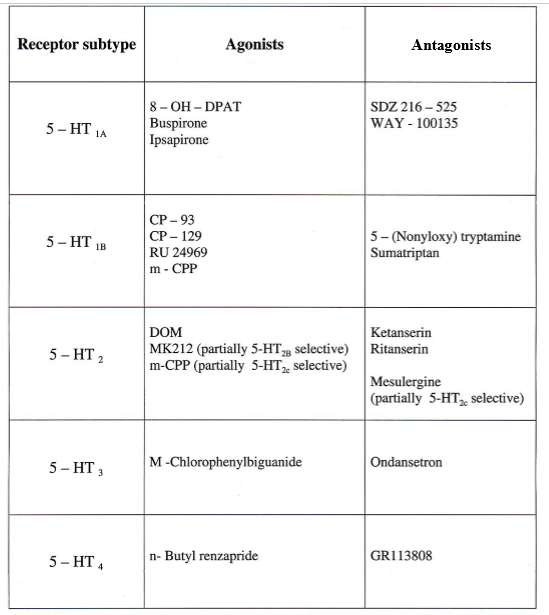
What is the main excitatory amino acid and how is it made?
glutamate
from alpha-kg using aminotransferase
What are the receptors of glutamate like?
both ionotropic and metabotropic
principle are NMDA and AMPA
How long does it take glutamate to be transported back into cell?
around 30 seconds so need reserve for about that
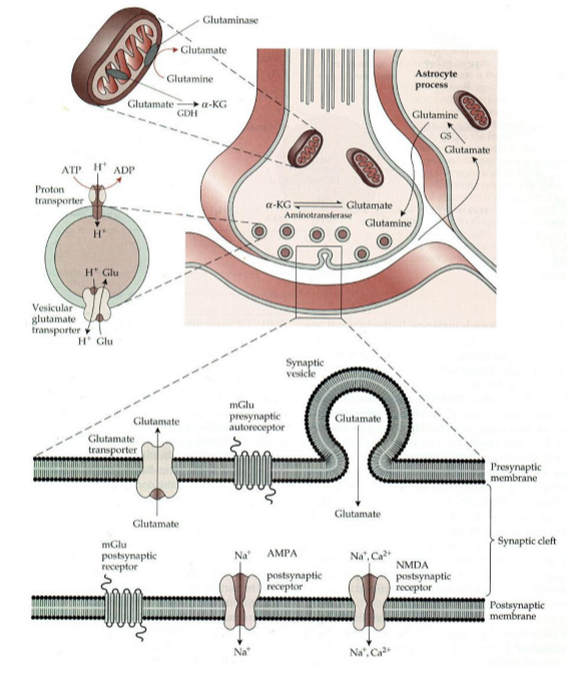
What receptor is often found on presynaptic?
kainate
autoreceptors regulate transmitter release
Examples of glutamate receptor agonists and antagonists?
CNQX and NBQX are used in treatment of epilepsy
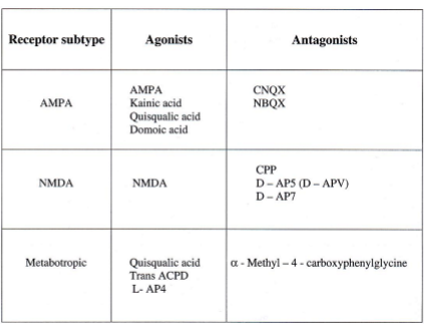
Whats the main inhibtory amino acid?
GABA
Physiological difference between glutamate and GABA?
GABA is made from glutamate by being acted on by decarboxylase
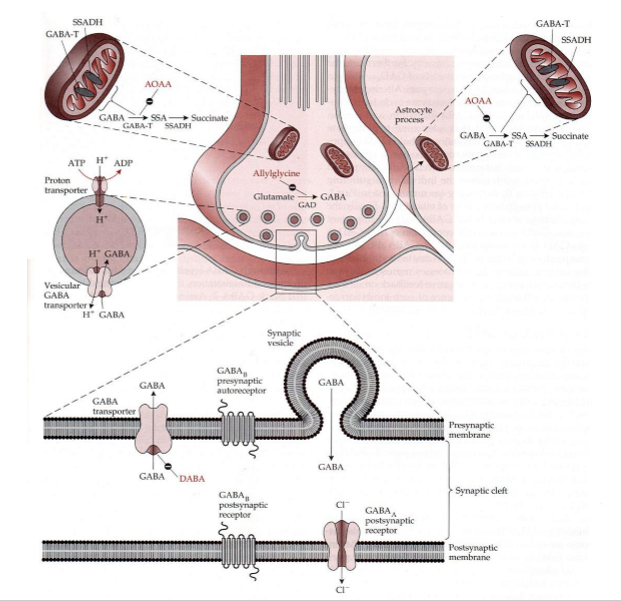
Which of the two GABA receptors are ionotropic and metabotropic?
a = ionotropic
b = metabotropic
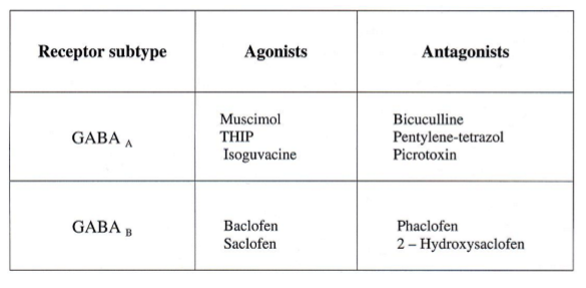
Examples of the GABA receptor agonists and antagonists?