Bio 2 Lab 8 - Lophotrochozoa
 Call Kai
 Learn
Learn Practice Test
 Spaced Repetition
 Match
Match Flashcards
 Knowt Play
1/49

Earn XP
Description and Tags
https://youtu.be/QDPi6ahuI4Q
Name | Mastery | Learn | Test | Matching | Spaced | Call with Kai | Chat |
|---|
No analytics yet
Send a link to your students to track their progress
50 Terms
Pseudocoelomate
An animal with a false body cavity.
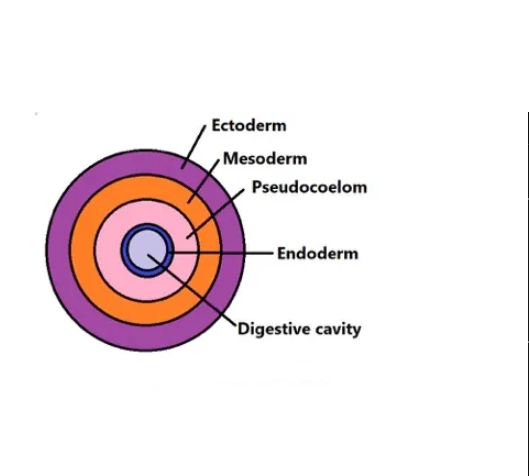
What type of body plan is this?
Pseudocoelomate.
Coelomate
An animal with a true, fluid-filled body cavity called a coelom.
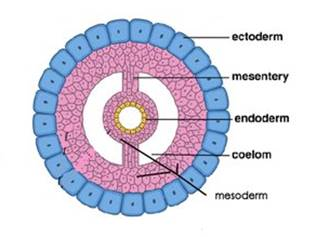
What type of body plan is this?
Coelomate
Acoelomate
An animal that does not have a body cavity.
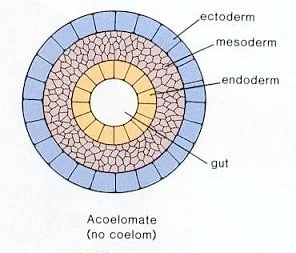
What type of body plan is this?
Acoelomate
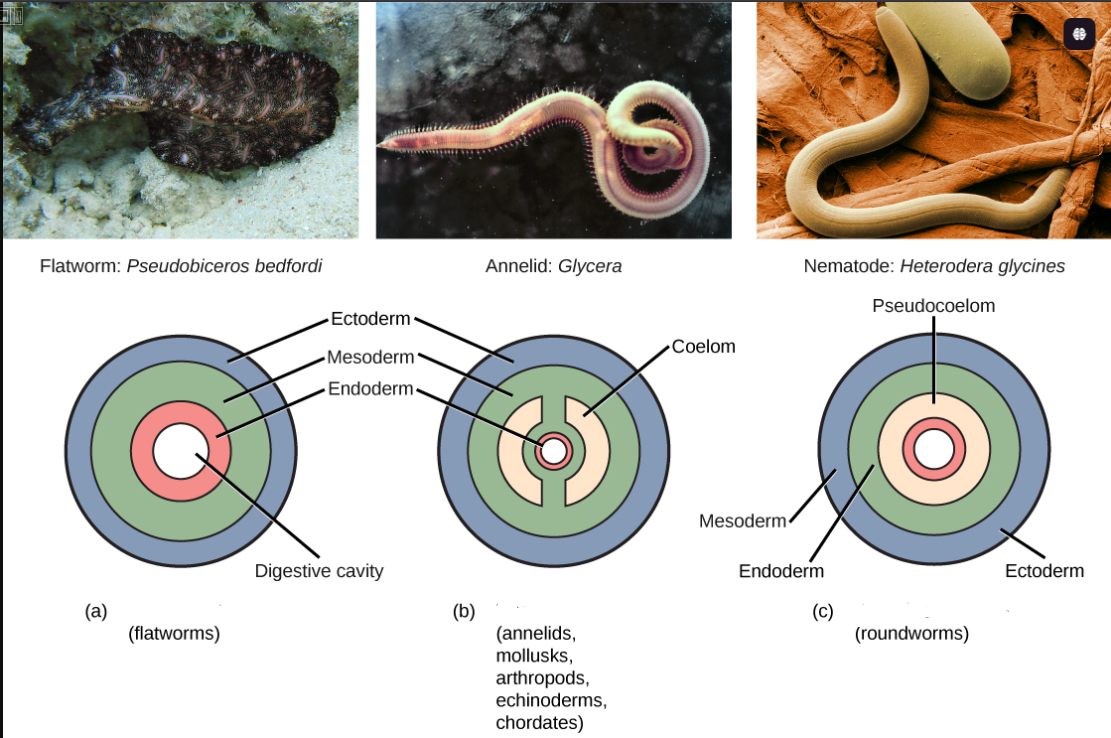
What body plan is (a)?
The following shows Acoelomate.
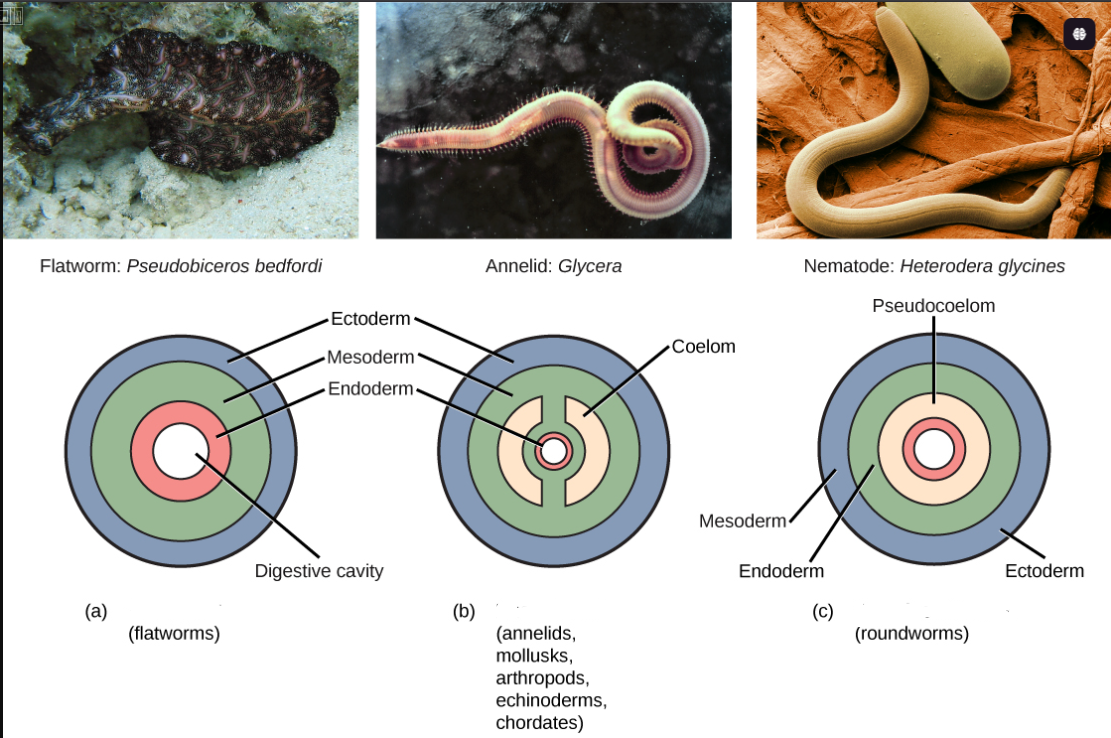
What body plan is (b)?
The following shows (Eu) Coelomate.
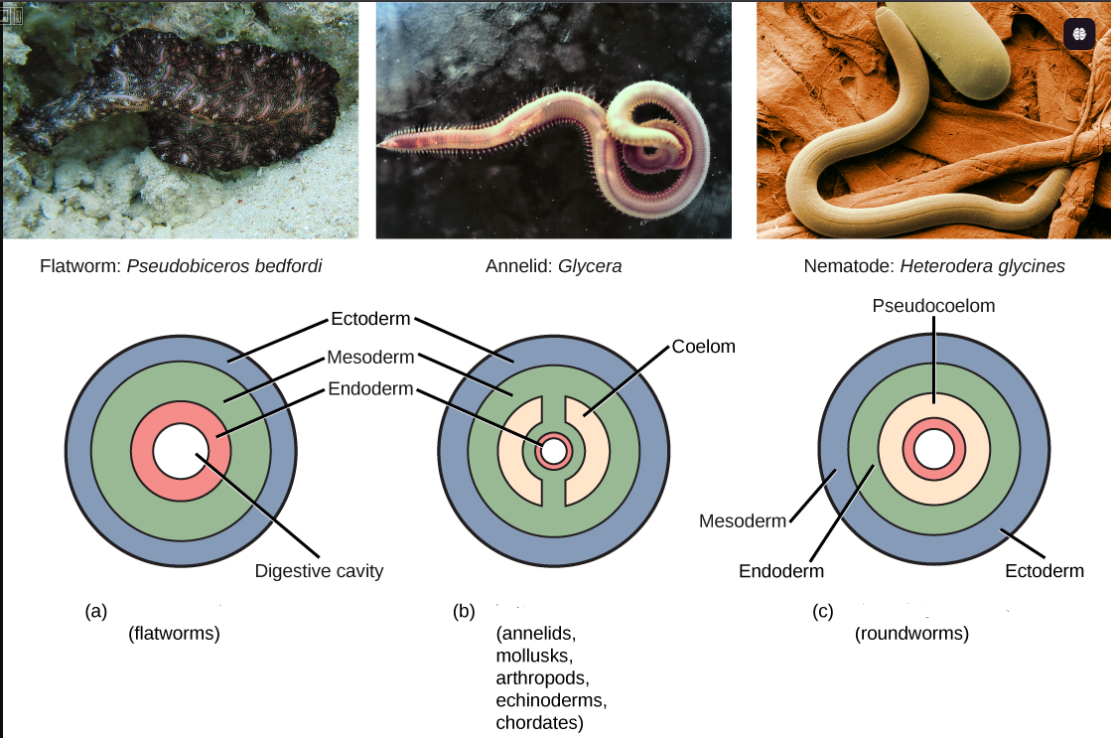
What body plan is (c)?
The following shows Pseudocoelomate.
Mesoderm
The middle tissue layer of an animal, between the outer ecto and inner endo layers.
Hydrostatic Skeleton
A flexible skeleton supported by fluid pressure inside the body.
Cuticle
The outer protective covering of an animal, like an earthworm.
Parasitic
An organism that lives on or in another organism a host to get food.
Endoparasite
A parasite that lives inside the body of its host.
Ectoparasite
A parasite that lives on the outside of its host.
Scolex
The head of a tapeworm, which uses hooks and suckers to attach to its host.
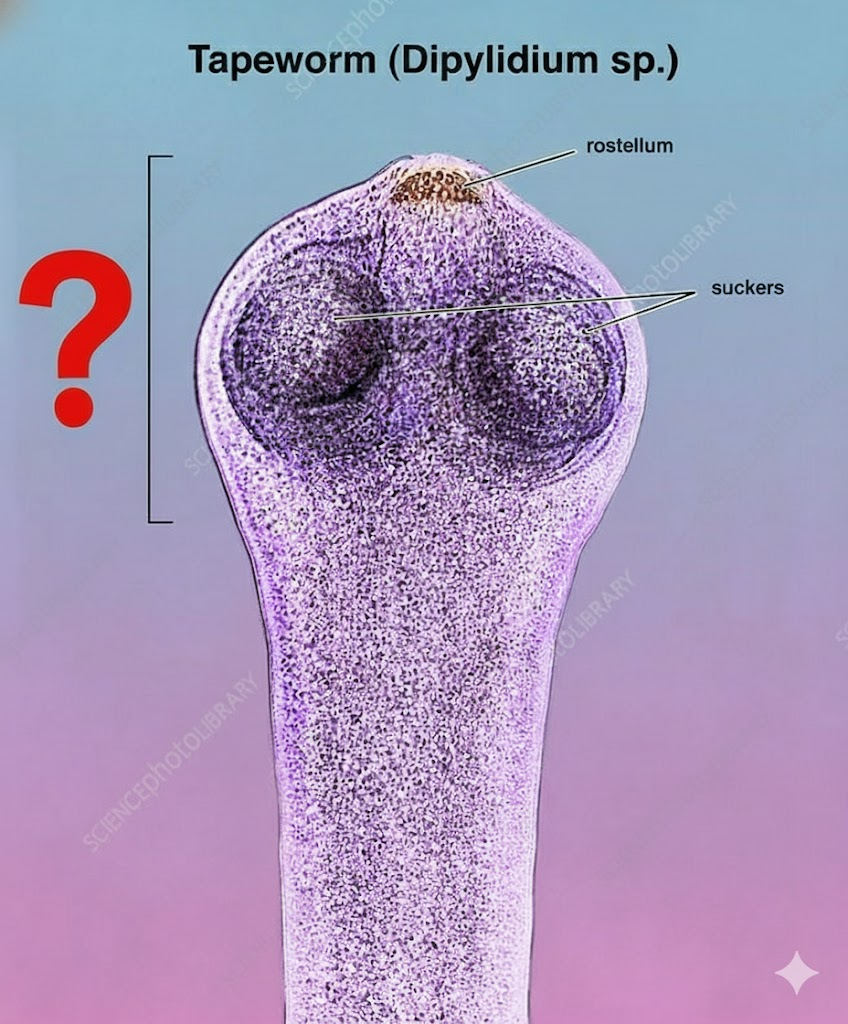
What is the name of this entire head structure, indicated by the red question mark?
Scolex
Proglottid
One of the many repeating segments of a tapeworms body that is filled with reproductive organs.
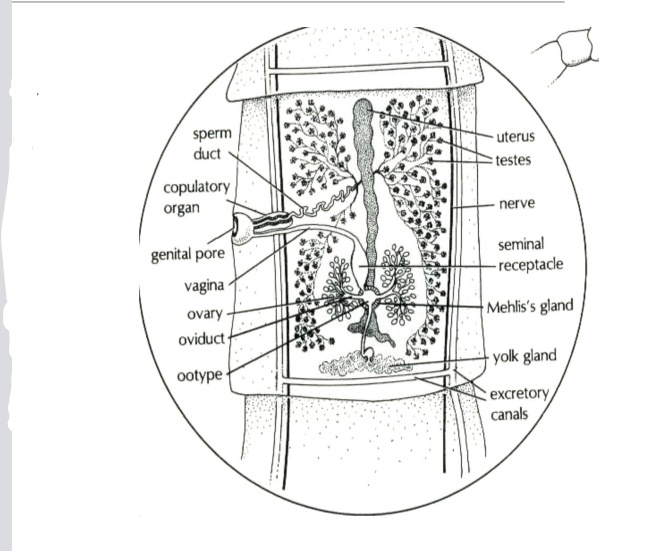
What does this image show?
The reproductive system inside a single segment of a tapeworm. This segment is called a proglottid.
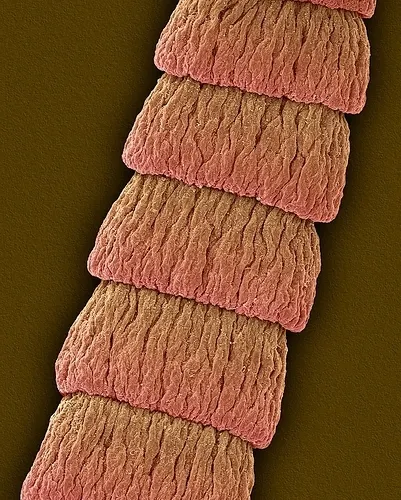
What are the segments called?
Proglotid (tapeworm's body)
Shell
The hard internal or external covering made by the mantle, often out of calcium carbonate.
Mantle
The thin layer of tissue that covers a mollusks internal organs and makes the shell.
Calcium carbonate
The chemical compound used by mollusks to build their shells.
Radula
A tongue-like ribbon of teeth used by many mollusks for feeding.
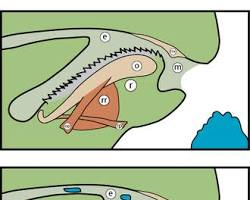
What is this tongue-like feeding structure called?
Radula (of a mollusk)
Siphon
A tube used for moving water.
Excurrent siphon
Pushes water out.
Incurrent siphon
Siphon draws water in.
Operculum
A trapdoor that covers the opening of a snails shell.
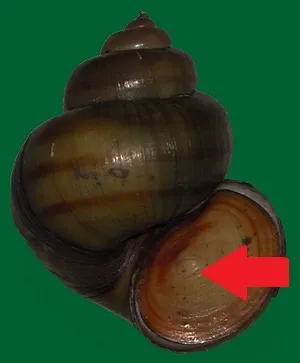
What is the hard, plate-like structure covering the shell's opening, indicated by the red arrow, called?
Operculum
Segmentation
The division of a body into a series of repeating parts or little rings.
Clitellum
The thick band on an earthworm or leech that creates a cocoon for eggs.
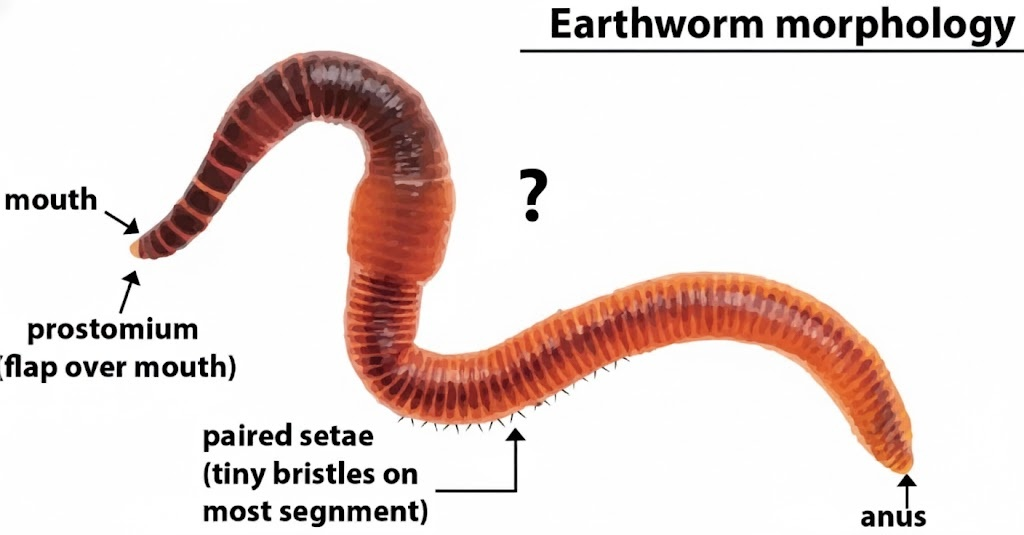
What is the thick, smooth band on the earthworm's body, indicated by the question mark, called?
Clitellum (on an earthworm)
Parapodia
Fleshy, leg-like side appendages on polychaete worms used for crawling and swimming.
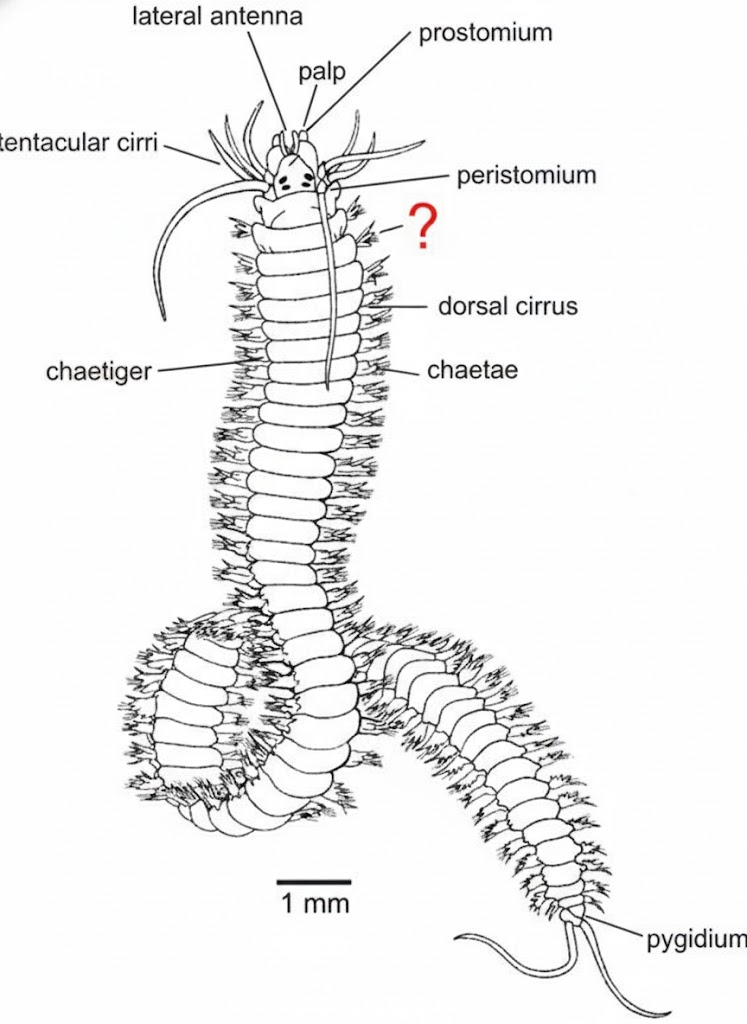
What are the fleshy, leg-like appendages, indicated by the red question mark, called?
Parapodia (on a polychaete worm)
Setae
Bristles on an annelid worm that help it move.
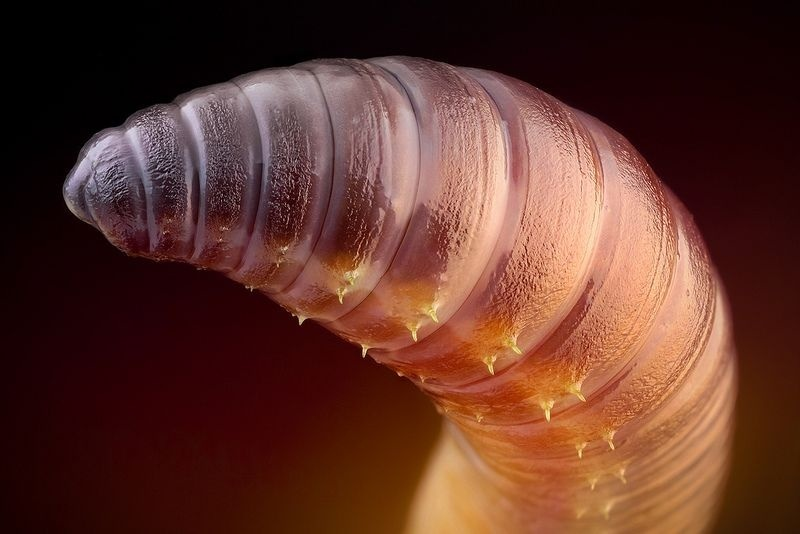
What are the tiny, yellow, spike-like bristles visible on the worm's body called?
Setae, they help the worm grip the soil to move.
Septa
The internal walls that divide an annelids body into segments.
Open Circulatory System
A system where blood is not always inside vessels and flows freely in the body cavity.
Closed Circulatory System
A system where blood stays contained within a network of vessels like arteries and veins.
Heart
The muscular organ that pumps blood.
Pharynx
The part of the digestive tube right after the mouth.
Esophagus
The tube that connects the pharynx to the stomach or crop.
Eye Spot (Oceli)
Simple organs that can only detect light.
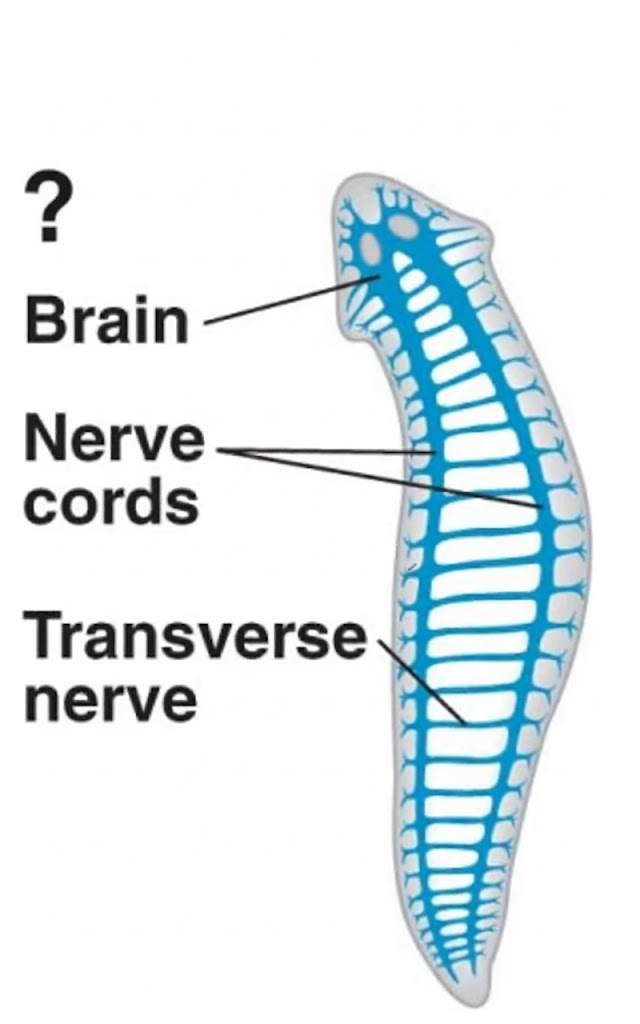
What structure is labeled with the question mark (?) in the image of this flatworm's nervous system?
That is an eyespot
Hermaphrodite
An animal that has both male and female reproductive organs.
Nephridia
Simple organs that remove waste from the body, similar to kidneys.
Corona
The crown of beating cilia hairs on a rotifers head used for swimming and feeding.
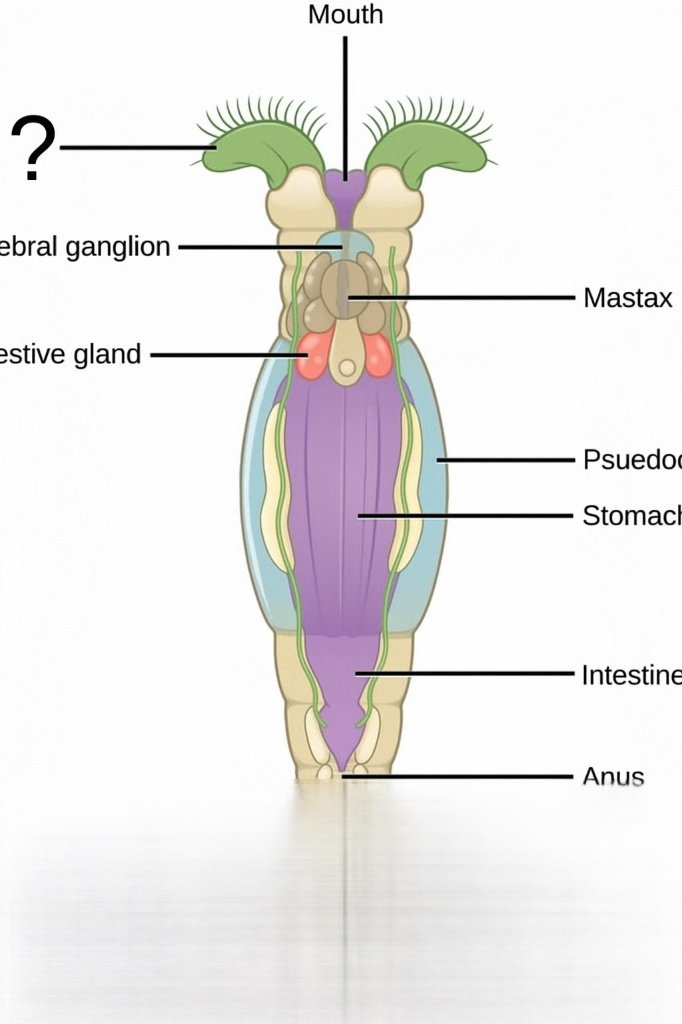
What is the crown of cilia (hairs) at the top of the animal, indicated by the question mark, called?
Corona (of a rotifer)
Cloaca
A single opening at the end of the body used for digestive, urinary, and reproductive wastes found in some animals.