Unit 2a Vocabulary (Egypt and Mesopotamia)
0.0(0)
Studied by 1 person Call Kai
 Learn
Learn Practice Test
 Spaced Repetition
 Match
Match Flashcards
 Knowt Play
Card Sorting
1/65

Earn XP
Description and Tags
Last updated 11:29 PM on 9/7/22
Name | Mastery | Learn | Test | Matching | Spaced | Call with Kai | Chat |
|---|
No analytics yet
Send a link to your students to track their progress
66 Terms
1
New cards
Abrasion
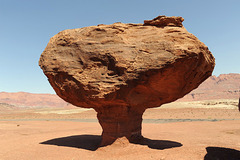
the process of scraping or wearing something away
2
New cards
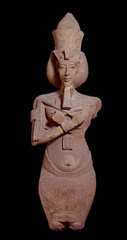
Akhenaten
abandoned polytheism to embrace monotheism. He held that the sun, named Aton, was god, and god alone, and that he was Aton's physical son
3
New cards
Amarna
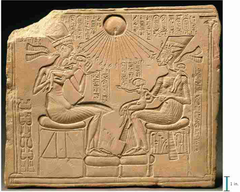
a more naturalistic artistic style centering on the Pharaoh Akhenaton
4
New cards
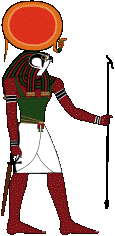
Amen -Ra
the god of the universe and the supreme Egyptian god during the period of Theban political supremacy
5
New cards
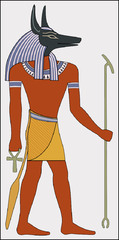
Anubis
god of death, mummification, embalming, the afterlife, cemeteries, tombs, and the Underworld, in ancient Egyptian religion, usually depicted as a canine or a man with a canine
6
New cards
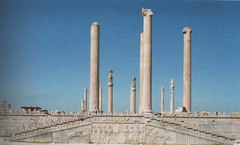
Apadana
An enormous audience hall in a Persian palace
7
New cards
apotropaic
having the power to ward off evil or bad luck
8
New cards
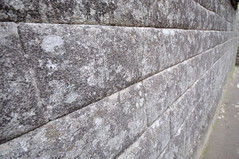
Ashlar masonry
the stones are cut so they have the same shape, size and surface texture; they are then usually mortared together to create a wall or building
9
New cards
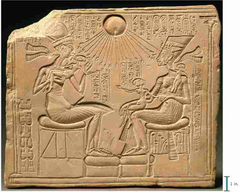
Aton
in ancient Egyptian religion, a sun god, depicted as the solar disk emitting rays terminating in human hands, whose worship briefly was the state religion
10
New cards
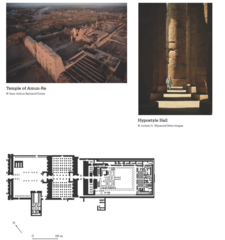
Axial plan
the parts of a building are organized longitudinally, or along a given axis (horizontally or vertically)
11
New cards
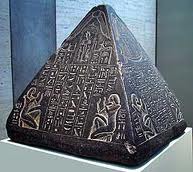
ben-ben (pyramidion)
The mound that arose from the primordial waters from the Ancient Egyptian creation story- it was in the shape of a pyramid
12
New cards
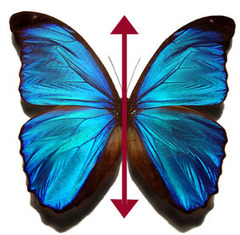
Bilateral symmetry
an image, object or design is mirrored equally through a vertical line. Ancient buildings such as the Parthenon in Athens are early examples
13
New cards
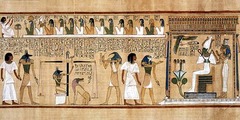
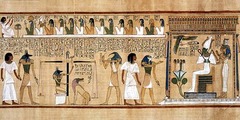
Book of the Dead
ancient Egyptian funerary text generally written on papyrus and used from the beginning of the New Kingdom to 50 BCE, used to aid the deceased in the Afterlife
14
New cards
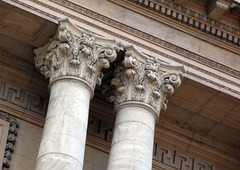
Capital
A topmost member of a column (pilaster), broadens the area of the column's supporting surface
15
New cards
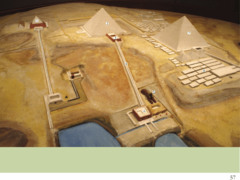
causeway
A road that is raised above water, marshland, or sand
16
New cards
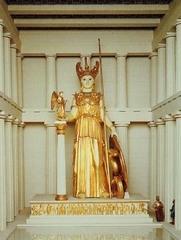
cella
the main room of a temple where the god is housed
17
New cards
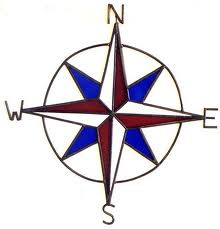
Cardinal points
the four main directions (north, south, east, and west)
18
New cards
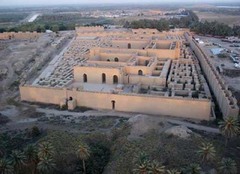
City- state
a city that with its surrounding territory forms an independent state
19
New cards
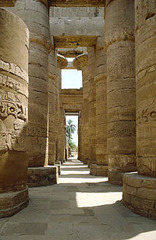
clerestory
Windows above ground level with the purpose of providing daylight for the interior of the building
20
New cards
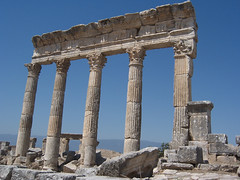
colonnade
A row of columns
21
New cards
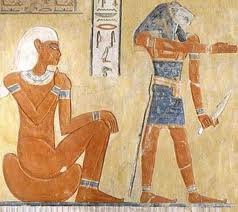
Composite view
part of a figure is shown in profile and another part of the same figure is shown frontally; also called twisted perspective or descriptive perspective
22
New cards
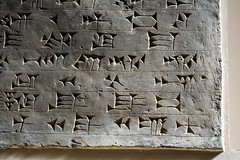
Cuneiform
Ancient wedge-shaped script used in Mesopotamia and Persia
23
New cards
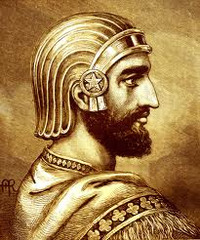
Cyrus II
founder of the Persian empire. Persian prince and satrap: leader of the armed conspiracy against his brother King Artaxerxes II
24
New cards
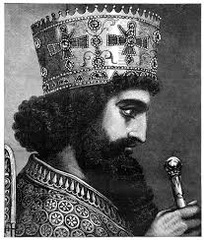
Darius I
king of Persia who expanded the Persian Empire and invaded Greece but was defeated at the battle of Marathon
25
New cards
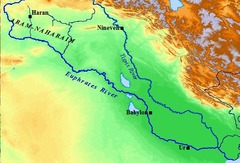
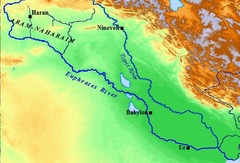
Euphrates
a river in Southwest Asia, joins the Tigris, important in ancient times for the extensive irrigation of its valley (in Mesopotamia)
26
New cards
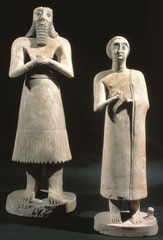
Eshnunna
ancient Sumerian city and city-state in central Mesopotamia
27
New cards
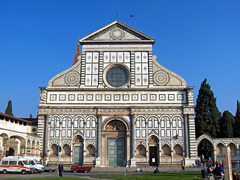
Façade
The front face of a building
28
New cards
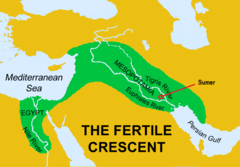
Fertile crescent
area of fertile land in the Middle East, extending around the Rivers Tigris and Euphrates, where the Sumerian, Babylonian, Assyrian, Phoenician, and Hebrew civilizations flourished
29
New cards
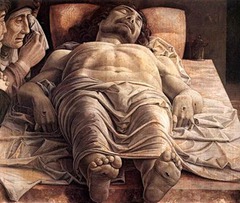
Foreshortening
portray or show (an object or view) as closer than it is or as having less depth or distance, as an effect of perspective or the angle of vision.
30
New cards
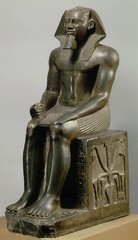
Frontal
a piece of art in which the figure is facing forward towards the viewer
31
New cards
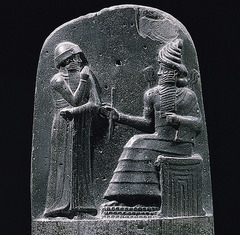
Hammurabi
king of ancient Mesopotamia, known for putting the laws of his country into a formal code
32
New cards
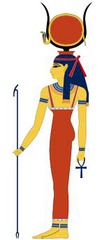
Hathor
in ancient Egyptian religion, goddess of the sky, of women, and of fertility and love
33
New cards
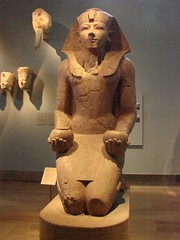
Hatshepsut
queen of ancient Egypt; After her husband's death, she continued in power as regent to his son, Thutmose III. Her reign was peaceful, and she developed the resources of Egypt, built the famous temple in Thebes.
34
New cards
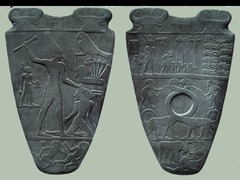
Hierarchical Scale
Artistic convention in which greater size means greater importance
35
New cards
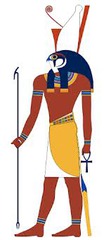
Horus
the falcon-headed Egyptian god of light and the son of Osiris and Isis
36
New cards
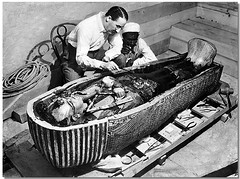
Howard Carter
British archaeologist and Egyptologist who became world-famous after discovering the intact tomb of Pharaoh, Tutankhamen
37
New cards
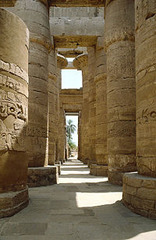
Hypostyle hall
A hall with a roof supported by columns
38
New cards
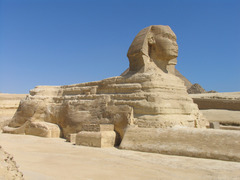
In situ
in its original place, in position
39
New cards
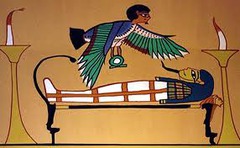
Ka
Egyptian concept of the soul or spirit
40
New cards
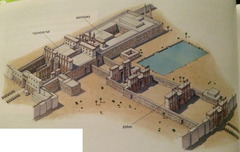
Karnak
modern-day name for the ancient site of the Temple of Amun-Re at Thebes, Egypt
41
New cards
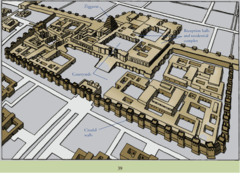
Khorsabad
Assyrian capital in the time of Sargon II of Assyria, "fortress of Sargon"
42
New cards
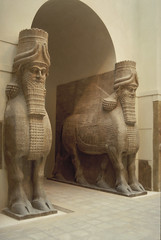
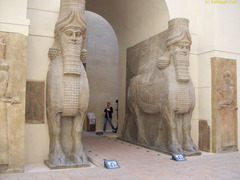
lamassu
Winged, 5 legged bulls with human heads (guardian statues from Mesopotamia and Persia)
43
New cards
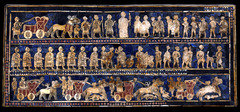
Lapis lazuli
Relatively rare, precious stone that's prized for its intense blue color
44
New cards
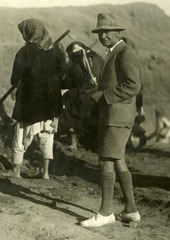
Leonard Woolley
British archaeologist best known for his excavations at Ur in Mesopotamia.
45
New cards
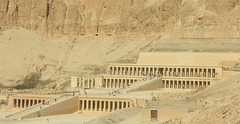
Mortuary temple:
Located near the pyramid, place to worship the deceased king, A.K.A funerary temple
46
New cards
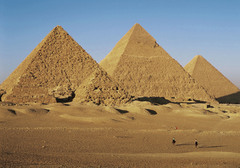
Necropolis
city of the dead (cemetery)
47
New cards
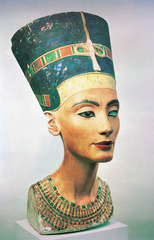
Nefertiti
queen of Egypt; wife of Akhenaton
48
New cards
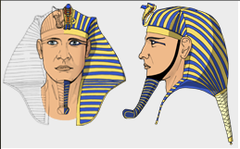
Nemes
headdress worn by the Pharaoh
49
New cards
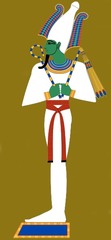
Osiris
Egyptian Lord of the Underworld and Judge of the Dead, brother-husband to Isis, and one of the most important gods of ancient Egypt.
50
New cards
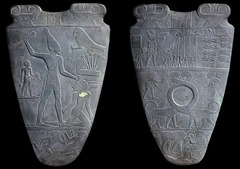
Palette
A stone slab with a circular depression, used to prepare eye makeup in Ancient Egypt
51
New cards
Papyrus
a tall aquatic plant whose fiber is used as a writing surface in ancient egypt
52
New cards
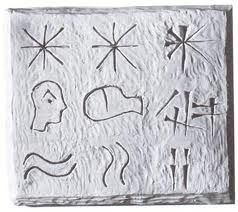
pictograph
a pictorial symbol for a word or phrase. Pictographs were used as the earliest known form of writing, examples having been discovered in Egypt and Mesopotamia from before 3000 BC
53
New cards
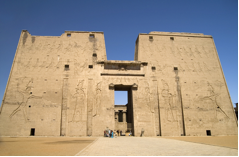
Pylon
Ancient Egyptian gateway building in a truncated pyramidal form
54
New cards
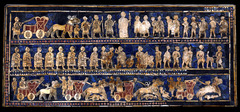
register
One of a series of rows in a pictorial narrative
55
New cards
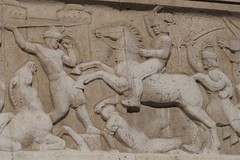
Relief sculpture
sculpture that projects from a flat background
56
New cards
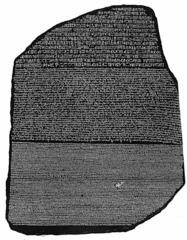
Rosetta Stone
a basalt slab with identical texts inscribed in hieroglyphic, demotic (latin), and Greek, It gave us the key to Egyptian hieroglyphic.
57
New cards
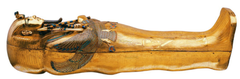
sarcophagus
a stone coffin, typically adorned with a sculpture or inscription and associated with the ancient civilizations of Egypt, Rome, and Greece
58
New cards
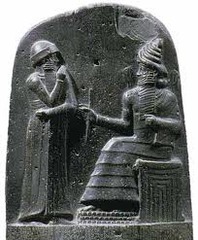
Shamash
in Mesopotamian religion, the god of the sun who, with the moon god Sin and the goddess of Venus Ishtar, was part of an astral triad of divinities
59
New cards
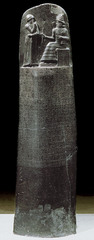
Stele
tone or wooden slab, generally taller than it is wide, erected in the ancient world as a monument or grave marker, often has text, ornamentation, or both. These may be inscribed, carved in relief, or painted
60
New cards
stylized
depict or treat in a mannered and nonrealistic style; a particular way of drawing something (such as people) over and over again
61
New cards
Tigris
a river in Southwest Asia, flowing southeast to the Euphrates
62
New cards
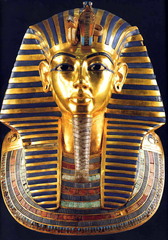
Tutankhamen
one of the few tombs found with the treasures and the mummy intact, its discovery afforded a new knowledge on Egyptian sculpture and life. Son of Akhenaten
63
New cards
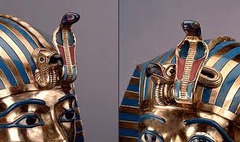
Uraeus
a representation of a sacred serpent as an emblem of supreme power, worn on the headdresses of ancient Egyptian deities and sovereigns
64
New cards
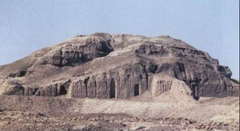
Uruk
ancient city of Sumer, location of White Temple and Ziggurat
65
New cards
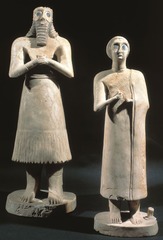
Votive
Gift/gratitude to a god
66
New cards
Ziggurat
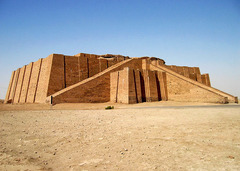
A Sumerian temple platform made of sun-dried mud brick shaped like truncated pyramids