chpt 10 pt 1: Muscle Basics, Anatomy, and Contraction
 Call Kai
 Learn
Learn Practice Test
 Spaced Repetition
 Match
Match Flashcards
 Knowt Play
1/42

There's no tags or description
Looks like no tags are added yet.
Name | Mastery | Learn | Test | Matching | Spaced | Call with Kai | Chat |
|---|
No analytics yet
Send a link to your students to track their progress
43 Terms
Skeletal Muscle
Attaches to and moves bones; striated and voluntary.
Cardiac Muscle
Found only in the heart; striated and involuntary.
Smooth Muscle
Found in walls of hollow organs; non-striated and involuntary.
Excitability
Ability of muscle cells to receive and respond to stimuli
Contractility
Ability of muscle cells to shorten forcibly
Extensibility
Ability of muscle cells to be stretched.
Elasticity
Ability of muscle cells to return to resting length after being stretched.
4 main functions of muscle
Movement, Maintains Posture, Stabilize Joints, Generate Heat
Myo-/Mys-/Sarco-
Prefixes meaning “muscle.”
muscle
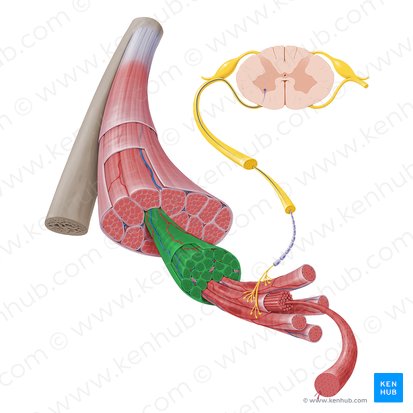
bundle of fasicles
Fascicle
bundle of muscle fibers
Muscle Fiber/cell
elongated muscle cell
Epimysium
A dense layer of connective tissue that surrounds the entire skeletal muscle.
Perimysium
A layer of connective tissue that surrounds bundles of muscle fibers, called fascicles.
Endomysium
A thin layer of connective tissue that surrounds each individual muscle fiber (cell).
Origin
Immovable bone attachment point of a muscle.
Insertion
Movable bone attachment point of a muscle.
sarcoplasm
the cytoplasm of a muscle fibre. It is a water solution containing ATP and phosphagens, as well as the enzymes and intermediate and product
multi nuclei
muscles that contain multiple nuclei within each muscle fiber. This is a characteristic feature of skeletal muscles
sarcolemma
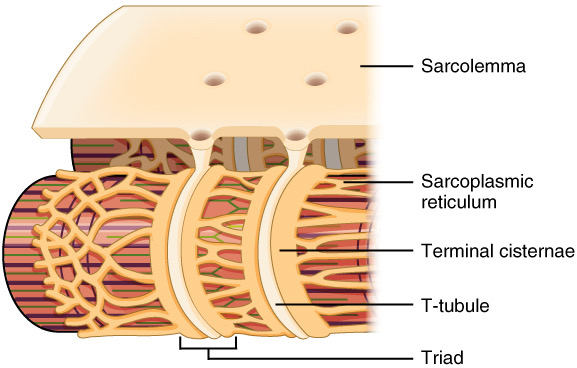
the plasma membrane, or outer covering, of a muscle fiber
myofibrils
rod-like structures inside cardiac and skeletal muscle fibers that are responsible for contraction
sarcoplasmic reticulum (sr)
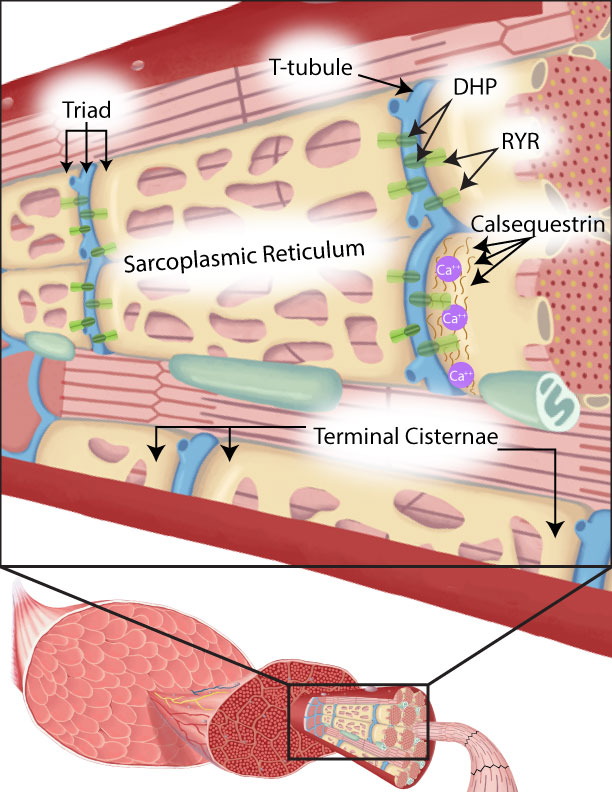
stores, releases, and reabsorbs calcium ions (\(Ca^{2+}\)) to control muscle contraction and relaxation
T-tubules
invaginations of the cell membrane that extend deep into the cytoplasm of muscle cells
Terminal Cisternae
enlarged regions of the sarcoplasmic reticulum in muscle cells that are responsible for storing and releasing calcium ions
A band
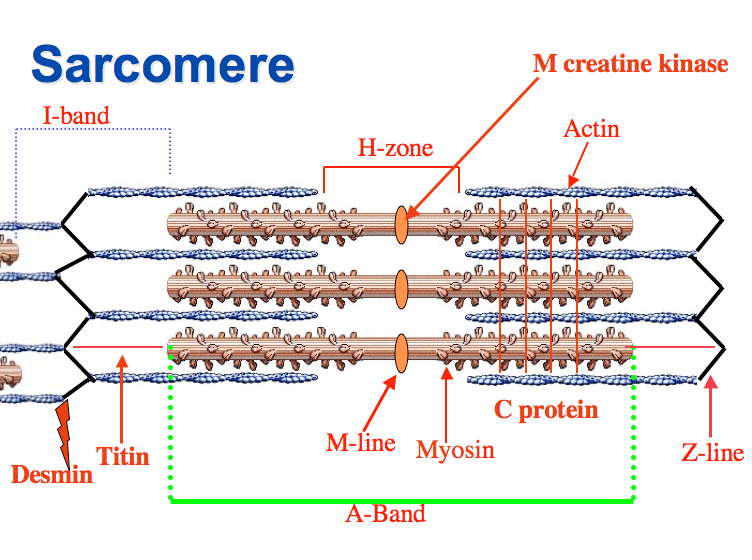
a dark-appearing region in the center of a muscle's sarcomere,
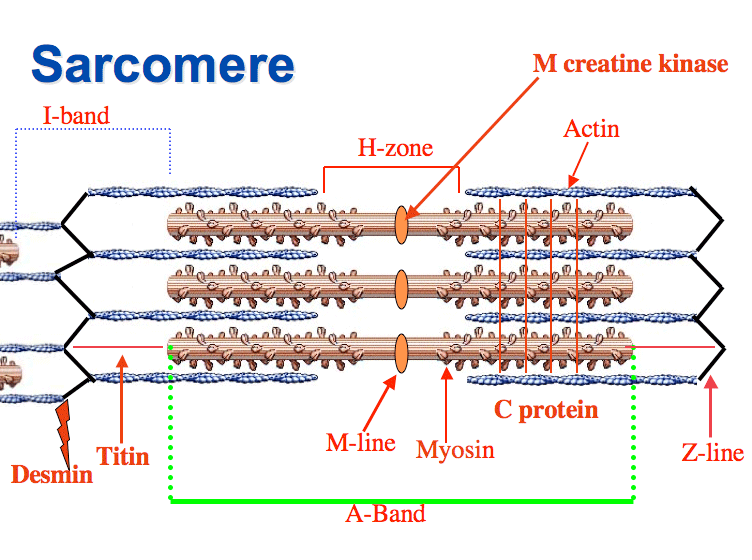
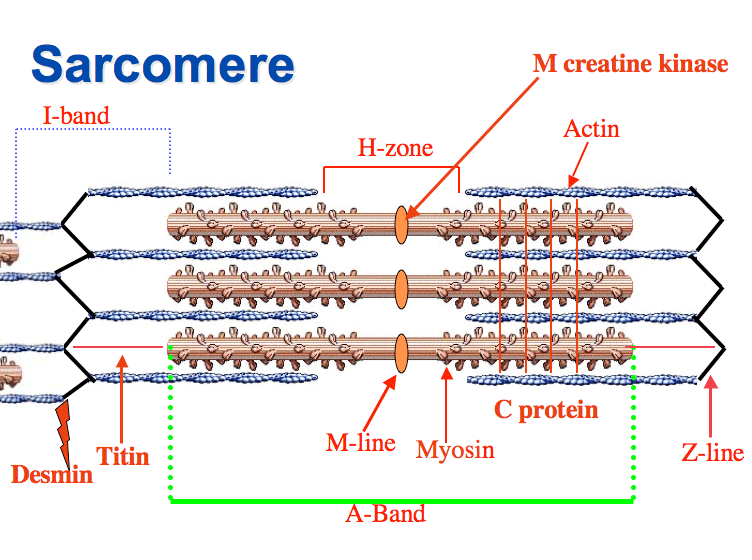
I band
a part of the sarcomere, the repeating unit of muscle contraction
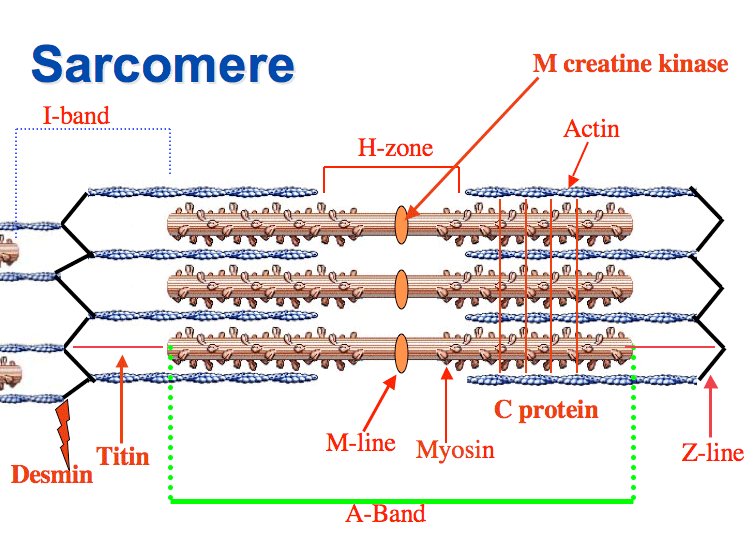
H zone
the central region of a sarcomere that contains only thick myosin filaments and lacks thin actin filaments
Z disc
located at the borders of the sarcomere, the functional unit of muscle contraction.
Actin
a protein that plays a crucial role in muscle contraction
Myosin
a protein that plays a crucial role in muscle contraction
Tropomysin
a protein that blocks myosin from binding to actin filaments in muscle fibers when the muscle is relaxed
Troponin
activating myosin ATPase activity and muscle contraction
neuromuscular junction
the synapse where a motor neuron transmits a signal to a muscle fiber, causing it to contract
Acetylcholine (ACh)
a crucial neurotransmitter that plays a vital role in both the central and peripheral nervous systems, enabling communication between nerve cells and other cells like muscles and glands
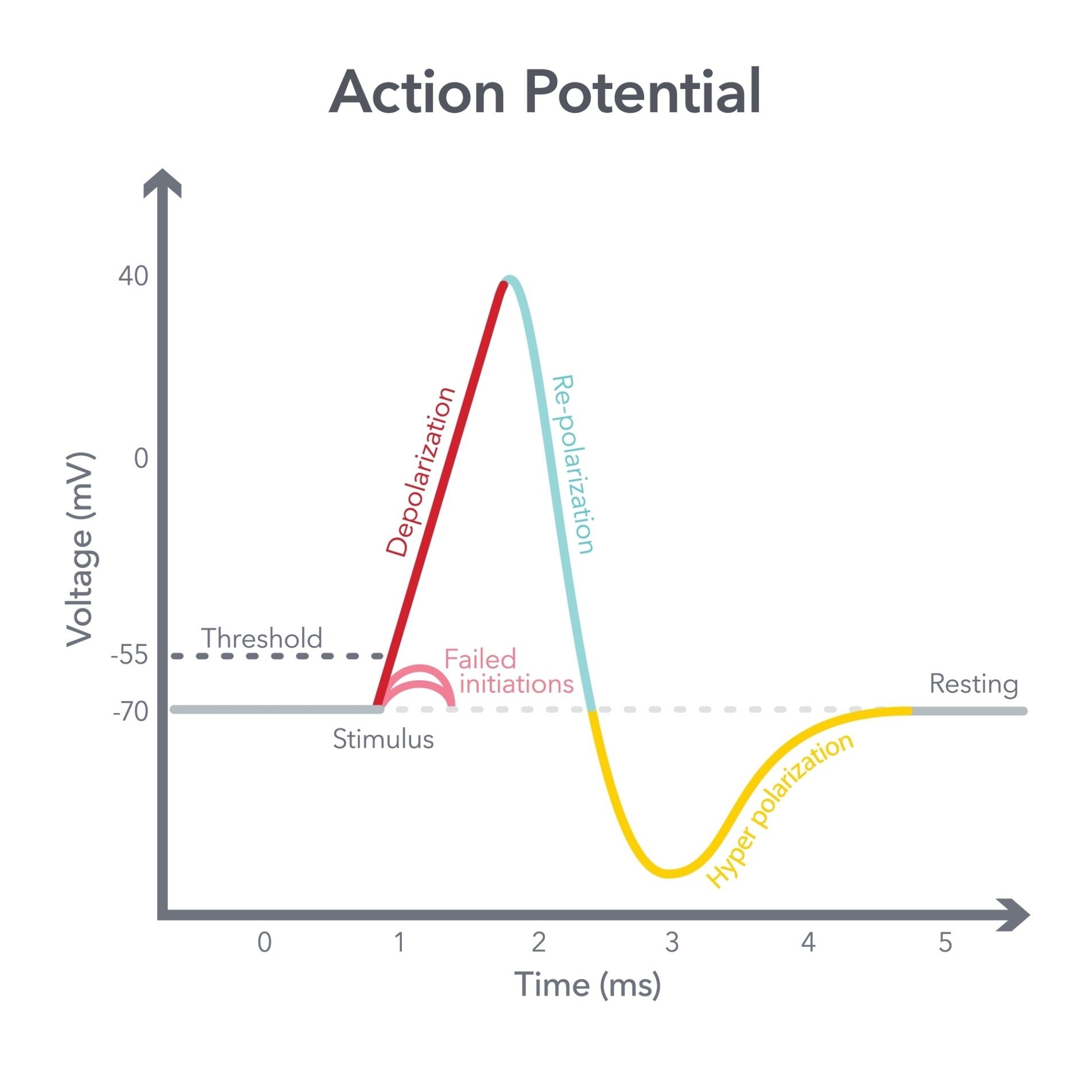
Action potentiol
a rapid, electrical impulse that travels down a neuron's axon, allowing for communication between cells in the nervous system
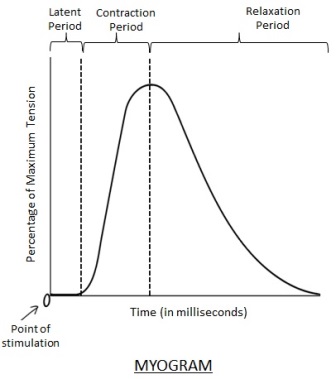
latent period
the brief time interval between the arrival of a nerve impulse at the muscle fiber and the onset of visible muscle contraction
crossbridge cycling
the repetitive process of myosin heads binding to and pulling on actin filaments, causing muscle contraction
power stroke
the movement of the myosin head (a protein) along the actin filament (another protein) that generates force and causes the muscle to shorten
Cocking
the process during muscle contraction when the myosin head moves into a high-energy
Triad
a substructure in skeletal muscle formed by a T-tubule flanked by two terminal cisternae of the sarcoplasmic reticulum (SR)
Excitation-Contraction Coupling
the process that links an electrical signal to a mechanical action, converting a neural signal into a muscle contraction
Crossbridge Release
the crucial step in the muscle contraction cycle where the myosin head detaches from the actin filament.
Myosin Reset
the reactivation of the myosin head after a power stroke, returning it to a "cocked" position ready for the next muscle contraction cycle