Immuno exam
 Call Kai
 Learn
Learn Practice Test
 Spaced Repetition
 Match
Match Flashcards
 Knowt Play
1/126

There's no tags or description
Looks like no tags are added yet.
Name | Mastery | Learn | Test | Matching | Spaced | Call with Kai | Chat |
|---|
No analytics yet
Send a link to your students to track their progress
127 Terms
what makes up innate immunity
PAMPs, DAMPs, PRRs, cytokines, TLRs
what makes up Adaptive immunity
lymphocytes, humoral and cell mediated responses
what is innate immunity
nonspecific, rely on IgG, acts within minuets
what is adaptive immunity
builds memory, rely on IgM, antigenic specific reponse
Layers of defense
physical barrier (skin, mucous), secretory barrier (lysozymes, normal flora), physiological barrier (fever, gastric acid)
PAMPs
Pathogen associated molecular patters
part of the innate immune system
includes viral DNA, flagella etc
DAMPs
AKA alarmins, released from stress cells (necrotic)
part of innate immunity
PRRs
pattern recognition factor that recognizes PAMPs and DAMPs which triggers the innate defense
inflammatory cytokines
IL-1
IL-6
TNF- alpha
IL-8
senteniel cells
macrophages, neutrophils, mast cells, dendritic cells
2 arms of adaptive immunity
humoral
cell mediates
humoral adaptive immunity
EXTRAcellular (bacteria, parasites)
use antibodies to neutralize, opsonize etc
cell mediated adaptive immunity
INTRAcellular, recognize viruses
use CD8 cells to directly kill infected cells
lymphocytes to know
B cells- differentiate into plasma cells which produce memory cells
T cells- CD4, CD8, Th 17, Treg
Th 17 lymphocyte
a t helper cell that helps with inflammation in mucosal surfaces
bacteria and fungal defense
Treg lymphocyte
stops inflammation when infection is cleared and prevents autoimmunity
Primary v secondary response
primary- innate acts faster than adaptive, longer lag, memory B and T cells are generated, IgM predominant
secondary- adaptive acts faster, shorter lag, IgG predominant
what causes a cytokine storm
LPS, TLR4
often in septic neonates or post surgical complications
multiorgan failure
primary lymphoid organ role
lymphocyte maturation and generation
do not need an antigen at this stage
primary lymphoid organ example
thymus, bursa (birds), bone marrow, peyer patches (ruminants)
if removed can cause lifelong issues
secondary lymphoid organ role
where the antigen encounters the lymphoid, site of immune response
secondary lymphoid organ example
lymph nodes, spleen, MALT
require an antigen
if removed patient will be ok
what is thymic education
positive- cells with affinity for self-MHC survive (T cells only)
negative-self reactive cells are deleted (T and B cells cells)
what is thymic involution
when the thymus begins to shrink- during puberty
Illeal Peyers patches
primary lymphoid organ
2 “species”
Group 1- in ruminants
Group 2- acts as secondary lymphoid in primates, rabbits and rodents
what is MALT
mucosa-associated lymphoid tissue
activate B cells to produce IgA
what happens if you remove the spleen
secondary lymphoid organ
loose blood filtering capability
compliment system
part of the innate immune system, can be activated in 2 ways
classical- when an antigen attaches to an antibody (bridges adaptive and innate)
alternative- when a pathogen invades
what is significant about C3
C3a- triggers inflammation
C3b- triggers opsonization
C3b complex- triggers MAC attack and lyses cells
what are polymorphonuclear granulocytes
eosinophils, neutrophils, basophils
what are mononuclear granulocytes
monocytes, lymphocytes
how does phagocytosis work
pathogen is engulfed with a phagosome, lysozome binds to digest pathogen, pathogen is digested to antigen, antigen is presented on MHC
professional phagocyte
macrophage, neutrophil
what is opsinization
when an antibody completely coats a pathogen to allow it to stick to a cell surface receptor
neutrophil surface receptors
integrins, compliment receptors CRs, antibody receptors FcR, PRRs
2 ways neutrophils work
NETS (if too big for phagocytosis)
phagocytosis (use reactive oxygen species)
macrophage of the skion
langerhan cells
macrophage of the liver
kupfffer cellsm
M1 macrophage
macrophage that use phagocytosis, secrete inflammation cytokines
M2 macrophages
trigger wound healing and regeneration, secrete anti-inflammatory cytokines
professional APC
dendritic cells, B cells, Macrophages
what are granulomas
type of wall to block foreign object from being continuously attacked by the immune system if it cannot be removed (ex tattoo ink)
what is pus?
dead neutrophils
acute inflammation
a response to harmful stimuli to eliminate pathogens
triggers of acute inflammation
PAMPs, DAMPs etc
cardinal signs of inflammation
redness, heat, swelling, pain
what are CAMs
proteins on the cell surface that bind APC to lymphocytes
they get lymphocytes out of the blood and into infected tissue
local effects of inflammation
increased blood flow, vascular permiability, increased expression of CAMs, inflammatory cytokine production
systemic effetcs of inflammation
fever, anorexia, lethargy, shock
how is inflammation terminated
anti-inflammatory cytokines (IL-10, TGF-beta), apoptosis of inflammation cells, short life of inflammatory mediators
chronic inflammation
due to infectious and noninfectious causes (cancer, autoimmune, obesity)
how to differentiate between lymphocyte populations
use flow cytometry to detect fluorescent labled antibodies bound to the surface receptors
what do B cells make
plasma cells which can make memory B cells and antibodies
what do T cells make
CD4, CD8, treg, memory cells
what do BCR and TCR recognize
antigens
what do MHC receptors do
present antigen to Th cells
2 T cell subpopulations
alpha/beta
gamma/delta
alpha/beta T cells
recognize antigen on MHC and express CD4 (MHC 2) or CD8 (MHC 1)
gamma/delta T cells
recognize free floating antigen and use perforins/granzymes to kill cells
example of CAMs
integrins, selectins
positive cytokine receptor
turns on gene expression in the nucleus
negative cytokine receptor
turns off cytokine action
How is a cytokine different from hormone
hormone signals to specific endocrine cells via endocrine signaling, cytokines signal to many kinds of cells via autocrine, paracrine and endocrine signaling
pleitropic cytokine
one cytokine can adhere to many cell types and cause different responses in those cells
redundant cytokine
multiple cytokines adhere to different cells but cause the same response
what is an interleukin
Type of cytokine
lymph to leukocyte interaction (IL)
what is an interferon
Type of cytokine
antiviral cytokine produced in reponse to a viral infection (INF)
what is a tumor necrosis factor
Type of cytokine
anti-tumor cytokine (TNF)
what is a growth factor
Type of cytokine
regulate stem cells and hematapoiesis
what is a chemokine
Type of cytokine
chemotaxis of immune cells
how are cytokines regulated
1- change receptor proteins on target cells to block cytokine binding
2- bind other proteins to block cytokines from acting
3- use negative cytokines to turn off function in cell
what are some specific cytokine effects
mediate innate immunity
regulate lymphocyte growth
activate inflammatory cells
what is EPO
a cytokine that specifically produces RBC
what is G-CSF
a cytokine that specifically produces neutrophils
what is IL-2
a cytokine that specifically stimulates lymphocyte production
what is dangerous about IL-6
IL-6 acts on both innate and adaptive immunity. Its soluble receptor allows IL-6 to signal in cells that do not express the membrane-bound IL-6 receptor, giving it a broader range of targets.
can lead to cancer/covid
what is an MHC haplotype
a specific combination of MHC 1,2,3 genes that are all carried on one chromosome and influence disease resistance etc
What is polygeny
multiple MHC genes within a cells DNA that can produce multiple types of MHC due to the different types in DNA
what is polymorphism
diversity of MHC genes between cells
what is codominance
express both parent MHC genes to expand immune coverage. Heterozygous advantage
what is promiscuous binding
one MHC can present many antigens and peptides
where is MHC1 found
on most nucleated cells, made up of 2 chains (alpha, beta-2-microglobin)
what is MHC1 recognized by
CD8 cells, lack of MHC 1 means the NK cells will kill it
where is MHC2 found
on APC cells, presents proteins from outside of the cell, made up of 2 chains (alpha, beta)
what is MHC2 recognized by
CD 4 cells
What is MHC 3
not an ag receptor, rather codes for compliment proteins, cytokines, stress hormones
Antigen vs Immunogen
an ag CAN induce an immune response, but an immunogen WILL induce an immune response
what is an epitope
region of an ag recognized by an ab. can be linear or conformational
linear- linear sequence of amino acids preserved after denaturation (recognized by TCR and MHC)
conformational- folded sequence lost after denaturation (recognized by BCR and antibodies)
isotype
differences between antibody classes (IgG vs IgM)
Allotype
same ab class but seperate ab
idiotype
unique features associated with an antibodies ag binding region
antibody structure
made up of 2 chains -light and heavy
both the light and the heavy chain have a variable (Fab) and a constant (Fc) region
ex Fc VH- the constant region on the heavy chain

where do the antigens bind to on the antibody
on the ag binding site which is made up of heavy and light variable regions

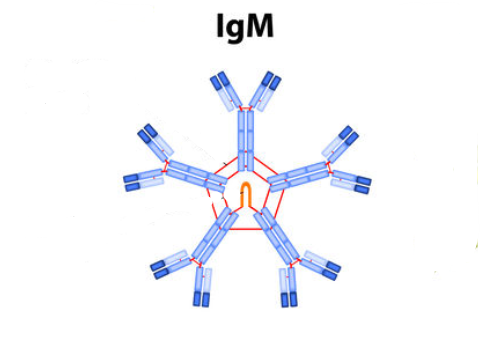
IgM
main
innate immunity, is a pentameter, helps with agglutination
IgG
secondary
adaptive immunity, is a monomer, helps with opsonization

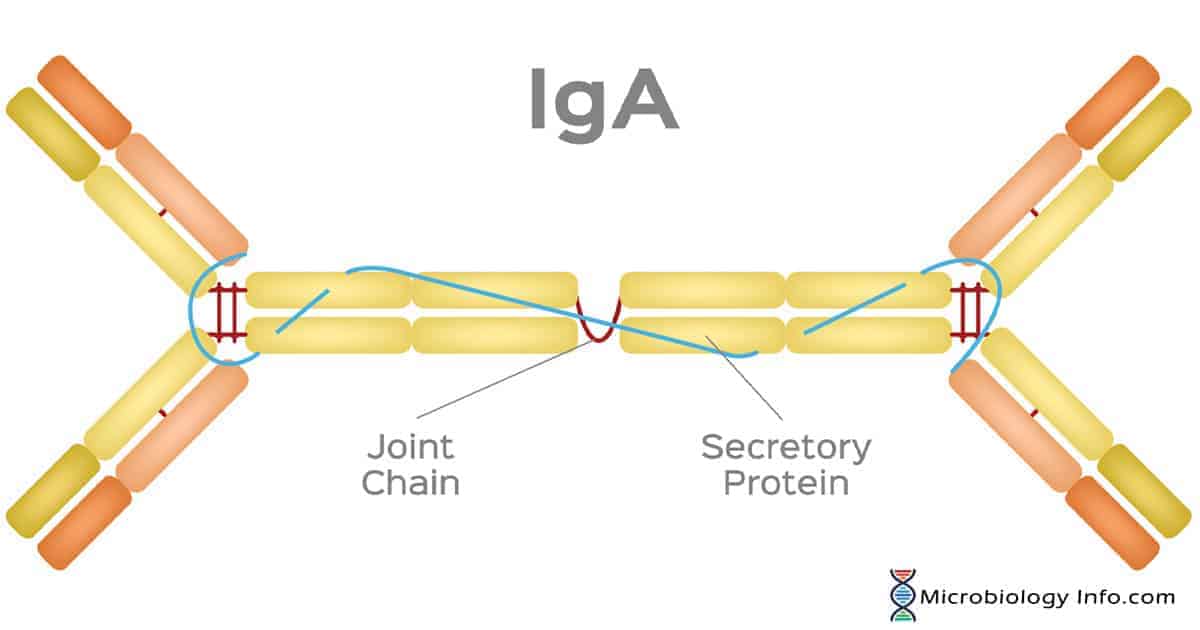
IgA
mucousal anitbody, is a monomer/dimer
has SIgA (secretory) to protect it from digestion
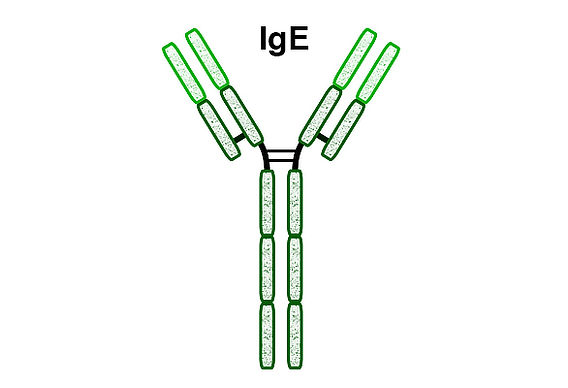
IgE
allergies, a monomer, on mast cells and basophils bc it deals with histamine
IgD
developing, in naive B cells, monomer
what is an immunoglobin superfamily
a group of proteins that share a similar structural feature (not all ab)
what is affinity
the strength of an individual bond